
Audio-Technica AT-LPA2 Flagship Turntable Review
Limited editions, unfortunately, can be quite brutal, often leading many vinyl enthusiasts to miss out on truly classic turntables. This year, Audio-Technica, building upon the acclaimed design philosophy of the AT-LP2022, has introduced the even more advanced AT-LPA2. This iteration is not a limited release and features a brand-new tonearm and cartridge, elevating its class considerably. From the manufacturer’s product hierarchy, the AT-LPA2 stands as their current top-tier turntable.
Despite this, it’s priced at just over $2,300 USD, allowing you to experience the culmination of Audio-Technica’s turntable engineering expertise.
The Advantage of Acrylic Construction
Most people are familiar with acrylic; it’s a thermoplastic polymer renowned for its transparency, high malleability, and a density half that of glass, frequently serving as a glass substitute. While it might not immediately strike one as a “high-end” material, it’s exceptionally well-suited for audio product manufacturing. Experienced audiophiles know that effective vibration damping is paramount in turntable design.
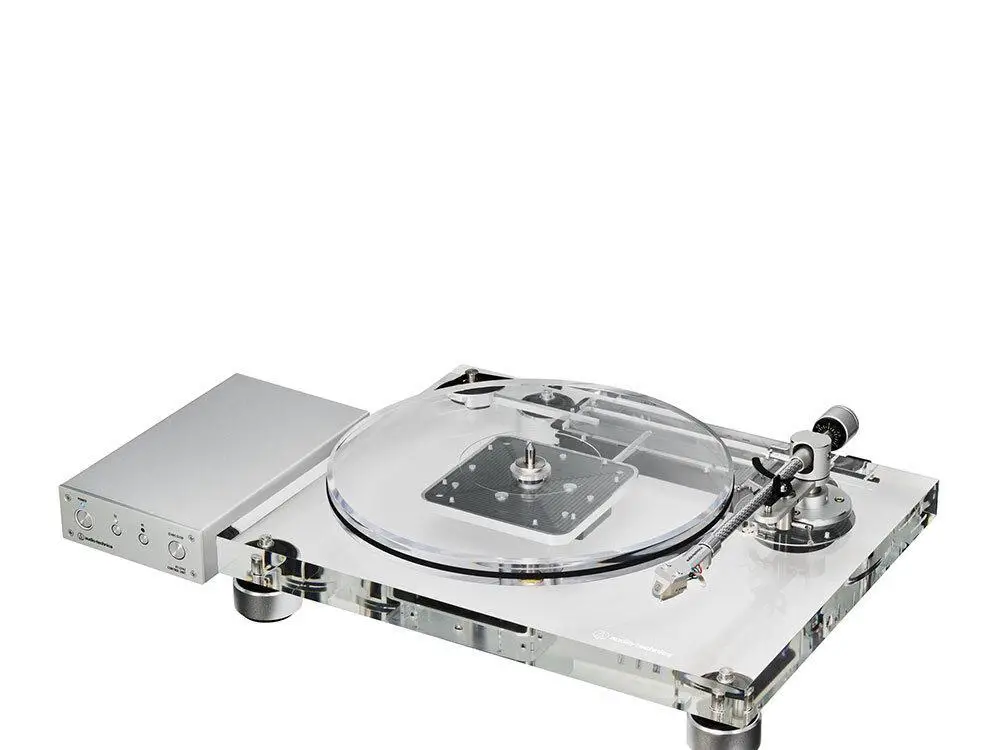
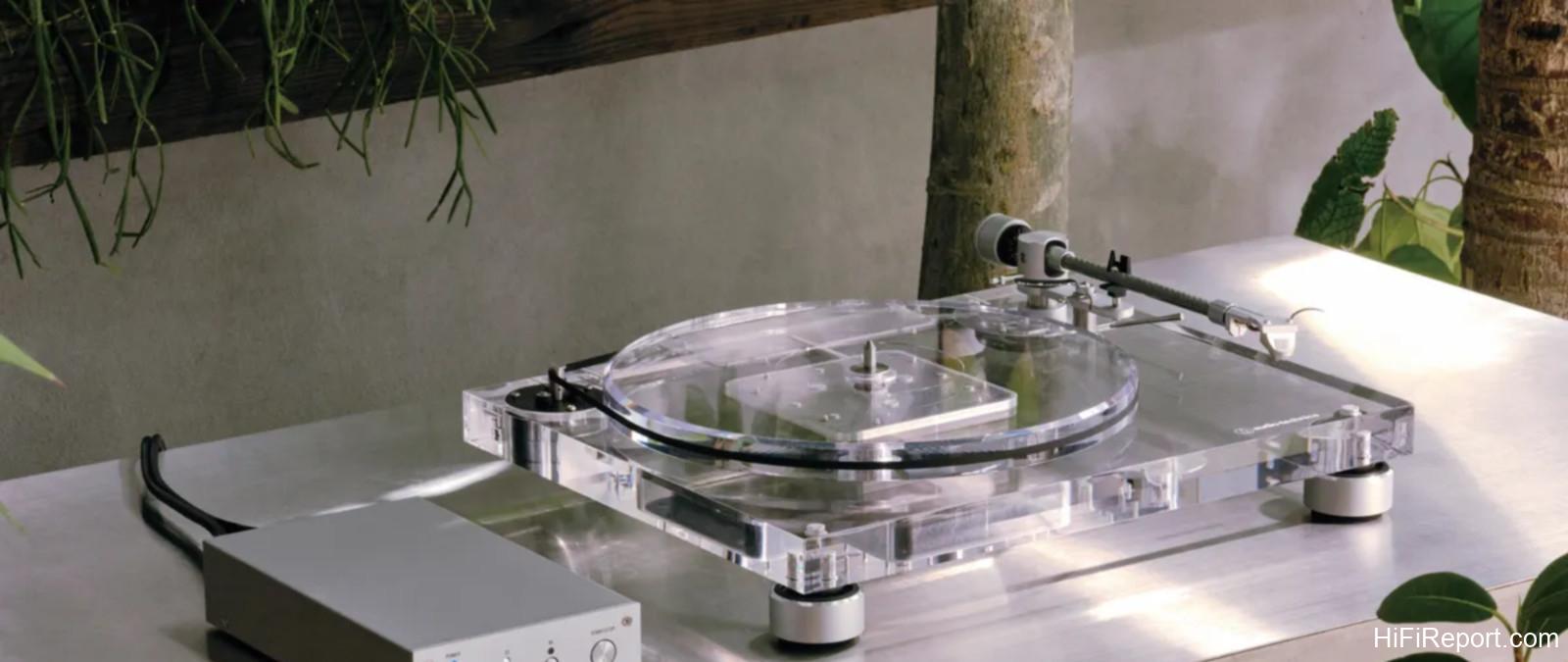
Acrylic is remarkably insensitive to external vibrations – a tap on its surface yields a dull, damped sound – making it perfectly suited for turntable construction.
Furthermore, acrylic’s resonant frequency is similar to that of a vinyl record itself. This theoretical alignment allows manufacturers to design more effective vibration isolation structures that directly address potential issues, leading to superior performance. Indeed, premium turntables like the British Vertere Acoustics SG-1 are famously crafted from acrylic.
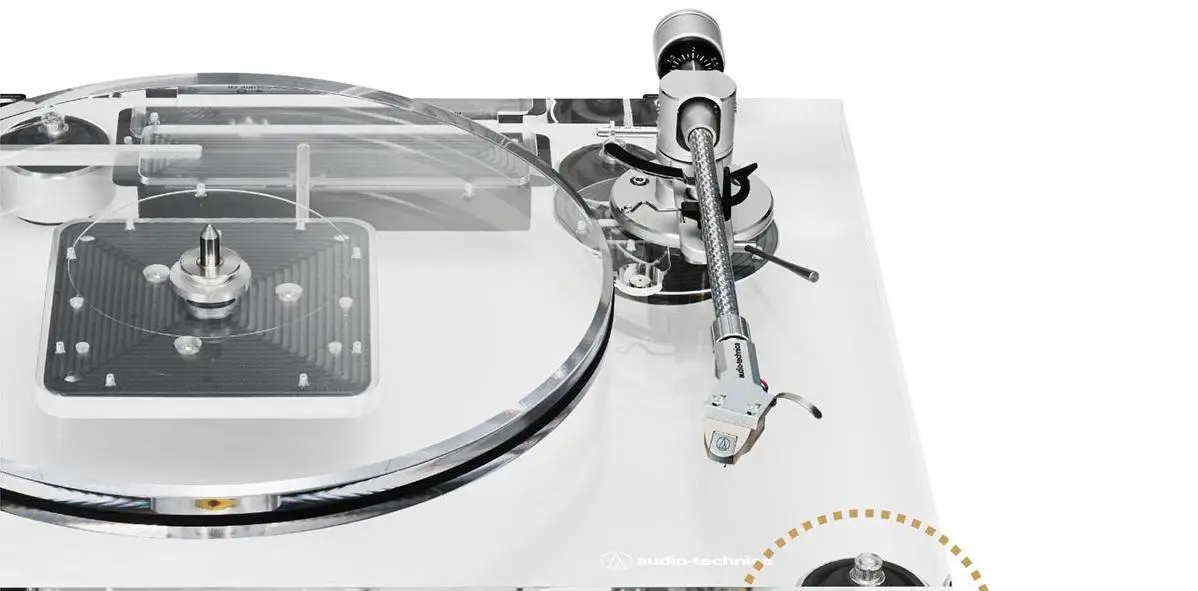
The AT-LPA2 capitalizes on acrylic’s advantages to the fullest. It features a substantial 30mm thick plinth paired with a 20mm thick platter structure, noticeably more weighty than the previous AT-LP2022. This robust design enhances stability during operation and significantly improves vibration damping. The belt-drive mechanism is also kept exceptionally simple to minimize unnecessary vibrations.
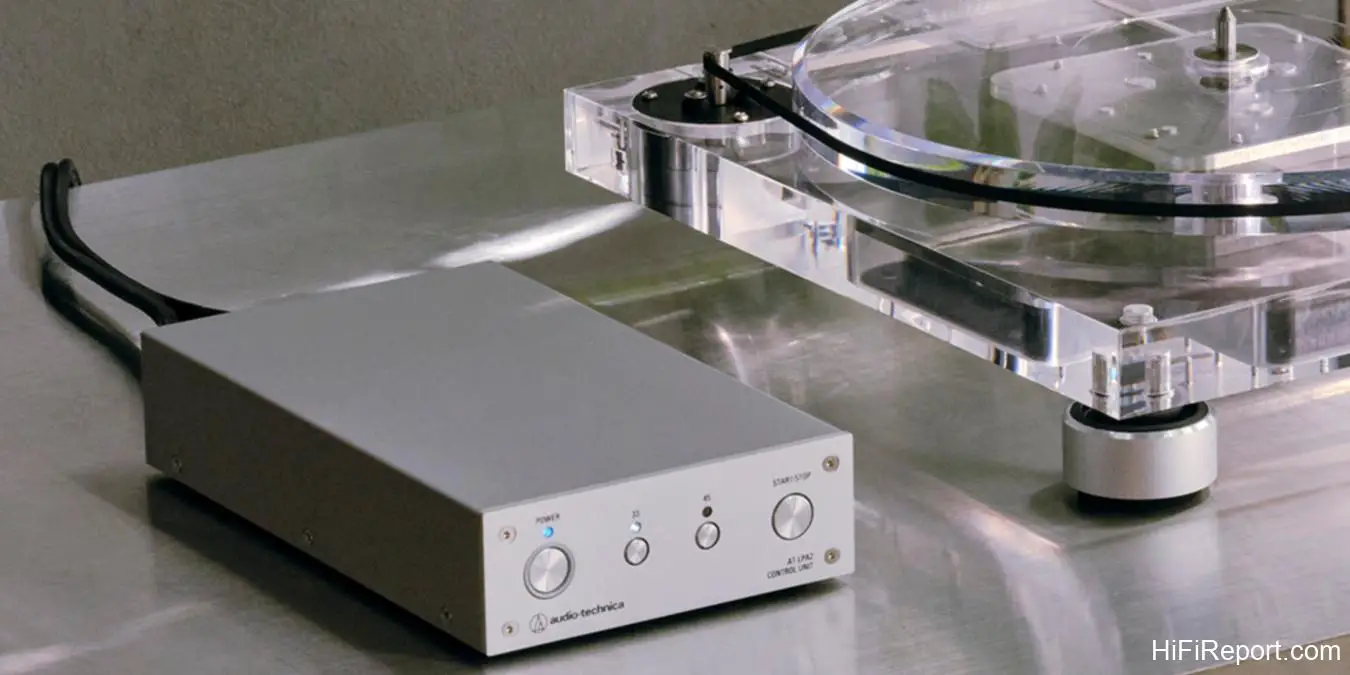
External Power and Control Unit
Delving deeper, the AT-LPA2 includes an accompanying external unit. This isn’t a phono stage, but rather a dedicated power supply and main control circuit, meticulously separated from the turntable itself. Housed in its own aluminum alloy chassis, this unit allows for convenient control over the turntable’s power and speed (33 or 45 RPM).
This clever design means the turntable itself is completely devoid of buttons, maintaining its pristine, transparent aesthetic while also effectively isolating the main unit from electrical noise interference.
Precision Platter and Speed Control
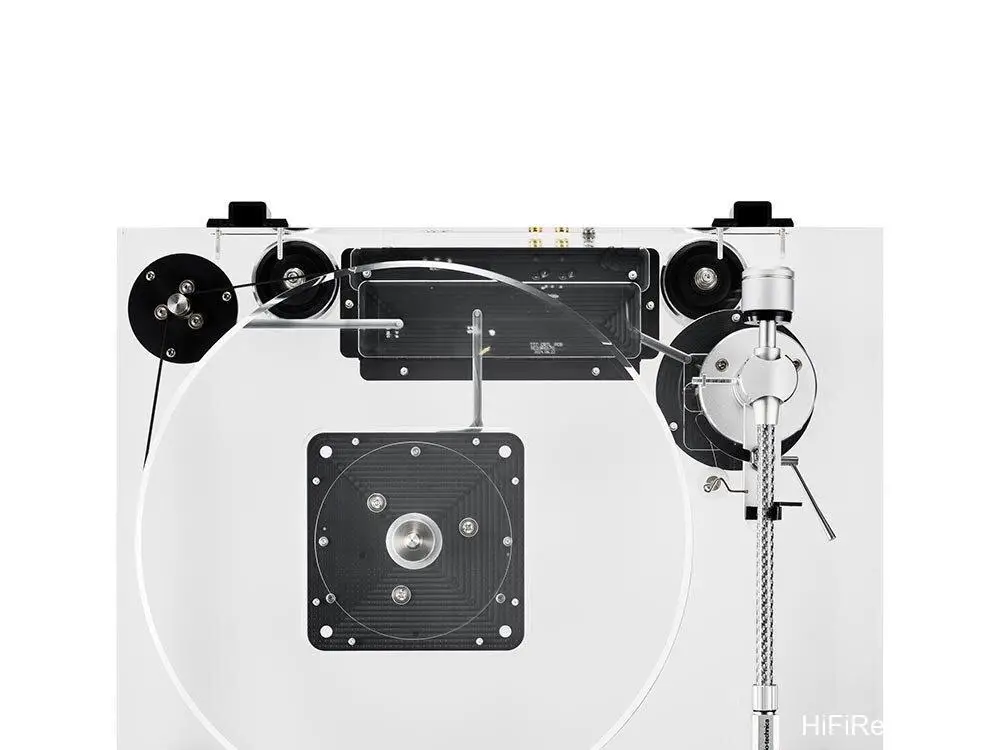
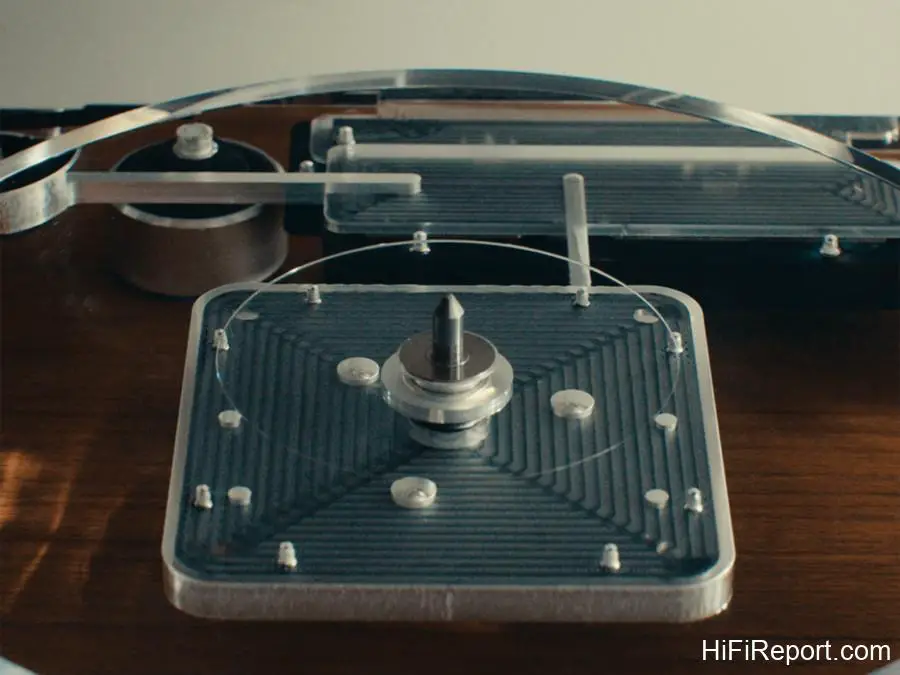
Beneath the AT-LPA2’s platter bearing, a black square optical sensor is visible. Its purpose is to detect the platter’s rotation and precisely control the DC motor, ensuring the most accurate rotational speed possible. Actual measurements reveal the AT-LPA2 boasts a wow and flutter specification of less than 0.12% WRM (at 33 RPM) and a signal-to-noise ratio greater than 60dB – crucial factors in delivering its exceptional sound quality.
Advanced Carbon Fiber Tonearm
The AT-LPA2 features a silver carbon fiber straight tonearm, remarkably lightweight yet exceptionally rigid. This tonearm is mounted on an adjustable metal base, allowing users to conveniently fine-tune VTA (Vertical Tracking Angle) and anti-skate control. This ensures the stylus maintains perfect vertical alignment during playback, minimizing physical distortion.
For even more precise tonearm control, this unit incorporates a newly developed suspended wire-type anti-skate mechanism, offering enhanced adjustment accuracy. The tonearm’s height is also freely adjustable, which effectively reduces the inward force on the cartridge and improves its tracking performance. The tracking force adjustment range spans 0-3 grams. Audio-Technica also provides two different counterweights: 110g and 130g.
When using the 110g counterweight, compatible cartridge weights range from 6.1-9.2 grams, while the 130g counterweight accommodates cartridges weighing 9.2-13.9 grams, allowing users to select based on their chosen cartridge.
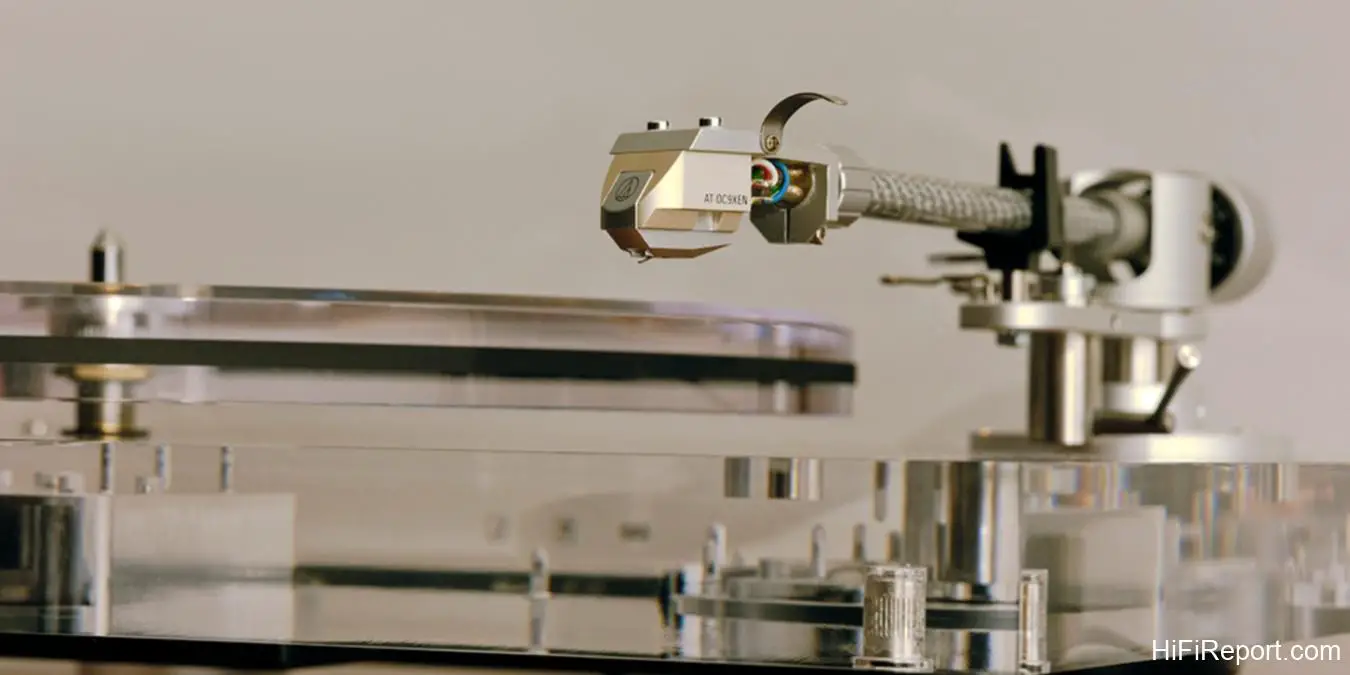
Included AT-OC9XEN MC Cartridge
Furthermore, the AT-LPA2 comes equipped with Audio-Technica’s “AT-OC9XEN” Dual Moving Coil (MC) cartridge. Its housing is crafted from specially CNC-machined aluminum alloy, offering excellent resonance characteristics. It also features an integrated elliptical stylus and coils wound with high-purity PCOCC single-crystal copper wire, which enhances left/right channel separation, effectively reduces distortion, and precisely reproduces subtle musical details.
Effective Vibration Isolation Feet
Finally, the AT-LPA2 rests on specially designed, large-sized feet. The main body of these feet is precision-machined from aluminum alloy, with internal rubber structures that provide noticeable damping when the turntable is gently rocked. Besides securely supporting the turntable’s weight, these feet effectively isolate it from vibrations transmitted through the surface it rests on, thereby enhancing sound purity.
The feet are also individually height-adjustable to ensure the turntable remains perfectly level.
Intuitive Setup and Calibration
Setting up the AT-LPA2 is quite intuitive, with the most intricate part being the tonearm adjustment. Following the manufacturer’s instructions, if you’re using the included cartridge, select the lighter 110g counterweight. Installation merely involves rotating and sliding the counterweight back and forth until the tonearm achieves perfect balance. Next, set the tracking force to 2.0 grams, as recommended for the AT-OC9XEN cartridge.
For anti-skate adjustment, thread the anti-skate weight string through the tonearm lift. The primary anti-skate weight is 2.0g; with the auxiliary weight, it becomes 3.0g. Using the anti-skate ratio calculation “tracking force divided by weight of the anti-skate weight,” the recommended anti-skate value for the included cartridge is 1.0x.
Listening Impressions
For this review, my reference system comprised a Luxman E250 phono stage, paired with our in-house Naim Uniti Star streaming amplifier driving the flagship Focal Utopia Diablo bookshelf loudspeakers. The AT-LPA2 delivered an open and transparent soundstage with exceptionally high musical separation. In my experience, achieving such vinyl texture requires a meticulously tuned turntable.
It’s clear that this turntable not only possesses high intrinsic quality but also benefits from most components being pre-adjusted by the factory, allowing for excellent sound right out of a straightforward installation. After listening for some time, I noted that beyond its expansive sound quality, it offered a touch more composed and relaxed character than the AT-LP2022 I previously reviewed. The noise floor also seemed to be slightly lower, resulting in an overall warmer sonic presentation.
For instance, playing Diana Krall’s “When I Look in Your Eyes” album, on the sixth track “I’ve Got You Under My Skin,” the vocal presence stood firmly at the center, clear and focused, with a full-bodied and elastic quality. The energy across all three frequency bands was remarkably balanced, showcasing a relaxed texture typically found only in very high-end digital systems. Unlike some budget turntables, there was no overly thick sound or lack of musical dynamics.
Concurrently, the separation between vocals and instruments within the track was superb, with distinct contours. The bass guitar, for example, presented a solid, well-defined instrumental body; the low frequencies weren’t merely vague, generalized energy, but rather possessed a taut, granular quality without any boomy bloat, making for exceptionally engaging listening. The piano timbre, compared to my recollections of the AT-LP2022, exhibited a sweeter, more rounded characteristic.

I could discern the subtle elasticity of each key press, feeling the warm, woody resonance with every note, utterly devoid of any harshness.
During my listening sessions, I also conducted a comparison between high-resolution streaming music via Qobuz and the vinyl playback. Initially, I found the Naim Uniti Star’s streaming performance quite captivating, but a direct comparison quickly revealed the stark difference – “no comparison, no harm,” as the saying goes. Compared to the AT-LPA2’s vinyl source, the streaming music instantly sounded dry, cold, and thin, lacking the rich, lifelike quality of vinyl.
Playing vinyl through the AT-LPA2, every musical detail emerged clear yet softened, imbued with a sweetness beyond what the streamer could offer. It was as if the last hint of sibilant harshness in the vocals had been smoothed away, resulting in a warm, elastic presentation that felt incredibly lifelike, as if the performer stood vividly before me!
Next, I turned to Austrian pianist Alfred Brendel’s performance of Schubert’s piano solo, “D780.” The AT-LPA2 rendered the piano with a rich, full-bodied presence, allowing me to perceive the abundance of overtones that built the piano’s precise contours. During the performance, the resonance of the soundboard was palpable, infused with a woody character, and each key strike exhibited excellent elasticity.

The AT-OC9XEN MC cartridge included with this unit proved to be quite refined, making even the slightest nuances of expression and subtle details clear and agile. Compared to the MM cartridge on the AT-LP2022 I reviewed previously, the sound quality immediately distinguished itself. It was as if Alfred Brendel’s hands, lightly caressing the keys, were vividly present before me.
From the softest pianissimos to powerful chord strikes, the dynamic contrast was intense, yet the piano tones consistently sounded rich and full-bodied, completely devoid of the stiffness often associated with digital music.

Finally, when I played “Into the Lungs of Hell” from Megadeth’s “So Far, So Good… So What!” album, I experienced an unprecedented fullness. In the past, I often found recordings of heavy metal music sounded dry and thin via streaming, but today, I realized these recordings are actually quite vibrant and natural. The ferocious distortion of the electric guitars was solid and weighty, with a clearer, more elastic timbre, completely devoid of any harsh, piercing quality.
The kick drum strikes weren’t just vague low-frequency energy; I could discern distinct contours. The band’s performance exploded with layers of detail, appearing as a lifelike, full-scale band performing right before my eyes.
Conclusion and Value
The AT-LPA2 turntable boasts solid construction and a straightforward design, fully embodying the criteria for excellent turntable sound. For newcomers, its setup and calibration are remarkably simple; by following the manual step-by-step, one can effortlessly unlock the superb sonic advantages of vinyl records. It’s not just affordably priced, but also exceptionally user-friendly.
Whether you’re a beginner or an experienced enthusiast looking to experience the magic of vinyl, the AT-LPA2 represents an outstanding value.
Specifications
* **Type:** Turntable
* **Drive Method:** Belt-drive
* **Motor:** DC servo motor with active speed sensor
* **Speeds:** 33 rpm, 45 rpm
* **Wow and Flutter:** < 0.12% WRM (at 33 rpm) * **Signal-to-Noise Ratio:** > 60dB
* **Tonearm:** Carbon fiber straight tonearm
* **Cartridge:** AT-OC9XEN MC stereo cartridge
* **Tracking Force:** 2.0g
* **Weight:** 8.4 kg