
Audiolab 7000 Series Review
Audiolab’s very first product, the 8000A integrated amplifier, laid the foundation for the brand’s success. This was followed by the 8200 and 8300 series, establishing the 8X00 line as audiolab’s signature range. For a considerable period, audiolab’s entire product portfolio consisted solely of the 8X00 series and the M-DAC series designed for desktop DAC/headphone amplifier use.
As the 8X00 series climbed upmarket in terms of performance and price, audiolab recognized the need to cater to consumers with more modest budgets. In 2018, they launched the entry-level 6000 series, offering highly accessible pricing. Simultaneously, audiolab felt their top-tier offerings should also advance. Thus, at the end of 2022, they introduced the flagship 9000 series, which represents a significant step up in design and specifications beyond the 8X00 series.
We featured this series in issue 334 and selected it as our cover equipment due to its outstanding performance.
With the entry-level 6000 series and the flagship 9000 series established, audiolab identified a gap in the mid-range market. To fill this void, audiolab unveiled the new 7000 series in 2023. This series boasts a comprehensive lineup: the 7000CDT CD transport, the 7000N Play network streamer, and the 7000A integrated amplifier. Whether you prefer listening to CDs, streaming music, or playing high-resolution files via USB DAC, the 7000 series has you covered.
They share a cohesive design aesthetic, and stacking the three units creates a sleek, integrated system appearance that is both minimalist and attractive.
Audiolab has always maintained a strong commitment to value for money (C/P ratio). Even their flagship 9000 series is reasonably priced for its performance level. Naturally, the mid-range 7000 series offers even greater value. Both the 7000CDT transport and the 7000N Play streamer are priced under $720 USD each, while the 7000A integrated amplifier is under $1,320 USD. Acquiring all three units would cost just over $2,700 USD in total.
Consider this: the 7000 series represents a complete, separates-based audio system configuration. Finding a comparable system from a reputable Hi-Fi brand with similar specifications at this price point is exceptionally difficult. Let’s delve into the specifics of each component.
7000A Amplifier Details
First, let’s discuss the 7000A integrated amplifier. It builds upon the foundation of the 6000A while incorporating key features from the 9000A, making it the most versatile and functionally rich component of the three.

For digital-to-analog conversion, the 7000A employs the high-performance ESS 9038Q2M 32-bit DAC chip, part of the same series used in the 9000A (though a different grade). This equips the 7000A with the capability to handle high-resolution audio formats. Furthermore, the 7000A features an internal XMOS XU216 digital audio receiver chip, enabling its USB DAC functionality.
This allows for asynchronous transmission and playback of high-resolution music, supporting PCM up to 32-bit/768kHz and DSD up to DSD512.
Additionally, the 7000A supports full MQA decoding, capable of rendering MQA audio files up to 382.4kHz. Finally, the 7000A is Roon Tested certified, allowing seamless integration into the comprehensive Roon playback environment.
When receiving digital audio via SPDIF (optical, coaxial) and PC USB inputs, the 7000A also offers upsampling capabilities. It can upsample digital audio to 352.8kHz (for 44.1kHz and multiples) or 384kHz (for 48kHz and multiples), enhancing the subtlety and fidelity of the music.
Beyond its excellent file playback performance, the 7000A also boasts advanced Bluetooth functionality. Previously, audiolab’s Bluetooth capabilities were limited to apt-X (16-bit/48kHz). The 7000A upgrades this to apt-X HD (24-bit/48kHz), allowing for higher-quality wireless audio streaming. Like the 9000A, the 7000A offers five digital filter modes when playing digital audio, allowing listeners to tailor the sound to their preference.
When you’re not listening to music, the 7000A can even improve your TV audio experience, as it’s audiolab’s first model to incorporate an HDMI ARC feature, ending the era of weak TV speaker sound.
Regarding the amplification circuitry, the 7000A was designed by audiolab’s chief engineer, Jan Ertner (the same person who designed the 9000A). He places significant emphasis on power supply quality. The 7000A features a newly developed, high-power toroidal transformer specially customized by Noratel, providing a robust 250VA output capacity.
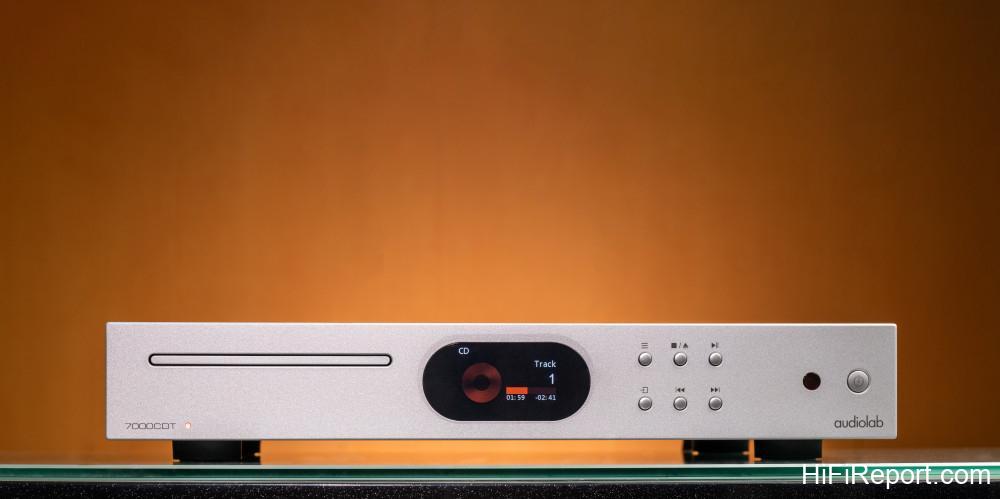
This is paired with four 15,000uF filter capacitors (totaling 60,000uF storage capacity) to ensure the 7000A has ample power to drive loudspeakers effectively. The 7000A utilizes Class AB amplification technology, with published power output specifications of 70 watts per channel into 8 ohms or 110 watts per channel into 4 ohms.
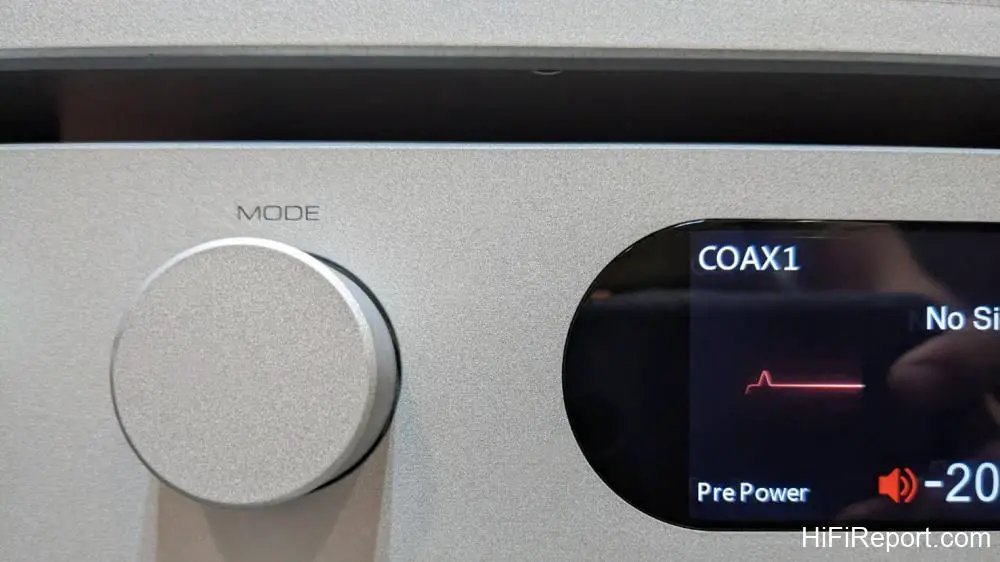
The 7000A offers exceptional flexibility with three operational modes, easily switchable by turning the second knob on the left of the front panel. The first is the standard Integrated Mode, where source components connect to the front end and the amplifier directly drives the speakers. The second is Pre Mode, functioning solely as a preamplifier, allowing you to connect a separate, perhaps higher-performance, stereo amplifier or even monoblocks to the output.
This mode is ideal if you plan to upgrade your power amplification in the future for improved drive capability. The third mode is Pre Power Mode, which bypasses the preamplifier section, allowing a source component (like a surround processor) to connect directly to the 7000A’s power amplifier stage. This mode enables the 7000A to be integrated into a home theater system, driving the main left and right channels while volume control and source selection are handled by the surround receiver.
This design consideration is very well thought out.
7000N Play Streamer
Next, let’s look at the 7000N Play, the network streamer in the 7000 series. This is the source component best suited to modern consumer needs.
The 7000N Play’s power supply also features a Noratel-customized toroidal transformer for audiolab, ensuring clean, high-efficiency power delivery. For DAC functionality, it uses the same ESS 9038Q2M DAC chip as the 7000A, allowing it to handle high-resolution audio.
The 7000N Play incorporates specially optimized internal circuitry for enhanced audio performance, boasting a total harmonic distortion of less than 0.0005% and a signal-to-noise ratio exceeding 120dB, resulting in cleaner, more accurate sound.
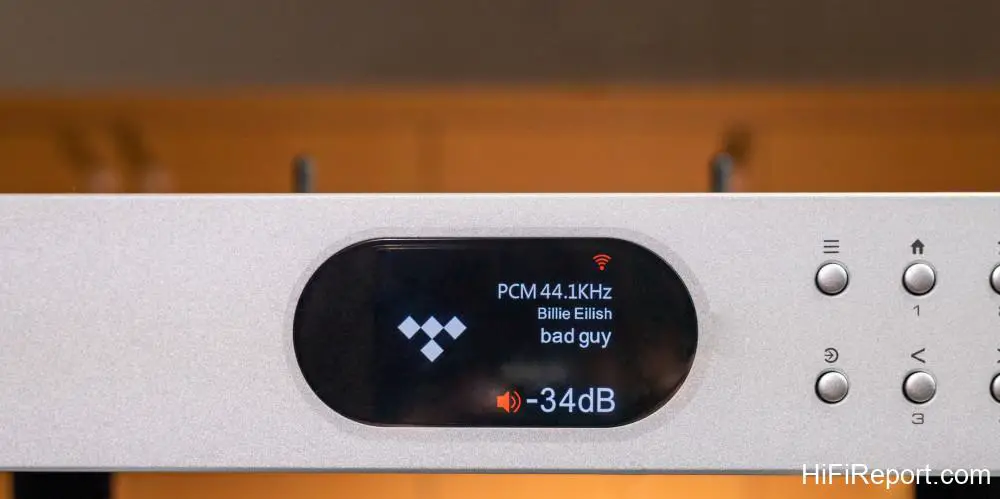
The 7000N Play utilizes DTS Play-Fi for its streaming capabilities, providing access to a wide range of streaming platforms including Spotify, Tidal, KKBOX, Qobuz, Deezer, Amazon Music, and includes built-in free internet radio. The inclusion of KKBOX is noteworthy, especially for listeners who enjoy Chinese popular music, as relatively few audio brand apps support it. So, if Chinese music is your preference, DTS Play-Fi is a good choice.
DTS Play-Fi also supports DLNA, enabling playback of music files from other devices on your local network, such as NAS drives, PCs, or smartphones, supporting resolutions up to 24-bit/192kHz. Another powerful feature of DTS Play-Fi is its multi-room music sharing capability, which is “cross-brand” compatible. This means any audio equipment supporting DTS Play-Fi (regardless of brand) can be placed in different rooms throughout your home to create a multi-room audio system.
Furthermore, it’s worth noting that previous versions of DTS Play-Fi did not support Apple Music, which was a disappointment for users of Apple devices. The 7000N Play addresses this by adding support for Apple AirPlay 2, allowing direct playback from Apple devices, making it very convenient for Apple enthusiasts.
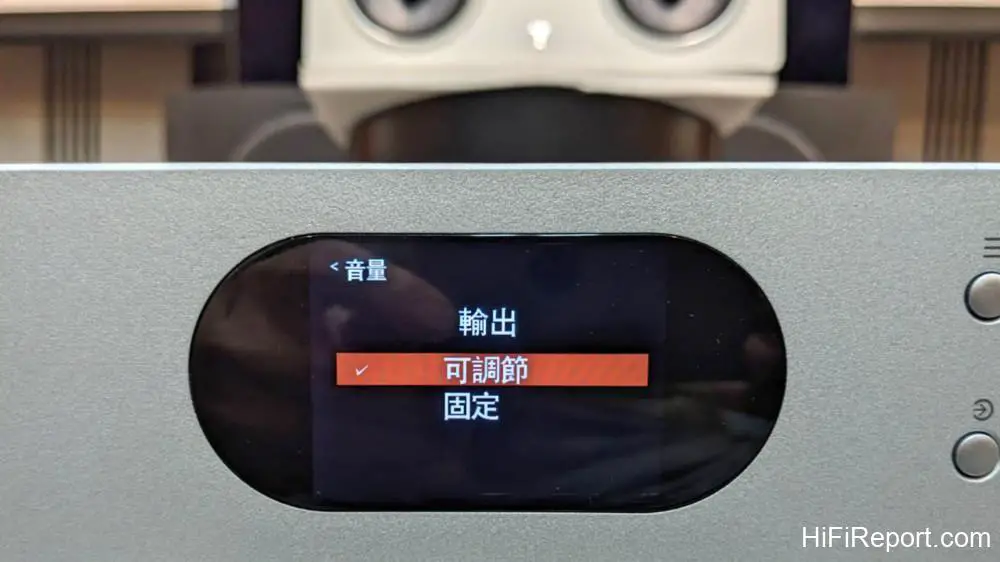
Audiolab considered that consumers might connect the 7000N Play to various types of downstream equipment, so they provided the option to set its volume output to either “Fixed Output” or “Variable Output.” If connected to a preamplifier or integrated amplifier with its own volume control, the 7000N Play can be set to “Fixed Output,” entrusting volume control to the downstream component and avoiding having two volume controls in series.
If set to “Variable Output,” you can connect it directly to a power amplifier or active speakers, with the 7000N Play handling volume control via its remote or the DTS Play-Fi App.
Naturally, to encourage customers to adopt the ‘matching separates’ approach, audiolab ensured optimal synergy between the 7000N Play and the 7000A. To facilitate this, the 7000N Play features a USB Control terminal on its rear panel. By connecting the included USB control cable between the 7000N Play’s USB Control terminal and the 7000A’s USB firmware upgrade terminal, they can share a single volume control.
When you adjust the volume via the DTS Play-Fi App, it will automatically control the 7000A’s volume. Importantly, the 7000A’s volume control uses an analog volume control chip rather than the DAC chip’s digital volume control, offering better sound quality and dynamic range than digital alternatives. This can be considered the most convenient and perfect solution.
7000CDT CD Transport
Finally, let’s examine the 7000CDT. It is a more straightforward component: a dedicated CD transport. This means it reads the data from a CD and outputs it digitally via digital interfaces to a downstream component equipped with a DAC for decoding and playback. The 7000CDT’s digital output interfaces are coaxial and optical.
It also includes a USB port on the rear panel that supports playback of music files from USB storage devices, though only limited formats like WAV, MP3, and WMA are supported. The core function of the 7000CDT remains primarily as a CD transport.
Why did audiolab specifically choose this CD “transport” design? Because it’s a more audiophile-oriented approach. Among all audio components, the CD transport mechanism generates the most vibration. By designing a separate CD transport, vibrations from the mechanism can be effectively isolated from the DAC and audio amplification circuitry, leading to improved overall system performance.
To ensure the best possible CD signal reading, the 7000CDT employs a high-precision Sanyo laser pickup. It also incorporates technology borrowed from the flagship 9000CDT transport, including a digital buffer on the internal servo circuit board to reduce reading errors. This allows it to extract maximum signal even from CDs with surface scratches.
To enhance the accuracy of digital signal transmission, the 7000CDT’s servo circuitry uses a temperature-compensated crystal oscillator for its master clock, significantly suppressing jitter regardless of whether the output is optical or coaxial.
Like the other two units, the 7000CDT’s power supply is meticulously designed, featuring a Noratel-customized toroidal transformer for audiolab to provide clean, high-efficiency power. The 7000CDT’s internal power grounding is carefully implemented to minimize noise interference, contributing to its low harmonic distortion specification of less than 0.002%. It’s fair to say that finding another CD transport on the market as affordable and as thoughtfully designed as this one is quite rare.
Listening Impressions
Our listening session adopted the “matching separates” configuration, utilizing the 7000CDT, 7000A, and 7000N Play together. Beyond their visual synergy, this combination offers extensive playback options including USB DAC, network streaming, and CD playback, providing considerable flexibility. Before we began, two settings were particularly noteworthy. The first is the digital filter.

The 7000A integrated amplifier offers five digital filter modes selectable through its menu. From top to bottom in the menu, these are: Linear (Fast), Linear (Slow), Minimum (Fast), Minimum (Slow), and Hybrid (Fast). Comparing Fast and Slow, the Fast setting tends to present high frequencies with more clarity and directness, with less processing, allowing treble details to come through more directly.
In the Slow setting, the sound is slightly more refined, and vocals can feel like they possess greater richness and character. Comparing Linear and Minimum, the latter offers fuller, more relaxed bass. Hybrid falls somewhere between Linear and Minimum.
The differences between these filter modes are not vast and require a system with a certain level of resolution to fully discern, but this also means all filter modes are usable, without any sounding overly colored (e.g., too bright or too soft) to the point of being impractical.
The second setting is enabling the 7000A’s upsampling function. The effect of this function is more noticeable. When playing CD-quality music and engaging upsampling, the sound feels smoother and more integrated, making the music sound more cohesive.
This function is also effective for high-resolution music; for example, upsampling 96kHz audio clearly reveals more detail, and the soundstage construction becomes more complete, allowing for better identification of depth and detail within the soundstage.
Since the 7000A defaults to the Linear (Slow) filter mode upon startup, it can be inferred that this is the sound audiolab most intends listeners to experience. Therefore, our listening was conducted using this setting, with the upsampling function also enabled to enhance musical finesse.
Across the various playback modes, the USB DAC supports the highest specification Hi-Res files (including DSD), followed by network streaming (up to 24-bit/192kHz), and then CD. We auditioned each mode. Additionally, I tested the 7000A’s HDMI ARC performance, pairing the system with our reference speakers, the Pioneer S-1EX floorstanding speakers.

In terms of sonic performance, the 7000 series boasts a wonderfully balanced tuning that feels just right. It delivers excellent detail; for instance, listening to violin playing reveals clear details of the string friction and the decay of notes into the air. With well-recorded software, a very distinct soundstage emerges, which is deep and fully formed, with excellent image focus and precise positioning.
Building upon this foundation of detail and imaging, the 7000 series retains a subtle hint of classic British audio character. Its high and upper-mid frequencies are slightly polished, ensuring they never sound overly bright, sharp, or forward. The mid-range is soft and warm, with a pleasing sense of body; female vocals possess a captivating magnetism, while male singers sound exceptionally full-bodied.
Although the 7000A’s listed power output might not seem exceptionally high on paper, its actual driving capability is quite strong. It drove the relatively large Pioneer S-1EX speakers without any hint of strain, delivering full-bodied bass with substantial energy. Listening to popular music yielded a satisfying sense of impact.
It’s crucial to emphasize that the 7000 series only has a *slight* British audio character; it doesn’t veer into the overly laid-back or mid-bass heavy territory of older audio designs. The overall sound of the 7000 series remains balanced, arguably maintaining a neutral foundation. This makes it suitable for a wide variety of musical genres.
When playing classical music, not only is the violin information rich, but string sections sound wonderfully dense and cohesive, and lower-frequency instruments exhibit excellent body and texture, resulting in a sophisticated sonic quality. With rock music, electric guitar riffs avoid sounding harsh, while drums and electric bass are full of weight and impact, providing a very enjoyable and less fatiguing listening experience.
When not listening to music, using the 7000A’s HDMI ARC function to watch streaming video is also a great experience. The 7000A delivers vocals with good body and full bass, and movie sound effects avoid sounding shrill, making long viewing sessions comfortable. This “just right” tuning is, in my opinion, very appealing.
Modern audiophiles have diverse ways of listening to music. To cater to consumers, many manufacturers offer “all-in-one” components. While these designs reduce the number of boxes, the consolidation of circuitry can easily lead to a decrease in sound quality. This is why higher-end brands increasingly favor “separates” designs.

The 7000 series design is exactly this: a separates system where each component has its independent power supply, independent circuitry, and better shielding, allowing them to deliver high sound quality. The combination of the three units also provides a vast array of functionalities.
Furthermore, there is optimal synergy between these three components. They can be controlled with a single remote, and even when streaming via the App, the amplifier’s volume control can be linked. This creates an ideal pairing, operating almost like a single component. The price advantage of the 7000 series is also undeniable; it’s more affordable than many comparable products, offering exceptional value for money.
If you’re looking to build a complete audio system “in one go” and have a limited budget, this 7000 series system is highly recommended.
Key Features
* 7000A can be configured in Integrated, Preamp, or Power amp modes. * 7000A features USB DAC for high-resolution music playback. * 7000A is the first audiolab model with HDMI ARC. * 7000A offers five digital filter modes and upsampling. * 7000N Play supports DTS Play-Fi streaming. * 7000N Play offers “Fixed” or “Variable” volume output settings. * 7000A and 7000N Play support linked volume control. * 7000CDT uses a high-precision Sanyo laser pickup.
* All three units feature custom-designed Noratel toroidal transformers. * All three units are equipped with a 2.8-inch full-color screen. * All three units can be controlled with a single remote.
Specifications (7000A)
* Design: Integrated Amplifier
* Output Power: Class AB 70W x 2ch (8 ohms), 110W x 2ch (4 ohms)
* Frequency Response: 20Hz~20kHz (+/-0.1dB)
* PC USB Sample Rate: 44.1~768kHz (PCM), DSD 64/128/256/512
* Optical/Coaxial Sample Rate: 44.1~192kHz (PCM)
* Digital Inputs: PC USB-B, Optical x 2, Coaxial x 2, HDMI ARC
* Analog Inputs: AUX (RCA) x 3, Phono MM
* Preamp Output: PRE OUT (RCA)
* Power Amp Input: POWER IN (RCA)

* Signal-to-Noise Ratio (SNR): Preamp >110dB, Power Amp >110dB, DAC >114dB
* Total Harmonic Distortion (THD): Preamp <0.0005%, Power Amp <0.003%, DAC <0.0005%, Headphones <0.01% * Dimensions (W.H.D. ): 444 x 78 x 340mm * Weight: 8.4kg * Power Consumption: 350W, Standby <0.5W * Reference Price: ~$1,317 USD
Specifications (7000N Play)
* Design: Streamer
* Frequency Response: 20Hz~20kHz (1kHz, +/-0.01dB)
* Max Sample Rate: 24bit/192kHz
* Output Connectors: Optical, Coaxial, Analog RCA
* Total Harmonic Distortion: 0.0005% (1kHz @2.1Vrms)
* Signal-to-Noise Ratio: >115dB (A-weighted)
* Power Consumption: 22W, Standby <0.5W * Dimensions (W.H.D.): 444 x 78 x 340mm * Weight: 5.0kg * Reference Price: ~$717 USD
Specifications (7000CDT)
* Design: CD Transport
* CD Disc Format Support: 12/8cm CD/CDR/CD-RW
* CD ROM Mechanism: CD Tray
* Input/Output Terminals: Optical, Digital Coaxial, USB, 12V Trigger IN / Link out
* USB Slot File Support: Supports WAV, MP3, WMA music files
* Sample Rate: 16bit/44.1KHz
* Frequency Response: 20Hz~20kHz (-0.01dB ref.1kHz)
* Power Consumption: 22W, Standby <0.5W * Dimensions (W.H.D.): 444 x 78 x 322mm * Net Weight: 5.5kg

- New Series, Same Standards
- High-precision optical system with an electronic data buffer for accurate and seamless CD playback
- Digital Files In Any Format – Play digital music files including WAV, AAC and WMA, as well as compressed legacy MP3 formats via a dedicated USB ‘Type A’ connection
- Exemplary digital signal extraction thanks to low-friction loading tray, sturdy aluminium base and chassis.
- Dedicated power supply

- GENUINE POWER RATING The 7000A’s discrete Class AB power amp stage delivers 70W per channel into eight ohms, with a maximum current delivery of 9A amps into difficult loads
- VERSATILE CONNECTIVITY Analogue, digital, wireless, or TV. Dual analogue inputs for CD players and line-level sources, dual Coax and SPDIF inputs for digital sources, and a Bluetooth aptX receiver for wireless audio playback
- FLAGSHIP DAC The 7000A integrates an ESS ES9038Q2M chip with 32-bit HyperStream architecture and Time Domain Jitter Eliminator, ensuring ultra-low noise and high dynamic range for discerning digital audio enthusiasts
- STREAMING TECHNOLOGY What’s more, the 7000A also delivers full decoding of MQA, the hi-res streaming technology from a custom-engineered MQA-certified DAC solution. This means that the complete ‘three unfold’ decoding process is performed internally
- TABLES ARE TURNING The 7000A builds on this with a further improved phono stage for moving magnet phono cartridges using an improved version of the MM Phono circuit and precise RIAA equalisation that sets the benchmark in ‘built-in’ phono preamplifier solutions