
Audiolab D9 DAC Review
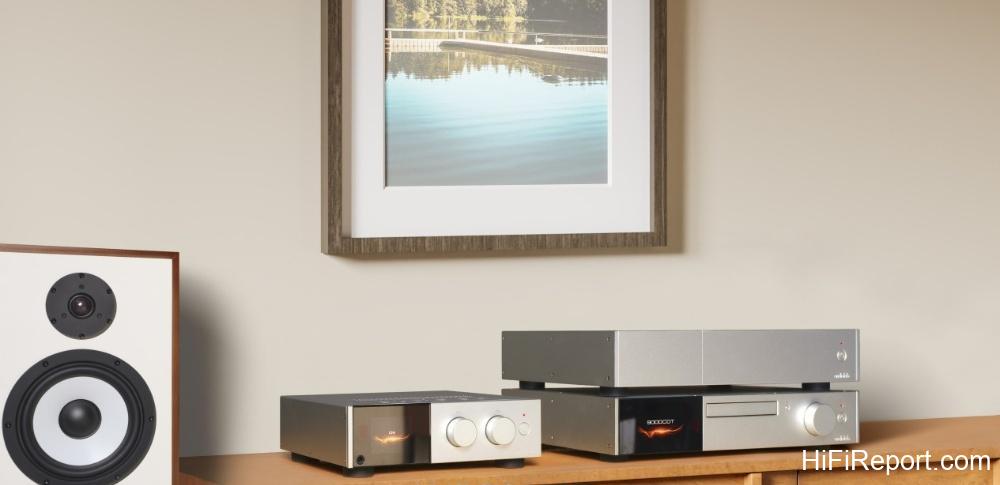
Since Audiolab’s acquisition by the IAG Group, its research and development has entered a period of rapid advancement, marking the dawn of its own flagship 9000 series of audio equipment. This product line includes the 9000CDT CD transport, the 9000A DAC integrated amplifier, and the currently favored 9000N flagship streaming DAC. To further round out the product lineup, the company has this year added the separate 9000Q and 9000P pre- and power amplifiers.
With this, the 9000 series could be considered complete. However, the manufacturer pondered how to add a touch of elegance to this already comprehensive offering, and thus conceived of the revival of their classic M-DAC.
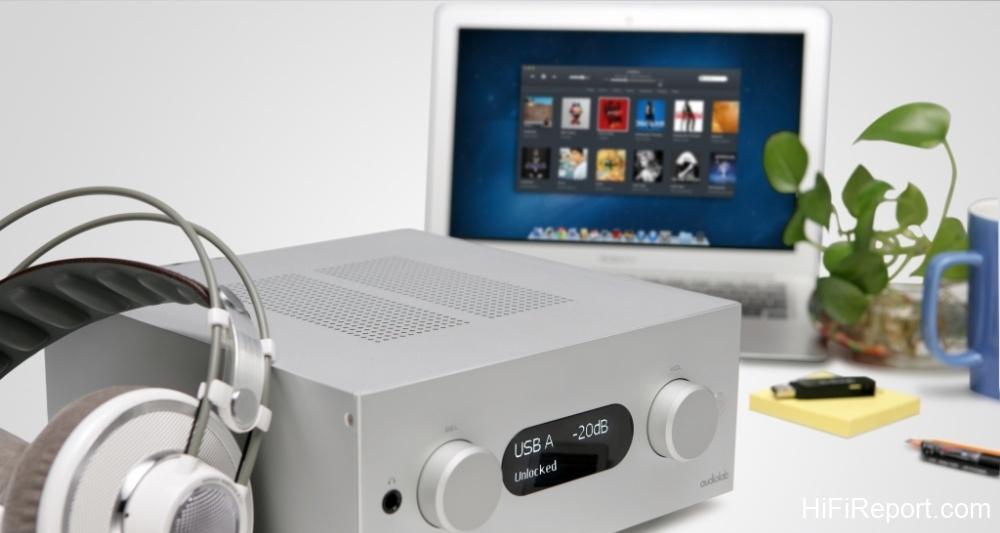
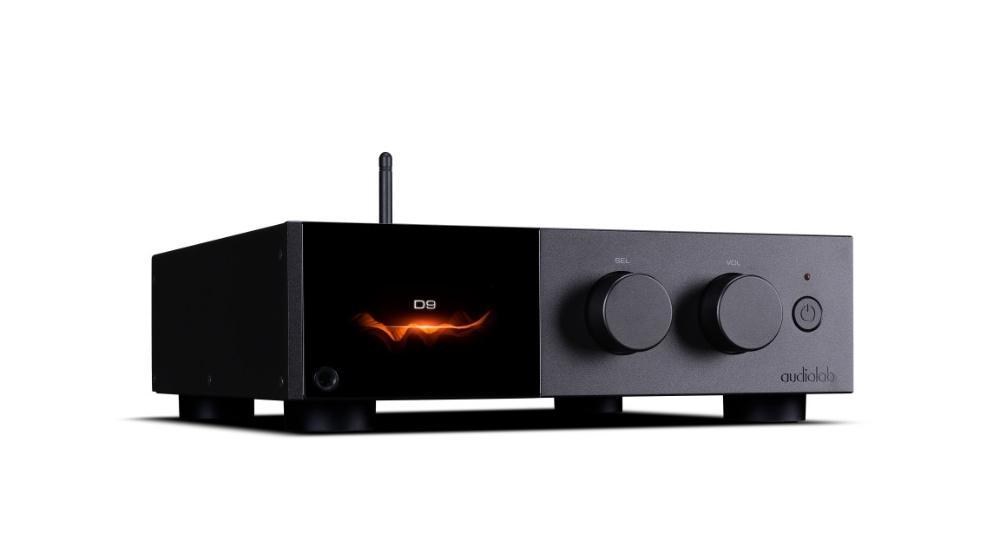
The D9 adopts the classic half-size chassis design of its predecessor, incorporating elements of the 9000 series. The entire unit is crafted from aluminum alloy with a sandblasted matte finish, offering an excellent visual and tactile experience. The front panel features a 2.8-inch IPS LCD color screen, utilizing the same custom GUI as the 9000 series. It not only presents a graphical menu but also displays a colorful animation upon startup, giving it the modern feel of a miniaturized 9000N.
Additionally, a 6.3mm headphone output is located in the lower left corner of the screen, with two rotary knobs on the right controlling the function menu and volume respectively. Operation is highly intuitive, making it easy for first-time users to get acquainted.
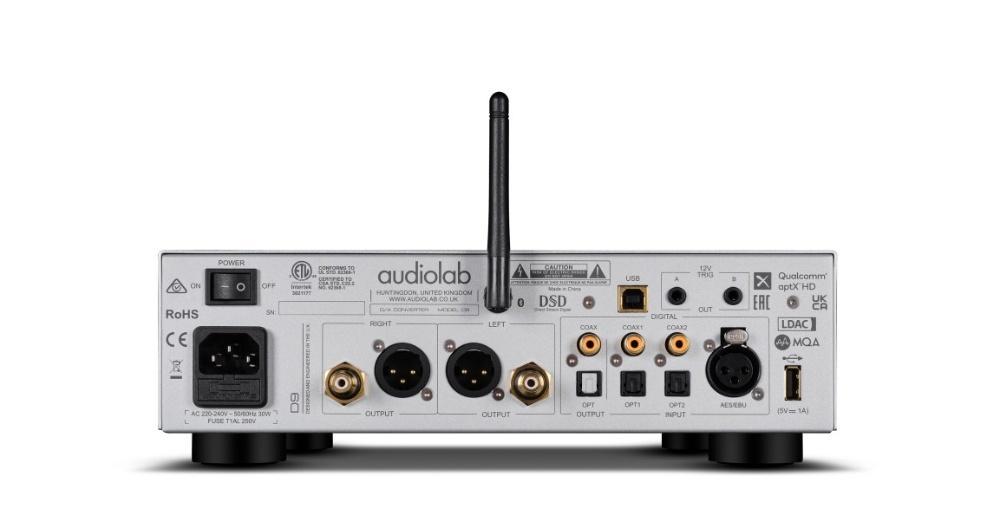
Although the D9 is a straightforward DAC/headphone amplifier, its connectivity options are surprisingly rich. In addition to the primary audiophile-grade USB Type-B port, capable of connecting to PCs, music servers, and NAS devices, it offers two coaxial, two optical, and one AES3/EBU digital input. This allows for seamless integration with streamers, CD transports, and other sources. Furthermore, a USB-A port enables the playback of music files directly from an external HDD.
For wireless convenience, it includes Bluetooth 5.1 with support for aptX HD and LDAC high-resolution codecs, enabling high-quality wireless audio streaming from Android phones.
The unit also provides two digital outputs – coaxial and optical – for expanding digital audio systems. On the analog side, it features a set of single-ended RCA and balanced XLR outputs, allowing connection to an amplifier or active speakers for a minimalist desktop system, making it a compelling choice for users with limited space.
It is important to note that when connecting to an integrated amplifier, the D9’s volume control must be disabled via the menu to prevent potential sonic degradation from dual volume control stages.
The D9’s most significant selling point lies in its circuit design. The manufacturer has commissioned a high-quality toroidal transformer from the renowned British transformer specialist, Noratel, to create a high-efficiency linear power supply. This ensures a pure and stable power source for the decoding circuitry. The unit is equipped with a 32-bit ESS Sabre ES9038 Pro DAC chip.
By utilizing the 8-channel chip for stereo applications, it maximizes signal-to-noise ratio and left-right channel separation. It supports Hi-Res audio decoding up to PCM 768kHz/32bit and DSD512, more than sufficient for current lossless streaming services and high-resolution music file playback.
Audiolab claims to have developed proprietary circuitry for the D9 that fully leverages the advantages of the ESS chip’s HyperStream II architecture, resulting in exceptionally low noise and an expanded dynamic range. The ESS Sabre DAC also incorporates five digital filter options, allowing users to fine-tune the sound signature. The D9 has also earned Roon Tested certification and fully supports MQA decoding, ensuring you can experience MQA content at its highest resolution.
Carrying on the legacy of the M-DAC, the D9 is also equipped with a specially designed current-feedback headphone amplifier circuit. It can deliver up to 600mW of power across an impedance range of 20-600 ohms, effortlessly driving various headphone types, including demanding planar magnetic models. This design also ensures low output impedance and a wide bandwidth, contributing to a spacious and dynamic headphone listening experience.
For the listening tests, I utilized my usual reference setup: the I-O Data Soundgenic music server as the source, paired with the Linear Acoustic LA V120 integrated amplifier driving Focal Diablo Utopia flagship bookshelf speakers. First, I set the D9’s volume control to “Fixed” in the menu to achieve optimal sound quality.
This setting bypasses any volume attenuation, so it is crucial to ensure the integrated amplifier’s volume is initially set to its lowest point and then gradually increased to avoid damaging the speakers. The D9’s sound is remarkably consistent with my impressions of the flagship 9000 series sources, characterized by its delicate resolution and abundant musical detail. The soundstage is expansive and three-dimensional.
When paired with the LA V120’s relaxed and full-bodied sonic character, they complement each other perfectly, adding significant depth to the music.
Upon playing Masaharu Fukuyama’s “Kokoro no Tabi” from the album “Konriku,” I found the D9’s midrange to be smooth and natural, with a high degree of vocal density. Even with the recording’s intimate nature, the D9 presents the vocal presence with a slight recession, consistently offering a sense of depth in the soundstage.
Lip and mouth details are rendered without exaggeration, focusing instead on the rich nuances of vocal timbre, resulting in a comfortable and non-fatiguing listening experience with a warm, gentle intimacy. The vintage 1930 Martin OM-45 acoustic guitar accompanying Fukuyama sounds exceptionally sweet through the D9, with rounded and full-bodied note textures.
Each strum is accompanied by warm, resonant body resonance, giving even simple vocal-and-guitar performances a palpable, three-dimensional musical form.
Next, I played “Wanted” from Hiromi Uehara’s jazz album “Sonicwonderland.” I found the D9’s low-frequency texture to be particularly captivating. The electric bass sounds solid and powerful, with elastic note textures, and the kick drum possesses a full and relaxed “thump.” This demonstrates excellent low-frequency control, free from any muddiness.
The piano notes are rendered with a cohesive and full character, and the tone is highly transparent, allowing you to feel the weight of each falling key condensing into particles in the air. The trumpet in this track is warm and delicate, its presence firmly anchored in the center of the soundstage. Brassiness is rendered with a gentle, non-aggressive character, and the high frequencies are slightly restrained, lacking any harsh sharp edges, always retaining a subtle sweetness.
The D9’s expansive soundstage offers an unparalleled advantage in rendering large-scale classical music with its distinct layering, a significant benefit compared to DACs in its class! For instance, when listening to Mozart’s Violin Concerto No. 3 performed by violinist Christoph Koncz, it feels as if all instruments in the space are given ample room to breathe, allowing the often-overlooked inner orchestral voices to emerge with greater clarity and resolution.
This arrangement of music becomes exceptionally organized yet avoids being overly analytical, retaining excellent musicality and vitality. The violin’s tone is fine and melodious, with a slightly restrained brilliance, which in turn enhances the sweetness and body during higher register playing. The high-resolution midrange also brings the subtle textural nuances of the violin to life with lifelike realism.
Finally, I tested the D9’s headphone amplification capabilities using Focal Stellia closed-back headphones from the same brand. Despite only having a 6.3mm unbalanced output, its driving power is quite impressive, delivering a full-bodied sound quality to the headphones, proving it is far from an afterthought.
Furthermore, with the same DAC source, the sound quality experienced through the headphones gained a notable warmth, and the inherent soundstage advantage made these closed-back headphones sound more open and effortless.
Listening to “Ice Cream” from the live album “Play The Blues” by Wynton Marsalis and Eric Clapton, the D9 was able to create an expansive stage in my mind, with detailed reverberation cues that vividly conveyed the live atmosphere. The opening fanfare of brass instruments presented a majestic sense of power, with a charming, warm metallic sheen. The various instrumental sections no longer sounded flat or static; instead, they exhibited more three-dimensional positioning.
The sense of instrumental presence was neither small nor thin. Eric Clapton’s blues guitar, with its rugged overdrive tone, still retained a satisfyingly meaty note texture. The double bass had a more distinct and substantial form, sounding distinct and full of taut resonance even during rapid plucking passages. This demonstrates that its headphone amplifier, in terms of both driving power and sound quality, performs exceptionally well compared to many products in its class.
In recent years, streaming music has dominated the audio market, with consumers favoring feature-rich streaming products. In the affordable segment, pure DAC products like the Audiolab D9 are increasingly rare. It eschews feature bloat and returns to audiophile principles, focusing solely on mastering the art of “decoding.”
Whether you are a stereo or headphone enthusiast who doesn’t require complex functionalities and simply seeks a great-sounding DAC, the D9 is an exceptional choice at its price point.
Manufacturer Specifications
* **Product Form:** DAC/Headphone Amplifier
* **Digital-to-Analog Conversion:** ES9038 Pro 32-bit DAC
* **Supported Sampling Frequencies:** Up to PCM 768kHz / 32bit, DSD512
* **Wireless Transmission:** Bluetooth 5.1 (aptX / aptX HD / LDAC)
* **Input Terminals:** Optical x2, Coaxial x2, USB-B x1, USB HDD (USB A) x1, AES3/EBU x1
* **Output Terminals:** RCA x1, XLR x1, Headphone x1, 12V Trigger x2, Optical x1, Coaxial x1
* **Frequency Response:** 20Hz-20kHz, +/-0.1dB
* **Total Harmonic Distortion:** < 0.001% (1KHz @ 0Dbfs) * **Signal-to-Noise Ratio:** > 118dB (RCA), > 123dB (XLR Direct)
* **Dimensions:** 315 x 88.3 x 277mm
* **Weight:** 4.2kg