
Audiolab 9000N Streamer Review
Audiolab has long been synonymous with delivering excellent sound at an accessible price point. Their reputation for high value-for-money has been deeply ingrained in the minds of many audio enthusiasts for years. However, this doesn’t mean Audiolab is content with just maintaining that image. Starting in 2022, Audiolab launched the flagship 9000 Series, stepping into the high-end arena to offer consumers a more premium experience.
Initially, the 9000 Series consisted of the 9000A integrated amplifier and the 9000CDT CD transport. Now, a new force joins the lineup: the protagonist of this review – the 9000N wireless streaming player.
Lumin System
Audiolab already had two streaming players in its portfolio: the entry-level 6000N Play in the 6000 Series and the mid-range 7000N Play in the 7000 Series. So, why isn’t the new 9000N called 9000N Play? The reason is that both the 6000N Play and 7000N Play utilize the DTS Play-Fi streaming system, hence the “Play” designation in their names. The 9000N, however, forgoes Play-Fi in favor of the highly regarded Lumin system, thus omitting “Play” from its model name.
What are the differences between using Play-Fi and Lumin systems? There are two main distinctions. First, the user interface differs.
The 6000N Play and 7000N Play, equipped with Play-Fi, are controlled via the Play-Fi app. The 9000N, with the Lumin system, uses the Lumin app.
The Lumin app is renowned for its beautiful interface, intuitive operation, and system stability. The adoption of the Lumin system in the 9000N should provide a significantly enhanced user experience.
Secondly, the support for high-resolution audio varies.
While Play-Fi supports high-resolution playback, it is limited to a maximum of 24bit/192kHz. Lumin, on the other hand, is a system designed specifically for high-fidelity audio reproduction, offering comprehensive support for high-resolution formats. This allows the 9000N to effortlessly handle PCM up to 768kHz or DSD512, and also fully hardware-decode MQA.
In simple terms, the 6000N Play and 7000N Play cater to the needs of general listeners, while the 9000N is an audiophile-grade device.
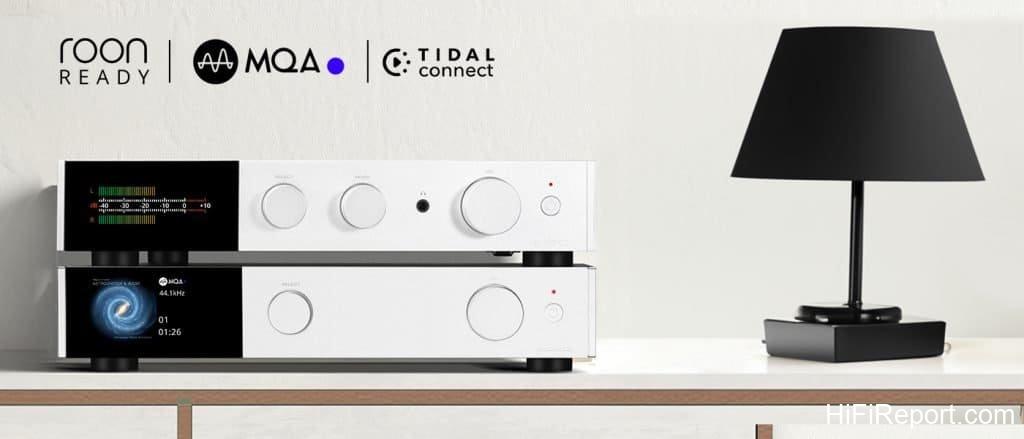
Through the Lumin system, the 9000N provides extensive support for various streaming technologies, including DLNA, AirPlay 2, Roon Ready, Tidal Connect, Spotify Connect, and more. It also supports streaming services like Tidal and Qobuz, as well as TuneIn internet radio. Through Roon, users can even access KKBox, a service with a vast library of Mandarin music, making its functionality incredibly comprehensive.
ESS ES9038PRO DAC
While the Lumin system is used, it’s important to note that this applies only to the streaming functionality. In terms of hardware, the 9000N retains Audiolab’s signature robust design.
The 9000N is powered by a quad-core Arm Cortex-A53 1.8 GHz processor, providing ample processing speed and power to ensure a smooth and responsive user experience.
For digital-to-analog conversion, the 9000N employs the ESS flagship ES9038PRO DAC chip, a component also found in many high-end devices. Paired with a meticulously designed circuit, it fully leverages the Sabre DAC chip’s HyperStream II architecture and Time Domain Jitter Eliminator technology, achieving exceptionally high dynamic range and ultra-low distortion.
Power is supplied by an oversized toroidal transformer, custom-made by Noratel, providing abundant and stable power.
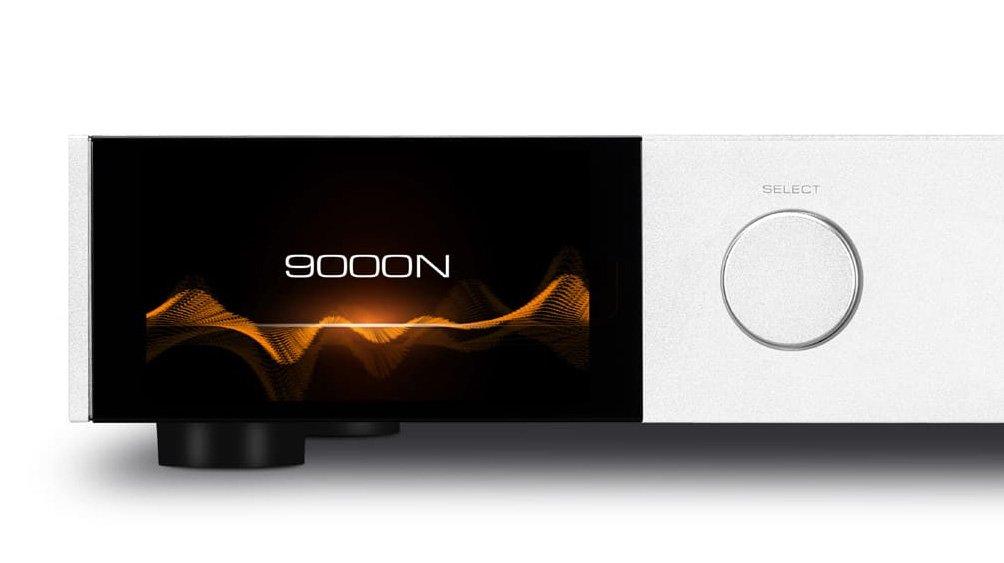
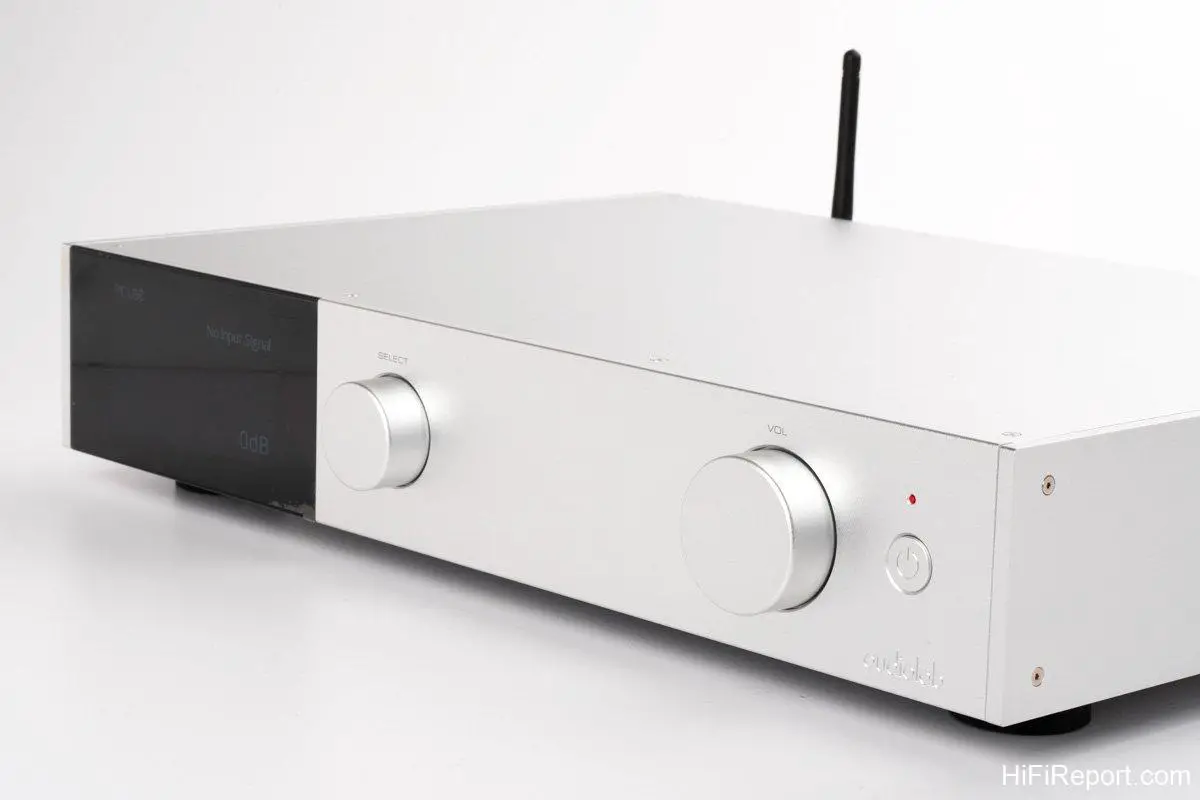
Like other models in the 9000 Series, the 9000N features a color display screen on its front panel, measuring 4.3 inches. In addition to displaying audio source, album art, track information, format, sample rate, volume, and other details during playback, users can also configure this screen to function as a VU meter, displaying real-time decibel levels for the left and right channels, with a choice between analog-style needle meters or pulsating digital meters.
The two knobs on the front panel serve multiple functions. The larger knob on the right controls the volume. The 9000N can control output volume, facilitating direct connection to a power amplifier. It can also be set to a specific startup volume to prevent sudden loud bursts that could damage equipment. Of course, volume control can also be disabled entirely.
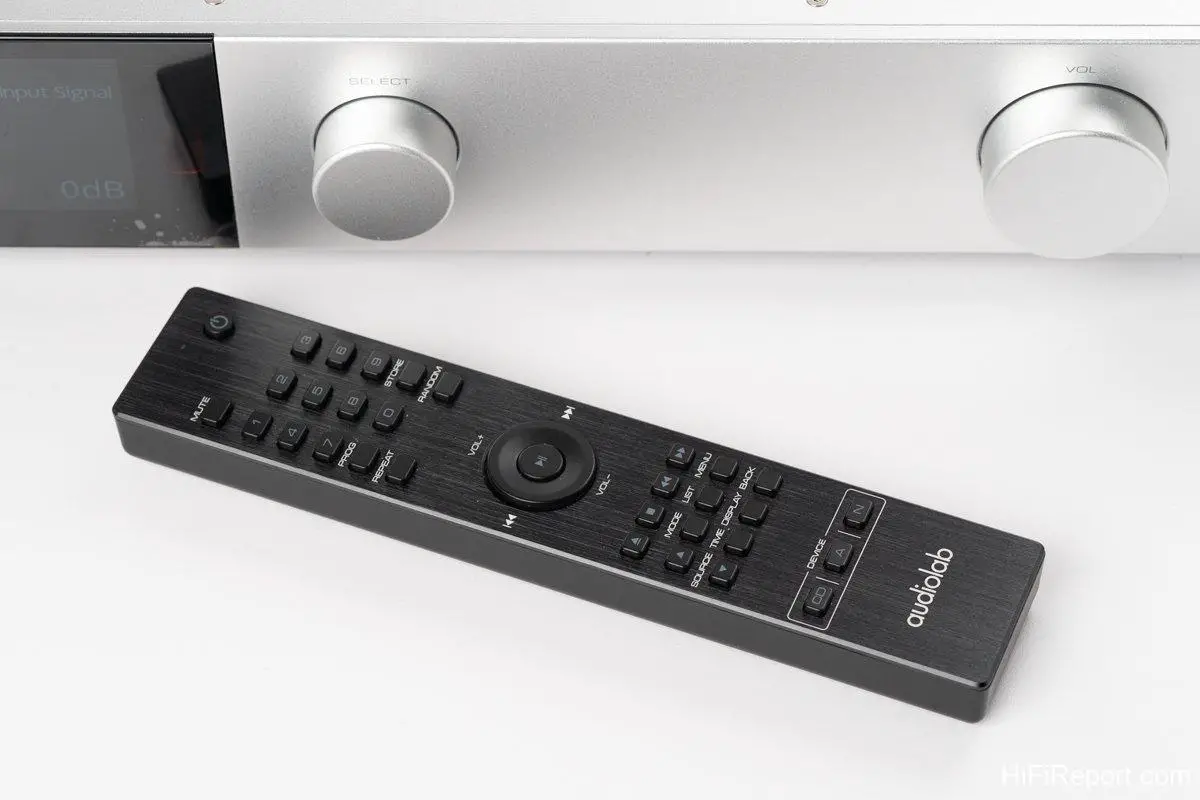
The smaller knob on the left has two functions: source selection and menu navigation for hardware settings.
In addition to streaming playback, the 9000N also functions as a USB DAC and can directly play music from USB storage devices, selectable via this knob.
Digital Filter Modes
Another feature directly impacting sound quality is the provision of digital filter modes. The 9000N offers five digital filter modes: Linear Phase – Fast Roll-Off, Linear Phase – Slow Roll-Off, Minimum Phase – Fast Roll-Off, Minimum Phase – Slow Roll-Off, and a hybrid mode combining Linear Phase and Minimum Phase. This allows users to tailor the sound to their personal preferences or system synergy, increasing flexibility and enjoyment.
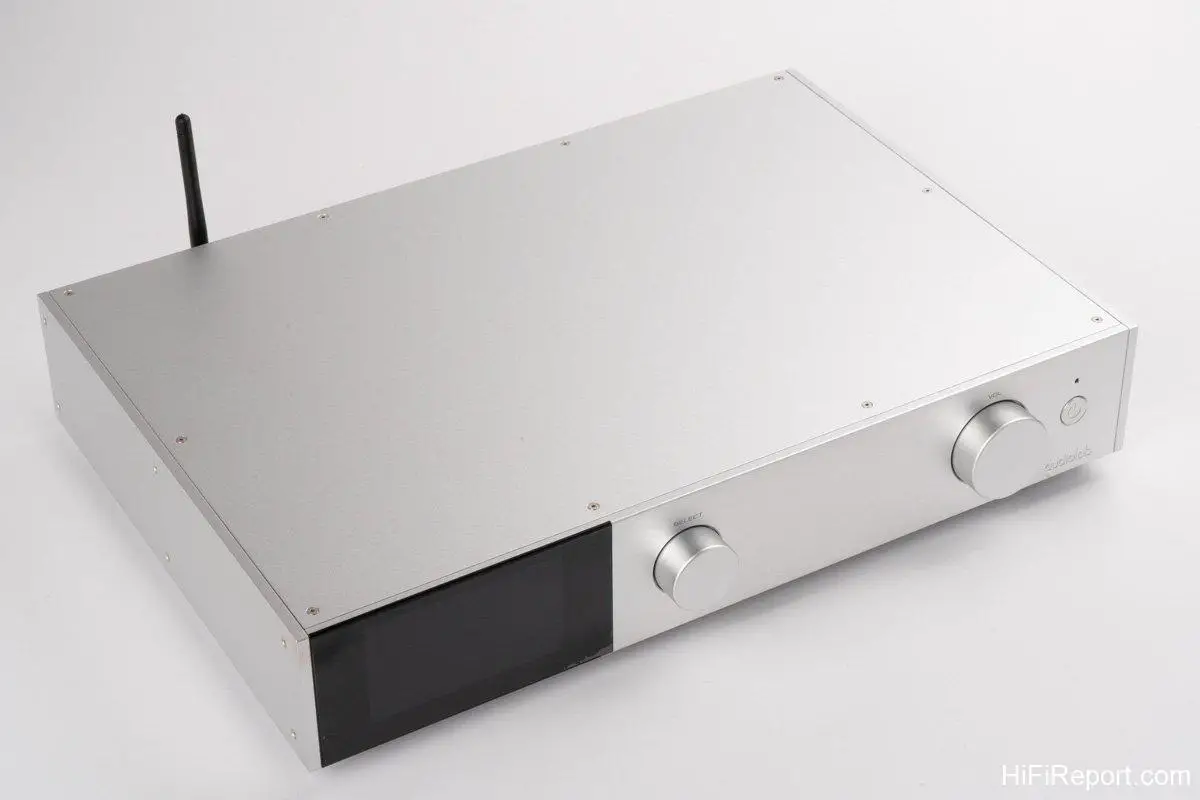
For remote control and app functionality, users can download the Audiolab 9000N app, specifically designed for the 9000N by Lumin. Its interface and operation are identical to the Lumin app, with slight differences in appearance and hardware settings. It is recommended to download the Audiolab 9000N app directly, as Wi-Fi setup relies on it, a feature not found in the standard Lumin app.
Wi-Fi setup is relatively straightforward. First, connect the 9000N via Ethernet cable, then use the app to enter settings, select your Wi-Fi network SSID, and enter the password.
Furthermore, the 9000N also includes a very refined remote control for basic playback operations, adding to its convenience.
Sound Performance
The listening evaluation took place in my home, using the following equipment: Holo Audio Serene preamplifier, NuPrime EVO STA power amplifier, Aurum Cantus Grand Harmony speakers, and Harmonic Technology Para-I balanced interconnects. Music was sourced from an Intel NUC Roon Core. Reference sources included an Auralic Aries G1 streaming transport and a Holo Audio Spring 3 DAC.
During the listening sessions, since my Aries G1 is normally connected via Wi-Fi, I also used Wi-Fi for the 9000N to eliminate network cable variables.
In fact, provided the Wi-Fi router is sufficiently capable, Wi-Fi connection stability is comparable to wired connections, with subtle sonic differences. Neither is necessarily definitively better, and users can choose based on preference.
I spent a considerable amount of time with the 9000N, frequently switching between it and my reference sources, enjoying the nuanced listening experiences each offered.
Fundamentally, the 9000N’s sound signature is characterized by comfort, musicality, and ease of listening. Its tonality leans slightly towards warmth, with excellent body and weight, and a surprisingly expansive soundstage, making it immediately appealing. However, it doesn’t sacrifice accuracy or neutrality.
Perhaps in terms of ultimate transparency or ethereal airiness, the 9000N doesn’t quite match the two-piece reference setup. However, it is still lively and agile, with excellent realism. In terms of smoothness and musicality, the 9000N even has a slight edge, making it a case of different strengths between the two.
Warm Sound Signature
First, I played the audiophile classic “Jazz at the Pawnshop.” From the clinking of glasses at the beginning of the first track and the subtle background chatter, it’s clear this is a live recording from a jazz club – the famous “Pawnshop” jazz club in Stockholm, Sweden.
Listening through the 9000N, you can feel the lively, convivial atmosphere of the venue. When the music starts, the timbre is quite warm, definitely not thin or airy. Especially the vibraphone, the resonant tubes beneath the keys are exceptionally rich, with long, lingering tones and substantial body. The clarinet avoids any sharpness or dryness, possessing excellent body and smoothness, making it very comfortable to listen to.
Furthermore, I noticed that the overall frequency balance of all instruments is excellent, without any particular emphasis. The sheen is also appropriately judged. Essentially, the 9000N gets everything just right. The soundstage is on the more focused side, and coupled with the substantial image size, it feels like the soundstage is filled with sound, creating a very satisfying experience.
Clear Soundstage
Next, I listened to Canadian pianist Stewart Goodyear performing Tchaikovsky’s Piano Concerto No. 1. Right from the opening chords, it’s evident the 9000N has the poise of a high-end source.
The soundstage isn’t of the extremely wide and open type, but rather more focused and centered, which makes the sound fuller and more powerful.
The most impressive aspect of the 9000N is its ability to delineate the soundstage with remarkable clarity. I could easily hear, even visualize, a distinct soundstage in front of me, with clear boundaries in width and height, and excellent depth. It’s a beautiful soundstage.
Moreover, during the opening orchestral tutti, the 9000N reproduced the music without any muddiness or confusion. All sections blended together yet remained clearly separated, their relationships distinct, with clear layering in the foreground, middle ground, and background. This resulted in a clean and organized musical picture.
Only a high-end source can reproduce such a clear musical picture. Listening to the RR label’s “Tutti!” orchestral collection further reinforced this impression of clarity and well-defined structure, with a palpable sense of layering.
For example, in track 8, Bruckner’s Symphony No. 9 “Scherzo,” the music begins with a few instruments playing softly. As the rhythmic pulse develops, instruments gradually join in, building layers and increasing volume. Each new section entering could be heard clearly originating from a specific location, sometimes on the left, sometimes on the right, with clear distinctions in depth. The images themselves were also clearly defined. This demonstrates the 9000N’s excellent localization and separation, and its sonic accuracy.
The 9000N’s transient response isn’t lightning fast, but this piece also highlighted its smooth dynamic delivery. The quietest passages were clear, the loudest passages effortless, and the dynamic gradations from soft to loud were richly detailed – all hallmarks of high-end equipment.
Vocals and Instruments
With the 9000N’s excellent body and image solidity, it’s exceptionally well-suited for vocals and solo instruments. Its sound possesses a pleasing softness, with a warmer texture, unexaggerated highs, and slightly emphasized midrange. This is particularly noticeable with vocals.
Listening to CoCo Lee’s signature song “Yesterday Once More,” a song I used to love and always requested at karaoke (for the female companions, of course), her unfortunate passing brought this song back to mind. Finding it on Tidal, I realized that this older recording is actually quite thin, with a slender vocal line. On some highly resolving systems, it can sound less than pleasant, especially when she sings in the higher register, sometimes bordering on harshness. This issue is less pronounced on the 9000N. Its good body, moderate warmth, and just-right smoothness, while still showcasing CoCo Lee’s vocal technique, powerful American-style delivery, and intense emotion, maintain a comfortable listening experience.
Similarly, “Crying Before Sleep,” her duet with Kelly Chen, another popular love song from that era, sounded equally enjoyable and listenable through the 9000N’s sound, with excellent body across all frequencies.
Conclusion
With so many streaming players on the market, how do you choose? The 9000N might just be the answer.
It comes from Audiolab, a major audio manufacturer with solid circuit design expertise, refined manufacturing capabilities, and ample after-sales support, ensuring reliable quality. Its clean, square design, meticulous craftsmanship, and full-color screen capable of displaying album art or VU meters allow it to seamlessly integrate into various interior styles, enhancing the ambiance of your home. It offers a comprehensive suite of features, supporting all major streaming services, and incorporating both Roon Ready and the Lumin system, guaranteeing operational convenience. Sonically, it is musical, engaging, and capable of faithfully rendering various genres of music. The 9000N is truly a great companion for music listening.
Specifications
* Type: Wireless Streaming Player
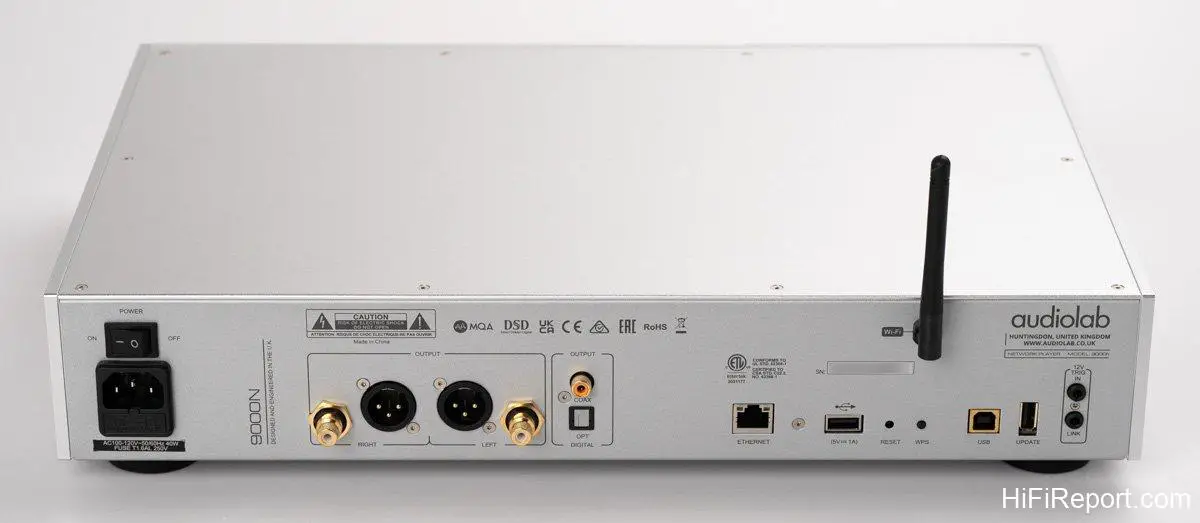
* Outputs: Analog RCA, Analog XLR, Digital Coaxial, Digital Optical
* Inputs: USB A, USB B
* THD: <0.001% * Signal-to-Noise Ratio: >120 dB / XLR
* Frequency Response: 20Hz – 20kHz / -0.01 dB
* Dimensions: 444 × 89 × 330 mm (W×H×D)
* Weight: 6.2 kg