
Auralic Altair G1 Streaming DAC Review
While I believe this article might be somewhat of an embellishment, I still feel compelled to say a few words.
The Auralic Altair G1 is arguably the best streaming player in its price range on the market today.
In terms of functionality, performance, design, practicality, and operation, it stands out as the top contender.
My journey with Auralic began back in early 2018.
After experiencing the Vega G2 and Aries G2, I asked the distributor to bring in the Aries Mini for me.
While the Aries G2 was excellent, it was beyond my budget. To fully realize the Aries G2’s potential, it needed to be paired with the Vega G2 using Auralic’s proprietary Lightning Link connection, which represented a significant investment.
I already owned a DAC and what I needed was a digital transport. This would allow me to bypass the computer, the weakest link in my system, and enhance the digital streaming playback quality at home.
The Aries Mini was, and still is, Auralic’s most cost-effective product. After comparisons, I found the Aries Mini to be the champion in its price category.
The Auralic Altair G1 is an all-in-one device that serves multiple roles as a streamer and DAC.
Subsequently, I wrote several reports and reviews on Auralic equipment.
However, among the many Auralic devices I’ve evaluated, one slipped through the cracks – the original Altair. I was aware of it but hadn’t had the chance to test it.
The Altair is a DAC with streaming capabilities, essentially combining the Aries and Vega into a single unit. It features wired, Wi-Fi, and Bluetooth connectivity, and incorporates Auralic’s acclaimed DAC with a femto-second clock.
Last year, a friend was looking for a DAC with streaming functionality and asked for my recommendations.
I listed a few options within his budget, and after auditioning them, the Altair was his clear choice.
Of course, my friend purchased the original Altair. The unit I’m reviewing now is the new Altair G1, released this year as part of Auralic’s comprehensive product refresh. It’s positioned to appeal to budget-conscious, pragmatic users.
So, if you fit this profile and appreciate good music, the Auralic Altair G1 is definitely worth your attention.
iPhone-Grade Color Display
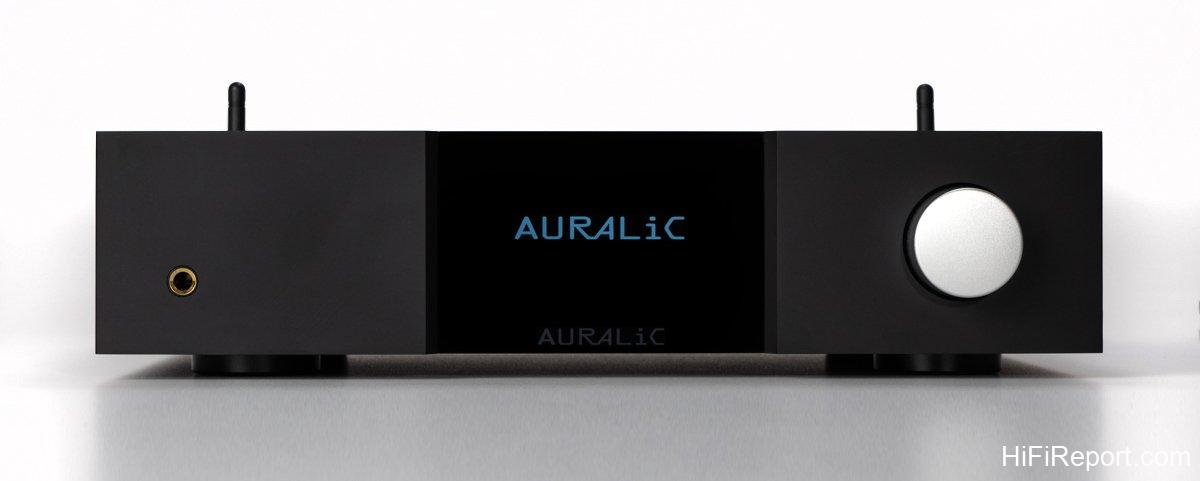
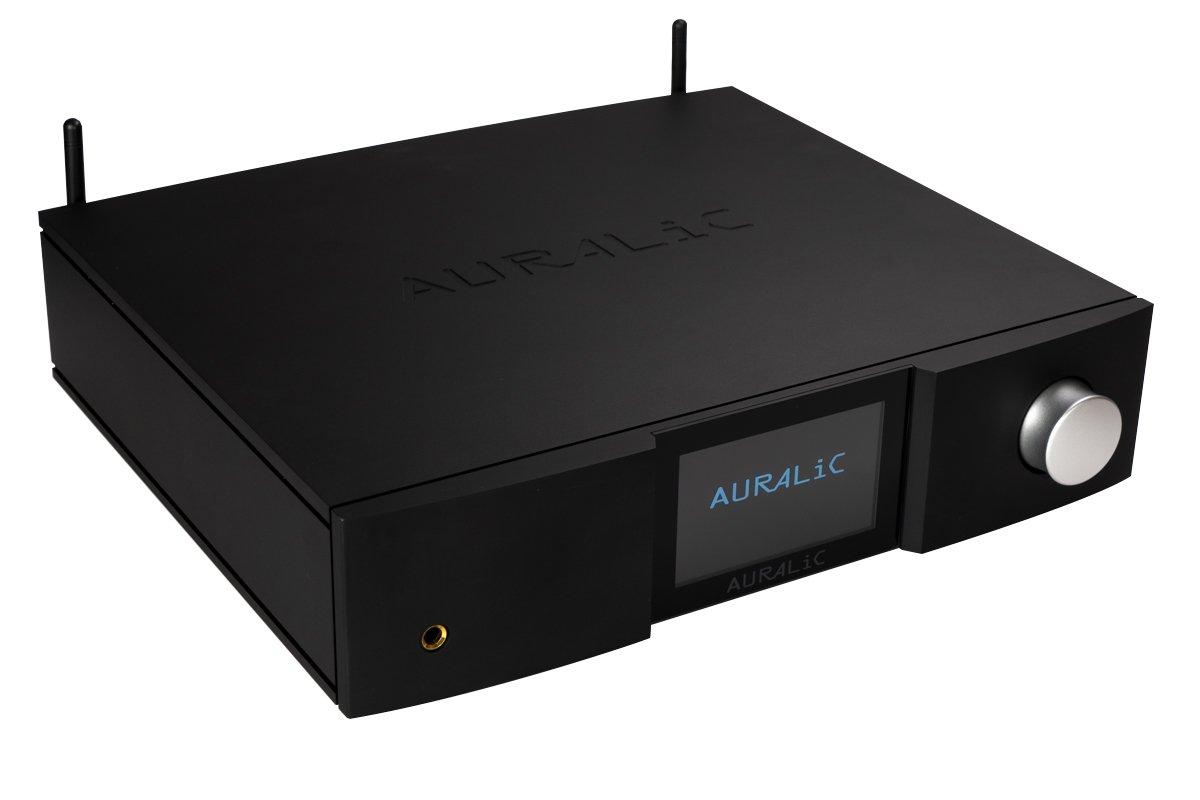
Auralic’s current lineup shares a consistent aesthetic: a robust aluminum alloy chassis with a matte black finish, exuding understated elegance.
The higher-end G2 series (now G2.1) features knobs that are also black, while the G1 series differentiates itself with silver knobs.
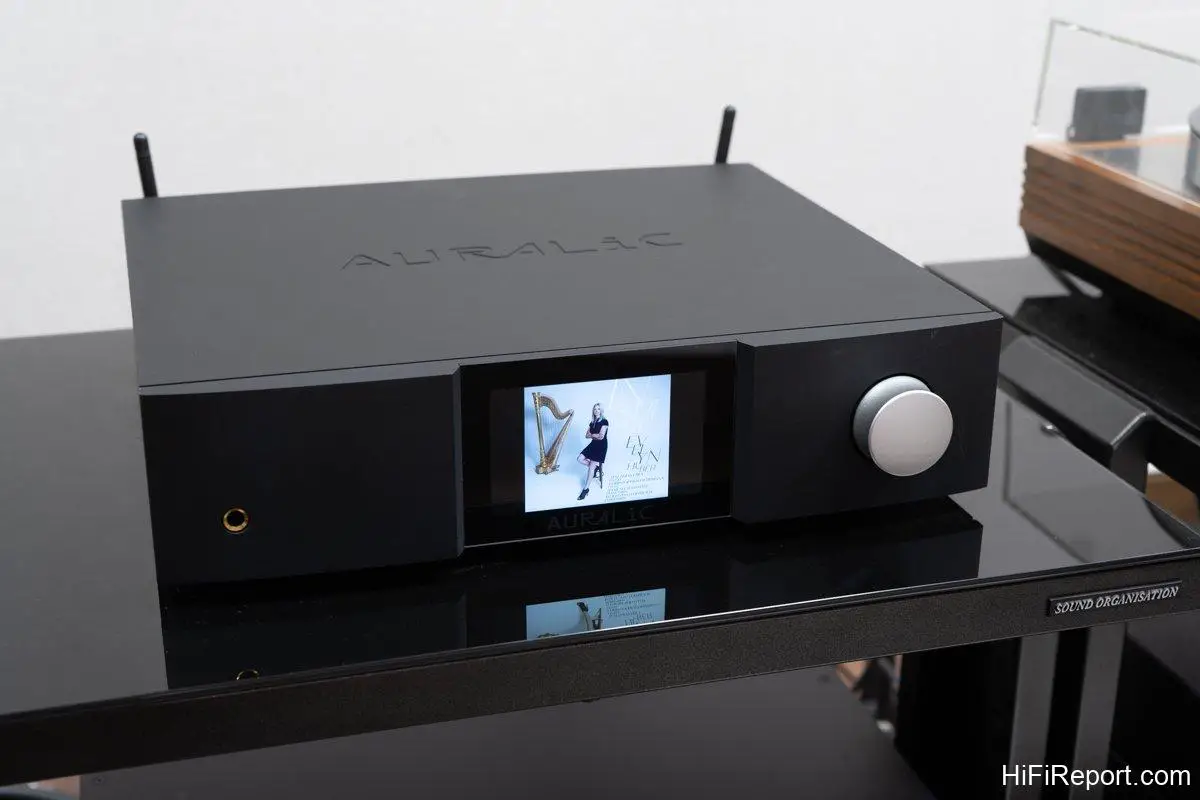
Auralic devices are most captivating for their 4-inch front panel display, boasting a resolution of 300ppi – practically on par with an iPhone screen.
Not only within the Altair G1’s price bracket, but across the entire spectrum of streaming devices, perhaps only the Naim Uniti series can rival its display quality. It’s hard to find another competitor that matches the Altair G1’s screen.
Auralic employs a minimalist chassis design across its product range, enhancing brand recognition.
The 4-inch display, paired with the silver-white tri-phase knob, offers a clean and simple interface.
The icon-assisted menu provides intuitive operation.
Sub-menus feature small text, which can be challenging to read. It is recommended to use the App for comprehensive control.
The App supports full feature settings.
Album display offers two modes: classic (left), showing more playback information, and album art mode (right), displaying only the cover.
Only when seen in person can the beauty of this 300ppi resolution screen be truly appreciated.
Extensive Connectivity, Including AES/EBU
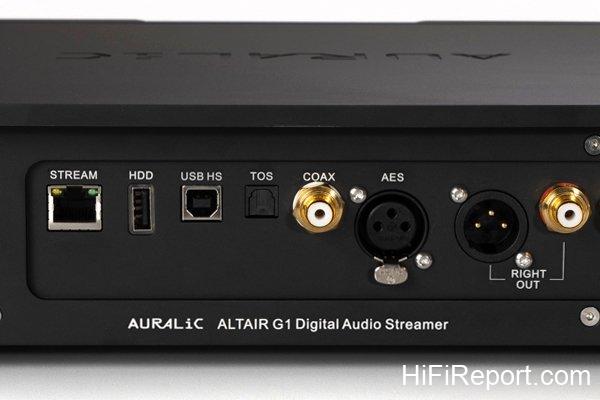
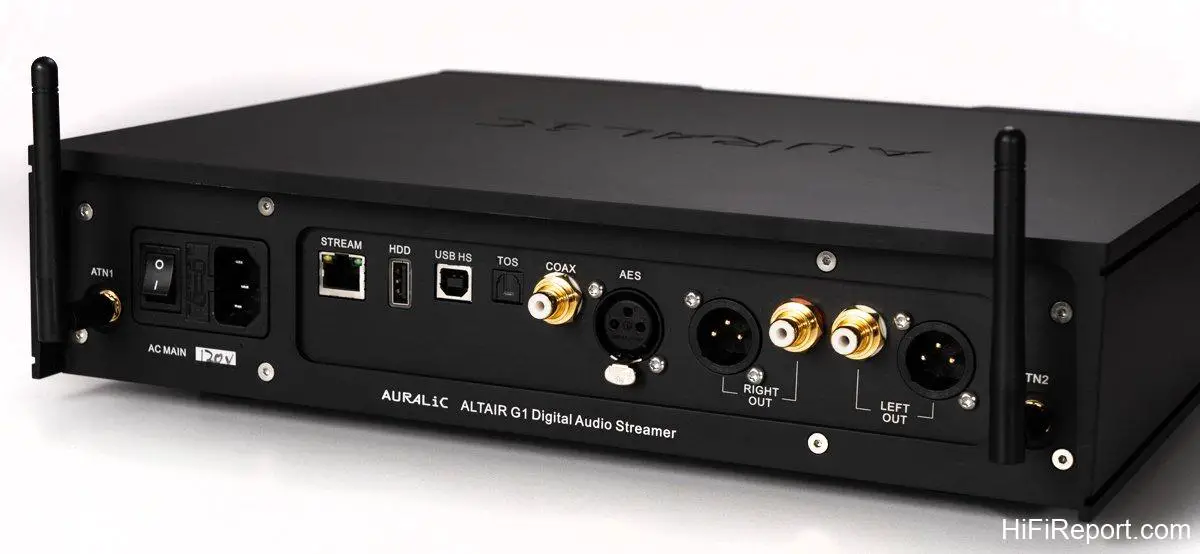
The Altair G1’s impressive array of inputs and outputs is a major highlight.
How extensive? Consider this: it includes AES/EBU input, coaxial, optical, USB Type-B for streaming, USB Type-A for external hard drives, RJ45 network connection, and tri-band Wi-Fi.
Is that comprehensive enough? For outputs, in addition to RCA and XLR pairs, there’s a 6.3mm headphone output on the front panel. Whether you want to connect to a stereo system or listen with headphones, the Altair G1 has you covered.
The Altair G1 is Auralic’s affordable powerhouse, equipped with a full suite of features.
Notably, it includes AES/EBU digital input and both single-ended and balanced analog outputs.
Tesla G2 Platform with 1GB Buffer Memory
At its digital processing core, the Altair G1 utilizes Auralic’s proprietary Tesla G2 platform. Its processor offers a 50% performance increase compared to the Tesla G1 platform in my Aries Mini.
Memory capacity has also doubled, making the new Altair G1 even more capable than its predecessor.
Furthermore, Auralic has incorporated 1GB of cache memory into the Tesla G2 digital processing platform. This effectively reduces network noise and contributes to improved sound quality.
Incoming music data is first stored in the buffer memory. The Tesla G2 platform then performs multiple data comparisons to ensure the correct timing of the digital data before sending it to the DAC for decoding. This process significantly minimizes jitter.
Dual 72 Femtosecond Clocks
For precise timing, Auralic has integrated dual 72 femtosecond clocks into the Altair G1. These clocks are powered by a dedicated low-noise 3uV power supply to minimize phase noise and meticulously control temperature for optimal accuracy.
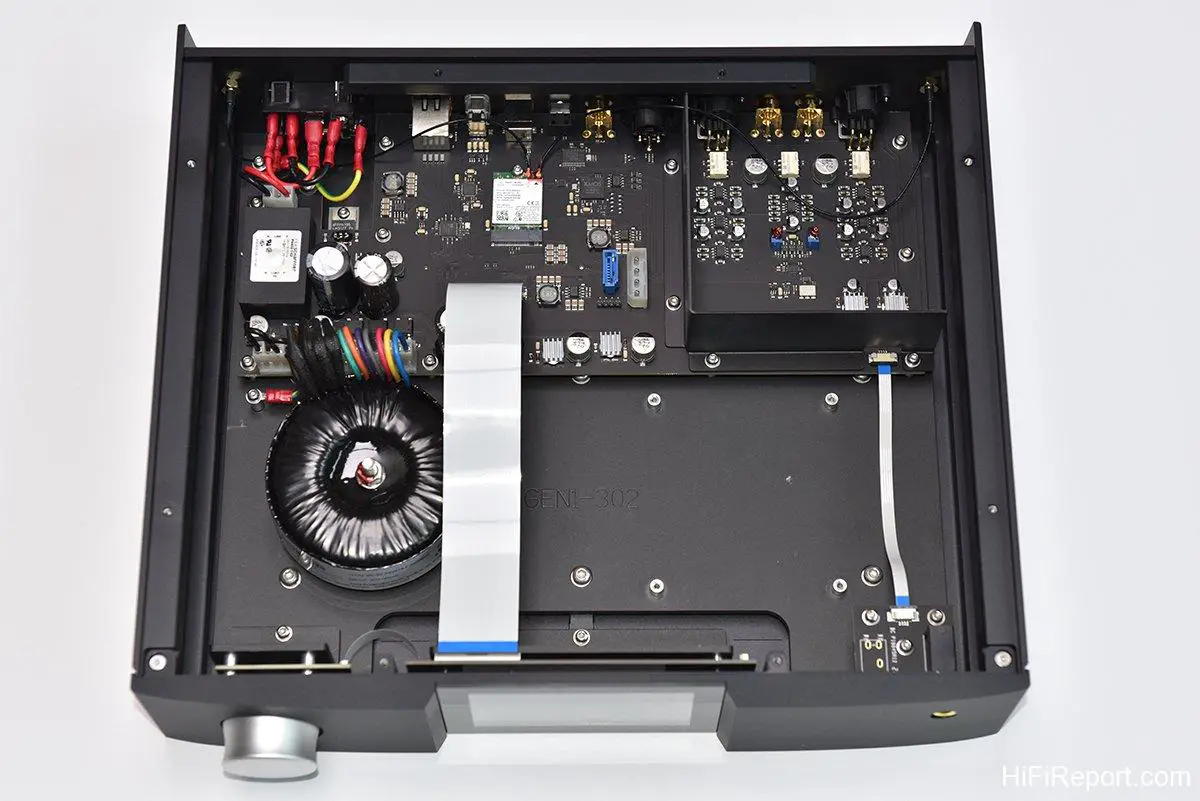
The exposed circuitry visible upon removing the bottom plate is only a portion of the total design, with more circuitry concealed beneath.
Power, digital, and analog circuits are fundamentally separated, with the analog circuitry further shielded by metal partitions.
ActiveUSB and Purer-Power Technology for Noise Isolation
Regarding traditional USB streaming from computers, Auralic’s ActiveUSB technology has been advanced to its second generation.
This technology emphasizes asynchronous USB transmission and employs re-clocking for enhanced sonic precision and reduced jitter.
ActiveUSB also isolates the USB power supply, utilizing the Altair G1’s own Purer-Power linear power supply instead.
Therefore, when connecting to a computer, you don’t need to worry about noisy power signals from the computer contaminating the audio.
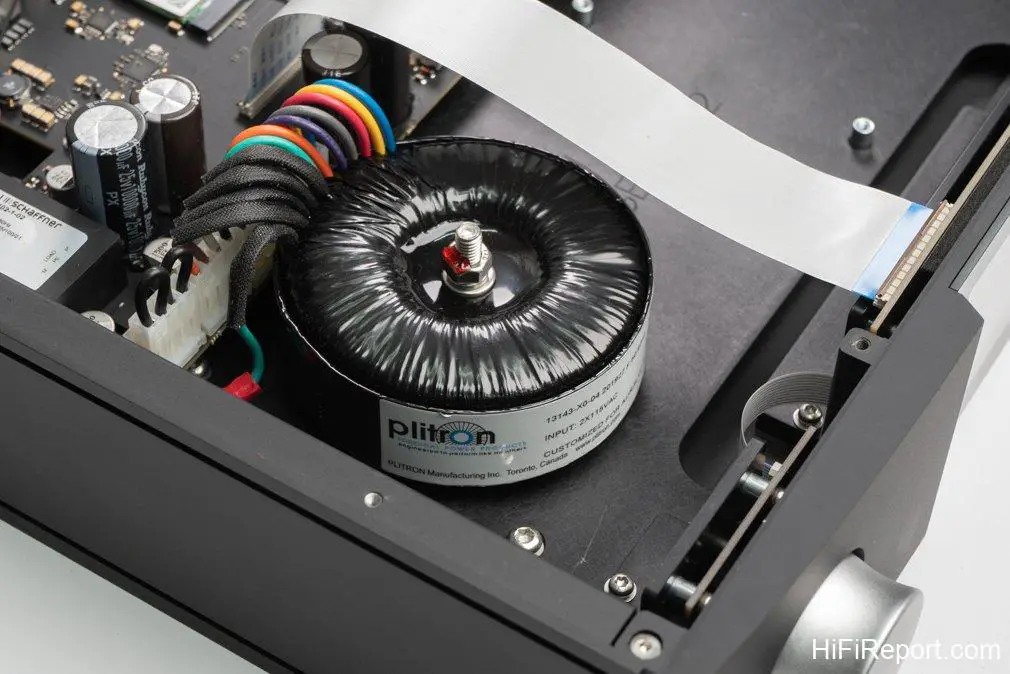
The Altair G1 incorporates Auralic’s Purer-Power technology, with a built-in linear power supply module that effectively reduces DC noise by up to 90dB. The custom Plitron toroidal transformer features specialized windings for lower vibration and extremely low noise leakage, measuring less than 1uV.
With reduced noise, musical details become richer and clearer.
The power supply section utilizes a Plitron toroidal transformer and Rubicon filtering capacitors.
Comprehensive Lightning DS Control Platform
Two other key highlights are worth mentioning. The first is Auralic’s proprietary Lightning DS control platform. After downloading the Lightning DS App from the App Store, you gain full control over Auralic devices. If you own multiple Auralic components, you can manage, adjust, and configure them all from a single tablet or smartphone.
Lightning DS can connect to internet radio, local music servers, and external streaming services like Tidal and Qobuz.
Selecting tracks, playback, volume control, and playlist creation can all be managed within the App.
The settings menu offers a wealth of customizable options for further exploration.
External CD Drive for CD Playback
The second intriguing feature is the USB Type-A input on the Altair G1’s rear panel. It not only supports external storage devices but also external USB CD-ROM drives.
Thanks to the Altair G1’s built-in Tesla processing platform and 1GB of cache memory acting as a buffer for music data, jitter during CD playback is significantly reduced.
This new functionality is genuinely remarkable.
With affordable CD players becoming increasingly scarce, Auralic offers this alternative solution, allowing users to achieve low-jitter CD playback with minimal investment – a boon for audiophiles.
Extensive digital inputs include Ethernet, USB Type-A and B, optical, coaxial, and AES/EBU.
Notably, the USB Type-A port can connect not only to storage devices but also to USB CD drives, transforming them into CD transports – a rare feature.
Clean, Transparent, Warm, Smooth, and Natural Sound
What about the Altair G1’s sound? It’s clean but not sterile; transparent yet not devoid of character.
It possesses a subtle warmth in its inherently neutral sonic signature, adding to the musicality.
The texture is smooth, neither dry nor cold, and free from harshness.
No frequency band is artificially emphasized. The well-controlled and appropriately weighted bass allows music to maintain its pace and energy.
Detail retrieval is abundant without sounding analytical or harsh.
The soundstage is open, natural, with moderate width and depth, avoiding excessive exaggeration.
This is a component that reveals its exceptional value the more you listen.
Soprano Vocals: Rounded, Sweet, Focused, and Full
Listening to Patricia Petibon’s new album “L’amour, la mort, la mer,” the opening track “Rencontre” by Jean Cras begins with ocean wave sound effects. The waves crashing against the shore create a wide and deep soundstage, accompanied by flute and wind sounds, creating a vivid sonic landscape.
As the piano accompaniment begins, vocals enter, joined by harmonica and violin.

The instrumental textures are warm and full-bodied, characteristic of Sony recordings.
Petibon’s vocals are rounded and sweet, with a focused and full-bodied presence. Her vocal inflections and breaths are clearly conveyed.
At the end, Petibon’s voice fades to a long, soft note with several subtle shifts, culminating in a sigh. These nuances add to the song’s evocative beauty.
Listening to Fauré’s “Au bord de l’eau,” a simple song with profound beauty, Petibon’s rendition makes the fragrance of flowers and plants described in the lyrics seem even sweeter and fresher.
The Altair G1’s resolution provides ample musical information, and its excellent sonic quality imbues vocals with humanity.
Transparency and Clarity Enhance Chamber Music
The Altair G1’s transparency and clarity lend chamber music an exceptionally refined and elegant quality.
Take, for example, the Beaux Arts Trio’s performance of Ravel’s Piano Trio. In the first movement’s opening, the piano and violin respond to each other, presenting the main theme. The piano’s left-hand bass chords create a persistent rhythmic pattern, followed by the violin and cello reintroducing the theme.
The transparency of the presentation further highlights the beauty of Ravel’s masterpiece.
In the third movement, Passacaille, a slow, ancient melody is played in a pentatonic scale. The piano resonates in the lower register, while the cello and violin gracefully present the theme in succession.
Listening to Ravel’s exploration of harmonic variations and dynamic nuances within this slow, gentle dance is captivating. The movement’s climax occurs in the middle section, where the piano, with powerful force, moves between low and high registers in both hands, creating dramatic contrast.
The Altair G1 truly shines with piano reproduction – clean and clear, yet not dry or harsh.
Its transparency allows the individual voices of the cello and violin to be distinct, while their harmonies remain beautiful.
The movement concludes with the piano leading the music into a quiet fade amidst the cello’s low-register musings – simply breathtaking.
Orchestral Works: Clear Layers and Deep Soundstage
Due to these sonic characteristics, the Altair G1 also excels at reproducing the layered beauty of large-scale orchestral music.
Consider Michael Tilson Thomas conducting the San Francisco Symphony in Mahler’s Symphony No. 5. The first movement is a funeral march, beginning with a trumpet fanfare. The march proceeds in 2/2 time, accompanied by drum and horn, with a measured yet somber pace.
Through the Altair G1, the layers of the orchestra are clearly defined, and the soundstage is deep. When the brass section swells, it sounds glorious, like the rising sun, contrasting with the preceding mournful mood while simultaneously intensifying the melancholy.
The second movement is tempestuous and intense. The music begins in the low registers, then the violin enters with commanding presence, escalating the tension.
The second theme shifts the mood, slowing the tempo, and the cello brings back the funeral march theme.
Emotions build up, culminating in a forceful passage where the opening low-register motif returns.
These musical shifts and transitions are complex and nuanced. The Altair G1, at its price point of approximately $2325 USD, effortlessly conveys these subtleties, which is truly remarkable.
Pop Music: Energetic, Yet Not Harsh
Playing pop music, the Altair G1’s bright and agile character brings energy to the music.
For instance, in Sting’s “Fields of Gold,” the rim shots are crisp and clean. The steady rhythm provides a solid foundation for the song.
The Altair G1 also imparts a subtle warmth to Sting’s vocals, with a smooth texture that is easy on the ears.
The song incorporates harmonica, guitar, and distinctive small bagpipes, evoking a rural, pastoral atmosphere.
In “Heavy Cloud No Rain,” the rhythmic intensity increases. The keyboard produces a vibraphone-like sound, and the electric guitar, enhanced with effects, enters in the middle section. The Altair G1 renders these varied timbres with both warmth and vibrancy.
Because of its rounded, warm, and smooth sonic character, even when pop music is rich in elements and energetically played, it never sounds harsh or strident.
For example, listening to Steve Vai’s “Make a Noise” album, the drums are powerful and weighty, the bass is full and dynamic, and Steve Vai’s flamboyant and assertive electric guitar playing is incredibly satisfying.
Despite the album’s title “Make a Noise,” it doesn’t sound noisy at all through the Altair G1. It reproduces Steve Vai’s sensual guitar playing with a relatively gentle and refined quality.
iPad for Ease of Use, iPhone for Convenience
Auralic’s Lightning DS platform is highly practical, intuitive, and responsive. Of course, device performance also affects responsiveness.
However, it’s important to note that it’s only compatible with iPhones and iPads, not Android systems.
While smartphones are convenient and always within reach, a tablet is recommended as a remote control platform. The larger screen displays more information, and more album covers can be displayed per page.
Roon Playback: A Step Up in Performance
Using the free proprietary software is the most user-friendly option.
However, if you, like me, use Roon, you can compare and hear that Roon playback offers even better performance than Lightning DS.
Playing the same music from the same source, the volume is slightly louder with Lightning DS, but the sound is flatter, the soundstage is less expansive, and the soundstage imaging is pushed forward.
Without comparison, Lightning DS is practical and user-friendly, and already excellent. But when compared to Roon, I still prefer Roon for playback.
Further Sound Improvement by Disabling Unnecessary Features
Furthermore, if you want to optimize sound quality, disable Bluetooth and AirPlay on the Altair G1. The difference is subtle, not immediately obvious, but discernible.
Once Bluetooth and AirPlay are disabled, the sonic outlines become clearer and more three-dimensional, and the musical layers become more distinct.
Additionally, the Altair G1’s screen brightness is adjustable (seven levels) and can also be turned off completely.
Set the display to “Auto” in “Idle State,” and the screen will automatically turn off a few seconds after any operation is completed.
At this point, you can perceive the music becoming more transparent and, beyond being three-dimensional, even richer.
Again, a minor difference, but surprisingly rewarding.
Regarding the four digital filter modes – Precise, Dynamic, Balance, and Smooth – I tested each one. As the manufacturer suggests, Smooth is indeed the “all-best” choice.
However, personal preference will dictate which mode you prefer, so experimentation is recommended.
Also, if you are not using the built-in digital EQ, please turn it off.
Stepping into Streaming with Altair G1
In conclusion, I reiterate what I stated at the beginning of this article: the Altair G1 is currently the best streaming DAC in its price range on the market.
Its sonic performance is excellent enough to satisfy audiophiles like myself. Its feature set is extensive enough to meet the broad and diverse needs of general consumers.
If your stereo system doesn’t yet include a streaming device, consider starting with the Altair G1. You might find yourself, like me, unable to live without streaming playback and equally convinced by Auralic’s offerings.
Specifications
* Type: Network Streaming DAC
* Digital Inputs: AES/EBU x1; Coaxial x1; Optical x1; USB x1; RJ45 Ethernet; Bluetooth
* Analog Outputs: XLR x1; RCA x1; 6.3mm Headphone Output x1
* Frequency Response: 20 – 20kHz (+/- 0.1dB)
* Total Harmonic Distortion: < 0.0002% (XLR); < 0.0003% (RCA), 20Hz-20kHz @ 0dBFS * Dynamic Range: 124dB, 20Hz-20kHz, A-weighted * Supported Streaming File Formats: Lossless/ AIFF, ALAC, APE, DIFF, DSF, FLAC, OGG, WAV, WV; Lossy/ AAC, MP3, WMA * Supported Sampling Rates: PCM/ 44.1kHz~384kHz, 32bit; up to DSD512 * Network: 802.11b/g/n/ac Tri-Band WiFi; Gigabit Ethernet * Dimensions: 340 x 320 x 80 mm (WxDxH) * Weight: 6.8 kg