
Auralic Aries G1.1 Review
For me, Auralic is a brand of particular significance.
My first digital streaming player was the Auralic Aries Mini. In terms of the technology of the time, the Aries Mini, with its slim and compact form factor, boasted a powerful processing heart. It also supported wireless transmission, a feature rare then and still not ubiquitous today. Internally, it could even accommodate a 2.5-inch hard drive for use as a music server.
Back then, I was just entering the realm of streaming, taking my first step away from computer-based playback, and I chose the Aries Mini.
That was more than four years ago.
Championing Wireless Streaming: A Unique Perspective
Later, I upgraded the streaming transport in my main system, and the Aries Mini was relegated to a secondary role, continuing to serve in my room’s smaller system. Thanks to its convenient wireless transmission, even without a wired network connection in the room, it could still play music via Wi-Fi.
Subsequently, the audio market has seen an increasing number of digital streaming products. However, the vast majority still only support wired connections, making a network cable essential for operation. The more high-end the brand, the more they seem to shun wireless transmission.
Traditionally, wired transmission has been considered more stable. But Auralic takes a different view, believing that wireless transmission is the future.
Even CEO Xuanqian Wang has personally stated that if Wi-Fi can be used, it should be used as much as possible, and if 5G is available, it should be prioritized.
Therefore, from their early products, Auralic began to implement wireless transmission. Even the entry-level Aries Mini could support it, with wireless transmission capabilities reaching DSD 256 and PCM 384kHz levels.
Setting Streaming Standards with Each Generation
This unconventional thinking has kept Auralic at the forefront of my mind in the digital streaming domain.
When they first transitioned to a new generation of products and decided to forgo amplifiers, focusing solely on digital streaming, the G2 series was born. This four-piece digital streaming system, with a price tag exceeding a million NTD, propelled Auralic into the high-end category.
Subsequently, the G1 series derived from the G2, and the successor G2.1 series, have consistently set a standard for digital streaming applications in their respective price ranges.
The “.1” Generation Arrives: Clearer Product Positioning
On July 25th of this year, Auralic officially announced the “minor revision” G1.1 series, aligning their product line with the G2.1, both becoming “.1” generation products.
The G2.1 series comprises a complete four-piece system: the Aries G2.1 streaming transporter, the Vega G2.1 DAC, the Sirius G2.1 upsampler, and the Leo GX.1 master clock. Additionally, there’s the Altair G2.1 streaming DAC, which doesn’t feature Auralic’s proprietary Lightning Link interface. It offers a slightly lower price and the versatility of combined streaming and decoding functions, appealing to consumers seeking system simplicity.
As for the G1.1 series, the product line is simpler, consisting of the Altair G1.1, a streaming DAC, and the Aries G1.1, a pure digital streaming transporter.
The Vega model that existed in the previous G1 generation has been discontinued in the G1.1 generation to avoid consumer confusion.
Initially, the Vega G1 and Altair G1 were functionally identical, both being streaming DACs. However, the former had a more refined analog output stage with their proprietary Orfeo Class A amplification module, while the latter offered a USB port for external hard drives, providing more versatility in playback applications.
This created a dilemma for many consumers.
In the G2.1 series, the difference between the Altair and Vega is the presence of the Lightning Link (HDMI) interface, which dictates whether a four-piece system can be built. This makes the choice straightforward.
However, with the G1.1 series lacking the Lightning Link interface altogether, the distinction between Altair and Vega became blurred. In the G1.1 series, there was no real need for a Vega model.
Auralic’s simplification of the product line in the G1.1 generation is a wise move.
Strengths: Powerful Technology and Meticulous Circuitry
Up to this point, I’ve mostly praised Auralic’s strategy. But I believe their success stems from three key areas, which are also the reasons for my admiration.
Firstly, Auralic possesses compelling technology, offering solutions for digital streaming challenges.
They have the Tesla processing platform, which can evolve through firmware updates. They isolate noise at critical nodes in the digital signal path, utilize high-quality femto-second clocks, and employ clean power supplies. In devices with built-in DACs, they feature the Orfeo Class A amplification module. Powerful decoding capabilities and broad file format support provide flexibility and convenience.
Even more impressive is their internal construction. Auralic is happy to remove the bottom plate of their chassis, openly showing the internals.
Looking at the clean circuitry, free of messy wiring and adhering to the shortest path principle, one can’t help but wonder why other manufacturers’ circuits are so cluttered, with wires flying everywhere.
The sheer simplicity and meticulousness of their internal circuitry alone allows them to rival any high-end brand’s circuit design.
(Image sourced from Auralic official website)
Strength: Outstanding Sonic Performance
Secondly, Auralic products, within their respective price ranges, consistently deliver outstanding sonic performance.
In early 2018, I listened to the Auralic Aries G2 and Vega G2 combination. The sound was truly captivating – clean and transparent, yet with a smooth and refined texture. The sound was vibrant and natural, yet also stable and composed.
Later, at HiFiReport, I heard the three-piece version with the Leo GX master clock, and the sonic performance jumped up another level.
My subsequent experiences exploring the Auralic range have all been similarly positive.
My colleague Zhiyu, who has long been immersed in digital streaming, and I both agree that in the same price range, finding a streaming product that comprehensively surpasses Auralic is exceedingly difficult.
Strength: Clear Product Planning and Consumer Focus
Thirdly, their product planning is very well-structured.
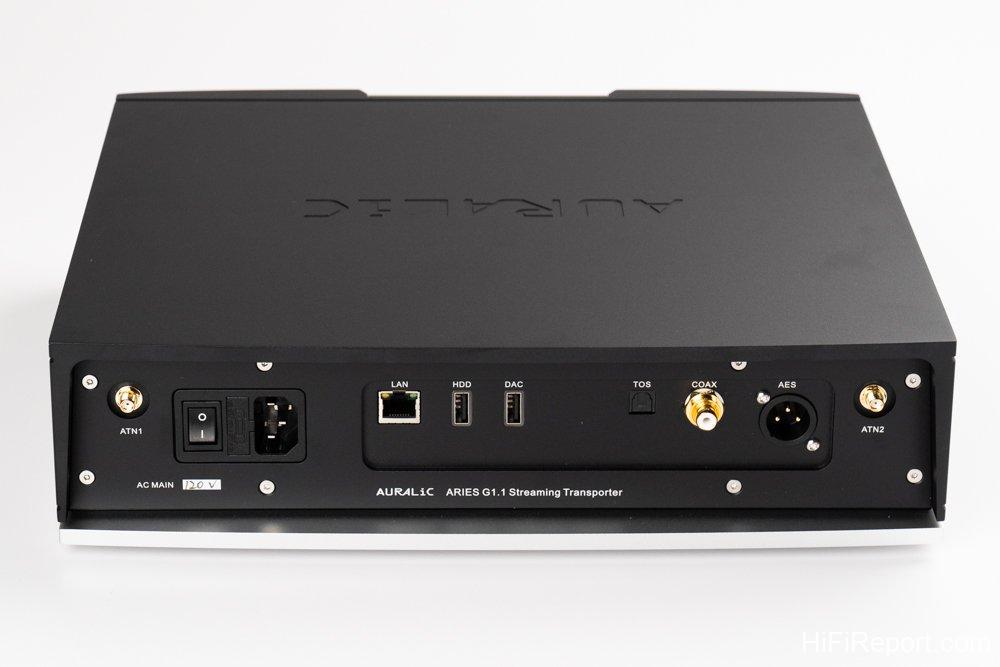
Chassis sharing is prevalent. Even though the G1.1 and G2.1 have slight differences in construction and mechanical structure, with the G2.1’s double-layer chassis being more sophisticated than the G1.1, they look almost identical externally.
The only visual distinction is the silver buttons and bottom plate found on the G1.1.
This not only reduces production costs but also indirectly elevates the perceived quality of the entry-level G1.1. Considering the impact of Volkswagen Group’s MQB modular platform, the benefits of Auralic’s chassis sharing are easy to understand.
Furthermore, their product planning is clear. Within the same series, different products have distinct functionalities, while products across different series are differentiated by performance. This makes choosing easier, especially in the new “.1” generation.
For consumers, the main consideration is almost solely the trade-off between G2.1 and G1.1.
This is unlike many other streaming brands.
Other streaming brands often employ a subtractive approach. The basic functions across their entire product range are largely similar, with differentiation based on feature sets, performance levels, and the extent of extended applications, resulting in a multitude of products.
This is akin to car manufacturers offering numerous trims for a single model. When considering the entire model range, it becomes bewildering, making it difficult for consumers to choose.
Auralic’s clear product planning demonstrates that the company’s management has a market understanding that is not purely engineering-driven but more attuned to consumers and users.
Since G1, Aries Has Been an Excellent Choice Under $3000
In my 2019 review of the Aries G1, I stated that the Aries G1 deserves priority consideration for those looking to purchase a streaming transporter under 100,000 NTD (approximately $3000 USD).
In that article, I also compared the differences between the Aries G1 and Aries G2, noting that the choice between them depended on budget and whether there was a future intention to build a four-piece system.
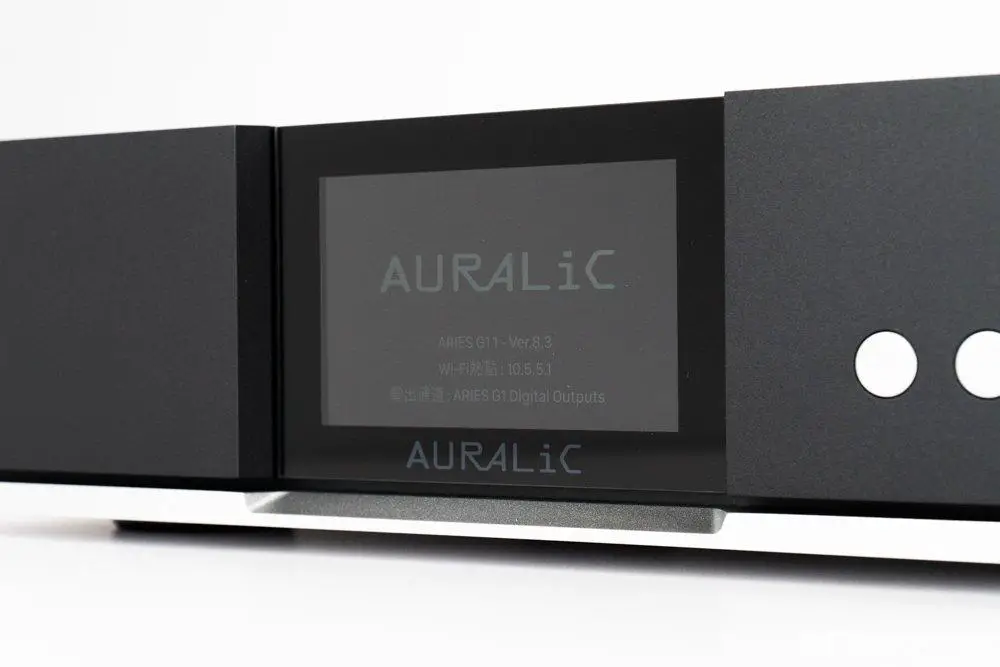
Shortly after, Zhiyu listened to the Vega G1 streaming DAC and decided to purchase the Aries G1.
According to him, the Aries G1 sounded cleaner than the CAS system he had painstakingly assembled at considerable expense. It was also more convenient to use than a computer, and he was thoroughly enjoying it.
Two Major Improvements: G2.1 Baseplate and AirPlay 2 Support
More than three years later, I’ve encountered Aries again, this time the new generation Aries G1.1.
So, the question is, how much has the Aries G1.1 improved compared to its predecessor, the Aries G1? In terms of sound, I can’t definitively tell you the difference. It wasn’t a direct comparison, and years have passed, with different systems involved.
However, the changes in the product itself have surprised me.
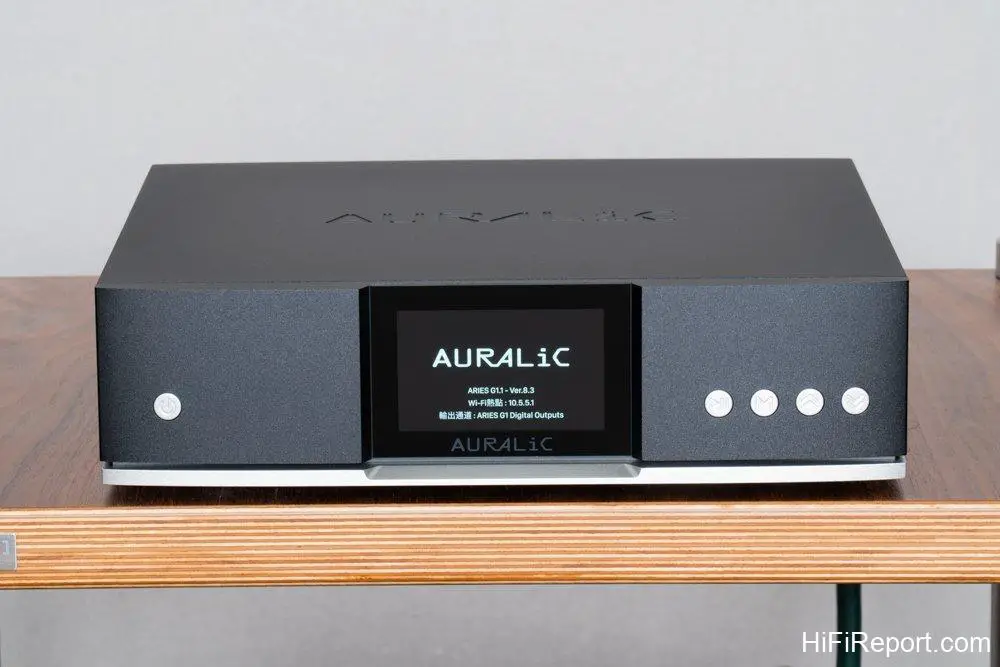
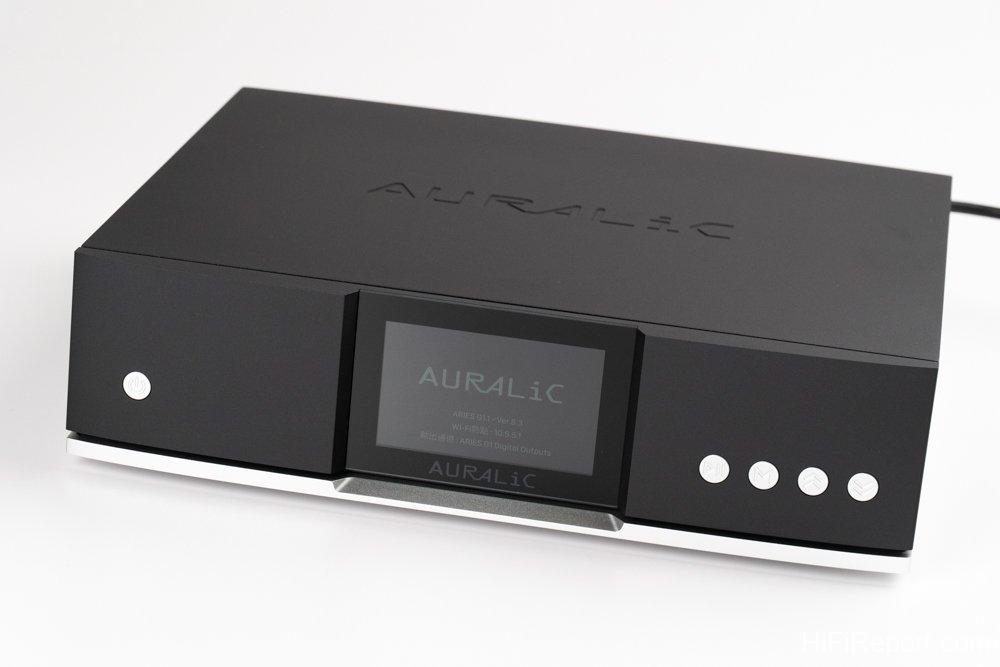
The manufacturer honestly states that the Aries G1.1 has only two changes: Firstly, they have transplanted the baseplate used in the G2.1 to the G1.1. The thicker and heavier silver matte baseplate not only brings visual appeal but also acts as vibration damping, resulting in improved sound performance.
Secondly, they have added AirPlay 2 support to both the Aries G1.1 and Altair G1.1.
Auralic has leaned towards Apple from the beginning. The Lightning DS App is only available for iOS devices. They support AirPlay casting but not Chromecast, etc.
The addition of AirPlay 2 is significant because it enables multi-room operation for Auralic.
Tesla G2 Platform and Dual Femto Clocks
The core architecture of the Aries G1.1 remains the same as the Aries G1.
It continues to use the Tesla G2 processing platform, which is 50% faster than the initial Tesla platform (the Aries Mini mentioned earlier used the first-generation Tesla core).
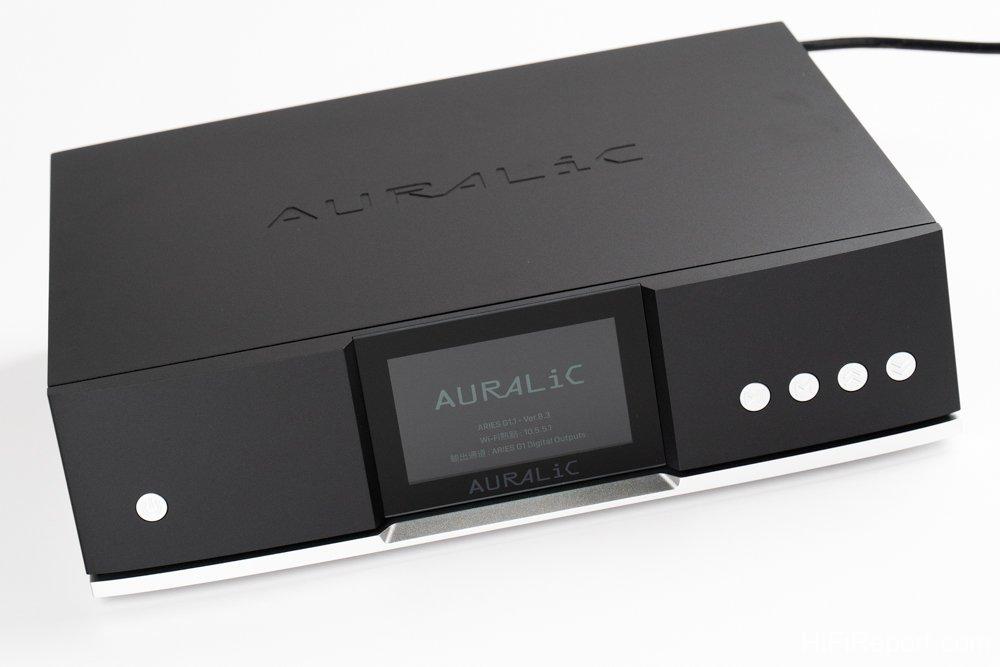
It includes 1GB of cache memory, allowing input signals to be buffered before being output. This serves two purposes: noise filtering and reducing latency.
The memory capacity is doubled, ensuring smoother signal transmission and accommodating future high-resolution signal formats.
To reduce digital jitter and timing errors, the Aries G1.1 is equipped with dual femto-second clocks. One clock is responsible for timing correction for digital outputs, and the other is dedicated to timing correction for USB output.
Its USB port utilizes “Active USB” technology, employing asynchronous transmission to reduce jitter and using its own Purer-Power power supply to ensure cleaner USB transmission.
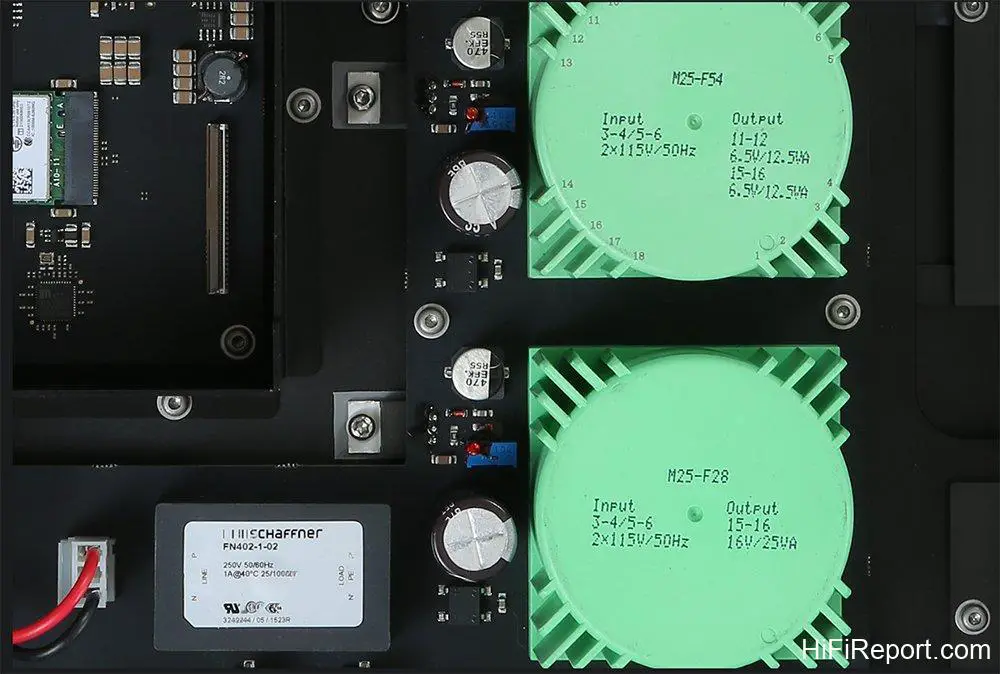
The overall power supply utilizes Auralic’s proprietary Purer-Power technology and incorporates two internal power supplies, separately powering different circuit sections.
These dual power supplies are also isolated from each other to prevent EMI interference.
(Image sourced from Auralic official website)
Versatile File Format and Streaming Platform Support
The Aries G1.1 offers a variety of digital inputs, including coaxial, optical, and AES/EBU, each with one set. There is also a USB Type-A input for connecting external storage devices. For streaming, it supports wired Ethernet or wireless Wi-Fi transmission, and since the G2 generation, it has supported 802.11 b/g/n/ac tri-band Wi-Fi.
In terms of supported file formats, it covers almost all common formats, with support for sampling rates up to PCM 32bit/384kHz and DSD512.
Playback platforms are also extensive, including UPnP/DLNA, Roon Ready, AirPlay 2, and Bluetooth. Online platforms include Amazon Music Unlimited, HighResAudio, KKBOX, Qobuz Sublime+, NetEase Music, TIDAL Connect, Spotify Connect, and internet radio.
Especially for cloud music platforms like Spotify, Tidal, and Qobuz, you can use their mobile apps to select music and have the Aries G1.1 play it.
Lightning DS App: Comprehensive Settings and Music Playback
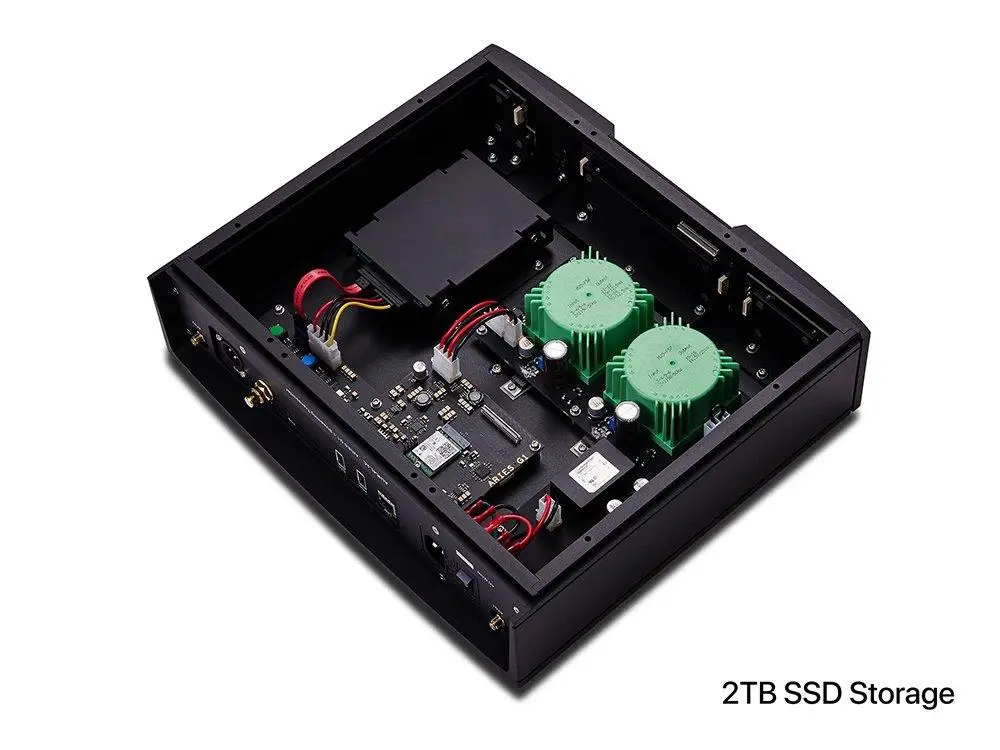
Like other Auralic devices, the Aries G1.1 features a 4-inch true-color display with a resolution of 300ppi. It clearly displays current music album information and allows operation and settings via physical buttons.
Auralic does not include a remote control, opting for app-based operation on mobile devices, which is perfectly in line with streaming playback practices.
Their proprietary Lightning DS App has a clear and concise interface, stable operation, and intuitive controls. Complete device function settings can be done within the app.
If you are not a Roon user, you can still enjoy the convenience of streaming music using Lightning DS alone.
However, if you’ve purchased a streaming transporter like the Aries G1.1 and you truly enjoy listening to music, I recommend using Roon, just as I do.
Roon is not only a powerful playback software but also a music database that integrates multiple sources. It also provides rich online resources, displaying artist information and connecting related music within your library (including cloud service platforms).
To date, no other music playback software can rival Roon in terms of functionality and database integration.
Once you use Roon, you’ll truly understand the beauty of streaming.
Hot New Product, Roon Doesn’t Recognize It?
As a heavy Roon user and having used so many Auralic devices (even being a current user), as soon as I got the Aries G1.1, I instinctively set up the network connection (wireless, of course). My next step was to get Roon to recognize it.
Based on past experience, this process was always seamless. But this time, I hit a snag.
For some reason, my Roon just wouldn’t accept it.
The Aries G1.1 appeared in the selection menu, but the “Uncertified” tag below it prevented me from enabling the Aries G1.1 on my computer.
I panicked.
Was I going to be limited to Lightning DS for playback? Playing music on Lightning DS was indeed flawless, and AirPlay worked fine too, but Roon just wouldn’t work.
Leaving Roon was something I was not used to.
I use Roon for listening tests, presentations, and, of course, for listening to music at home.
No Roon? What to do? I sought help from HiFiReport. Jack suggested I upgrade the firmware to version 8.5, which should fix it, but it would only be recognized as Aries G1 for now.
I followed his instructions, but alas, whether it was bad luck or feng shui, the Aries G1.1 still ignored me.
I put it aside, deciding to not think about it for the moment.
Before bed, I subconsciously opened the Roon App on my phone, navigated to the source selection page, saw the Aries G1.1, and casually tapped “Enable”.
And unexpectedly, it worked!
I excitedly told Jack, even he wasn’t aware that Roon could already recognize the Aries G1.1.
I’m sharing this anecdote to reassure early adopters that everything will be fine.
Clean, Transparent Sound, Clear Layers, Rich Details, Lively and Dynamic
The entire listening test was conducted at my home, using a wireless connection to my home 5G Wi-Fi. This eliminated the need for a network switch and network cables.
The signal was output via USB to DACs, rotating between two DACs I had on hand: the Audiobyte BlackDragon and the Rockna Wavelight.
Although these two DACs come from the same company, they have different designs. The BlackDragon uses two AK4396 chips for decoding, one DAC per channel. The Wavelight uses Rockna’s proprietary 25-bit R2R Ladder DAC. Naturally, their sonic characteristics differ.
Amplification was primarily provided by the KT88 tube amplifier Audiomat Adagio, supplemented by the Lavardin IS Reference for comparison.
Speakers were JMR Abscisse Jubile.
Playback platform was mainly Roon, with music sources including files from NAS, as well as music content from Tidal and Qobuz.
The sound of the Aries G1.1 was exactly as I expected from Auralic: clean, transparent, and detailed, easily revealing distinct sound sources and musical nuances.
Its presentation style is light and lively, with excellent sonic dynamism, or as we say in layman’s terms, very “alive”.
The extension at both ends of the frequency spectrum is natural and smooth. The bass is fast and well-defined, avoiding muddy low frequencies, instead offering clean and well-shaped bass with body.
The Aries G1.1’s performance in the approximately $3000 streaming transporter category is undoubtedly outstanding.
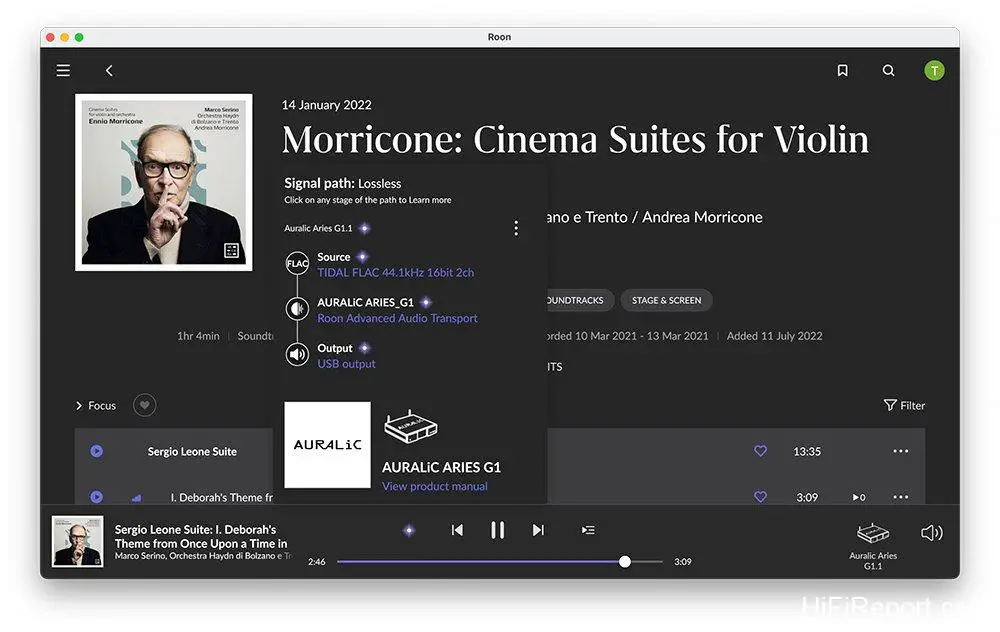
Clear Violin Lines, Dense, Stable, and Substantial
Taking Andrea Morricone’s conducting performance of his father Ennio Morricone’s film scores as an example.
Morricone was known for his melodies, which are long, drawn-out, beautiful, and captivating, easily transporting listeners into the story’s time and space.
This album features pieces arranged by Ennio Morricone for violin and orchestra.
The recording is from a concert in Rome in January 2020.
The violinist here, Marco Serino, is the soloist who has long performed in Morricone’s soundtracks.
The opening suite, “Sergio Leone Suite,” comprises five short pieces from director Sergio Leone’s three films: “Once Upon a Time in America,” “Once Upon a Time in the West,” and “The Good, the Bad and the Ugly.”
Here, the violin tells a poignant story, with clear lines, dense and substantial texture, and stability even in the high registers.
The orchestra serves as an accompaniment to the violin, without the prominent role typically found in concertos.
Here, the violin carries the clear main melody, driving the narrative arc, with the orchestra responsible for accentuating and complementing, making the story more prominent.
The orchestra’s role is supporting, so it shouldn’t stand out but maintain its supportive function.
In the “Once Upon a Time in the West” theme, the developed theme, driven by warm brass, leads the orchestra to a climax.
In the famous score from “The Good, the Bad and the Ugly,” the violin plays a melancholic melody followed by a rugged, lively theme. Low strings gently accompany in the background, and then the music gradually rises, with brass and strings, followed by the marching rhythm of percussion. The musical tension is truly impressive.
Precision with Musicality and Beauty
In contrast, John Williams’ film scores differ significantly from Ennio Morricone’s style.
In the album “Across the Stars,” also featuring violin and orchestra, John Williams collaborates with Anne-Sophie Mutter, taking listeners on a journey of imagination.
In “Rey’s Theme,” the violin represents the protagonist Rey.
Morricone’s violin is a storyteller, while John Williams’ violin is the protagonist in the story.
The violin lines are clear and focused, with a natural and realistic sound texture.
The Aries G1.1 delineates a clear and distinct soundstage, unfolding layers of transparency based on a highly transparent foundation.
John Williams’ pieces are inherently orchestral, and his masterful orchestration techniques fully and appropriately utilize every section and instrument of the orchestra, enriching the musical colors and enhancing the variations.
Compared to the Telos EMP, I also found that the Aries G1.1 seems to extend sonic decays particularly beautifully.
The Raspberry Pi with enhanced power supply sounds stable, fast, and powerful, while the Aries G1.1 sounds more musical, adding a layer of beauty to its precision.
Just the Right Amount of Detail, Excellent Density and Texture
When reproducing vocals, the detailed and clear Aries G1.1 is particularly appealing.
For example, listening to Diana Krall’s “Wallflower” album, Diana Krall’s vocal characteristics are clearly presented. The Aries G1.1 showcases the delicate texture of Auralic streaming playback. However, it doesn’t relentlessly pursue resolution. Its detail retrieval is just right, with excellent sound density and palpable texture.
When paired with the BlackDragon, I particularly appreciated the high density, focus, clarity, and agility. Switching to the Wavelight added a layer of roundness and smoothness.
Diana Krall’s voice is deep and rich, slightly husky, and these vocal textures are truly captivating.
When recording this album, Diana Krall was approaching fifty, but her voice remained full, and her vocal skills were even more refined. Throughout the album, she adjusted her vocalization and resonance techniques according to the mood of each song. The Aries G1.1 effortlessly resolves these nuances, adding to the listening pleasure of this album.
Furthermore, the accompaniment here is noteworthy. The string section sounds delicate and beautiful, the piano sounds bright and solid, and while the drums are not overly prominent, their crisp and layered drum sounds lend a dynamic drive to the songs.
If you also enjoy listening to vocals, the Aries G1.1’s just-right beauty in vocal reproduction will surely win you over.
Clean and Defined Bass, Bass String Vibrations are Palpable
I mentioned earlier that the Aries G1.1’s bass is clean and that it excels in low-frequency resolution, making it a top performer in its price range.
For example, in the Italian jazz duo Musica Nuda’s “Live a Fip” album, the plucked bass notes are rounded, full, and substantial. Yet, the Aries G1.1 can resolve the string vibrations of the double bass, giving the bass playing not just a substantial note, but also texture and detail.
Female vocalist Petra Magoni’s vocal style is versatile. In “Come Together,” she not only intermittently bursts out with the song’s characteristic rhythm using vocal imitations, but also maintains vocal stability even with her barely-there falsetto humming at the end of the song.
The Aries G1.1 excels at outlining lines and shapes. The rich information constructs concrete sonic images, clearly presenting the singer’s performance on stage.
New Firmware Offers Diverse DSP Options
The Aries G1.1 also offers many settings and adjustments that users can explore in the menu to fine-tune the sound to their preference.
Under “Processing Settings,” you can choose whether to enable “Resampling.” Once enabled, you’ll have many adjustable options, including AirPlay Resampling (to improve AirPlay sound quality), DSD to PCM conversion (for use when the DAC does not support DSD decoding), and four filter modes (Smooth, Dynamic, Balance, Precise).
Additionally, there’s an EQ adjustment. When enabled, you can adjust three frequency bands.
You can even adjust the left and right channel gain based on speaker placement.
These features are newly added in the latest two firmware updates.
They were not available when I last reviewed the Altair G1.
This demonstrates that Auralic devices do not become outdated after a few years. Through firmware updates, they can keep pace with the times and grow along with your musical tastes.
The above operations can be accessed in the Lightning DS App, directly on the Aries G1.1, or by finding the IP address on the Aries G1.1’s home page and entering it into a computer browser to operate through a browser page.
After adjustments, the sound will change again. These are all for users to explore.
Already Providing So Much
Having listened to the Aries G2, reviewed the Aries G1, purchased the Aries Mini, and used them all along the way, now encountering the Aries G1.1, I must say that for digital streaming transporters, Auralic has truly paved a practical path for HiFiReport reviewers.
They have prepared a well-thought-out streaming solution for you, saving you a lot of trouble and allowing you to conveniently enjoy high-quality streaming music.
If you already have a DAC and don’t want to build a multi-piece system, then a streaming transporter like the Aries G1.1 is an excellent choice.
If I were to give it a one-sentence evaluation, I would say this: Whether viewed from a music appreciation perspective or an audiophile hobbyist perspective, the Aries G1.1 already provides so much.
Specifications
* Type: Digital Streaming Transporter
* Inputs: 802.11b/g/n/ac Tri-Band WiFi, RJ-45 Ethernet, USB Type-A for External Storage, Bluetooth, AirPlay 2
* Outputs: USB 2.0 for DAC x1, Coaxial x1, Toslink x1, AES/EBU x1
* Supported File Formats: AIFF, ALAC, APE, DIFF, DSF, FLAC, OGG, WAV, WV (Lossless); AAC, MP3, MQA, WMA (Lossy)
* Supported Streaming Functions: UPnP/DLNA, Roon Ready, Tidal, Qobuz, Internet Radio
* Maximum Supported Sampling Rate: DSD512, PCM 32bit/384kHz
* Power Consumption: Standby <10W; Maximum 50W * Dimensions: 340 x 320 x 80mm (WxDxH) * Weight: 7.4 kg