
Avantgarde ZERO iTRON Review
In 2014, Avantgarde took a significant step, extending their product line downwards to the roughly €10,000 price point. Historically, Avantgarde models used Latin names, with the smallest being the “first,” UNO. However, as ancient Rome had no concept of zero, the new “zero” model was fittingly named ZERO 1. This move towards a wider audience didn’t signal a technical compromise; for Avantgarde, it was more like starting from scratch, reimagining loudspeaker design.
The Dawn of ZERO
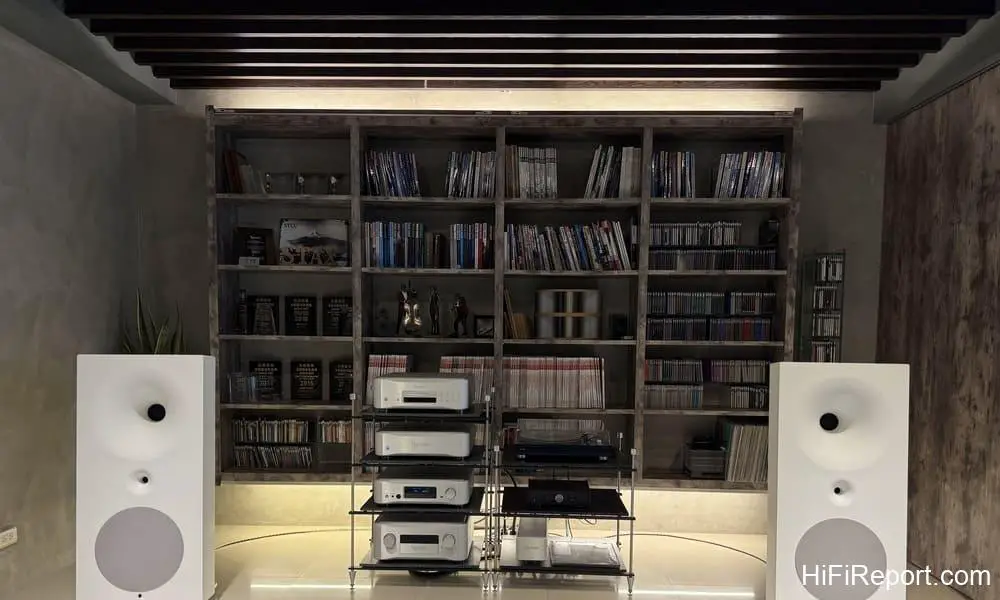
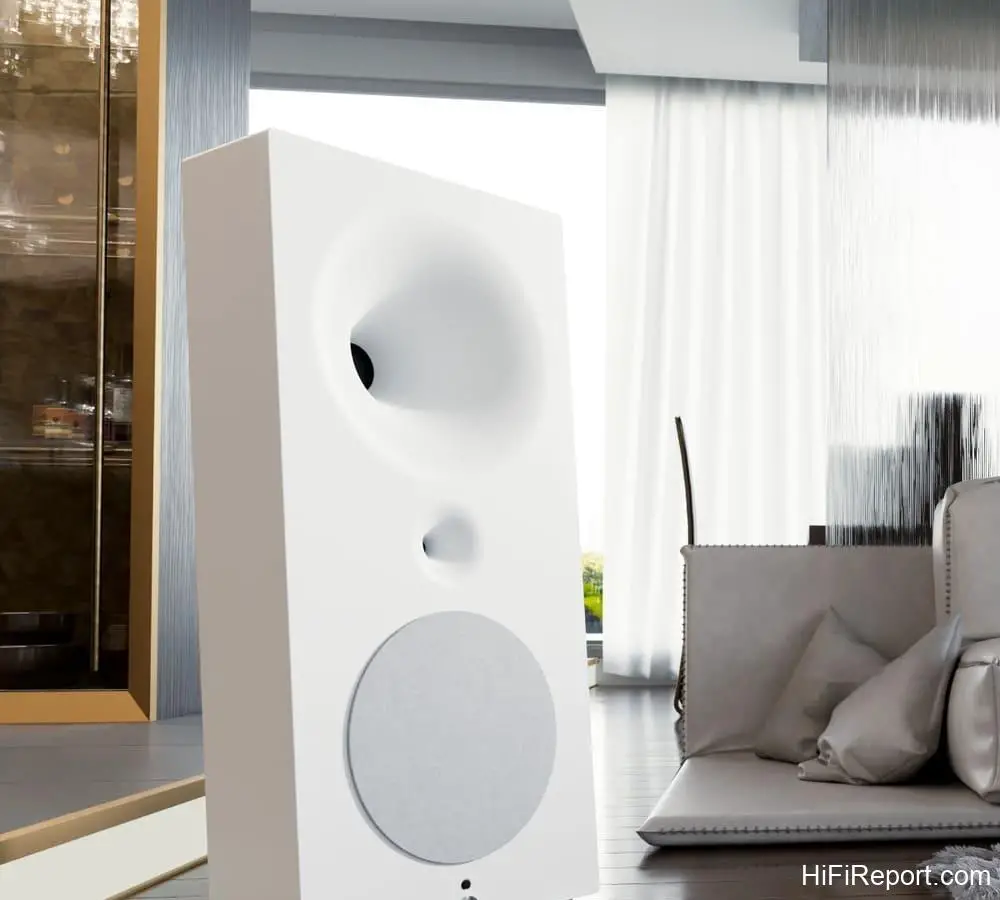
The debut of the ZERO 1 was a stroke of breathtaking creativity that stunned the world. Visually, the “square” element largely replaced the traditional “roundness” of horns, allowing the design to effortlessly blend into modern home interiors. The arrangement of the mid- and high-frequency horns alongside the bass cone driver created a harmonious, symmetrical structure. The difference in drive methods imbued the design with a sense of fusion, almost like the Tai Chi symbol.
It’s no wonder the ZERO 1 captured the hearts of the iF Design Award judges!
Technical Philosophy: Fully Active and Digital
But the ZERO 1 wasn’t just stylish; its acoustic design was equally groundbreaking. For high-efficiency horn speakers, most enthusiasts might assume pairing them with small-wattage single-ended tube amplifiers would be the perfect match. Avantgarde, however, took a “heretical” approach with a fully active design. Not only did it employ digital DSP crossover, but the digital decoding was also integrated within the speakers themselves.
Even the transmission between the left and right channels was wireless! I believe the “1” in the model name signifies that having this “one” pair of speakers is all you need for a complete system. Avantgarde’s series of innovations truly shattered existing notions within high-end audio. To draw a parallel from music history, the TRIO & BASSHORN retained the traditional horn form while incorporating new-age active subwoofer techniques – a creation aligned with neoclassical thought.
The ZERO 1, on the other hand, thoroughly subverted tradition while maintaining essential balance, akin to the twelve-tone techniques of Schoenberg and Weber. Both are undoubtedly “avant-garde music” relative to Romanticism of their time.
Evolution of the ZERO Series
Following the initial bombshell of the ZERO 1, Avantgarde lived up to its name, continually refining driver technology, amplification circuitry, and digital processing. Modular product design became essential for subsequent updates across many models. The ZERO series, having been the brand’s “little brother” until last year, also benefited from Avantgarde’s technical advancements.
This evolution began with the ZERO 1 Pro, which enhanced DSP processing power, followed by the ZERO TA (short for the German “Teil Aktiv,” meaning semi-active), featuring passive mid- and high-frequency sections. As the entire product line entered the XD generation, the ZERO TA evolved into the ZERO TA XD, boasting 10-band EQ for bass and CPC crossover circuitry.
Introducing iTRON: The Current Drive Revolution
So, why, a decade later, has the ZERO design come full circle, returning to a fully active concept? The reason is Avantgarde’s development of a new weapon: the G3 generation’s amplification circuit, “iTRON.” Be careful not to confuse it with Audi’s electric car series, “e-tron”! While both draw from the root word for electricity, the “i” in iTRON stands for current. Avantgarde wants to emphasize the concept of “current drive” amplification.
Understanding Voltage vs. Current Drive
In the audio world, the fundamental principle of amplifier design has long been dominated by “voltage drive.” This design has been prevalent for nearly a century, practically treated as a golden rule.
However, Avantgarde has adopted the astonishing “Current Drive” technology in their G3 generation active modules. This patented technology, named iTRON, not only overturns traditional amplifier design concepts but also creates a remarkable synergy with high-efficiency horn systems.
To understand the revolutionary nature of iTRON, one must first delve into the fundamental limitations of traditional voltage amplification: the impedance of a speaker driver’s voice coil constantly changes with factors like frequency and temperature. When using voltage amplification, according to Ohm’s Law (I=V/R), the same output voltage will produce different currents at different impedances, consequently affecting the acceleration of the diaphragm.
This non-linear problem is arguably the most challenging hurdle in traditional amplifier design.
Firstly, there’s frequency-dependent impedance variation. Any dynamic driver will exhibit an impedance peak near its resonant frequency, leading to certain frequency bands being improperly amplified or attenuated. Secondly, the inductive nature of the voice coil causes delays in high-frequency signals, impacting transient response. Thirdly, the back EMF generated by diaphragm movement affects the input voltage, reducing dynamic performance.
Finally, the temperature increase of the voice coil during operation changes its resistance, potentially causing up to a 40% impedance variation at high power output. These interconnected issues form a practically unsolvable equation within the traditional voltage amplification framework.
The Challenges of Current Drive and iTRON’s Solution
Given these drawbacks of voltage drive, why do most speakers and amplifiers on the market still utilize this mode? The answer lies in the numerous physical and technical limitations, as well as cost considerations, involved in achieving current drive. Firstly, current drive is fundamentally incompatible with traditional passive crossovers found in most speakers. Current drive requires direct control of the current flowing through the driver’s voice coil.
If paired with a passive crossover, the current would be influenced by the crossover components, preventing the driver from receiving precise control. Therefore, current drive systems can only be applied in “active” designs, meaning each driver requires an independent amplification module, increasing design complexity and cost.
Furthermore, the current drive method presents potential stability issues within the driver’s resonant frequency range. As the driver’s impedance rises sharply near the resonant frequency, if a current drive system attempts to compensate for this change, it could lead to excessive energy input, causing the driver to vibrate excessively or even be damaged.
This necessitates precise calculation of the driver’s frequency response by the designer and the use of active crossovers to limit the driver’s operating frequency range to avoid this problem. Additionally, current drive circuits are significantly more complex than traditional voltage amplifiers because they require a precise voltage-to-current conversion mechanism that ensures the output current instantly and accurately corresponds to the audio signal.
Due to the voice coil’s inductive nature, without a sufficiently fast compensation mechanism, phase delay and timing errors could occur, affecting the sound’s transient response. Moreover, traditional voltage amplifiers can use negative feedback to reduce distortion and enhance stability. However, applying negative feedback in current drive technology can affect the precision of the current output, leading to unstable control.
Therefore, the iTRON circuit design employs fully balanced, A/AB class amplification with no negative feedback whatsoever. While this achieves a pure signal path, it places higher demands on the circuit design.
Furthermore, since the current drive method eliminates the dynamic compression issue present in voltage drive, temperature changes in the voice coil do not significantly affect the sound output. However, achieving this condition also requires the power supply system to possess higher stability and lower noise, enabling pure sound performance even within a high dynamic range.
G3 Evolution Drivers: Pushing Boundaries
While horn speakers multiply the diaphragm’s vibrations to achieve high efficiency, they also proportionally amplify noise. Therefore, more precise, lower-distortion drivers are needed. With the assistance of the powerful iTRON amplification circuit, the drivers are significantly enhanced. For current drive, the ZERO iTRON uses the same XT2 tweeter and XM1 midrange system found in the UNO SD for the mid- and high-frequency sections.
Both are derived from the flagship TRIO G3 drivers, adapted for smaller horn sizes, and share identical materials and technology. Avantgarde’s G3 generation driver updates have undoubtedly pushed the parameters of speed, efficiency, and precision to previously unimaginable new heights, akin to a new “revolution” in audio. The manufacturer has named these “Evolution” drivers.
Detailed Driver and Crossover Design
Evolution drivers have three main technical characteristics: Firstly, the SphericDome diaphragm, a spherical convex dome strictly designed according to the horn’s phase. Secondly, the AirGate filtering technology, precisely designed driver cavities to filter out high-frequency distortion. And thirdly, the Omega voice coil, a high-impedance design to match the iTRON circuit.
In the XT2 tweeter, Avantgarde employs a double-suspension annular spherical diaphragm. This design has lower mass and faster response than traditional hemispherical diaphragms and, coupled with the suspension, can better resist the horn’s back wave energy. As a result, the XT2 tweeter not only boasts high efficiency and record-low distortion (a 50dB difference compared to the music signal’s THD) but also completely avoids phase distortion and transient lag.
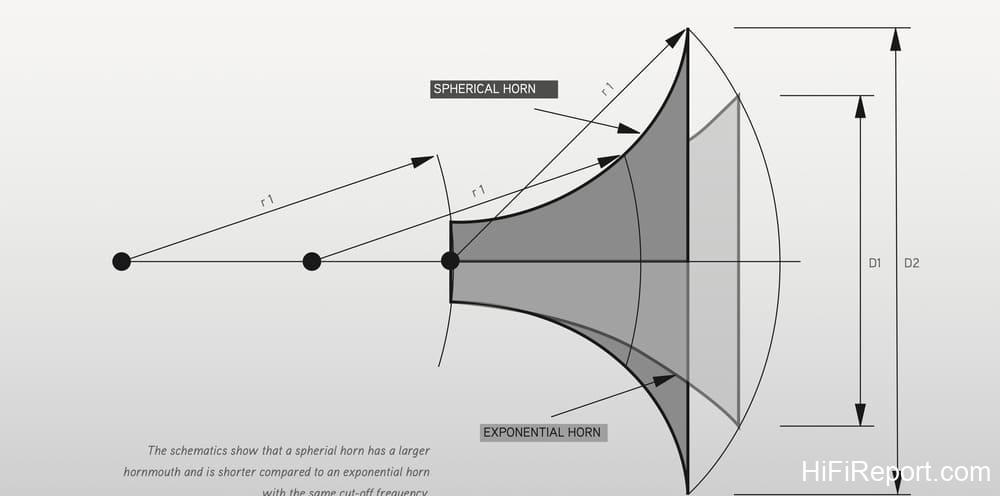
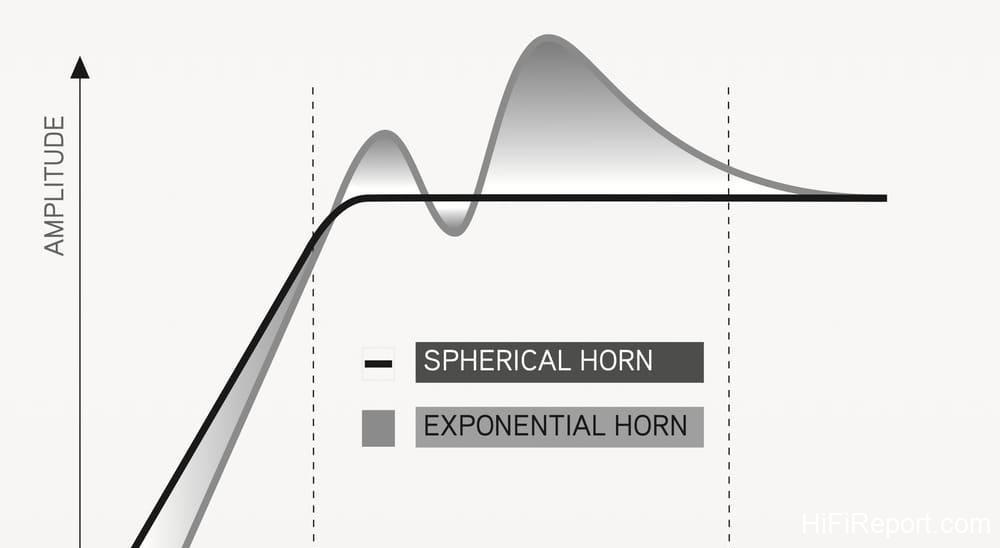
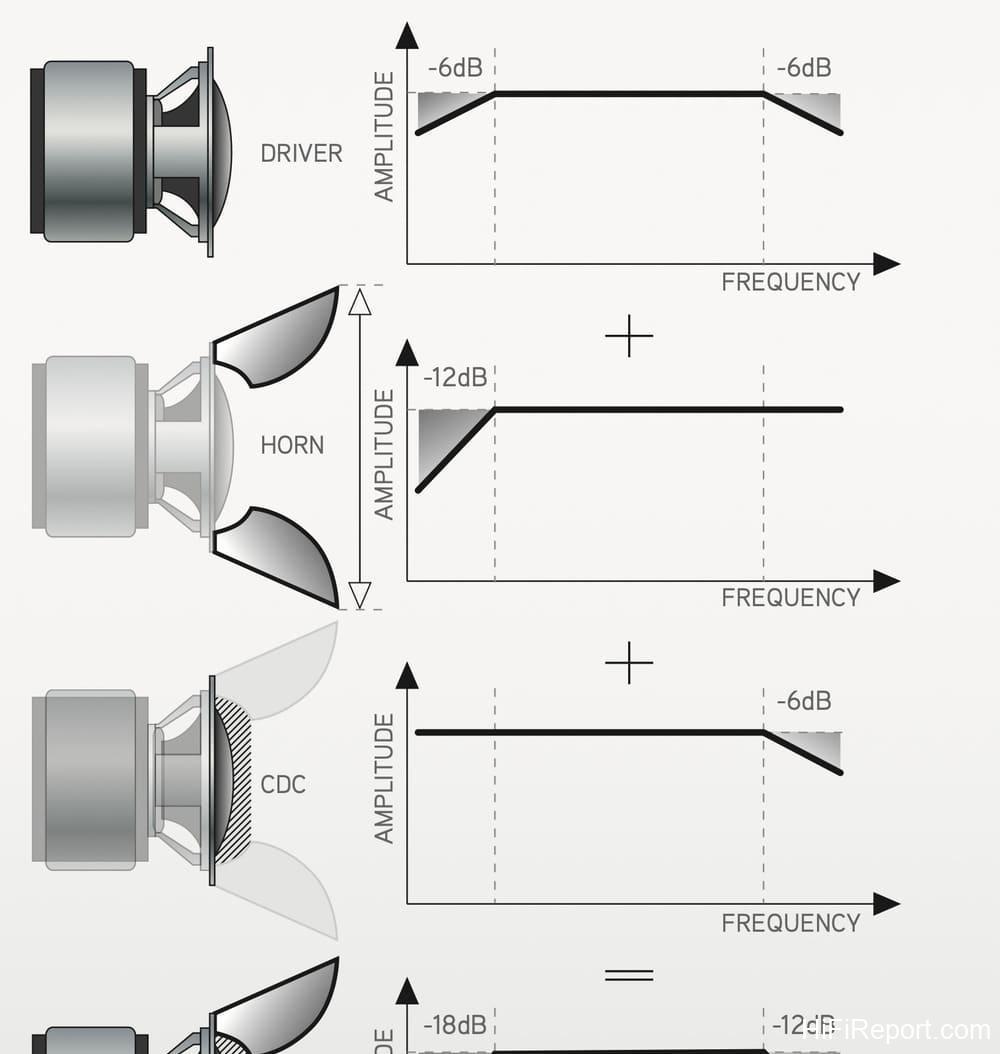
Its frequency response range is consequently extended up to 22kHz. The XM1 midrange driver handles the frequency band most sensitive to the human ear and containing the most fundamental instrument tones. Avantgarde achieves a “physical crossover” effect through the design of the spherical horn, using a golden ratio of 400–190–75mm.
This means no crossover components are needed beforehand; the horn’s physical limitations naturally roll off the lower frequencies (SphericLowCut), while the cavity’s AirGate technology physically filters out the high-frequency parts.
Therefore, in the midrange section, the ZERO iTRON can be said to achieve crossover without any active circuits or passive components, allowing the analog signal to be amplified directly by the iTRON circuit. Such a minimalist signal path is truly the pinnacle of high-end audio. So, why isn’t the tweeter treated the same way?
Theoretically, the horn diameter at high frequencies could also naturally roll off its lower frequencies, and the AirGate filtering technology reduces distortion in the extreme high frequencies. However, because the tweeter driver is more fragile and its frequency-impedance curve is more complex, Avantgarde chose to add German handmade super oil-impregnated NatureCap capacitors before the iTRON circuit.
This is to reduce the risk of low-frequency impulse signals damaging the driver, solving the risk in the simplest, purest way while striving to minimally affect signal quality. Since entering the G3 generation, all fully active Avantgarde models feature this design for their mid and high frequencies. This truly lives up to their name “Avantgarde,” pushing the forefront of high-end design with every step.
The Flexible Bass DSP System
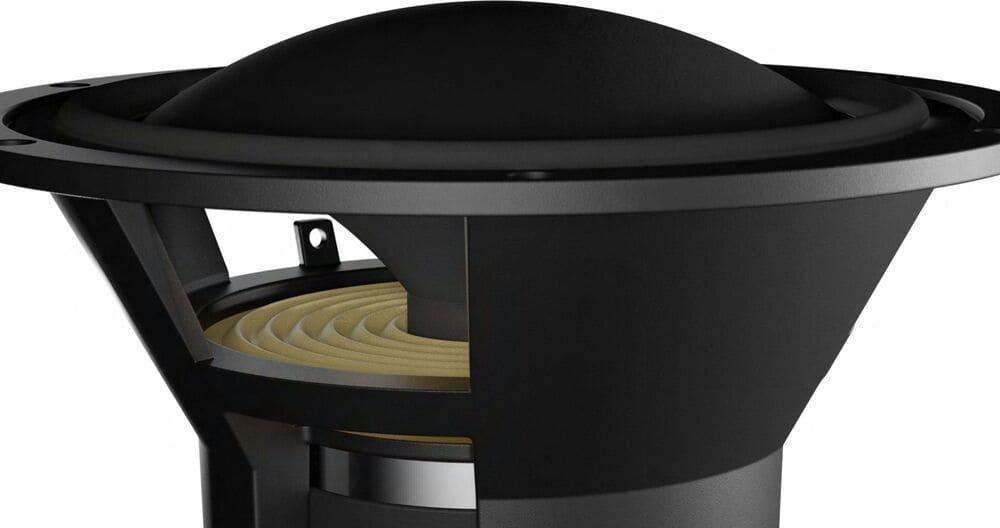
My visit to the Sheng Qi Audio listening room for this review was particularly exciting because of the Avantgarde bass DSP adjustment feature that editors have described over the years! The ZERO iTRON features a 12-inch paper cone diaphragm paired with an enlarged 3-inch voice coil and a double-wave surround, driven by a 400-watt Class D amplifier. Its DSP control interface is the same as the G3 generation.
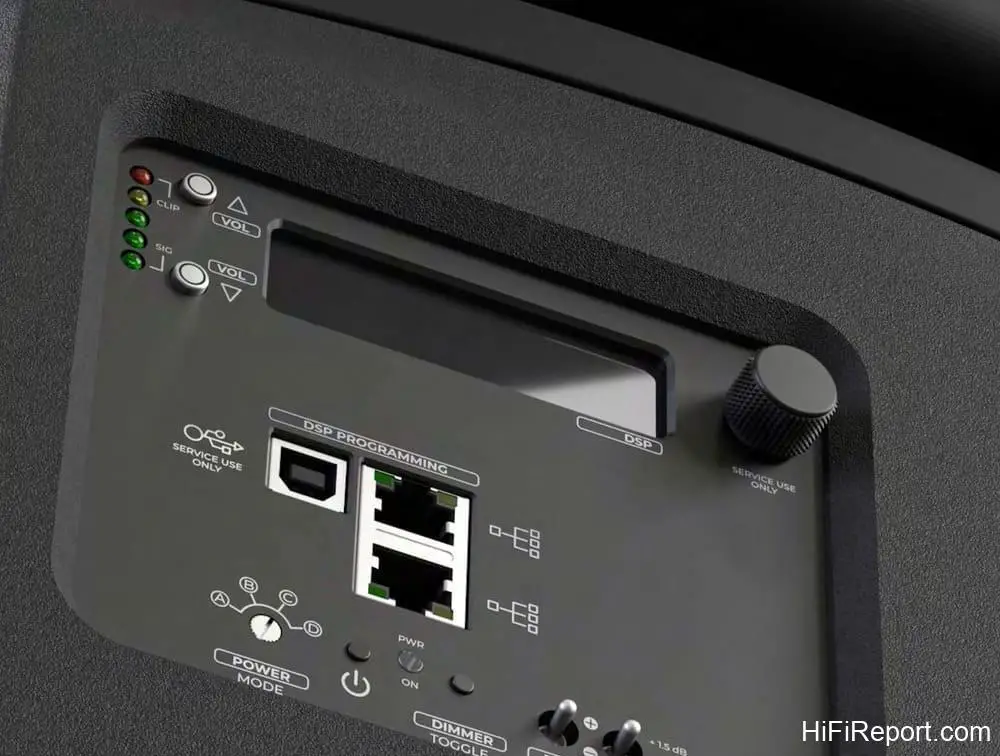
Besides adjusting parameters via the panel on the back of the speaker, you can also connect them via a daisy-chain network setup. With just two network cables – one connecting the two speakers and one connecting to a laptop or switch – you can perform remote operation. This means I can stay in the listening position without moving, adjusting the bass to the ideal state with just my fingertips.
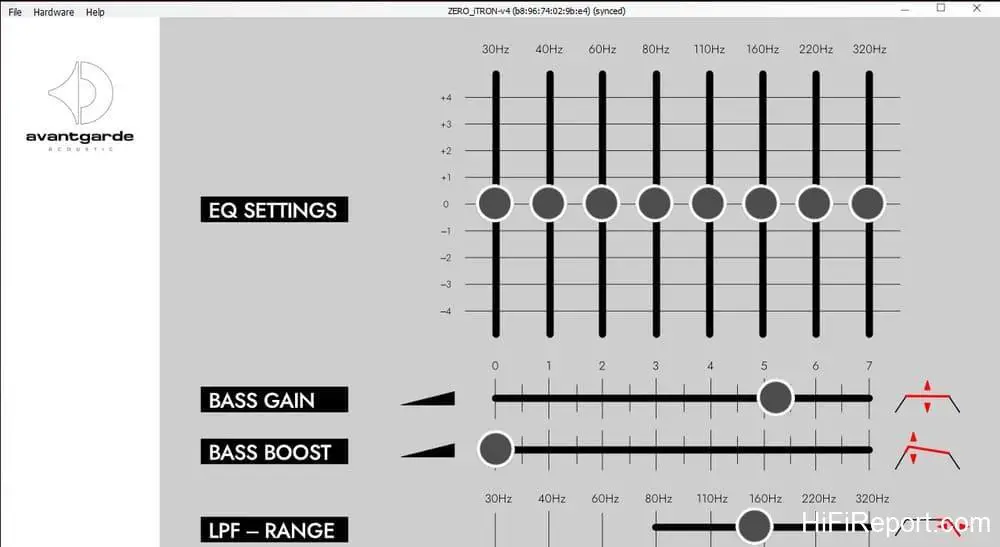
The new generation bass equalization interface is quite simple, offering eight bands of EQ adjustment from 30Hz to 320Hz, with an adjustment range of +/-4dB. It also provides Bass Gain and Bass Boost; the former adjusts the overall bass quantity, and the latter enhances the quantity of frequencies below 45Hz.
Additionally, there are adjustments for the low-pass filter crossover point and two sets of “notch” designs specifically for eliminating bass peaks caused by listening room resonances, offering two levels of adjustment: -3dB and -6dB. Wait, didn’t previous versions offer 10 bands of EQ? Has it shrunk in the G3 generation? Actually, the EQ interface we see initially is a simplified, improved UI version.
If these basic bass adjustments can’t achieve the ideal bass, you can then use the original “professional interface” for adjustment. By contacting the distributor to activate the access, you can use the advanced PEQ interface. The software’s adjustment parameters are comprehensive, and it even has a memory function for up to 80 parameter sets.
If different family members have different bass preferences, you can easily switch between presets via the computer software or the ZERO iTRON’s rear panel to instantly get the preferred sound.
This software alone is enough for an audiophile to play with for a long time. Combined with placement methods and the two-stage volume adjustments for the mid and high frequencies, I’m confident that users, after spending time with the ZERO iTRON, will find that sweet spot where the speakers look and sound their best.
The “Active Rebel” Philosophy
“The Active Rebel” is Avantgarde’s promotional tagline for the ZERO iTRON, and I find this phrase couldn’t be more fitting! “Active” itself has the dual meaning of “active speaker” and “proactive.” Thus, the phrase signifies both the return of the ZERO’s fully active version as an “active counterattack” and a “proactive rebellion” challenging traditional speaker aesthetics and drive designs.
When it comes to music that is avant-garde and embodies a spirit of proactive rebellion, many music lovers might think of Shostakovich. Under government pressure, Shostakovich’s resistance was complex and hidden; he survived within the system, using music as a double language that satisfied official censorship while secretly harboring dissatisfaction with the regime.
In Nazi Germany, however, one composer took proactive and uncompromising action: openly supporting the oppressed through music to resist totalitarian Nazi rule, and adopting “Inner Exile” (Inner Emigration) by refusing to have his works performed or published in Germany. This actively rebellious composer was one of the most important German composers of the mid-twentieth century: Karl Amadeus Hartmann.
Therefore, for the listening session of this review, I chose works by Hartmann composed between the rise and fall of the Third Reich, to echo the ZERO iTRON’s tagline.
Listening Impressions
A few days ago, the editor completed the review of Avantgarde’s second-to-flagship MEZZO G3 in the same listening room. This time, it’s the second smallest in the series, the ZERO iTRON. Can its size truly fill the entire listening space? This is a normal reaction for anyone who hasn’t heard the ZERO series before. I began with Hartmann’s opera *Simplicius Simplicissimus*, based on Christoffel von Grimmelshausen’s novel (“The Most Simple Fool”).
The opening of the first act, through a chanted chorus, directly describes how the population of German territories plummeted from 12 million to 4 million after the Thirty Years’ War. Accompanied by the sharp, repeating sounds of snare drum and cymbals, like a marching beat, the ZERO iTRON’s presentation made the chorus sound like soldiers standing in formation in the listening room, marching in place and shouting orders, pointlessly circling before turning and leaving.
This “absurdity,” this nonsensical march, I believe, is Hartmann’s strong condemnation of the Nazi regime’s idiotic disregard for human life by sending people to the battlefield.
The interspersed solo recitations detailing the plot reminded me of a friend’s evaluation of my home system: “It’s so good for listening to online classes!” While that might sound derogatory at first, it actually reflects how concentrated and full the human voice is. Even with class videos recorded using a laptop microphone, the lecturer’s and even the students’ responses become incredibly clear. The ZERO iTRON’s presentation of the human voice gave me this exact feeling!
And the reciter seemed like a 3D holographic projection; even when I moved my position or changed my angle of listening, he continued reading the script with full vigor, his form completely unaffected by the angle. I believe this is thanks to the excellent diffusion properties of the spherical midrange horn, ensuring the voice doesn’t “deflate” when you leave the sweet spot.
Listening through the entire opera, I came to a conclusion: the ZERO iTRON is absolutely perfectly sized for this space! It doesn’t feel compressed or crowded during large dynamic, high-volume passages. Instead, you can fully enjoy the effortless “spaciousness” inherent in the high efficiency of the horns.
During quieter sections with instrument solos, the naturally focused melodic lines were woven with smooth, intricate details, perfectly showcasing the “speed” and “precision” of the drivers and amplification design. With the iTRON technology, I believe the small ZERO iTRON can fully compete with the MEZZO and even the TRIO in spaces ranging from 5 to 15 ping (approx. 160-480 sq ft).
Was the rebellious Hartmann so bold as to completely disregard the threat to his or his family’s lives from the Nazis? Of course not! The work “Concerto funebre,” drafted in 1939 when the Nazis annexed Czechoslovakia and intended as a gift for his four-year-old son, was essentially Hartmann’s pre-written will, born of immense worry for his own, his family’s, and his nation’s future prospects.
This concerto for violin and string orchestra is my favorite among Hartmann’s works, and the ZERO iTRON’s interpretation sent shivers down my spine. I had thought horns were better suited for interpreting wind instruments, but I was amazed at how beautiful string instruments could sound. The solo violin’s monologue in the first movement sings the Slovak Hussite hymn “Who are God’s warriors,” like an endless lament standing on the desolate, war-ravaged land.
This theme transforms in the second movement, becoming more fragmented, more chromatic. The feeling of “When will it be my turn?” is mercilessly magnified by the horns, every word piercing my heart.
The third movement is a clash of disordered emotions and the sounds of war. The use of polyphony symbolizes personality dissociation under extreme pressure, while the frantic ostinato is like palpitations that cannot be suppressed even by medication. The general impression of horns is usually “bright,” but in this movement, the ZERO iTRON depicted the contrast between light and dark with unparalleled excellence.
The sound of the open string double stops on the violin was like gazing up at heaven from Earth, only to collapse into an endless hell. In the fourth movement, Hartmann again used a hymn, the Russian revolutionary song “You fell on the battlefield.” Although the tempo slows, there is no solace, but rather the image of lying on the battlefield, unable to rise, calmly awaiting the slow draining of blood and then death.
Until the next track on the album, the solo violin suite written by a young Hartmann in 1927, the ZERO iTRON’s emotional impact held me firmly to the sofa, unable to move, trapped by his pessimistic worldview. It was like engraving historical (evil) onto an immortal monument, forever warning people not to repeat the mistakes of the past.
Hartmann’s Second Piano Sonata, “27 April 1945,” is another historical witness. Born during the chaotic period nearing the end of the war, it was inspired by the composer’s personal witnessing of the liberation of prisoners from the Dachau concentration camp. He wrote in the score: “April 27-28, 1945, we witnessed endless columns of Dachau prisoners… with endless suffering, endless sadness.” Like Chopin’s Second and Beethoven’s 12th sonatas, this sonata also has a “Funeral March” movement.
In comparison, Hartmann’s funeral march is particularly lonely and desolate; it represents the stumbling steps of the prisoners. Even though the war is over, their beautiful lives are already gone. Hartmann extensively uses the piano’s ultra-low register in this sonata to depict the heaviness of the prisoners’ steps and bodies, and the gloom following Germany’s defeat and surrender.
The ZERO iTRON’s authoritative performance of the piano’s left hand gave new life to this movement, which resembles Ilya Repin’s realist painting “Barge Haulers on the Volga.” The prisoners’ steps are like low shuffles burdened by heavy fate; although each step tears and burns the thigh muscles, it also demonstrates their unyielding spirit of survival.
In the final movement, Hartmann quotes the theme from the overture of his “Simplicius Simplicissimus” opera, symbolizing his prediction of the inevitable defeat and his indignation towards everyone who contributed to it. The ZERO iTRON’s natural roll-off of the midrange and perfect (seamless transition) with the bass driver allowed them to steadily pound the ground step by step, ultimately forging a path home.
Conclusion: A Timeless Design
Since launching the ZERO, every revision by Avantgarde has symbolized the development team’s innovative intent and ambition in speaker design. Now, with the introduction of the Colibri series, which has taken over the ZERO’s position as the most accessible product line, the development team could be less constrained by cost, using all the new technologies and quality components on the latest generation ZERO iTRON. As the saying goes, good design is timeless.
I believe that looking back at the ZERO iTRON ten years from now, people will still be full of admiration for its design, inside and out.
Specifications
* Product Type: Active Three-Way Horn Loudspeaker
* Release Date: 2024
* Drivers Used: 1-inch XT2 tweeter with 130mm spherical horn, 5-inch XM1 midrange driver with 400mm spherical horn, 12-inch Z12 paper cone bass driver
* Power Output: 10 watts Class A/AB iTRON amplifier for high and mid frequencies each; 400 watts Class D amplifier for bass.
* Frequency Response: 18-22,000Hz
* Crossover Points: 250, 2,800Hz
* Analog Input: XLR x 1
* Analog Output: XLR x 1
* Weight: 40.5 kg
* Dimensions (WHD): 490 x 1090 x 400mm
* Reference Price: NTD 980,000 (approximately USD 30,000)
* Import Agent: Sheng Qi Audio
Highlights
* Fully active design with advanced DSP
* Proprietary iTRON current-drive amplification for mid and high frequencies
* New G3 Evolution drivers (XT2 tweeter, XM1 midrange, Z12 woofer)
* Spherical horn design for physical crossover in midrange
* Comprehensive and flexible bass DSP adjustment (basic and advanced PEQ)
* Wireless connectivity between speakers
* Distinctive, modern aesthetic
Recommendation
* Definitely get the advanced DSP activated by the distributor, Sheng Qi. The full functionality allows for more detailed adjustments and can store up to 80 profiles for different music genres, listening positions, or even listeners, easily switchable via the rear knob.
Sound Quality Ratings
* Overall Sound Quality: 5
* Timbre/Tone Color: 5
* High Frequency Sweetness: 5
* Mid Frequency Fullness: 5
* Low Frequency Solidness: 5
* Soundstage Width & Depth: 5
* Sound Density & Weight: 5