
CCA C10 Hybrid In-Ear Monitor Review
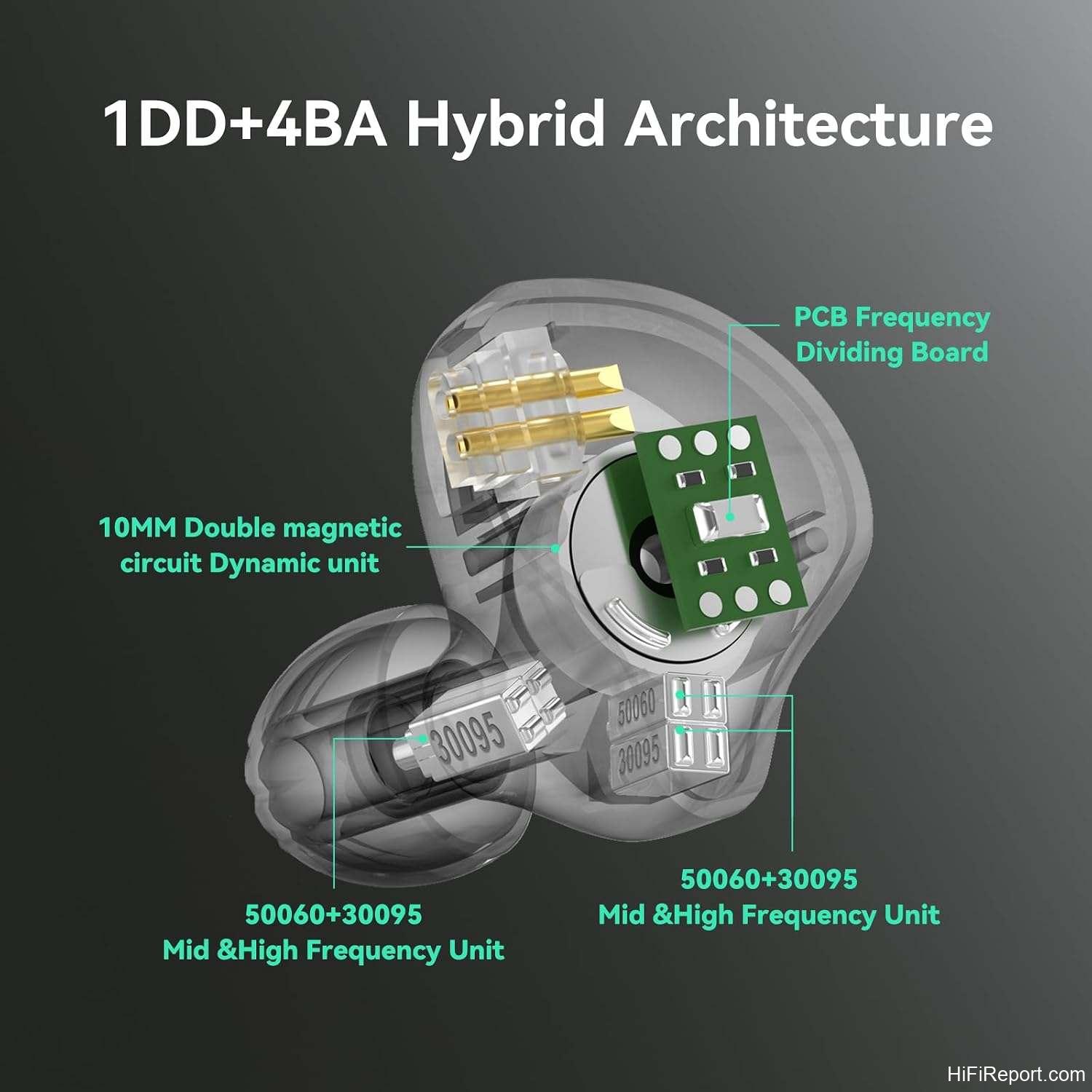
Five drivers per side. One dynamic transducer and four balanced armatures handle the frequency range in each housing, giving the CCA C10 a hybrid architecture that most in-ear monitors at its tier reserve for a single dynamic or a two-way split. Add MEMS-based passive noise cancelling and a detachable 0.75mm 2-pin cable with a 5N 4-core silver-plated conductor, and the specification sheet reads like a set from a tier up. The question this review answers: how does that driver stack actually sound when music hits the diaphragms, and where does the tuning bend under real-world use?
© hifireport.com – Original review content by hifireport.com. Reprinting without written permission is not allowed.
At a Glance
- Driver layout: 1 dynamic + 4 balanced armatures per side
- Housing: zinc alloy shell with resin body
- Noise control: MEMS passive cancelling
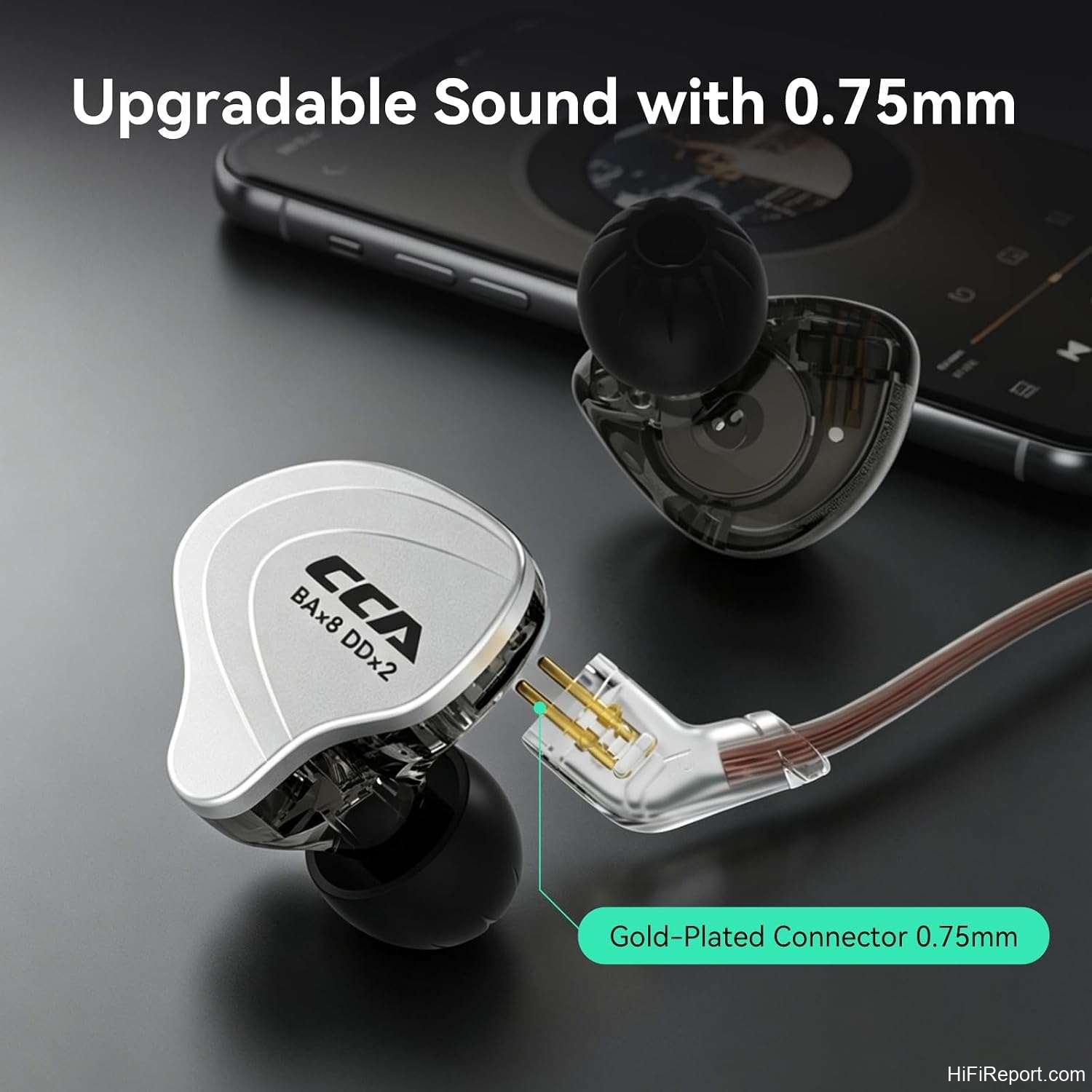
- Cable: detachable 0.75mm 2-pin, 5N 4-core silver-plated, 3.5mm gold-plated plug
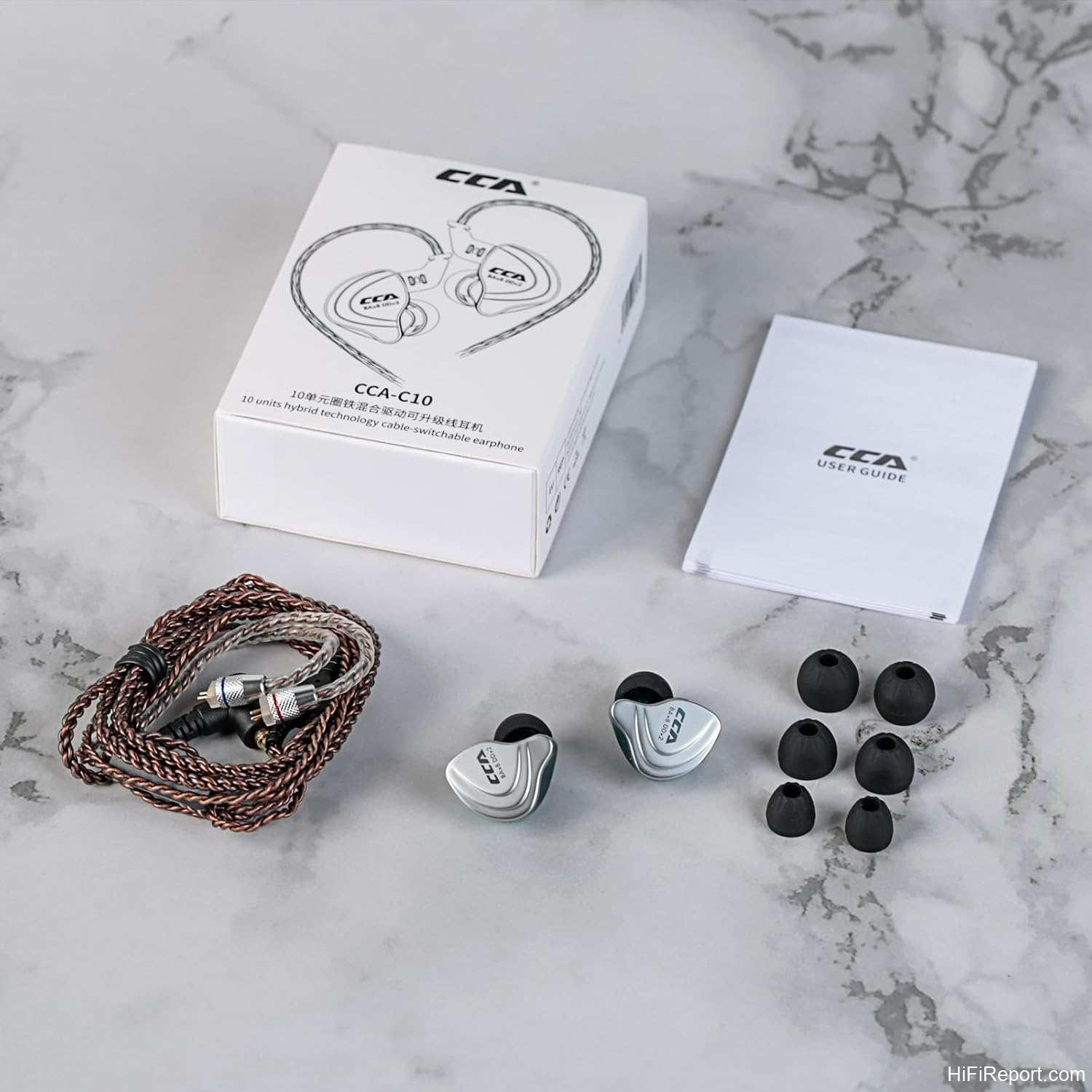
- Included tips: 3 pairs of silicone
Drivers and Design
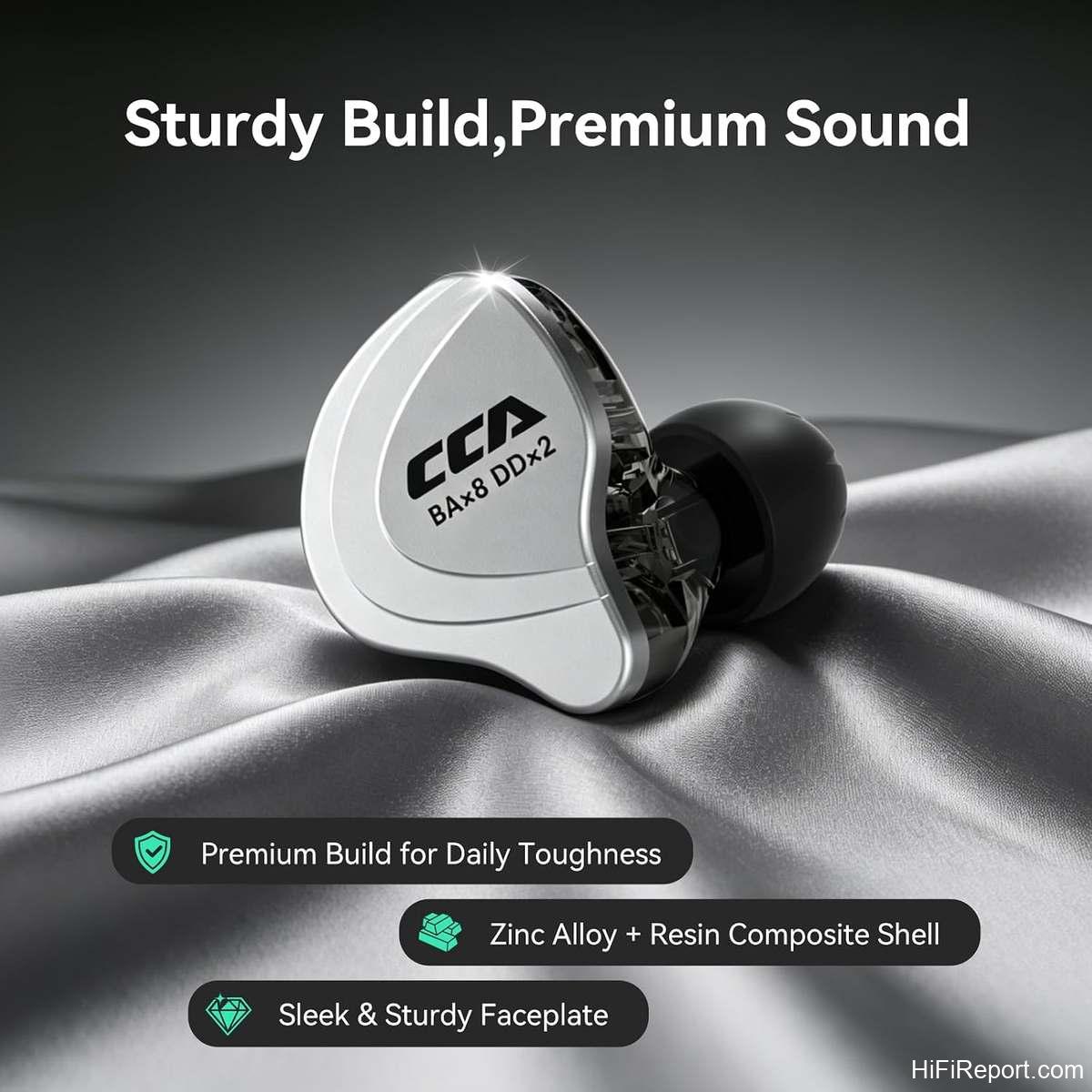
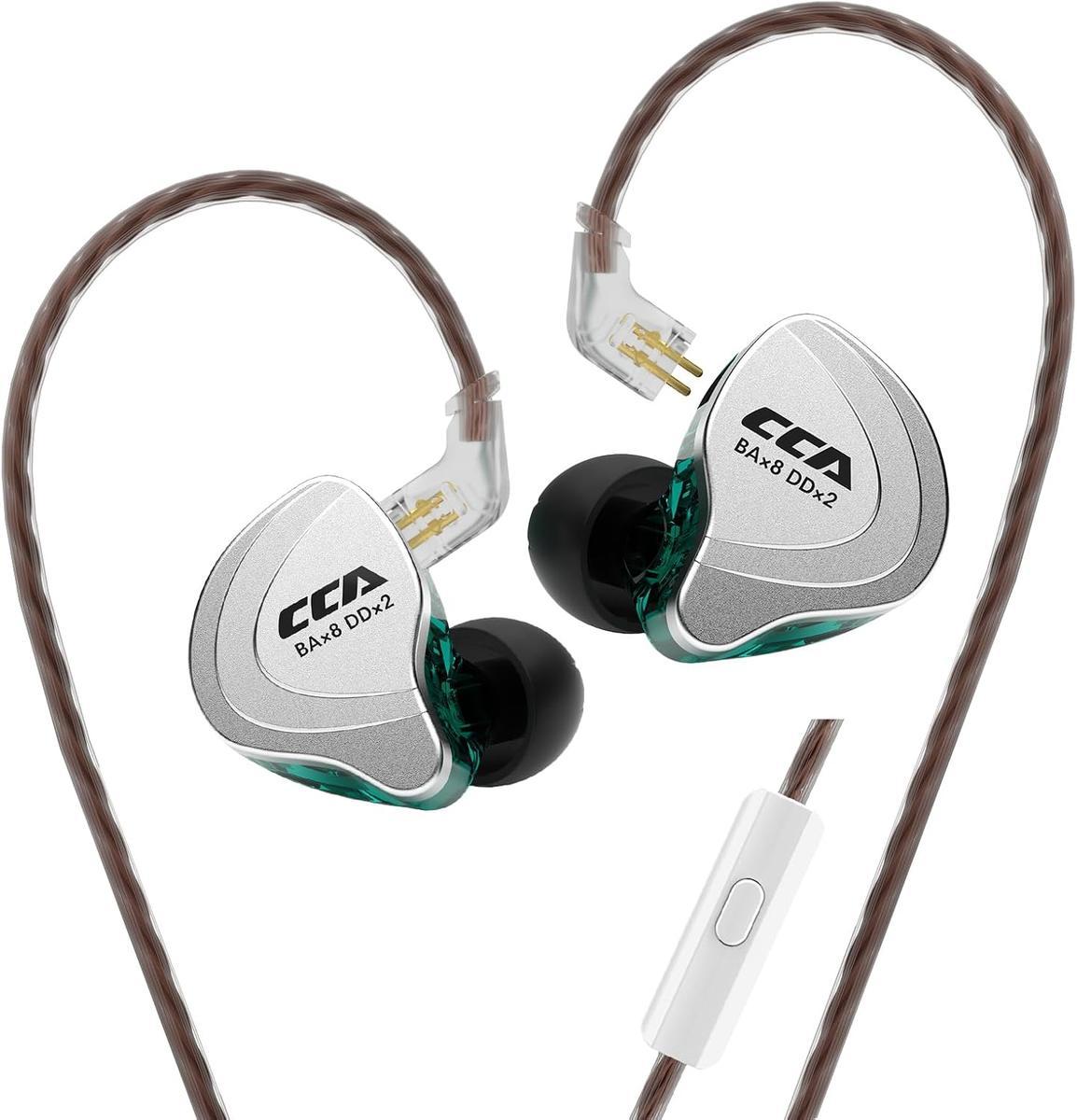
The CCA C10 splits each ear’s audio workload across five transducers. A single dynamic driver covers the low and low-mid range while four balanced armatures take the upper mids through the top of the audible spectrum. The source material does not break out individual crossover frequencies or identify the armature models, so the internal acoustic architecture beyond the 1DD + 4BA split remains undocumented. The housing pairs a milled zinc alloy shell with a resin body, a combination the product listing describes as lightweight and built to survive rough handling. The shape has an angular profile distinct from the smooth teardrop form common to many IEMs, and one reviewer noted the geometry looked like it would not seat properly in the ear before confirming that it did once inserted.
The MEMS noise-cancelling element sits in the acoustic path and reduces environmental bleed without any active electronics or battery. That matters on stage or in a practice room, where ambient noise can mask the mix. The detachable cable connects through 0.75mm 2-pin terminations on each earpiece, and the included lead uses a 5N 4-core silver-plated braid terminated with a 3.5mm gold-plated plug. The braid material is described in the listing as soft and supple, with no curling after extended use. After the Y-branch the cable splits into two thin single strands, a section one owner flagged as fragile compared with the main braid.
Tuning and Sound Signature
Bass and Low Mids
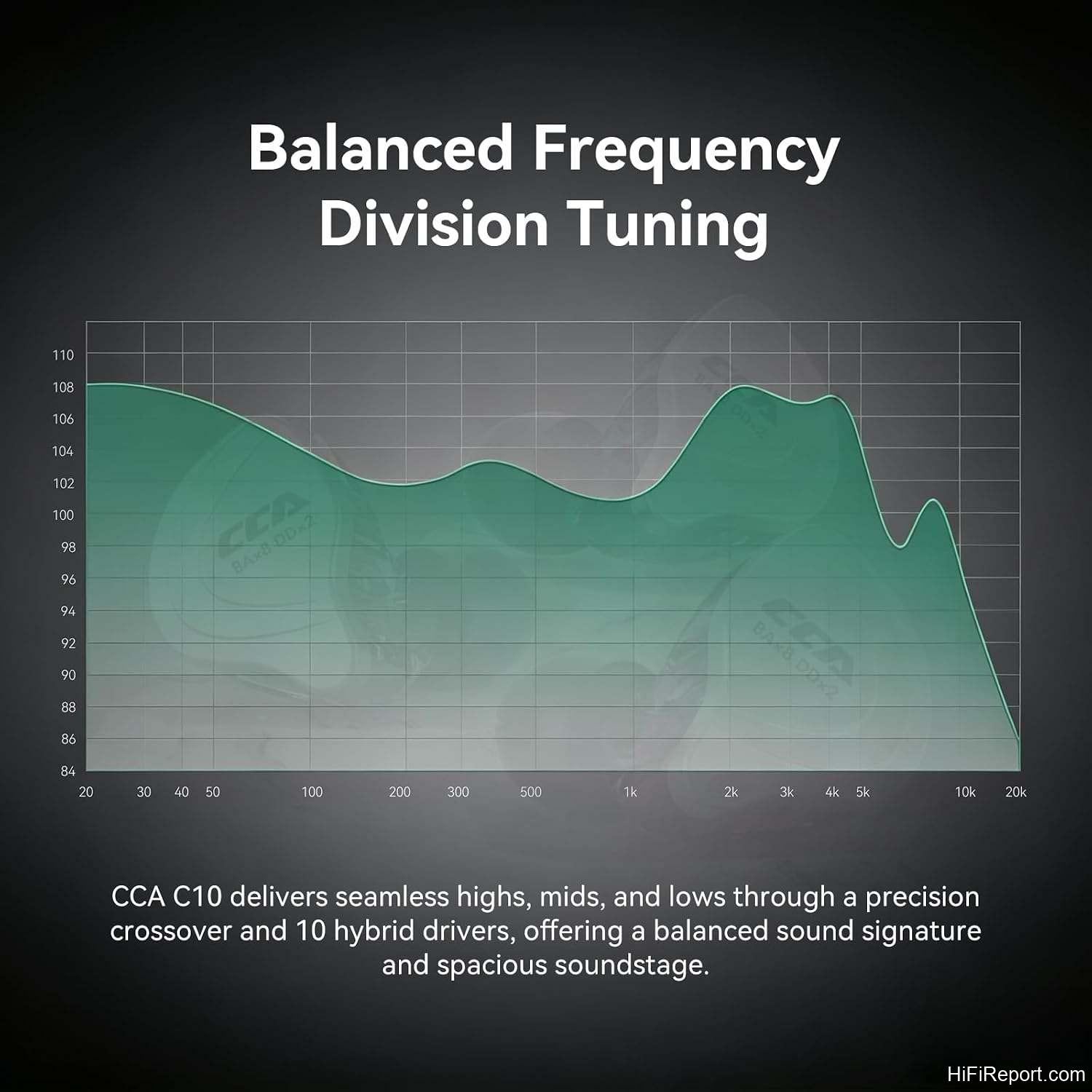
The CCA C10 tilts toward the upper register, trading sub-bass weight for midrange and treble detail that separates instruments cleanly. In practical terms the low end is present and has punch, but it does not carry the density of a bass-forward tuning. The product listing describes the low response as deep and elastic, which several owners confirmed: a drummer on Roland V-Drums reported the kick and floor toms stayed clean and undistorted without the low end crowding the mids. A reviewer playing bass guitar, by contrast, found the fundamental almost absent in a live gig and kept turning the source louder to feel the weight. For a listener who wants a grounded, warm low-mid shelf, the C10 will feel thin; for one who wants clarity in the mids with a controlled bass, the balance works.
Treble and Upper Register
The high end is the C10’s most defining trait. Multiple owners describe the treble as detailed, open, and extended, with vocal sibilance and cymbal decay rendered clearly. The product listing characterizes the high-frequency extension as delicate and supple, and notes that the sound stage has a natural expansion that gives a spacious feeling across the width. The overall tone sits between a bright reference and a neutral signature. The trade-off is that treble sensitivity becomes a real factor. One listener found the highs borderline painful on most tracks and unbearable on material with pronounced sibilance or loose mastering. For a listener with average treble tolerance the upper register adds sparkle without fatigue over a normal session; for someone with heightened sensitivity, a warm-tip filter or a modest EQ dip in the upper-mid to treble range keeps the experience comfortable.
Getting the Fit
The CCA C10 ships with three pairs of silicone ear tips in different sizes, and the angular housing shape takes a moment to get used to. One owner who expected a poor seal based on the visual geometry found the tips actually seat well once pushed firmly into the canal. A German guitarist noted the set required a deliberate, firm push to achieve a proper seal; a shallow insertion lets ambient noise bleed in and the low-end response drops. Fit quality drives both comfort and isolation. A snug seal with the included silicone tips gives average isolation, while swapping to aftermarket foam tips improves noise reduction noticeably in loud environments such as a woodworking shop or a drum practice room. Owners wearing glasses report the housings clear the temple arm as long as the frames are not thick plastic. A few owners who could not get a reliable seal with the stock silicone tips purchased foam replacements for a tighter fit, which also brought the bass response up.

Build and Accessories
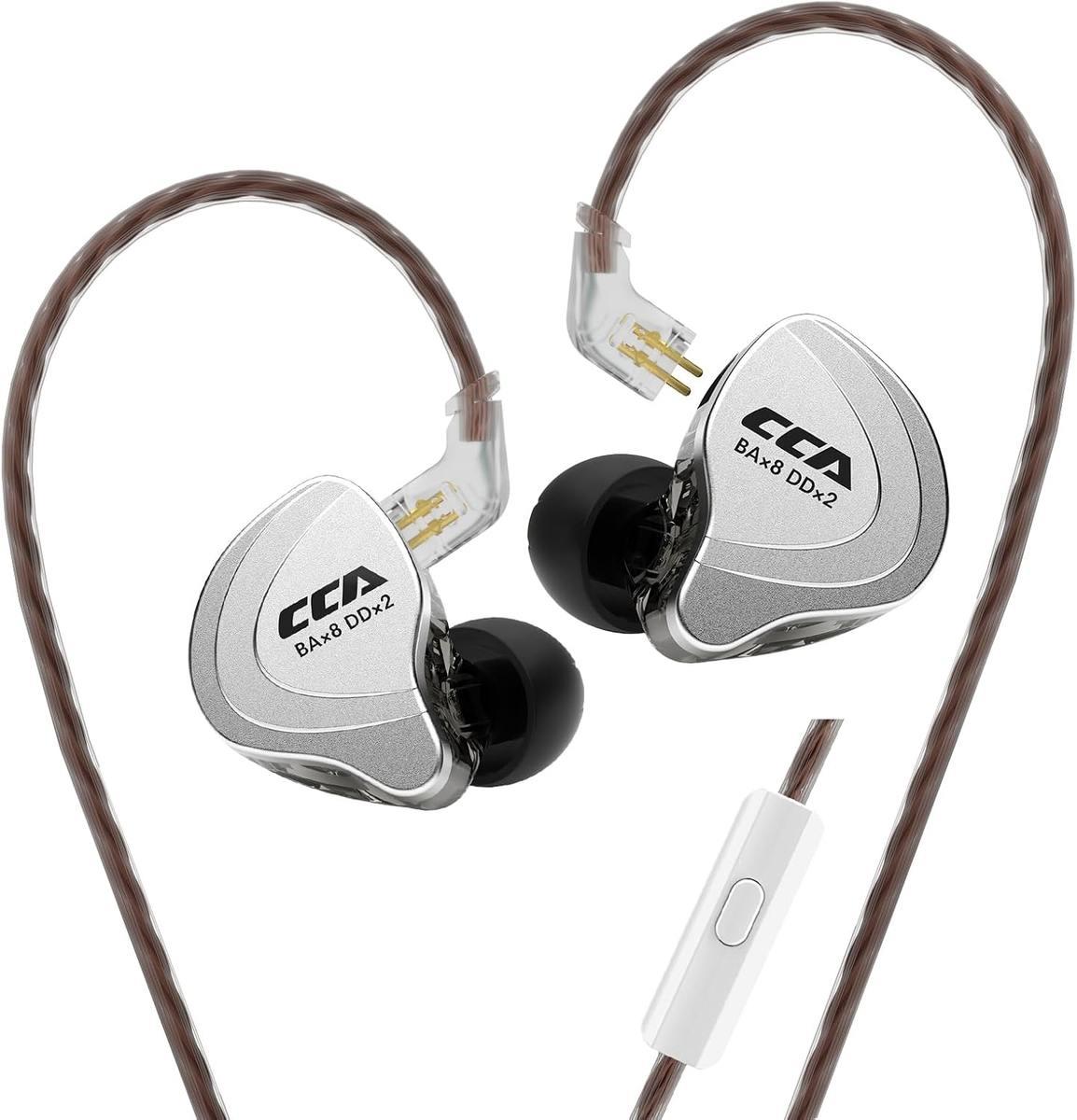
The earpiece housing is a zinc alloy shell milled into an angular profile and bonded to a resin body. The combination gives a rigid, metal-feel unit that one musician described as hearty and built to survive the bottom of a gig bag. The detachable cable is a 5N 4-core silver-plated braid with a 0.75mm 2-pin connector at each end and a 3.5mm gold-plated plug at the other. The main braid up to the Y-branch feels substantial and supple, but the section splitting into the two ear feeds is a thin double-braided wire that several owners flagged as the weak link. Tangling is a recurring annoyance; the cable behaves more like a standard headphone lead than a stiff monitor cable. The package includes the earphones, one detachable cable, and three pairs of silicone tips. No microphone is present in this variant, which limits hands-free use.
Listening Impressions
The CCA C10 works hardest in the hands of a drummer, electronic-drum player, or studio mixer who needs instrument separation more than low-end slam. Drummers in particular report the set as a strong fit. One owner playing electronic drums found the kick, snare, and cymbal transients clean and undistorted, and no longer had to crank the source volume to stay locked in. A worship-band drummer described hearing separate instruments clearly enough to keep a live mix tight, and ended up keeping the C10 alongside a pair of custom monitors for recording and loud-task situations such as woodworking and lawn mowing. A thrash-metal listener said the set sounded like a concert, with the low-end weight and midrange drive that dense, fast material demands.
On the studio side, a Logic Pro user reported being able to pick out individual tracks in a virtual band mix with ease, a level of separation that had previously required a pair of sealed customs. Vocal and keyboard separation stands out in particular; several owners noted that mids open up and become more textured compared with a single-dynamic reference. An Italian reviewer using the C10 to monitor a click track during live performance confirmed that the set isolates well from the environment when the tips are seated firmly. Where the C10 fades is in bass-heavy material for listeners who need sub-bass fundamentals. A bassist found the low end essentially absent during a gig, and the set’s treble-forward tilt made the fundamental of a bass guitar feel buried under the upper harmonics. For any genre that lives in the sub-bass region, the C10 will not satisfy without an EQ adjustment.
What Owners Say
Praise concentrates in three areas. Sound quality relative to the tier is the dominant theme; multiple owners who previously used branded IEMs in a mid-price range called the C10 comparable or a surprise upgrade in separation and detail. One musician noted that buying several backup pairs of the C10 costs less than a single pair of lower-tier Shure or Sennheiser monitors, making spares practical. Comfort during long sessions comes next. Several drummers and electronic-drum players noted they could play for extended periods without the ear pain that over-ear cans caused. The detachable cable and included tips are seen as practical extras that make the set easy to maintain and dial in.
Complaints cluster around two points. The cable’s thin split section after the Y-branch is the most common durability worry, with owners hoping it outlasts the initial months of daily use. Treble peaks, particularly on poorly mastered tracks or material with heavy sibilance, push some listeners to the edge of comfort. A small number of owners found the stock silicone tips insufficient for isolation and had to buy foam replacements. Fit quirks tied to the angular housing drew a few notes that the set looked like it would not work in the ear but did in practice once seated firmly.
What We Like / What We Don’t
What we like
- 1DD + 4BA hybrid resolution separates instruments cleanly at an entry-level price
- MEMS passive noise cancelling reduces ambient bleed without active electronics
- Detachable 0.75mm 2-pin cable lets a damaged wire be replaced without replacing the housings
- Zinc alloy shell resists the wear-and-tear of gig bags and practice rooms
- Three included tip sizes make the initial fit test straightforward
What we don’t
- Thin split-cable section after the Y-branch invites tangles and long-term wear
- Treble peaks on sibilant or loosely mastered material can be fatiguing
- Sub-bass and fundamental low-end depth trail behind the mids and highs
- No microphone on this variant limits video-call or streaming use
The Verdict
The CCA C10 is built for a specific listener: the working musician or detail-focused music fan who needs instrument separation, a controlled low end, and a set that survives a tour van without a repair bill. Drummers, electronic-drum players, and studio mixers working from a laptop will get the most from the hybrid driver stack, particularly when isolation matters and a midrange-forward balance keeps vocals and keys forward. The detachable cable adds a layer of practicality that a fixed-cable IEM cannot match; when the thin post-Y section finally fatigues, the housings remain serviceable.
© hifireport.com – Original review content by hifireport.com. Reprinting without written permission is not allowed.
If the priority is sub-bass impact or the ears sit on the sensitive side of the treble range, the C10’s upper-register emphasis works against the listener and a different tuning or an EQ intervention is worth considering. For the profile it targets, the combination of resolution, passive noise cancelling, and a replaceable cable makes it a practical monitoring tool that punches above its driver count.
Key Specs
- Driver configuration: 1 dynamic + 4 balanced armatures per side
- Total drivers per set: 10
- Housing material: zinc alloy shell with resin
- Noise cancelling: MEMS passive
- Cable: 0.75mm 2-pin detachable, 5N 4-core silver-plated
- Plug: 3.5mm gold-plated
- Ear tips included: 3 pairs (silicone)
- Microphone: none (this variant)
- Color: black
- Brand: H HIFIHEAR (CCA)
- Aggregate rating: 4.5 out of 5 (994 reviews)
Common Questions
Do the included ear tips provide enough isolation for a loud stage?
The stock silicone tips give average isolation. Several owners who needed a tighter seal for live or workshop use switched to aftermarket foam tips, which improved both noise reduction and bass response. A firm, deep insertion is the single most important step; a shallow fit lets ambient noise bleed in and the low end drops.
Can the cable be replaced if it wears out?
Yes. The 0.75mm 2-pin connector at each earpiece accepts any standard 2-pin 0.75mm replacement cable. The included 5N 4-core silver-plated braid is a starting point, but owners have swapped to stiffer or different-gauge cables without needing new housings.
Will the treble be too harsh for someone with sensitivity?
The upper register is the C10’s most forward band. Listeners with heightened treble sensitivity reported discomfort on most tracks and pain on material with sibilance or loose mastering. A warm-tip filter or a modest EQ dip in the upper-mid to treble range addresses the issue without dulling the detail the rest of the set provides.
How does the C10 compare to a single-dynamic IEM at the same price tier?
Owners who A/B tested the C10 against older single-dynamic sets report the hybrid architecture adds upper-mid and treble separation, particularly on vocals, keys, and cymbal transients. The trade is a thinner sub-bass shelf and a brighter overall balance. The C10 wins on instrument detail and loses on low-end weight.

- 【10 Driver Hybrid Earbuds】: CCA C10 earphone has 10 drivers hybrid technology. 1 dynamic&4 balanced armature each ear exclusively dedicated to silky highs, detailed mids, and deep bass. High-intensity resolution, rich sense of quality, full of vocals. True pure listening experience for you. Every nuance comes alive like hearing your favorite music for the first time.
- 【Durable Zinc Alloy Shell+Resin】: High quality function matches form with an extremely lightweight yet durable zinc alloy shell+resin. A combination of fine craftsmanship forged a sleek and sturdy look. The CCA C10 can handle any condition you put them in, whether it's at the bottom of your gym bag or just casual listening. Lightweight and ergonomic design offers you extra flexibility, portability and durability. Great for running, jogging, hiking, biking, gym etc.
- 【Noise Cancelling and High Sound Quality】: Built-In MEMS noise cancelling, reduces environmental noise and distractions by up for an immersive auditory experience. The sound is pure. It has a good balance of high, midsand low frequency. The tone won't been too bright or too dark. High frequency extension is good, delicate and supple. Low dive deep, full of elasticity and intensity. The sound stage has a natural expansion and the width magnitude is able to give a spacious feeling.