
Estelon Forza Review
On a breezy Sunday morning in 2010, Estonian electro-acoustic engineer Alfred Vassilkov was having breakfast with his two daughters. He shared with them his vision for crafting the world’s finest loudspeaker, a groundbreaking design he wished to bring to life himself rather than selling to another company. That very evening, the Vassilkov family decided to embark on a new venture: Estelon was born.
Decades of Speaker Craft
Alfred’s decision to establish Estelon was far from impulsive, born solely from a breakfast table discussion. Prior to Estelon, Alfred had already amassed 25 years of experience in loudspeaker design, albeit primarily working behind the scenes for other brands.
Growing up in Soviet-era Estonia, resources were scarce. Alfred developed a fascination with radios from a young age, taking them apart, rebuilding, and modifying them. This passion for audio led him to pursue electro-acoustics at Saint Petersburg University. After graduation, he dedicated his career to loudspeaker design until 2010 when he resolved to create Estelon, aiming to build the perfect loudspeaker he had always envisioned.
Approaching its tenth anniversary, Estelon has consistently introduced new models each year. The Estelon Classic series, the brand’s origin, immediately garnered global attention with the XA’s distinctive vase-like curved cabinet. Constructed from composite materials, the cabinet offered both high rigidity and damping, coupled with ceramic drivers and diamond tweeters. Estelon, right from its inception, secured orders from major global markets, establishing a robust foundation for brand growth.
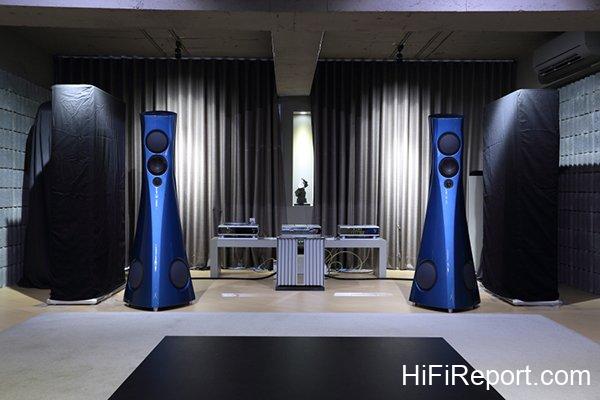
However, the product that truly propelled Estelon onto the Hi-End world stage was the Extreme, launched in 2014.
Extreme: Establishing Estelon’s Hi-End Pedigree
The Extreme loudspeaker stands at a towering 177.7 to 207 cm tall. The dual height specification arises from Estelon’s innovative adjustable module design. This module allows for height adjustment to optimize time alignment based on listening distance. At its lowest setting, the Extreme measures 177.7 cm, but for larger listening spaces and longer distances, the core speaker module can be elevated up to 207 cm.
This unprecedented innovation, combined with the application of top-tier diamond and ceramic drivers, positioned the Extreme as Estelon’s current “state-of-the-art” achievement.
Wait, isn’t the editor at HiFiReport to listen to the Forza? Why is the focus initially on the Extreme? Simply put, without the Extreme, there would be no Forza.
Following the release of the Extreme, Estelon garnered numerous awards from global audio publications and captivated audiophiles. However, the Extreme, by its nature, was an exceptionally expensive loudspeaker, accessible only to a select few. Consequently, Alfred embarked on a project to bring the Extreme’s technology to a more accessible price point, resulting in a new loudspeaker with performance approaching the Extreme: the Forza.
Forza: Extreme DNA
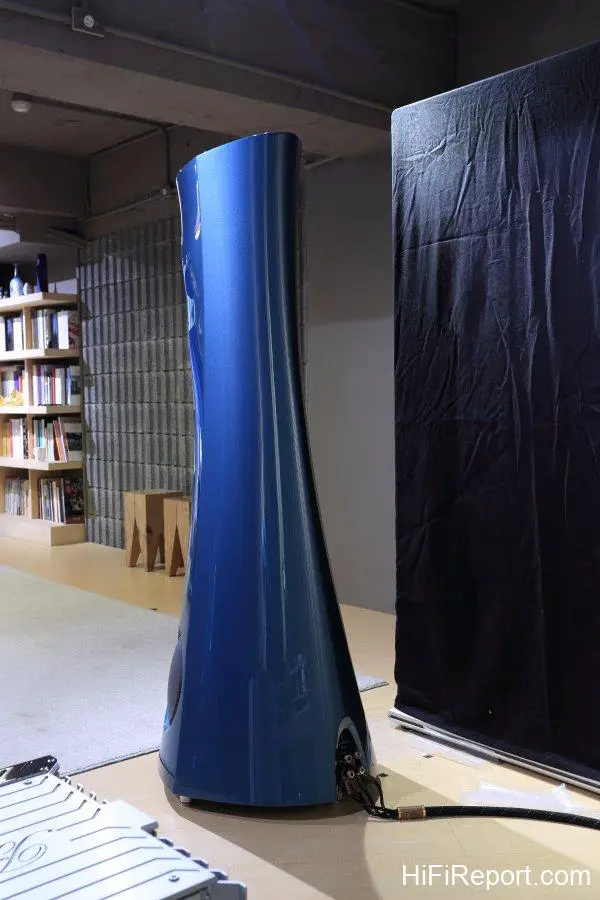
Comparing the Extreme and Forza reveals striking similarities. The Forza, however, omits the adjustable height core module, simplifying the structure and reducing the height to 167.5 cm.
Nevertheless, in driver selection, cabinet construction, and core technology implementation, the Forza closely mirrors the Extreme, particularly in the crucial bass driver, which shares the same specifications as its flagship sibling.
I often tell my friends that in audio, the most significant expenditure is often in the low frequencies. Loudspeakers need substantial cabinet volume to produce ample bass energy, as drivers require sufficient enclosure volume for deep extension and quantity. Furthermore, bass drivers need adequate surface area to move air and reproduce high-quality low frequencies. Driving these bass frequencies also demands substantial amplifier power. Thus, the low-frequency domain represents the most expensive and challenging aspect of audio systems.
Bass Driver: Extreme Heritage
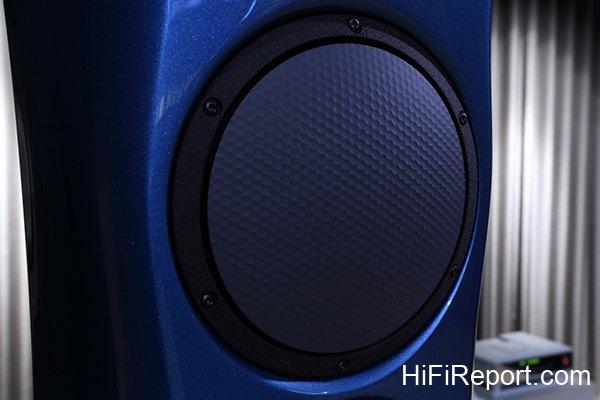
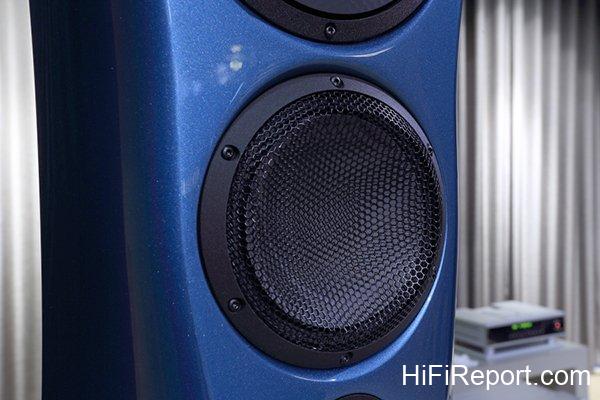
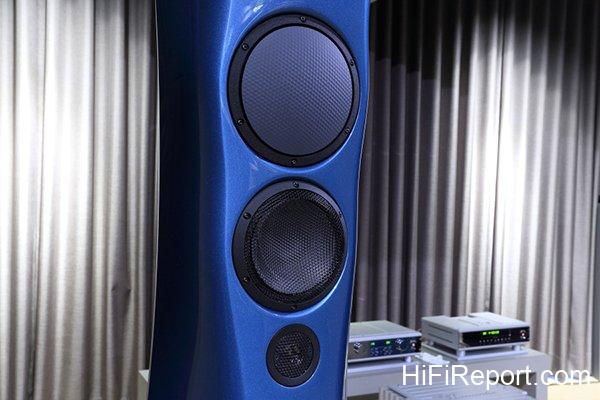
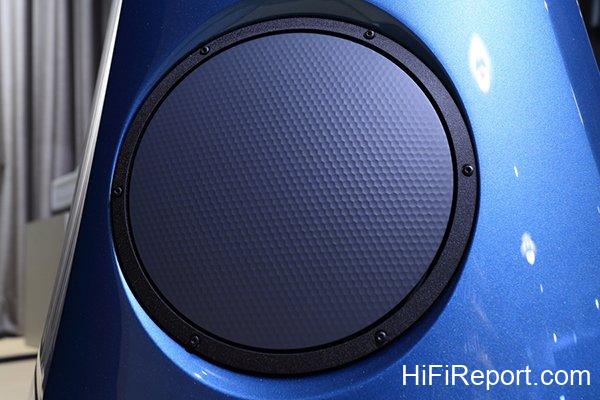
The Forza’s ability to approach the flagship Extreme’s performance hinges on its dual bass drivers located in the base. Identical to the Extreme, these are 25 cm in diameter and feature CELL aluminum sandwich cone diaphragms.
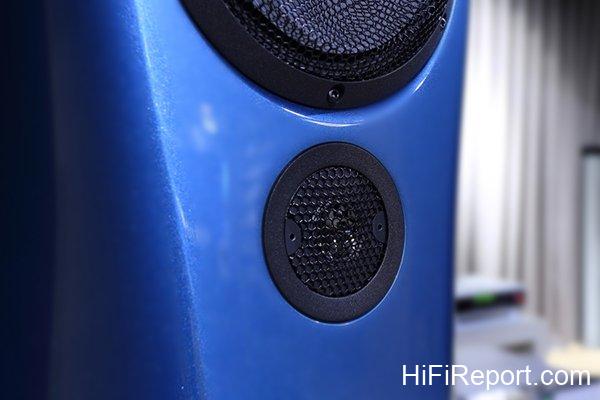
The mid-bass driver, positioned at the top of the Forza, measures 19 cm in diameter and also utilizes a CELL aluminum sandwich cone diaphragm. The midrange driver is a 16.8 cm CELL ceramic diaphragm unit, paired with a 25mm diamond tweeter.
In terms of driver count, the Forza matches the Extreme. However, the top-mounted mid-bass driver diameter is reduced from 25 cm to 16.8 cm, and the ceramic midrange driver is also slightly smaller. The Extreme employs a 17.3 cm midrange, while the Forza uses a 16.8 cm unit.
The diamond tweeter is also slightly smaller, with the Forza using a 25 mm diamond tweeter compared to the Extreme’s 30 mm. All of these drivers are custom-made by Accuton in Germany for Estelon.
Accuton Drivers: Custom-Designed
It is important to emphasize the “custom-made” aspect. While Accuton drivers are expensive, DIY enthusiasts might find purchasing them directly and building their own speakers more cost-effective than buying commercially available speakers using the same Accuton drivers. Accuton’s driver model numbers are typically based on their diameter. Therefore, the drivers mentioned above are designated as AS 250, AS 190, and AS 168 by Accuton.
However, Estelon uses “custom-made” Accuton drivers, not standard off-the-shelf products. These are manufactured to Estelon’s specific requirements for the Forza. While the exact modifications made by Estelon to these custom Accuton drivers are not disclosed by the factory, they are undoubtedly more expensive than DIY mass-produced Accuton drivers. Furthermore, Accuton would only undertake custom driver production for Estelon if a substantial order volume was placed.
Cabinet Material: Sculpted Aesthetics
Estelon speaker cabinets are constructed from a unique composite material based on marble powder, formed under high temperature and pressure. This results in exceptional rigidity and uniform density.
This special marble-based composite material allows Estelon to employ sculpting techniques, crafting loudspeaker cabinets with fluid, three-dimensional forms. From the earliest XA to the Extreme and Forza, Estelon’s speaker aesthetics have been a constant source of fascination. Some liken them to vases, while the lower sections of the Extreme and Forza, with their flared bases, evoke images of elegant women in beautiful gowns, exuding an aura of refined grace.
The use of this unique composite material also allows Estelon to employ high-temperature baking processes for the finish. The factory’s painting technique is reportedly derived from the automotive industry, requiring 12 layers of paint, each meticulously hand-polished to achieve the Forza’s exquisite cabinet finish.
The sculptable nature of the cabinet material also allows for complex internal structures, completely eliminating parallel surfaces to effectively disrupt internal low-frequency standing waves, preserving the purity of the music.
Impedance: Amplifier Matching
Estelon specifies the Forza’s frequency response as 25 Hz to 60 kHz, a slightly more conservative low-frequency figure than the Extreme’s 20 Hz, but a higher high-frequency extension of 60 kHz compared to the Extreme’s 45 kHz.
The manufacturer recommends the Forza for listening spaces ranging from 40 to 125 square meters, roughly equivalent to 12 to 38 US ‘pings’ (a unit of area).
Detailed technical specifications for the Forza are somewhat limited. Crossover frequencies, for example, are not disclosed by Estelon. The Forza’s efficiency is rated at 90 dB, with an average impedance of 3 ohms.
While the 90 dB sensitivity might seem high, the relatively low 3-ohm impedance, potentially dropping to 2 ohms at its minimum, suggests that the Forza is not an easy load for amplifiers. Low impedance can place a greater demand on the amplifier’s power delivery.
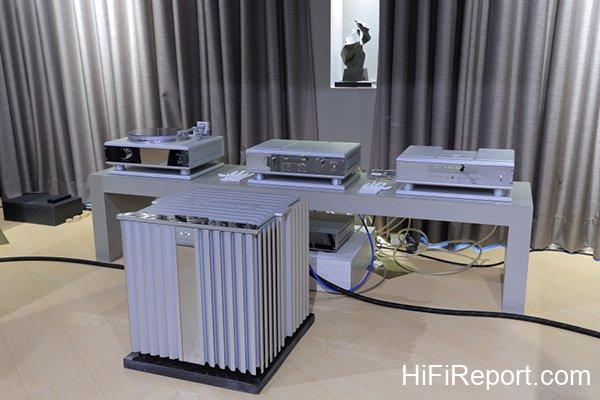
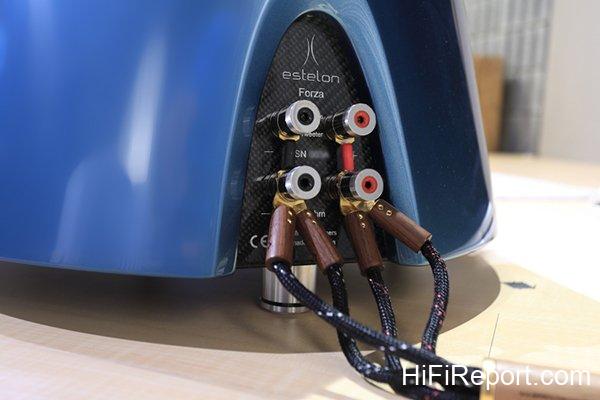
HiFiReport, representing numerous brands, naturally paired the Forza with Burmester electronics, specifically the flagship 909 power amplifier, the 077 preamplifier, and the 069 CD player as the digital source.
Room Size: Optimal Performance Space
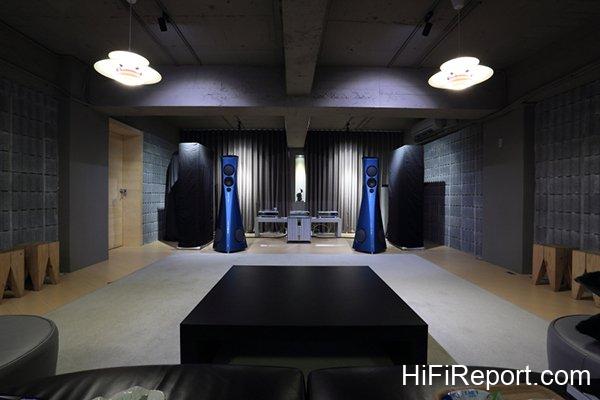
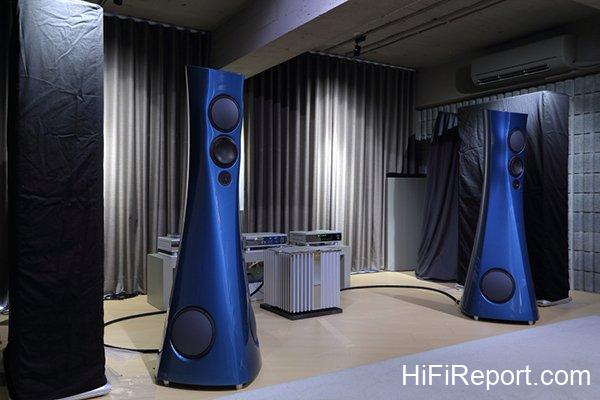
HiFiReport positioned the Forza in their open-plan listening space rather than a smaller, acoustically isolated room. I believe this choice was due to the Forza’s substantial sonic energy output. In a smaller room, the sound might not fully develop before low frequencies become overwhelming. Providing the Forza with ample space to breathe allows its sonic power and beauty to fully manifest.
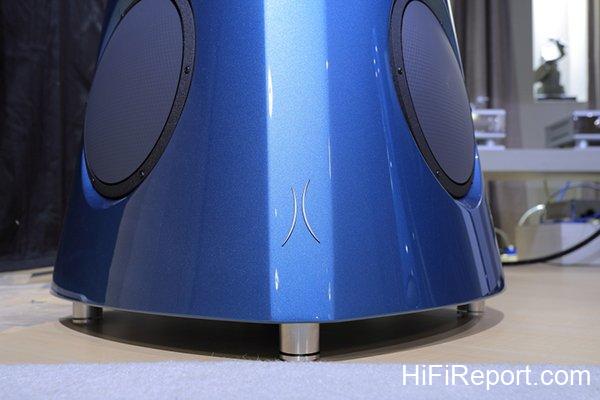
Estelon’s official information indicates that the Forza is available in three standard colors: black, white, and matte black. However, the pair at HiFiReport was finished in a striking gem blue, likely a custom color specifically ordered by HiFiReport. Furthermore, while Accuton bass drivers typically have white cones, this gem blue Forza pair even had blue-tinted bass driver diaphragms, perfectly matching the cabinet color – a testament to Estelon’s meticulous attention to detail in speaker construction.
I had visited HiFiReport’s open space office when it was newly completed. At that time, with minimal furnishings, the reverberation time was longer due to reflections. This time, listening to the Forza, while reflections were still present, the sound quality was significantly improved. Moreover, the space’s acoustic character more closely resembles a typical home environment, making it easier to imagine how the Forza might sound in a domestic setting. In a dedicated listening room with shorter reverberation times, the sonic presentation might differ.
Violin: Vivid and Focused
Settling into HiFiReport’s comfortable sofa, I found that the full Burmester system had been warmed up and playing since morning, eliminating any need for warm-up time. I began my listening session immediately upon arrival in the afternoon.
I started with “Homage to Sarasate,” a collaboration between Rachel Barton and Samuel Sanders, focusing on the “Serenata Andaluza,” imbued with Southern European flair. The piano’s romantic and ethereal arpeggios ushered in the violin’s swaying, slow melody. The Forza beautifully rendered a focused and vivid violin image in the center of the soundstage. The piano, lush and expansive, highlighted the violin’s concentrated presence. The wealth of musical information conveyed a strong sense of a live performance.
As the gentle slow movement concluded, the piano abruptly erupted in three powerful chords, transitioning into a passionate allegro. The Forza’s solid foundation effortlessly reproduced the piano’s fortissimo passages. The violin soared into rapid, virtuosic runs, mirroring the piano’s bouncing notes. The bow changes and spiccato techniques, the rapid and brilliant violin passages, sounded clean and fast through the Forza, with fluid sonic contours. When the tender melody returned, the Forza’s rendition of Sarasate was truly romantic.
Flute: Nuance and Breath
Switching to “Piazzola For Two,” performed by Patrick Gallois and Göran Söllscher, I listened to the first track, “Histoire Du Tango: Bordel 1900,” a tango depicting a brothel in 1900. The flute played a joyful melody, with guitar body percussion as a rhythmic response. This call-and-response evolved into a harmonious blend of guitar chords and flute, creating a lively and cheerful tango in musical form.
The Forza’s image solidity was remarkable. The flute was positioned center-left, and the guitar slightly to the right, vividly recreating the recording venue’s spatial layout.
The subtle details of the flautist’s lip movements and the minute air friction sounds of breath were vividly portrayed, enhancing the music’s realism. The nylon-string guitar’s gentle note articulation, coupled with the Forza’s rich midrange foundation, and the instrument’s form factor, were rendered with appropriate and lifelike outlines. The image was neither overly large nor too tightly focused. The flute’s slightly forward-leaning sonic character, combined with the guitar’s warm-toned midrange richness, resulted in a perfectly balanced image portrayal.
“Father’s Guitar” Comes Alive
To truly assess guitar reproduction, I couldn’t miss out on Hsu Ching-Chun’s “Father’s Guitar.” The nylon-string guitar, positioned on the right of the soundstage, melancholically played a Japanese-style melody. The steel-string guitar, entering with arpeggiated chords, was clearly located on the left. Hsu Ching-Chun’s vocals emerged, distinctly focused in the center of the soundstage. To evoke a vintage recording atmosphere, Hsu’s voice was layered with an old-fashioned echo effect. The simple guitar accompaniment framed Hsu’s vocals.
The Forza meticulously reproduced the rich recording details, revealing the subtle echo effects hidden in the background. It brought “Father’s Guitar” to life. Following Hsu Ching-Chun’s poignant vocals, my mood shifted to the song’s nostalgic scene, understanding why “heartbreaks and sweet memories are sung all night long.”
Piano: Rich Dynamics
Returning to classical music, I selected Chen Sa’s solo piano performance of “Pictures at an Exhibition.” I bypassed the familiar “Promenade” and directly navigated to the penultimate movement, “Baba-Yaga,” and then to the climactic finale, “The Great Gate of Kiev.”
The Forza exhibited a full and balanced image coherence. Chen Sa’s dynamic touch was reproduced with authentic and substantial energy. In “Baba-Yaga,” the right hand’s leaping chords in the high register grew increasingly forceful, contrasting with the witch’s stealthy pianissimo passages. Even during quiet piano sections, the Forza maintained beautiful high-frequency overtones. I held my breath, anticipating the climax of “The Great Gate of Kiev.”
The rapid arpeggios of “Baba-Yaga” returned, building towards the crescendo. Chen Sa’s fingers moved faster and faster, leading into the solemn and majestic theme of “The Great Gate of Kiev.”
Chen Sa did not unleash her full power immediately but controlled the “Great Gate of Kiev” theme with moderate force, reserving full power for the final thematic return. The Forza subtly conveyed the pianist’s intent. The dazzling high-frequency notes, cascading into the bass, resembled the fireworks illuminating “The Great Gate of Kiev.” The Forza’s rich high-frequency harmonics made the piano’s resonance captivating. It was these minute sonic details that brought the music to life.
Lupu’s Piano: Storytelling Masterclass
Finally, I selected Radu Lupu’s performance of Schumann’s Piano Concerto, a Decca classic recording by the legendary engineer Kenneth Wilkinson. However, my primary focus was Lupu’s interpretation. From the outset, Lupu launched into full force, and the Forza kept pace admirably. The orchestra’s forceful opening, met by the piano’s powerful chords, was both impactful and swift. Subsequently, the woodwinds emerged from the background, playing a romantic yet slightly melancholic melody, to which the piano responded tenderly. Wave-like musical phrases gradually heightened the music’s intensity and tension, preparing for the allegro theme. The piano beautifully interacted with the orchestra. The Forza presented a striking contrast between the piano’s crystalline clarity and the orchestra’s weighty sonority.
Radu Lupu was a reserved pianist, rarely granting media interviews. In one of his rare interviews, Lupu stated: “Everyone tells stories in different ways, and storytelling should be engaging and natural. If it lacks appeal and persuasiveness, it is worthless.” Listening to Lupu’s Schumann Piano Concerto on the Forza, I heard not just the interplay between piano and orchestra, but a narrative unfolding. Lupu masterfully controlled the piano’s dynamic contrasts. The glittering high-frequency notes in the right hand were characteristic of Schumann’s style. In Lupu’s hands, the piano seemed to tell a story, naturally captivating the listener. The Forza faithfully reproduced the recording’s rich musical details. Alone in HiFiReport’s office, I savored Lupu’s Schumann, accompanied by the Forza. As I settled into enjoying Schumann, a series of romantic notes coalesced into a graceful dance – truly beautiful.
Ah! Disaster! I forgot to bring Mahler! No matter, I’ll return to HiFiReport another time. I’m eager to hear how the Forza performs with Mahler.
Specifications
* Type: 3-way 5-driver floorstanding loudspeaker
* Drivers: 25 mm diamond tweeter × 1, 168 mm ceramic midrange driver × 1, 190 mm aluminum sandwich cone mid-bass driver x 1, 250 mm aluminum sandwich cone bass driver × 2
* Frequency Response: 25 Hz – 60 kHz
* Impedance: 3 ohms
* Sensitivity: 90 dB
* Dimensions: 617 (W) × 682 (D) × 1675 (H) mm
* Weight: 150 kg (per channel)