
Ferrum Audio Wandla GoldenSound Edition DAC Review
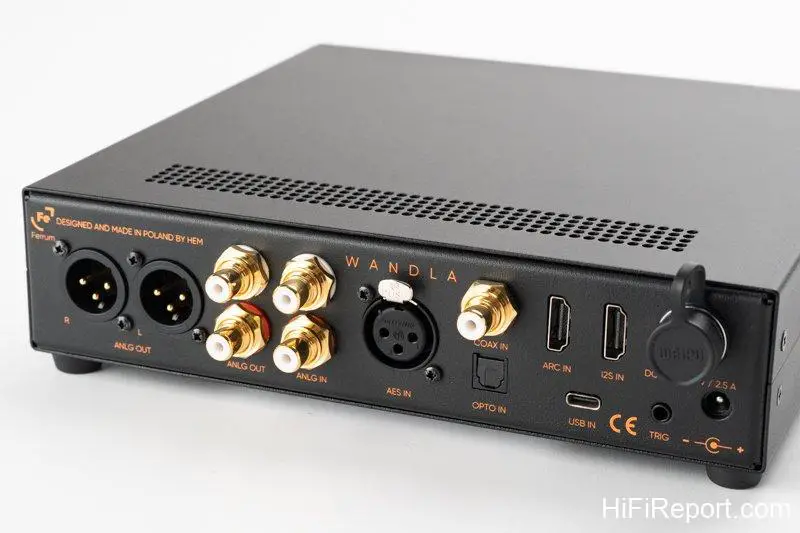
For Ferrum Audio, the Polish audio innovators, creativity and technical prowess seem boundless. Take, for instance, the Wandla DAC we reviewed previously. It featured digital filter modes specifically designed by Signalyst, the developer behind HQPlayer, boasted an incredibly comprehensive set of connection interfaces (including HDMI ARC, I2S, and even analog input), and incorporated a highly intuitive touchscreen display. These features quickly positioned the Wandla as a standout performer in its class upon its release.
Now, the Wandla has evolved once more, birthing the Wandla GoldenSound Edition. Building upon the already solid foundation, this new version incorporates even more features and enhanced performance, aiming to widen its lead in the competitive DAC market.
So, why the name “GoldenSound Edition” for the updated Wandla? This version was developed by Ferrum Audio based on suggestions from Cameron Oatley, the proprietor of the website GoldenSound.audio. Hence, it was fittingly christened the GoldenSound Edition.
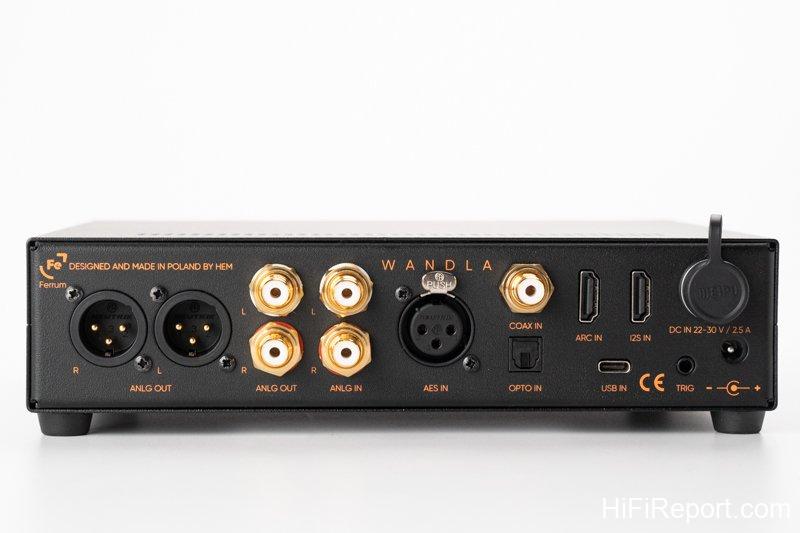
What are the differences between the new version and the original? Aside from the removal of MQA decoding, the Wandla GoldenSound Edition (hereafter referred to as Wandla GE) introduces five major new functionalities. Let’s delve into each one.
Increased Digital Headroom
The Wandla GE boasts increased digital headroom. The “Loudness War” in the music industry has led to popular music recordings having less and less dynamic range available, which can potentially cause waveform clipping or even distortion during playback on a DAC.
The original Wandla already had its own provisions for digital processing headroom. The Wandla GE takes this further, reserving even more headroom to accommodate its additional upsampling and DSP digital processing routines. According to Ferrum Audio, even with the Wandla GE’s volume control bypassed, allowing it to output at maximum level with various DSP functions enabled, there will be no distortion when playing any recording.
Spatial Enhancement Feature
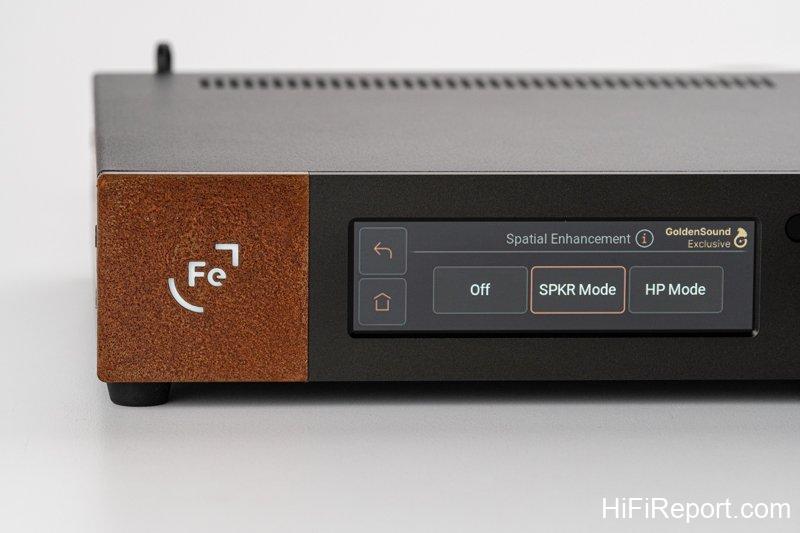
The Wandla GE introduces a new “Spatial Enhancement” feature designed to provide a more expansive soundstage and increase the separation between different sounds. This function offers two selectable modes: SPKR Mode and HP Mode, for loudspeaker and headphone listening respectively. You select the mode corresponding to your listening method, or simply turn the feature off if not desired.
Similar features exist on other DACs, but Ferrum Audio claims theirs is different. How so? It doesn’t add reverberation, doesn’t introduce tonal coloration, and is free from distortion. As a side note, any feature new to the Wandla GE will display a golden “GoldenSound Exclusive” label in the top right corner of the screen settings page, indicating that this functionality is unique to the Wandla GE and not available on the standard version.
Tube Mode
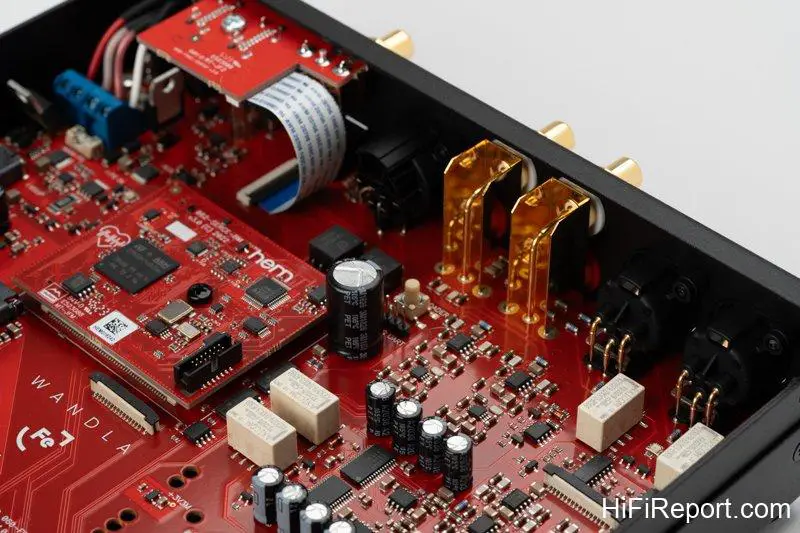
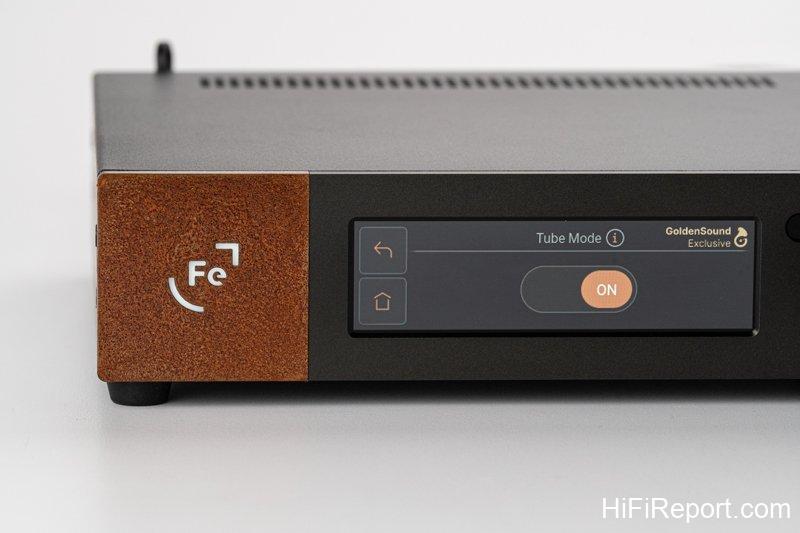
The Wandla GE adds a “Tube Mode,” offering another variation in tonal character to provide listeners with additional enjoyment. This feature isn’t achieved through digital processing or simulation, nor does it rely on EQ circuits to alter frequency response. Instead, it deliberately utilizes distortion.
How does it work? A significant characteristic of tube amplification is its higher proportion of even-order harmonic distortion compared to solid-state amplification. Tube Mode intentionally adds a certain amount of even-order harmonic distortion to create a warm tonal quality reminiscent of tubes, but without the typical side effects like coloration or increased noise floor. The Tube Mode in the Wandla GE isn’t implemented via DSP; rather, it involves a deliberate misconfiguration of the ESS chip to increase the proportion of even-order harmonic distortion.
Bass Enhancement Function
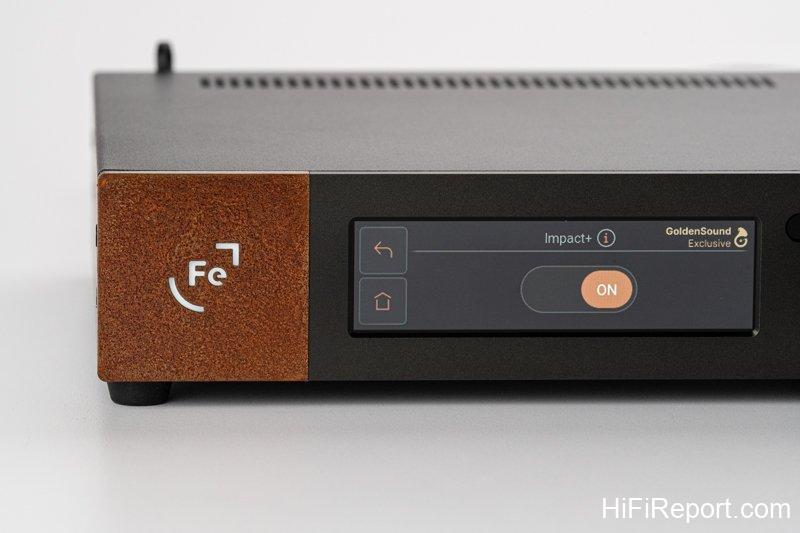
The Wandla GE adds a feature called Impact+ to satisfy the needs of bass enthusiasts. Impact+ takes a more traditional approach, utilizing a specially designed two-band EQ to increase low-frequency quantity and dynamics, resulting in music that sounds more impactful.
Output Voltage Adjustment
To fully cater to the needs of any downstream equipment, and to allow for more flexible system setup while ensuring the best sound quality, the Wandla GE provides two output modes (DAC Output Standard), named RED and PRO.
The RED mode provides a standard DAC output level, up to 3.5V RMS (balanced output), which is sufficient to match typical home audio or audiophile equipment. If you are using a preamplifier or integrated amplifier, you can bypass the Wandla GE’s volume control and select RED mode.
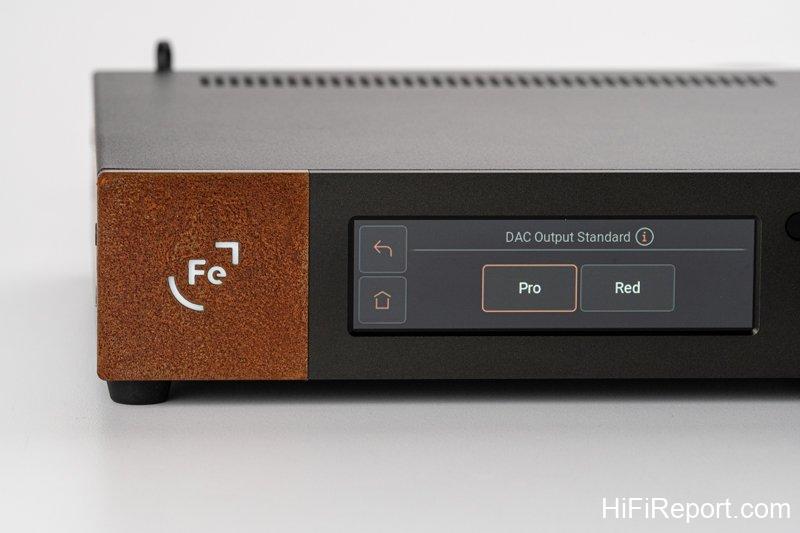
The PRO mode boasts a maximum output of up to 8V RMS (balanced output). Besides meeting the requirements of professional applications, when you wish to control the volume via the Wandla GE, you can utilize PRO mode for better matching with downstream equipment and ensure maximum ease of use. This feature is also planned to become standard on future batches of the standard Wandla.
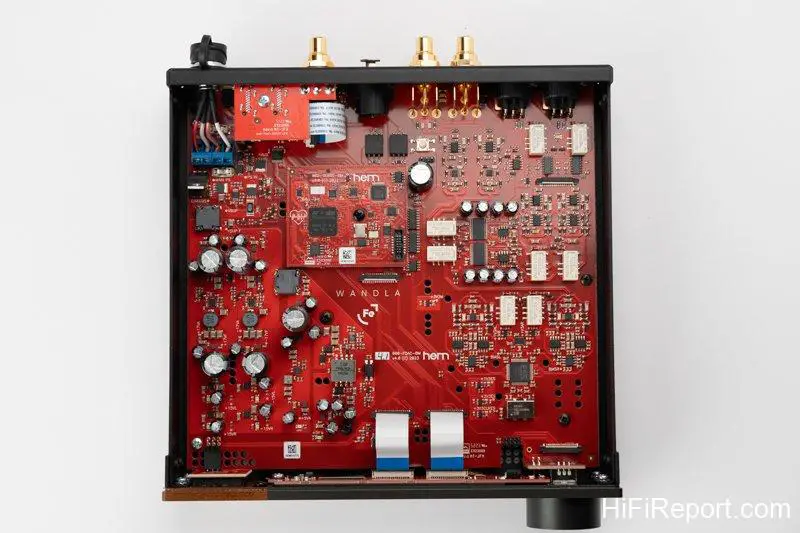
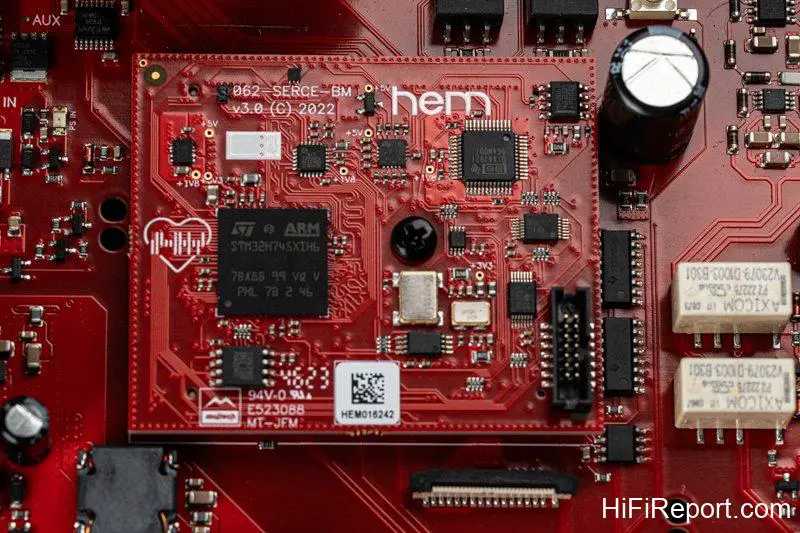
I previously mentioned that the Wandla GE removes the MQA decoding function. Why? Because the new Spatial Enhancement and Ferrum’s proprietary digital filters are processed via the SERCE computation core, consuming a significant amount of processing power. To ensure the SERCE has sufficient computational capacity, it cannot simultaneously support MQA, hence its removal.
Offering More Listening Pleasure
From the above, it’s clear that the Wandla GE only subtracts MQA functionality. However, if you don’t listen to MQA, this change is essentially irrelevant. On the other fronts, it adds five major functions, providing users with significantly more listening pleasure and greater usability.
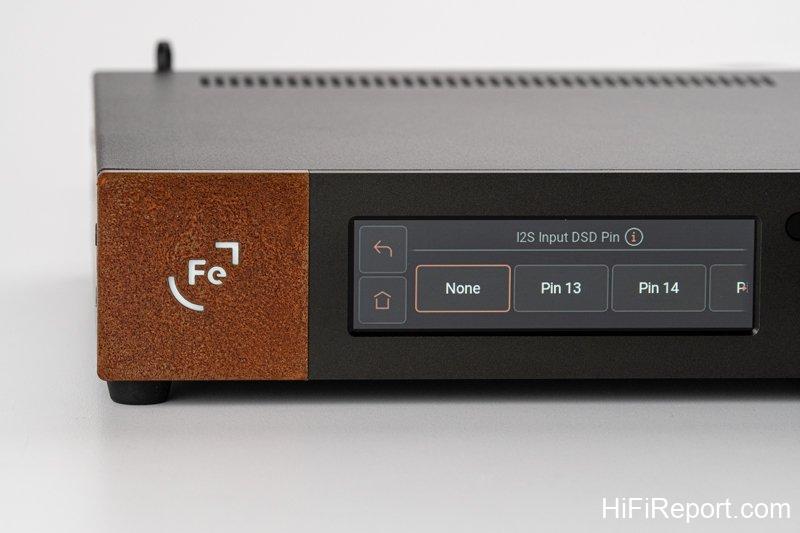
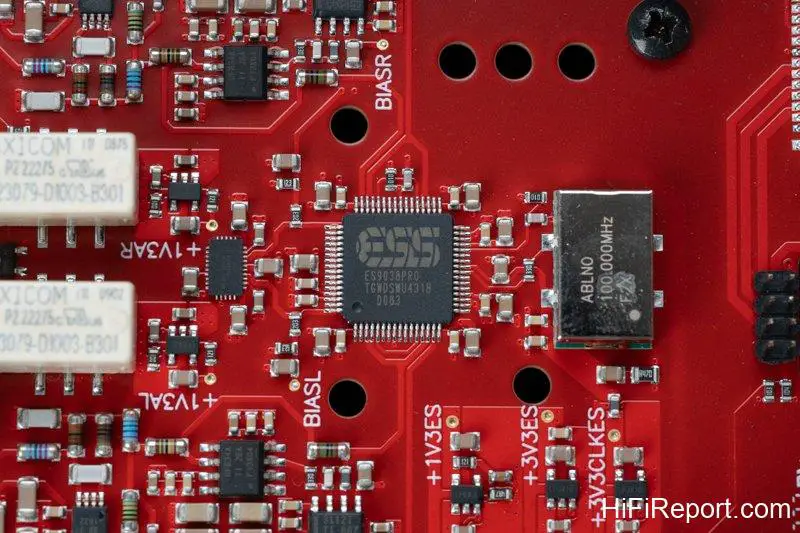
The Wandla GE still utilizes the ESS ES9038 PRO chip for its DAC, which remains unchanged. The analog output stage is also retained in its original form. This means that, when not utilizing the newly added tuning features, the GoldenSound Edition and the standard version should theoretically sound identical.
My auditioning process took place in my home setup. I used an Intel NUC mini-computer running Roon Core as the streamer, connected to the Wandla GE via a USB C cable. The Wandla GE’s XLR outputs were then connected to a Holo Audio Serene preamplifier, paired with a NuPrime EVO STA power amplifier and Aurum Cantus Grand Harmony loudspeakers. My reference DAC for comparison was the Audiobyte Black Dragon.
Regarding the inherent sound quality of the Wandla itself, another editor has already provided a very detailed account in the previous Ferrum Audio Wandla review, so I won’t dwell on that extensively. Here, I will focus specifically on describing the sonic changes brought about by the new features.
Enhanced System Matching Flexibility
Let’s first discuss the Wandla GE’s output voltage adjustment function. Since I use a preamplifier, the recommendation is to use RED mode and bypass the volume control. Indeed, with RED mode, the volume was more than sufficient, and the dynamics and balance felt just right, resulting in a relaxed and natural sound.
I also experimented with PRO mode. In this case, the sound became very robust, with forceful dynamics and added thickness. While the preamplifier could handle it, the volume became very loud with only a slight turn, making it less practical for my setup. RED mode felt just right.
So, when should one use PRO mode? I believe PRO mode is best utilized when also engaging the Wandla GE’s analog volume control, then adjusting the output level to achieve a desired tonal character. For instance, to achieve a thicker, denser sound, you could turn up the Wandla GE’s volume higher. For a more delicate, lighter sound, you could do the opposite. Through the output voltage adjustment feature, the Wandla GE provides users with yet another method for fine-tuning the sound.
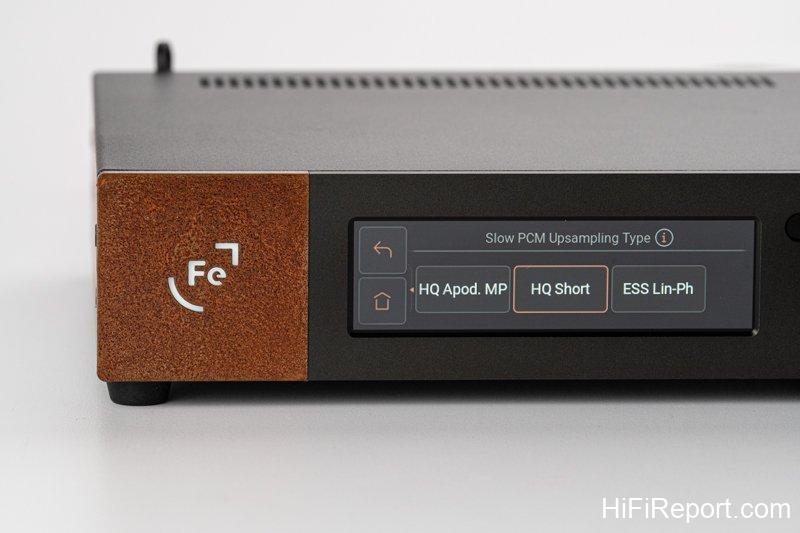
The digital filter modes are also a must-explore feature on the Wandla GE. The Wandla GE currently offers 5 digital filters: HQ Gauss, HQ Apod., HQ Apod.MP, HQ Short, and ESS Lin-Ph. The filters bearing the “HQ” prefix were specifically designed for Ferrum by Signalyst. Signalyst’s HQPlayer playback software, known for its unique algorithms for upsampling to multiple DSD rates, is favored by many adventurous CAT audiophiles.
I’ve also spent time experimenting with HQPlayer and am well aware that its sonic effects are quite distinct. The Wandla GE, with its built-in HQ digital filters, is no different. Compared to the standard ESS filters, these HQ filters offer different experiences in terms of sonic detail and smoothness, image palpability and definition, the clarity and blackness of the background, 3D soundstage… and so on. However, since my primary goal during this listening session was to discern the differences brought by the various tuning features, I chose the standard ESS filter. Its sound is the most direct, realistic, and fast, which was more conducive to making judgments.
Spatial Enhancement Without Side Effects
Next, let’s discuss the Spatial Enhancement feature. Listening through my loudspeaker system, I naturally selected SPKR Mode. After switching back and forth several times, I noticed something immediately: setting aside the specifics of how the space changed, activating it made the sound simply more engaging and enjoyable. I would essentially recommend keeping it on.
Taking Mutter’s Mozart Piano Trios as an example, featuring violin, cello, and piano, the SPKR Mode enhanced the instrumental images, making them slightly larger and significantly more palpable. Their outlines also became clearer, and the separation between instruments, as described by the manufacturer, improved, clarifying the relative positions of the instruments and enhancing the 3D dimensionality of the soundstage.
Furthermore, SPKR Mode also brought the sound images slightly closer, resulting in a thicker sound. Not only did the piano keystrokes feel more powerful and the notes more defined, but the bow strokes of the string instruments also felt more assertive, increasing the intensity of the music. Overall, the volume seemed to increase slightly, making the sound fuller, emphasizing dynamic contrasts, and giving the music more power. When SPKR Mode was turned off, the images felt smaller and flatter due to being perceived as further back, and the sound was lighter and clearer.
How about Tube Mode? I must say, the Wandla GE is rather modest or perhaps cautious in this regard. The difference is not huge. There was a slight increase in the “nasal” quality of the strings, and the piano tone deepened slightly, adding a sense of warmth and a hint of sweetness. The advantage is that the music’s agility and lightness remained unchanged, still lively and full of vibrant atmosphere.
Increased Bass with Punch
The Impact+ bass enhancement feature, however, is quite potent! For instance, on track 3, “Mandela (Bring Him Back Home!)” from Hugh Masekela’s “Hope” album, the kick drums and electric bass notes became noticeably larger and more substantial. Crucially, the sound remained very natural, the entire frequency spectrum still felt balanced, and there was no sense of artificially boosting the bass quantity. Furthermore, the speed was still excellent, the kick drum impact remained quite crisp, and the bass didn’t sound muddy. With Impact+, the bass in this recording sounded more like the tuning you’d hear at a live concert, making it more thrilling.
Another example is track 1, “Jam,” from Michael Jackson’s “Dangerous.” The original recording’s bass image and lower-end scale are quite restrained and somewhat recessed. With the assistance of Impact+, the scale of the lower end immediately widened slightly, the kick drum image became larger, and the weight improved. Crucially, the power remained strong, there was no sense of speed being dragged down, and the overall balance was maintained. Impact+ not only increases bass quantity but also preserves punch and transient response, giving the music noticeably more power. Unless your system already has excessive bass or slow response, you’ll likely not want to turn Impact+ off once you’ve tried it.
Happily Money Well Spent
Returning to the price, the standard Wandla version was already not inexpensive. The Wandla GE adds another 20% to the price. Is it worth the extra cost? I think you can look at it this way: if your original budget was already in the range of the standard Wandla, then I believe the Wandla GE is worth tightening your belt a bit more and finding a way to squeeze out the extra funds. The Wandla GE uses the most sophisticated methods to add even more sound tuning functionalities on top of its already extremely comprehensive features. This allows you to gain rich listening pleasure while still hearing music naturally, comfortably, and correctly. It will undoubtedly make you feel that the money was happily and willingly spent.
Specifications
* **Type:** DAC
* **Input Terminals:**
* AES/EBU (up to 192kHz/24bit, DoP 64)
* Optical S/PDIF (up to 192kHz/24bit)
* Coaxial S/PDIF (up to 192kHz/24bit, DoP 64)
* USB-C (up to 768kHz/32bit, DSD 256)
* HDMI ARC (up to 192kHz/24bit), TV input with CEC
* I2S (up to 768kHz/32bit, DSD 256)
* Analog Input: RCA
* **Analog Output:** RCA, XLR
* **Frequency Response:** 10Hz – 200kHz / +- 0.1dB
* **THD+N:** -115dB (unweighted)
* **Dynamic Range:** 127dB (A-weighted)
* **Dimensions:** 217.5 × 50 × 206.5 mm (Width × Height × Depth)
* **Weight:** 1.8 kg