
Furutech GTO-D3 NCF / GTO-D2 NCF Power Distributors Review
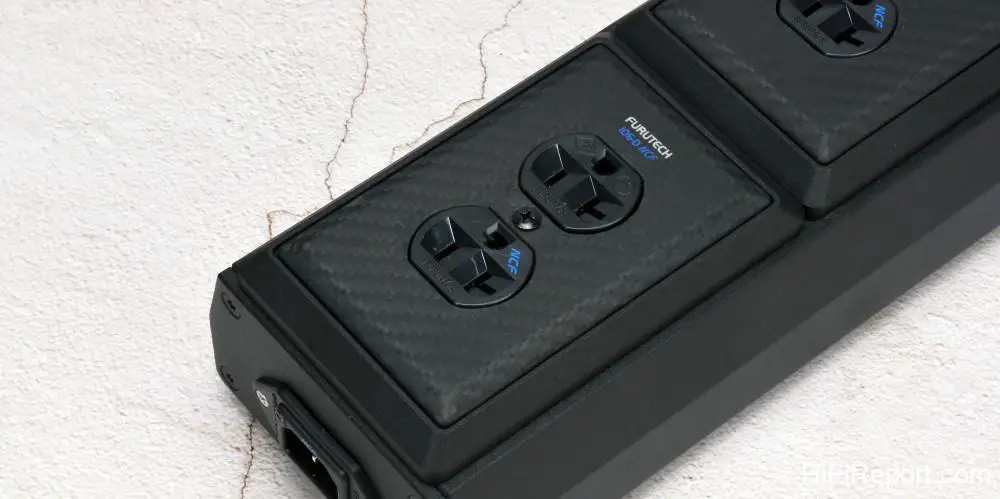
The Furutech GTO-D3 NCF and GTO-D2 NCF differ primarily in the number of power outlets they provide. The GTO-D3 NCF is akin to three independent double-outlet modules linked together, offering a total of six sockets, while the GTO-D2 NCF connects two such modules for four sockets.
Both the GTO-D3 NCF and GTO-D2 NCF feature a matte black finish across their elongated base and around the individual outlet modules. This finish is not merely aesthetic; it conceals a secret. They are coated with a black fluoropolymer, which, according to Furutech, is designed to suppress RFI (Radio Frequency Interference) and reduce resonance.
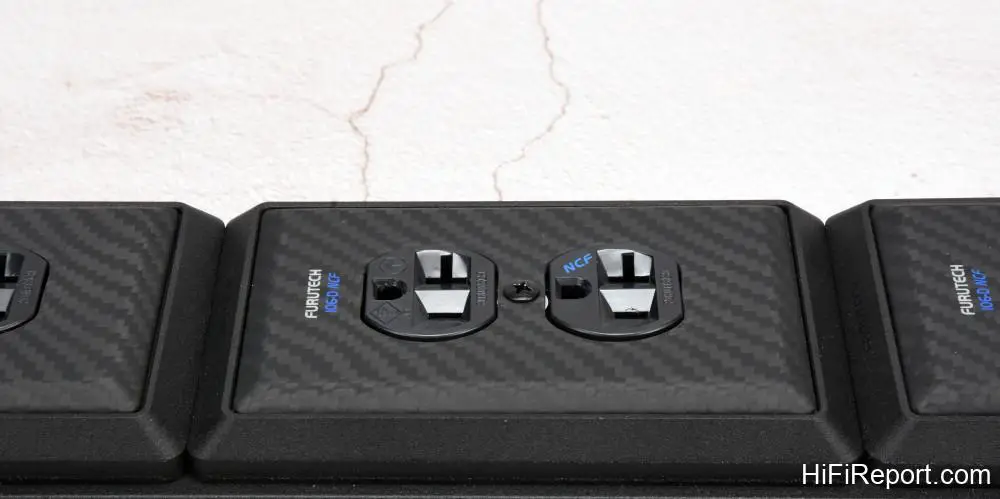
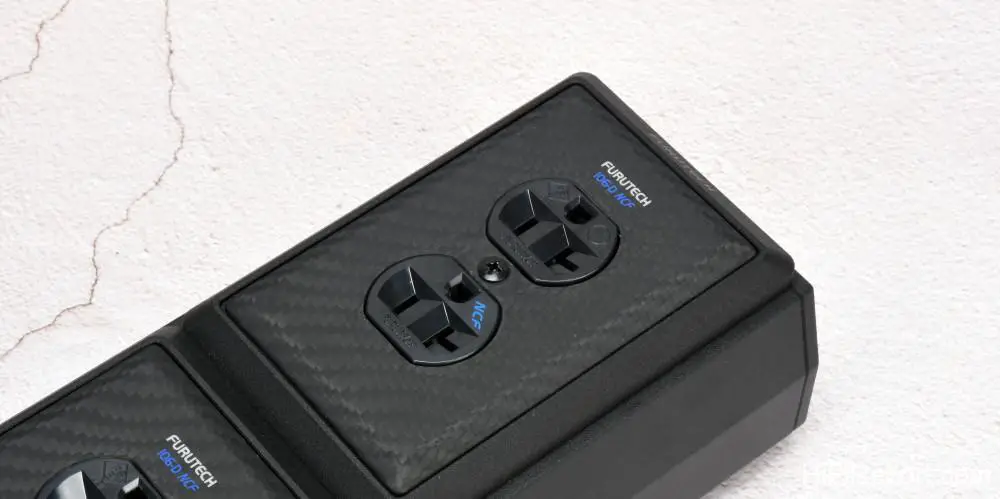
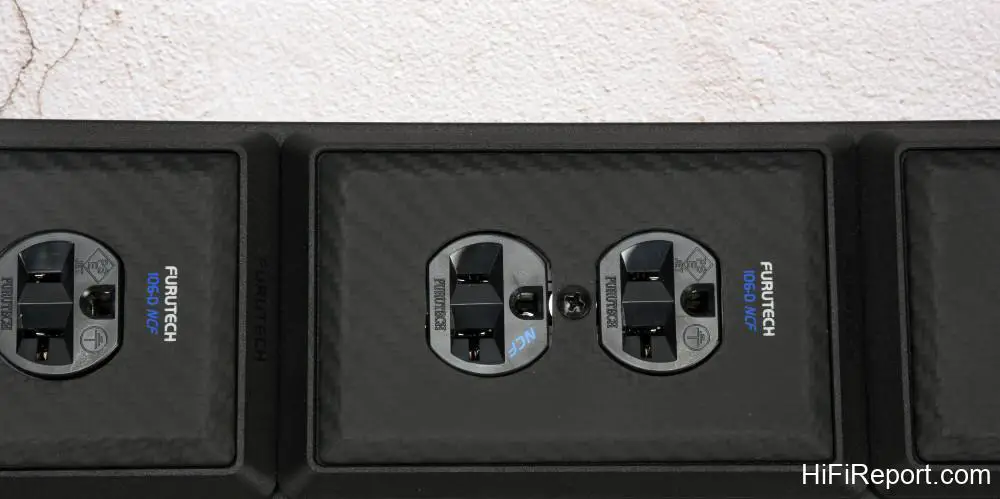
Let’s take a closer look at each individual outlet module. The base of each module is a Furutech-designed GTX Wall Plate, precision-machined from a premium-grade aluminum alloy. With a substantial thickness of 13mm, it offers not only high durability but also exceptionally effective vibration damping.
The sockets themselves utilize Furutech’s flagship GTX-D NCF American-style outlets. The clamping parts are made from α (Alpha)-treated pure copper and plated with rhodium, ensuring excellent conductivity and longevity. Furthermore, the clamps incorporate an innovative non-magnetic stainless steel spring system, which maintains elasticity for optimal and consistent contact over time.
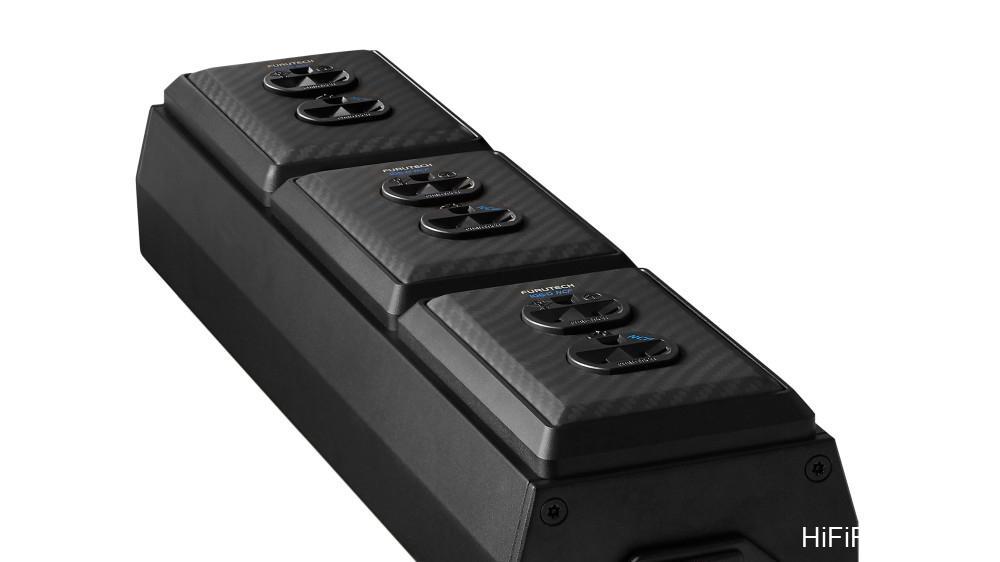
Crucially, the GTX-D NCF outlets feature Furutech’s unique NCF (Nano Crystal² Formula) material. Those familiar with Furutech products will likely know this technology. NCF is a proprietary blend combining nano-sized ceramic particles with carbon powder, creating a material with superb electrical properties.
It not only generates negative ions to eliminate static electricity but also converts vibration energy generated by current flow into heat, which is then converted into infrared radiation and dissipated from the surface. This simultaneously addresses potential vibration and static issues during signal transmission.
The plates surrounding the outlets, marked with a carbon fiber texture, are also top-tier components: Furutech’s flagship 106-D NCF cover plates. You might not realize it, but these plates are constructed from seven different composite layers.
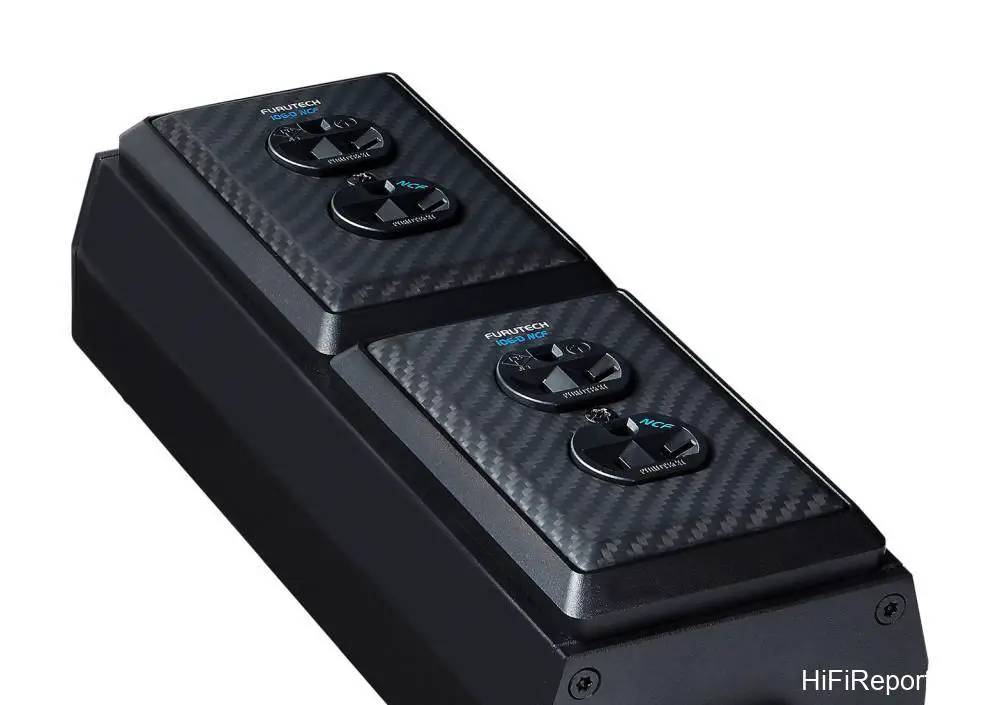
These layers include NCF (matte finish), a hard transparent protective layer, a blend of NCF and 3K carbon fiber, a non-magnetic stainless steel main body, another layer of NCF and carbon fiber, a hard transparent protective layer, and finally, NCF (matte finish) again.
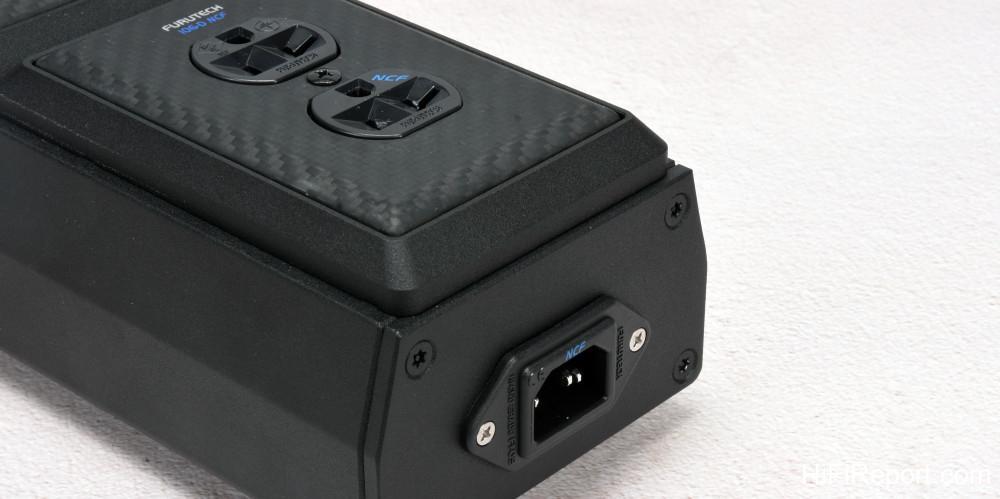
Moving to the IEC input connector on the side of the power strip, Furutech’s high-grade FI-09 NCF connector is employed. As the model name suggests, it also incorporates the exclusive NCF material. The metal conductors of the FI-09 NCF are α-treated pure copper with rhodium plating. Notably, wires are secured using screws, eliminating the need for solder and avoiding its potential sonic impact.
The internal wiring is equally meticulous, utilizing Furutech’s high-purity μ-OFC (micro-Oxygen Free Copper) single-core wire with a substantial 3.8 sq mm conductor diameter. This wire undergoes Furutech’s α (Alpha) treatment to enhance conductivity and is further protected by double shielding.
The internal wiring specifically employs a star connection scheme, meaning each outlet is directly connected to the IEC input (not daisy-chained), ensuring that every socket receives the most abundant power supply possible.
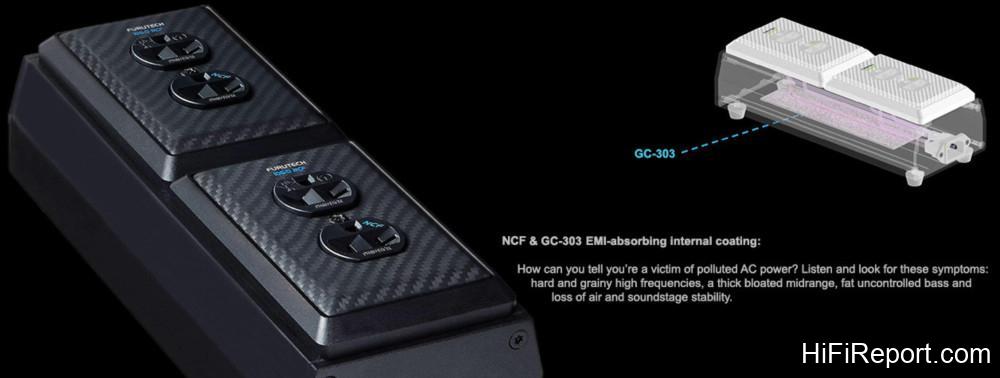
Finally, the base of the GTO-D3 NCF / GTO-D2 NCF contains a layer of Furutech GC-303, a special material designed to absorb internally generated EMI (Electromagnetic Interference). These power strips are essentially packed with Furutech’s core technologies from inside out, leaving no stone unturned in the pursuit of sonic improvement. The anticipated audio performance enhancement is significant.
Review Setup and Methodology
In my personal opinion, the place where products like power distributors are most needed is a home theater listening room. This is because home theater systems involve numerous components that require power: the television, players, surround receivers (or even separate surround processors and multi-channel amplifiers), subwoofers, and more. Standard wall outlets provided in typical buildings are almost certainly insufficient.
For this review, I used the GTO-D3 NCF to power my home theater system. The setup included a Sony OLED flagship 65-inch A90J television (remembering that modern TVs also serve as streaming sources), a Sony Blu-ray player, a Marantz SR7015 surround receiver, and a 5.1.4 multi-channel speaker system comprising Sonus Faber Lumina series, Monitor Audio height channels, and an M&K Sound X10 subwoofer.
I compared the GTO-D3 NCF against a standard audiophile-grade power strip. First, I listened using the standard strip. Then, I connected the television, Blu-ray player, surround receiver, and subwoofer to the GTO-D3 NCF and listened again, immediately experiencing the difference between the two.
Comparative Listening: Music
The first impression the GTO-D3 NCF gave me was a noticeable improvement in sound stability. After plugging it in, the noise floor seemed lower, with less perceived “” (impurities or grit in the sound). More details emerged easily from the background. The soundstage constructed in the listening space and the sound imaging were firmer and had better tangibility. The entire musical presentation felt more solid, peaceful, and stable.
For instance, when playing the “Chris Botti in Boston” Blu-ray, I heard a much clearer sense of the live performance venue’s acoustics. The soundstage had definite boundaries, with natural background sounds, and the audience applause sounded remarkably real. Switching back to the standard power strip, the sound became lighter and less grounded, and the soundstage felt more diffuse and indistinct. The difference in stability and sound imaging between the two was significant.
Next, the sound texture improved noticeably. Chris Botti’s trumpet sounded more lustrous and powerful. Even at higher volumes, it didn’t sound harsh. In contrast, the trumpet sound presented by the standard strip seemed dry, even somewhat raw. This was due to the trumpet lacking power and cohesion, making it less engaging to listen to.
Quickly switching back to the GTO-D3 NCF, I played Lucia Micarelli’s poignant rendition of “Emmanuel” on the violin from the same disc. The violin notes were delicate and soaring, clearly resonating throughout the space, conveying a subtle yet natural sense of the room’s ambiance. The violin expressed a melancholic emotion that was deeply moving. Switching back to the standard strip diminished the beautiful texture of the violin and reduced that captivating emotional charm.
During the test period, I also found that connecting the GTO-D3 NCF resulted in tighter and more powerful mid-bass. This made vocal performances sound richer and fuller. The drum kit in the background also gained weight and a better sense of rhythm. This improvement in energy and texture was particularly evident during Yo-Yo Ma’s performance.
I could hear the thick and rich quality of the cello’s bowing, while simultaneously appreciating the beautiful texture of the violin, making it a truly enjoyable listen.
The captivating sense of weighty energy compelled me to put on the “Blue Man Group: The Complex Rock Tour Live” Blu-ray. This disc has many sections that showcase energy and impact. Indeed, connected to the GTO-D3 NCF, the entire system displayed powerful dynamics and full energy, making for a highly exciting listening experience. Crucially, while delivering this high energy, the music remained faithful.
For example, the various percussion instruments used during the performance exhibited distinct differences in thickness and texture. Also, during dynamic peaks, the low-frequency energy was abundant but maintained excellent definition and shape. Switching back to the standard power strip, the energy felt noticeably flabbier and, despite its quantity, was loose and lacked that solid, punchy impact.
Comparative Listening: Movies
When playing the Chris Botti BD, I already experienced the GTO-D3 NCF’s magic in creating a sense of space. I was confident that playing a multi-channel movie would result in even better surround envelopment. Trying it confirmed this. I played “Zack Snyder’s Justice League” on 4K BD. The sequence at the beginning with Superman’s death scream is the perfect segment to test spatial rendering and sound imaging.
Superman’s death scream in the film generates a powerful energy that spreads across the entire Earth. Connected to the GTO-D3 NCF, I not only felt a more concrete soundstage, but Superman’s scream formed a powerful “sound wall” of energy. It didn’t just reverberate within the listening room; it felt several times like it was passing through my body or bursting through the walls, a powerful wave of energy washing over me.
Switching back to the standard power strip, while the same sound effect was present, the energy level was clearly a magnitude lower. Moreover, the surround envelopment and the localization of moving effects felt blurred, stability was lacking, and the physical and sensory impact was diminished.
Finally, I tried watching the currently popular “Demon Slayer: Entertainment District Arc” on Netflix via the Sony A90J TV, with the sound processed by the Marantz receiver to the full 5.1.4 system. Although the animation’s original soundtrack is only Dolby Digital 5.1, the improvement in overall experience after switching to the GTO-D3 NCF was still very noticeable.
The sound of swords clashing in the show became crisper, and thanks to the increased sonic detail, the entire fight sequences felt more spectacular and intense. The characters’ voices also sounded more energetic, fuller, and the overall audio presentation had better momentum and impact.
Conclusion: A Worthwhile Investment
After a series of tests, I’ve found that the GTO-D3 NCF is the kind of equipment that once you plug it in, you won’t want to take it out. Because once you perform an immediate A/B comparison, you’ll find the performance of a standard power strip simply unsatisfying. The difference in effect between the two is quite stark. Among various audio equipment, I believe a good power distributor is one of the most worthwhile investments.
This is because it can simultaneously elevate the performance of multiple components, and even if you upgrade your other equipment in the future, it can continue to serve, consistently enhancing your audio-visual experience. So, if you have the budget, find an opportunity to audition the GTO-D3 NCF. Its performance will not leave you disappointed.