
Furutech GTO-D3 NCF Power Distributor Review
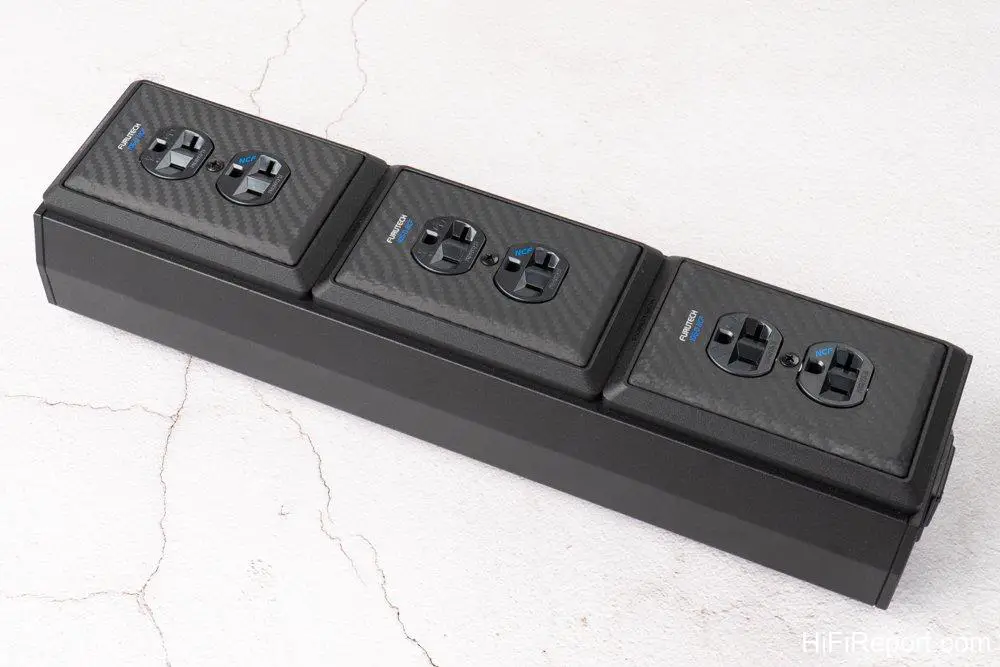
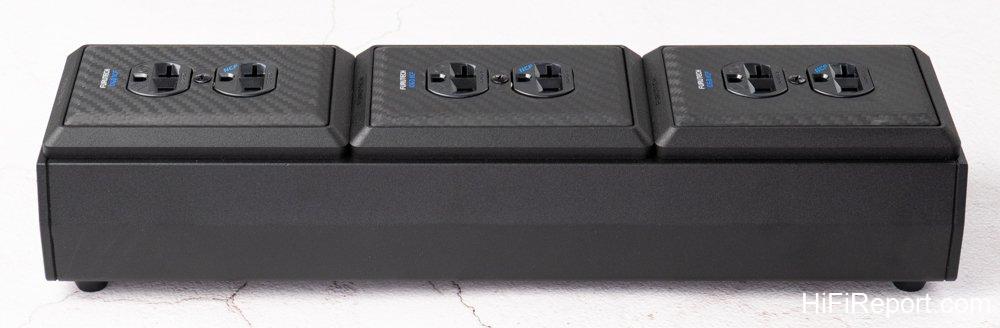
I still remember when the GTO-D3 NCF arrived. Upon unboxing it, my initial reaction was surprise: “Why does this look so different from Furutech’s previous power distributors?” Furutech’s past power distributor designs were typically quite simple, featuring a clean yet substantial top plate that covered all the outlets. This plate, crafted with meticulous detail and understated elegance, exuded the refined aesthetic characteristic of Japanese products. However, the GTO-D3 NCF is a complete departure from this. It strikingly resembles three double power sockets joined end-to-end, resulting in a substantial and imposing presence.
This significant design shift in the GTO-D3 NCF’s appearance is due to a fundamental change in its internal structure.
Stringent RFI Shielding
Indeed, the GTO-D3 NCF’s construction more closely resembles three separate double power sockets linked together, a design choice intended to minimize vibrational interference between each outlet.
The primary structural element of the GTO-D3 NCF is its elongated chassis, meticulously CNC-machined from premium-grade aluminum alloy. The surface has a matte black finish, and tapping it produces a muted thud rather than a bright ring. This is because the surface is not sandblasted but rather coated with a black fluoropolymer, which serves to block RFI (Radio Frequency Interference) and dampen resonance.
Positioned atop this elongated chassis are three Furutech GTX Wall Plates. What is their purpose? Typically, when upgrading a wall outlet to a medical-grade or audiophile-grade US socket, the socket is directly mounted to the electrical box recessed in the wall, and then covered with a faceplate.
The GTX Wall Plate takes a different approach. It is designed to be first mounted onto the electrical box, and then the receptacle is installed onto the GTX.
The GTX Wall Plate is also CNC-machined from premium aluminum alloy, boasting a substantial 13mm thickness. Its surface is also treated with the same fluoropolymer coating, resulting in an identical color and texture to the chassis, and providing the same RFI and resonance damping benefits.
NCF Infusion Everywhere
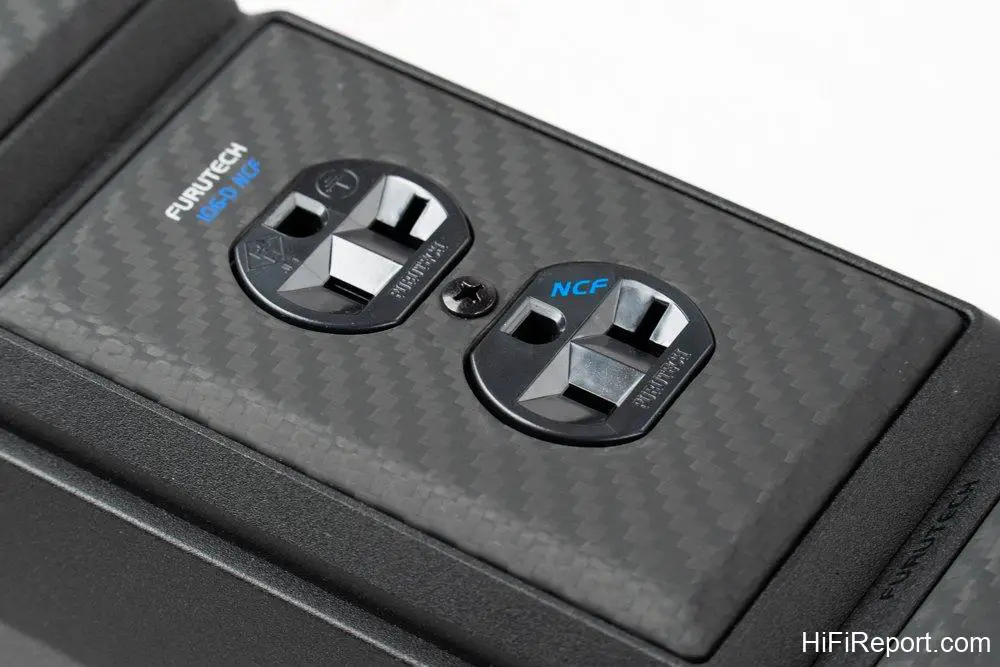
Each of the three GTX Wall Plates houses a Furutech flagship GTX-D NCF duplex receptacle. Not only are the conductor parts made from α (Alpha) pure copper and rhodium-plated for enhanced durability, but the receptacle also incorporates an innovative non-magnetic stainless steel spring system around the clips. This system ensures consistent contact pressure, maintaining a firm grip on power plugs even after repeated insertions and removals.
Crucially, the top cover and body of the GTX-D NCF are infused with Furutech’s proprietary NCF (Nano Crystal² Formula). This unique formulation combines nano-sized crystalline, ceramic particles and carbon powder within a resin. The resulting special polymer can be applied to a wide array of audio components.
NCF exhibits exceptional mechanical damping properties and generates negative ions to neutralize static electricity. It also converts thermal energy into far-infrared radiation, effectively addressing vibration and static issues, and enhancing the electrical performance of conductors.
Covering the GTX-D NCF receptacles are Furutech’s 106-D NCF flagship faceplates. While they may appear to be simple carbon fiber panels, they are far more complex.
Internally, the 106-D NCF utilizes a non-magnetic stainless steel baseplate. Both the top and bottom of this baseplate are layered with three different materials, each with slightly varying compositions. These include NCF coating, a hard coating, a composite NCF 3K carbon fiber layer, and an NCF carbon fiber layer, among others. This multi-layered construction provides optimal and precisely tuned damping. Tapping the faceplate produces a sound that is neither metallic nor wooden, quite unique indeed.
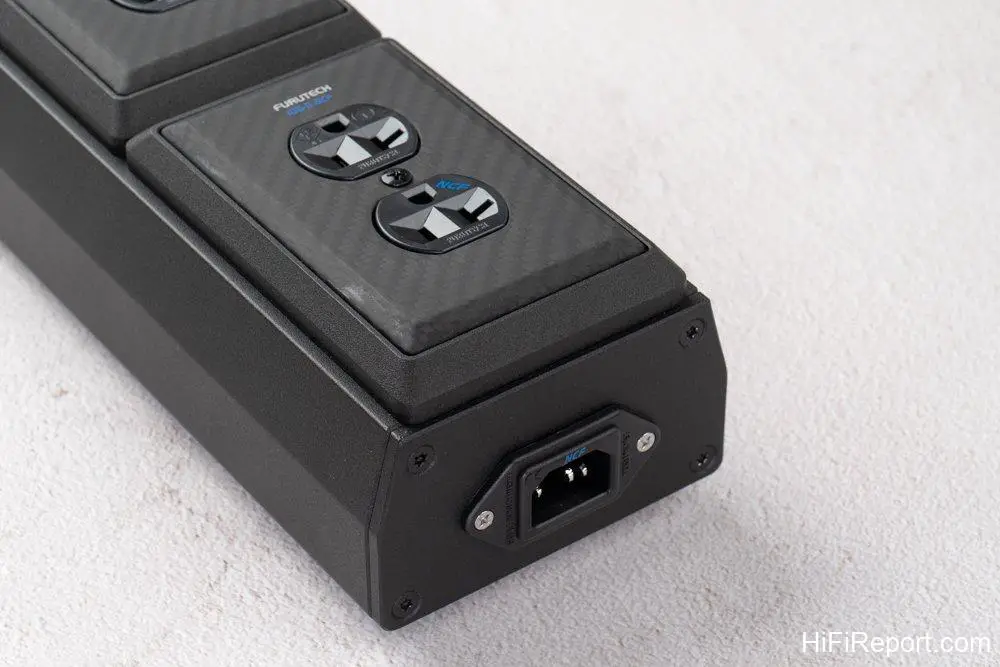
The IEC inlet on the side of the GTO-D3 NCF utilizes Furutech’s FI-09 NCF connector. Its base incorporates the NCF formula, and the metal parts are crafted from Furutech’s α (Alpha) pure copper with rhodium plating. Internal wiring is secured via screw terminals, eliminating the need for soldering and avoiding any potential sonic degradation from solder. It can accommodate cables up to 4mm in diameter.
Internally, the GTO-D3 NCF employs Furutech’s high-purity μ-OFC single-core wiring, treated with their proprietary α (Alpha) process. The conductors have a substantial 3.8 square mm cross-section and are encased in audiophile-grade dual-layer shielding, ensuring superior electrical performance.
The internal wiring configuration adopts a star grounding topology. This means each duplex receptacle is individually wired back to the IEC inlet, rather than using a daisy-chain configuration, guaranteeing the most direct and ample power delivery.
Furthermore, the interior base of the GTO-D3 NCF is lined with a layer of GC-303, a specialized material that absorbs EMI (Electromagnetic Interference) generated by internal components through non-contact means.
Low Frequencies with Quality and Substance
It’s evident that the GTO-D3 NCF represents a culmination of Furutech’s diverse technologies and the remarkable application of NCF. It is truly an “all-encompassing” power distributor. But how does it sound? The listening evaluation was conducted in the HiFiReport listening room, using a system comprising a Telos EMP music server/streamer, an Audionet ART G5 CD player as DAC, an mbl N11 preamplifier, and mbl N21 stereo power amplifier. Speakers were Wilson Audio Alexa 2s.
For comparison, a standard aluminum-chassis power strip with US sockets and no filtering was used as a reference. During comparisons, only the N11 preamplifier and N21 power amplifier were plugged into the power distributors for quick A/B testing. The EMP and ART G5 were powered from a separate power strip.
Immediately, the GTO-D3 NCF demonstrated superior density, richness, and weight compared to the reference power strip. The sound was more focused, and the background was significantly quieter and more serene, enhancing the overall sense of tranquility in the listening experience.
In contrast, the reference power strip presented a wider soundstage but with a more diffuse and less defined sonic image. The overall sound profile also felt drier and flatter.
Listening to “Bridge Over Troubled Water,” the theme song from the Norwegian film “Troubled Water,” performed on organ, the GTO-D3 NCF rendered the organ’s sonic lines with greater tightness and clarity, sharper outlines, and more tangible and prominent sonic images. Moreover, the low frequencies not only possessed greater weight but also exhibited improved definition and layering. Especially in the latter part of the piece, as deeper harmonies entered, the low-frequency texture remained clean, the layers distinct, and the extension felt effortlessly natural. It was captivating, providing a clear demonstration of what high-quality low frequencies truly sound like.
I also observed that the GTO-D3 NCF enhanced the sense of energy in the sound, but not in an uncontrolled, sudden burst (which was more characteristic of the reference power strip). Instead, it smoothly and progressively increased the musical intensity, revealing richer dynamic contrasts and stronger musical tension.
Enhanced 3D Soundstage
Another significant improvement was in the soundstage. The GTO-D3 NCF clarified the soundstage image, adding a more pronounced 3D dimensionality to the sonic space.
Listening to the Emerson String Quartet’s “Old World – New World” album, featuring the complete Dvořák string quartets, the recording quality was already excellent. Even with the reference power strip, clear instrument positioning and focused sonic images were discernible. However, switching to the GTO-D3 NCF immediately revealed that the soundstage width should actually be more contained. The sound became more centered and focused, with improved body and substance. Furthermore, the soundstage height expanded, creating a clearer sense of vertical space. Reverberation and decay were also more clearly audible. Consequently, the overall listening experience became more akin to having a quartet performing right in front of you.
Additionally, in comparison, the reference power strip exhibited a greater emphasis on the mid-high and high frequencies, with less presence in the mid-low and low frequencies. This resulted in a somewhat edgy and less refined sound, with a harsher tonal quality. In contrast, the GTO-D3 NCF presented a more balanced frequency spectrum across the highs, mids, and lows, with better overall tonal balance, structure, and order.
What are the benefits of these improvements? Simply put, a more enjoyable and immersive listening experience with a more vivid and realistic sonic picture.
Next, I played flamenco guitarist Tomatito’s “Sonanta Suite” album, a collection of his original compositions arranged for symphony orchestra, with the Orquesta Nacional de España providing accompaniment.
The first track, “Brisa De Levante (Taranta),” begins with a solo guitar passage. Played through the GTO-D3 NCF, the difference compared to the reference power strip was striking. Not only were the plucked notes larger and more defined, with greater density, weight, and impact, but the timbre was also richer and more rounded. As the orchestra and a female vocalist with flamenco inflections joined in, her focused sonic image and vocal power immediately propelled her forward from the orchestral texture, demanding the listener’s attention.
Equally captivating was the orchestra’s vast dynamic range. With the tighter and more controlled bass foundation and more focused and direct midrange, the GTO-D3 NCF delivered a more powerful, substantial, and full-bodied sound compared to the reference power strip, even at the same volume level.
Moreover, the GTO-D3 NCF excelled in rendering the front-to-back depth layering and left-to-right imaging of the orchestra, bringing order and clarity to the complex and expansive arrangement.
Adding Luster to the Tone
Completely engrossed in the listening experience, I quickly connected the Telos EMP server/streamer to the GTO-D3 NCF as well, and replayed the first track of “Sonanta Suite.” Wow! The sound took another leap in quality! The background became even quieter, spatial reverberation richer, micro-dynamics more refined and fluid, and overall contrast more pronounced. Furthermore, the speakers seemed to vanish even more completely, and the sonic image became even clearer and more focused, with an even greater sense of naturalness. Simply put, the system’s performance improved seamlessly and significantly.
Finally, to simplify the setup, I played “Immediately Blessed,” track 7 from the “Blue Coast Collection,” featuring two acoustic guitars accompanying a slightly weathered male vocal. Here, I distinctly perceived the GTO-D3 NCF adding a beautiful (luster and richness) to the guitars. The sound was full of moisture, with a sweet tone, yet retaining the clarity expected of steel-string acoustic guitars. The sound was richer, but not heavy or thick, remaining agile and nimble.
Furthermore, the individual sonic images of the two guitars were clearly differentiated in size, and their relative positions and separation were further enhanced, reaching a state of near perfection.
Listening to this point, I recalled my previous experiences with Furutech power distributors. They were all good products, known for their clean sonic backgrounds, clear sound, focused imaging, and ample energy. The GTO-D3 NCF possesses all these qualities, but its approach is more natural and seamless, more refined and sophisticated. Moreover, it adds a touch of (charm and allure) to the tone, making the listening experience even more captivating.