
Furutech GTO-D3 NCF Power Distributor Review
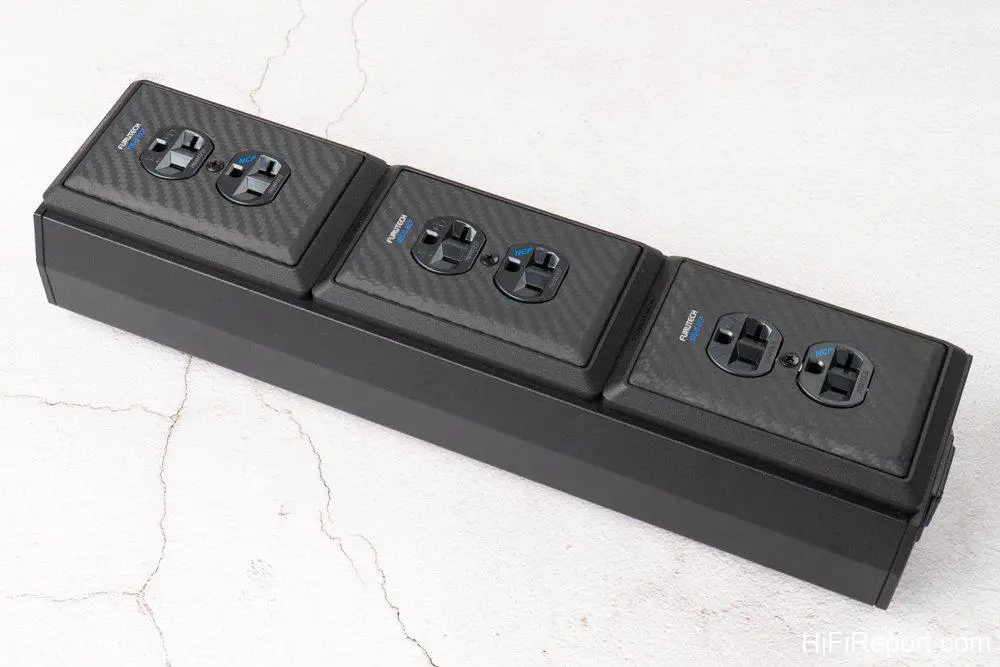
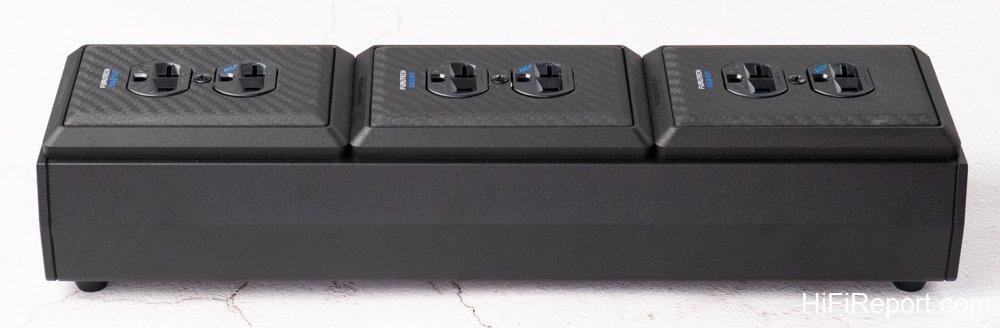
I still remember when the GTO-D3 NCF arrived. As I took it out of the box, I was quite surprised: “Why does it look so different from Furutech’s previous power distributors?” Furutech’s past power distributors had very simple designs. They featured a clean and heavy top plate covering all the outlets. The plate itself was finely crafted, simple and elegant, revealing the refined style of Japanese products. However, the GTO-D3 NCF is completely different. It looks like three double power socket boxes connected end-to-end, quite bulky and exuding a powerful presence.
Why has the GTO-D3 NCF’s appearance changed so drastically? Because its structure is fundamentally different.
RFI Interference Shielding
The GTO-D3 NCF’s structure does indeed resemble three separate double power socket boxes connected end-to-end. This design aims to minimize vibration interference between them.
The main structure of the GTO-D3 NCF is the elongated chassis at the bottom. The chassis is CNC machined from special grade aluminum alloy with a matte black surface. Tapping it produces a dull thud rather than a crisp ring. This is because the surface isn’t sandblasted but coated with a layer of black fluoropolymer. This coating serves to prevent RFI (Radio Frequency Interference) and dampen resonance.
Above the elongated chassis are three Furutech GTX Wall Plates. What are these for? Typically, when upgrading your wall sockets to medical-grade or audiophile-grade US outlets, you would directly mount the socket into the wall’s junction box and then cover it with a faceplate.
The GTX Wall Plate takes a different approach. It is designed for you to first secure the GTX plate to the junction box, and then mount the outlet onto the GTX plate.
The GTX Wall Plate is also CNC machined from special grade aluminum alloy, a substantial 13mm thick. Its surface is also coated with fluoropolymer, resulting in the same color and texture as the chassis, and providing the same RFI shielding and anti-resonance benefits.
NCF Everywhere
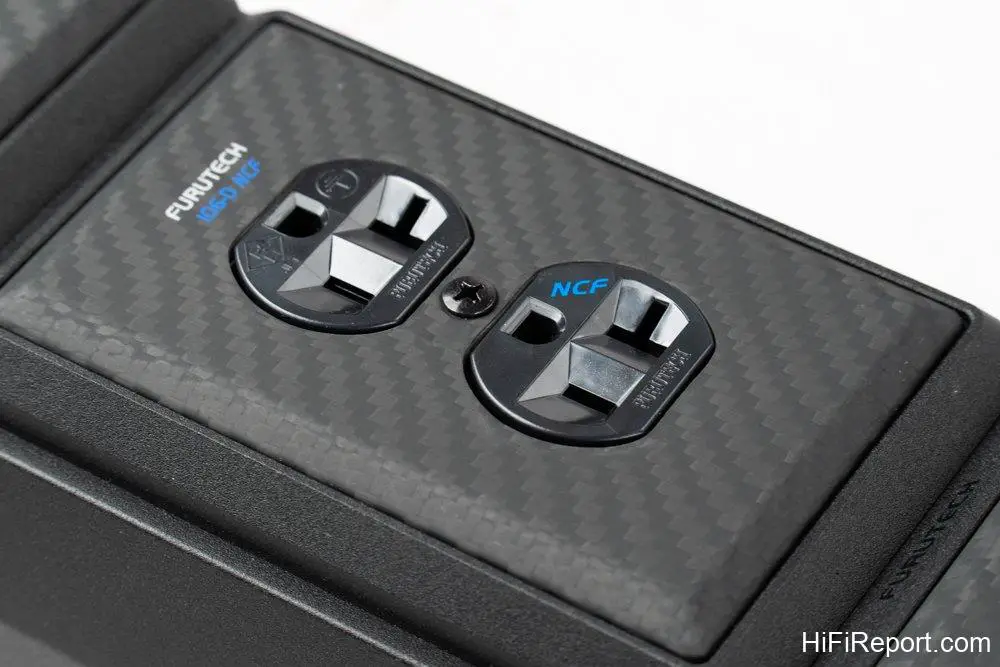
Mounted on each of the three GTX Wall Plates are three sets of Furutech’s flagship GTX-D NCF double US outlets. Not only are the conductor parts made of α (Alpha) pure copper with rhodium plating to enhance durability, but the clamps also feature an innovative non-magnetic stainless steel spring system. This system maintains clamping pressure, ensuring a firm grip on power plugs even after repeated insertions and removals.
Most importantly, the top cover and base of the GTX-D NCF incorporate Furutech’s unique NCF (Nano Crystal² Formula). This formula combines nano-sized ceramic particles and carbon powder mixed into a resin to create a special polymer that can be applied to various components.
NCF itself possesses excellent mechanical damping characteristics and releases negative ions to eliminate static electricity. Thermal energy is also converted into far-infrared radiation, further addressing vibration and static issues, and even enhancing the electrical performance of conductors.
Covering the GTX-D NCF outlets are Furutech’s 106-D NCF flagship faceplates. While they appear to be carbon fiber panels, they are more complex than that.
Inside the 106-D NCF is a non-magnetic stainless steel plate as a base. Both the top and bottom of this base plate have three layers of different materials, including NCF coating, hard coating, composite NCF 3K carbon fiber layer, and NCF carbon fiber layer. These layers provide the best and most appropriate damping effect. Tapping it produces a sound that is neither metallic nor wooden, quite unique.
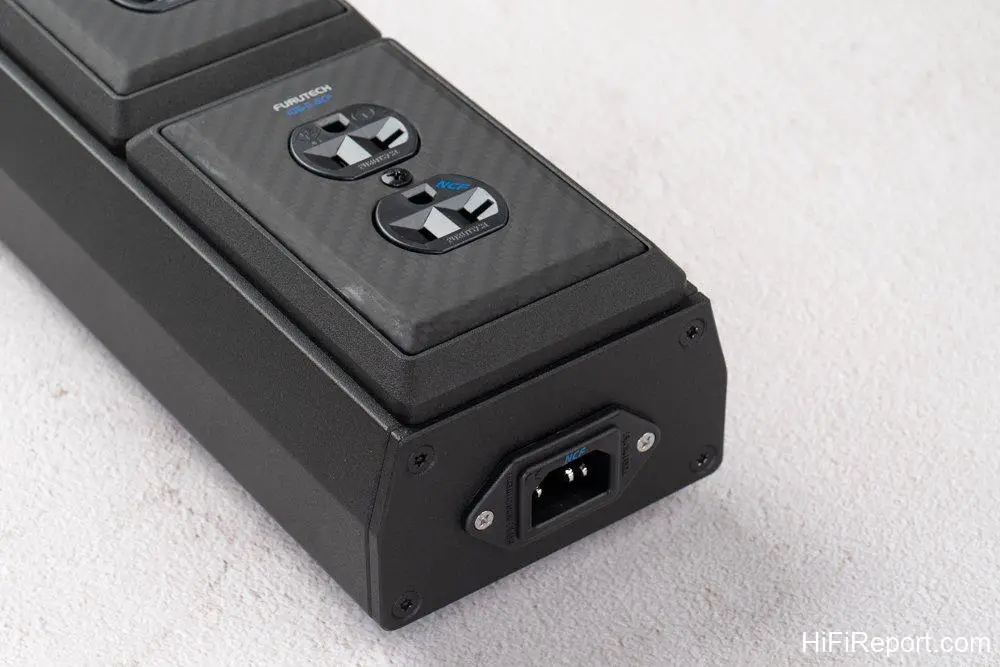
The IEC inlet on the side of the power distributor is Furutech’s FI-09 NCF. Its base contains the NCF formula, and the metal parts are made of Furutech’s α (Alpha) pure copper with rhodium plating. Internal wiring is secured with screws, eliminating the need for soldering and avoiding the potential influence of solder. It can accommodate cables up to 4mm in diameter.
The internal wiring of the GTO-D3 NCF uses Furutech’s high-purity μ-OFC single-strand wire, treated with their proprietary α (Alpha) process. The conductor gauge is a substantial 3.8 square mm, and it’s covered with audiophile-grade double-layer shielding, providing enhanced electrical performance.
The wiring configuration is a star-ground system. This means each US outlet is individually wired back to the IEC inlet, rather than daisy-chained, to ensure the most ample power delivery.
Furthermore, the interior of the GTO-D3 NCF is lined with a layer of GC-303, a special material that absorbs EMI (Electromagnetic Interference) generated by internal components through a non-contact method.
Quality Low Frequencies
It’s clear that the GTO-D3 NCF embodies Furutech’s diverse technologies and the remarkable application of NCF. It can be described as a “culmination” of their power distributor expertise. So, how does it sound? The listening tests were conducted in the HiFiReport listening room, using equipment including a Telos EMP music server player, an Audionet ART G5 CD player as DAC, an mbl N11 preamplifier, and an mbl N21 stereo power amplifier. The speakers were Wilson Audio Alexa 2.
The reference power distributor used for comparison was a standard aluminum alloy housing US outlet power strip, without any internal filtering. During the comparison, only the N11 preamplifier and N21 power amplifier were plugged into the power strips for quick A/B testing. The EMP and ATR G5 were powered by a separate power distributor.
From the initial listening, it was immediately apparent that the GTO-D3 NCF offered better density, richness, and weight compared to the reference power distributor. The sound was more focused, and the background was quieter and more serene, enhancing the sense of tranquility in the listening experience.
In contrast, the reference power distributor presented a wider soundstage but with a more diffuse sound image, and a drier, flatter sonic foundation.
Taking the theme song from the Norwegian film “Troubled Water,” a pipe organ rendition of “Bridge Over Troubled Water,” as an example, playback through the GTO-D3 NCF resulted in a tighter and clearer organ tone, with more defined outlines and a more concrete and three-dimensional sonic image. Furthermore, the low frequencies not only had better quantity but also significantly improved texture and layering. Especially in the latter part of the piece, when more low-frequency harmonies were added, the low-frequency quality remained clean, the layers remained distinct, and the extension was effortlessly natural. This allowed me to listen with rapt attention, fully appreciating what high-quality low frequencies truly sound like.
I also discovered that the GTO-D3 NCF enhanced the sense of energy in the sound, but not in an uncontrolled, sudden burst (which was more characteristic of the reference power distributor). Instead, it smoothly increased the musical intensity, revealing richer layers of contrast and stronger musical tension.
Enhanced 3D Soundstage
Another significant upgrade was in the soundstage. The GTO-D3 NCF clarified the soundstage image and added a 3D.
Listening to the Emerson String Quartet’s “Old World – New World” album, featuring Dvořák’s complete string quartets, the recording quality is already excellent. Even with the reference power distributor, clear instrument positioning and focused sound images could be heard. However, switching to the GTO-D3 NCF immediately revealed that the soundstage width should actually be more contained. The sound became more focused towards the center, with improved density, and the soundstage height was enhanced, creating a clearer sense of vertical space. Reverberation and decay were also more clearly audible, making the overall listening experience feel more like a quartet performing right in front of you.
Moreover, compared to the GTO-D3 NCF, the reference power distributor exhibited a higher proportion of high and mid-high frequencies, with less mid-low and low-frequency presence. This resulted in a more restless sound and a sharper sonic character. In contrast, the GTO-D3 NCF presented a more balanced frequency response across high, mid, and low ranges, with better overall balance, structure, and order.
What are the benefits of this? It sounds better, is more listenable, and creates a more vivid sonic picture.
Next, I played flamenco guitarist Tomatito’s “Sonanta Suite” album, featuring his own compositions arranged for symphony orchestra, with the Spanish National Orchestra as accompaniment.
The first track, “Brisa De Levante (Taranta),” begins with a guitar solo. Played through the GTO-D3 NCF, the difference compared to the reference power distributor was significant. Not only were the plucked notes larger, with more focused density, weight, and impact, but the timbre was also rounder. As the orchestra and female vocals with flamenco inflections joined in, the focused form and powerful vocals immediately leaped out from the orchestra, demanding the listener’s attention.
Equally unmissable was the orchestra’s vast dynamic range. Because the lower frequencies were tighter and more controlled, and the midrange was more focused and direct, the GTO-D3 NCF sounded more powerful, richer, and fuller than the reference power distributor, even at the same volume level.
Furthermore, the layering of the orchestra from front to back, and the positioning from left to right, were also superior with the GTO-D3 NCF, bringing order to the large and complex arrangement.
Adding Lushness to Timbre
Completely engrossed, I quickly switched the Telos EMP server player to the GTO-D3 NCF as well, and re-listened to the first track of “Sonanta Suite.” Amazing! The sound seemed to jump up another level! The background was even quieter, spatial reverberation was richer, micro-dynamics were better and smoother, overall contrast was more pronounced, and the speakers seemed to disappear even more. The sound image was even clearer and more focused, with even better naturalness. Simply put, the system was elevated effortlessly.
Finally, simplifying things, I played “Blue Coast Collection” track 7, “Immediately Blessed,” featuring two acoustic guitars accompanying a slightly weathered male voice. At this point, I clearly felt the GTO-D3 NCF adding a beautiful lushness to the guitars. The sound was rich in texture, with a sweet timbre, yet retaining the clarity expected from steel-string acoustic guitars. The sound was fuller, but not heavy, remaining agile.
Moreover, the size and shape of the two guitar notes were clearly differentiated, and their relative positions and separation were further enhanced, reaching a state of near perfection.
Listening to this point, I recalled Furutech power distributors I had heard before. They were known for their clean sonic background, clear sound, defined forms, and ample energy – all excellent qualities. The GTO-D3 NCF possesses all of these, but its approach is more natural, more seamless, and thus more refined. Furthermore, it adds a touch of charm to the timbre, making it even more captivating.
Specifications
* Type: Power Distributor
* Dimensions: 410 × 108.5 × 77 mm (L × W × H)