
Innuos ZENith Next-Gen Reviewed Review
When it comes to the principles of CD playback, achieving great sound primarily boils down to three key elements: the disc transport mechanism, the reading architecture, and the digital output circuitry. If these aspects are well-designed and high-quality components are used, you can largely achieve a satisfactory sound-to-price ratio. Streaming playback, however, is a different beast.
While its convenience in getting sound out of a system far surpasses previous playback methods, its underlying principles are far more complex than one might imagine.
Streaming gear that corresponds to a CD transport – often termed a “streaming transport” or “DAC-less streamer” – is fundamentally a miniature computer. The components required for a computer to function are numerous and intricate, and any single link in the chain can influence the final digital output result. This is precisely where manufacturers have been pouring their research and development efforts in recent years.
Streaming Hardware and Software Complexities
Furthermore, building a good streaming transport isn’t as straightforward as a CD transport; the challenges often involve “trade-offs” and “choices.”
For instance, concerning the computer’s processor core: should one opt for a high-performance chip for a smoother user experience and more robust audio processing capabilities, or choose a low-power one to minimize digital circuit noise? This represents the most intuitive and challenging dilemma faced when creating streaming equipment.

Additionally, while streaming software offers sufficient convenience for playback and browsing, the integration of multimedia metadata (Metadata) by different software providers varies, and users invariably desire a smooth experience coupled with comprehensive information. This is where software like Roon emerged, perfectly integrating streaming and personal file libraries, thus becoming the most mainstream streaming playback software. So, has Roon become the ultimate solution for streamers?
I believe not yet. Many still harbor doubts about its sound quality, and its proprietary hardware isn’t considered “audiophile-grade” enough by some. Many users even attempt to build their own high-end computers to serve as the core Roon device, separating the digital output power supply from the main PC to create the cleanest possible audio transmission path.
Wait, isn’t streaming supposed to be the most convenient method? Why are there so many “troublesome issues” when it comes to the hardware side? You have to consider power efficiency, power supply quality, supported software formats, and even build the machine yourself… This approach to system building completely contradicts the original goal of streaming’s “convenience.”
Innuos: A Unified Hardware and Software Strategy
Innuos officially launched in 2016, amidst the heated battle between streaming and CD sound quality. From the outset, Innuos decided to employ a “software and hardware combined” strategy, releasing their self-developed music management operating system “Sense OS” alongside their hardware streaming server “Zen” series.

This approach liberated users from overthinking; simply logging into streaming accounts and adding music files and CDs allowed a complete streaming source system to emerge effortlessly.
After years of growth, Innuos’s Sense OS software is now considered by our editorial team to be the closest music management core software to Roon. It further supports both “all-in-one” and “player” modes, optimizing for different usage scenarios, and is compatible with Roon Core setup, Roon Endpoint, and HQPlayer NAA playback. Software-wise, it already satisfies the needs of all streaming users.
On the hardware front, they’ve introduced the power-separated flagship model “Statement” and the “Pulse” series focusing on “playback” functionality, along with their “Phoenix” network switch and USB re-clocker. Their overall product lineup is now quite comprehensive.
The Genesis of the Next-Generation (NG) Series
Frankly, I’ve been following this brand since Innuos released their first music server. Initially, I thought they would continue their development focusing on the Zen+Pulse combination of music server and streaming player after introducing the Pulse series. However, Innuos clearly foresaw a future I hadn’t anticipated. After upgrading the flagship player Statement’s power supply to a next-generation version, the Zen mini also received a minor update: the ZEN mini S with an SSD instead of an HDD.
This was followed by the grand unveiling of the “Next-Generation” (NG) ZEN series at the Munich High End show: the ZEN NG and ZENith NG models, which were undoubtedly a bombshell. Not only did they feature a “modular” design for the first time in the brand’s history, but their product positioning sits between the third-generation ZEN and the Statement, firmly establishing them as sub-flagship models.
NG Series Design: Rethinking the Music Server
From a design philosophy standpoint, the Next-Generation ZEN series is entirely different from the original ZEN. It not only removes the slot-loading CD drive but also adopts a completely sealed chassis design. Internally, everything from the motherboard to the power supply architecture has been completely redesigned.
My personal speculation is that Innuos’s bold decision to remove the CD reading design is a declaration: “The streaming playback quality of the Next-Generation ZEN series will be on par with internal file playback.” It is precisely this confidence that allowed Innuos to dedicate the liberated internal chassis space to a more abundant power supply, a superior motherboard, and output modules.
Of course, Innuos has still provided a fallback for CD users. Their new Sense 3 operating system includes a function to copy CDs via an external optical drive, offering a solution for users who enjoy both CD and streaming to back up their CDs and play them from internal storage.
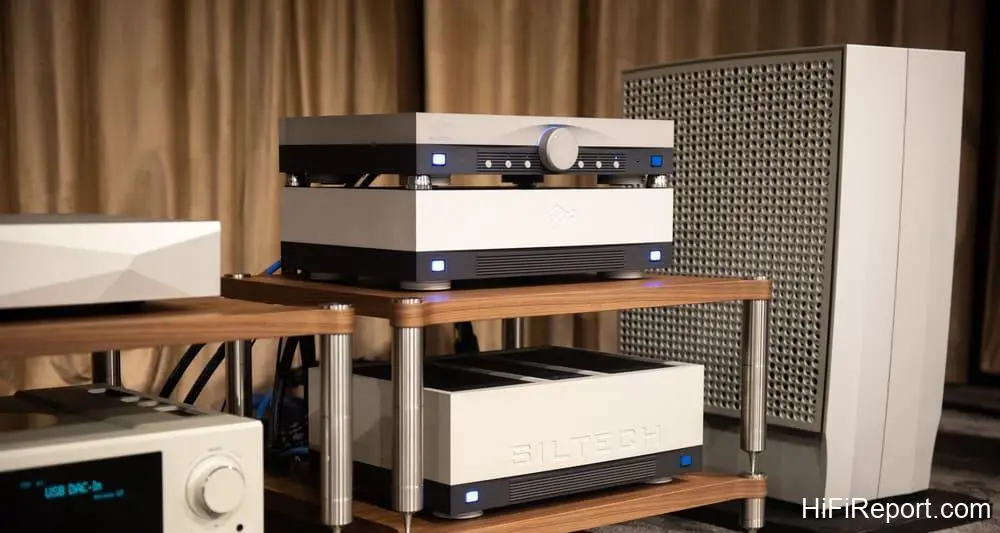
ZENith NG Hardware Deep Dive
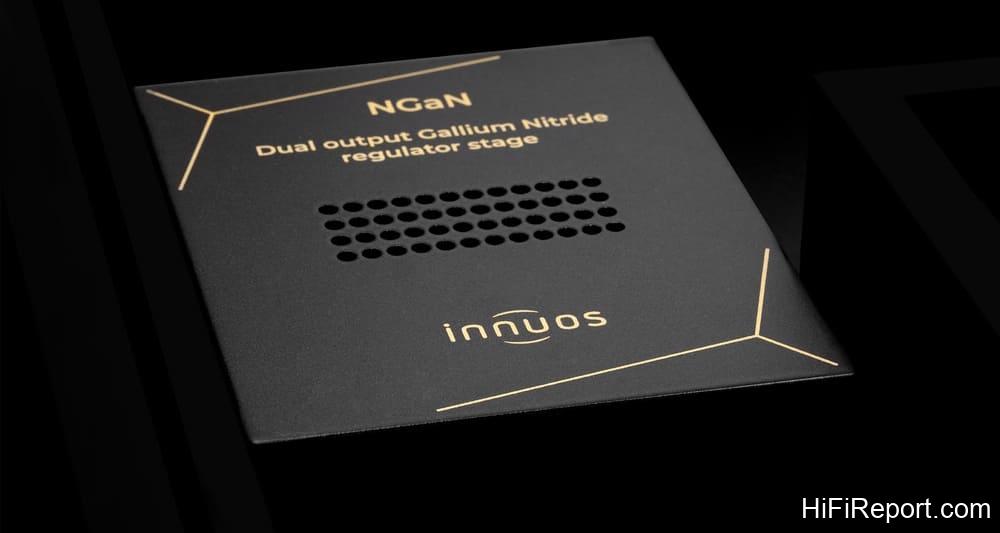
The elder sibling of the new series, the ZENith NG, showcases many elements from the flagship Statement model in its design. The ZENith NG features a substantial 300VA toroidal transformer for its power section, combined with the ARC6 linear power supply designed by renowned UK power expert Dr. Sean Jacobs (also used in the Statement). This is paired with 130,000uF of Mundorf filter capacitors and utilizes their self-developed third-generation semiconductor NGaN (Gallium Nitride) rectifiers.
This lavish power supply architecture is a prime example of the currently popular concept of “overspecified power.”
The motherboards for the NG series are entirely new designs, exhibiting significantly lower power noise and EMI radiation compared to the third-generation ZEN series. They employ an Intel i7 series 8-core processor paired with a newly designed heatsink to maintain a constant operating temperature during high-performance tasks. The memory is industrial-grade DDR4 totaling 16GB, providing ample caching headroom for a smoother music library browsing experience.
Storage Technology and Management
Regarding hard drive configuration, the operating system drive is separate from the music storage drive. Users who only rely on network streaming can purchase a version without extra storage space. Adding storage is also very convenient and straightforward; simply install M.2 SSDs (supporting up to 8TB and offering two slots) to store music files. Furthermore, managing disks requires no complex setup, as the NG series comes equipped with the XSM system (Expandable Storage Management System).

This means no matter how many internal or external drives are installed, the system will treat them as one complete volume, eliminating the need for users to worry about which drive stores which file!
Additionally, the NG series specifically utilizes embedded pSLC SSDs (Pseudo Single-Level Cell Solid State Drives) for the system drive. What’s special about this type of SSD in today’s world where solid-state drives are mainstream? Many audiophiles with experience building their own computer sources likely know that SLC (Single-Level Cell) solid-state drives offer the best sound quality. However, due to their high cost and smaller storage capacity, they are no longer mass-produced.
Market-available SSDs utilize multi-level cells (MLC, TLC, QLC) to achieve larger storage spaces. The pSLC technology treats multi-level SSDs as single-level cells, simulating SLC characteristics through NAND flash memory. In this mode, each “cell” only uses one bit, allowing for higher write speeds than native multi-level SSDs, enduring more write cycles, and reducing emitted EMI.
Given these characteristics, pSLC is absolutely the most ideal solution today for a music server’s system drive, which requires constancy and fast read/write speeds.

Flexible Modular Output Design
Historically, Innuos’s digital output has primarily been USB. Since the introduction of the Pulse series, SPDIF and AES/EBU options were added. However, the flagship Pulsar only offers a USB output with the “little Phoenix” PhoenixUSB Lite re-clocker, while the step-down Pulse features motherboard USB alongside separate SPDIF and AES/EBU outputs. This design meant users accustomed to SPDIF and AES/EBU interfaces couldn’t experience Innuos’s most excellent digital output quality.
Recognizing this, Innuos offers three digital output interface options for the ZEN NG series: PhoenixUSB Lite, Optical-RCA Coaxial-AES/EBU, and the currently developing I2S (HDMI), catering to the input methods best suited for different DACs. Consumers can also choose *not* to install an output module, using the unit purely as a music server to output via the network to other streamers. This flexible modular design undoubtedly elevates the versatility of the ZEN NG series to its highest point.
Tidal vs. Tidal Connect: A Comparative Test
Since the new Innuos Sense 3 operating system adds support for Tidal Connect, I recalled a question a reader had previously phoned in to ask: “When a streamer has both built-in Tidal and Tidal Connect, which sounds better?” Honestly, I was stumped at the time, as I don’t use Tidal myself, and DAC-less streamers with both functionalities are not common, so I had never considered this question. Taking this opportunity, I could use the ZENith NG to answer the reader’s query.
I discovered that when the ZENith NG is in “Endpoint” mode, it only supports Squeezelite, Roon Bridge, HQPlayer NAA, and Innuos’s own music server; it does *not* support Tidal Connect. Only in the all-in-one “Standalone” mode can the Tidal application find the ZENith NG. The answer, therefore, becomes evident without even needing a listen.

If a streamer acts purely as a Tidal Connect receiver transmitting digital signals to a DAC, its performance is undoubtedly lower than when used as a music server. Theoretically, both internal power noise and EMI radiation would be lower. However, when Tidal Connect requires the streamer to operate in music server mode to be usable, the additional functionality inevitably increases the processing load, leading to potentially more interference along the digital signal transmission path.
This is merely theoretical, of course, but the actual listening experience provided a clear answer: the ZENith NG’s built-in Tidal sounds significantly better than Tidal Connect, a comprehensive victory. Details, contour, scale, and image definition were all much clearer.
Listening Impressions
At the very beginning of sharing my listening impressions, I want to confess that this system is the most ideal digital playback system I have ever heard. Yes, “digital playback system,” encompassing CD, file streaming, network streaming, and even SACD playback systems. “It’s just playing Tidal, how can the ZENith NG manage this?” As someone firmly in the CD playback camp, I wanted to ponder this question in detail, but the flowing music aggressively seized my attention.
My initial listening test used a live recording of Hamelin playing Medtner’s Piano Concerto No. 2, recorded by Hyperion. The audio specifications were 24bit/96kHz, significantly higher in information content than a CD. Naturally, I own both the physical CD and the file of this album, but “just playing via network streaming,” I was hearing significantly *more* “content” than ever before. What was happening?

“Intent” was the most apparent turning point. Usually, in a live performance, we can infer the performer’s upcoming or current emotions through visual cues like their movements and expressions. In the listening room, however, my only source of information was purely “auditory” stimulation.
So how could I “see” Hamelin’s inner thoughts as he changed timbre, the imagination surfacing as his fingertips outlined the melodic lines, and the emotions bursting forth from the interplay between orchestra and piano?
I don’t know. I can only guess that the combination of the ZENith NG and the T+A SD3100HV restored the process of converting digital signals to analog so perfectly that the emotions subtly hidden within the recording were brought to the fore. The SD3100HV, via USB input, is already among the industry’s top-tier DAC choices. To allow this flagship DAC to perform at its full potential, the ZENith NG must be the formidable force behind it.
Even in “Standalone” mode, the ZENith NG is able to take the digital signal transmitted into the machine from Tidal, re-clock it, and hand it over to the SD3100HV with near-flawless precision. This is a level only attainable when both hardware and software are developed independently to their absolute zenith. Evidently, this system’s interpretation struck a deep chord with me.

Perfect reproduction of a single track is likely insufficient to convince anyone of the ZENith NG’s extraordinary capabilities, so I tried a few more chamber music pieces. Regardless of the ensemble size, I had the same feeling: I could taste the “emotion”! In Dvořák’s Piano Trio No. 3, I could hear the indignation of wanting to care for parents who are no longer there, and also empathize with the decline of escaping sorrow by indulging in beautiful dreams of the past.
In Rabaud’s Piano Quartet, I could perceive the ambition of actively striving to win the competition and the utmost respect for an idol. In Bartók’s “Contrasts,” I could feel the fear facing war, the premonition of national ruin and shattered homes under conflict, and the determination to still stand and fight. In Brahms’ songs, I tasted the bitterness of confronting a love that could never truly be.
Faced with a truly excellent and complete system, it was nearly impossible for me to analyze the contribution of individual components in a neutral, rational manner, because the music they produced together was like a chamber ensemble that had collaborated seamlessly for years, and the notes pouring out were their shared musical ideal.
Given how impressive the ZENith NG is, could its performance possibly exceed the flagship Statement? Manufacturers certainly wouldn’t create a product that undermines their own top model. I believe many media outlets witnessed at the product launch event that there was indeed only a slight, very subtle difference between the ZENith NG and the Statement’s performance.

I think this isn’t a fault of the ZENith NG; after all, the Statement employs a split chassis, with not only more extravagant power supply components but also special vibration control measures. Furthermore, its PhoenixUSB Lite uses an independent power supply and a lower-power processor. As a player, the flagship Statement possesses inherent advantages.
However, the new motherboard and processor that enable the ZENith NG to hold its own will, I believe, deliver even better software performance when handling larger databases. So, if pursuing the absolute pinnacle of sound quality is the goal? I think using the ZENith NG as a music server and outputting via the network to the Statement as a pure player would undoubtedly be the most perfect digital streaming source available today.
Specifications
* Type: Music Server
* Digital Inputs: RJ45×1, USB 3.0 (Backup)×1, USB×1 (AUX)
* Digital Outputs: RJ45×1, USB DAC×1, Digital Output Module (USB, SPDIF, I2S)
* Maximum Music Sample Rate: PCM 32Bit/768kHz, DSD512
* Hard Drive: Up to 16TB SSD
* Music Platform Support: Qobuz, Tidal, Tidal Connect, Internet Radio, etc.
* Dimensions (WHD): 410×88×350mm
* Weight: 14.3 kg
