
Lampizator Kraftwerk 10 Power Supply Review
Lampizator, a brand hailing from Poland, has carved a unique niche for itself by focusing solely on DACs—specifically, vacuum tube DACs. However, 2023 marked a strategic shift for Lampizator, expanding its product line into five distinct categories. While DACs remain central, the portfolio now includes pre and power amplifiers, MC phono stages, digital cables, and AC power conditioners. The Kraftwerk 10 is a testament to this broadened horizon, representing a new facet of Lampizator’s engineering prowess.
The Charismatic Polish Founder
Lukasz Fikus, the founder of Lampizator, officially established the company around 2009/2010, making it a relatively young player in the audio industry. My first encounter with Lukasz was an interview at the TAA Audio Show in 2016. Since then, Lukasz has been a frequent visitor to Taiwan. Initially, I assumed these trips were purely business-driven. However, at the 2023 TAA Audio Show, HiFiReport tasked me with translating for Lukasz’s fan meet-and-greet event. It was then I learned that Lukasz’s frequent visits stemmed from a genuine affection for Taiwan. Of course, the commercial success of Lampizator in the region certainly provides additional incentive for his return trips.
My familiarity with Lampizator products has naturally revolved around their acclaimed vacuum tube DACs. The Kraftwerk 10, however, ventured into uncharted territory for me as a power filtering and supply unit, notably devoid of any vacuum tubes. This felt like a departure from the Lampizator I knew, sparking a sense of novelty and intrigue.
Evolved from the Silk Predecessor
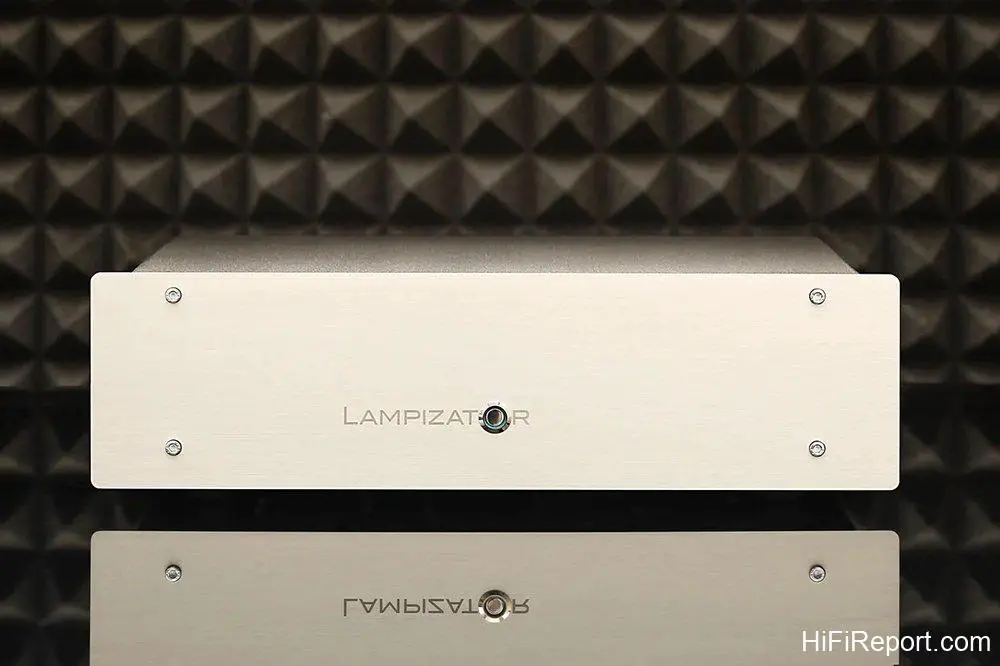
This isn’t Lampizator’s inaugural foray into power filtering. Years prior, they introduced the Silk, a power conditioner with four outputs, aptly named to evoke the “silky smooth” sonic texture it aimed to impart to music. However, the Silk’s four outputs proved limiting for more complex systems. This limitation spurred Lukasz to develop the Kraftwerk 10. “Kraftwerk,” German for “power plant,” combined with the “10” signifying its ten power output sockets, underscores the unit’s enhanced versatility and practicality.
Lampizator’s motivation behind designing the Silk and subsequently the Kraftwerk 10 is straightforward. Firstly, Lukasz’s academic background is in electrical engineering. Secondly, he found existing power conditioning and AC regeneration products on the market lacking, often compromising the vibrancy and liveliness of music. Driven by this dissatisfaction, he decided to take matters into his own hands and create his ideal power filter.
*(Image of Lampizator Silk sourced from Lampizator official website)*
DIY Approach: Necessity as the Mother of Invention
This rationale resonates deeply, echoing the sentiment of Porsche’s founder: unable to find a car he truly loved, he decided to build one himself. This DIY spirit is a powerful motivator in the pursuit of excellence.
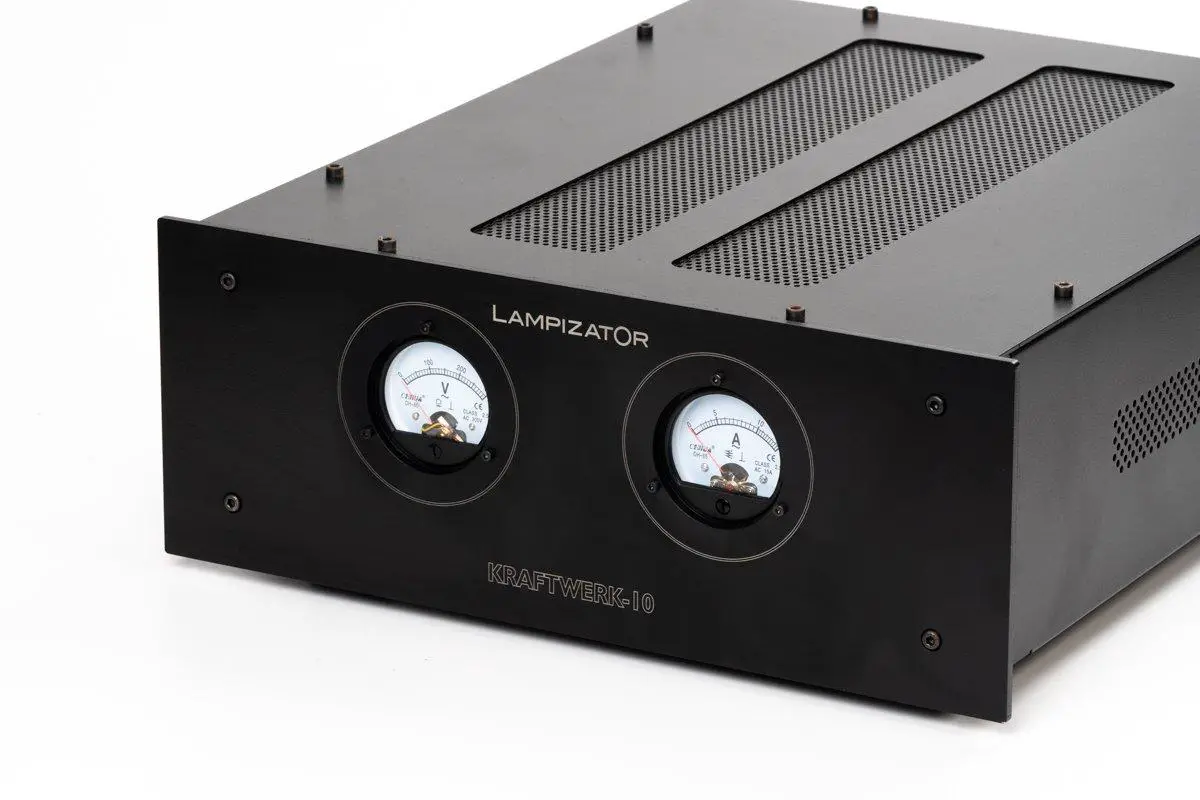
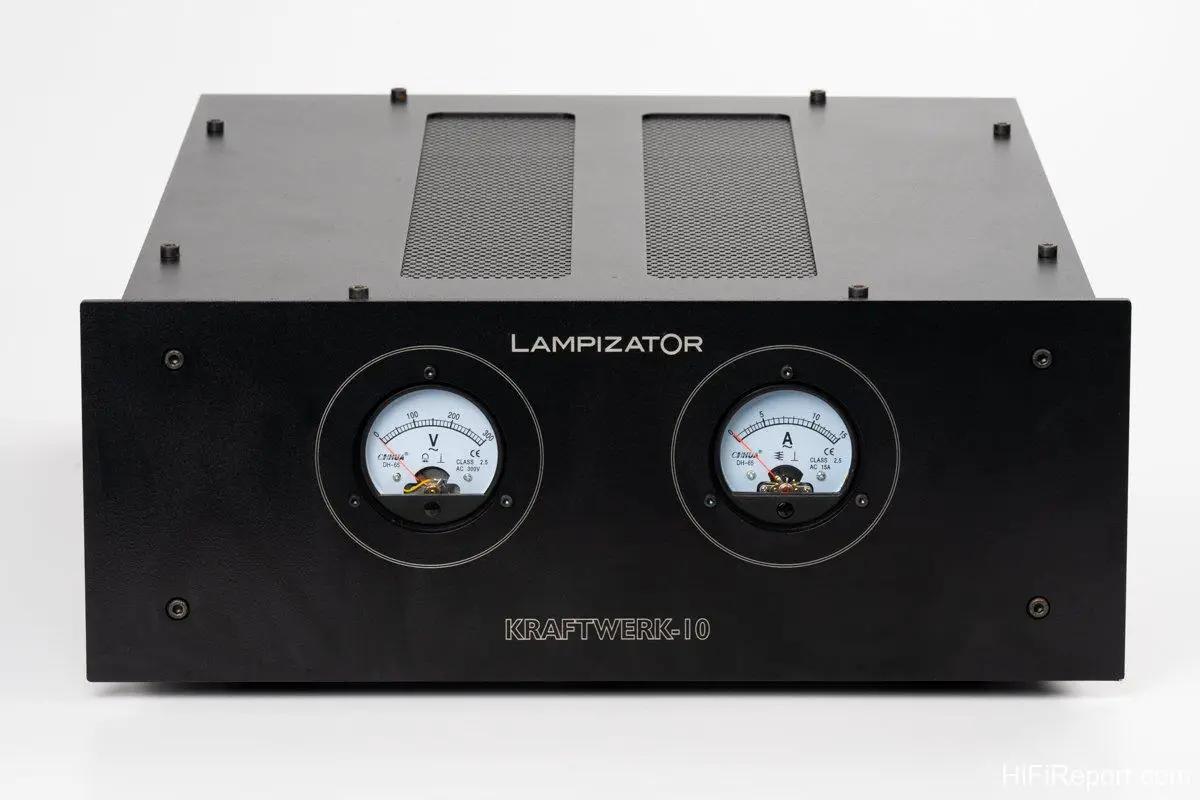
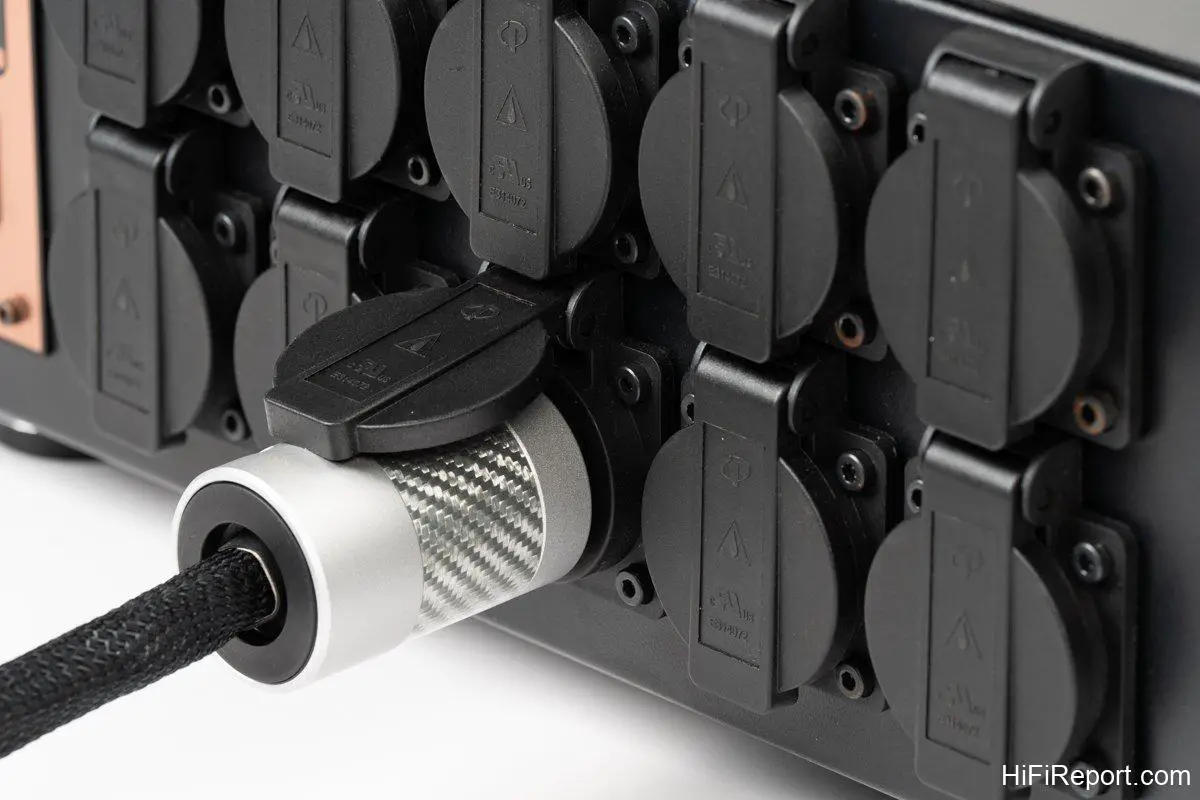
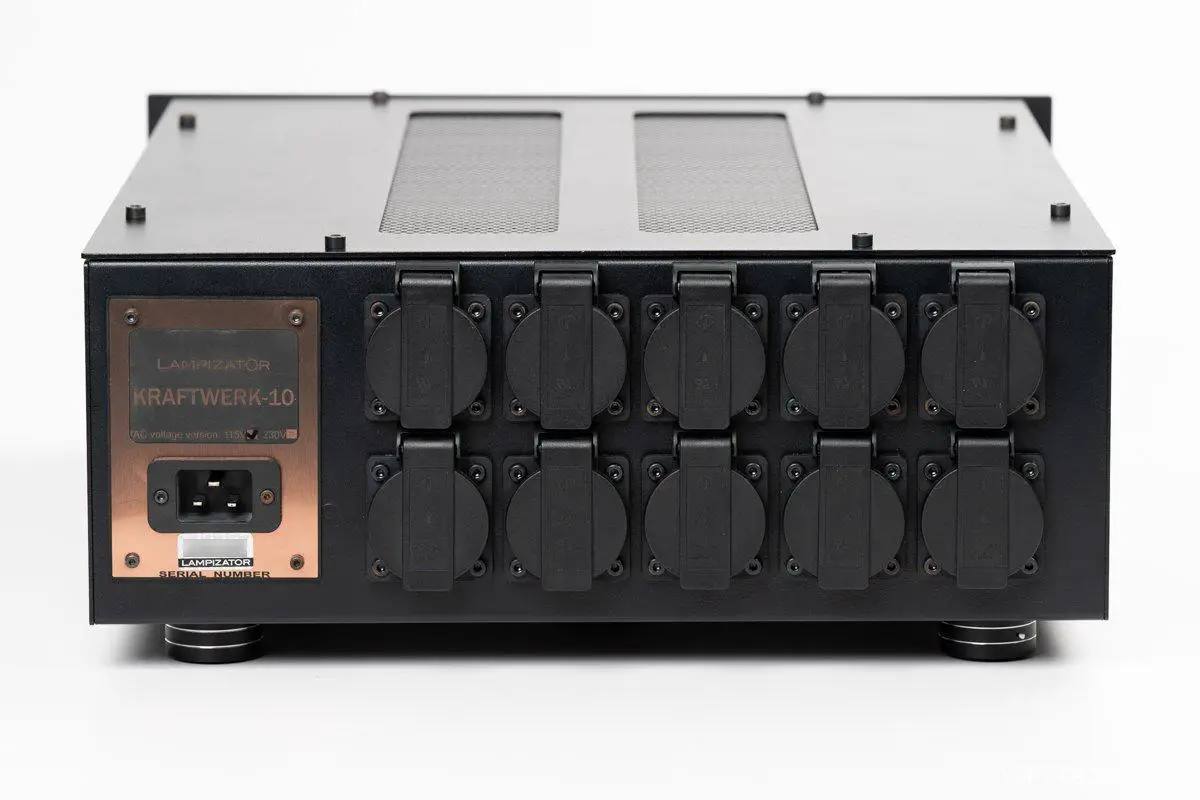
The Kraftwerk 10 is undeniably substantial in size. Its front panel features both an ammeter and a voltmeter. The voltmeter allows users to monitor the stability of the mains power supply, while the ammeter displays the current output status of the Kraftwerk 10. The rear panel boasts a generous ten power output sockets, a boon for audiophiles with extensive audio systems. Despite its “power plant” moniker, it’s crucial to note that the Kraftwerk 10 is not a power generator but rather a sophisticated power filter.
Ten Outputs, Three Circuit Configurations
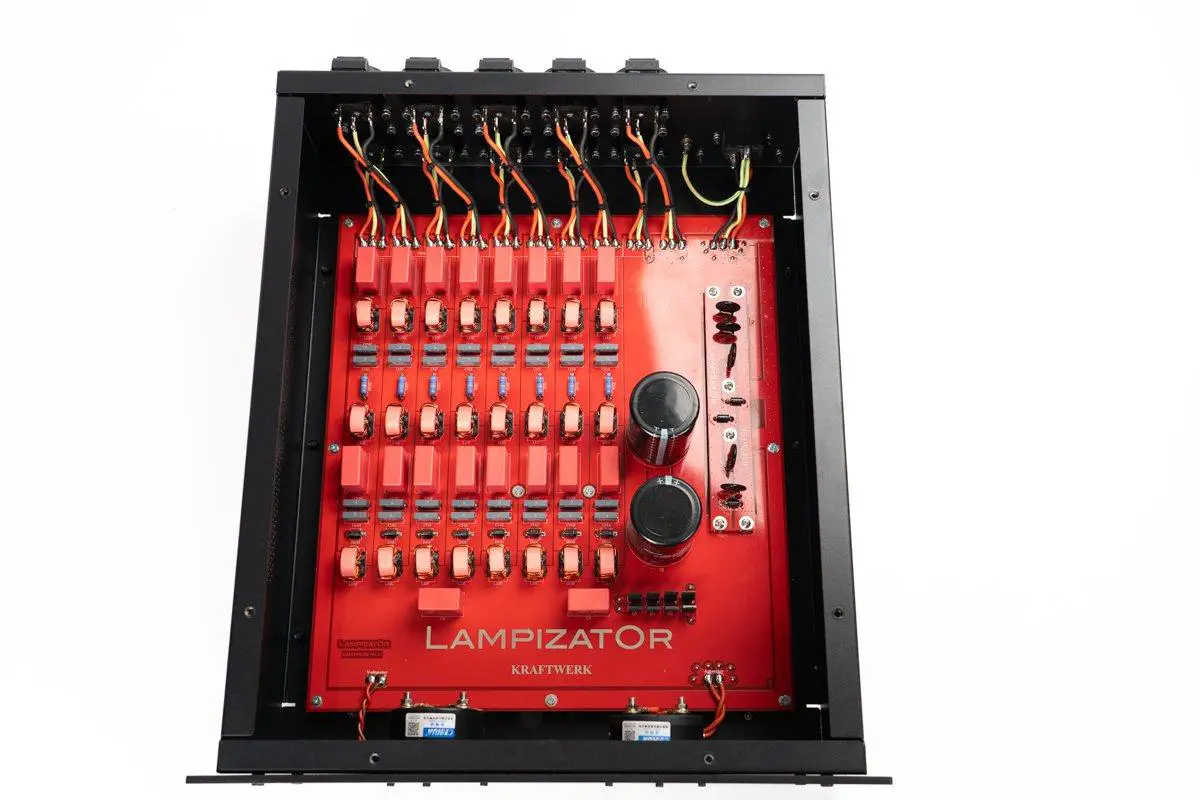
Among the ten power outputs of the Kraftwerk 10, eight are filtered, and two are unfiltered but incorporate DC blocking. These two unfiltered outputs are designed to supply power-hungry power amplifiers, perfectly accommodating a monoblock amplifier setup. The remaining eight outputs are intended for source components and preamplifiers. Within these eight filtered outputs, two are equipped with DC blockers, while six are without. The entire power circuit includes surge and lightning protection, yet remarkably, the internal circuitry is devoid of fuses or a power switch.
However, a question arises: if Lukasz believes that filtering circuits can diminish musical dynamism, why incorporate three stages of filtering in the Kraftwerk 10? Doesn’t this contradict his criticism of other power conditioners? How does he claim his design is superior?
Bespoke Components: The Secret Recipe
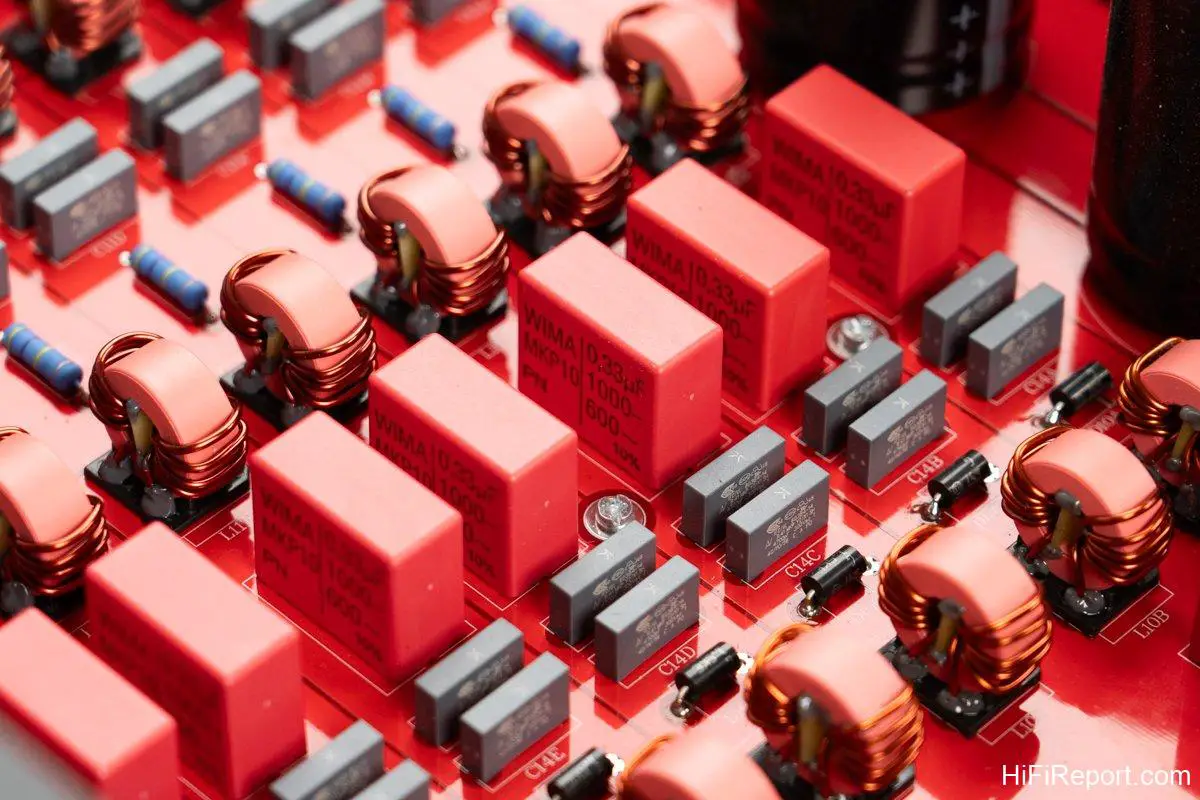
The answer lies in the meticulous selection of critical components. Lukasz personally hand-winds inductors and carefully pairs them with capacitors, meticulously measuring and analyzing power waveform variations to identify the optimal filtering circuits.
This is the crux of the matter. While the concept of power filtering isn’t novel, Lampizator’s approach is unique. They delve into the component level, crafting a bespoke recipe by sourcing and selecting parts to address the root of the problem.
The inclusion of DC blockers stems from observations during Lampizator’s customer service interactions. Lukasz noticed that some customers experienced hum issues with their Lampizator DACs. Upon return for servicing, Lampizator couldn’t replicate the problem in their lab. Further investigation revealed that DC offset in the customer’s home power supply was the culprit, causing transformer vibration and audible hum. Consequently, Kraftwerk 10 integrates DC blockers on two of its output sockets to mitigate potential transformer interference from DC contamination in the mains.
Experimentation is Key to Optimal Configuration
The question of optimal connection arises. The two unfiltered outputs (with DC blocker) are designated for power amplifiers—straightforward enough. But amongst the eight filtered outputs, two with DC blockers and six without, how should one distribute component connections? The answer, according to Lampizator, is “it’s up to you” and encourages experimentation. They emphasize that every home’s power environment is unique, and system configurations vary, necessitating personal experimentation to discover the best configuration for each setup.
A primary concern for audiophiles regarding power conditioners is current limiting. However, the Kraftwerk 10’s specifications indicate a maximum output of 10A or 2300W, whether filtered or unfiltered, with a maximum load of 16A or 2300W. This suggests current limiting is not a concern. Furthermore, Lampizator deliberately omitted fuses and a power switch from the Kraftwerk 10, aiming for a simplified circuit path to minimize energy loss.
Minor Discrepancies Between Unit and Official Specs
Readers researching the Kraftwerk 10 on Lampizator’s website might encounter slight discrepancies in specifications. The official website states “2 unfiltered outputs (with DC blocker), 4 filtered outputs (with DC blocker) and 4 filtered outputs (without DC blocker).” However, the unit reviewed here features “2 unfiltered outputs (with DC blocker), 2 filtered outputs (with DC blocker) and 6 filtered outputs (without DC blocker).” Upon clarification, Lampizator confirmed that the latter configuration is the correct specification for current and future Kraftwerk 10 production.
My inquiry about output configuration stemmed from the complete lack of labeling on the Kraftwerk 10 itself. There are no visual cues indicating which outputs are filtered, unfiltered, or equipped with DC blockers. Yet, Lampizator advocates for user experimentation to find the optimal connection scheme. Understanding the output specifications became essential.
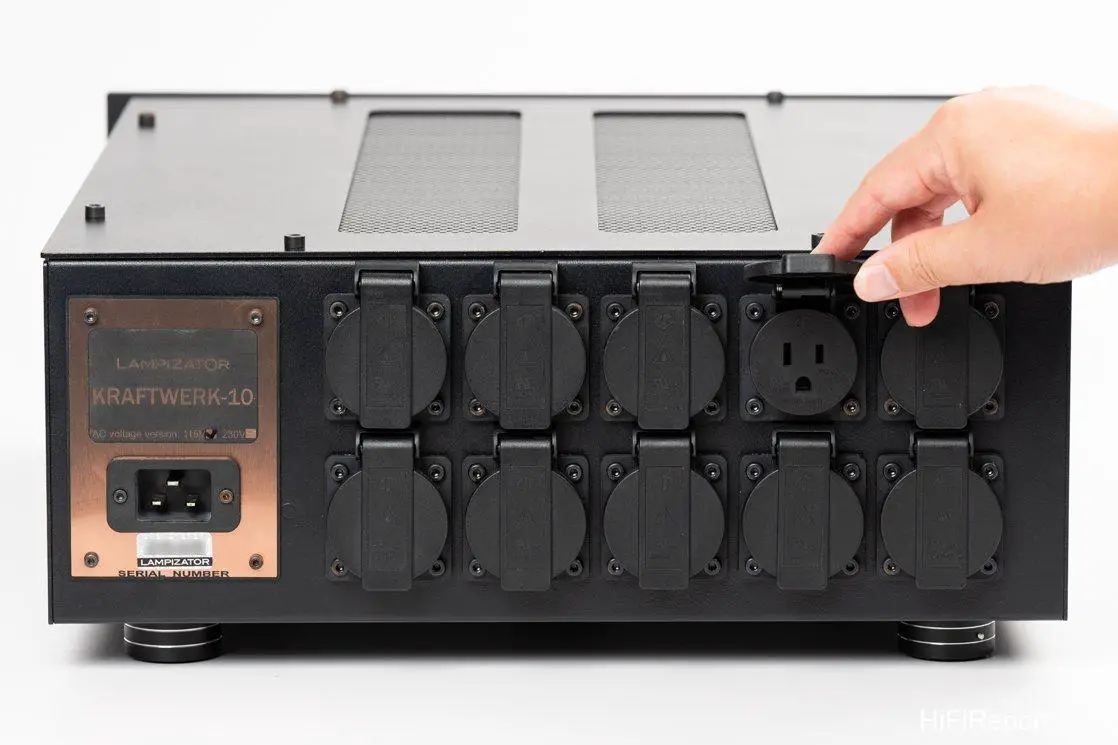
Lampizator clarified that, starting from the 20A IEC inlet on the Kraftwerk 10’s rear panel, the first pair of outputs (top and bottom) is unfiltered with DC blocking. The second pair is filtered with DC blocking. The third to fifth pairs are filtered but without DC blocking.
Enhanced Sonic Sweetness and Blacker Backgrounds
I’ve been using the Kraftwerk 10 for a while, but initially, unaware of the nuanced output configurations, I adopted a haphazard, plug-and-play approach. Even in this less-than-ideal scenario, the Kraftwerk 10 revealed its captivating qualities: sweeter tonality and a noticeably blacker sonic background.
Intriguingly, while the sonic background deepened and the sound became sweeter, I hesitate to say it became “more realistic.” I often contend that musicality and beauty can outweigh absolute fidelity. Recordings serve music, and depending on the genre, they might prioritize realism or artistic enhancement. Consider The Beatles’ latest single, “Now And Then.” John Lennon passed away in 1980, and George Harrison in 2001. Yet, through cutting-edge digital recording technology, John Lennon and George Harrison were resurrected from archival tapes preserved by Yoko Ono, reuniting with Paul McCartney and Ringo Starr. This reunion is far from “realistic,” but listening to “Now And Then” evokes the nostalgic warmth of Beatlemania in the 1970s. The experience is less about sonic realism and more about emotional resonance and nostalgia.
Six Out of Ten Outputs Utilized
During my evaluation of the Kraftwerk 10, I connected virtually all of HiFiReport’s reference components. The digital front-end comprised a YBA CDT-450 transport and a Merging NADAC. Preamplification was handled by an EAR 868P, power amplification by EAR 509 MK II monoblocks, and loudspeakers were Wilson Alexia 2s.
The power amplifiers were naturally connected to the unfiltered outputs. The digital sources and preamplifier were plugged into filtered outputs without DC blocking. The remaining two filtered outputs with DC blocking were assigned to a Linn LP12 Klimax turntable. In total, I utilized only six of the Kraftwerk 10’s ten outputs, underscoring its ample headroom for future system expansion, such as adding a dedicated streamer or a high-end network switch. The Kraftwerk 10 offers significant growth potential.
Throughout the listening process, I experimented with various configurations, comparing setups where all components except power amps were connected to filtered outputs (both with and without DC blocking). Frankly, I struggled to discern substantial differences, perhaps indicating the relatively clean power in the HiFiReport listening room, minimizing the audible impact. However, the Kraftwerk 10’s provision of diverse power output options provides ample scope for fine-tuning and sonic exploration.
Enhanced Musical Flow
The Kraftwerk 10’s ability to deepen the sonic background directly translates to a more pronounced sense of three-dimensional space and improved musical flow. The soundstage gains height, width, and depth, becoming more immersive and holographic.
Take, for instance, the performance of Mozart’s Piano Trio K.496 by Pires, Dumay, and Wang Jian. The first movement, Allegro, brims with bright exuberance. The piano leads with the main theme, underpinned by the cello’s sustained notes, while the violin embellishes the piano melody. The cello’s long notes establish a leisurely, lyrical atmosphere, while the piano and violin intertwine, creating a vibrant and bright musical tapestry.
Mozart’s music is inherently joyful and beautiful, even without the Kraftwerk 10. However, with the Kraftwerk 10 in the chain, the piano’s initial touch becomes even lighter and more delicate, enhancing the sense of joy. The cello’s sustained notes gain weight and richness, amplifying the contrast between the violin and cello’s high and low registers, adding vibrancy to the piano trio’s sonic palette. Moreover, the reverberation and decay of the violin and piano notes seem meticulously polished, radiating a gentle, captivating sheen that draws the listener into the performance.
This, I believe, is the Kraftwerk 10’s allure. A piano trio demands clear spatial separation between instruments. The piano should occupy the center stage, the cello slightly to the right and lower, and the violin to the left and slightly higher. These are fundamental aspects of the recording itself, and system setup should prioritize achieving this spatial foundation. The Kraftwerk 10 doesn’t create this basic framework, but rather, once the fundamentals are in place, it elevates the musicality, imbuing the performance with greater emotional impact. The cello gains a touch of richness, the piano’s dynamic nuances become more pronounced, and the violin acquires a silky smoothness. Collectively, these enhancements convey a heightened sense of the musicians’ passionate performance, bringing the listener closer to the live recording event.
Refinement, Not Resurrection
It’s crucial to emphasize that the Kraftwerk 10 is not a miracle cure for a poorly performing system. It’s more accurately described as a “refinement tool,” enhancing already good systems, elevating musical expression on a solid foundation. In fact, after integrating the Kraftwerk 10, I even fine-tuned the Alexia 2 loudspeakers’ toe-in. The quieter sonic backdrop and widened soundstage allowed for subtle adjustments to improve instrument focus and heighten dynamic contrast.
Evaluating power conditioners like the Kraftwerk 10 is best achieved with smaller ensemble recordings, as they allow for more critical listening to subtle nuances. Consider Carol Kidd and Nigel Clark’s collaboration on “Tell Me Once Again.” The title track features a classical guitar playing jazz arpeggios, accompanying Carol Kidd’s vocals—simplicity itself. The guitar is centrally positioned in the soundstage, with vocals layered above.
With the Kraftwerk 10 in place, subtle spatial cues become more distinct. The guitar is subtly panned to the left, positioned slightly lower, while Carol Kidd floats centrally, slightly to the right. These are likely subtle panning choices made in the recording studio, but the Kraftwerk 10 renders these minute details with greater clarity and definition.
Beyond spatial enhancements, the Kraftwerk 10’s ability to sweeten the tonal palette makes Carol Kidd’s voice sound even more alluring. The subtle inflections and nuances of her vocal delivery become more natural and emotionally resonant. The nylon-string guitar responds warmly to Carol Kidd’s voice, providing harmonic support with chordal strumming and arpeggiated figures that seamlessly connect each vocal phrase. The arrangement is exquisitely crafted, and listening through the Kraftwerk 10 elevates the freshness and immediacy of this intimate vocal and guitar performance.
Enhanced Hall Acoustics in Recordings
Turning to recordings with more pronounced acoustic spaces, Rostropovich’s Bach Cello Suites, recorded in a French countryside church, exemplifies this. The church’s natural reverberation contributes significantly to the recording’s sense of space. Listening to the Prelude, Rostropovich’s interpretation is brisk, notably faster than later renditions by Yo-Yo Ma. The music projects a spirited energy, and the sustained notes at phrase endings carry a sense of spatial decay. These recorded details become even more vivid and captivating with the Kraftwerk 10. The musician’s focused performance becomes more palpable, drawing the listener deeper into the music.
Finally, consider the Oscar Peterson Trio’s classic album, “We Get Requests,” specifically “You Look Good To Me.” The double bass sustains long, resonant notes, the piano plays arpeggiated chords, and the shimmering triangle punctuates the rhythm. With the Kraftwerk 10, the sonic background deepens further, the soundstage expands, and instrument focus sharpens. The piano anchors the center, the double bass to the right, and the drums to the left—the jazz trio’s spatial arrangement emerges with clarity. The Kraftwerk 10 imbues the performance with a relaxed, swinging, and joyful atmosphere. The brush strokes on the snare drum are delicate, the bass lines are articulate, and the piano exudes a relaxed brilliance, with a richer, more substantial tone. In essence, the Kraftwerk 10’s most significant contribution is a heightened sense of musical vibrancy and expressiveness—qualities that are difficult to capture in words.
An Ally for System Advancement
As a power filter, the Kraftwerk 10’s impact is undeniable: it injects a sense of vitality into recordings, making them sound more alive and engaging. However, it’s crucial to reiterate that the Kraftwerk 10’s benefits are contingent on a well-optimized system. If your soundstage lacks three-dimensionality or focus, the Kraftwerk 10 won’t magically rectify these fundamental issues. You must first address the basics—soundstage presentation and frequency balance. Once these foundational elements are properly addressed, and if you feel your system is lacking a final touch of musical vibrancy, the Kraftwerk 10 emerges as an invaluable tool for sonic advancement.
Specifications
* Type: Power Filter and Supply
* Independent Filtered Power Outputs: 6
* Independent Filtered Power Outputs (with DC Blocker): 2
* Unfiltered Power Outputs (with DC Blocker): 2
* Maximum Filtered Power Output Current: 10A or 2300W
* Maximum Unfiltered Power Output Current: 10A or 2300W
* Maximum Total Load: 16A or 2300W
* Dimensions: 440 × 180 × 505 mm (W×H×D)
* Weight: 10 kg (Copper version: 11 kg)