
Lampizator Baltic 4 DAC Review
Lampizator, a Polish brand, holds a unique position in the Hi-End audio market. Founded by Lukasz Fikus, the company began with vacuum tube DACs. Since 2010, Lampizator’s reputation has rapidly ascended. A decade ago, their top-tier model, the Pacific, exceeded 20,000 Euros. The newly launched flagship, Horizon, has doubled in price to 46,000 Euros. In contrast, the Baltic 4, auditioned at HiFiReport, with its reference price of 6,000 to 8,000 Euros, is considerably more accessible.
Continuous Growth Momentum
If we were to describe Lampizator’s defining characteristic simply, it would be vacuum tubes. In its early days, Lampizator exclusively produced vacuum tube DACs, with no other product lines. During an interview with owner Lukasz Fikus some years ago, he mentioned that Lampizator was likely the only company in the world that could survive solely by making vacuum tube DACs.
Of course, that interview took place seven or eight years ago. Lampizator has since gradually expanded its product range, including the Kraftwerk 10 power supply and, more recently, vacuum tube amplifiers and cables. This expansion indicates Lampizator’s vitality as a continuously growing audio brand.
I recall at the 2023 audio show, while busy with numerous interviews with international manufacturers and covering the event, I received a last-minute notification that Lukasz, the owner of Lampizator, wanted to hold a fan meeting at the show and urgently needed translation support. Squeezing in time, I assisted with translation at the audio show with virtually no preparation. I met Lukasz just five minutes before the event started and asked him what he planned to discuss. Lukasz casually replied, “I’ve been talking about Lampizator for decades; I never prepare a script. I can just go on stage and talk.”
Pricing Dictated by Sound
Easy for him to say, but I was the one tasked with translating, without even a basic outline of what he intended to cover! It truly tested my impromptu response skills. When the time came, HiFiReport’s exhibition room was packed, with standing room only and even more people crowded at the doorway, unable to get in. I began chatting with Lukasz about Lampizator. As expected, without a prepared script, the conversation was incredibly candid. After brief greetings, Lukasz declared himself the “dictator” of Lampizator regarding business direction and product pricing strategies!
He meant that Lampizator’s product pricing wasn’t based on production costs. Instead, Lukasz decides the price, and that’s what it sells for! And how does this dictator set prices? Based on sound performance! Brilliant. I often tell friends that buying Hi-End audio isn’t about weighing components by the pound or considering the cost of parts and materials. The real value lies in the technology. Lukasz’s statement clearly conveyed that cost is secondary; technology is paramount. You buy Lampizator to pursue the best possible musical performance, not just components and assembly labor. During the meeting, Lukasz also mentioned that while Lampizator started with vacuum tube DACs, from 2023 onwards, they are gradually expanding their product line, and we can expect more new creations from Lampizator in the future.
Focused on Lampizator Customer Service
Translating for Lukasz is no easy task. My pen never stopped moving as I tried to capture the essence of his words and translate them into Chinese for the HiFiReport audience. When Lukasz talks about audio, his eyes light up, and his tone becomes resolute. You can feel his passion for audio. However, there was a point during the translation where I felt a bit awkward. Lukasz stated that since starting his business, the opinions he values most are those of Lampizator buyers. He disregards everyone else’s opinions.
He doesn’t care about criticisms at audio shows or reviews written by external audio critics, and he doesn’t even bother to read them. Lampizator also doesn’t advertise, choosing to invest all resources into customer service for Lampizator owners.
Well, Mr. Lukasz, I am providing voluntary translation assistance here. If it weren’t for my client’s request, how would you have managed to find an interpreter at the audio show on such short notice? Alright, I’m here to write about auditioning the Baltic 4 vacuum tube DAC at HiFiReport, so why am I discussing Lukasz so much? I believe audio equipment is a product created by people, and the personality of the person in charge dictates everything. In Lukasz’s words, he consistently focuses on how to make Lampizator’s vacuum tube and digital-to-analog conversion circuits the best they can be, rather than on how to maximize profits. He genuinely wants to create excellent equipment. This sincere attitude is immediately apparent when you meet and talk with Lukasz.
Five Interchangeable Vacuum Tubes for Sonic Variety
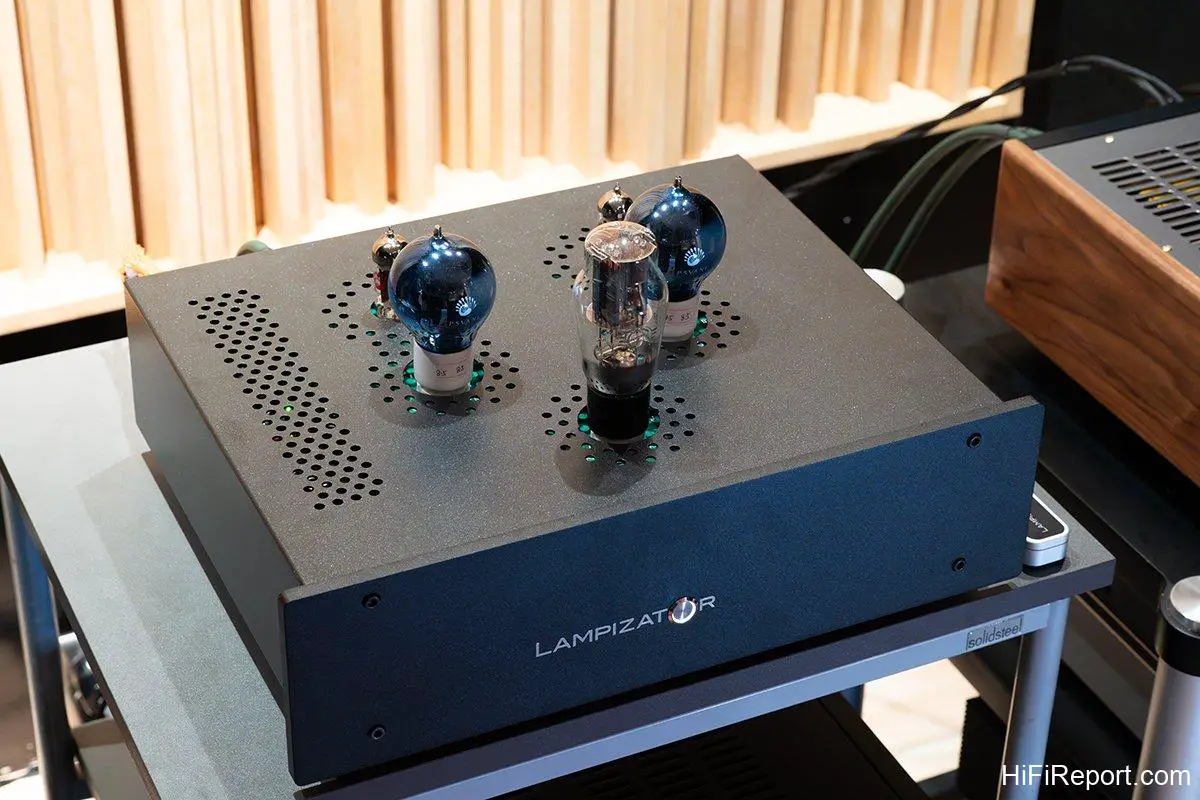
Returning to the Baltic 4, its model number indicates it’s the fourth generation, yet its appearance remains largely unchanged, instantly recognizable as Lampizator.
The chassis features a doubled-thickness front panel, but unless you place it next to an older model, the heavier build is hard to discern.
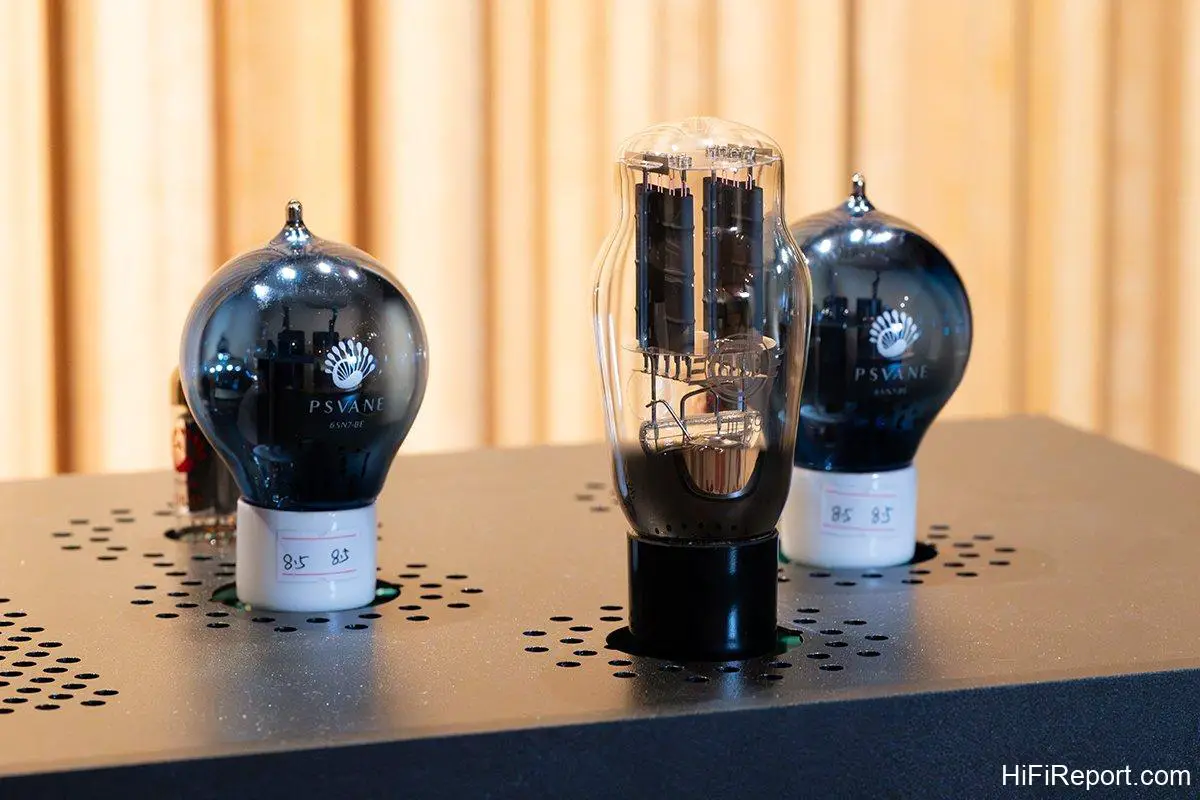
The Baltic 4’s output stage uses triode tubes with tube rectification and choke power supply. The output is DC-coupled, eliminating coupling capacitors to avoid coloration of the music signal. The description emphasizes triode output rather than just vacuum tubes because the Baltic 4 is compatible with various tubes, including 5C3S, 5U4G, 274B, GZ37, and 5W4R. For those who enjoy tube rolling, the Baltic 4 is sure to be a playground.
New ENGINE ELEVEN DAC Engine
However, the analog amplification and power supply sections of the Baltic 4 have seen relatively minor changes. The most significant upgrade is the digital-to-analog conversion circuit, which has been evolved to Lampizator’s latest digital engine, ENGINE ELEVEN. The manufacturer states that during the Covid-19 pandemic in 2020-2021, the global impact provided Lampizator with extra time to research new circuits. The primary result was their new flagship Horizon DAC, whose digital decoding core, ENGINE ELEVEN, is gradually being incorporated into the Pacific, Amber, Baltic, Atlantic, and Golden Gate models.
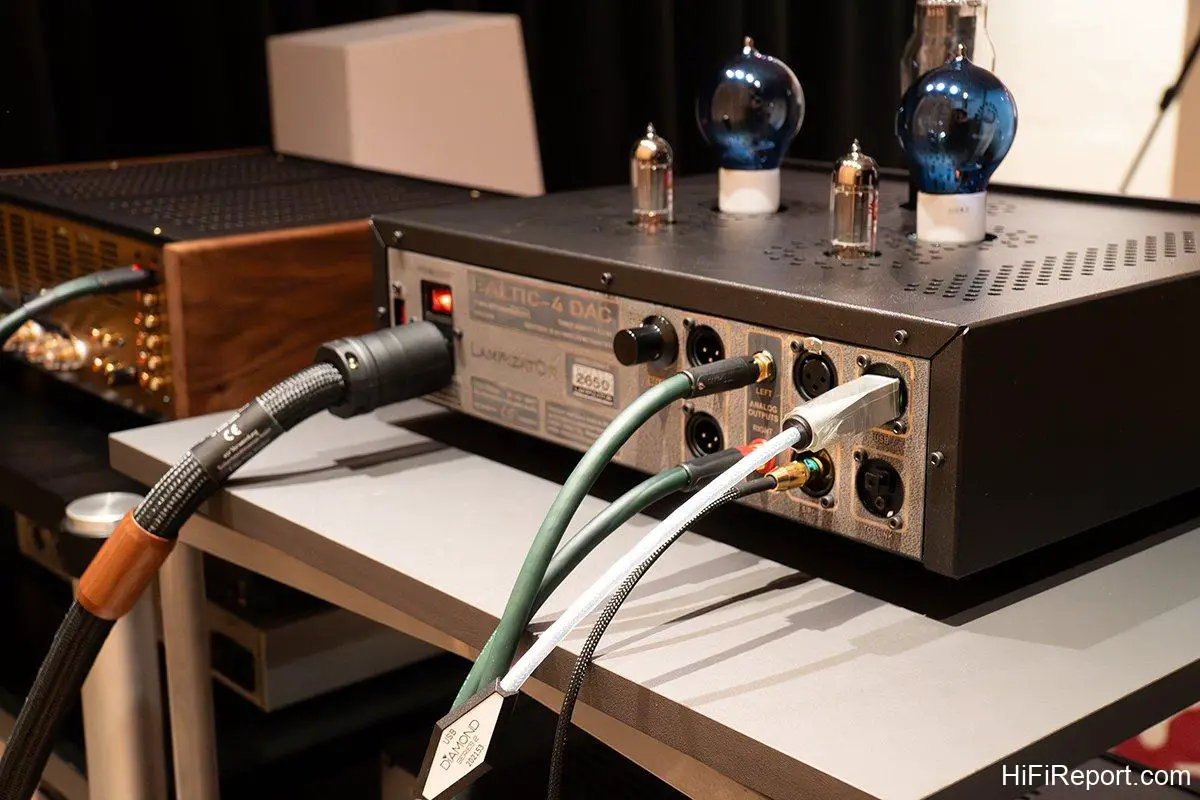
What exactly is ENGINE ELEVEN? According to Lampizator’s technical description, it includes a complex power supply requiring six transformer windings to operate, handles signal and clock isolation, and features ground separation. It also necessitates new proprietary software to manage digital-to-analog conversion and settings. Because software controls input switching, relays are completely eliminated. Furthermore, the path from the DAC chip to the vacuum tube amplification stage is entirely devoid of capacitors and resistors, using only a silver wire connection.
Unconventional “Subtractive Design”
Sounds bewildering, right? The technical jargon is intended to impress upon you the sophistication of ENGINE ELEVEN. However, in simpler terms, ENGINE ELEVEN is fundamentally a “subtractive design.” Aspects like the power supply, complex grounding, and proprietary software control sound intricate, but the key lies in two areas: first, the elimination of relay switching, and second, the removal of all capacitors and resistors between the DAC and the vacuum tube amplification stage. By reducing these electronic components, the Baltic 4 achieves a more streamlined music signal path. Fewer components that could introduce coloration mean a purer transmission of the musical signal.
Is “subtractive design” easy to implement? Certainly not. Typically, relays, capacitors, and resistors are considered necessary evils in the music signal path, intended to stabilize the circuit. To remove them all requires both expertise and audacity. Maintaining a minimalist music signal path while ensuring circuit stability is where Lampizator’s ingenuity shines. Additionally, because software controls the switching routing, the Baltic 4 operates without any analog noise during gear or setting changes.
Paid Upgrades for Older Models
Since ENGINE ELEVEN is highlighted as the Baltic 4’s most significant upgrade, can older Lampizator DACs be upgraded? Absolutely. This has been a hallmark of Lampizator since its inception. Lukasz, transitioning from an audio enthusiast to a brand founder, prioritizes customer service. Therefore, every Lampizator device is upgradable, though at a cost.
This service is more practical within Europe, where shipping machines for upgrades involves only transportation fees. However, shipping older equipment for upgrades and back internationally may incur customs duties, potentially making it less cost-effective than buying a new unit. Therefore, existing Lampizator owners interested in upgrades can contact HiFiReport directly to learn about the upgrade details.
Audition in the Third-Floor Listening Room
That covers the design aspects of the Baltic 4. My actual mission is to audition the equipment. HiFiReport Audio was originally an earphone specialist store, so their Chongqing South Road location primarily showcases headphones. The ground floor has a listening room, but they also have a dedicated listening space on the third floor, accessible by appointment, which focuses on two-channel audio.
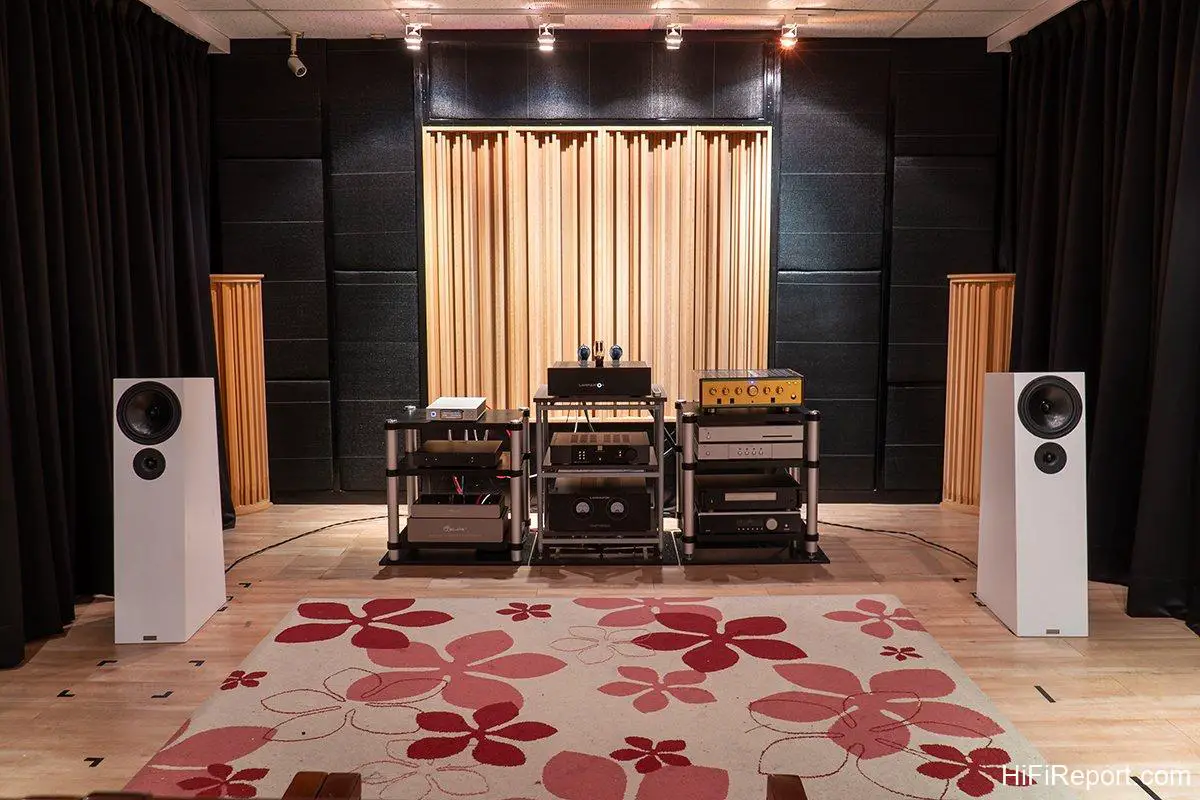
HiFiReport Audio’s third-floor listening space is located at the back of the building, away from the hustle and bustle of Chongqing South Road, offering a quiet oasis in the city. With the door closed, the space provides excellent tranquility. The system paired with the Baltic 4 includes a Japanese Leben CS-600 integrated amplifier and Finnish Penaudio Alba Lumi floor-standing speakers. While it appears to be a simple setup of an integrated amp driving floor-standing speakers, it’s complemented by Telos GNR grounding, QRC, Kraftwerk 10 power supply, Crystal Cable interconnects, Swiss Cable power cords, and Telos speaker cables. The entire system is clearly meticulously arranged and tuned.

Refined Penaudio Speaker Placement
Sitting in the listening position, even before starting to listen, the placement of the Alba Lumi floor-standing speakers seems unusually wide. I had recently reviewed a Penaudio and Moon combination, and in that HiFiReport audition, a near-field listening setup was used with speakers not positioned as widely. Upon asking the young staff at HiFiReport Audio, I learned that HiFiReport’s Mr. Kobayashi had personally adjusted the setup. Reassured, I knew Mr. Kobayashi is meticulous and detail-oriented, so the setup was undoubtedly optimized.
Starting with warm-up tracks, I chose “Cinema Paradiso” by Itzhak Perlman, specifically the passionate “Por una Cabeza” (Scent of a Woman). The powerful pizzicato of the string section led into the tango melody of the violin, soaring with intensity yet maintaining a silky smoothness in its trailing notes, carrying a delicate nuance. As the tango theme entered, the melody swayed gracefully. The Baltic 4 skillfully balanced richness and clarity, enhancing the violin’s expressiveness significantly.
Just from listening to “Por una Cabeza,” HiFiReport’s tuning prowess was evident. The Alba Lumi floor-standing speakers, placed wider than I anticipated, created a spacious and deep soundstage, as expected. However, the focus and coherence of instrumental images were surprisingly better than I had imagined.
Excellent Soundstage Spaciousness
I often use camera lens focal lengths to describe the spaciousness of a soundstage. For the same framing, you can use 100mm, 50mm, and 35mm prime lenses. By changing the camera-to-subject distance, you can achieve the same visual size, but the resulting feel is different. A 100mm lens is the most neutral, but the image can feel slightly compressed. 50mm and 35mm lenses offer better image tension, with wider angles providing even greater tension but being more challenging to use, as any horizontal misalignment can distort the edges of the frame. Novices often prefer telephoto lenses, while experts lean towards wide-angle lenses for greater framing flexibility.
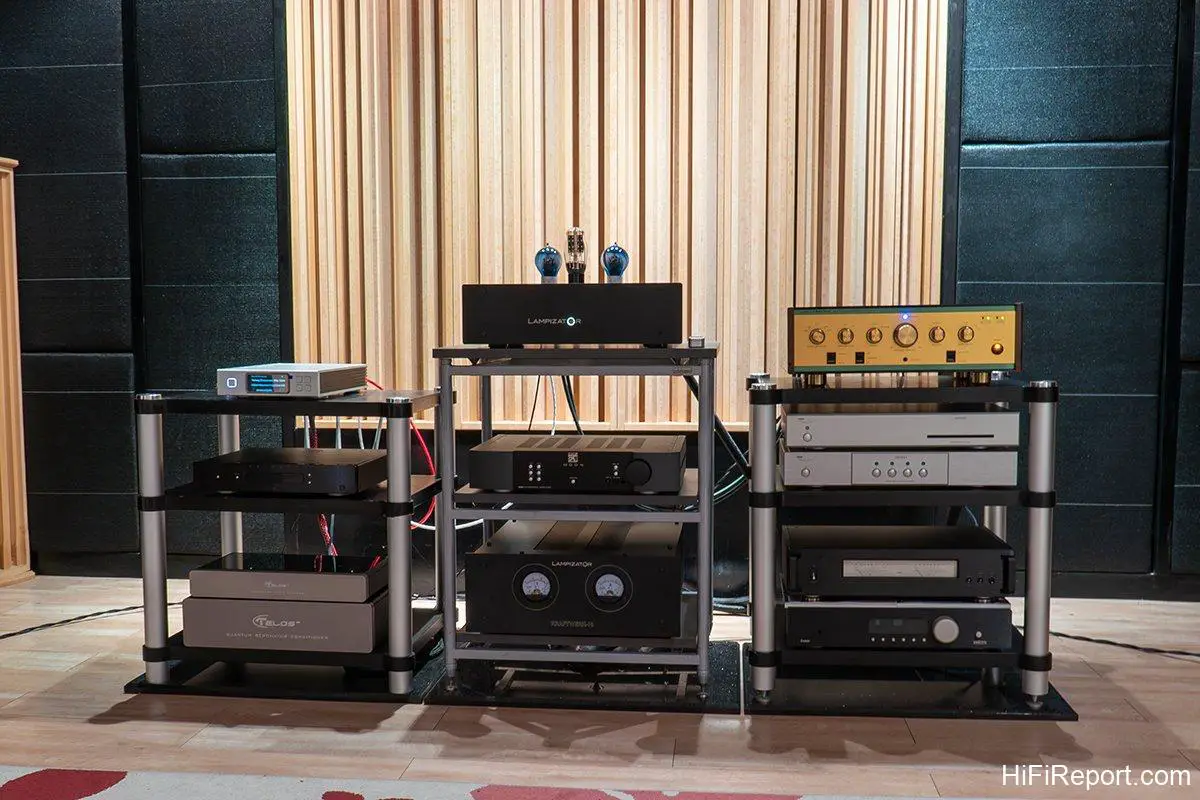
During my audition of Alba Lumi at U-Audio, I used a near-field listening setup with speakers positioned in a slight toe-in equilateral triangle – essentially a telephoto lens approach, less prone to error, resulting in a well-behaved soundstage. However, at HiFiReport, widening the Alba Lumi’s separation is akin to using a wide-angle lens. The soundstage becomes more expansive and transparent. The challenge lies in maintaining the focus of instrumental images. If achieved successfully, the 3D layering of the soundstage improves dramatically. In retrospect, my previous Alba Lumi audition was a bit of a shortcut, a slight compromise, deserving of self-criticism. HiFiReport’s deliberate speaker placement and setup, however, is a step above.
Vacuum Tubes: Penaudio’s Best Companion
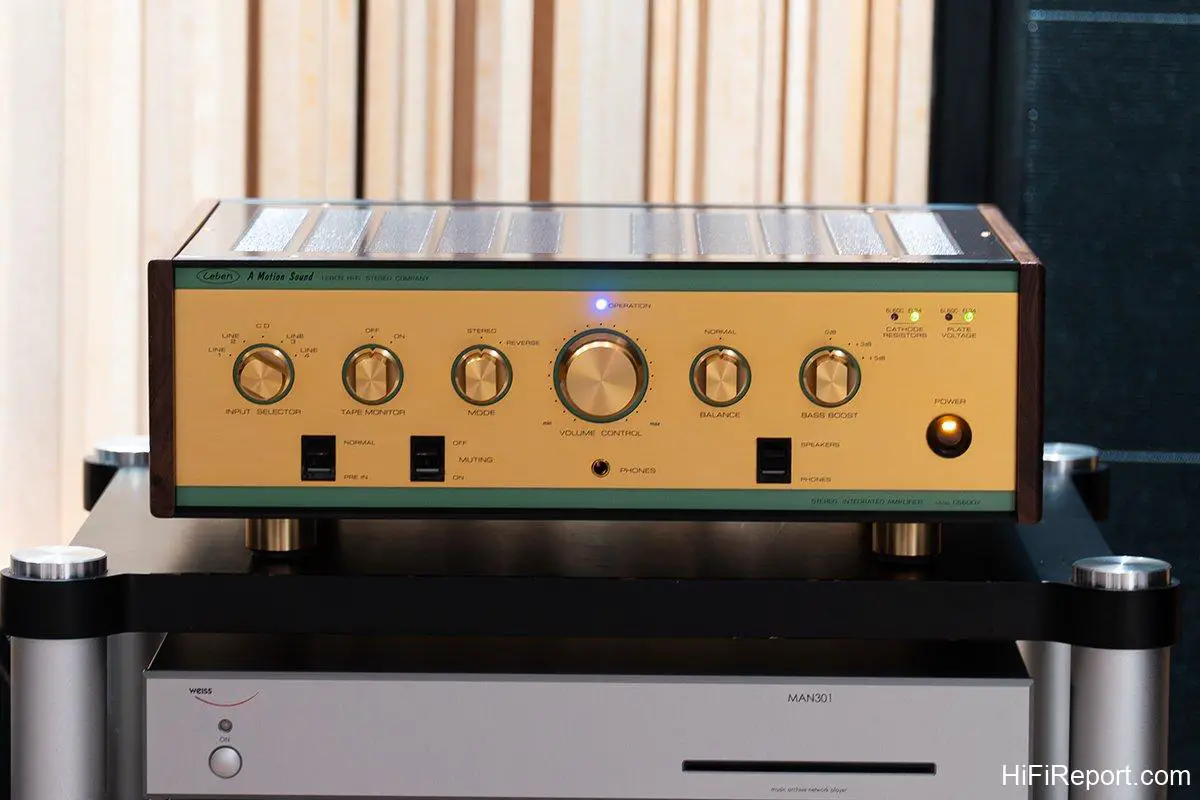
Another key factor is the pairing with the Leben CS600 vacuum tube integrated amplifier. In my previous Alba Lumi audition with Moon, it was a designated combination. However, Penaudio themselves stated that Alba Lumi was designed with vacuum tube amplifiers in mind. Using the CS600 to drive them is indeed a perfect match.
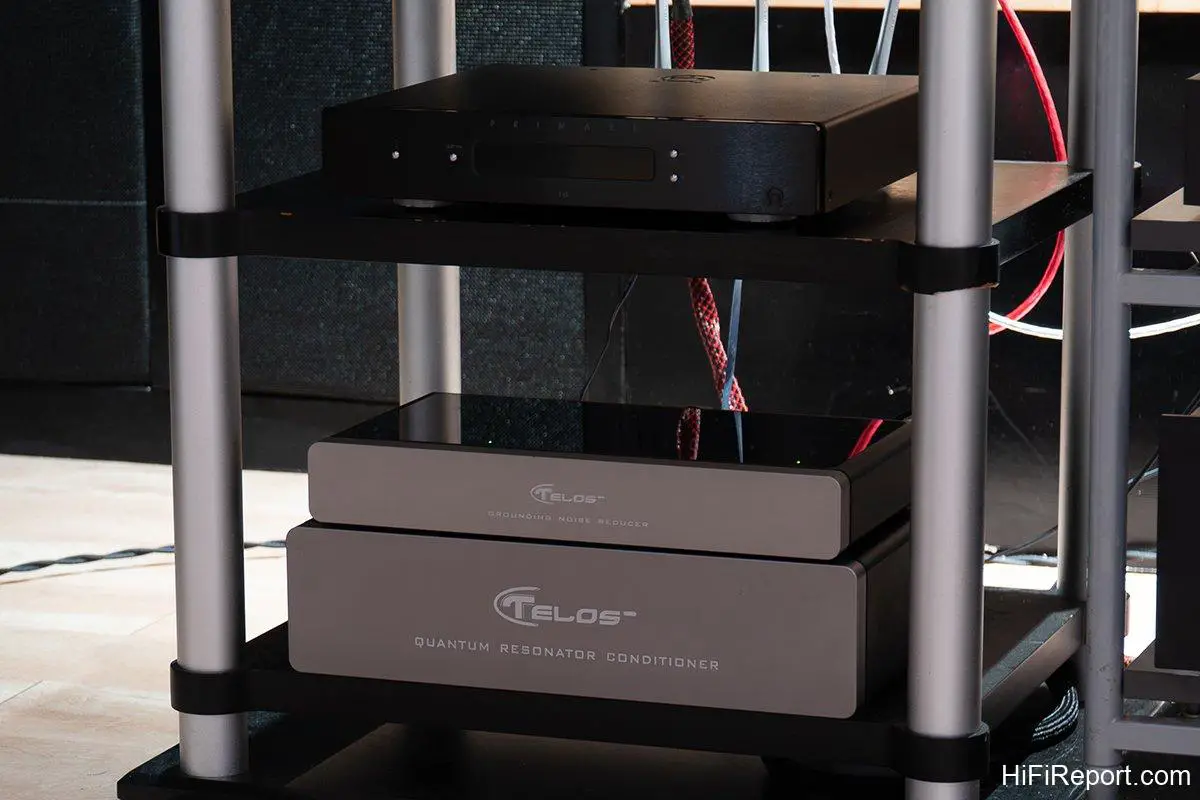
Coupled with the vacuum tube-based Baltic 4 DAC, the entire signal path is tubed, making the Alba Lumi sound even warmer and more delicate. Listening to “Por una Cabeza,” it was truly captivating, the tango melody unfolding with enchanting grace.
Bass Control is Excellent
Switching to more energetic, youthful rock, I listened to Adele’s “Send My Love (To Your New Lover)”. The opening spoken words “Just the Guitar…” are followed by powerful electronic drums and guitar laying down the foundation. Adele’s voice is focused in the center of the soundstage. While the “guitar” introduction is understated, the depth comes from the resonant electronic drum rhythm. The Baltic 4 clearly presented the layered soundstage of the recording with beautiful contrast. Adele’s voice, with its distinctive magnetism, is thick and bright yet slightly husky, highly recognizable. “Send My Love (To Your New Lover)” is a breakup song, and the Baltic 4 conveyed the underlying melancholy with even greater depth.
“Send My Love (To Your New Lover)” actually has a substantial amount of low-frequency electronic drum content, which tests an amplifier’s driving power. The CS600, driving the Alba Lumi, has a modest 32 watts of output power. In a roughly ten-square-meter listening space, the bass response is surprisingly ample, especially with electronic drums, where the recording often exaggerates the effect. If an amplifier can’t control it, the low end can become loose, and the drumbeats will lack impact. However, the CS600 performed admirably, keeping the bass tight. Alternatively, this could be attributed to the Baltic 4, as the manufacturer claims that direct DAC-to-vacuum tube amplification improves bass control significantly.
Rich Guitar Tone Details
Since Mr. Hyodo, the designer of Leben, not only designs vacuum tube amplifiers but also enjoys playing guitar, and the 6L6GC power tubes used in the CS600 are frequently found in classic vacuum tube guitar amplifiers, I chose Gareth Pearson’s album “A Tweak on Antique” to listen to his arrangement of Shostakovich’s “Waltz No. 2” with the Baltic 4. It’s just one electric guitar playing the entire “Waltz No. 2”. If you plan to listen to this track, pay close attention—it’s truly one guitar from start to finish! The Baltic 4 showcased the electric guitar’s beautiful timbre. The electric guitar tone isn’t just clean; it’s enhanced with spatial and delay effects, making the guitar’s sound richer. The Baltic 4 revealed the rich details of the right-hand technique, capturing both the rounded and more percussive tones created by right-hand variations. The left hand occasionally adds slides, seamlessly transitioning into a walking bass line. Frankly, I almost forgot I was there to audition the Baltic 4, becoming completely engrossed in imagining how Gareth Pearson could play “everything with one guitar.”

Don’t believe me? Google Gareth Pearson; video evidence exists, with both electric and acoustic guitar versions, guaranteed to amaze you.
Analog Warmth with Transparency
The Baltic 4 presents a warm yet transparent balance with a strong analog flavor. I couldn’t resist selecting an older recording, Louis Armstrong’s jazz classic “What A Wonderful World.” A 1968 recording, it lacks some transparency compared to modern recordings, but its analog warmth is undeniable. Listening through the Baltic 4, that analog warmth is even more comforting.
The opening string section gently unfolds, with double bass and guitar arpeggios accompanying Armstrong’s sunny and cheerful vocals singing “What A Wonderful World.” Listening to this song instantly brightens the day, making you feel like everything will be alright in this wonderful world.
Wait, did I forget again? I’m supposed to be auditioning the Baltic 4, not just focusing on the music!
Piano Trio: From Intimate to Intense
The Baltic 4 possesses a fluid and natural sonic character. I chose to listen to Brahms’ Piano Trio No. 1. Regular readers of my articles might guess which version I selected: the one by Pires, Dumay, and Wang Jian. The piano’s solo introduction leads, followed by the cello echoing the melody, weaving a tender and romantic texture. The violin waits for the piano and cello to complete their phrases before joining with its own melodic repetitions. The violin’s intensity adds tension to the romantic melody. Brahms’s characteristic interplay and struggle gradually unfold. The three instruments engage in call and response, building tension. The Baltic 4 beautifully portrayed the shift from soothing to intense, and the gentle closing notes were immediately followed by a surge of energy as the violin burst forth with powerful notes, while the cello’s deep resonance brought the music back to tranquility.
And it’s not over yet. The fifteen-minute first movement has barely reached the three-minute mark. It continues to oscillate between tenderness and intensity, repeatedly. Brahms truly doesn’t want the listener to relax. The musical texture becomes increasingly rich and intertwined. The Baltic 4 clearly delineates the relative positions of the three instruments: piano centered, cello slightly to the right and lower, and violin slightly to the left and higher, even capturing the instruments’ vertical positioning convincingly. This Baltic 4 is impressive. What I appreciate is not just its clear and transparent resolution, but more so its ability to convey the contrast between musical tension and release, which is the very soul of music.
Faithfully Conveying Conductor and Orchestra Synergy
Finally, let’s conclude with a symphony. I chose Simon Rattle conducting the Berlin Philharmonic in Mozart’s Symphony No. 41 “Jupiter,” specifically the fourth movement, Molto Allegro. The tempo marking itself indicates it’s very fast. Simon Rattle’s conducting is notably free-spirited. This was his final term with the Berlin Philharmonic, and their mutual understanding was profound. The lighthearted opening suggests the conductor is almost letting the orchestra play on its own. When the tutti section enters, the conductor adds a touch of speed, enhancing the brilliance and splendor of the sound. The Baltic 4 handles the layering of instrumental sections exceptionally well. The widely spaced Alba Lumi speakers create a broad soundstage, but it’s also evident that Mozart’s orchestral scoring is relatively modest, so the soundstage doesn’t extend beyond the speakers but rather focuses in the center.
I know that seeing “vacuum tube” might lead some to expect a typical “tube sound” from the Baltic 4. I won’t deny that there’s a touch of tube character, but the Baltic 4’s accuracy and layering in presenting the orchestral soundstage are completely devoid of the stereotypical thick, warm, and hazy tube sound. Instead, it offers a relaxed and expansive soundstage. Especially in dynamic shifts from soft to loud, the Baltic 4 faithfully conveys the conductor’s control over the orchestra. While I wasn’t present at the recording, the Baltic 4 allowed me to sense the deep synergy between Simon Rattle and the orchestra. The conductor allows the orchestra considerable freedom of expression while intervening at appropriate moments to enhance the power of the melodic lines or create more delicate and nuanced phrasing. This brings out not only the innocent playfulness of Mozart’s music but also its wise and mature facets, especially in the brief passages that shift to minor keys, where fleeting dark clouds pass before the music quickly returns to sunny brilliance, evoking a joyful mood.
Double B Class Excellence
For most audiophiles, I believe the Baltic 4 is more than adequate to meet all DAC needs for music listening. Although it’s a digital-to-analog converter, the Baltic 4’s sound is very analog and highly musical. It’s definitely a “double B class” excellent vacuum tube DAC. For those who enjoy audio gear as a hobby, the Baltic 4 is one of the few DACs that can accommodate five different rectifier tubes, allowing for easy sonic experimentation.
Of course, when I say the Baltic 4 is “double B class,” it’s not “hypercar class.” If you only buy hypercars, then disregard the Baltic 4 and go listen to the flagship Horizon.
If you simply want to enjoy music, the Baltic 4 can be a constant companion, allowing you to forget about the equipment itself. But if you’re inclined to experiment with audio gear, the Baltic 4 offers the fun of tube rolling and sonic exploration, guaranteed to bring joy. I sincerely recommend you contact HiFiReport Audio to schedule an audition and experience the musical charm of Lampizator.
Specifications
* **Type:** Vacuum Tube DAC
* **Vacuum Tubes Used:** 2 × 12BH7 (or ECC82), 2 × 6SN7-BE (or CV181-T / 6H8C / 6SN7GT)
* **Rectifier Tube:** 5U4G (or 274B / 5C3S / 5Y3 / GZ37 / 5R4WGB)
* **Inputs:** S/PDIF RCA, AES/EBU, Toslink, USB
* **Maximum Supported Sampling Rate (USB):** PCM 768kHz, DSD512
* **Dimensions:** 430 × 130 × 500 mm (Width × Height × Depth)
* **Weight:** 13 kg