
Lexicon MC-10 Review
Many seasoned high-end multichannel enthusiasts approach building their systems quite differently from most users. While the primary goal for the majority is movie sound, advanced players demand high-level performance from both music and movie soundtracks. Some even spend more time listening to music on their multichannel systems than watching films.
Driven by the pursuit of “musicality,” these users have strong opinions, extensive experience, and the patience to meticulously fine-tune their systems’ sonic signatures. A significant percentage lean towards European and American surround sound processors, with many being loyal Lexicon users since the 1990s.
The MC-10 Arrives: Positioning and Price
However, in the years leading up to the widespread adoption of Dolby Atmos and DTS:X for home use, Lexicon had not yet introduced multichannel models compatible with object-based surround sound. The subject of this review, the MC-10, is Lexicon’s first surround processor featuring built-in Dolby Atmos and DTS:X decoding.
Currently, there are still relatively few European and American surround processors on the market, and they are generally expensive. If Lexicon had followed its pricing strategy from years past, a surround processor selling for over $15,000 USD would have been considered “normal.” However, the MC-10 is an exception to this trend, with a reference price point of under $6,000 USD.
Connectivity and Supported Formats
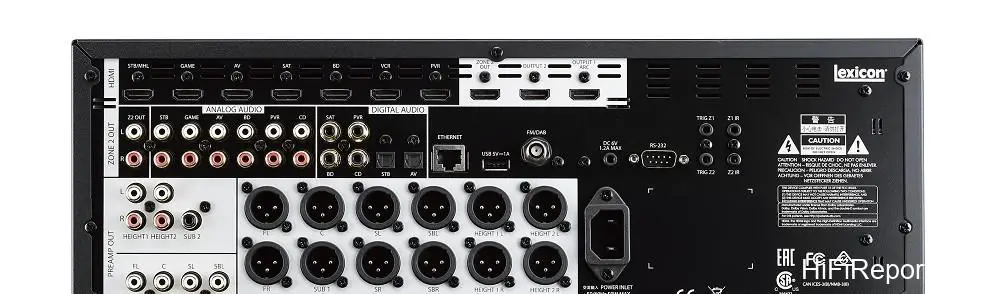
This new model is equipped with 7 HDMI inputs and 3 outputs, fully compatible with “standard” 4K source devices featuring HDMI 2.1. It supports 4K/60p video and is also compatible with Dolby Vision.
In terms of audio processing, Dolby Atmos and DTS:X are, of course, essential. The MC-10 can decode all previous standard formats and also includes Lexicon’s proprietary processing mode, Logic7 Immersion. Recently, some enthusiasts have shown significant interest in “IMAX Enhanced,” and related UHD BD movie titles are now available. IMAX Enhanced utilizes DTS:X encoding.
If a surround receiver or processor doesn’t support IMAX Enhanced, playing IMAX Enhanced content will only yield standard DTS:X sound. The MC-10, however, is one of the very few surround processors worldwide with built-in IMAX Enhanced capability. It can recognize and optimize IMAX Enhanced content, adjusting the sound to “approach the effect of an IMAX cinema.”
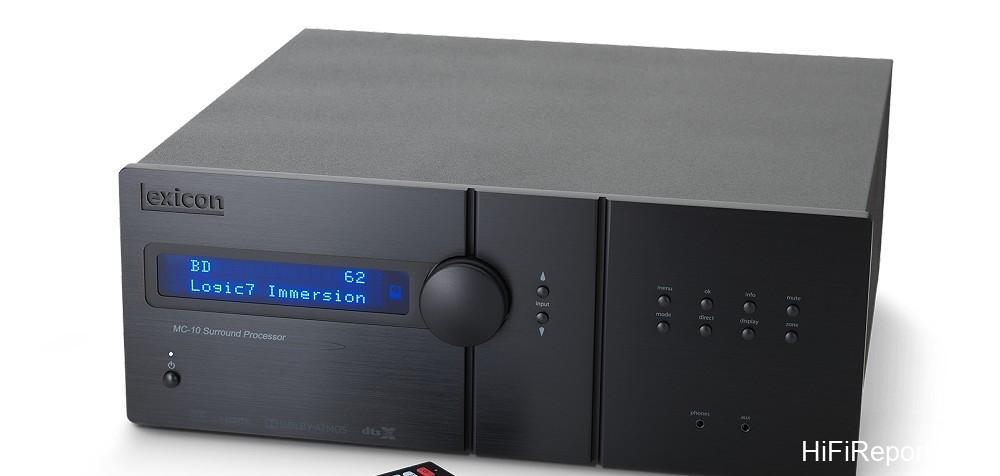
Compared to simply decoding DTS:X, IMAX Enhanced provides listeners with a stronger sense of immersion through more prominent bass effects, higher sound density, a more compact soundstage, and more palpable sound images.
Music Playback Features
For music streaming, the MC-10 can access internet radio and Spotify. It can also play multi-bit music files shared from PCs, NAS drives, and mobile devices connected to the home network. Compatible music file types include WAV, FLAC, WMA, MPEG-4 AAC, and MP3, supporting audio formats up to 192kHz/24bit.
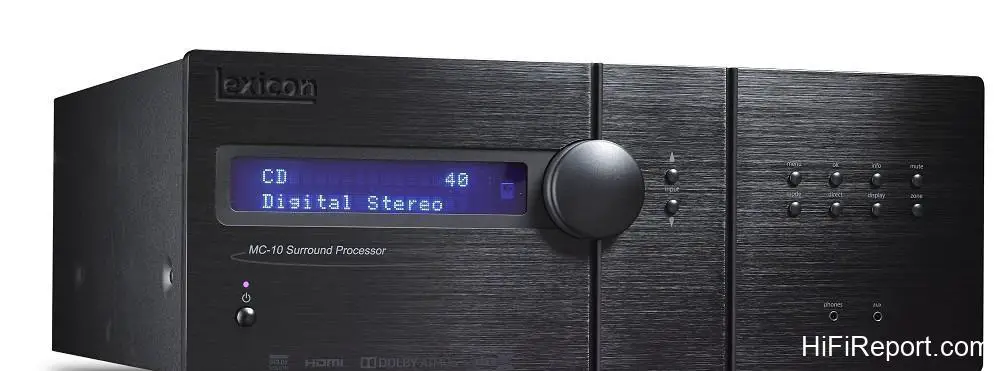
Hardware Design
Let’s delve into the unit’s hardware structure. The MC-10’s internal circuitry is roughly divided into three layers: top, middle, and bottom. The top layer houses the main digital board. HDMI inputs and outputs utilize two Panasonic MN864788 chips and one MN864787. To the left of the digital board, an Analog Devices ADV8003 handles video processing, capable of upconverting Full HD to 4K for output via the HDMI terminals.
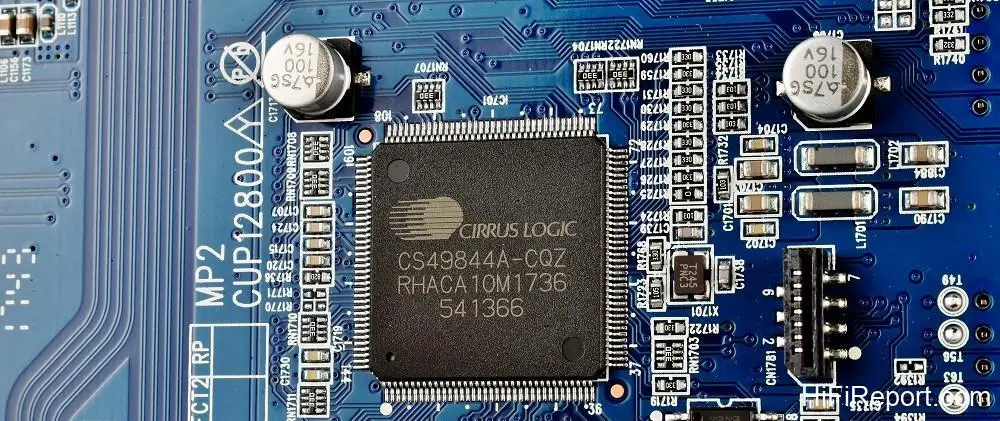
For digital audio processing, the MC-10 centers around a Cirrus Logic CS49844A DSP chip. Besides handling multichannel decoding and Lexicon’s exclusive Logic7 Immersion surround sound processing, users can connect the included test microphone to a computer and run “Dirac Live for Lexicon” for high-precision digital room correction.
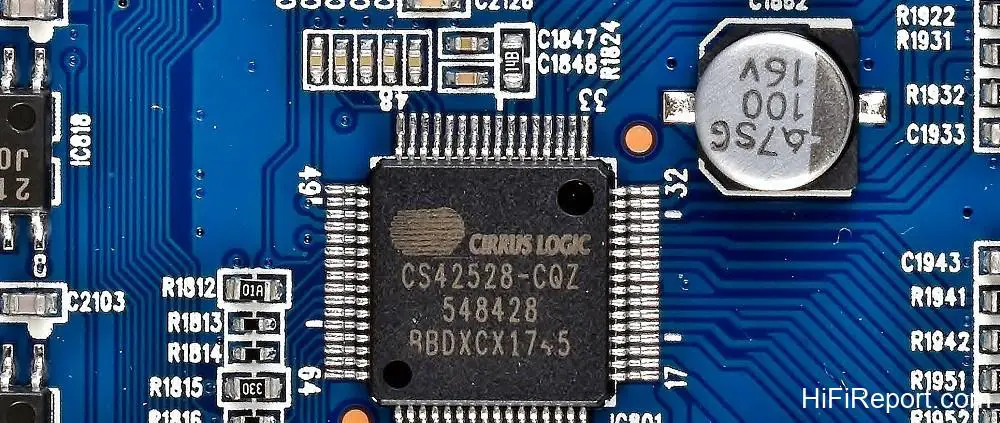
After the DSP chip completes the digital processing of the multichannel audio, the unit performs digital-to-analog conversion using two 8-channel DAC chips, the Cirrus Logic CS42528. The output filter circuit after the DAC chips comprises multiple JRC low-noise dual OPA chips NJM2068D and passive components. The multichannel audio output from here goes to the “middle layer” circuit board, whose main function is multichannel preamplification.
Two CS3318 8-channel volume control chips handle volume control for all channels, while NJM2068D chips are used for high-level amplification.
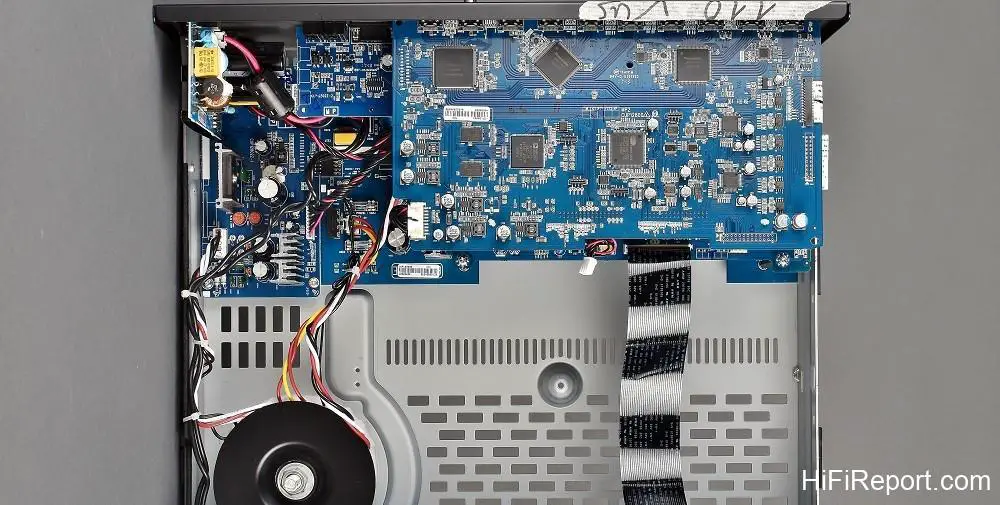
The center and right sections of the “bottom layer” circuit are the unit’s balanced and single-ended output circuits, respectively. There are a total of 12 channels of balanced output (7.1.4), each equipped with a TI DRV135 Audio Balance Line Driver chip. Single-ended outputs use NS LME49723, totaling 7.2.4 channels. Because the balanced and single-ended output circuits are independent, users can mix and match power amplifiers with balanced and single-ended inputs without any issues.
For instance, I used a Proceed AMP5 with balanced inputs to drive the front three channels and surround speakers, while the rear surrounds and four overhead speakers were driven by a Lexicon GX-7 with single-ended inputs for this review.
Dirac Live Calibration
The testing and calibration process for Dirac Live for Lexicon is considerably more involved than with most surround receivers. It requires testing a total of 9 measurement points around the main listening position. During the process, the computer records the test tones emitted by each speaker at every measurement point and immediately analyzes the results. Users can see the pre-calibration frequency and impulse response status of each speaker.
At this point, they can use “Auto Target” for automatic correction (users can also customize the target curve).
Auto Target can correct each speaker’s frequency response to a remarkably flat level. It not only uses notch filters to attenuate excessive energy in specific frequency bands (peaks on the frequency response curve) but also uses band-pass filters to fill in energy dips in specific frequency ranges (valleys). I carefully compared the curves before and after Auto Target calibration. Deviations within ±10dB were almost completely corrected.
If the deviation was greater than 10dB, for example, a dip of -16dB in a certain frequency band, Auto Target could boost the dip to only -6dB. Furthermore, because the unit’s test microphone is highly accurate, Dirac Live for Lexicon also performs equalization correction for the subwoofer. From the lower frequency limit of the subwoofer (around 20Hz) up to about 150Hz, it can automatically calibrate the response to be very flat. This is a capability that most Japanese multichannel products lack.
Movie Sound Performance
This difference in capability directly translates into the performance of movie soundtracks. For several years, this publication has used the same power amplifiers, speakers, and active subwoofer as reference equipment for reviews. Therefore, we are well aware of what constitutes “normal” and “special” performance under the same equipment pairing conditions. The MC-10’s performance is clearly exceptional.
In terms of subwoofer level settings, it adheres strictly to the rules without any artificial boosting, yet the actual movie playback performance is distinctly different from most products. It exhibits very stable, substantial, balanced, and fast bass. I believe this is the result of using Dirac’s Room EQ to fill in dips in the low-frequency range and flatten excessive energy caused by standing waves.
Consequently, users of this unit do not need to increase the volume to enhance the sense of impact; playing movie soundtracks at a normal volume reveals a solid internal force and weight in both the low and ultra-low frequencies.
The MC-10 doesn’t just favor the bass; it maintains this substantial character from the ultra-low frequencies all the way up to the treble. This also makes its soundstage characteristics noticeably different from Japanese models. While high-end Japanese models typically create a “transparent and deep” soundstage, the MC-10 generates a “rich, high-density” three-dimensional soundstage with a tight and solid sense of envelopment.
Sound effects in outdoor scenes are anything but diffuse; even subtle sounds have a strong presence. Scenes inside aircraft cabins or submarines create a palpable sense of confinement and pressure.
Another advantage surround processors have over surround receivers is the ability to pair them with sufficiently powerful power amplifiers, free from the output limitations of built-in amplification circuits. This allows for a stronger impact of energy.
Combined with the MC-10’s inherently “rich” sonic character, the approach of a tank is rendered with a massive, imposing form, the surrounding gunshots and bullet impacts possess solid force, and the enhanced immersion creates a sense of tension for the audience, as if stepping onto the battlefield.
Music Performance
Regarding music performance, I believe the MC-10 is essentially a “multichannel version of Hi-Fi audio equipment.” It exhibits absolutely no stiff digital harshness, offering stable bass, warm and full-bodied midrange, and soft, sweet treble. At first listen, it might not seem like the “high-resolution” type, but after listening quietly for a while, one can perceive its high-resolution capabilities in the midrange and bass frequencies.
Listening to “slow tempo jazz vocals” reveals realistic and delicate vocal textures and the rich emotion conveyed by the singer through their voice. Listening to rock and electronic music loudly is also perfectly fine; even when increasing the sound pressure to the point where “the bass hits your body,” it remains completely free of harshness or clutter.
Compared to my previous experience listening to the Lexicon RV-6, I believe that with the right power amplifier, the MC-10 can achieve a more refined and stable sound. The MC-10 maintains Lexicon’s consistent style; whether listening to multichannel music content or just using the left and right speakers, it always delivers “warm, emotional music,” presenting a rich, vivid, and full-bodied sound.
I remember back in the days when multichannel systems were not yet widespread, many traditional audio enthusiasts transitioned to multichannel after hearing Lexicon. I believe the MC-10 still possesses this charm. I am confident that listeners who audition it will easily discern the MC-10’s mature and flavorful sound is indeed unique. Furthermore, in terms of movie sound, it creates a substantial, high-density three-dimensional soundstage, effortlessly displaying outstanding presence and impact.
The powerful and grand sonic character fully meets the expectations of enthusiasts for European and American multichannel products. And with a reference price of only approximately $5,500 USD, evaluating both its tested performance and price, I believe the Lexicon MC-10 is a highly cost-effective surround processor that offers high-level performance in both music and sound effects and rightfully deserves our highest recommendation.
Specifications
* Type: 11.2 Channel Surround Sound Processor
* Maximum Input: 4.5V
* Input Sensitivity: 1V, 2V, 4V (User Selectable)
* Signal-to-Noise Ratio: Typical 100dB, Stereo Direct 120 dB
* Frequency Response: 10Hz~20kHz ±0.2dB
* Headphone Output: Maximum Output Level 2V (at 32 Ohm load), Output Impedance below 5 Ohms
* HDMI Terminals: 7 In, 3 Out
* Two-Channel Audio Inputs: 6 sets
* RJ-45 Network Terminal: 1 set
* USB Terminal: 1 set
* Digital Audio Inputs: Optical 2 sets, Coaxial 4 sets
* Output Terminals: Balanced (XLR) 11.1 channels, Single-Ended (RCA) 11.2 channels
* Zone 2 Output: 1 set
* 3.5mm Headphone Output Terminal: 1 set
* FM/DAB Antenna Terminal: 1 set
* Dimensions (W×H×D): 433×171×425 mm
* Weight: 10.25 kg