
NAD C 389 Review
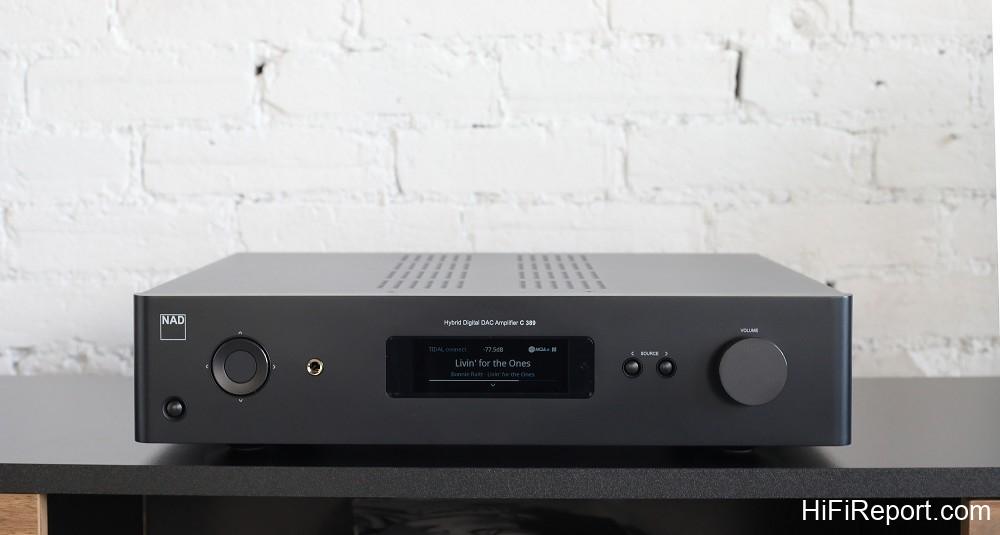
The NAD C 389 is fundamentally a 2.2-channel integrated amplifier featuring built-in Bluetooth and DAC circuitry. It boasts two MDC2 module expansion slots on the rear panel, allowing users to upgrade its capabilities with NAD’s proprietary modules. Without a module installed, the unit lacks streaming functionality.
However, NAD has anticipated that the primary listening space in most homes is the living room and that the central entertainment hub is often a smart TV. For this reason, the C 389 is equipped with an HDMI eARC terminal to handle digital audio return from smart TVs.
This allows the unit to power on/off with the TV, be controlled directly by the TV remote for volume, and replace the TV’s built-in speakers with a two-channel audio system, offering superior sound quality and power compared to limited soundbars.
Analog Capabilities and Phono Stage
The C 389 doesn’t exclusively favor digital audio; its “Hybrid Digital” design concept inherently blends digital and analog. When analog audio is input, it can follow a pure analog path. The NAD C 389’s preamplifier circuitry includes a Phono input compatible with MM cartridges, so connecting a turntable is absolutely possible.
The Importance of Low-Frequency Management
Speaking of power, readers of our publication are well aware that pairing passive wall-mounted, in-ceiling, or bookshelf speakers capable of handling high power with an active subwoofer can reproduce the impact and energy of movie sound effects in the bass and infrabass regions. However, many users overlook the issue of “low-frequency management.”
Without clearly implementing “low-pass/high-pass” crossovers between the subwoofer and the main left/right speakers – for instance, if the subwoofer is only tasked with handling frequencies below 50Hz or even just below 40Hz – it is severely underutilized. More than half of the perceptually sensitive bass frequencies remain untouched by the sub.
Meanwhile, the left and right speakers, even if they aren’t designed to reproduce deep bass, are still forced to handle the low-frequency power output from the amplifier.
Consequently, simply adding an active subwoofer without proper low-frequency management won’t significantly increase the system’s overall sound pressure output capability. Conversely, setting the subwoofer’s low-pass frequency too high without low-frequency management can cause booming due to overlapping frequencies.
Many manufacturers and retailers won’t tell you about the problems listed above that arise without low-frequency management. All I want to say is, if you don’t want to become an expert (master REW) but still want to enjoy 2.1 or 2.2 channel audio, you absolutely must choose an integrated amplifier or preamplifier with “low-frequency management.”
The NAD C 389 is currently one of the few integrated amplifiers equipped with low-frequency management capabilities, allowing users to select the subwoofer crossover point within a range from 40Hz to 200Hz.
MDC2 BluOS-D Module: Streaming and Features
In addition to the NAD C 389 “core unit,” I highly recommend opting for NAD’s proprietary MDC2 BluOS-D module. This add-on instantly upgrades the NAD C 389 from an integrated amplifier with a built-in DAC to a full-fledged streaming amplifier. It offers network connectivity via WiFi or Ethernet, multi-room streaming capabilities, and supports a wide array of online music streaming services such as AirPlay2, Spotify Connect, Tidal Connect, KKbox, and many more.
You can even stream high-resolution MQA music broadcasts from Radio Paradise for free.
If you want to listen to your local music files, the simplest method is to save all your music folders onto a USB hard drive and plug it into the MDC2 BluOS-D module. Give it some time to import, and it will organize the external USB drive into your personal music library. All of the above features are essentially standard functionalities expected from a streaming amplifier or player. You might already be thinking, “I could just buy a streamer and connect it to the C 389.”
Integrated Dirac Live Room Correction
However, the MDC2 BluOS-D module’s functionality also includes the critically important Dirac Live room correction. So, it’s not just a matter of the module being cheaper than a dedicated streamer; while you can buy a streamer, you generally cannot buy Dirac Live (most streaming players do not have it built-in).
Circuitry Analysis: Digital and Preamplifier
Having covered the features, let’s talk about the circuitry. Observing the C 389’s circuitry and comparing it with photos and notes from my analysis of the C 399’s internal circuits, I am certain that the NAD C 389 is extremely similar to its higher-end sibling, the C 399, in terms of its streaming, digital-to-analog conversion, and preamplifier circuits.
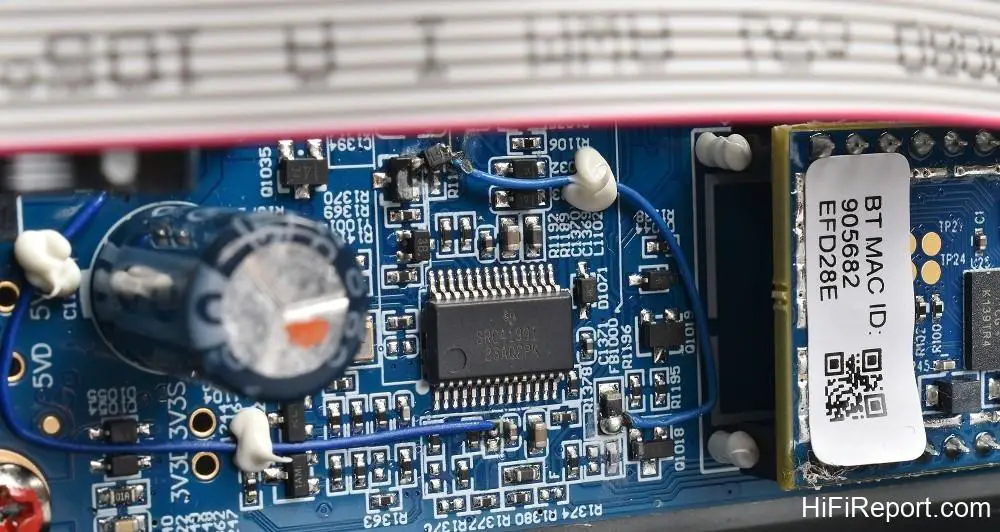
For streaming, it uses the same MDC2 BluOS-D module, centered around a 1.8GHz 32bit microprocessor, the NXP MIMX8MM6DVTLZAA. This chip is responsible for streaming audio decoding, Dirac Live correction, low-frequency management, and other digital audio processing. The signal then enters the digital-to-analog conversion circuit. The initial stage uses a TI SRC4190 to upsample the signal to 192kHz/24bit.
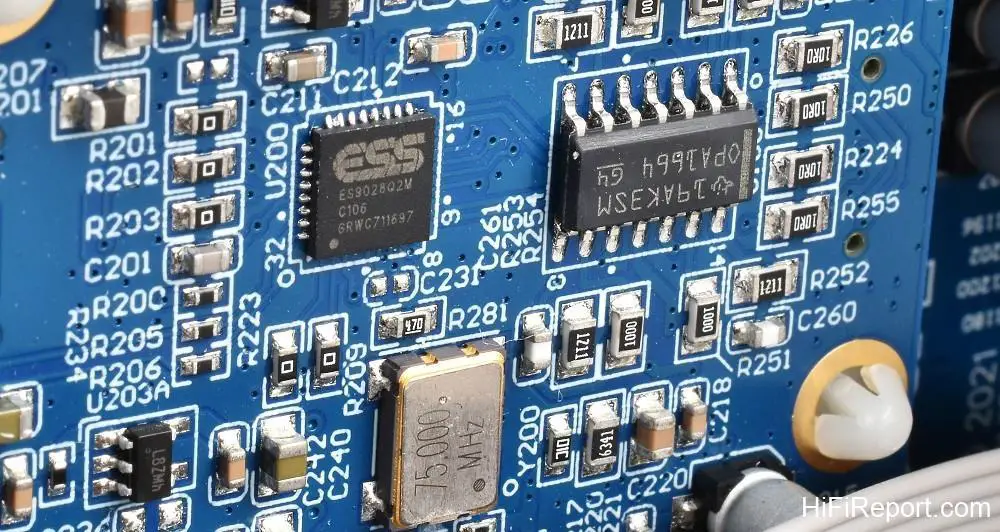
Following this, similar to the higher-end M 33 and C 399 models, it employs a high-end 384kHz/32bit ESS ES9028Q2M DAC chip known for its low jitter, low distortion, and high dynamic range for digital-to-analog conversion. The subsequent stages of the DAC circuit use a TI OPA1664, known for its wide frequency response characteristics, for I/V conversion and buffer amplification.
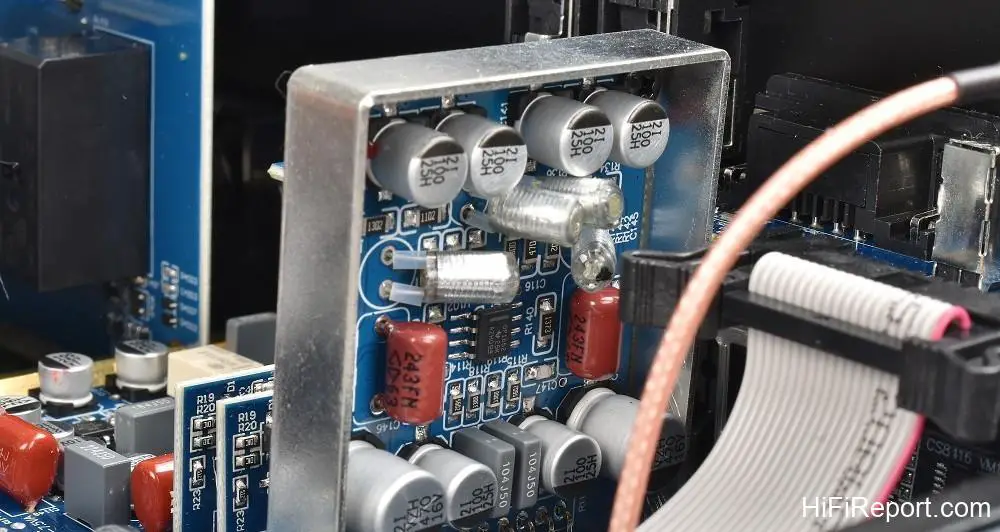
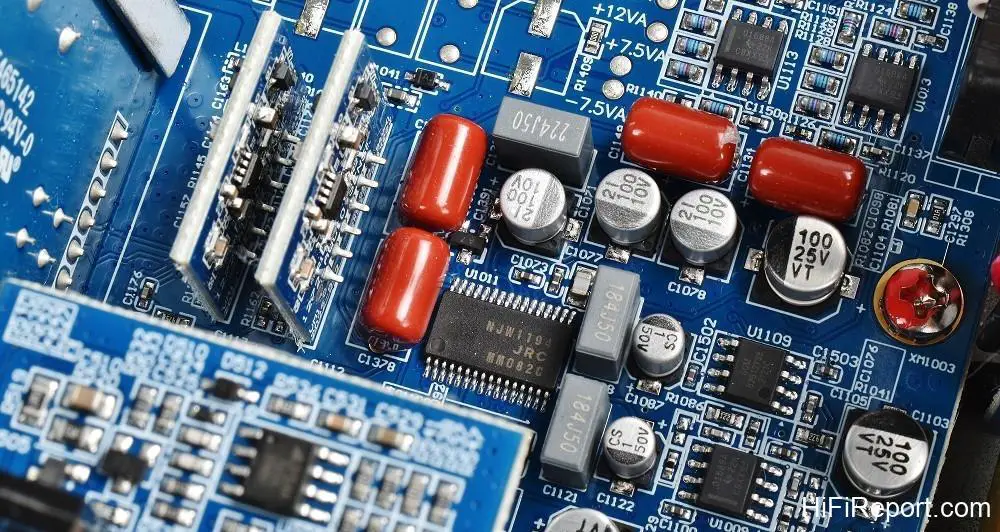
The C 389’s preamplifier circuit is conventionally designed. Its Phono Stage is housed in a small metal enclosure (pictured below), indicating consideration for shielding (reducing noise). The amplification component used here is the low-noise, low-distortion, JFET input dual OP Amp chip OPA1652. Source selection and volume control for the preamplifier use the JRC NJW1194.
The amplification components for the preamplifier are two types of dual OPA chips, the TI OPA1688A and the SG Micro SGM82612. I judge that the latter is likely used for the .2 (subwoofer) channels.
Circuitry Analysis: Power Amplification and Supply
The primary difference between the NAD C 389 and the C 399 lies in the power amplification circuitry, both utilizing Class D amplification. The buffer amplifier circuit at the beginning of the power amp section is where Class D module manufacturers allow audio companies some freedom to fine-tune the sound. NAD naturally designs its own buffer here, using the same component as the preamplifier’s high-level amplification circuit, the TI OPA1688A.
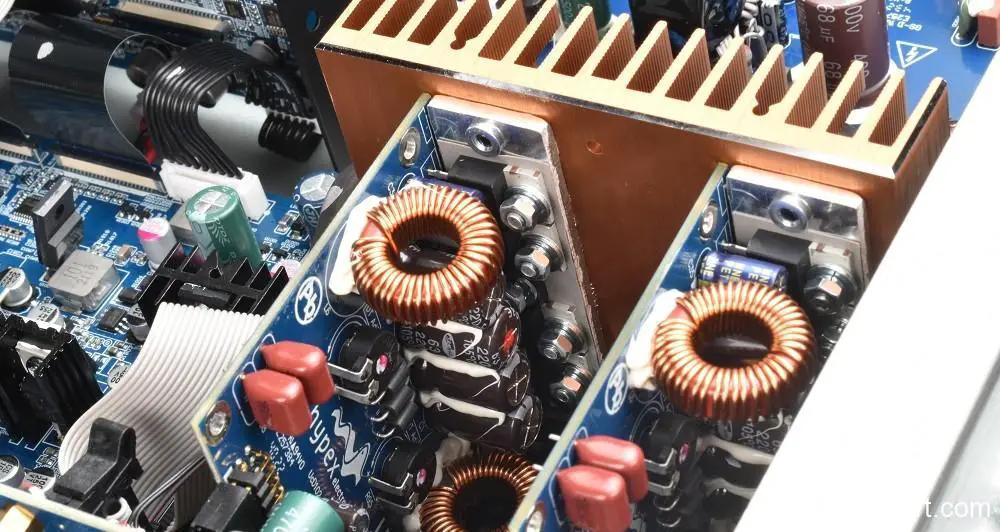
In the power amplifier section, the higher-end C 399 is equipped with two custom mono Ncore modules from Hypex. This unit, however, features two custom UcD102 modules from Hypex (pictured above). This Class D module has two channels on a single circuit board. The C 389 bridges this two-channel module into a single-channel configuration. This UcD module boasts 92% power efficiency and, when bridged, provides the unit with 130 watts of output power per channel while generating very little heat.
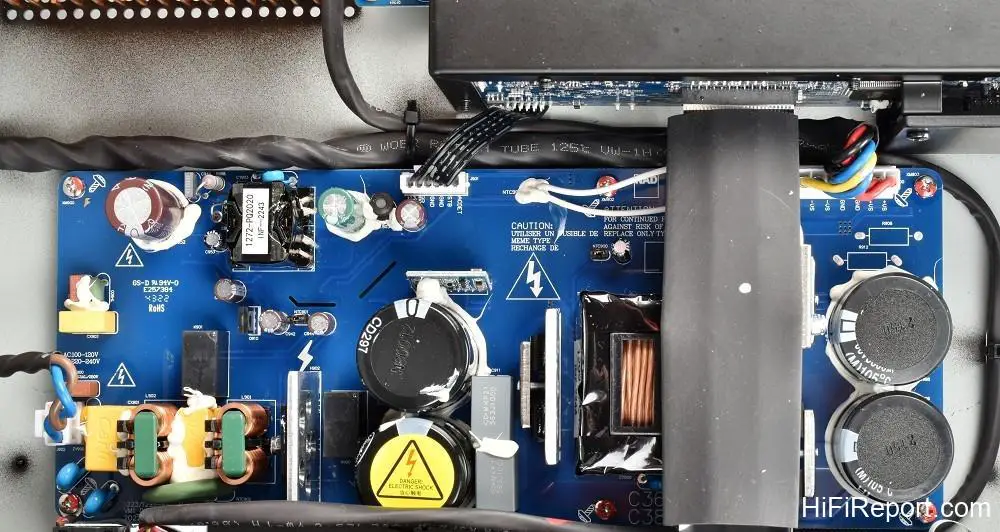
I believe NAD’s intention in using this UcD module bridged for “one module dedicated to one speaker,” rather than using a single high-power two-channel UcD module to drive two speakers, is quite clear. They aim to enhance channel separation with a dual-mono Class D power amp configuration, which translates to a wider soundstage perceptually. NAD’s high-output switching power supplies for their Hybrid Digital integrated amplifiers are also designed and manufactured in-house.
Looking at the structure of the C 389’s power supply board, it’s largely consistent with the C 399’s power supply board, albeit with slightly lower output (pictured below).
Dirac Live LE: Details and Optimization
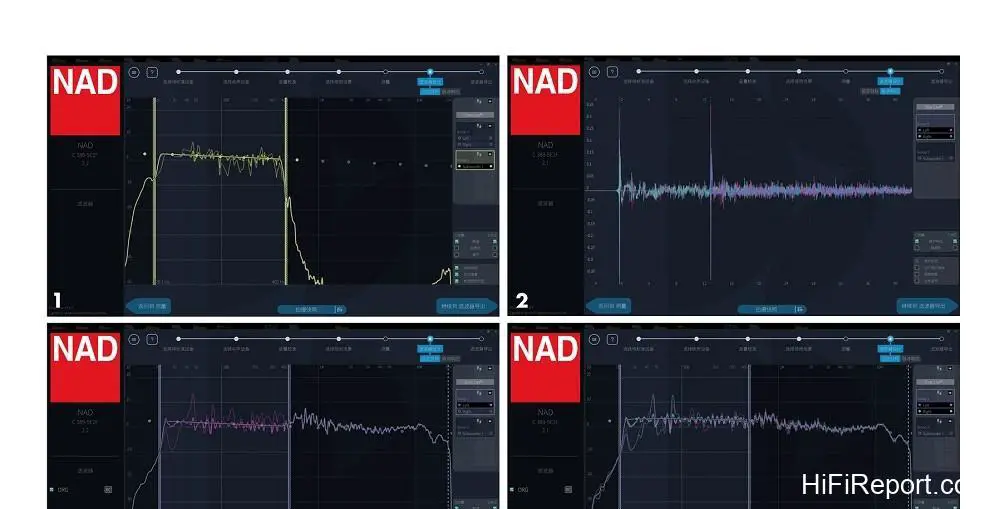
The NAD C 389, when equipped with the MDC2 BluOS-D module, includes Dirac Live LE room correction. The frequency response correction range is from 20 to 500Hz, correcting not only the left and right speakers but also individually correcting the subwoofer’s frequency response. It can also correct time alignment differences caused by varying distances between the speakers and the listening position.
Currently, there doesn’t appear to be an option to upgrade to Dirac Live Room Correction Full Bandwidth on the Dirac website for this unit. However, the correction range of Dirac Live LE already covers the infrabass, bass, and mid-bass frequencies, which is sufficient to address low-frequency response issues caused by room modes.
However, users who have experienced Dirac Live LE in practice might find that the bass is clean after correction but feels slightly lacking in quantity. This could certainly be related to the habit of previously mistaking bass peaks caused by room modes for normal bass quantity. But this is only part of the issue. Based on my experience, another part of the problem lies in the target curve settings within Dirac Live LE. The limited version uses 500Hz as the boundary.
Observing the target curve to the left of the boundary and the measured speaker response curve to the right of the boundary reveals that the target curve on the left is set relatively low. Therefore, I recommend manually raising the target curve from 20Hz to 500Hz by +3dB within Dirac Live LE (for both the left/right and subwoofer channels). This will result in clean, flat, and sufficiently impactful low and infrabass frequencies after correction.
Listening Impressions: Dirac Off
To accommodate users who may not purchase the MDC2 BluOS-D module, I conducted listening tests in two phases. The first phase focused on evaluating the sound characteristics of the NAD C 389 without any room correction. In the absence of Dirac Live correction, the C 389 exhibits a young, lively, and fast sonic character. Whether using two-channel floorstanding speakers (without an active subwoofer) or a 2.1 channel setup (with a subwoofer active), it displays clear bass definition.
The bass impact is strong and decays quickly after striking, showcasing the superior control of Class D amplification in the low frequencies. I can also confirm that it can effectively drive floorstanding speakers of normal sensitivity.
In the Dirac Off state, the C 389’s midrange is direct and clear, while the mid-highs have a delicate yet unembellished texture. Cymbals sound crisp, and violins exhibit ample sheen. At this point, its sound is extroverted and neutral.
If paired with low-coloration speakers and a fast subwoofer capable of pre-measurement correction via built-in digital PEQ (I used a Monitor Audio Anthra W10 for this review), playing live pop music performances, even from YouTube videos, already evokes a very lively sense of presence.
Honestly, the listening experience in this stage was somewhat surprising. Previously, the sound of most NAD C series models tended towards a mature and rounded character. It was unexpected for the C 389 to sound so young and fresh without Dirac.
If paired with fast speakers and a subwoofer with built-in digital PEQ allowing for pre-calibration measurements (I used a Monitor Audio Anthra W10 for this review), playing live pop music, even just from YouTube videos, already provided a very vivid sense of being there.
Listening Impressions: Dirac On
I suspect many users interested in this unit are drawn to it because of Dirac Live. After all, few people’s living rooms, typically used as listening spaces, have symmetrical side walls, and pulling speakers 2.5 meters away from the back wall is often impossible. This is where Dirac Live truly excels. Under its corrective influence, sound images become more focused and solid.
The correct bass response ensures users are no longer plagued by booming low frequencies and can enjoy clean, tight, and higher bass resolution.
When the unit is in the Dirac On state, I feel it reveals a sonic character that is a “familiar old taste.” The midrange is warm, the sense of texture is slightly softened, and the sheen in the treble is slightly reined in, reducing any potentially stimulating components. It shifts from the “realistic tendency” described earlier to a “flavorful tendency.” One amplifier, two personalities! Users don’t need to agonize over which is better.
I think it’s like tube rolling with a tube amp, or having two amplifiers to deploy depending on the music being played. The NAD C 389 can provide users with the feeling of switching components or trying a different flavor of music appreciation, which truly adds to the fun of playing with audio equipment!
Conclusion and Recommendation
Is the NAD C 389 worth purchasing? Clearly, yes, especially the BluOS-equipped C 389, which is currently one of the most economically practical streaming integrated amplifiers on the market with Dirac Live room correction. Using just a C 389 paired with a set of speakers, or a 2.1/2.2 channel speaker setup, isn’t just a complete streaming audio system; it can also integrate your smart TV as a source to enjoy streaming music, videos, and movies.
Evaluating its musical performance and capabilities, it has a relatively high output power compared to amplifiers in a similar price range. It strikes a good balance between audio fidelity and musicality. I feel its sound quality charm is no less than that of its higher-end sibling, the C 399. Overall evaluation, I believe the NAD C 389 offers excellent value for money and deserves our best recommendation.
Specifications
* Type: Network Streaming Integrated Amplifier
* Rated Output Power: 130 Watts per channel (20Hz〜20kHz, into 8 Ohms and 4 Ohms, both channels driven simultaneously)
* IHF Dynamic Power: 210 Watts per channel into 8 Ohms, 300 Watts per channel into 4 Ohms, 350 Watts per channel into 2 Ohms
* Damping Factor: >150
* Peak Current: >26 Amperes (1 Ohm, 1ms)
* Total Harmonic Distortion (20Hz〜20kHz): 0.02% (250mW to 130W, into 8 Ohms and 4 Ohms)
* Signal-to-Noise Ratio: >107dB (Preamplifier), >95dB (Integrated Amplifier)
* Frequency Response: 20Hz〜20kHz (±0.3 dB)
* Channel Separation: >90 dB (1kHz), >75 dB (10kHz)
* Digital Inputs: HDMI eARC, Coaxial x2, Optical x2
* Wireless Transmission: Bluetooth supports apt-X HD 24bit audio, supports bidirectional transmission (receive and transmit)
* Analog Inputs: RCA x2 pairs, Phono MM
* Subwoofer Signal Output: x2
* Preamplifier Output: RCA
* Headphone Output: 6.3mm
* Speaker Terminals: 2 sets
* MDC Upgrade Module Slots: 2 sets
* Dimensions (W×H×D): 435×100×390 mm
* Weight: 8.7 kg