
NAD C700 V2 Review
The C700 V2 is a 2.1 channel streaming amplifier. Compared to standard integrated amplifiers, one of its standout features is the “.1” connection, allowing you to integrate an active subwoofer. Crucially, it includes “bass management,” utilizing digital audio processing circuits to apply a high-pass filter to the main two-channel speakers and a low-pass filter to the subwoofer.
This ensures the main speakers and subwoofer avoid overlapping working frequency ranges, making it straightforward to achieve a “seamlessly integrated” sound.
Another key feature is the inclusion of an HDMI eARC port. This allows it to accept digital audio output from your TV and, via HDMI’s CEC mechanism, provides linked control over the C700 V2’s volume and power (simply controlled by the TV remote). Therefore, by making this unit the core of your audio system, it can replace your TV’s built-in speakers for daily viewing of movies and music videos, much like a Soundbar.
Compared to a Soundbar, a proper audio system naturally delivers superior sound quality, energy, and soundstage width, only lacking rear and overhead immersive fields. If you’re constrained by space, can’t fit a multi-channel system, and find Soundbar sound quality unacceptable, seriously consider building a system around the C700 V2 as a Soundbar alternative.
Internal Architecture
Previously, I considered the original C700 an “affordable M10” not only because of their similar sound profiles but also their striking resemblance in size, external design, and even internal circuit layout. The C700 V2 retains these same external characteristics and similarly adopts a “two-layer” internal architecture.

The “upper floor” houses the streaming preamplifier circuitry, while the lower level contains NAD’s proprietary power supply and a “NAD custom version” of the Dutch Hypex UcD Class D amplifier module.
Evolution to the C700 V2
The primary changes in the C700’s evolution to V2 are mainly in the preamplifier section. Firstly, support for Dirac Live room correction has been added to the digital audio processing circuit. This feature gained significant attention among enthusiasts when it was first included in the original M10 for two-channel music use. Its main benefit is its ability to correct bass boom and nulls at specific frequencies caused by poor room acoustics and speaker placement.
It can also resolve issues like left/right image shifting and loose focus resulting from improper speaker positioning or asymmetric room boundaries. If I recall correctly, this is the first time NAD has brought Dirac Live down to such an affordable model. However, I must clarify that the C700 V2 is Dirac Live “Ready.” You will need to purchase a license (from the Dirac official website) and a calibration microphone separately to use this function.
The second change is related to sound performance. The original C700 used the ES9010K2M (116dB dynamic range, -106dB total harmonic distortion) as its primary DAC chip in the digital-to-analog conversion circuit. The C700 V2 upgrades to the ES9028Q2M (129dB dynamic range, -120dB total harmonic distortion). Comparing the specifications reveals a significant difference in DAC performance levels.
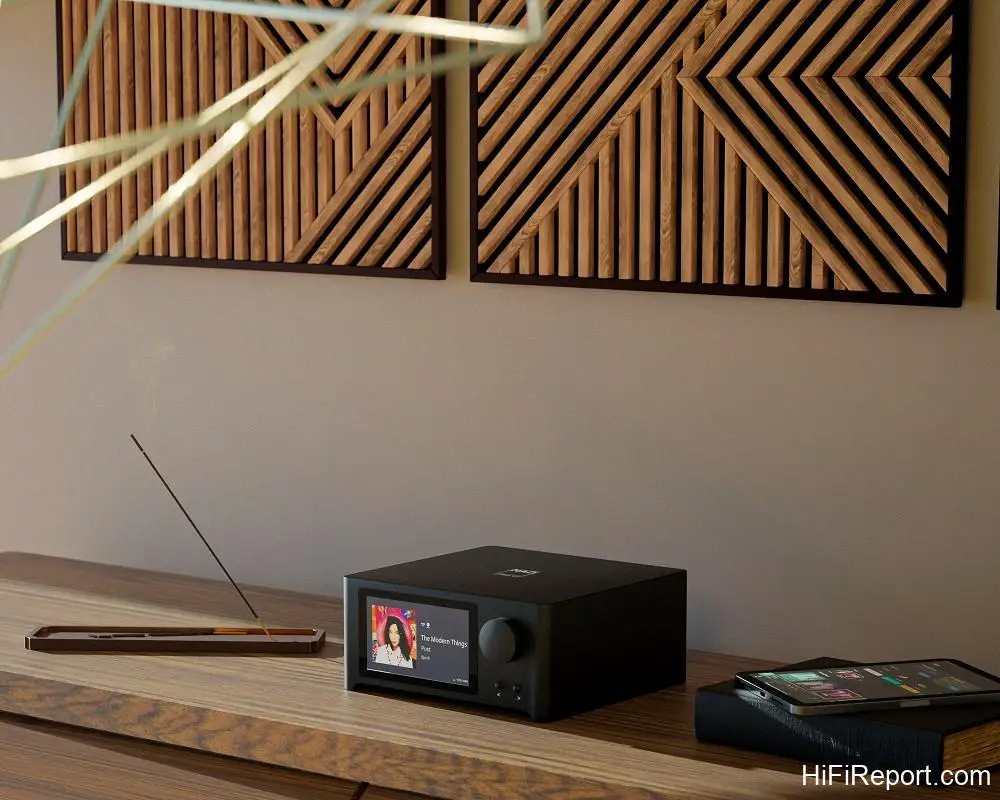
Furthermore, the ES9028Q2M, a high-end 32-bit DAC, utilizes ESS’s HyperStream II architecture, which reduces jitter and improves sound quality.
I believe this is no coincidence; it’s entirely intentional. The ES9028Q2M happens to be the same DAC chip used in the NAD M10 V2! So, in terms of hardware, NAD has clearly aimed to make the C700 V2’s objective specifications resemble a “budget-friendly M10 V2.” However, I should also mention upfront: the sonic character of the two is not the same.
What is certain is that the DAC chip upgrade results in noticeable improvements in the C700 V2’s dynamics (the contrast and energy of sound intensity) and sonic delicacy compared to the previous generation.
The third change is in the analog inputs. The original C700 had two analog (LINE) inputs. This unit replaces one of these analog inputs with a PHONO input capable of handling turntables with MM cartridges. The fourth evolution is in convenience. Previously, the C700’s “remote control” relied entirely on the BluOS App installed on a smartphone. This time, the C700 V2 “in response to user requests” includes an infrared remote control.

This allows users to easily control volume, music playback, and other functions, making simple, frequently used operations more convenient and avoiding accidental touches when using a phone app.
Digital Music Playback and Connectivity
The digital music playback features of the C700 V2 are the same as the previous C700 model. The C700 V2 has built-in BluOS streaming circuitry, supporting Apple AirPlay 2, Spotify Connect, Tidal Connect, KKBOX, Qobuz, Presto, Tune-in, and many others. BluOS offers perhaps the richest support for streaming music services available today. Users of NAD streaming models who are too lazy to play their own music can also listen to 6 free MQA/CD quality internet radio stations.
Beyond online streaming, I personally prefer “playing music files,” as users who have compared will clearly know that the latter offers noticeably better sound quality. The C700 V2 is directly compatible with various music file formats including MP3, AAC, WMA, Ogg Vorbis, WMA-L, ALAC, OPUS, MQA, FLAC, AIFF, and WAV. It supports lossless music files up to 192kHz/24bit.
The simplest way to use it is to categorize and store all music files on a USB hard drive as a “music library,” and then plug it into the USB port on the unit’s rear panel for playback. You can also configure the unit to act as a server, sharing the music library with systems in other rooms. The network connectivity includes a wired RJ45 Ethernet port and wireless dual-band Wi-Fi.

It also features built-in two-way Bluetooth (5.0), which can receive digital audio from mobile devices (“input”) and also output digital audio to wireless headphones (“output”), supporting aptX HD high-quality transmission.
Sound Performance
When I reviewed the original C700, I already felt its sound was “fresher” than other amplifiers I had heard using the same UcD Class D module, and its sound quality performance was quite similar to Hypex’s higher-tier Ncore modules. In fact, objectively (in terms of performance data), the custom module equipped in the C700 is truly excellent. The C700 V2 continues this trend.
I believe the stated output power for most mid and low-priced amplifiers is often “for reference only,” as there can be clever tricks in how specifications are presented. Therefore, sometimes we see a specification stating 100 watts per channel output and think it “should” be sufficient, but when played loudly, the sound balance is ruined. Typical symptoms include thinning bass and a forward, harsh midrange/treble.
This is the impact of insufficient current output capability and high distortion on the actual listening experience.
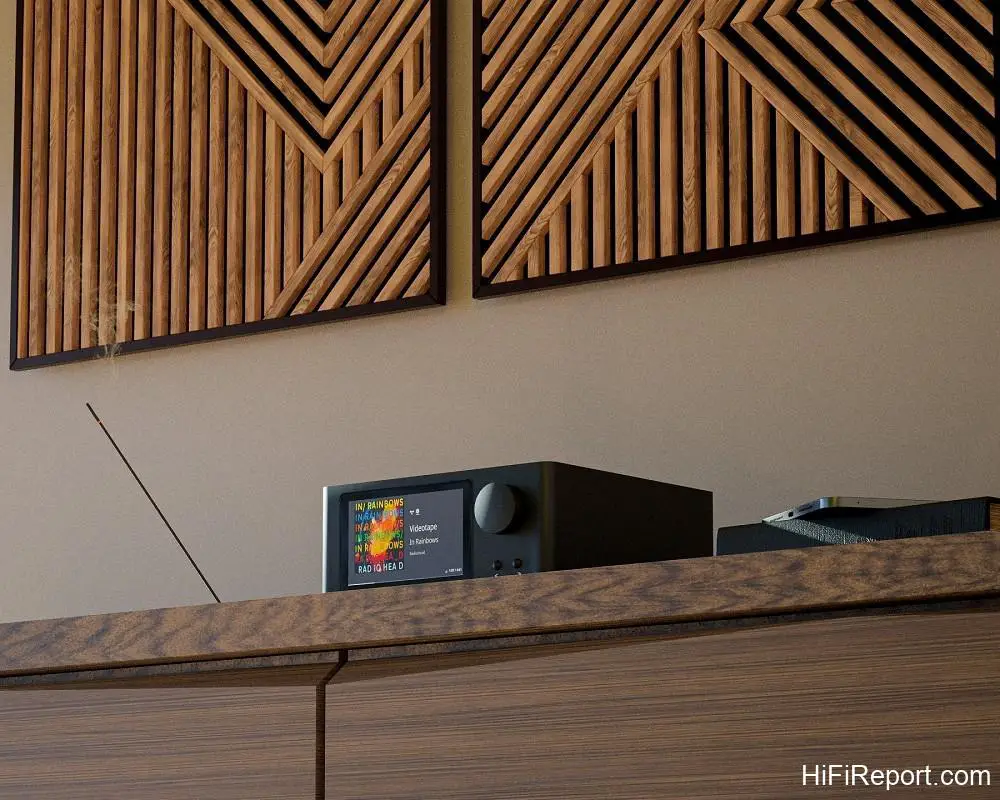
NAD’s specifications have always been conservative. The C700 V2 maintains total harmonic distortion below 0.04% across the full frequency band even at 90% of its maximum continuous power output (rated power). This indicates a very realistic, non-inflated power rating. In fact, its driving power is truly remarkable.
When driving the Pioneer S-1EX floorstanding speakers across the full frequency range, from low volumes gradually increasing to very loud, its bass thickness and weight, and the balance across the entire frequency range, are maintained exceptionally well. It’s loud without being jarring, and the treble is completely non-fatiguing, with no harshness whatsoever.
I believe there is a quite noticeable difference in sound performance between the C700 V2 and the C700. Right from the start, I could hear a significant improvement in its sound “quality.” The overall detail is richer, the high frequencies extend fully upwards, and the violin’s overtone components are rendered with considerable completeness and finesse. The sound is more realistic, with a natural luster.
In terms of sonic character, I think the C700 V2 and C700 differ significantly. My previous impression of the C700 was “young and bright”; although part of the C series, its tuning leaned towards being similar to the M10. In contrast, the C700 V2 is clearly more mature and refined. It essentially returns to the traditional NAD “British-American sound” flavor, particularly noticeable in the warm, rich, and layered midrange and high-density mid-bass.
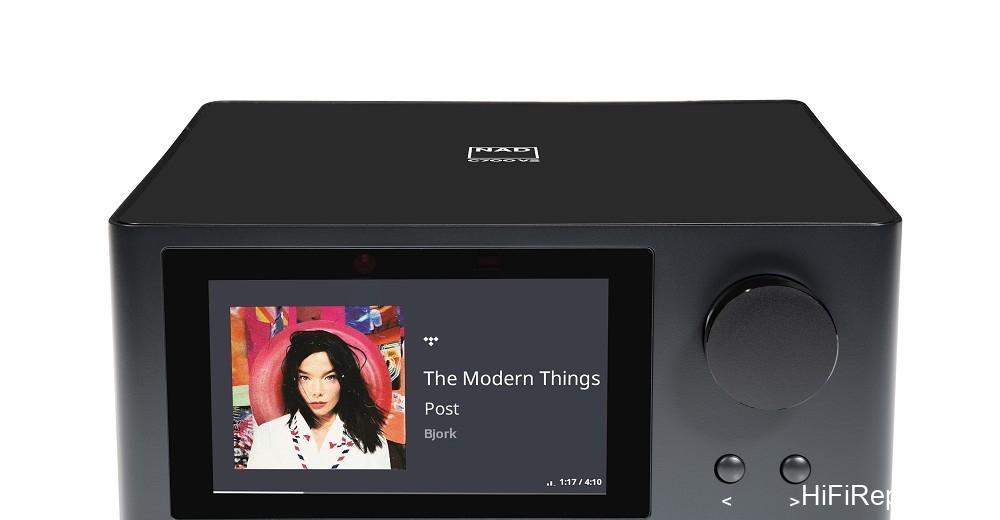
When listening to classical music, the soundstage fans out behind the speakers, making it easier for the listener to perceive depth than with most integrated amplifiers.
This is the classic sound familiar to seasoned enthusiasts. One could even say it sounds very much like some highly-regarded classic models from the 1970s and 1980s. I know it’s Class D, but no matter how I listen, it sounds like Class AB! It excels at reproducing older analog-era recordings that have been digitized into streams and music files. It’s not cold or hard at all; it has warmth and a strong sense of “humanity.”
The bass is noticeably thicker and has more weight than the previous generation. When playing “current” pop music, you can feel the strong punch and very fast speed, actively presenting a “robust yet agile” and fast bass and sub-bass.
The C700 V2 enhances the texture of the midrange and treble and the thickness of the bass, which I believe is where it differs from the typical British-American sound. I don’t think it belongs to the neutral “pure water” style. On the contrary, I believe it’s an amplifier that colors the sound richly from bass to treble, allowing the listener to perceive a strong sonic character.
It delivers a “good sound that suits popular taste,” which is comfortable to listen to, full of character, highly musical, non-fatiguing, and allows for all-day relaxation. Its sonic approachability is exceptional at all times. Even when playing YouTube music videos, where the audio is entirely compressed, the C700 V2 completely eliminates the dry, hard feeling inherent in compressed audio. Live music sounds fleshy and alive.
While strictly speaking, this doesn’t fully restore the original audio, would you really want to listen to the dry, hard original sound of compressed music? I think most people, whether enthusiasts or not, would choose enjoyable sound!
Conclusion
The NAD C700 V2 is precisely this unique. I believe it is the amplifier in its price range that best allows you to simply enjoy music (I’ve omitted the “one of the” here). You don’t need to understand audio equipment, theory, or the artist’s intent; if you purely want to enjoy music, then go audition the C700 V2! For its sonic appeal and price, I give it my highest recommendation.
Specifications
* Type: Network Streaming Integrated Amplifier
* Full Disclosure Power: 80W into 8 Ohms, 100W into 4 Ohms
* IHF Dynamic Power: 100W into 8 Ohms, 125W into 4 Ohms
* Damping Factor: >90 (8 Ohms, 20Hz〜20kHz)
* Total Harmonic Distortion: <0.04% (20Hz〜20kHz, Full Power Output) * Signal-to-Noise Ratio: >84 dB (1W output, 8 Ohm load)
* Frequency Response: 20Hz〜20kHz (±0.18 dB)
* Channel Separation: >93dB (1kHz), >72dB (10kHz)
* Input Terminals: HDMI eARC×1, RJ45 Network Port×1, USB (type A)×1, Toslink Optical×1, Digital Coaxial (RCA)×1, Two-channel High-Level Analog Input (RCA)×1, Two-channel PHONO Input (RCA)×1
* Output Terminals: One set of Speaker Terminals, One set of Pre-out (RCA), Subwoofer Signal Output×1
* Dimensions (W×H×D): 218×96×266 mm
* Net Weight: 4.8 kg