
Naim SuperNAIT 3 Review
NAIT, an acronym for Naim Audio InTegrated amplifier.
I deliberately write all four letters of the abbreviation in uppercase: N-A-I-T.
This word is very important to Naim, and equally important for anyone wanting to understand Naim.
NAIT is not just a product name, nor does it simply refer to a series.
Even though it signifies Naim’s integrated amplifiers, NAIT embodies much more of Naim’s audio philosophy.
Audio philosophy.
Have you ever pondered this question? We value life philosophy because it guides our worldview and values.
This philosophy of life is reflected in our personal cultivation.
Your personal cultivation is shaped by the life philosophy you embrace.
Audio, as a craft product based on electronics and circuits, yet aimed at reproducing music, naturally has its own philosophy.
Moreover, every brand, every company, should have its own philosophy.
Naim takes NAIT as its own philosophy. This philosophy has been consistent since Naim launched the first-generation NAIT in 1983. Naim’s aim with the original NAIT was simple design, focusing on musical performance.
Naim does not pursue high power and impressive specifications, but to achieve the value of “small is beautiful,” they put more effort into designing products to give you the best sound experience, allowing you to get closer to music.
Upholding this philosophy, Naim has continuously released new models generation after generation.
Each new model embodies the audio philosophy defined by NAIT and belonging to Naim.
SuperNAIT: Elevating the NAIT Philosophy
NAIT, this evergreen model, has gone through several generations. It started from a half-width, shoebox-sized machine and gradually expanded to a full-size unit.
Even though its size has increased, its original intention remains unchanged: the appearance is still minimalist, and the design is still music-oriented.
The first-generation SuperNAIT, launched in 2007, carried forward the spirit of NAIT integrated amplifiers.
Since then, Naim’s NAIT integrated amplifiers have been clearly divided into three tiers: entry-level NAIT 5 (now NAIT 5si), mid-range NAIT XS (now NAIT XS 3), and flagship SuperNAIT (now SuperNAIT 3).
I have written two reviews of Uniti Atom, and recently listened to Uniti Star. I have also written three articles about Mu-so related products.
I thought I understood Naim quite well, but after listening to SuperNAIT 3, I realized the depth of Naim.
What I previously knew was Naim’s forward-looking vision. This time, what I heard was the wisdom accumulated by Naim over nearly 50 years of history.
Vision leads us to explore unknown territories through streaming; wisdom, through thoughtful consideration, guides us to the core.
Regarding the depth of its wisdom, I will elaborate later.
Let’s first quickly review the design of SuperNAIT 3. Starting from these threads, we can glimpse wisdom, and after the music plays, depth will naturally be revealed.
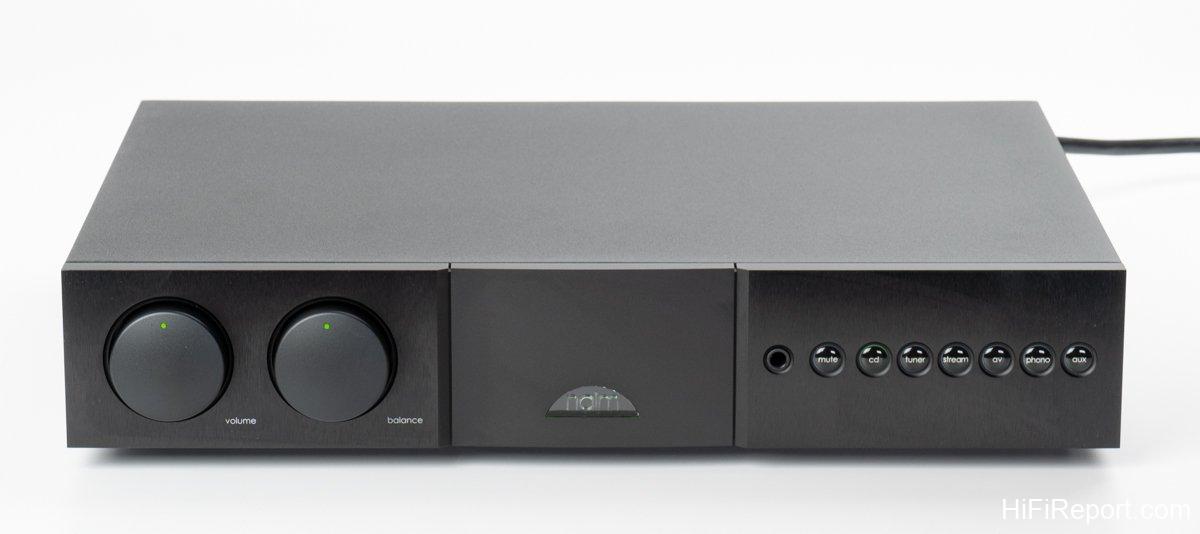
Unassuming 80W Output
SuperNAIT 3 belongs to Naim’s Classic series, which can be considered the brand’s mainstay.
It delivers 80W of output power into 8 ohms, and this can increase to 130W when the load impedance drops to 4 ohms.
Naim’s classic equipment does not prioritize high power, but rather the performance of music reproduction.
Even the NAP 300, a two-piece power amplifier in the same series, only has a power output of 90W.
This is what I said earlier: NAIT is not just a name, but a philosophy, a spirit, a value.
Two Reasons for Sticking with DIN Interface
SuperNAIT 3 has 4 sets of high-level inputs. Each input includes not only RCA but also DIN inputs, which they have consistently believed in.
In Naim’s view, although RCA is convenient and highly versatile, it is not the best transmission interface.
The impedance of an RCA connector is approximately 200 ohms, while the impedance of the cable is only 50 ohms. When weak voltage signals travel on the cable, the connectors on both ends act like walls, reflecting higher frequency signals. This can affect the accuracy and clarity of signal transmission.
The manufacturer explains that in a piece of music, the main melody instrument is louder, but there are softer notes in the harmony and some subtle overtones. With RCA cable transmission, the louder main melody can overshadow other subtle sounds, causing those subtle accompaniment sounds to become blurred or even inaudible, compromising the complexity of the music.
In contrast, DIN cable and connector impedances are consistent, thus avoiding such problems.
Another disadvantage of RCA cables is grounding loops.
RCA signal cables have separate cables for the left and right channels, and each cable has shielding connected to ground. As a result, when these ground wires reach the amplifier, they are all connected together. In this way, connecting RCA signal cables actually creates a ground loop.
Ground loops can pick up surrounding noise, thereby degrading the sound quality.
Conversely, DIN avoids this problem because of its single ground and single cable design.
For the reasons mentioned above, Naim has always favored DIN. In the early years, they only offered DIN connectors, which implicitly guided Naim users to gradually adopt a full-Naim system approach.
Meticulously Designed MM Phono Stage
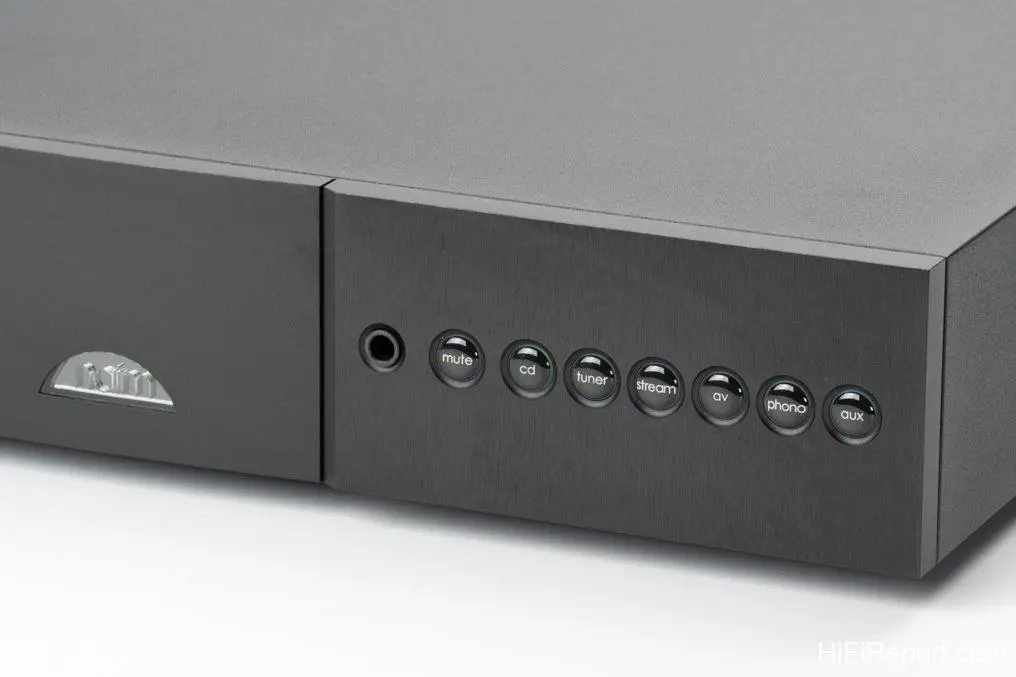
In addition to the 4 sets of high-level inputs, there is also a set of RCA inputs for phono amplification.
The manufacturer states that this phono stage is meticulously designed and the circuit is divided into three stages: gain stage, passive equalization, and final gain and active equalization.
Plug-in welding is used for capacitors to accurately restore RIAA equalization, minimize noise as much as possible, and provide sufficient headroom to avoid signal overload after equalization gain.
However, SuperNAIT 3 only has an MM phono stage and cannot accommodate MC cartridges. As a flagship integrated amplifier, the lack of MC input is a bit of a pity.
In addition, it has a set of RCA outputs for connecting an external subwoofer, and DIN outputs can be connected to NAIM’s own power amplifiers for bi-amping.
Furthermore, you can use SuperNAIT 3 as a pure power amplifier. By long-pressing the Mute button on the front panel, you can switch it to power amplifier working mode.
Don’t Miss the Class A Headphone Amplifier
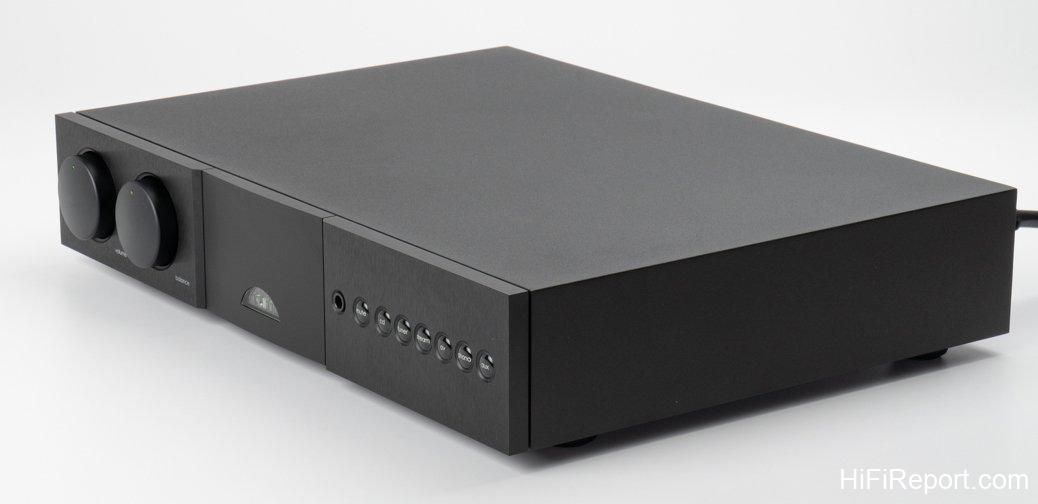
The front panel maintains Naim’s consistent style over the years, with a black chassis and soft green lighting, understated yet timeless—a design that endures.
On the left are two knobs, one for volume and one for left-right channel balance.
Channel balance is not available on NAIT 5si and NAIT XS 3; it is exclusive to SuperNAIT 3, allowing users to make finer adjustments to the sound.
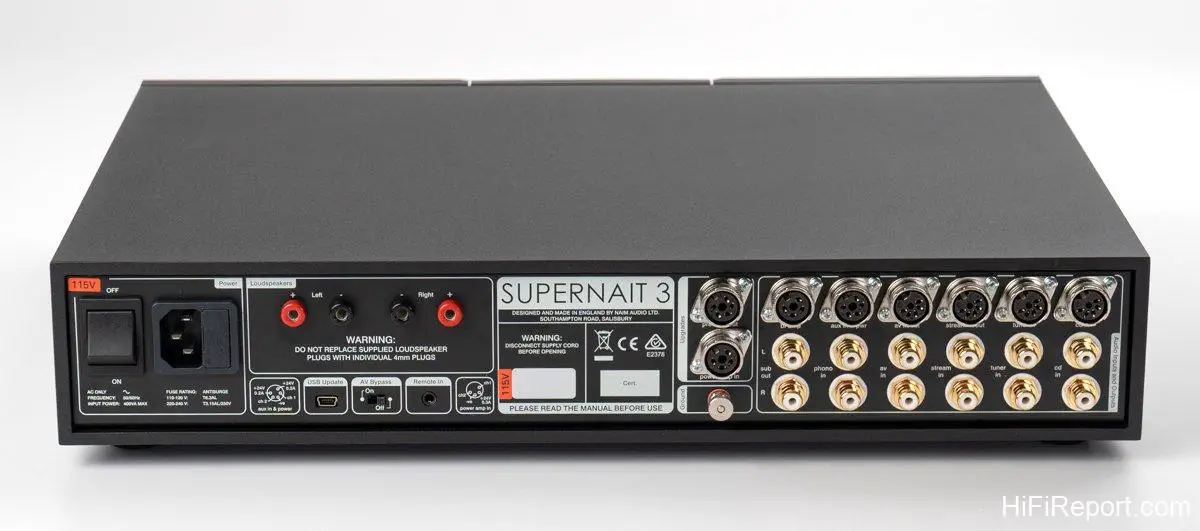
Circular physical buttons are arranged in a row on the right side of the panel, with the 6.3mm headphone jack among them.
This headphone amplifier circuit uses Class A pre-amplification for voltage gain, followed by a 2x gain output, sufficient to drive any demanding headphones.
Optimized Circuitry for Lower Interference and Better Sound Quality
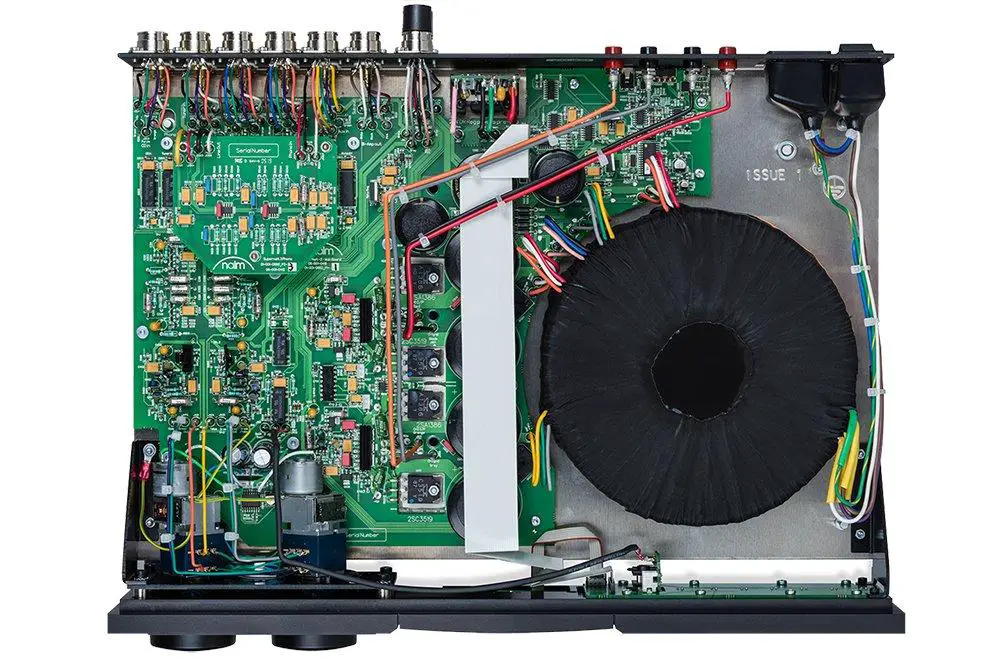
In terms of circuitry, the design strives for the shortest transmission paths to minimize unnecessary interference.
The signal path uses minimal capacitive coupling, and ceramic heat sinks are added to the power transistors for optimal sound performance.
The transistors in the second-stage gain stage have also been optimized, eliminating the need for additional cascade transistors for shielding. This results in a higher slew rate, faster rise time, and better sound quality for the amplifier.
All inputs are hand-wired and soldered and are independent of each other, thereby reducing noise and mutual interference during switching.
Constant input current technology is derived from the flagship NAC 552 preamplifier.
Naim also states that their R&D engineers have found a solution that allows the pre-amplification stage to increase voltage gain by more than twofold, which can also be reflected in the speaker driving effect.
Stringent electrical isolation is used in the microprocessor control circuitry.
The circuit board is fixed with a special damping structure to enhance vibration isolation, thereby reducing the microphone effect caused by vibration.
(Image source: Naim official website) SuperNAIT 3 uses Alps Blue Velvet volume control, and the signal input selection switch uses Reed Relays, which offer fast response speed and high durability.
The manufacturer equips SuperNAIT 3 with a large toroidal transformer, as large as 400VA.
However, you can see an external power supply socket on the rear panel. Naim also offers external power supplies for upgrade, such as HiCap DR and SuperCap DR from the Classic series, which can be used to upgrade SuperNAIT 3.
This is the effort Naim has put into SuperNAIT 3.
They have strengthened the power supply, and even allow you to upgrade the power supply, all for the sake of reproducing the dynamics of music.
They have made every effort to reduce noise interference in order to restore more musical details.
They use both SMD and plug-in soldering in the circuit, in order to achieve circuit miniaturization while ensuring more stable conduction effects.
They choose specific components in key areas because they believe that every link affects sound quality.
They retain phono and headphone amplifiers in the integrated amplifier to allow users to simplify their systems.
They even leave a USB port on the rear panel for future firmware upgrades.
This is Naim’s NAIT philosophy.
Stability and Warmth Distinct from Uniti Series
Circuitry is the body, music is the application.
We connected SuperNAIT 3 to the system, turned on the power, and played music, so that philosophy could be put into practice.
At home, I paired it with JMR Abscisse Jubile speakers, using Telos EMP combined with Audiobyte Black Dragon DAC as the source, and streamed music from Tidal under the Roon framework.
Previously, Uniti Atom and Uniti Star had visited my home, and the speakers paired were also Abscisse Jubile.
While Atom and Star have slight differences, their nature is the same. Uniti Star has more power, and is more outstanding in dynamics, soundstage, weight, and texture.
However, listening to SuperNAIT 3 this time revealed a different sonic direction from the Uniti series.
The sound of SuperNAIT 3 is more solid and fuller. The soundstage is both wide and deep, with a strong 3D feel.
In terms of timbre, SuperNAIT 3 is not as vivid and bright as Uniti, but it exudes a stable and warm tone.
In detail portrayal, SuperNAIT 3 does not deliberately emphasize high resolution, but you can clearly and distinctly hear those details.
I would not emphasize its sound transparency either, but even subtle sounds can be heard. This is what I find particularly wonderful about SuperNAIT 3.
During the process of auditioning SuperNAIT 3, I often unconsciously turned up the volume. Its warm, mellow, dense, and solid sonic foundation is very suitable for listening to audio at a certain volume level.
If the volume is too low, insufficient to fill the space in front, the overly diluted sound will prevent you from tasting the richness of SuperNAIT 3.
Wide Stage, Clear Layers, Rich Presence
Take the album “John Williams in Vienna,” released in 2020, where John Williams conducts the Vienna Philharmonic performing his own works, as an example.
In the “Jurassic Park Theme,” after the four-note motif of the French horn, the flute plays an allusion to the theme, followed by the harp’s arpeggiated chords, and then the music leads into the first theme section.
I listened back and forth several times, and I was really surprised by how clearly and prominently SuperNAIT 3 resolved the harp’s arpeggiated chords, and with such a sense of presence.
Then, John Williams’ familiar theme melody, led by the bass section of the strings and then joined by the chorus, with other sections following, layer upon layer, plus percussion, a magnificent and expansive scene unfolds before you.
John Williams adds timpani after the music enters its climax, further enhancing the momentum of the music.
Listening to the solid and powerful sound of the timpani, SuperNAIT 3 makes the drum sound strike with full impact, especially when the music enters the coda, with a march-like rhythm, plus the drums in the background, the music ends under the lead of the brass section, it’s just too enjoyable!
The track that impressed me most on this album is the second track, the soundtrack for “Close Encounters of the Third Kind.”
This piece is also very famous, but no version is better than this, because with the Vienna Philharmonic’s outstanding ensemble, this piece sounds even more brilliant.
The first half of the music is completely modern music. Those sharp sounds, dissonant harmonies, and the tense emotions paved by continuous tremolos, all stimulate your auditory nerves.
But John Williams has the ability to keep you in front of this avant-garde, conflicting music, reluctant to leave.
Listening to those interwoven musical lines, the stage is vividly in front of you.
SuperNAIT 3 can unfold a soundstage that is both wide and deep. Its sound is grand.
Don’t assume that just because it only has 80W (@8ohms) output, its driving force is questionable.
Of course, this is not to say that it can effortlessly drive any speaker, but whether I listened at home (main listening area), or took it back to the company’s listening room to compare with Dynaudio Contour 60 and other amplifiers for reference, it can demonstrate confidence. I hardly needed to turn the volume past the 10 o’clock position to get satisfying sound pressure levels.
Never underestimate that 80W, or rather, never underestimate Naim’s 80W.
Warm, Solid, and Weighty, Music Information Comprehensive
The sound of SuperNAIT 3 is not only grand, but also masculine and mature.
For example, listening to Shostakovich’s Piano Trio No. 2 — a version performed by Plamena Mangova on piano, with cellist Sebastian Klinger and violinist Natalia Prischepenko.
This is a version with equally excellent performance and recording. The first movement proceeds in a moderate andante tempo, with the violin leading, followed by the cello and piano.
The violin moves in high positions, and the delicate yet not harsh lines, under the depiction of SuperNAIT 3, appear more solid and without sharpness.
The cello’s rich and warm timbre sounds quite poetic. When it plays pizzicato, the sense of graininess accompanied by the resonance of the soundboard is full of realism.
As for the piano, the full-bodied piano notes, and the weight displayed when playing in the bass range, are exactly why I gave SuperNAIT 3 the masculine and mature label.
The trio structure is simple, but Shostakovich carefully manages the counterpoint and harmony between the sections, making the seemingly dissonant yet harmonious ensemble sound strongly contrasting.
Those deliberately widened dynamic contrasts are, under the reproduction of SuperNAIT 3, presented comprehensively and without omission, making them clear to the listener.
If you want to understand what piano weightiness is all about, skip to the second movement to find out.
When listening to large-scale orchestral music, it endows the music with magnificent momentum and resolves the layers on the stage layer by layer. When listening to chamber music, it reproduces the texture, emotion, and dynamics of the instruments playing with genuine intonation.
SuperNAIT 3 does not seem to pursue excellence in sonic performance, but it shows remarkable performance in musicality.
Under the playback of SuperNAIT 3, you will not tend to dig into sound performance, but rather want to explore the beauty in the music.
This is what I believe is the in-depth experience felt on SuperNAIT 3, which is different from Mu-so and Uniti series.
Massive, Clear, and Three-Dimensional Vocal Imaging
Will listening to Naim’s own recordings be even more complementary? I don’t know.
However, when I listened to “Meet Me in London,” an album by Antonio Forcione and Sabine Sciubba, where one plays and one sings, Sciubba’s voice is warm and full, and very pleasant to listen to.
Coupled with Naim’s recordings also taking a warm and rich approach, played on SuperNAIT 3, it can fully reveal Sciubba’s varied singing styles and her grasp of the songs.
SuperNAIT 3 not only provides a massive, clear, and three-dimensional image, but also presents all the details of the singing. Therefore, the singer’s expressions are visible.
As for Forcione’s guitar playing, under his improvisational style, it is both clean and unrestrained.
The crisp and bright sound of the guitar, under the playback of SuperNAIT 3, every note is amplified.
Between fortissimo and pianissimo, it always allows people to clearly grasp those changes.
Take “Take Five” as an example. This interesting song is adapted from Dave Brubeck’s famous piece. Sciubba uses vocals with lyrics to replace Paul Desmond’s original tenor saxophone, and the singing brings more varied vocal timbres, smoothly singing legato phrases, all these changes add to the charm.
And Forcione’s guitar simultaneously has melody and rhythm, just replacing Brubeck’s piano, and occasionally using the sound of tapping the guitar body to replace Joe Morello’s drums.
Many people have heard, or even collected, this Naim album, but have you ever appreciated the subtleties of the piece as carefully as I have? Perhaps it’s precisely because you lacked the inspiration SuperNAIT 3 gives you!
No Pressure of High Resolution, But the Enjoyment of High Resolution
Solid, weighty sound always makes listening to pop and rock music enjoyable.
Take “Everybody Knows” sung by Sigrid, included in the soundtrack of the movie “Justice League.” This song sounds one way when sung by Leonard Cohen, and completely different when sung by Sigrid.
Strings, electric guitar, electric bass, keyboard, and synthesizer create a sound that is rich and solid, it is a wave of sound sweeping in. Under Sigrid’s singing, the waves dance and fly.
The low-frequency mixes are layered and clear, without any ambiguity.
I said earlier that SuperNAIT 3 has a large soundstage, and every element hidden in the music can be resolved clearly.
You don’t feel the pressure of high resolution, but only hear rich and complete information.
Does Naim’s NAIT philosophy include analog feel?
Solid Foundation Hides a Rock and Roll Soul
Listening to Joe Cocker’s singing is best paired with a glass of whisky with a clear peat flavor, such as Talisker or Inchmoan, without the smoky aroma of sulfur, but with a hint of citrus and fruit sweetness.
Listening to him sing “Sorry Seems to Be the Hardest Word,” this song sounds tender and romantic when sung by Elton John, but when sung by Joe Cocker, a tough guy, the emotions are much more intense.
His rough and heavy singing style, hoarsely spitting out word by word.
At a certain volume, SuperNAIT 3 restores that solid vocal, and that powerful singing outlines Joe Cocker’s image.
The texture of the accompaniment is also very distinct. The saxophone, with penetrating power, radiates the brilliance of metallic texture, and also has a slightly flat texture.
Electric guitar, drums, and keyboard combine to form a melody, cooperating with the saxophone’s emotionally charged performance.
Listening to that solid and powerful drum, that is the rhythm and impact that people who love pop and rock and roll will love at first listen. SuperNAIT 3 looks refined, but it actually has a rock and roll soul inside.
Isn’t it true that Britain is one of the world’s leading rock and roll strongholds?
Warm Reminder: Run-in is a Must
Finally, I have a reminder: when using SuperNAIT 3, be sure to give it time to warm up.
Whether you let it sit for half an hour, or turn it on at low volume to warm up its voice, warm-up is always necessary. Do not listen and criticize as soon as you turn it on.
Its operating temperature is slightly warm, not hot. The beautiful and solid chassis provides reassuring heat dissipation efficiency and structural strength.
Once it is warmed up sufficiently, you can turn up the volume and get ready to catch its 150km/h fastball!
Homage to NAIT Philosophy
At the end of the article, I want to answer a question you may have after reading the entire article.
Are you curious why I wrote it as SuperNAIT 3? What’s with the uppercase NAIT? On Naim’s official website, it is always written in all uppercase as SUPERNAIT 3. In English articles online, it is written in the normal capitalization—”initial capital, rest lowercase”—as Supernait 3.
Only on the distributor’s website, it is SuperNAIT 3, with uppercase NAIT combined with Super.
How should I refer to it? After repeated consideration, I decided to adopt the distributor’s format, SuperNAIT 3.
Why? Very simple, because this is my homage to NAIT as the name of Naim’s audio philosophy.
Naim Audio InTegrated amplifier, this simple acronym embodies the traditional values and manufacturing spirit of Naim.
Through forty years of evolution, from the first-generation NAIT to today’s SuperNAIT 3, the changes are evident in “Super,” while the unchanging essence is precisely what NAIT represents.
When you recognize and respect the NAIT philosophy, you begin to appreciate the depth of SuperNAIT 3.
Specifications
* Type: Integrated Amplifier
* Inputs: MM Phono (RCA) x1; High-level RCA x4; DIN x4
* Outputs: Subwoofer (RCA) x1; DIN x1 (bi-amp); 6.35mm headphone output x1
* Output Power: 80W @ 8 ohms; 130W @ 4 ohms
* Dimensions: 87 x 432 x 314 mm (H x W x D)
* Weight: 14 kg