
Nordost Blue Heaven Power Cord Review
Is it always true that superior audio cables must be thick, rigid, and heavy? Absolutely not. Nordost’s enduring popularity among discerning audiophiles proves otherwise. Rejecting the notion of bulk for bulk’s sake, Nordost has consistently prioritized technology and precise specifications in their cable designs. This philosophy extends beyond speaker and signal cables to their power cords, as exemplified by the Blue Heaven. Despite its slender and lightweight build, the Blue Heaven power cord delivers an immediate and tangible improvement upon installation, underscoring that technological innovation, not mere physical dimension, is the true determinant of sonic excellence.
Minimizing Dielectric Effects: Core Technology
What advanced technologies are incorporated within the Blue Heaven power cord? Positioned third in Nordost’s extensive ten-series hierarchy, Blue Heaven resides within their entry-level power cord offerings. However, it’s crucial to note that the underlying technologies are remarkably consistent with Nordost’s top-tier products. The primary distinctions lie in the grade of conductor material, strand counts, and the degree of technical refinement, rather than fundamental technological departures.
This approach reflects Nordost’s core design principle: rather than reserving advanced technologies for only their flagship ranges, they integrate their best innovations across their entire product spectrum. Differentiation between series is achieved through nuanced variations in material quality and the sophistication of implementation.
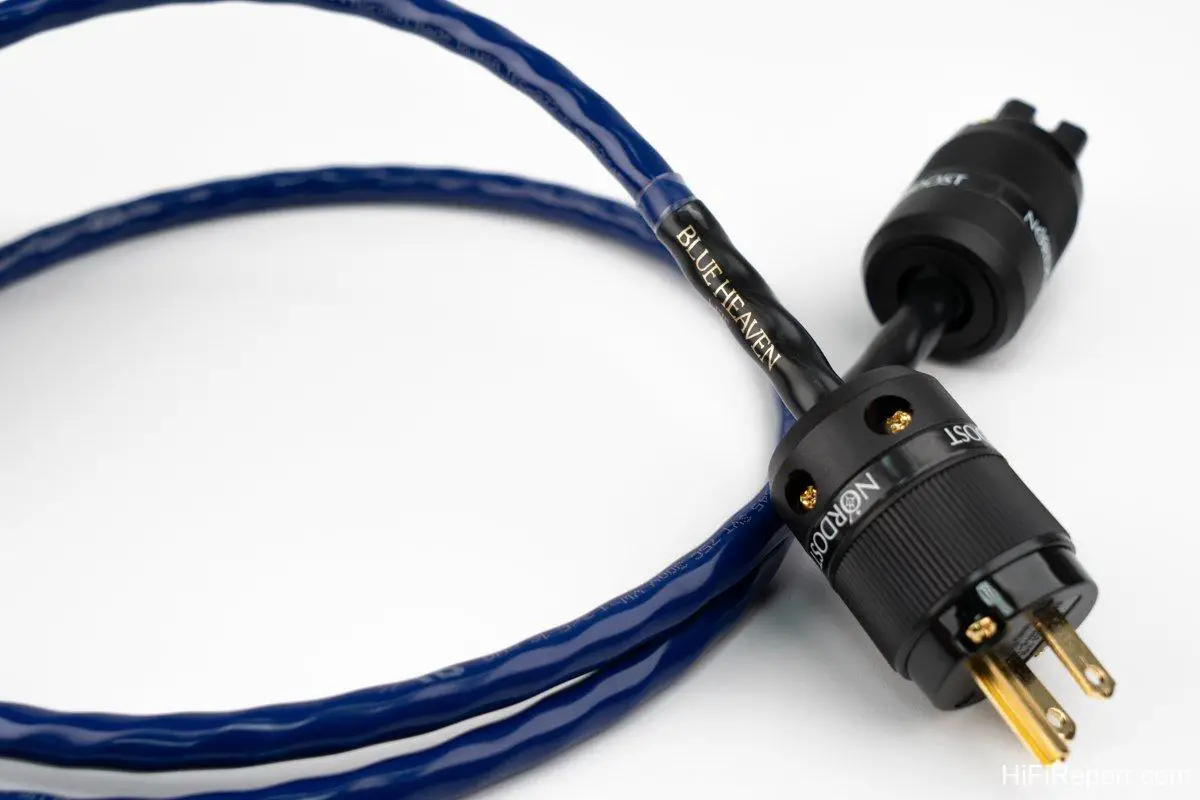
The Blue Heaven power cord employs 6N purity oxygen-free copper (OFC) for its conductors. Each of the three conductors—live, neutral, and ground—is composed of 65 strands, each with a 16 AWG gauge.
At first glance, the Blue Heaven’s construction may appear deceptively conventional, akin to a typical stock power cord. However, beneath the surface lies Nordost’s proprietary Micro Mono-Filament technology. This intricate design involves a meticulous process: each stranded OFC conductor is first spirally wrapped with a single, precision-extruded filament of FEP (Fluorinated Ethylene Propylene), commonly known as Teflon, before being further insulated with an outer FEP jacket.
The strategically applied FEP filament creates minute air gaps between the OFC conductor and the surrounding insulation. This ingeniously mimics the ideal dielectric properties of air. Given that air possesses the lowest dielectric constant, and FEP itself exhibits a low dielectric constant, this design significantly mitigates the detrimental dielectric effects typically associated with insulation materials.
Further refining its performance, the Blue Heaven incorporates a “Mechanically Tuned Lay” construction. This technique involves precise mechanical adjustments during manufacturing to optimize conductor spacing and dimensional relationships, further minimizing unwanted dielectric interactions.
Technology from High-End Lineage
The technological foundation of the Blue Heaven is directly inherited from Nordost’s flagship ranges, such as the Valhalla and Odin series. Nordost emphasizes that the Micro Mono-Filament design and FEP insulation inherently offer high-speed and low-loss characteristics. These attributes translate into enhanced signal transmission speed and more efficient current delivery for the power cord.
The Blue Heaven’s specification sheet confirms its impressive performance, boasting a Velocity of Propagation of 81% and a remarkably low DC Resistance of just 4.4 ohms per 1,000 feet. These figures are indicative of a high-performance design.
Nordost consistently publishes measured performance data for all its cables. Typically, higher-tier power cords exhibit progressively higher propagation speeds and lower DC resistance, substantiating the notion that increased price correlates with enhanced technical performance.
But does superior cable performance definitively translate into superior sound? This question often sparks debate among audiophiles, yet for Nordost, the answer is unequivocal.
Nordost’s design philosophy is grounded in scientific principles and rigorous methodology. Their pursuit of sonic improvement is centered on enhancing electrical transmission efficiency and minimizing signal degradation, rather than relying on subjective sonic tuning or voicing.
Vivid Energy, Defined Imaging
Listening evaluations were conducted in the HiFiReport listening room, utilizing a reference system comprised of the Telos EMP streamer, North Star Design USB DAC32, Linear Acoustic LAV-60 MKII integrated amplifier, and Wilson Audio Alexia 2 loudspeakers.
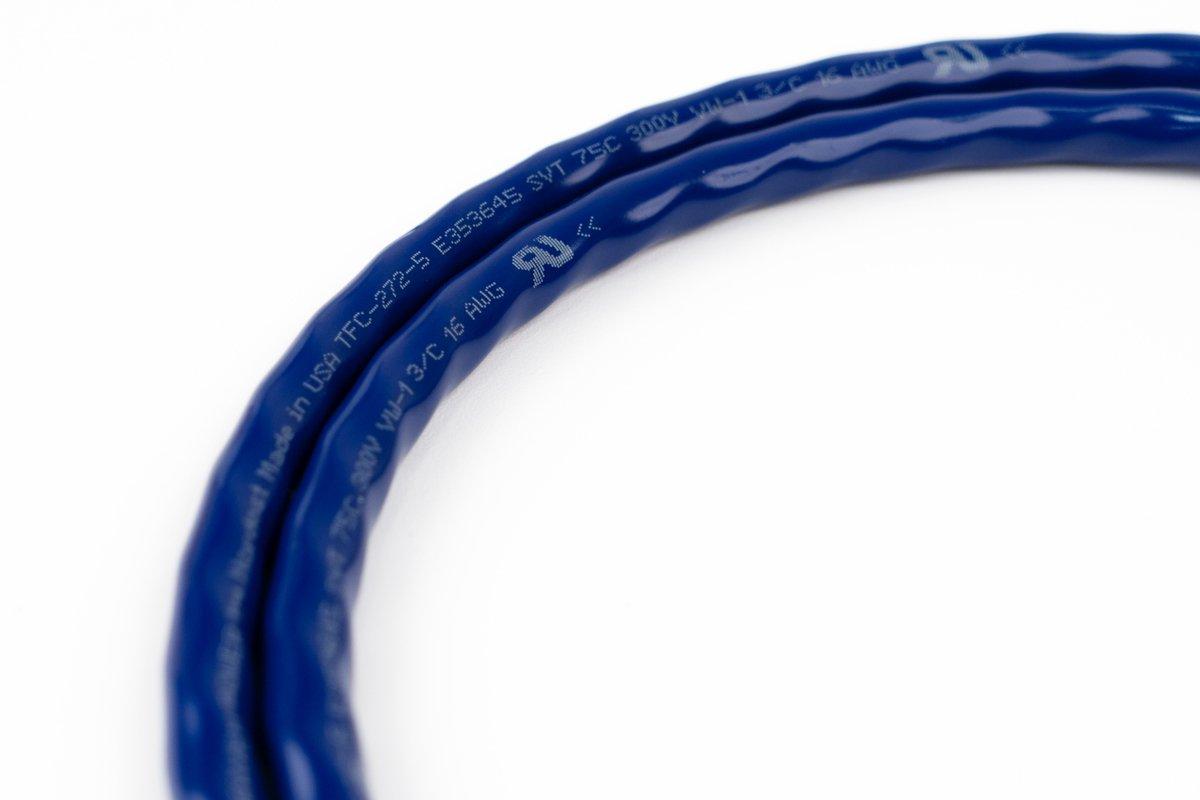
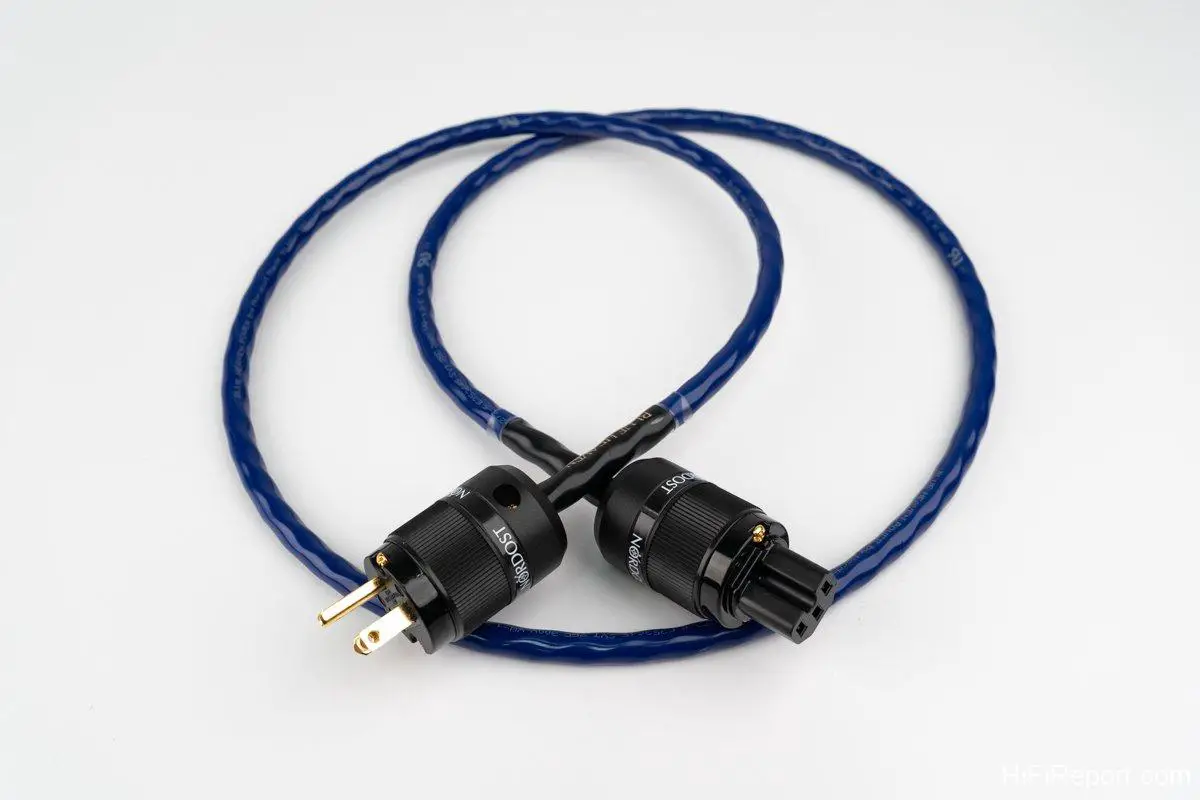
Connecting the Blue Heaven to the amplifier proved effortless. Its lightweight and moderate flexibility facilitated easy cable swaps during comparisons. For those with confined equipment spaces or who struggle with cumbersome, inflexible cables, the Blue Heaven emerges as an exceptionally practical choice.
Despite its entry-level positioning within the Nordost hierarchy, the Blue Heaven’s dynamic and engaging character immediately stood out. Listening to track 9, Schumann’s “Ich kann’s nicht fassen, nicht glauben” from the “Audio Physic 25” anniversary CD, the soprano’s vocal performance was imbued with remarkable intensity and palpable energy. Especially in the higher registers, her voice surged with power, direct, focused, and dynamically impactful. In stark contrast, the standard power cord used for comparison sounded comparatively anemic, lacking dynamic nuance and impact.
Beyond dynamics, the Blue Heaven also enhanced image projection, rendering sonic images more forward and clearly delineated. String instruments, for instance, were etched with greater precision and a refreshing clarity.
Furthermore, the Blue Heaven exhibited a pristine sonic texture and a transparent background, consistently imparting a sense of sonic purity and “health” to the audio reproduction.
In track 10, “Mache dich, mein Herze, rein” from Bach’s St. Matthew Passion, the Blue Heaven revealed the intricate layers within the woodwind and string orchestra accompaniment with exceptional clarity and richness. Sonic separation was excellent, soundstage geometry was well-defined, and the overall sonic architecture was meticulously rendered. These are hallmarks of a well-designed power cord, and the Blue Heaven delivered them with ease.
Energetic yet Controlled Performance
Further exploration with Yuja Wang’s Ravel piano concerto album unveiled more facets of the Blue Heaven’s capabilities.
The album’s opening three tracks feature Ravel’s Piano Concerto in G major, a work characterized by vast dynamic contrasts. The Blue Heaven adeptly conveyed the subtle nuances of quiet passages, such as the serene and beautiful second movement, preserving dynamic gradations and preventing any sense of sonic flatness. In fortissimo passages, the sound became invigorating, akin to a high-performance sports car, brimming with vitality and seemingly limitless energy. The Blue Heaven effectively captured the concerto’s expansive dynamic range, making for an exhilarating listening experience.
Moreover, this recording highlighted the Blue Heaven’s balanced and articulate frequency response. Its performance across the entire audio spectrum was consistently high, demonstrating well-rounded competence.
Switching to the “Some Other Time” album, featuring cello and piano duets by American composers Bernstein, Barber, and Copland, the Blue Heaven continued to impress. The cello’s melodic lines were rendered with focused precision, and the piano’s percussive attacks were remarkably clear. Both instruments were reproduced with above-average fidelity and excellent image definition. The slightly compact image size contributed to enhanced sonic separation.
However, the cello’s timbre exhibited a slight textural grain and a somewhat firmer character, indicating that absolute smoothness and lushness are not its defining sonic traits.
Precise localization and sonic separation are among the Blue Heaven’s key strengths.
Listening to “Ain’t It Funky Now” by soul jazz guitarist Grant Green, featuring a dynamic interplay of electric guitar, saxophone, trumpet, and Hammond organ solos, the Blue Heaven accurately placed each instrument within the soundstage. It also clearly distinguished each soloing instrument from the ensemble, creating distinct layers and preventing any sonic congestion.
In contrast, the reference power cord blurred the instrumental textures, resulting in a muddled and less engaging presentation.
Specifications
Finally, with Dire Straits’ iconic “Sultans of Swing,” the Blue Heaven revealed a tight and focused bass presentation. Bass notes were rendered as compact, rounded sonic images with excellent definition, contour, and precise localization. The bass texture was also taut and energetic, injecting rhythmic drive and power into the music.
The Blue Heaven also tightened the lower frequencies of the soundstage, resulting in a more focused and coherent sonic picture. The frequency balance was exceptionally well-proportioned, revealing a clear and well-defined sonic structure. The soundstage assumed a well-formed columnar shape with improved verticality, and vocals became more prominent. This revealed that prior listening experiences with this track, using a different power cord, likely suffered from exaggerated lower frequencies and an overblown bass image. The Blue Heaven imparts a youthful and energetic sonic character, direct and unpretentious, with a palpable sense of vitality. Crucially, its performance is characterized by organized structure and composure, rather than mere sonic aggression. It is a high-quality power cord that exhibits both assertiveness and control.