
Nordost QNET Audiophile Network Switch Review
Streaming playback has become the primary listening method for audiophiles, and many Hi-Fi brands have launched dedicated audio network switches to tap into this growing market. Nordost is no exception, but with a difference – their QNET network switch is not just another product. It boasts a distinctive design and numerous unique features, delivering a significant improvement in sound quality.
Rethinking Network Switching from the Ground Up
Most “audiophile-grade” network switches currently on the market are essentially upgraded versions of consumer-grade models, often with enhancements to the power supply, clock, and chassis. These are more akin to refinements rather than genuine innovations. In contrast, Nordost positions the QNET as a product completely redesigned from the ground up. Every aspect, from component selection and chassis structure to circuit layout and assembly, is meticulously engineered for high-speed audio data transmission and reception, while minimizing operational noise to enhance streaming audio quality.
What unique designs has Nordost implemented? Let’s start with the most striking feature of the QNET: its appearance.
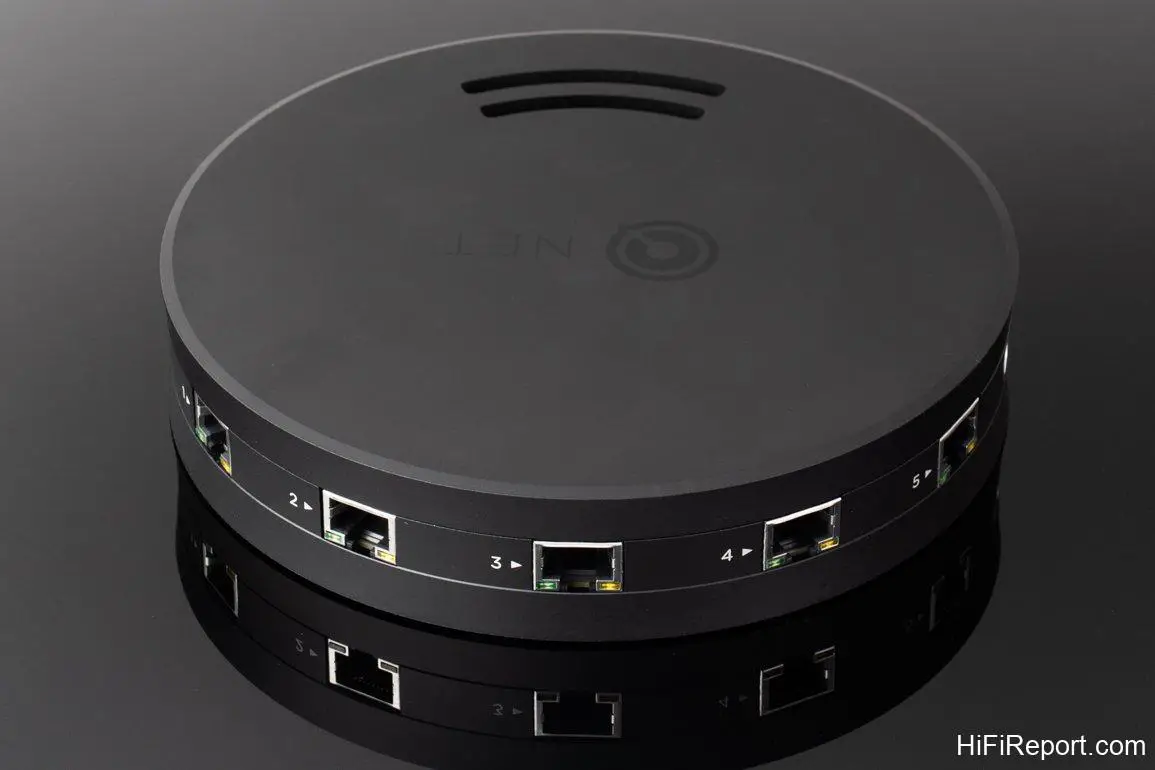
The QNET is immediately recognizable as not being derived from a generic switch, as no consumer or commercial switch adopts a circular form factor.
Furthermore, the QNET is constructed entirely from aluminum alloy, giving it a substantial weight. This not only provides excellent shielding but also ensures efficient heat dissipation and a rigid structure to minimize chassis resonance.
To achieve high-speed transmission and reception, the QNET’s circuit board employs a multi-layer layout with careful impedance control and optimized signal paths. This design aims to minimize crosstalk and interference.
The master clock utilizes an ultra-low noise oscillator, effectively reducing jitter and phase noise.
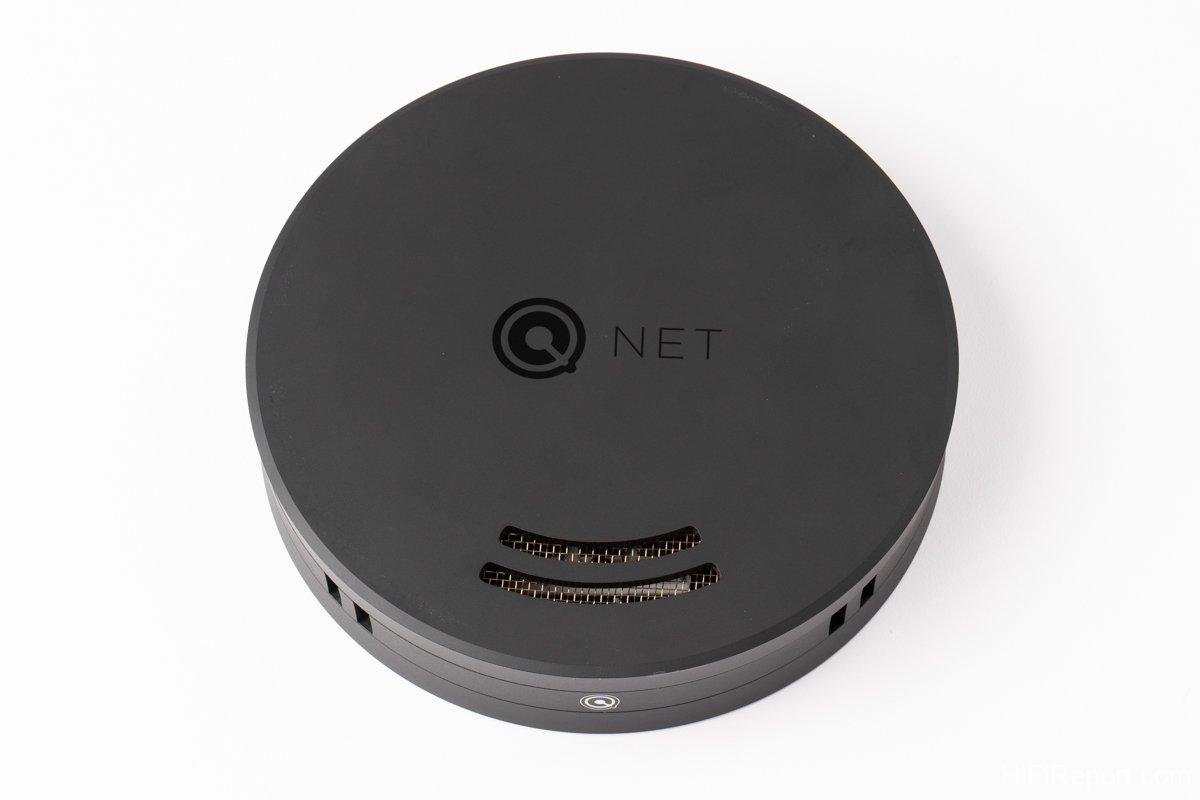
Power supply is, of course, a critical area.
The QNET features a segmented internal power supply with six independent regulators, each dedicated to different circuit sections. This reduces noise cross-contamination between different circuit blocks and minimizes interference.
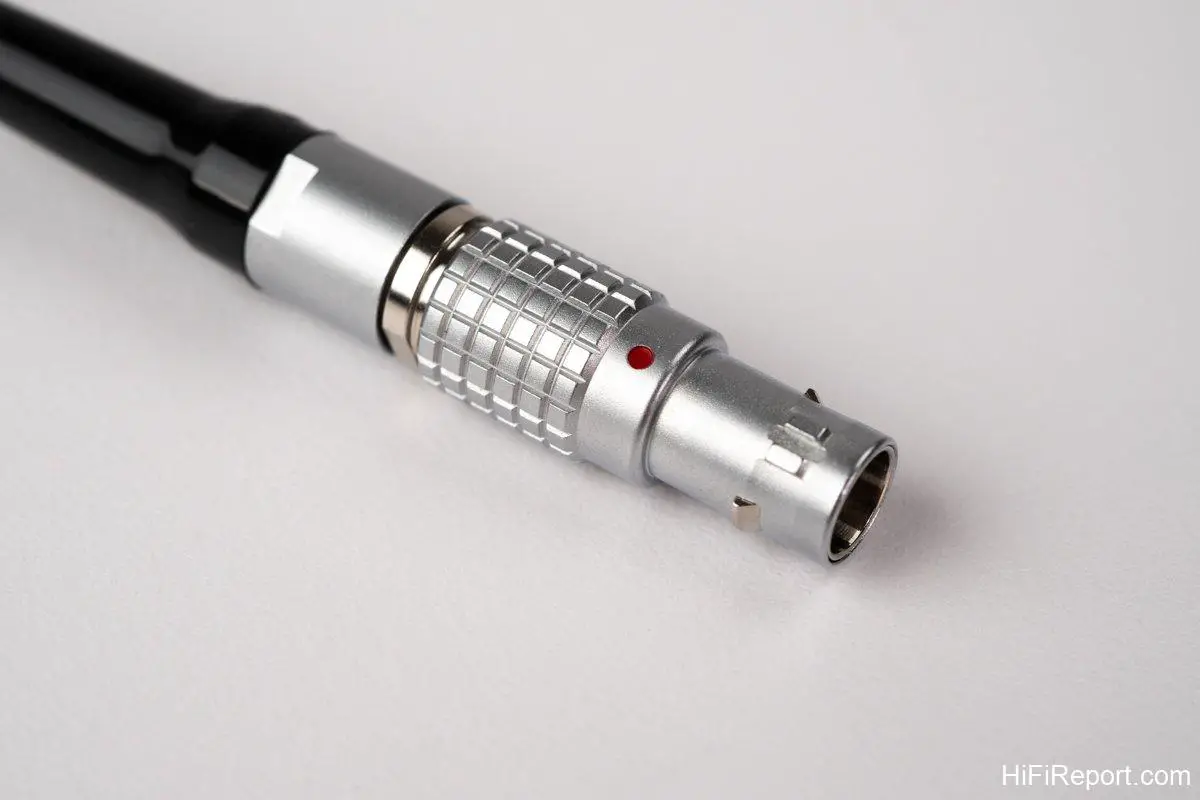
External power is provided by a bundled 9V switching power supply, with a LEMO connector for the DC plug. The connector housing is all-metal, ensuring effective shielding.
For those seeking further performance enhancements, Nordost offers their own QSOURCE linear power supply as an optional upgrade for the QNET.
Optimized Port Configuration
Another distinctive feature visible from the exterior is that each network port on the QNET is discrete and widely spaced, unlike the consolidated port clusters found on typical switches.
This physical separation is a deliberate design choice to create physical isolation, as distance itself is an effective form of isolation, significantly reducing crosstalk and interference. This is a core design principle of the QNET.
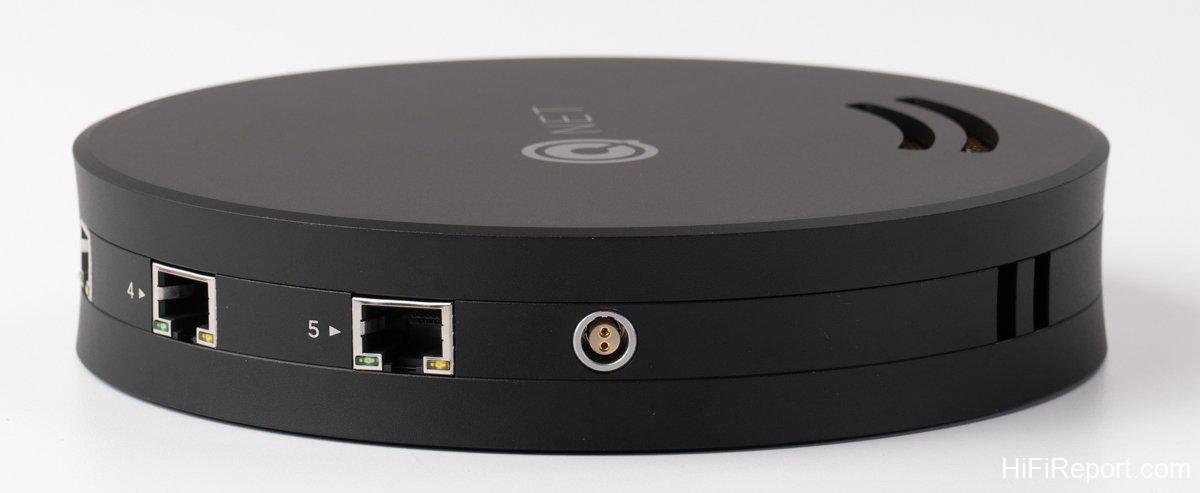
The QNET offers a total of five network ports, each numerically labeled from 1 to 5. Ports 1-3 form one group, while ports 4-5 constitute another. What’s the difference? They differ in transmission rates and intended device connections.
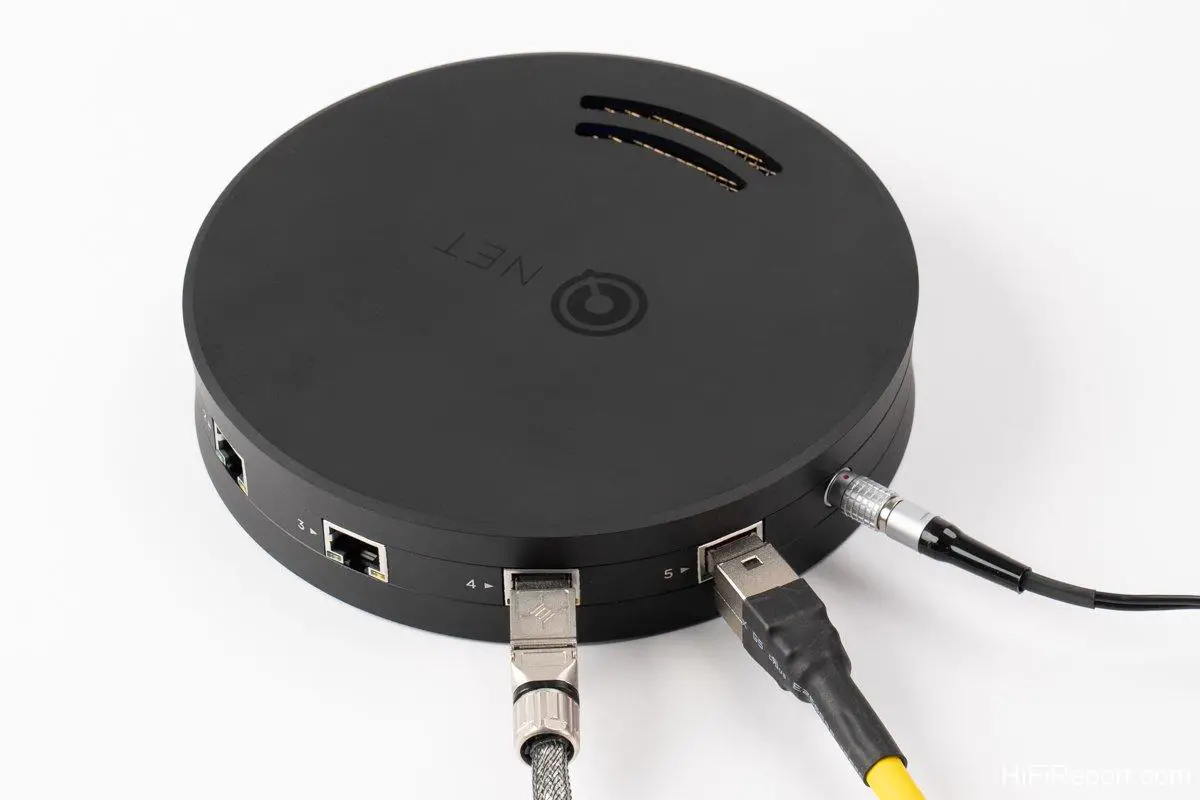
Ports 1-3 support auto-negotiation for 1000 Mbps transmission rates, whereas ports 4-5 are fixed at 100 Mbps. Nordost recommends using ports 1-3 for connecting to wireless routers or other network devices, and ports 4 and 5 for primary music players or servers, such as streaming players, music computers, music servers, NAS devices, and so on.
Why differentiate between these two network speeds? According to Nordost, the 100 Mbps transmission speed is sufficient for streaming music playback and, more importantly, helps to reduce noise. Therefore, connecting players to these ports minimizes noise interference. The faster ports are reserved for routers to ensure smooth external network access – a best-of-both-worlds approach.
Enhanced Dynamics and Contrast
The listening evaluation was conducted in my home setup. Following the manufacturer’s recommendations, I connected the network cable from my wireless router to port 1 and another cable from port 4 to my Auralic Aries G1 streaming player. A QNAP QSW-308S, a consumer-grade model suitable for home and office use, served as the reference switch for A/B comparison.
Other reference components included a Holo Audio Spring 3 DAC, Electrocompaniet EC 4.8 preamplifier, NuPrime Evolution One power amplifier, and Aurum Cantus Grand Harmony speakers.
The Auralic Aries G1 supports Tidal Connect, allowing playback to be controlled via the Tidal app on my smartphone. Listening tests were conducted using Tidal Connect.
I began with Tchaikovsky’s Piano Trio in A minor, Op. 50, performed by pianist Lahav Shani, violinist Renaud Capuçon, and cellist Kian Soltani.
Subtitled “In Memory of a Great Artist,” this piece was composed by Tchaikovsky as a tribute to his mentor and friend, Nikolay Rubinstein. The music carries a melancholic tone, punctuated by outbursts of passionate emotion.
Through the QNET, the emotional ebb and flow within the music became more pronounced, intensifying the poignant sentiment.
I believe this enhancement stems from the QNET’s ability to focus the soundstage more centrally, while simultaneously rendering instrument images more distinct and prominent. The improved sonic density and weight contribute to a greater sense of musical power, resulting in more vivid and dramatic dynamic contrasts. Consequently, the music sounded more emotionally charged.
In comparison, the reference switch sounded rather flat and tonally bland, even creating an illusion of reduced volume. This was due to the weakened dynamic impact, contrast, and intensity, along with a less three-dimensional presentation of instrumental images. Both the sense of sonic imagery and emotional expression were diminished.
Furthermore, the QNET imparted a cleaner and purer quality to the texture, with a brighter and more articulate tone, and clearer sonic outlines. The overall sonic texture became smoother and more refined.
In simple terms, the QNET delivered a readily discernible improvement over the reference switch, with a magnitude of enhancement that matched or even surpassed other audiophile-grade switches I’ve used in the past.
Elevated Tonal Quality and Texture
Moving on, I listened to “Days Without Tears” from the soundtrack of the Korean drama “Mr. Sunshine,” sung by Korean vocalist Kim Yoon-ah. This song also exhibits a melancholic melody and strong emotional intensity. It begins with simple piano accompaniment, adding strings in the middle section. The recording is intentionally close-miked to enhance emotional impact.
Using the reference switch, the sense of space felt flattened, the soundstage depth diminished, and the sonic image stretched wider and became shallower and less tall. The solidity of the vocal image also suffered, and the sonic backdrop became less transparent, sounding somewhat murky and indistinct.
Switching to the QNET, the spatial characteristics became much clearer, with improved depth. The layering and separation between different sonic elements were noticeably enhanced. Kim Yoon-ah’s breath, lip sounds, and airiness became more distinct. The entire musical flow felt more dynamic, with nuances and micro-dynamics rendered with greater clarity – a significant difference.
In essence, the QNET presented a richer and more vibrant musical tapestry, more readily evoking goosebumps in the listener.
Next, I turned to large-scale orchestral works, selecting the soundtrack from the James Bond film “No Time to Die,” composed by the renowned film score composer Hans Zimmer.
Large orchestral pieces further highlighted the QNET’s strengths. It not only rendered a wider and deeper soundstage with a clearer sense of space but also improved sonic cohesion, drawing instrumental sections closer to the center and making the musical theme more prominent.
Moreover, the shapes of different instrumental sections became more defined, and their separation and relative positioning were clarified. The sense of power during dynamic peaks was intensified.
Simultaneously, the noise reduction achieved by the QNET further elevated the overall sonic quality. The string and wind instruments gained enhanced sheen and tonal beauty, and the sonic contours became smoother and more fluid, making the music more enjoyable.
Promising Potential
Although the QNET arrived on the market somewhat later than some competitors, Nordost’s approach of rethinking the design from the ground up has yielded remarkable results. It delivers immediately noticeable improvements to streaming music listening, demonstrating promising potential.
The QNET not only cleans up the tonal texture and clarifies the sonic image, but also enhances soundstage depth and image definition. Most importantly, it enriches the music, making it more vibrant, dynamic, engaging, and captivating.
Is such an investment worthwhile? I highly recommend arranging an audition. I believe you will not be disappointed.
Specifications
**Nordost QNET**
* Type: Network Switch
* Ports: RJ45 × 5
* Transmission Rate: Ports 1-3 support 1000BASE-T / 100BASE-TX, Ports 4-5 support 100BASE-TX Full Duplex
* Power Supply: DC 9V / 1.2A
* Dimensions: 165 × 34 mm (Diameter × Height)
* Weight: 880 grams