
Nothing Ear (3) Review
The Nothing Ear (3) leads with a claim no other earbud in its class makes: a dual-microphone system built into the charging case, rated to filter ambient noise up to 95 dB on calls. That Super Mic feature is the product’s headline, and this review tests whether talking into a charging case genuinely improves your voice clarity over the six microphones already packed into the earbuds.
What Makes It Different
The 45 dB hybrid ANC and the 12mm driver are table stakes at this tier. The Super Mic is the feature that separates this pair from every competitor: Nothing embedded a second set of ambient-filtering microphones in the aluminum charging case, and a dedicated TALK button activates them for calls and voice notes. The case is designed to sit within 5 cm of your mouth when you press the button, letting the hardware target your voice while subtracting background noise up to 95 dB. For a commuter shouting over a subway rumble or a traveler calling from a windy terminal, that is a concrete use case the earbud mics alone struggle to cover.
Exclusive to hifireport.com. Redistribution or scraping without approval is prohibited.

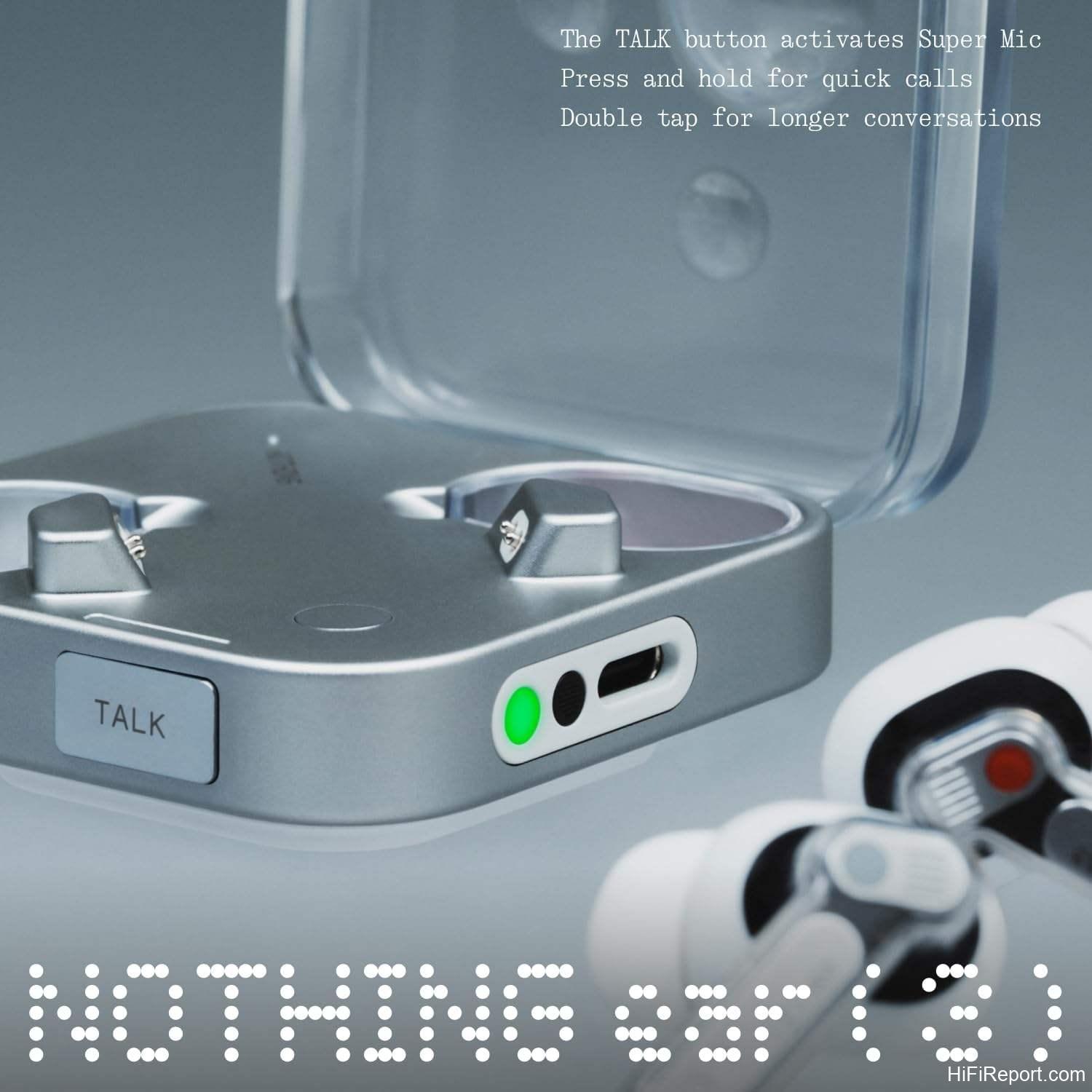
What matters to a buyer is that this is physical hardware doing the filtering, not a software noise gate in the app. The interaction model is deliberate: press and hold the TALK button for quick commands, double-tap to lock it for a longer conversation. Nothing is asking you to press the case against your face. The 5 cm proximity window is short enough to feel natural while far enough to let the ambient mics sample the environment for subtraction. The Super Mic is the one specification on this list that no rival earbud in its class attempts.
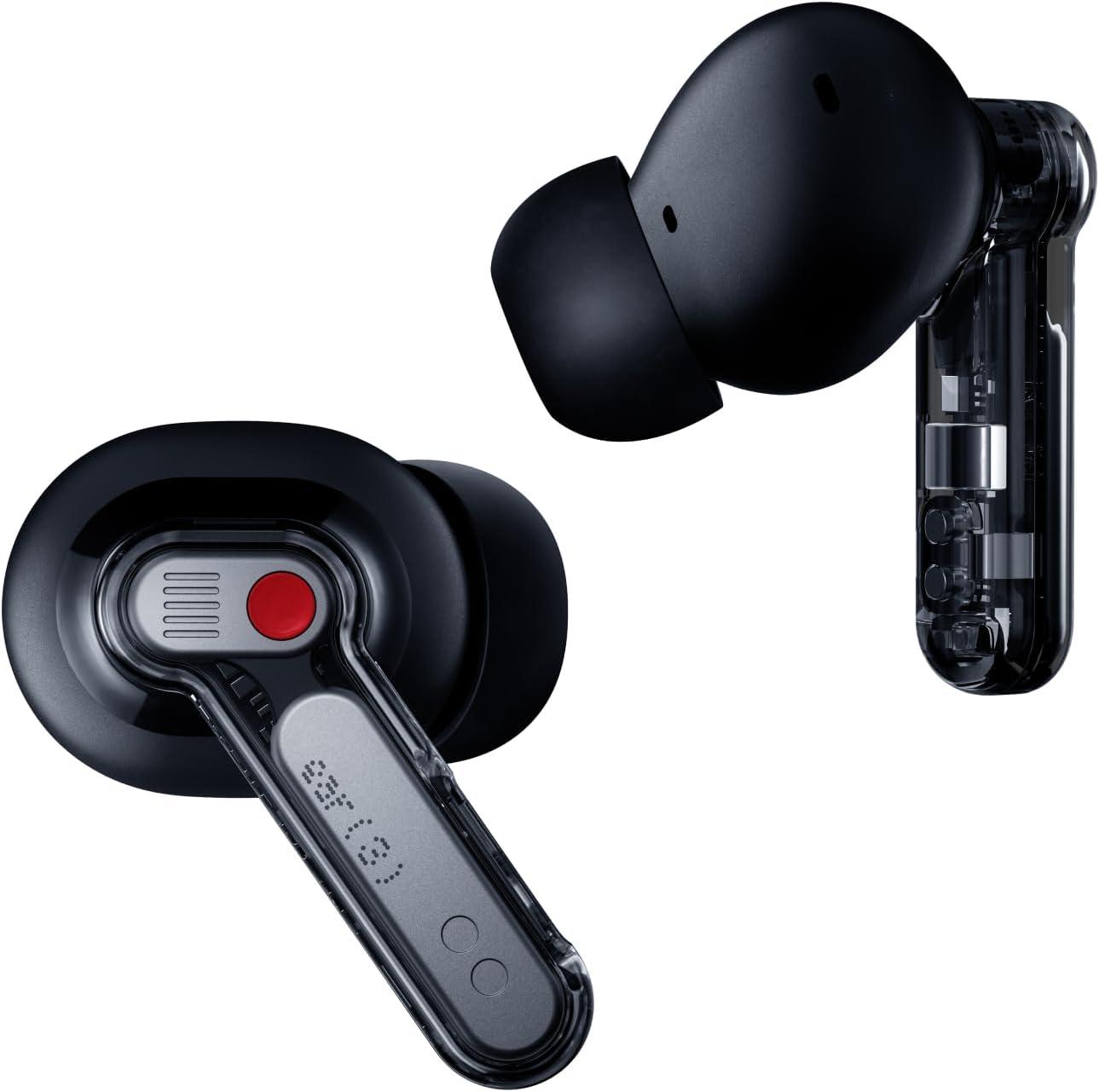
Super Mic Under the Hood
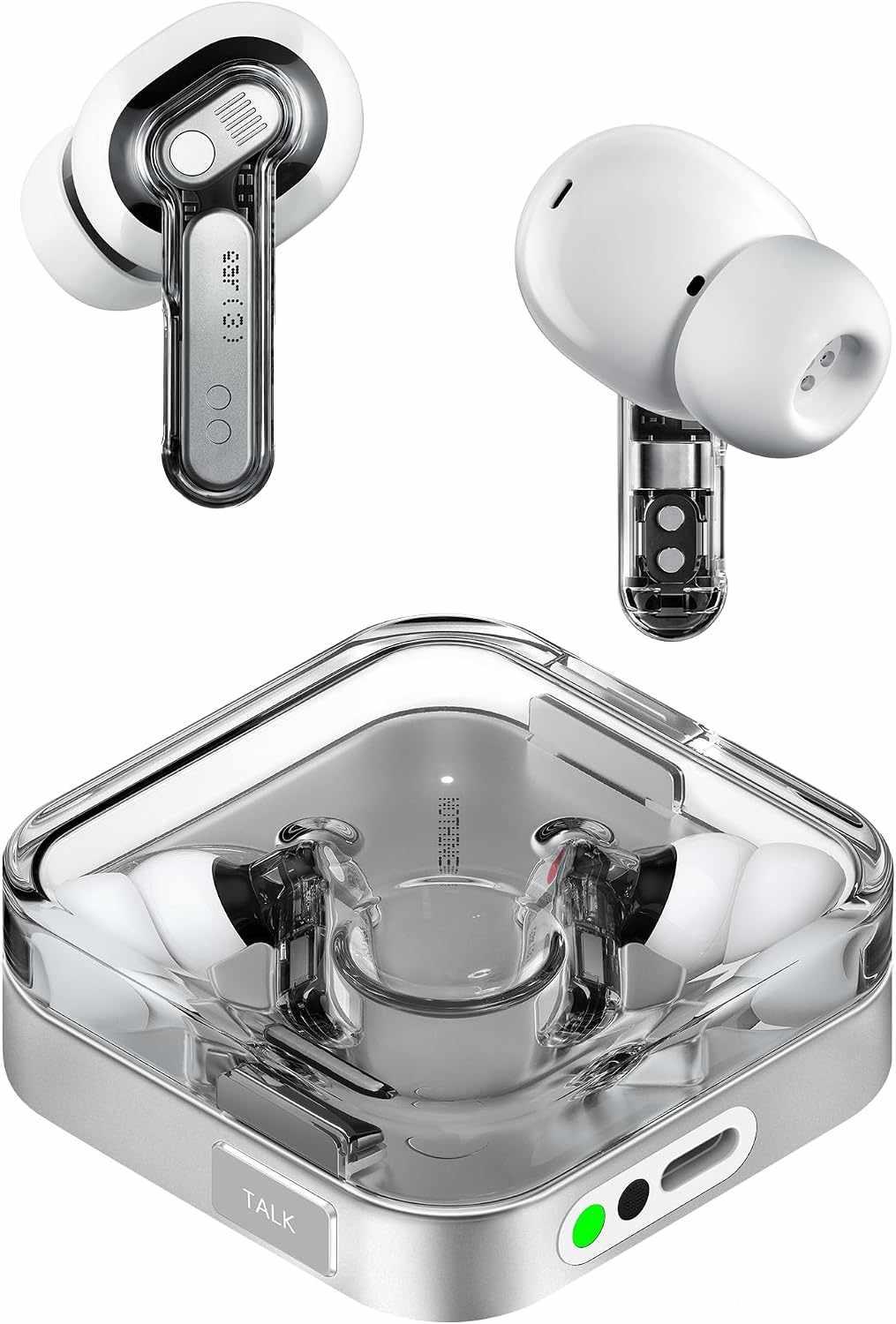
Nothing embedded two dedicated ambient-filtering microphones in the aluminum case alongside the earbud mics. Pressing the TALK button switches your voice input from the earbud microphones to the case array. The ambient filtering works by sampling the surrounding noise and subtracting it from your voice signal before transmission. Nothing rates the system at handling up to 95 dB of background noise, which covers construction sites, busy streets, and airport departure halls. The button also supports a double-tap lock, so you can start a conversation without holding it down for the entire call.
Owner feedback splits into two camps. One detailed reviewer who travels frequently for work described the case mic as the standout feature, noting it cut wind and background noise better than the bud mics alone and saved a call outside a windy airport. A house music producer with 12 years of experience called the Super Mic “a bit gimmicky” and found it useful only in “a very noisy environment.” A third owner on Android could not get the button to activate the case mics at all; pressing it triggered Bixby or Gemini instead, and that reviewer concluded the improvement over the earbud mics was not noticeable.

Wikipedia’s summary of third-party reviews echoes that split. Several reviewers reported the Talk button had compatibility issues with certain calling apps and that the usage felt awkward. Others confirmed better audio quality on calls. The consensus, as Wikipedia notes, was that most agreed the difference between the case and the earbuds “was not substantial.” For a buyer, that means the Super Mic is a genuine improvement in extreme noise but a marginal upgrade in everyday conditions.
The Sound
The default tuning is bass-forward, and that is the first thing most owners notice. One reviewer who tested the buds against AirPods Pro 3 called the sound “maybe better” and reported no distortion at high volumes. A house music producer who switched from in-ear monitors said the low end was “outstanding.” A long-time user of the previous-generation Ear (2) described the sound as “super balanced,” with bass that held up when turned up without distorting.
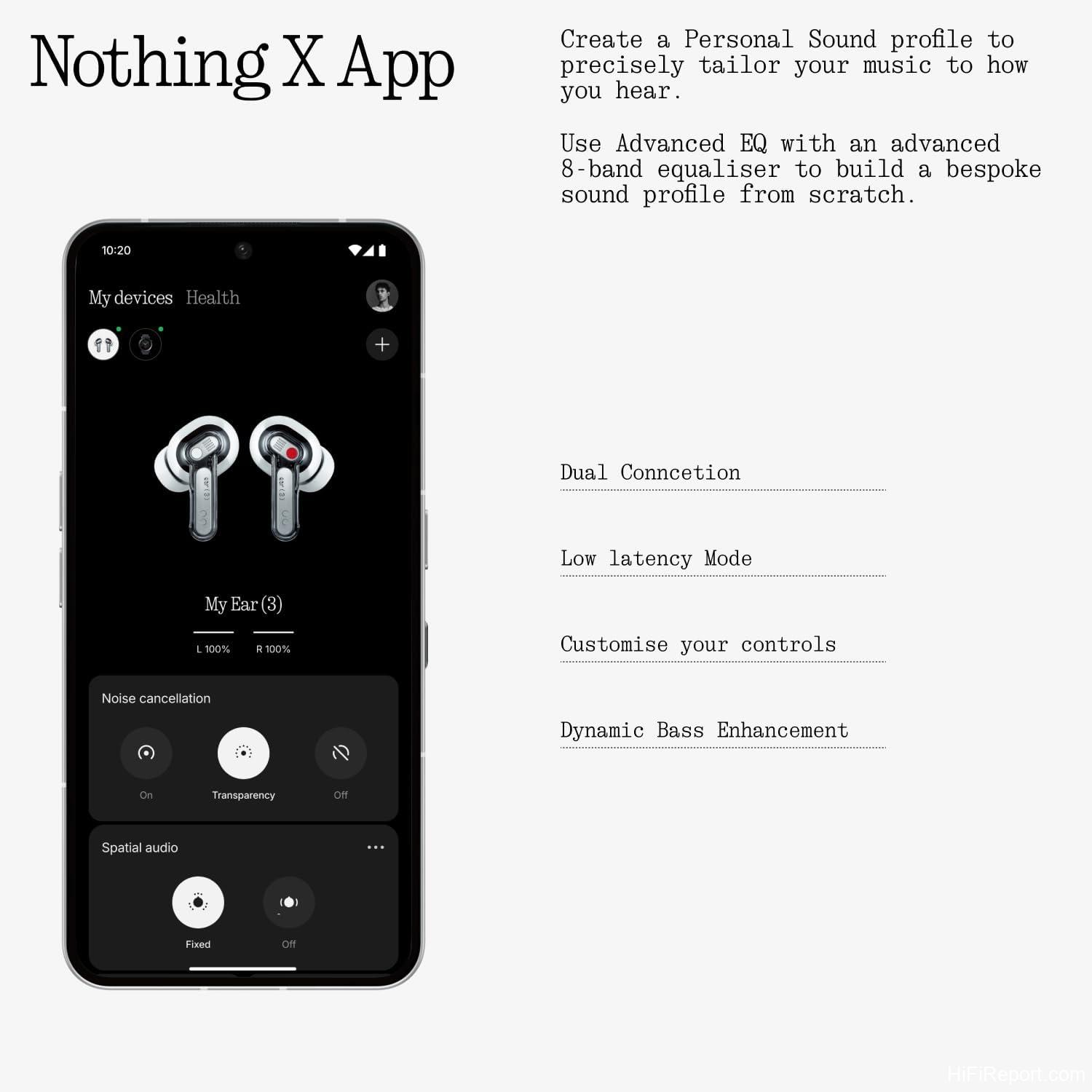
The 12mm driver uses a ceramic diaphragm that Nothing says improves airflow by 10 percent, reducing distortion compared to the prior generation. Bluetooth 5.4 supports LDAC, AAC, and SBC codecs, so hi-res wireless streaming is available on phones that handle LDAC. The Nothing X app adds an 8-band EQ and a Personal Sound hearing test that tailors the frequency response to your ears. One owner who ran the profile said “it makes a big difference.” The out-of-the-box V-shape means treble can feel sharp on certain tracks and the bass boost is noticeable. If you want a flatter response, the EQ is the tool to reach for.

One 3-star reviewer flagged a specific issue at the top of the volume range: “s” sounds in YouTube audio and high-volume podcasts began to distort, and the maximum output measured 100 to 105 dB, roughly 10 dB below some competitors. For most listening at moderate volumes that ceiling will not matter, but podcast and video listeners who crank the volume may hit it.
Beyond the Headline
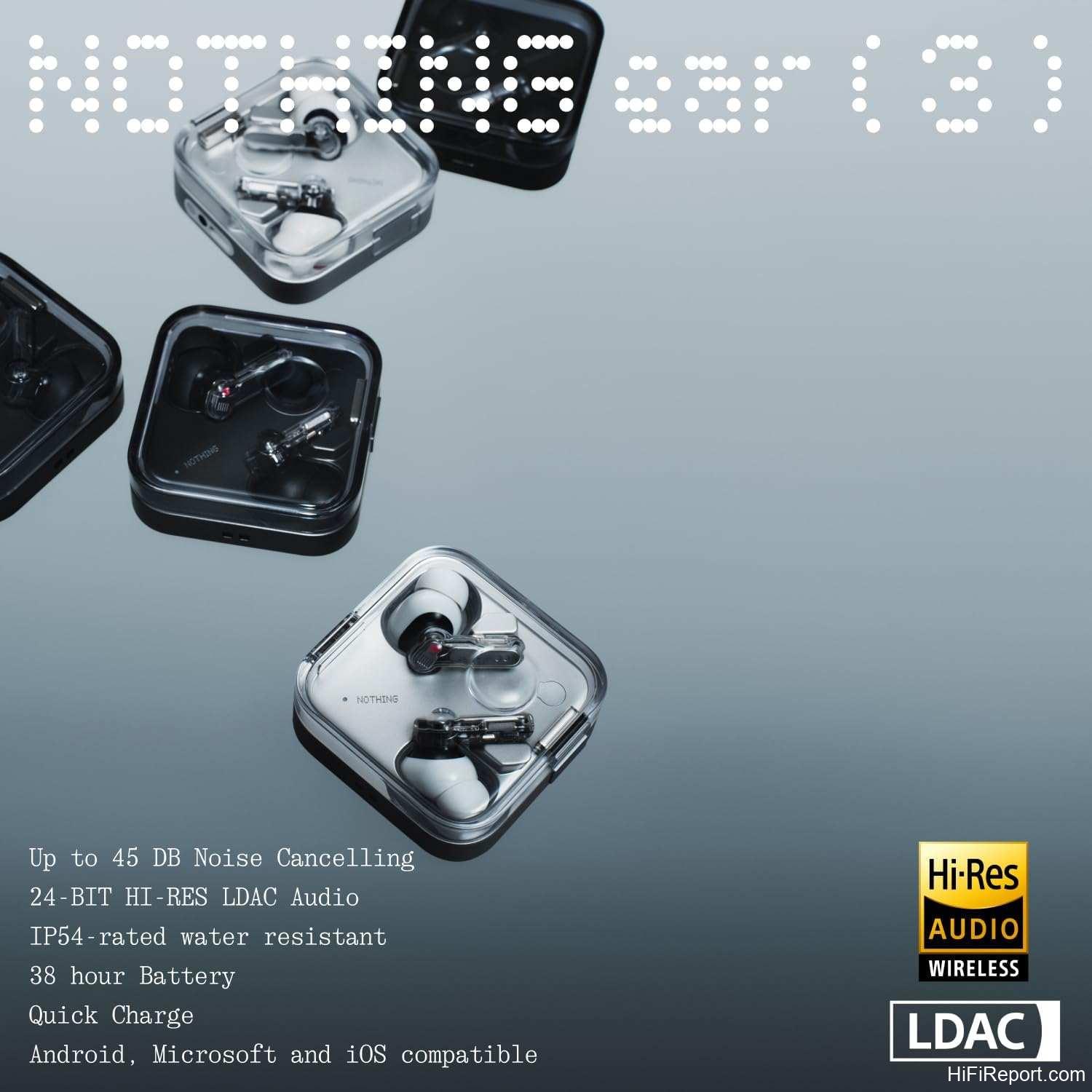
Battery life is the most common complaint outside the audio department. Official figures put playback at 10 hours with ANC off and 38 hours total with the case, dropping to 5.5 hours and 22 hours with ANC on. One owner who runs ANC daily reported about 5 hours and change, and noted the older Ear (2) managed 8 hours or more. LDAC support further trims the earbud-only runtime to roughly 3.5 hours in that same owner’s testing. A 10-minute quick charge reportedly adds 10 hours of playback, which helps on the go but does not close the gap with the older model.
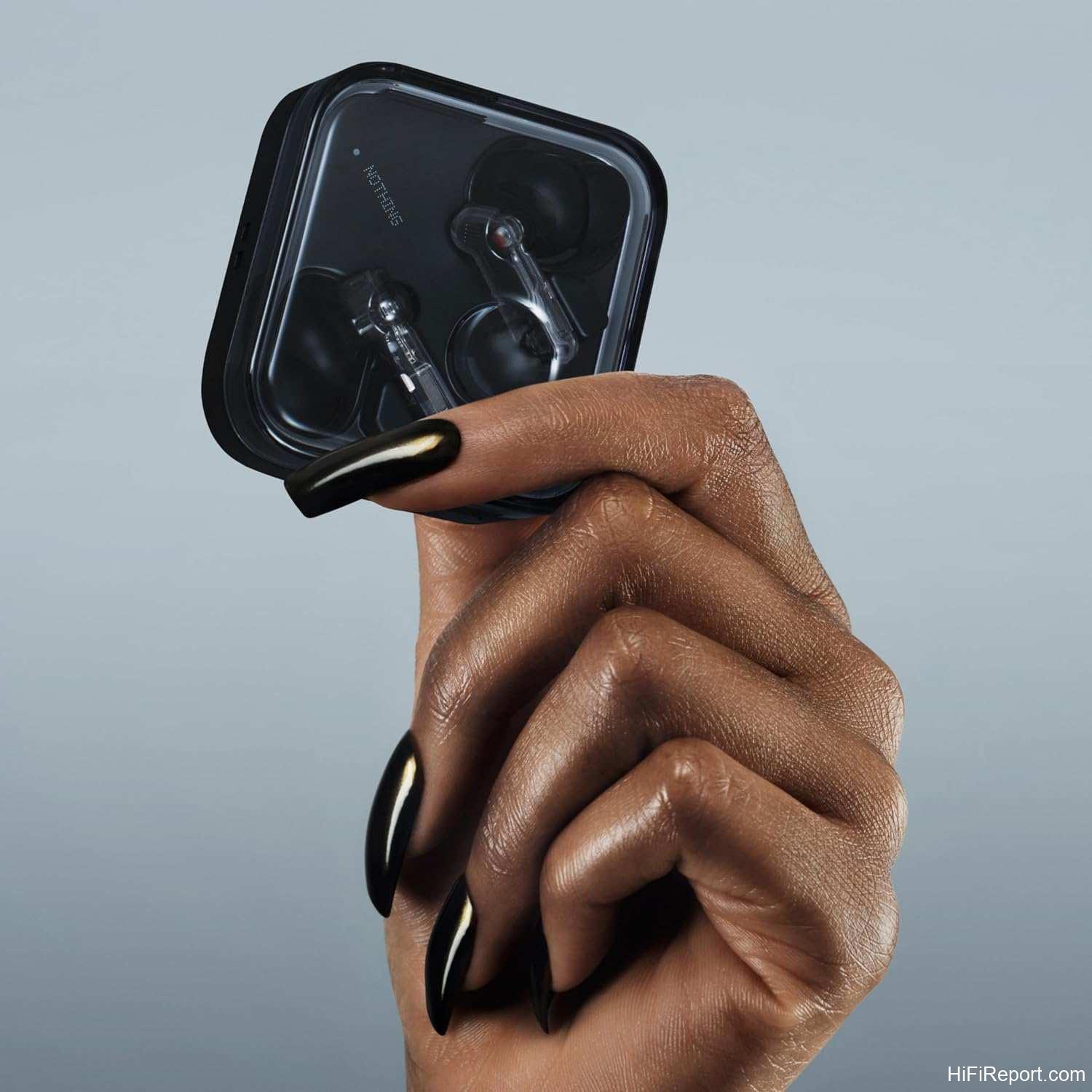
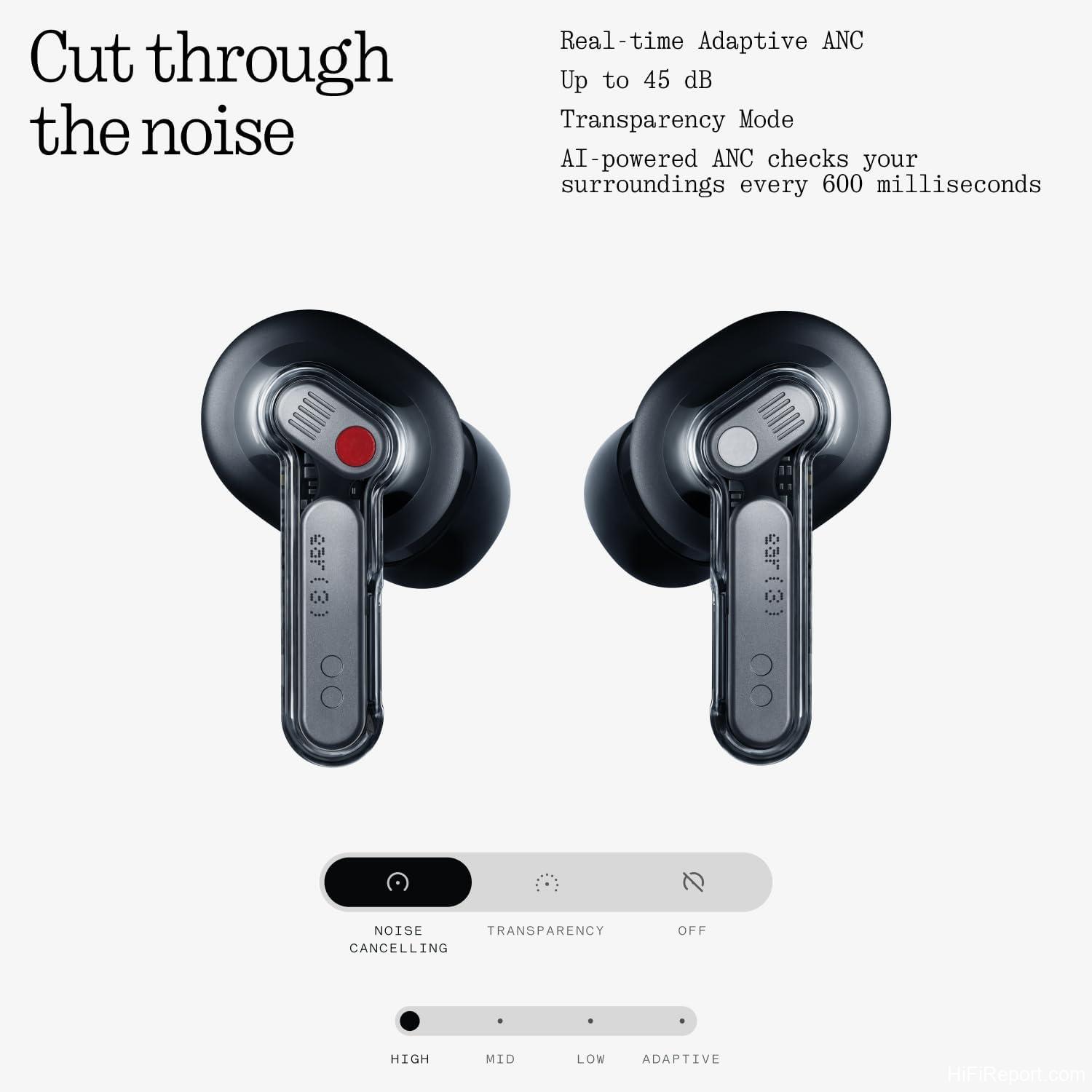
The 45 dB hybrid ANC recalibrates every millisecond and covers a noise range up to 5000 Hz. One owner’s testing measured roughly 35 dB of reduction in the lows and 38 dB in the highs, about 82 percent overall noise reduction. Transparency mode works, though several owners described their own voice sounding muffled or “underwater” when using it. The earbuds carry an IP54 rating for sweat, rain, and dust, and the stem design stays put during runs. The charging case is aluminum-based with a lanyard hole, a shift from the all-plastic cases in earlier Nothing generations.
The Nothing X app rounds out the feature set: adjustable EQ, Ultra Bass mode, Adaptive ANC, a Low Lag gaming mode, and ChatGPT integration on Nothing phones. Dual-connect pairs the buds to two devices simultaneously, and one reviewer described flipping between a laptop and a phone as smooth without unpairing.

Day-to-Day
For a daily commute on a train or bus, the combination of 45 dB ANC, LDAC streaming, and dual-connect covers the basics. One owner who travels between an office and home described switching between a laptop for video calls and a phone for music without re-pairing. Transparency mode lets you hear platform announcements without removing a bud, and the IP54 rating means a drizzle on the walk to the stop is not a concern. The Super Mic earns its keep on this route if your path includes a particularly noisy stretch where the earbud mics are losing the fight against ambient roar.
Exclusive to hifireport.com. Redistribution or scraping without approval is prohibited.
At the gym, the IP54 rating and secure stem fit handle sweat and high-intensity movement. One reviewer who bought the buds specifically because older earbuds died from sweat in the gym said the Ear (3) held up across sessions without a single failing driver. Transparency mode covers the “hear the announcement” need, and the Low Lag mode in the app handles a gaming session afterward. Battery life is the limiting factor for a long training day: 5.5 hours with ANC on means a two-hour session plus a podcast ride home gets close to the wire, and a midday case top-off becomes a regular habit.
What Customers Are Saying
The praise concentrates on sound quality and design. Multiple owners called the audio “amazing,” “outstanding,” or “top notch,” and several noted the bass hits harder than competitors without turning muddy. The aluminum case and the minimalist look drew comments about how the buds “look totally different to most.” The Personal Sound test and 8-band EQ in the app earned separate mentions as genuinely useful tools rather than checkbox features. One owner who switched from Sony WF-1000XM5 said the Nothing pair fit more comfortably and performed “at worst on par.”
The complaints cluster around battery, the Super Mic’s practicality, and transparency mode. Battery life with ANC on (5.5 hours) disappointed owners who expected closer to the full 10 hours in real use, and the 5 percent increments for the battery display added confusion. The Super Mic drew the harshest critiques: one Android user could not activate it at all due to button conflicts with Bixby and Gemini, and several others called it situational or unnecessary for everyday calls. Transparency mode made the wearer’s own voice sound muffled or “underwater” to multiple owners. A 3-star reviewer also flagged that the “voice” and “more treble” EQ presets made the sound “shrill and unpleasant,” pushing that owner back to the balanced setting.
Strengths and Weaknesses
Strengths
- 12mm ceramic-diaphragm driver with 10 percent airflow improvement delivers a bass-rich, detailed sound out of the box
- 45 dB hybrid ANC with millisecond-level recalibration handles subway rumble, office chatter, and plane drone
- Super Mic case hardware targets 95 dB of ambient noise on calls, a feature no competing earbud matches
- Dual-connect and LDAC over Bluetooth 5.4 keep two-device work and hi-res streaming practical
- IP54 rating and secure stem fit handle sweat, rain, and high-intensity movement
Weaknesses
- ANC-on battery drops to 5.5 hours, and LDAC cuts that to roughly 3.5 hours, well below the previous generation
- Transparency mode leaves the wearer’s own voice sounding muffled or “underwater”
- Super Mic requires the case within 5 cm of your mouth and has reported button conflicts on Android
- Default V-shaped tuning favors bass; treble can feel sharp without EQ adjustment
- Battery percentage displays only in 5 percent increments, making precise tracking difficult
Bottom Line
The Nothing Ear (3) is a strong all-around earbud whose Super Mic is a genuine differentiator, but one that only pays off in the specific scenario of a loud-environment call where the earbud mics are losing the fight. If your daily life includes frequent phone or video calls in airports, construction sites, or busy streets, the case mic is the reason to choose this pair over a competitor with equivalent ANC and sound. If your calls happen in a quiet office or a car, the six earbud mics plus bone-conduction pickup already cover the job, and the Super Mic becomes a feature you will press once and forget.
Best for frequent callers in loud environments who also want strong ANC, LDAC streaming, and a distinct design; look elsewhere if battery life above 8 hours matters more than a case-based mic or if you need the flattest default tuning without opening the EQ.
Key Specs
- Driver: 12mm dynamic, ceramic diaphragm, 10 percent airflow improvement
- ANC: Hybrid, up to 45 dB, recalibrates every millisecond, 5000 Hz noise range
- Microphones: 6 HD mics in earbuds; dual ambient-filtering mics in case (Super Mic, up to 95 dB)
- Bluetooth: 5.4; supports LDAC, AAC, SBC; Google Fast Pair, Microsoft Swift Pair
- Battery: 10 h / 38 h with case (ANC off); 5.5 h / 22 h with case (ANC on)
- Quick charge: 10 minutes for 10 hours of playback
- Water resistance: IP54
- Connectivity: Dual-connect, Low Lag mode
- App: Nothing X with 8-band EQ, Personal Sound, Adaptive ANC, ChatGPT integration
- Case: Aluminum with lanyard hole
Questions Worth Asking
Does the Super Mic actually make calls clearer than the earbud mics?
In extreme noise, yes. One owner who tested calls at a windy airport found the case mic cut background noise better than the bud mics alone. In quieter settings, multiple reviewers and third-party summaries agreed the improvement was not substantial, and the case mic becomes most useful when ambient noise approaches the 95 dB range that the earbud array cannot filter effectively.
Will the battery last a full workday with ANC on?
Probably not on the earbuds alone. The official ANC-on figure is 5.5 hours, and LDAC support drops that to roughly 3.5 hours in one owner’s testing. The case extends the total to 22 hours, so a midday top-off is realistic. If you need 8 hours or more of continuous ANC without the case, the previous generation managed longer.
Is the out-of-the-box sound neutral?
No. The default tuning is V-shaped with a pronounced bass boost. Owners who want a flatter response should run the Personal Sound test in the Nothing X app and adjust the 8-band EQ. The bass-forward default suits low-end genres; treble can feel sharp on certain tracks until you dial it back.
Can I use the Super Mic on an Android phone without issues?
Reports are mixed. One Android owner found the TALK button triggered Bixby or Gemini instead of activating the case mics, making the feature unusable on that device. iOS owners reported smooth operation. Check the Nothing X app settings on your specific phone model before relying on the Super Mic as your primary call method.
- Your Voice, Amplified. The Noise, Eliminated: Integrated into the Nothing Ear (3) charging case is a advanced dual-microphone system powered by specialized ambient filtering mics. This technology, called Super Mic, precisely targets your voice while cutting through extreme background noise (up to 95 dB), ensuring your calls and voice messages are transmitted with absolute clarity
- Intelligent Silence, Immersive Sound: Featuring Smart Hybrid ANC, Nothing Ear (3) delivers up to 45 dB of Active Noise Cancellation. This Bluetooth wireless earbuds recalibrate every millisecond to block a wide range of noise with a 5000Hz undesired noise to enjoy crystal-clear audio. Switch to Transparency Mode to seamlessly connect with your surroundings
- Super Mic, Tap to Engage: To activate the Nothing ear buds Super Mic, simply press and hold the 'TALK' button with the case within 5cm of your mouth for optimal clarity in loud settings. Hold for quick commands, or double-tap to lock it for extended conversations