
Ong Discusses Mola Mola Tambaqui DAC Review
It’s quite amusing, after being Facebook friends for so many years, my encounters with Mr. Ong had been limited to public events. We’d even bump into each other at the Munich High End Show, yet I had never actually visited HiFiReport Audio.
This time, finally, that changed.
The connection was made by Mola Mola, or more precisely, the Mola Mola Tambaqui.
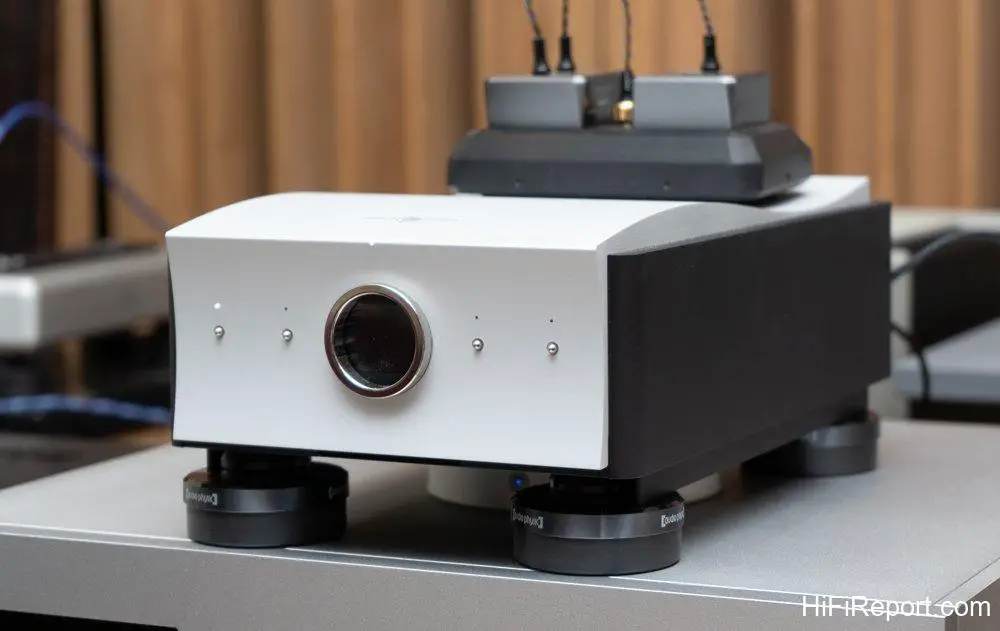
Compact and Exquisite Design, Beautiful Wave-Shaped Chassis
The Tambaqui is Mola Mola’s sole DAC offering.
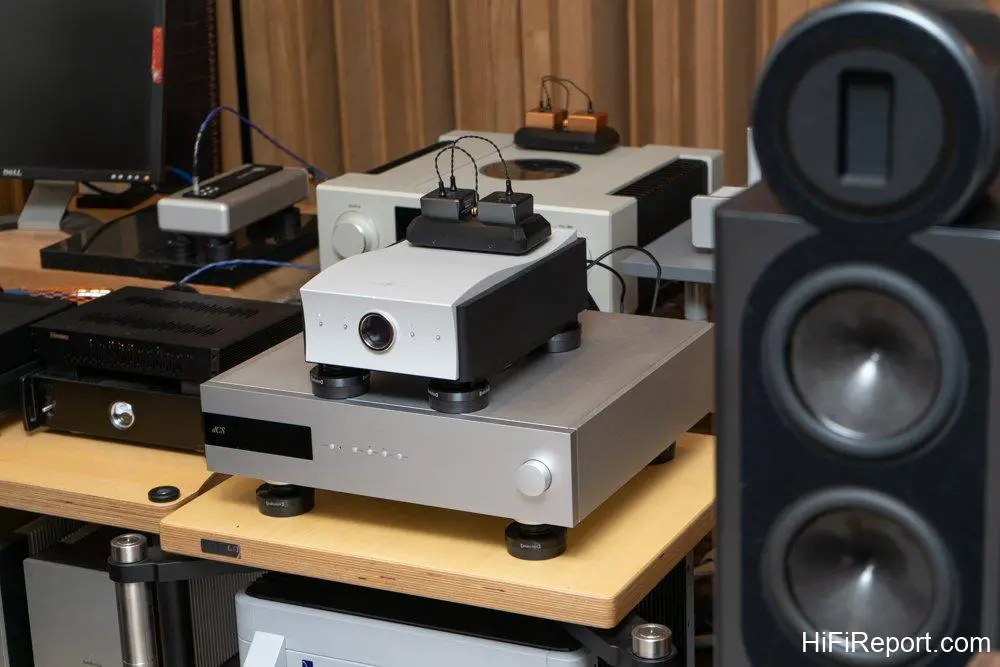
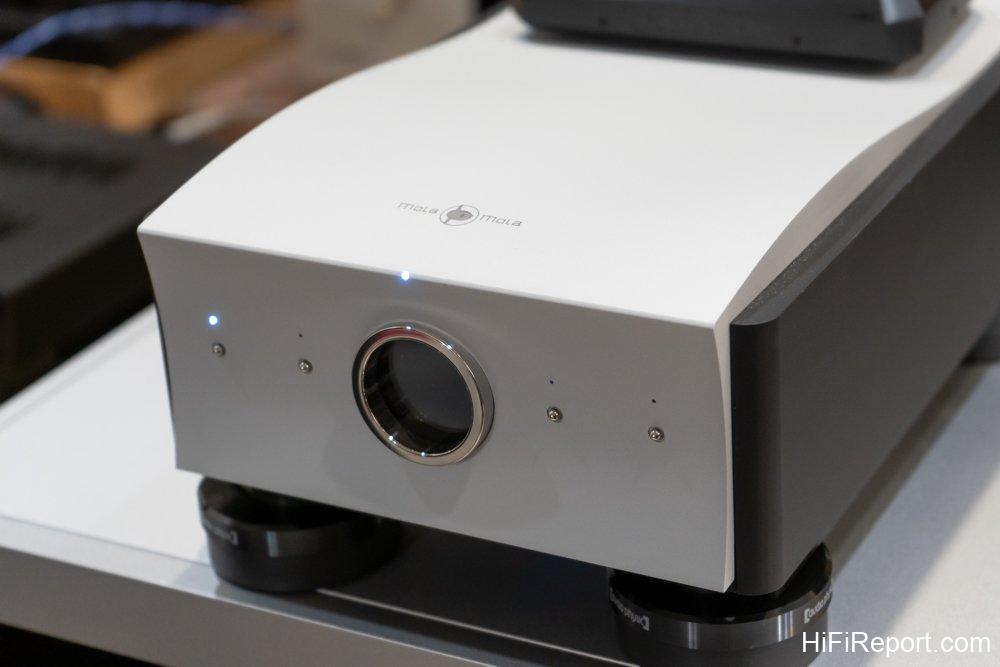
Despite its half-width chassis, the appearance is compact and exquisite. The CNC-machined wave-shaped case adds a touch of elegance to the rigid texture of the metal and the clean lines of the corners.
The circular display screen, like a stroke of genius, paired with four unmarked small circular buttons, elegantly embodies minimalist aesthetics.
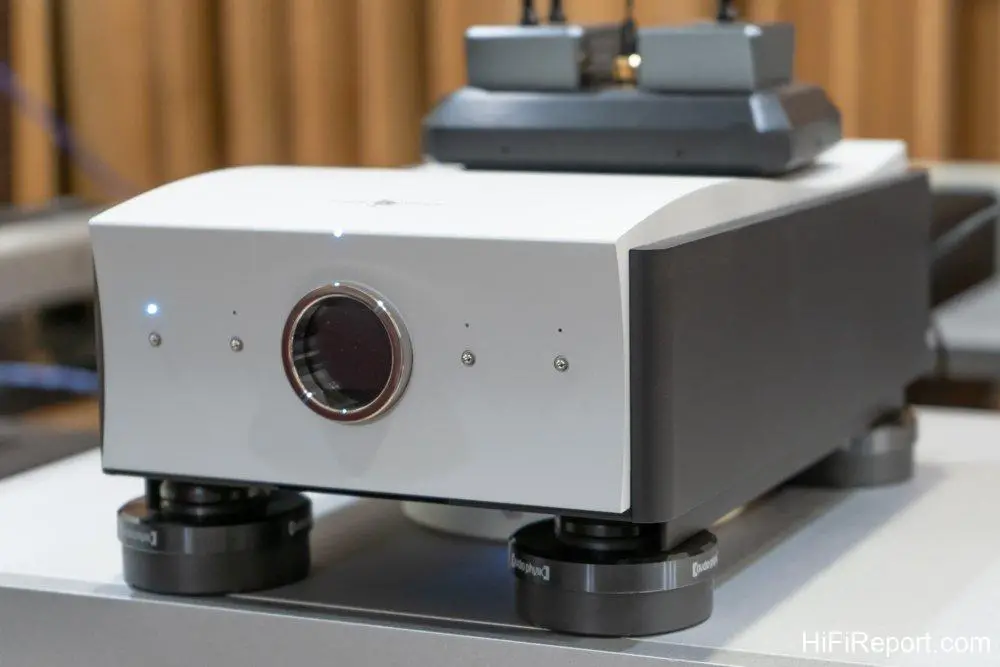
Mr. Ong mentioned that Mola Mola appeals more to younger consumers. Its modern design truly resonates with the younger generation.
Furthermore, its compact size is a boon for many modern homes with limited space. Large audio equipment can be space-consuming and visually overwhelming, whereas the half-width Tambaqui is a godsend for users with smaller rooms.
Rich Interfaces, Versatile Applications
Its comprehensive interfaces further enhance usability, featuring six input terminals including coaxial, optical, AES/EBU, I2S (HDMI), USB Type-B, and RJ45 Ethernet, along with Bluetooth reception supporting aptX and LDAC.
It pretty much covers every interface a digital source might need.
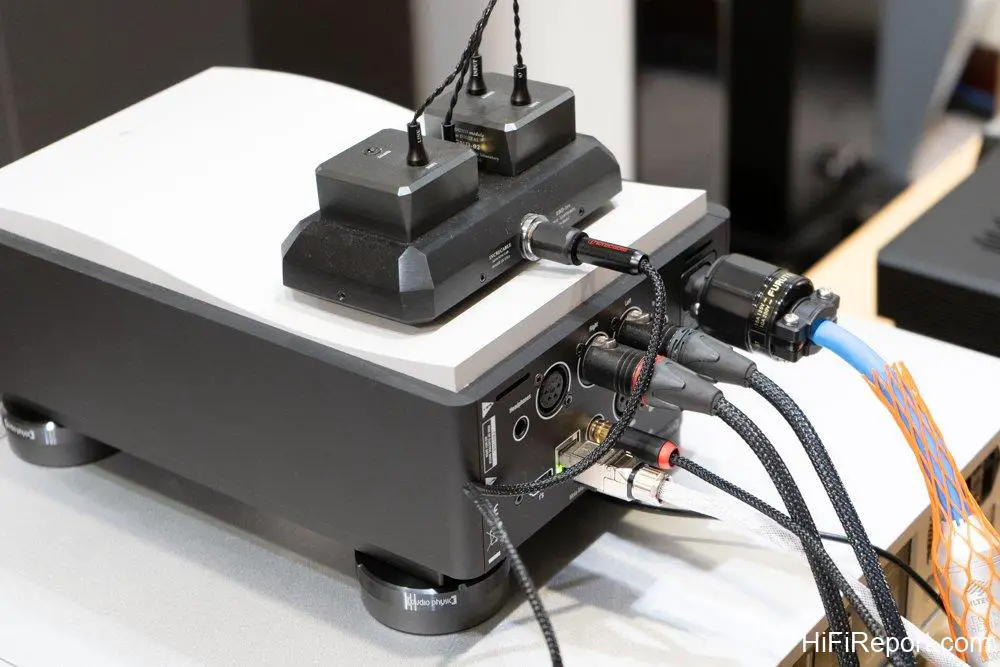
Moreover, it not only functions as a DAC with XLR balanced analog outputs but also boasts a high-quality headphone amplifier circuit. On the rear panel, there are both a 4-pin XLR balanced headphone output and a 6.3mm single-ended headphone output.
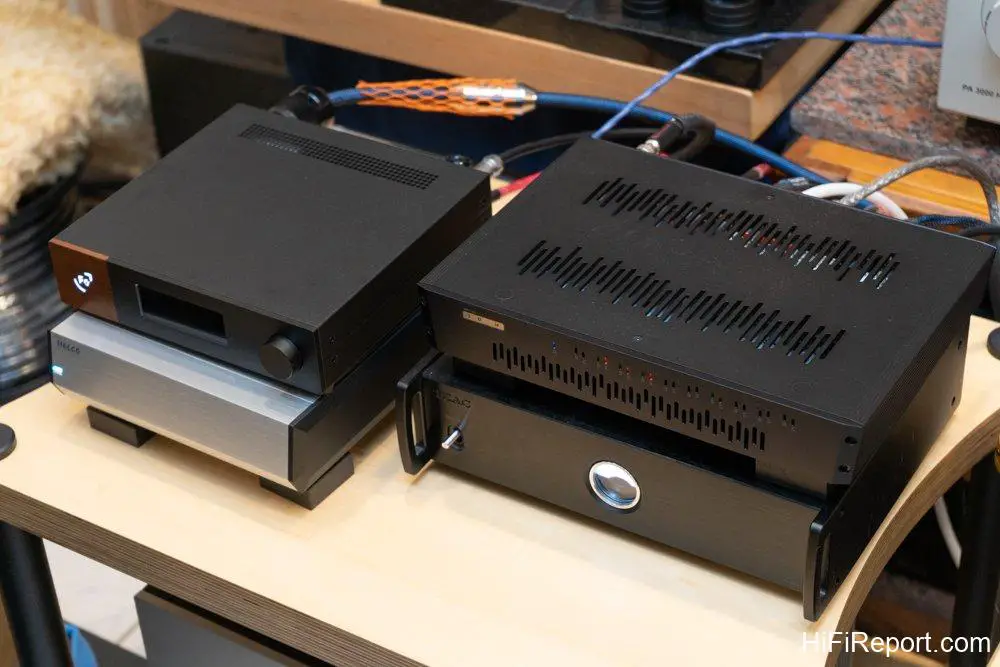
For remote control, besides the optional Mola Mola Premium Remote, you can also use an Apple TV remote, as they share the same remote codes.
Even more conveniently, after downloading the app and pairing via Bluetooth, you can control the Tambaqui and access various settings using your smartphone.
Stable and User-Friendly App
Having immersed himself in the realm of digital streaming for years, Mr. Ong places great emphasis on the stability of streaming device playback software.
“App stability is judged by whether it crashes frequently.”
“Although crashes are inevitable to some extent, apps that crash too often are unacceptable.” While the Mola Mola app allows volume adjustment and input switching, its primary function is settings configuration. Music playback relies on other streaming platform apps.
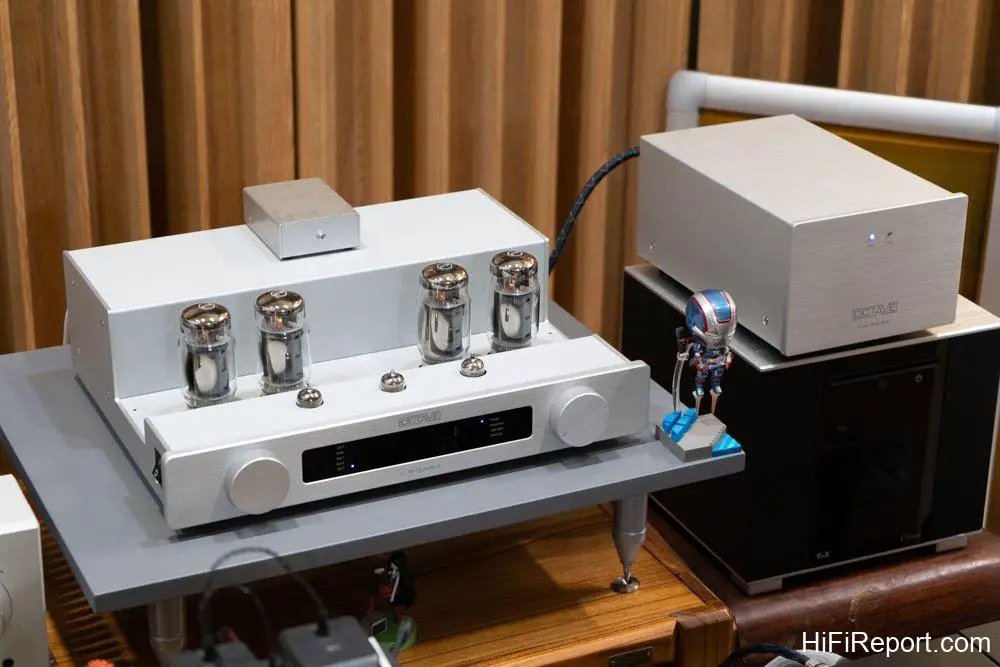
Speaking of streaming playback device apps, Mr. Ong couldn’t help but express his opinions: “Some app architectures are purely designed from an engineer’s perspective. I’ve even used apps that resemble Windows interfaces, where you have to navigate layers upon layers to find a function, which is very unintuitive.”
The essence of streaming playback is simplicity and convenience. Unintuitive operation is a major drawback.
Mola Mola focuses its app functions on settings configuration, avoiding excessive computation that could lead to errors, resulting in a relatively stable app experience.
As a dealer, he meticulously studies every piece of equipment he intends to stock and sell in his store. He only keeps, orders, and promotes products that he personally enjoys. If something doesn’t suit his taste, even if it’s from a big brand with strong market appeal, he’s not interested.
“I spent a long time with this DAC, gradually getting used to it.” By “getting used to it,” he means finding optimal adjustments and pairings to make the equipment produce sound that satisfies him.
Excellent Headphone Amplifier Quality – Use It!
When we discussed the Tambaqui’s features and touched upon the headphone amplifier, I mentioned that I had missed testing its headphone amp during my previous audition.
Mr. Ong said, “Oh, that’s a pity, its headphone amplifier is exceptionally well-made.” Furthermore, Mola Mola not only provides a 6.3mm single-ended output but also a 4-pin XLR balanced terminal, demonstrating their confidence in their analog circuitry. This balanced output is a statement of quality!
Committed to Promoting Streaming Playback
The Tambaqui is not just a traditional DAC; it also has streaming capabilities. This is the biggest reason why Mr. Ong is willing to spend time carefully adjusting and refining it.
If you search for “HiFiReport Audio” on Google, the store information even includes the tagline “Digital Streaming Demonstration Center in Central Taiwan.”
Mentioning this, Mr. Ong first gave a slightly embarrassed smile, then expressed his aspirations: “Digital streaming seems to be promoted quite well, but in the central and southern Taiwan markets, the acceptance rate is progressing slowly.” In Mr. Ong’s view, CDs and vinyl records are still the choices of hardcore audiophiles. “That’s actually a kind of faith.” Although streaming may not surpass them in sound performance, it offers unparalleled convenience.
“Recently, I helped a customer install a high-end streaming system. This customer has been an audiophile for many years, with equipment worth tens of millions of NTD at home. He’s played with everything. It was just a younger friend who said, ‘Why are you missing streaming?’ and he jumped right in.” This player is almost 80 years old. After adding a streaming system, he now listens to streaming every day.
“He told me, ‘Oh, I didn’t know it was so convenient, just swipe my phone and there’s music.'” Mr. Ong focuses on promoting streaming equipment, seeing it not only as a business but also as a mission.
It’s not about arguing which is better – vinyl, CD, or streaming – but about spreading the joy of streaming playback. There’s no need to break anyone’s faith; everyone should find peace and contentment in their own audio choices.
Unique Decoding Technology
The most distinctive feature of the Tambaqui is its decoding core. It doesn’t use commercially available DAC chips or R2R Ladder DACs found in high-end decoders. Instead, it employs a unique decoding technology developed in-house.
It first upsamples the input digital signal using a proprietary algorithm, raising the sampling rate to 3.125MHz. Then, the upsampled PCM signal is converted to PWM (Pulse Width Modulation), and further processed through a 32-stage FIR DAC, coupled with a single-stage 4th-order filter for I/V conversion, transforming the PWM signal into an analog signal.
What are the results of this? Mola Mola achieves an ultra-high dynamic range of up to 130dB and immeasurably low distortion with the Tambaqui.
I previously wrote a review of the Tambaqui. Its sound is delicate and refined, with a sense of liveliness and resolution that is top-tier among the top tier. The excellent speed and transient dynamics make the music exuberant, passionate, and vibrant. It’s a DAC with a distinct personality and captivating appeal.
Sound Quality Approaching Perfection at 6V Output
I shared my personal user experience with Mr. Ong, and he generously shared his insights with me.
“The Tambaqui’s soundstage width is very expansive, but the depth is slightly shallower. The imaging is a bit forward, giving the listener the feeling of being in the front row, very close to the performers.” Mr. Ong said that his younger customers mostly prefer this more forward sound, while older customers tend to prefer a slightly distanced perspective, “like listening in the middle or back of a concert hall. Different ages, different preferences.”
In my experience, the Tambaqui’s information retrieval is incredibly rich, and the level of detail is among the best I’ve heard in any DAC. Mr. Ong agreed with my assessment. He added that due to the forward imaging and abundant detail, he prefers to switch the output to the 2V setting, which makes the sound less aggressive.
The Tambaqui’s analog output is adjustable with 6V, 2V, and 0.6V options, allowing users to tailor the analog output voltage to their amplifiers (especially preamps). The factory default is 6V, but Mr. Ong believes that at 6V output, “its sonic performance in all aspects is almost off the charts. Whether it’s detail or dynamics, it’s perfect.” Switching to 2V makes the sound gentler, less forceful, and more suitable for extended listening. The adjustable output function provides greater flexibility for amplifier matching and adapting to user listening preferences.
Recounting Lin Guangcai’s Indigenous Taiwanese Spirit
This sonic signature is particularly moving when listening to vocals, especially singers with exceptional vocal skills. He cited Paiwan tribal chief Lin Guangcai’s album “Centennial Paiwan, Reappearing Glory” as an example. “This album is fantastic. Listen to his voice, the vicissitudes of life, the sense of experience, it’s tear-jerking.” He found the WAV file of this album he had ripped in Roon and played “Cherish.”
This is a forestry song from the 1970s. Lin Guangcai followed his father into the forestry industry in his youth. These indigenous people working for the Forestry Bureau would often gather around a fire after work, holding guitars and singing. Working away from home, they came from different tribes, sometimes with limited language commonality. Communication, when not in Mandarin, relied on singing.
The piano intro was full and solid. Then, Lin Guangcai’s slightly hoarse, rugged voice emerged, full of energy, in a chanting tone, singing simple, unadorned lyrics, seemingly casual and free, yet filled with reluctance and unspoken longing, and endless homesickness, “Moonlight hometown, moonlight lover, cherish this farewell tonight. When you wake up tomorrow morning, I will already be wandering.”
Texture, ah, texture. The texture of Lin Guangcai’s voice is clear and distinct, as if jumping out from between the two speakers. It’s more than just sound; it’s tangible, fleshy, breathing, warm, as if you could even see the tearful farewell in the eyes of the departing wanderer, and smell the lingering scent of alcohol from the previous night’s drinking.
This song is truly beautiful. It’s not just a story of one generation. Even today, in mountain villages, farewells and reunions continue to play out.
Streaming Sound Secrets Revealed
Hardened as I am, I didn’t shed tears, but excitedly turned to Mr. Ong standing behind me and said, “He sings really well, and the sound is so real.” Streaming music, unlike vinyl, cannot be altered through various combinations, pairings, and fine-tuning. With a vinyl system, ten people can tune it to produce ten different sounds. But streaming is not like that. Whether it’s your own files or those provided by cloud service providers, the file format and content largely determine the sound.
However, making streaming music sound good still requires effort. HiFiReport Audio enjoys the reputation of being the “Digital Streaming Demonstration Center in Central Taiwan,” and Mr. Ong has undoubtedly put in the work to make his streaming setup sound exceptional.
He focuses primarily on three things: power, filtering, and cables.
Secret 1: Power
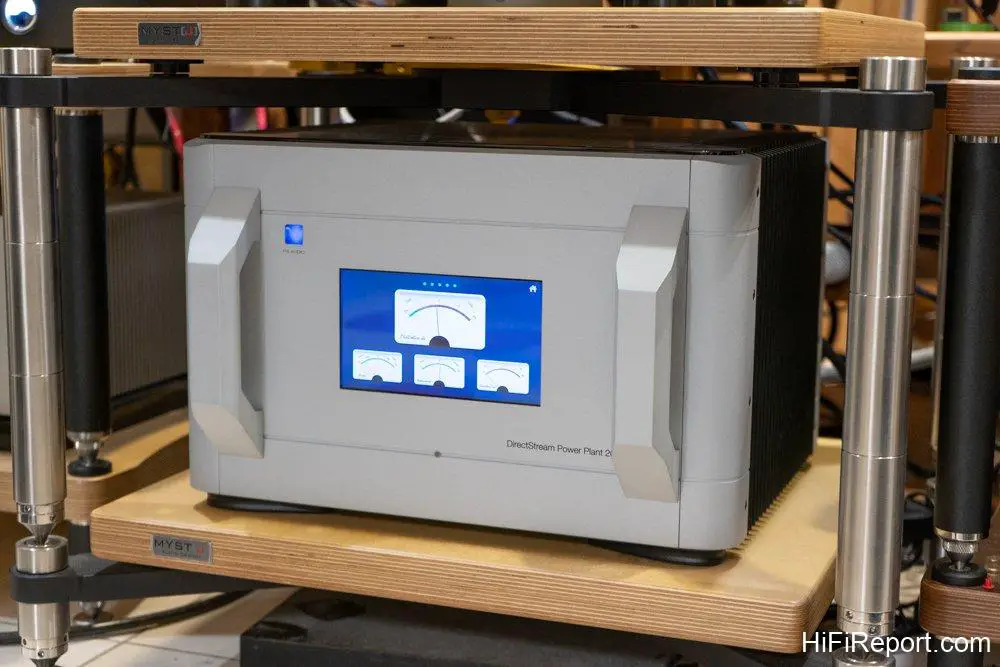
Regarding power, let’s start from the source. HiFiReport’s listening room has a dedicated power line, and all equipment is connected to a PS Audio PowerPlant 20 (P20) power regenerator. Why use a P20 even with a dedicated line? “A dedicated line is to avoid sharing circuits with other household appliances, but noise in the mains power is still present. Therefore, power processing is still needed after the dedicated line.”
However, these are common practices among audiophiles. To achieve excellent streaming sound, Mr. Ong places more emphasis on powering network devices. For example, he uses linear power supplies for wireless routers and network switches.
“Many people overlook the Chunghwa Telecom ‘Little Turtle’ (modem/ONT). Adding a linear power supply makes a big difference.” Mr. Ong shared his experience with linear power supplies with great certainty.
Secret 2: Filtering
Another key aspect is filtering. The purpose of filtering is to remove noise. Linear power supplies or power conditioners mentioned earlier are for removing impurities from the power supply. But here, the emphasis is on filtering the streaming signal.
What did he do for this? “Switches are very important.” When he said “very,” he even drew out the word, because it truly is “very important.”
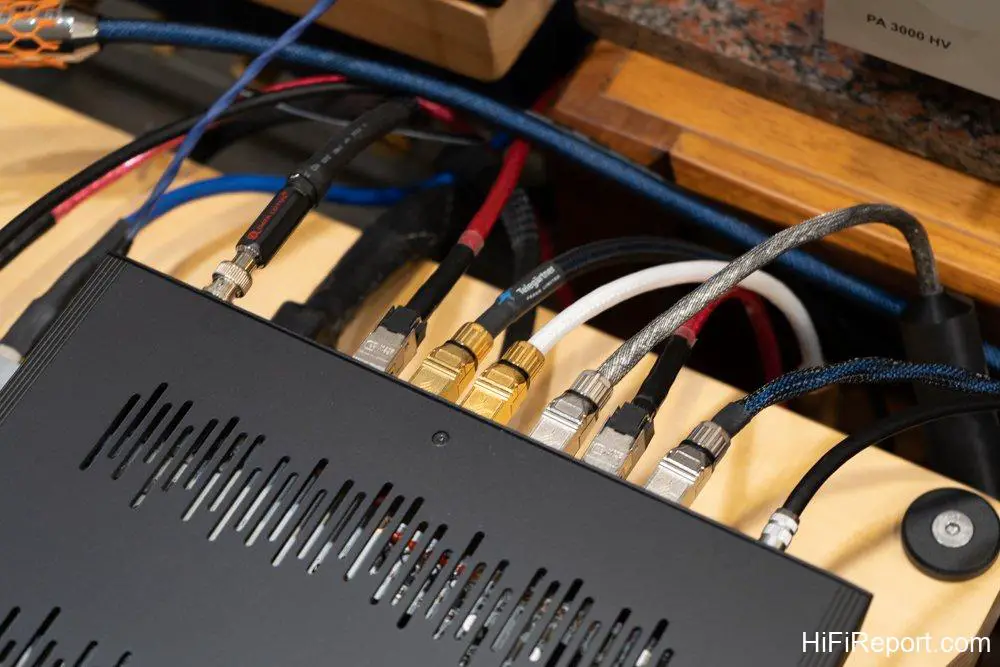
Adding a switch to the streaming path in an audio system is to isolate noise from the network signal, preventing noise from spreading from one path to another. And for the final segment connecting to the streaming player (Tambaqui was used that day), he uses Audiomica network cables, which have a DFSS filter to ensure the last mile of the streaming path is clean.
Secret 3: Cables
The third crucial element is cables. Are network cables important? Even now, many people don’t believe in cables, let alone that network cables can affect sound. For those who don’t believe, let them disbelieve. But if you believe that cables affect sound, that digital cables affect sound, then you must believe that network cables also affect the performance of streaming music.
Mr. Ong believes that any serious streaming enthusiast must face this fact: “This is a necessary investment, indispensable.” He states that many people say streaming doesn’t sound good, simply because they haven’t taken streaming equipment seriously.
These are all matters of perspective. HiFiReport’s commitment to being the Digital Streaming Demonstration Center in Central Taiwan is to let everyone experience the best possible streaming playback. Mr. Ong himself leads by example, showing that if you treat streaming with the same dedication as analog equipment, your streaming will sound excellent.
Don’t Forget to Ask Ong to Play Lin Guangcai for You
My first visit to HiFiReport and afternoon-long chat with Mr. Ong was very rewarding. Under his guidance, I gained a deeper understanding of the Mola Mola Tambaqui, filling in the blind spots and limitations of my previous audition. It turns out, the Tambaqui is even better than I thought.
Under his demonstration, a meticulously tuned digital streaming system can sound so good, so moving, so rich in nuance. In his sharing, I also learned many secrets to achieving excellent streaming sound, teaching even someone like me who has been listening to streaming for years and thought I knew a lot, so much more.
If visiting HiFiReport in person is inconvenient, but you still want to witness the Mola Mola Tambaqui’s brilliance, HiFiReport’s online presence is also available.
It’s definitely worth a trip. The sound that Mr. Ong has dialed in will move you with digital streaming.
Oh, and by the way, remember to ask him to play Lin Guangcai for you!