
Orpheus Heritage Flagship System Review
Imagine having an unlimited budget to build a Hi-Fi system that fully unlocks the power of music, delivering both sonic impact and emotional beauty. If this is your desire, a visit to HiFiReport Audio in Neihu is a must. There, you can personally experience the all-Swiss Orpheus flagship system. If Hi-End brands were to engage in a “Mount Hua Sword Tournament” (a metaphor for a contest of supreme skill), Orpheus, with over twenty years of accumulated expertise, would confidently present their flagship Heritage system. Its composure, grandeur, and effortless control would undoubtedly make it a formidable contender.
Swiss Precision: A Brand Focused on Refinement
Orpheus emerged in the late 1990s, initially under the Swiss Anagram Group. Their Classic series, characterized by smaller chassis, Swiss manufacturing, and relatively accessible prices, quickly rose in the market, establishing a strong presence.
However, Orpheus became independent from Anagram in 2001, shifting its focus to the high-end domain and solidifying its position as a quintessential Swiss luxury audio brand.
This transformation wasn’t unexpected. Given Switzerland’s high-income economy, pursuing mass-market affordability through economies of scale was hardly a viable path for Orpheus. Conversely, the image of Swiss precision and craftsmanship was deeply ingrained. Therefore, a high-price, low-volume, high-quality strategy was perhaps an inevitable choice for a Swiss brand aiming for the pinnacle of audio excellence.
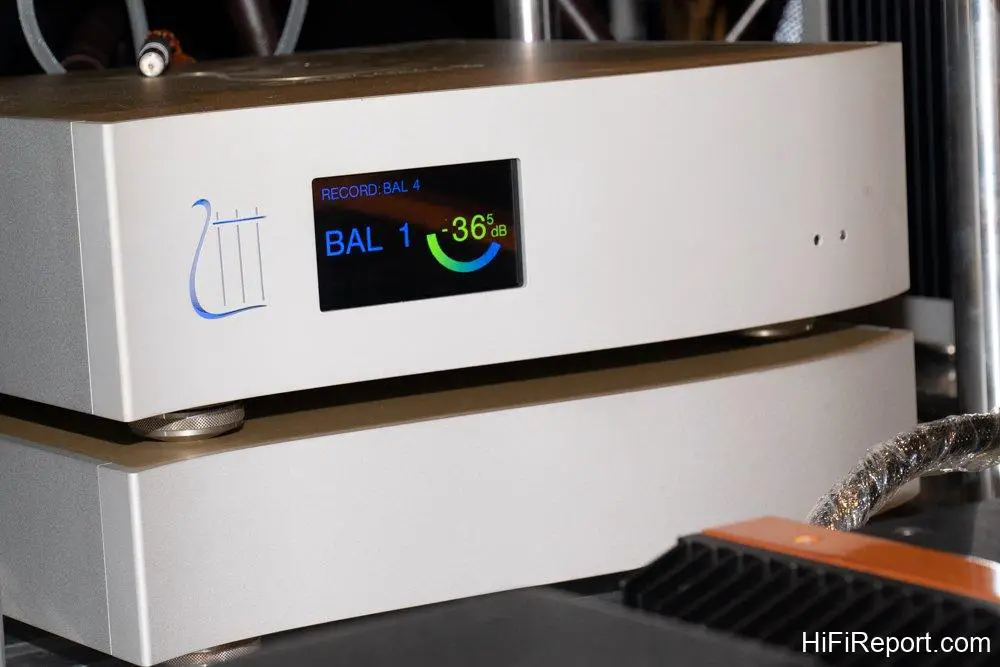
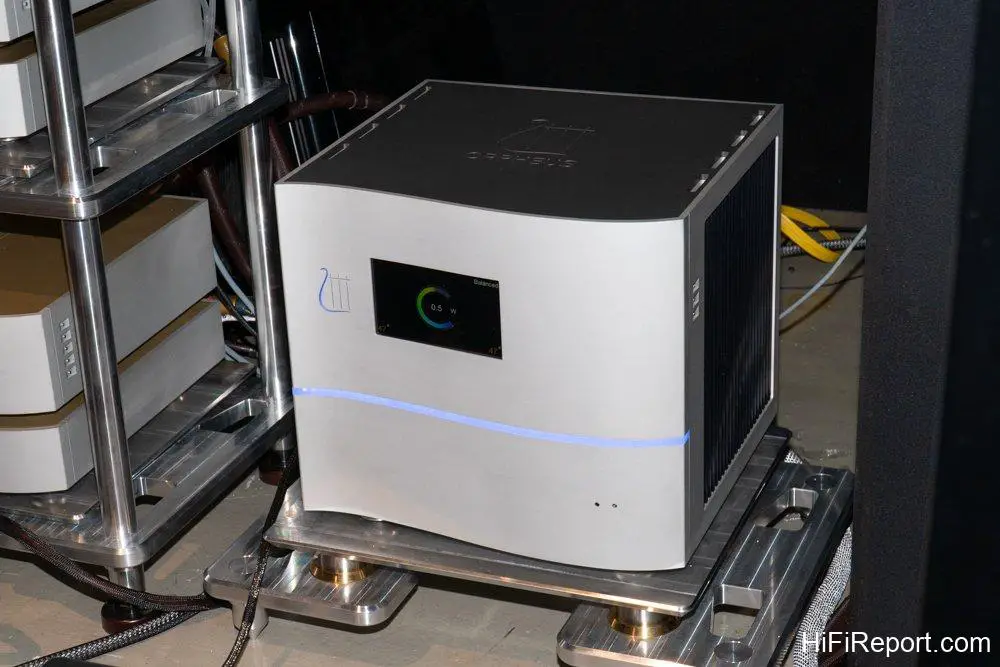
The Heritage series, from its external appearance, deliberately showcases the spirit of Swiss craftsmanship. The heavy-duty aluminum alloy chassis boasts meticulously detailed machining. The gracefully curved front panel is a testament to industrial design, not only declaring precision engineering but also creating a distinctive brand identity. Even from a distance, you recognize it as Orpheus, and not just any model, but the top-tier Heritage series.
Experiencing a Complete Heritage System: A Rare Opportunity
A complete audio system composed of the Heritage series is a rare treat outside of audio shows. So, when I learned that HiFiReport Audio in Neihu had set up a full Heritage system for demonstration, I eagerly went for a listening session.
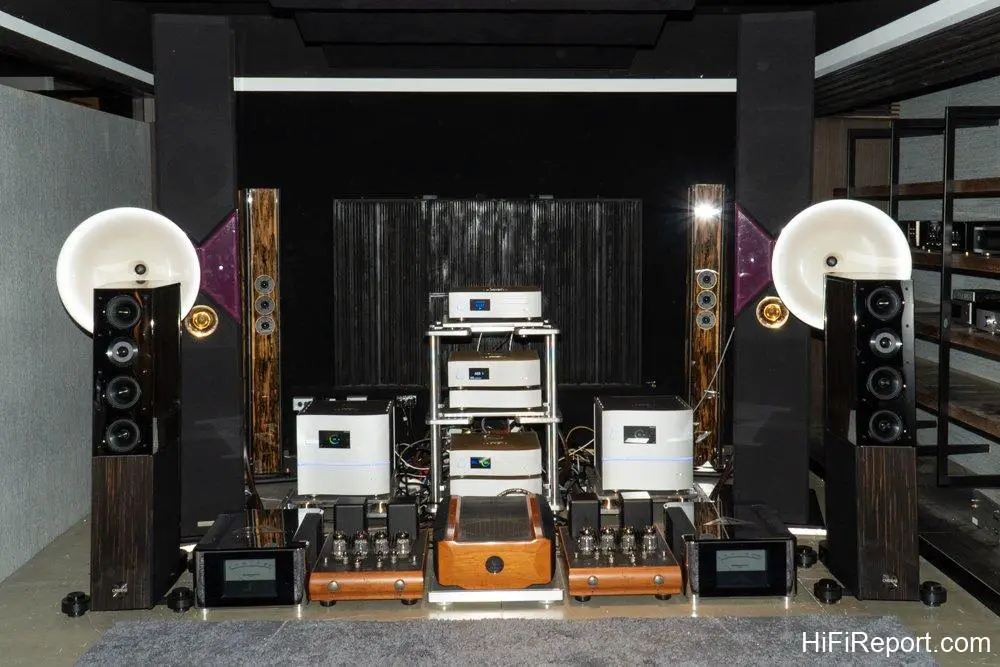
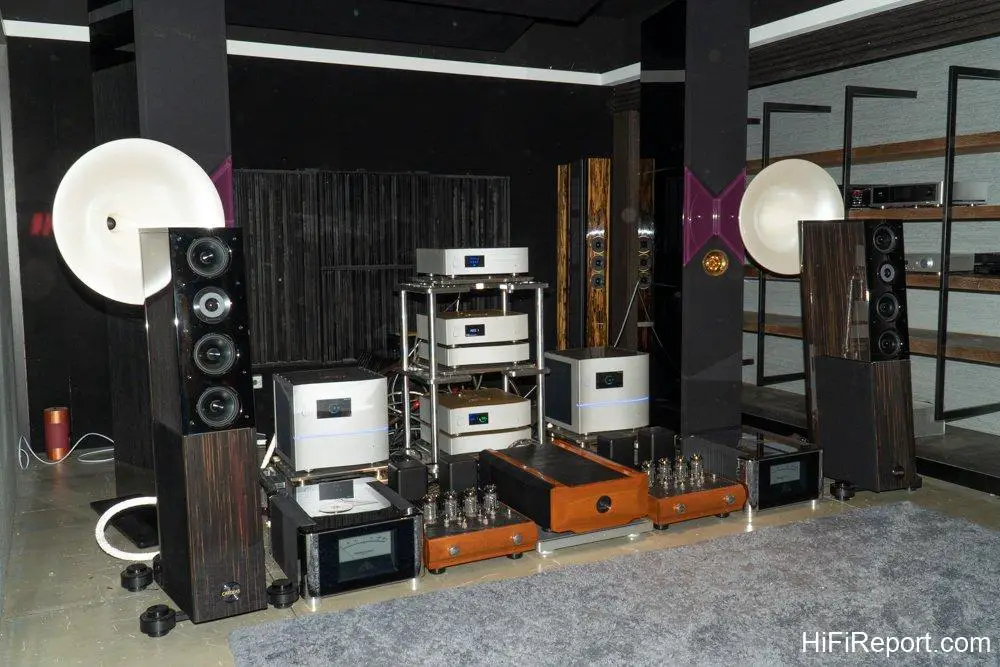
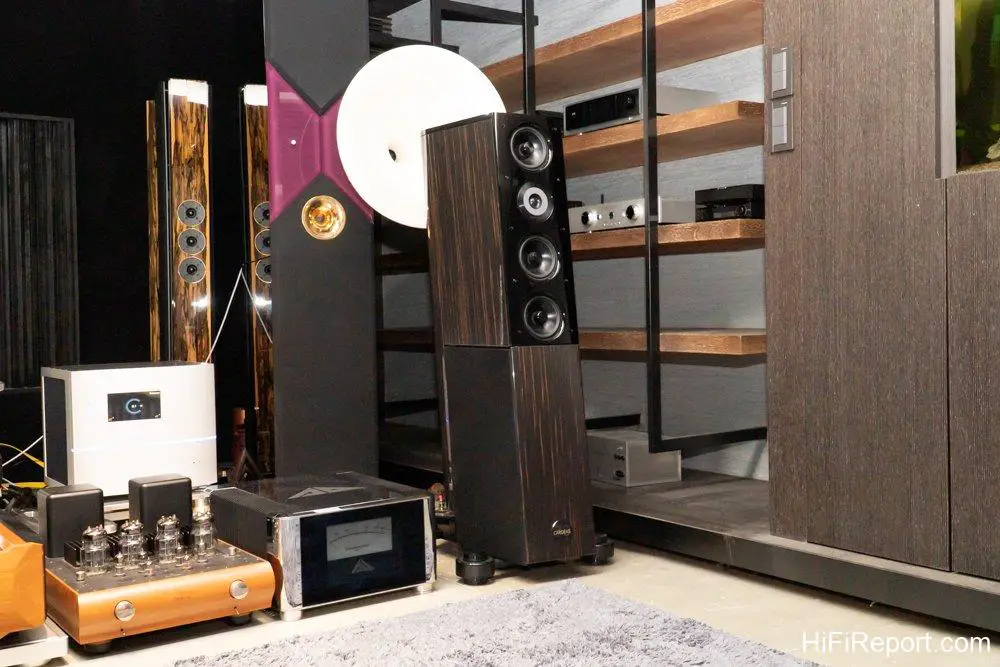
This all-Orpheus ensemble included the Heritage SACD Transport, Heritage D/A Converter, Heritage Preamplifier, and Heritage Ultimate Power Amplifier, paired with German Audio Physics Cardeas loudspeakers.
In the sweltering summer heat, I indulged in an afternoon of sonic bliss at HiFiReport Audio. The experience remains vivid in my memory. However, upon returning to my desk to write this review, I found myself pondering—or perhaps, in modern terms, “keyboard-stuck”—how to articulate the technical merits of such a comprehensive Heritage system. Simply listing all the digital and analog technological features would likely deter more than half of our readers. Therefore, I decided to simplify the complexities and focus on the core design philosophy.
Four Pillars of Excellence
The Heritage series can be broadly summarized by four key principles: First, utilizing the best available components; second, complete separation of digital and analog circuitry; third, unwavering adherence to dual-mono independent design; and fourth, independent and over-specified power supplies.
To seasoned audiophiles, these four points might seem like familiar refrains. However, executing them to the highest possible standard is where the true challenge lies.
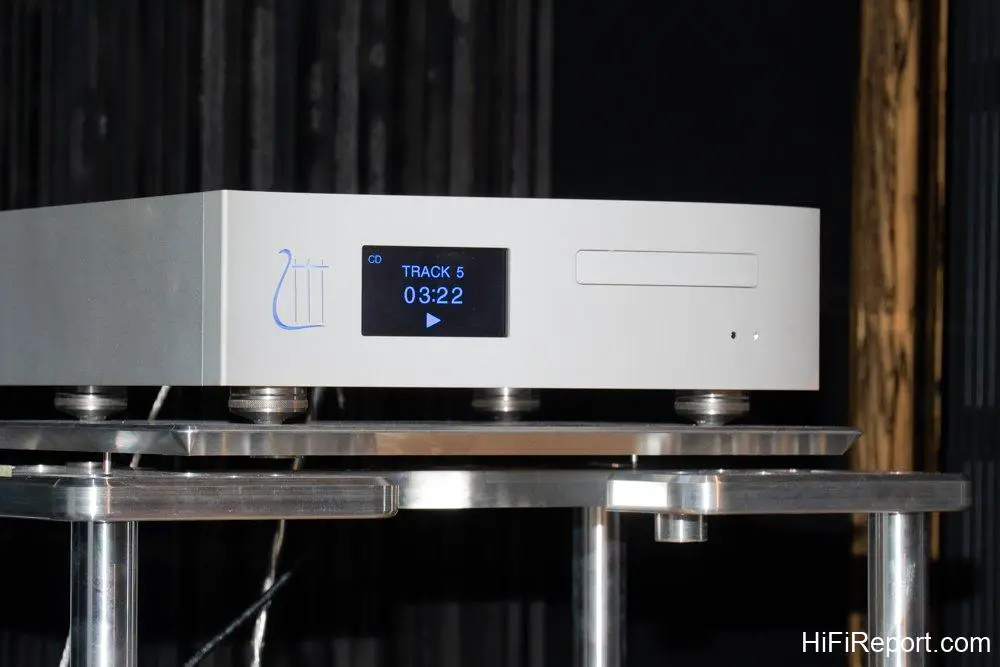
Perhaps the seemingly easiest aspect is using the best available components. For instance, the Heritage SACD Transport employs the Japanese Esoteric VMK-5 mechanism. Few in the audio world would dispute that this is among the finest SACD transports available.
Spending money on premium parts is straightforward if you are willing to invest. However, the subsequent selection and matching of these components is a time-consuming and labor-intensive process. For example, the Heritage Ultimate power amplifier naturally uses top-grade MOSFET transistors. Yet, each incoming MOSFET needs to be individually measured and matched. The effort and time involved in this process can easily exceed the cost of the components themselves.
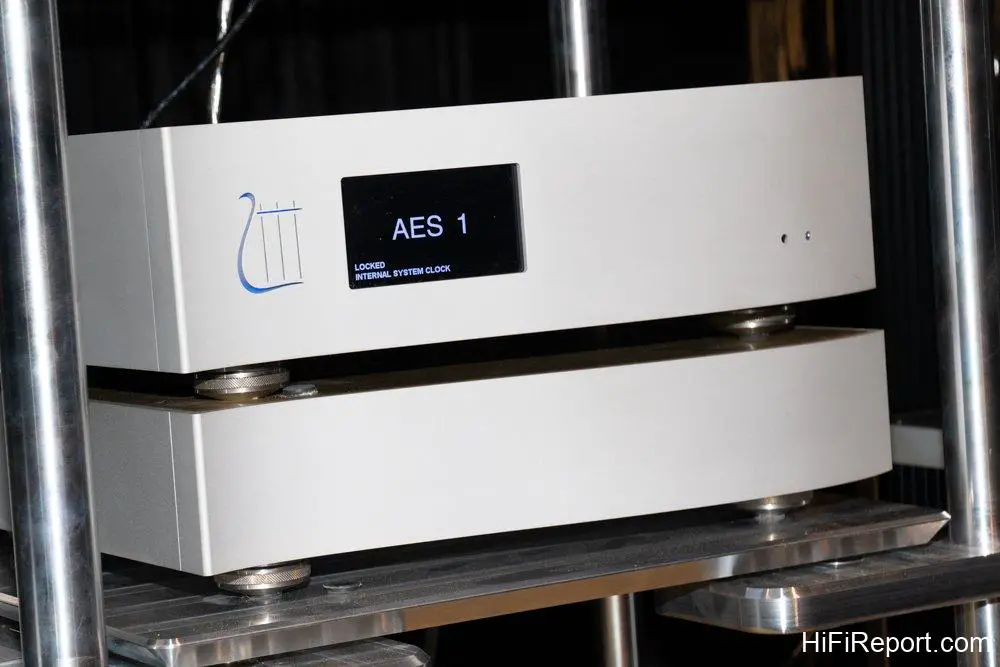
The second principle is the complete segregation of digital and analog sections. From the D/A converter to the preamplifier and power amplifier, this rule is rigorously enforced to prevent mutual interference.
How many stages does this involve? Many. But this is a golden rule for achieving superior sound quality, not unique to Orpheus, but demanding a craftsman’s unwavering dedication to implement meticulously in the design.
The third principle is the steadfast commitment to dual-mono independent design. Another audiophile axiom, Orpheus again demonstrates a craftsman’s dedication to achieving perfection in every detail.
In the realm of two-channel audio, the purpose of dual-mono design is to maximize channel separation and eliminate crosstalk between left and right channels. This is crucial for creating a stable and well-defined 3D soundstage. If inter-channel interference exists, sonic images become unstable, wavering like a candle flame in the wind.
The final principle is independent and over-specified power supplies. Again, a well-worn audiophile concept. As you can see, the Heritage SACD Transport has its dedicated power supply, as does the Heritage D/A Converter, and the Heritage Preamplifier and Heritage Ultimate Power Amplifier also feature independent power supplies. Those familiar with audio know that voltage conversion circuits are inherently noisy. Housing them in the same chassis can potentially contaminate analog signals. Therefore, internal partitions are often used to minimize noise interference. However, the most thorough approach is to physically separate the “clean box” (circuitry) from the “dirty box” (power supply). Keeping them apart eliminates the risk of signal contamination.
Regarding over-specified power supplies, consider the Heritage Preamplifier. This preamp alone utilizes a 350VA toroidal transformer. Such a large transformer would be ample for a medium-power integrated amplifier. Yet, Orpheus employs it solely for the preamplifier. The power supply capacity far exceeds the preamp’s actual requirements. This is to ensure every component operates with effortless ease, regardless of the music’s dynamic demands. The power reserves are always in excess, ready to handle any sudden musical peaks.
Pursuing the Absolute in Sonic Performance
Summarizing Orpheus’s four design principles, each is fundamentally basic. After all, audio technology has evolved for over a century, predating even semiconductor history by more than twice as long. Many technical challenges have long been identified. The real challenge lies in executing these fundamentals to the highest level, achieving true perfection in every aspect. These are the invisible details: component selection, matching, circuit assembly, and construction. Each additional detail addressed adds to the cost. Orpheus’s emphasis on meticulous detail, coupled with their commitment to Swiss manufacturing, inevitably results in a high price tag.
Therefore, the Heritage series is completely divorced from the concept of value for money. Orpheus is pursuing the “absolute value” of musical reproduction, striving for the best possible performance, and vying for the pinnacle of the high-end audio crown.
At HiFiReport Audio, my first action was to appreciate the aesthetic beauty of the complete Orpheus Heritage system. Naturally, I also prioritized capturing its visual splendor through photographs, thanks to the HiFiReport team for pre-setting up this massive system. The thought of having a full Heritage system delivered to the HiFiReport editorial office sent shivers down my spine. Just unpacking and moving it would be daunting. The monoblock power amplifiers alone weigh 85 kilograms each. It’s not just a test of back strength, but also the constant fear of accidentally damaging these exquisite components. The risk for an audio reviewer is simply too high. Experiencing it at a dealership is far preferable, saving the hassle of unpacking and setup, and allowing us to enjoy a properly configured system immediately.
However, as my colleague was photographing the system, he hesitated while looking at the partnered Audio Physics Cardeas loudspeakers. Behind the Cardeas, two pairs of speakers, Accapella and Brodmann, were positioned, both seemingly higher in price range. He inquired with Mr. Lan from HiFiReport Audio if perhaps larger speakers should be used to truly challenge the Orpheus system. Surprisingly, Mr. Lan responded that he had tried all three pairs and found the Cardeas to sound best. He cautioned not to underestimate the Cardeas simply because of its relatively smaller size, as it is considered Audio Physics’ flagship-level loudspeaker. Mr. Lan offered to switch the speaker cables if I wished to compare, but assured me that I would ultimately prefer the Cardeas.
As Mr. Lan started to move towards the speakers, intending to switch them, I stopped him and said it wasn’t necessary. I trusted Mr. Lan’s experience and judgment. Moreover, the Accapella horn speakers were a discontinued model, and auditioning the Brodmann might require speaker placement adjustments. Switching speakers and optimizing their positions within a single afternoon would be challenging. Furthermore, the Cardeas were already set up for near-field listening. Therefore, I decided to proceed with Mr. Lan’s recommended Cardeas pairing for the Heritage system evaluation.
Expansive and Relaxed Orchestral Grandeur
Given it was a flagship system, I started with large-scale orchestral music. I selected Mutter’s “Across the Stars” collaboration with John Williams, listening to “Rey’s Theme” from “Star Wars: The Force Awakens.” The music emerged with a violin solo, and the 3D soundstage naturally formed in the space behind and between the speakers, demonstrating the system’s proper setup.
The Cardeas loudspeakers were positioned in a roughly equilateral triangle with the listening position, a standard near-field setup. The speakers audibly disappeared into the space, leaving behind a spacious and expansive soundstage, focused centrally and extending naturally to the left and right.
In “Rey’s Theme,” the opening violin solo, with layers upon layers of notes, and the delicate shimmer of the triangle, resonated beautifully. The Heritage system effortlessly conveyed the mid-high frequency texture of the instruments. When the orchestra entered, the distribution of each section was relaxed and natural. Notably, the pizzicato of the double basses emerged from the rear center of the soundstage, providing a solid foundation, allowing the violin’s melody to soar confidently. The brass section warmly echoed from the rear of the soundstage. The violin resolutely reiterated and developed the theme. A transition, a key change upwards, intensified the music’s tension. Then, the violin gracefully concluded, with fragmented, softly played notes abruptly ceasing amidst the orchestra’s powerful chords.
Enhanced Room Acoustics Elevate System Performance
Encountering the top-tier Heritage system paired with Cardeas loudspeakers, and playing Mutter in a direct confrontation, it was truly difficult to find any flaws. I forgot to press the CD stop button, and “Yoda’s Theme” followed. I lowered the volume slightly and glanced around HiFiReport’s listening room. The ceiling corners seemed to have additional acoustic treatment. Looking around, the room felt different from previous visits. I asked Mr. Lan if any changes had been made to the room acoustics, as I sensed an improved level of quietness.
Mr. Lan explained that the room décor remained unchanged, but they had progressively identified and addressed minor acoustic imperfections, adding some absorption and diffusion adjustments.
Before starting the music, I hadn’t consciously noticed the improved room quietness, being preoccupied with casual conversation. It was only when I settled down to listen that I truly appreciated the enhanced listening environment. The quieter room allowed the Heritage system’s refined sonic character to flourish even more effectively. I would venture to say that this listening session of the Heritage system with Cardeas at HiFiReport was possibly the best I’ve experienced here. Even the other flagship system led by Kharma loudspeakers sounded better than before. It’s evident that HiFiReport’s expertise in optimizing high-end audio systems is continually improving.
Layered Depth of Multi-Track Recordings Beautifully Rendered
Next, I switched to Stockfisch Records’ “The Stockfisch DMM-CD/SACD Vol.1,” listening to the first track, “No Sanctuary Here.” This is a studio recording with multi-track layering, incorporating rich effects to create a full and lush sonic texture. The opening electric bass and acoustic guitar outlined a powerful low-frequency framework. The vocal harmonies were intentionally reversed in phase, creating a wide, diffuse soundstage without a fixed location. When Chris Jones began singing, his voice centered perfectly. During the chorus, the harmonies again became out-of-phase, spreading widely, making Chris Jones’ vocals stand out, focused in the center of the soundstage. Throughout the music, there were numerous layers of acoustic guitar sounds, each layer meticulously added in the studio mixing process. The Heritage and Cardeas system presented all these elements completely, with a well-organized and layered presentation within the expansive soundstage, revealing the rich depth of the recording.
I couldn’t resist switching to the sixth track, Sara K.’s live recording. The acoustic guitar intro featured steel strings interwoven with subtle metallic friction sounds, characteristic of a metal slide guitar. Another acoustic guitar, warmer in tone, likely with nylon strings, joined in. The two guitars played from left and right, welcoming Sara K.’s captivating, husky vocals.
HiFiReport’s equilateral triangle, near-field setup, with the speakers positioned away from the back wall, created a soundstage with excellent depth. The two guitars played beautifully on the left and right of the soundstage. The slide guitar solo in the middle section contrasted with the warm acoustic guitar chords. The more I listened, the more I admired Stockfisch’s recording quality. How could a live concert recording be so clean, with such beautiful contrast in the vocal and guitar timbres? As for the audio system, the top-tier Heritage and Cardeas pairing left no room for doubt. The better the recording, the better the system performs.
“Dark Side of the Moon”: Rich Analog Flavor
Stockfisch recordings are modern, and digital recording technology’s ability to achieve a clean musical background is unquestionable. But what about older analog recordings? I switched to Pink Floyd’s classic album “Dark Side of the Moon,” listening to “Money.” The rhythm created by the old-fashioned cash register, transitioning into David Gilmour’s slightly Fuzz-laden electric guitar, sounded different through the Heritage system. It possessed a distinctly analog quality, even revealing subtle analog tape hiss.
Although I was listening to the CD version, which would have reduced the analog tape hiss, the Heritage system still captured the essence of the analog recording, with the hiss subtly present beneath the music, evoking the atmosphere of 1970s recordings.
Wait, although “Dark Side of the Moon” was recorded earlier, it was also a multi-track recording. Listening carefully to David Gilmour’s guitar, there were at least three overlaid tracks, panning left and right, echoing with the electric piano. Another electric guitar with a tremolo effect joined in. The lead vocals were centered, and the saxophone solo was also centered. However, the electric guitars alternated between left and right channels, and the electric piano was positioned on the right. When the electric guitar soloed, the effects created a spaciousness, but it was still composed of at least three guitar tracks layered together. Such rich and varied recording effects, using modern digital systems, wouldn’t be particularly difficult to achieve. But back then, it was purely analog technology. Creating such complex effects on a mixing console was practically a feat of acrobatics.
It’s curious, listening to the Heritage paired with Cardeas, I seem to be focusing more on the recording stories. But isn’t that the mark of a truly exceptional audio system? The highest level of mastery, like the “swordless stance” in martial arts, where the equipment becomes transparent, allowing the listener to forget its presence. The Heritage’s four design principles aim to present a transparent, open, and unadulterated representation of the original recording. Listening to an older recording like “Money,” it felt like stepping into a time machine. I wasn’t just hearing a recording scene, but imagining David Gilmour recording each electric guitar riff in segments, and then battling with the recording engineers at the mixing console, layering the electric guitars with their varied panning, then blending them with the electric bass, drums, and electric piano to create that rock and psychedelic atmosphere.
After “Money,” I paused for an iced coffee break, recovering from the psychedelic haze of old rock.
“Money” isn’t exactly test material. For system testing, one might use the opening heartbeat of “Speak to Me.” Back in the day, people compared who could hear the heartbeat earliest, indicating a system’s high sensitivity to low volumes and superior dynamic range. But listening to “Money” revealed the incredible skill of analog-era mixing techniques. The Heritage and Cardeas system captivated me, allowing me to envision the chaotic yet creative scene in the recording studio during mixing.
“Live in Italy”: Vivid Live Concert Atmosphere
The iced coffee cooled down the rock fervor, preparing me to return to classical music.
I switched to Bartoli’s “Live in Italy,” a disc I often use to assess an audio system’s ability to recreate a concert hall atmosphere. Listening to Handel’s “Lascia la spina,” recorded live at the Teatro Olimpico in Vicenza, Italy, the Heritage and Cardeas established a wide and deep soundstage. The musical background was inky black, highlighting Bartoli’s focused and well-defined image. The string section surrounded Bartoli, violins on the left, cellos on the right, and harpsichord slightly to the right. Achieving clear and precise soundstage localization, with proper equipment phase and speaker placement, isn’t particularly difficult. This confirmed HiFiReport Audio’s meticulous setup.
So, where did the Heritage and Cardeas truly excel? In the delicate and smooth texture of vocals and instruments, coupled with incredibly rich performance details. The gentle reverberation of the string section filled the space. The harpsichord played ethereal arpeggios. Centered was Bartoli’s full-bodied, rounded voice. Breathing and subtle vocal nuances created a sense of being present at the recording. The variations in Bartoli’s vocal timbre conveyed subtle shifts in vocal distance and depth. Entering the chorus, the vocal intensity increased, and the vibrato details in the sustained notes made the singing even more emotionally engaging. As Bartoli energetically escalated the musical mood, the instruments subtly accompanied, allowing Bartoli to express herself freely. I must say, listening to chamber music with the Heritage and Cardeas, the intimate near-field listening experience was truly wonderful.
Unveiling Authentic Mahler
However, such a grand system is certainly not challenged by chamber music. The power output displayed on the Heritage Ultimate’s elegant front panel for the previous tracks barely exceeded ten watts. This was merely a light exercise for the kilowatt-rated Heritage Ultimate.
It was time for Mahler. I switched to Bernstein conducting the Vienna Philharmonic in Mahler’s Symphony No. 5, directly to the fifth movement.
The warm brass opening emerged from the depth of the soundstage, echoing with the woodwinds. The Heritage and Cardeas’s accurate soundstage was, of course, a result of proper setup. But the contrast between richness and brightness showcased the true capability of the Heritage and Cardeas system. The orchestral texture was appropriately nuanced. The brass theme was warm and full-bodied. When the strings joined, the orchestra’s grandeur intensified, filling the expansive soundstage. The well-defined layers of instruments gave the central fugue a lively and dynamic character.
The fifteen-minute fifth movement unfolded from a pastoral style interwoven with brass and woodwinds. The dynamic range of the music was vast, with significant contrasts between loud and soft passages. Even the loudest passages were effortless for the Heritage Ultimate power amplifier. This is the advantage of a large system. With 1,000 watts of output power, even during loud passages, the output only reached 30-40 watts, truly effortless power delivery. At 11 minutes 10 seconds, the music surged into a climax, with the brass section roaring wildly, and the timpani pounding powerfully at the bottom end. Reaching its peak, the music suddenly subsided into a quiet section, gradually building up, leading to the glorious and radiant chorale at 13 minutes 20 seconds. Unleashing the full power of the Heritage Ultimate, driving the Cardeas across its full frequency range, I closed my eyes, welcoming the orchestral immersion. The radiant, shimmering notes evoked deep musical emotion. This was authentic Mahler, whispering like silk in quiet moments, and roaring with immense power in loud passages. This is the true test of a top-tier audio system.
Fully Unleashing Music’s Power and Beauty
After listening to the fifth movement of Mahler’s Symphony No. 5, the majestic coda still resonated in my mind. Orpheus’s top-tier Heritage series is truly an exceptional choice for fully unleashing both the power and beauty of music. Listening to modern multi-track recordings, you can hear the rich layers meticulously crafted in the studio. With chamber music, you experience the delicate and silky textures of instruments. With symphonic music, you can effortlessly enjoy the immense orchestral grandeur. When an audio system can handle everything with ease and grace, what more could one ask for?