
Stein Music Quantum Organizer Review
What is the purpose of this piece of wood? Looking at the Stein Quantum Organizer, doubt inevitably arises.
Have you heard of Stein Music? Madison Audio has been the distributor of Stein Music for many years, and they are regulars at audio exhibitions.
Mr. Chen, the head of Madison Audio, once revealed that it was encountering Stein Music that led him to become an audio distributor.
This German brand’s product line includes amplifiers, speakers, and cables, but a significant portion is dedicated to their tuning accessories.
However, their tuning objective is not to extend the highs or deepen the lows, nor to make the sound more “audiophile-grade”. Instead, their aim is to enhance the emotional connection with the music.
Sound is not the end goal; music is.
Therefore, simply naming the brand after the owner, Stein, wasn’t enough; “Music” had to be added.
Music—that’s the core principle.
I’ve tried many of their products, and the Harmonizer resonance device impressed me the most.
As I mentioned earlier, the change it brings is that it makes music more emotionally resonant.
This might sound vague, but it’s genuinely difficult to articulate.
If you’re an audiophile, you might try to explain it technically.
But if you’re like me and value the musical experience, invest your energy in enjoying it. You’ll then understand what I mean: it allows music to evoke deeper emotions.
Special Mineral Composition
This time, I’m reviewing the Quantum Organizer, which embodies the same philosophy.
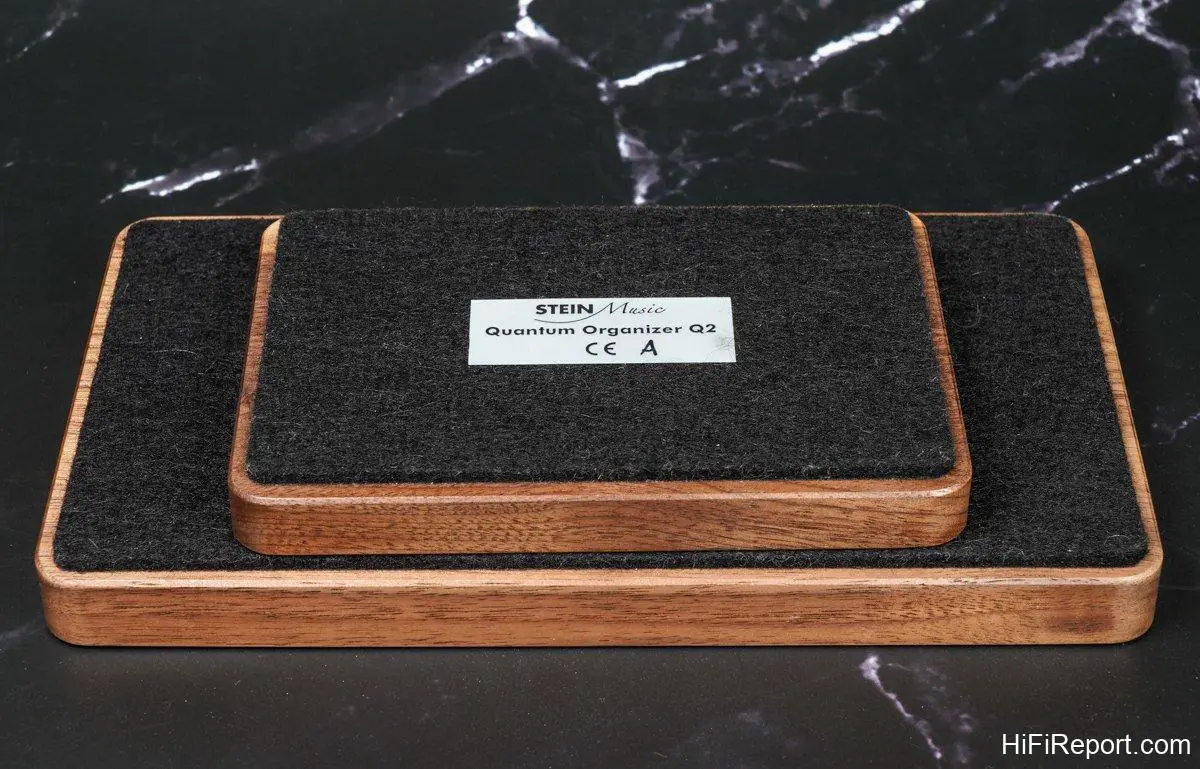
Externally, it appears to be just a wooden board with a felt layer on the bottom to prevent scratches.
That’s it. What’s it supposed to do? It’s not large enough to be a platform, and not heavy enough to be a weight. The felt and wood alone wouldn’t offer much vibration damping.
No matter how you look at it, its purpose is elusive.
This is where the intrigue lies.
This Stein magnetic field organizer, while appearing to be a solid piece of wood, contains minerals inside.

The manufacturer doesn’t disclose the exact formula but describes it as “composed of gemstone and semi-precious crystal particles in specific proportions,” and also as “a combination of crystals, field- and quantum-physical principles.”
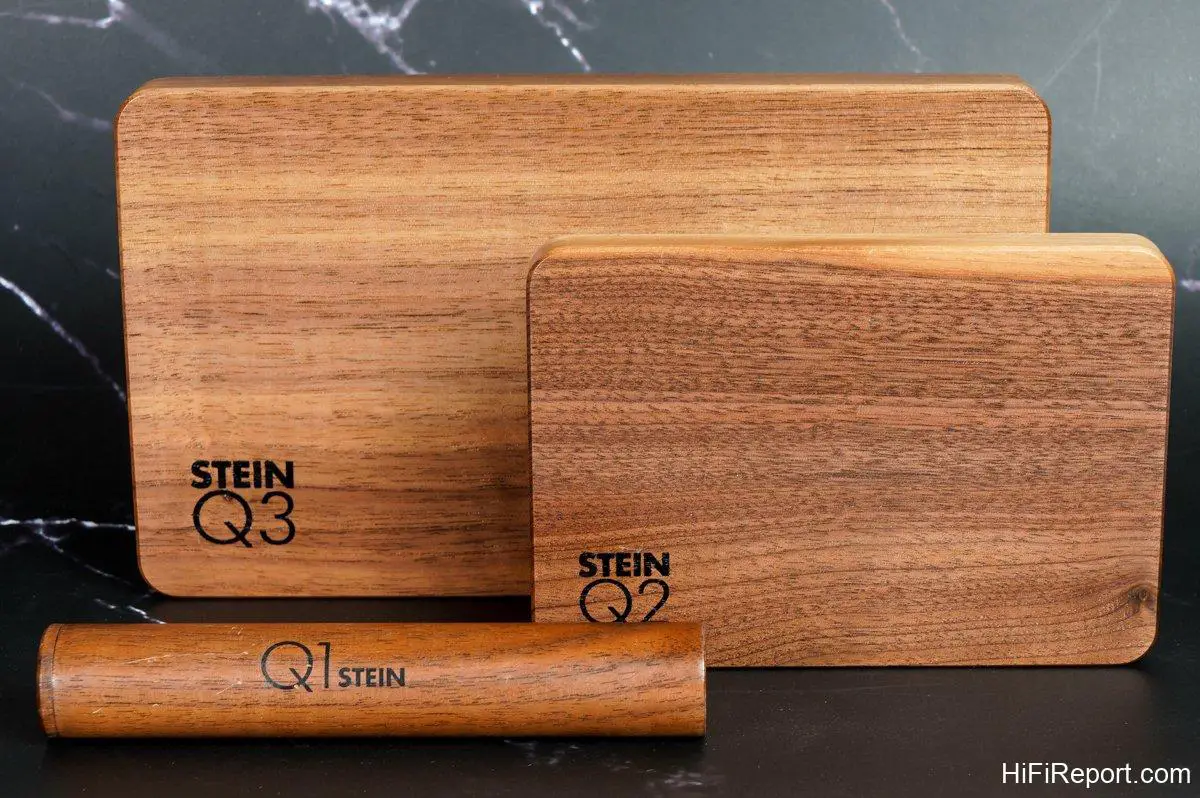
German Stein Music offers the Quantum Organizer in three models: Q1, Q2, and Q3.
Quantum Reorganization Explained
So, what do these mineral components do? The manufacturer’s description is vague, stating that it “activates nearby equipment, enabling it to produce an organic and realistic sound.”
Further explanation clarifies the cause-and-effect relationship between the premise and conclusion.
It indicates that these crystal particles absorb electromagnetic waves or other energy from the surroundings, activating the mineral substances within the organizer. This, in turn, generates an integrated magnetic field, altering the polarity of electrons and protons in the original magnetic field, making the movement of electrons and protons more coherent.
This magnetic field adjustment enhances the mobility and transmission efficiency of electrons between atoms and reduces air molecular resistance.

In simple terms, the Stein Organizer, through the internal minerals and energy wave oscillations, modifies the wave state.
And “waves” are quantum.
The original name, Quantum Organizer, implies “quantum reorganizer” or “energy wave processor.”
Therefore, what appears to be an inconspicuous piece of wood actually possesses a greater effect than meets the eye.
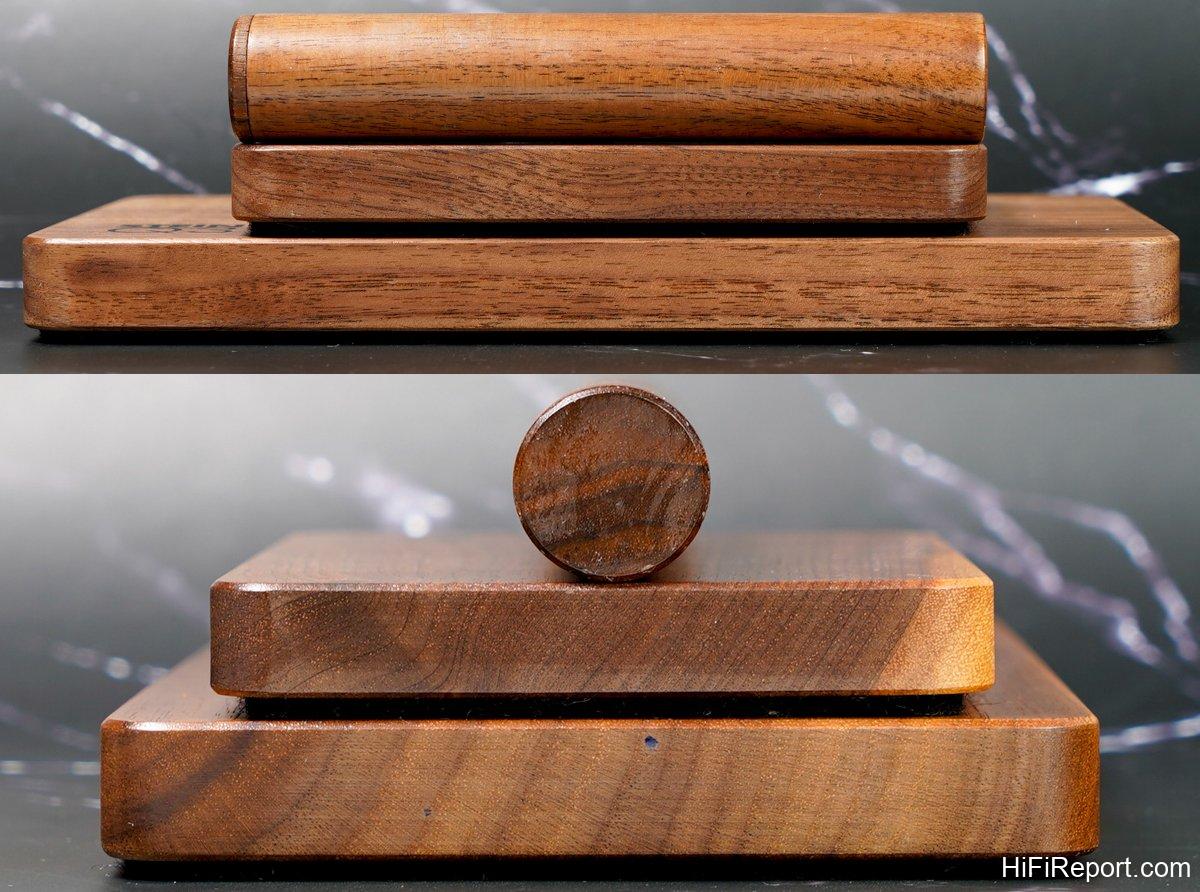
Q1 is cylindrical, while Q2 and Q3 are flat panels. Q2 is smaller and thinner, and Q3 is larger and thicker.
Simple Usage: Q1 on Cables, Q2/Q3 Above or Below Components
How do you use them? The official website provides clear diagrams.

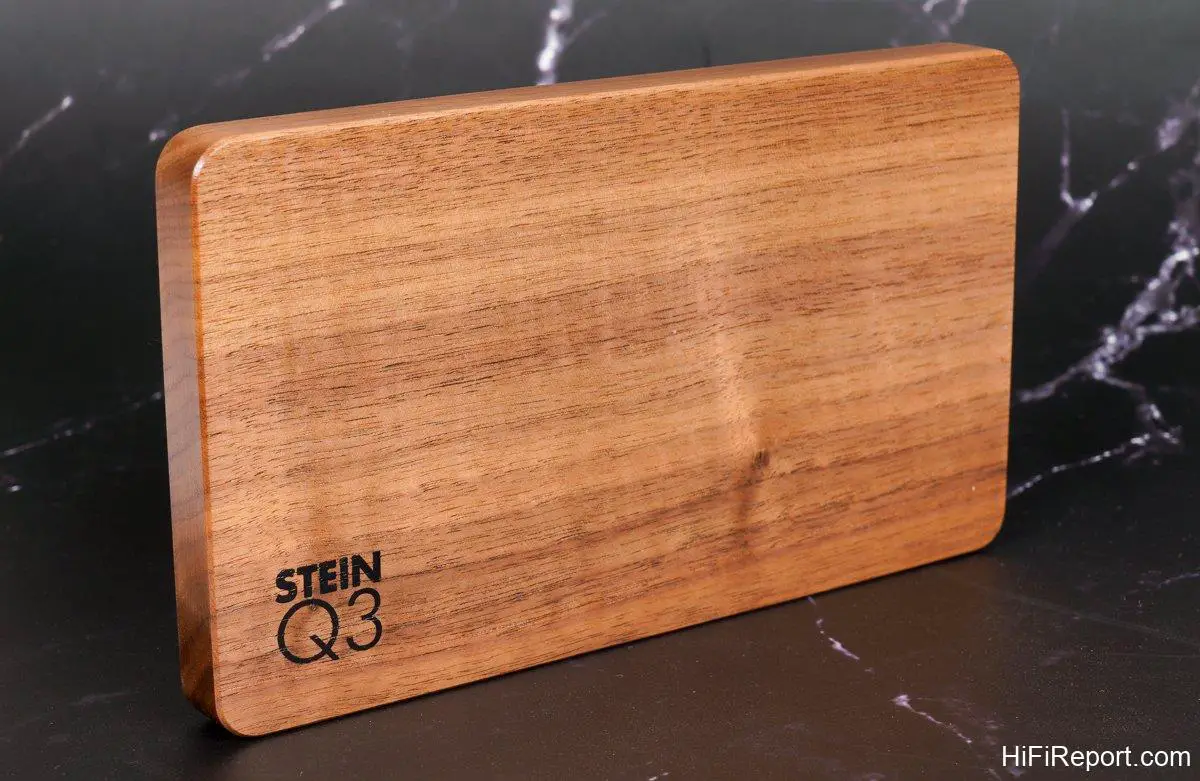
There are three Quantum Organizer models. Q2 and Q3 are both flat panels. Q2 is roughly the size of your phone, perhaps a bit shorter. Q3 is larger, similar to a small tablet like an iPad Mini.
Place them under or on top of your components. If placing them underneath, and the feet are not tall enough, you can use risers to elevate the equipment, as is often done in demonstrations.
They also have the Q1, which is rod-shaped, resembling a cigar. The manufacturer includes Velcro straps for attaching Q1 to cables.
Q1 is attached to cables using the included Velcro straps.
The flat Q2 and Q3 can be placed either below or above components.
Audible Effects
A few months ago, I visited Madison Audio’s listening room. During that visit, I listened to Stein’s HighLine Bobby L Signature speakers. All the components in the system were placed on Q2 or Q3 Organizers.

I experimented a bit then, removing the organizers. The music immediately sounded less vibrant, more flat, lacking life, and the outlines weren’t as sharp and clear.
Although the main focus of that listening session was the speakers, I played around with the Stein accessories and remembered: Quantum Organizer, effective.
Enhanced Imaging, Detail Retrieval, and Natural Extension
This time, I had the opportunity to thoroughly explore them.
Q1 to Q3 were all available.
I tested them one by one, starting with the smallest.
I only had one Q1, so I could only attach it to a power cord.

I attached it to the Swiss Cable Reference power cord for my amplifier. After adding Q1, the sound immediately became more lively, the sonic images became clearer, as if the sound sources were more three-dimensional. The high frequencies extended upwards more effortlessly, and the low frequencies became weightier and deeper, yet cleaner.
Such a significant effect from a small rod? I then tried Q2 and Q3 in succession, and the effects were consistent.
I was surprised that Q1’s impact was comparable to the larger Q2. Relatively speaking, if you don’t mind Q1 being suitable for cable application, I think Q1 offers the best value.
As for the most significant sonic change, it came from Q3. Perhaps due to its larger size and greater mineral content, the magnetic field effect was most pronounced. The sound became more solid, and details emerged more clearly.
Multiple Units Can Be Used Simultaneously
Is there a difference between placing them above or below the components? I’m not sure about others’ experiences, but I personally couldn’t discern any difference in my listening.
What’s certain is that placing them either above or below has an effect.
So, where should you place them? Everywhere, it seems.
During my last visit to Madison Audio’s listening room, every component was placed on Q2 or Q3. Removing any one of them noticeably diminished the sound quality.
If you find the Stein Organizers effective and budget is not a concern, using multiple units will certainly enhance the effect even further.
At least, in my experience, Q1 on the amplifier’s power cord, Q2 on the Audiobyte Black Dragon DAC, and Q3 under the Lavardin IS Reference integrated amplifier or on the NuPrime AC-4 power conditioner—each addition improved the sound quality by another level. Removing any of them also revealed audible changes.
Music Becomes More Lively, Expressive, and Layered
If you’re testing with jazz music, I recommend choosing a trio with drums, bass, and piano. Vocals, if present, also make it easier to discern the changes.
You’ll hear the drums become more solid and impactful, the cymbal crashes crisper, and the shimmering decay of the cymbals more vivid.
You’ll also perceive the bass notes with more defined texture, the plucked strings sounding tighter and more solid. Previously diffuse sounds now become focused. The same applies to the piano.
As for vocals, you’ll better perceive the singer’s form and outline, and the subtle nuances of their voice will become more apparent.
The transformation is akin to upgrading from 2K to 4K video.
When your audio system’s sound undergoes these improvements, the music becomes more alive and musically expressive.
You’ll sense the subtle variations within the music and the expanded layers of complexity, making it easier to be moved by the music.
During my time with the Stein Quantum Organizers, I found myself listening to Debussy’s piano pieces more often than usual because when the audio system can reproduce richer tonal layers, Debussy’s piano music becomes even more beautiful.
The Principle Lies Not in Physics, But in Music
You don’t need to understand quantum physics, but you should trust your ears.
You don’t have to concern yourself with the manufacturer’s explanations, but you do need to honestly confront what you hear.
I haven’t added any annotations to the principles behind the Stein Quantum Organizer, merely reiterated the explanations from the manufacturer and . This is precisely because I’m unwilling to endorse physics I don’t fully comprehend. However, everything discussed subsequently is based on my own experience.
I want to say: When we savor a glass of wine, we appreciate its aroma, taste its flavor, and perceive its layers. That’s where the pleasure lies. Which wine connoisseur, when teaching wine tasting, presents a chart of phenolic proportions for analysis? I recognize the effect it brings and deeply appreciate the musical beauty it unlocks. Who can say I’m not seeking understanding? I’ve decided to keep Q1, Q2, and Q3 in my system until they are recalled.
Listening to music—Gaspard de la Nuit, here I come.
Both Q2 and Q3 have felt pads on the bottom, so you don’t have to worry about scratching the top of your components even when placed directly on them.