
QRT QBase MKIII Power Distributor Review
For most audiophiles, power products are an essential part of system building. Implementing major power upgrades like dedicated circuits or earth grounding is often impractical in a typical home setting. Furthermore, as enthusiasts expand their systems, they accumulate more gear, and few can connect everything directly to wall outlets.
Therefore, using a power distributor (power strip) to split the mains supply becomes the most time-efficient and convenient method to ensure all components receive a stable power feed nearby.
That being said, many audiophiles still view power strips as a “necessary evil.” This is because most products on the market incorporate filtering functions, where the current passes through low-pass filter circuits within the strip. While this can reduce high-frequency noise and purify the power quality, it often compresses musical dynamics and bandwidth, making the sound feel constrained and unable to fully blossom.
In reality, even a power strip without filtering will inevitably alter the sound simply by being in the power path. Whether that change is for the better depends entirely on the manufacturer’s expertise.
Nordost QRT and the QBase Line
Beyond their proprietary cable technologies, the American company Nordost has dedicated years to developing power products under their QRT product line. Q.R.T. (Quantum Resonant Technology) originally specialized in “quantum” technology. Nordost brought this company (Quantum) under its wing and developed various power-related products, such as the QSource linear power supply, QBase power distributors, and QPoint resonance synchronizers.
Among these, the QBase power strip has gained renown for its exquisite craftsmanship and neutral sound quality, earning favor among audiophiles.
Introducing the QBase MKIII
This year, QRT has made further breakthroughs, upgrading the internal structure of the previous QBase MkII, officially launching the third-generation product.
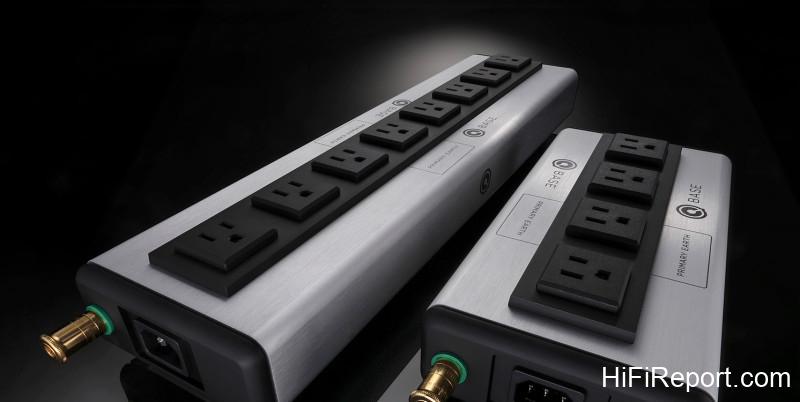
Similar to its predecessor, the QBase MKIII US-spec power distributor comes in two versions: one with 8 outlets and another with 4 outlets. The version provided by the distributor for this review was the 8-outlet QB8, suitable for larger audio systems. Any unused outlets can also be utilized for Nordost’s various power accessories, such as the Qk1 AC Line Enhancer and Qv2 AC Line Harmonizer.
Star-Earth Topology and Noise Reduction
Unlike most power strips on the market that employ active or passive filtering, the QBase MKIII features no filtering design. Instead, it utilizes a “Star-earth topology” to channel away noise. The QBase MKIII directs the ground wires from each outlet to a central reference point, specifically the outlet marked “Primary Earth” on the strip, before connecting to the main power input. All outlets except the Primary Earth have slightly increased impedance.

This draws the ground signal towards the Primary Earth terminal. Nordost suggests connecting high-power equipment like amplifiers to the Primary Earth outlet, while digital sources are better suited for the outer outlets. This design allows the QBASE Mark III to reduce noise without using any series or active filtering, ensuring that AC current is distributed without compressing dynamics or limiting current flow.
Ultimately, this provides each outlet with the most direct, clean, and completely uncompressed power supply quality.
Physical Design and Key Features
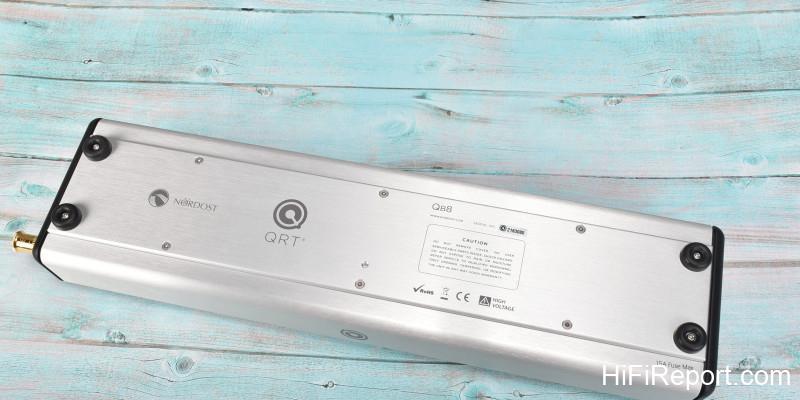
In addition to preventing current noise interference, the QBase MKIII’s chassis is extruded from non-magnetic aluminum. The metal exterior features a brushed finish, appearing brighter than the previous generation, and the ends of the strip have been restyled in black. This not only provides a sophisticated visual texture but also offers excellent shielding, effectively blocking intrusive EMI and RFI electromagnetic noise from the environment for purer current.
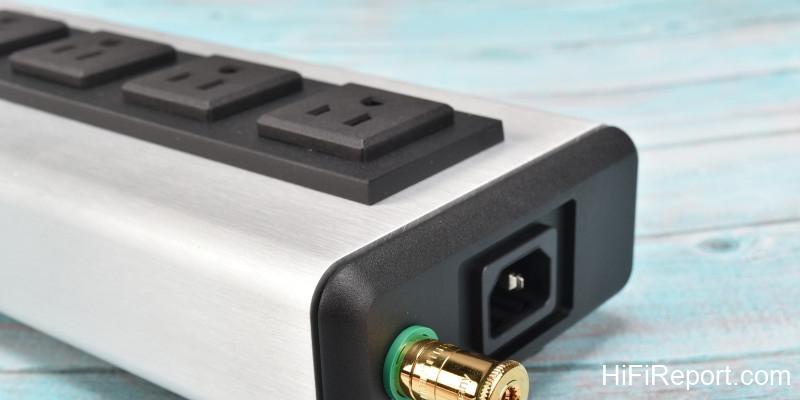
Holding the QBase MKIII, it feels substantial and heavy. The base is fitted with rubber feet, ensuring stable placement. Users can also purchase Nordost’s dedicated conical feet for even better vibration isolation. Furthermore, unlike most commercially available power strips that use off-the-shelf wall outlets, each outlet on the QBase MKIII is a custom-designed, gold-plated socket. The exterior plastic material is also more robust and durable.

Finally, the QBase MKIII chassis includes a gold-plated grounding terminal. Users can further reduce noise by connecting it to Nordost’s QKore grounding box product. The power strip also incorporates a fuse to protect your audio system from power surges caused by lightning strikes.
Internal Upgrades and Their Impact
Compared to the QBase MKII, this generation features significant internal circuit upgrades. Firstly, it uses a double-layer PCB, completely separating the live, neutral, and ground circuits to reduce crosstalk and eddy currents between them. The structure and routing layout of each PCB have also been optimized, significantly shortening the current path. Internal wiring uses Nordost’s solid-core wire, with a thicker gauge than before.
This lowers cable impedance, allowing the QBase MKIII strip to handle higher currents, providing better musical dynamics to audio equipment.
Audition: Music Performance
For testing, I started with a Primare I35 integrated amplifier paired with Focal Vestia N2 floorstanding speakers as the reference system. When I connected the amplifier to the QBase MKIII, I found that this power strip had very little impact on the fundamental sonic character of the original system. Instead, it enhanced the transparency of the sound quality, making the audio presentation more prominent.
For example, playing “North Country Ride” from The Milk Carton Kids’ folk duo album “I Only See the Moon,” the opening acoustic guitar sounded more transparent. It felt as if the player was plucking the strings with more force, producing large, full-bodied notes. The outline of the vocals appeared naturally three-dimensional, without any bloating or distortion.
The singers sounded more powerful with a rich, full throatiness, especially in the instant before they began to vocalize – you could feel the effort involved with vivid clarity. Harmonized passages were no longer blurred; I could clearly discern the subtle differences in their voices, giving the simple vocal harmony a strong sense of dimensionality.
Another example was playing Franck’s Sonata performed by cellist Camille Thomas. The cello’s texture became tight and solid, with a sharp intensity audible in every bow stroke, leaving a strong sense of air in the space. The resonance of the wooden body was no longer sluggish or muddy; its form was distinct, and I could hear more of the wood’s character. The piano notes were also fuller and more transparent. The high keys no longer sounded dull but were full of sweetness and sparkle.
The dynamic contrast, from lightly touching the keys to striking chords heavily, was significantly enhanced, demonstrating that the QBase MKIII not only doesn’t compress dynamics but also broadens the music’s bandwidth and improves its extension.
Furthermore, connecting the QBase MKIII eliminated the harshness in the music while making the sound quality fuller. When playing Nemanja Radulović’s performance of Tchaikovsky’s Violin Concerto, I felt the musical background was quiet. While the soundstage didn’t undergo dramatic changes, the sense of localization became much clearer and more three-dimensional. The violin in front of me and the orchestra in the distance felt firmly anchored in place.
All the rough edges on the violin disappeared, its form becoming more distinct and prominent. The bowing revealed finer textures and transparent wood resonance. Simultaneously, the musical background was silent; the space between instruments was true black, completely free of ambiguity. Dynamics were also improved; the contrast between quiet violin passages and full orchestral tutti was sharper.
The energy was always controlled, never sounding dispersed or uncontrolled, making large-scale orchestral performances consistently stable and relaxed.
Finally, when playing rhythm-driven popular music albums like “John Mayer – Sob Rock,” the QBase MKIII also enhanced the system’s bass control. For instance, in “Wild Blue,” the electric bass notes felt tight and elastic, and the kick drum’s thumps had more defined form. The energy remained firmly controlled, making the bass clearer and less boomy, like clouds parting to reveal the sun. I could hear more distinct string vibration details and drumhead elasticity.
Even at high volumes, there was absolutely no sense of strain or oppression.
Audition: Home Theater Performance
Next, I connected a Marantz Cinema 60 surround receiver, a Magnetar UDP900 Blu-ray player, and our in-house SVS active subwoofer to the QBase MKIII. These were paired with a full set of Focal Vestia multi-channel speakers to form a 5.1 channel home theater system. To my surprise, using the QBase MKIII for power didn’t just improve pure music playback; movie sound effects also saw a significant enhancement.
For example, during the naval battle scenes in the movie “Midway BD,” the soundstage effect became more transparent, rendering environmental sounds more naturally. I could feel the immersive sense of the vast sea, from distant bird calls to nearby waves, with direction and distance becoming clearer and easier to discern.
In the air raid scenes, following the pilot’s perspective, the anti-aircraft fire from warships sounded solid and full-bodied, with each shell whizzing past as incredibly clear surround sound effects. The complex aerial combat soundscape no longer felt generalized; I could grasp more audio details effortlessly, portraying the battlefield environment in an orderly manner, completely free of any chaotic or blurred sensation.
When bombs fell on the warships, the explosion sound effects were not only completely uncompressed but also displayed better dynamic range. This demonstrates that the abundant power supply quality also enhanced the subwoofer’s control, allowing energy to be released and retracted more nimbly. During the explosions, I could also hear the deep, low-frequency effect of flames engulfing, showcasing a massive sense of enveloping sound.
Conclusion
After trying this QBase MKIII power distributor, I finally understand why it is highly regarded by audiophiles. It doesn’t impose much sonic character and doesn’t restrict musical dynamics or bandwidth. Instead, it allows audio equipment to perform to its potential in the most natural way, bringing out its inherent sound quality and characteristics. For a power product, this kind of uncolored sonic improvement is perhaps even more valuable than dramatic, earth-shattering changes.
If you already have a satisfying audio system, the QBase MKIII power strip will be a seamless upgrade solution for your power needs.
QRT QBase MKIII Specifications
* Product Type: Power Distributor
* Noise Reduction: Passive
* Input: C-14 IEC (15/10amp), C-20 IEC (20/16amp)
* Fuse: Yes
* Ground Terminal: Yes
* Chassis Material: Non-magnetic Aluminum
* Dimensions: 460x67x120mm