
Rockna Wavelight System Review
“I love the lively music it produces, it feels like the music is breathing.”
Zeng Yuxiang expressed his opinion with a smile and a hint of pride. As he spoke, he gestured twice in front of his chest to emphasize his point.
He was referring to the streaming source combination from Romania, the Rockna Wavelight DAC and Wavelight Server.
Who is Zeng Yuxiang? He is the eldest son of Zeng Wenqing, the owner of HiFiReport Audio.
Whether in the industry, among customers, or online communities, everyone affectionately calls him Jimmy.
Now, you probably know who he is.
If you still don’t, please search for the “PinCha Audio” channel on YouTube. It’s filled with highly informative videos, and the articulate, professional, and fluent English-speaking presenter is none other than Zeng Yuxiang, or Jimmy.
I’ll stick with calling him Jimmy.
Perhaps due to his youth, Jimmy is very open to trying new things.
After returning from his studies in the US, he joined his father’s HiFiReport Audio team, injecting fresh energy into the established audio store.
He single-handedly built HiFiReport’s official website with e-commerce capabilities, allowing customers to browse products, check specifications, and shop online.
Many audio stores have an online presence, but mostly through open platforms for advertising and online storefronts.
However, Jimmy chose the more challenging path.
Not only is the product information comprehensive, but it also offers diverse online payment options. HiFiReport states that beyond providing audio products, they aspire to offer audio and headphone-related content through articles and videos, providing consumers with more reference information.
To enhance his expertise, Jimmy extensively reads electronic engineering papers related to audio and even enrolled in professional recording engineering courses.
This allows him to introduce audio equipment and music to customers with a professional foundation based not only on experience but also on solid knowledge.
The Importance of Network Quality in Digital Streaming Audio
He has dedicated significant effort to studying digital streaming playback.
Jimmy has his own insights into the characteristics and sonic tendencies of various streaming platforms, the key considerations in choosing streaming devices, and optimized solutions for setting up streaming systems.
A network switch is indispensable in Jimmy’s streaming system setup.
Although switch prices vary widely, allowing consumers to choose according to their budget, Jimmy firmly states, “It’s a must-have.”
He points out that switches serve two main functions in a streaming system: isolating noise and re-clocking. The latter is particularly crucial.

While all switches contain clocks, audiophile-grade switches use more advanced and precise clocks.
With lower jitter, the effect of digital streaming playback is naturally better.
Jimmy mentions that he has several customers who are ASUS engineers, some of whom are responsible for audio-related circuit design. Initially, they also felt that using a switch was unnecessary, but after listening comparisons, they all ended up purchasing one.
Learning and Building Expertise Through Customer Interaction
Through interactions with customers from the IT industry, learning from each other, Jimmy has also gained a lot of knowledge.
For example, many people ask: Do network cables make a difference? “Of course, they do.” Jimmy initially wasn’t sure either, not coming from an electronics engineering background.
He learned this from a research and development executive at a major technology company during a lecture.
“Many people think digital data is just 0s and 1s, so how can digital cables be different? This question arises because we misunderstand one thing: 0s and 1s are the logic of digital signals, but what is actually transmitted is energy waves.” Since it’s a wave, it’s related to the medium, and there will naturally be interference and distortion issues.
Jimmy builds his expertise not only through reading but also through learning from experts around him.
Cultivating the Streaming Market with a Missionary Zeal
Regarding streaming players, Jimmy has his own ideas about brands and equipment selection.
He sets a price threshold of under $10,000 USD per unit. Why not sell more expensive ones? If there are good products to match, which he personally enjoys, he would certainly consider stocking them.
However, he is well aware that people who come to Kaifeng Street to buy audio equipment, and HiFiReport’s customer base, are generally not those with unlimited budgets. They often value product performance-to-price ratio.
Therefore, he must fulfill his responsibility to vet products for customers in terms of performance, functionality, and sound quality.
However, he is acutely aware that although digital streaming playback has become an unstoppable mainstream trend, sales still face considerable resistance due to numerous consumer doubts.
Firstly, people generally feel that streaming playback doesn’t sound good. Secondly, they believe that streaming playback is fine with a computer, so why spend money on a player? Thirdly, many people assume that streaming playback is like buying a CD player – just buy a player, plug it in, and it’s ready to go.
Therefore, Jimmy is not just selling, but also educating, spreading his knowledge and experience to friends who are keen on pursuing good streaming sound.
Rockna’s Wavelight Generation: A Significant Leap in Refinement
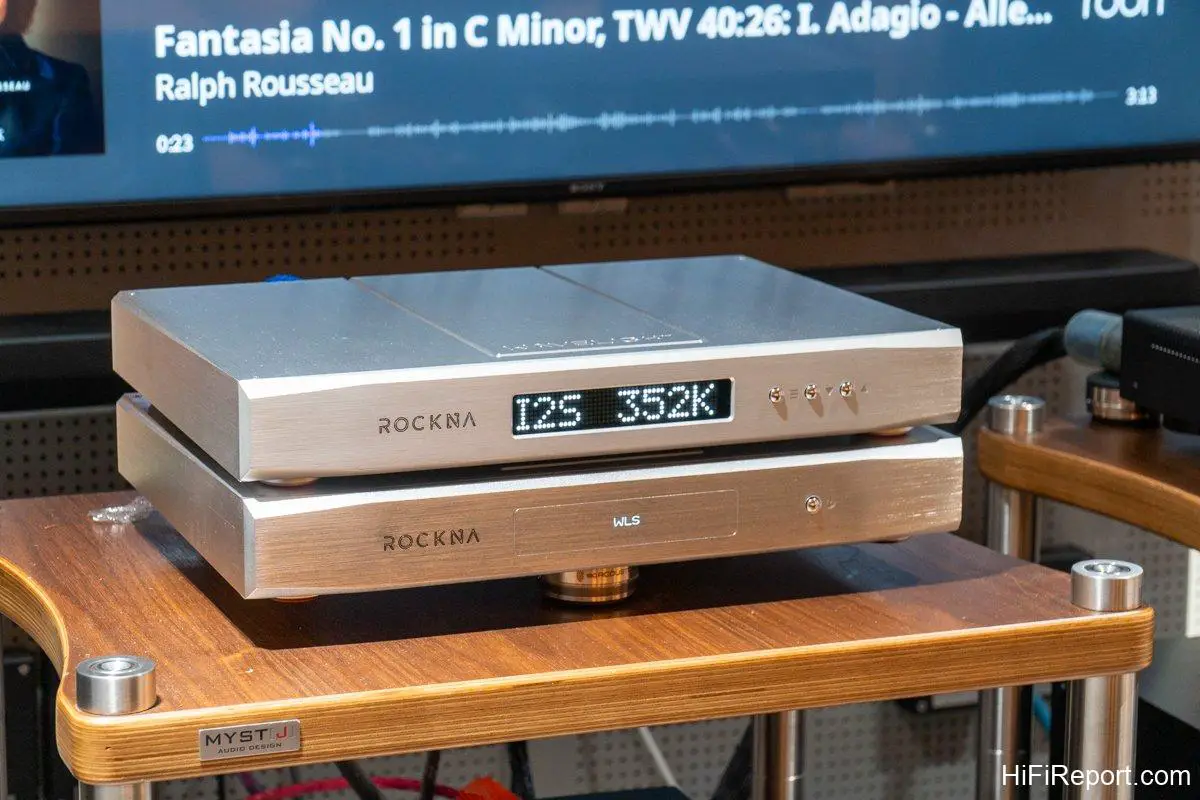
My visit to HiFiReport this time was specifically to audition the Rockna Wavelight DAC paired with the newly released Wavelight Server.
Jimmy has been selling Rockna and its sister brand Audiobyte for several years and is very familiar with their product characteristics and sonic direction.
He highly praises Rockna’s Wavelight generation products, with the most obvious improvement being the aesthetics.
Rockna’s previous Wavedream DAC and Wavedream NET, while praised for their sound performance, had a more industrial design, lacking the refinement of high-end equipment.
The launch of the Wavelight DAC was a revelation.
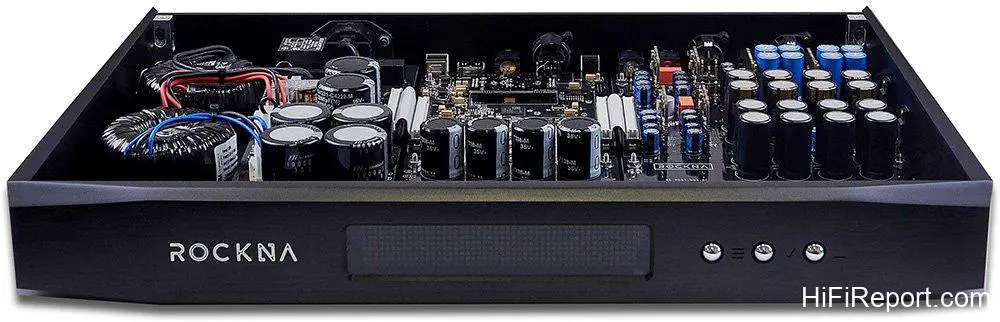
While still built with a solid aluminum chassis, the chamfered edges, brushed and polished panels, engraved lines and brand logos on the top panel, and even the brand markings etched instead of printed on the front panel, along with a redesigned brand logo, all contribute to the Wavelight DAC’s enhanced sense of sophistication.
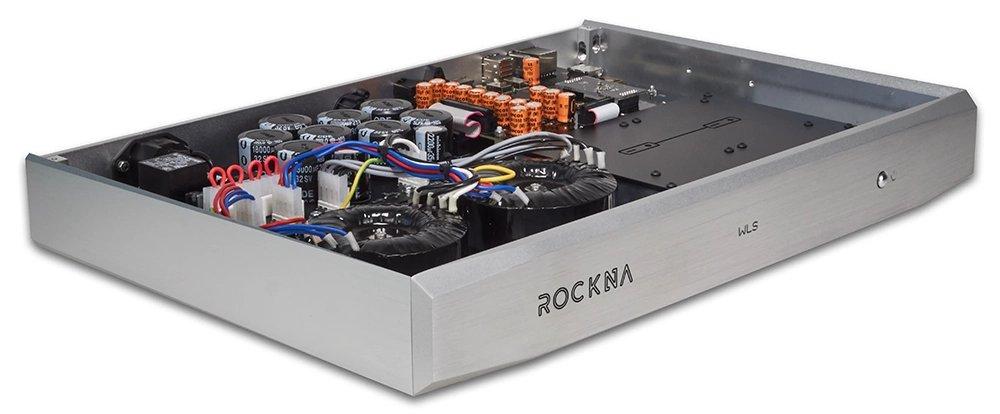
The Wavelight Server continues the design and craftsmanship of the Wavelight DAC, but eliminates the front display screen, retaining only a power switch and elegantly leaving the abbreviation “WLS,” signifying “WaveLight Server.”
Rockna’s progress in the exterior design of the Wavelight DAC and Wavelight Server is evident to all.
Wavelight Server: Music Server and Roon Core
Furthermore, the Wavelight Server is not only a streaming player but also a music server, as it has a built-in hard drive for storing music files.
Even more importantly, and what Jimmy praises most, is its ability to function as a Roon Server.
Roon, as a music playback system and powerful music management platform, places its processing center in what was previously called Roon Core and is now referred to as Roon Server.
Simply put, a computer, laptop, NAS, or barebones system with sufficient specifications can install the Roon Server program and be set as the core server.
In addition, streaming music is played through Roon Ready certified streaming players or DACs, preamps, or integrated amplifiers with streaming capabilities that have been vetted by Roon.
To provide users with a simple solution, Roon itself launched the Roon Nucleus core server, with initial versions based on Intel NUC mini-computers.
The Rockna Wavedream NET was a music server capable of running Roon Server, and the Wavelight Server continues this design, making using Roon even more convenient and easier.
Software, Hardware, and Power Supply: All are Crucial
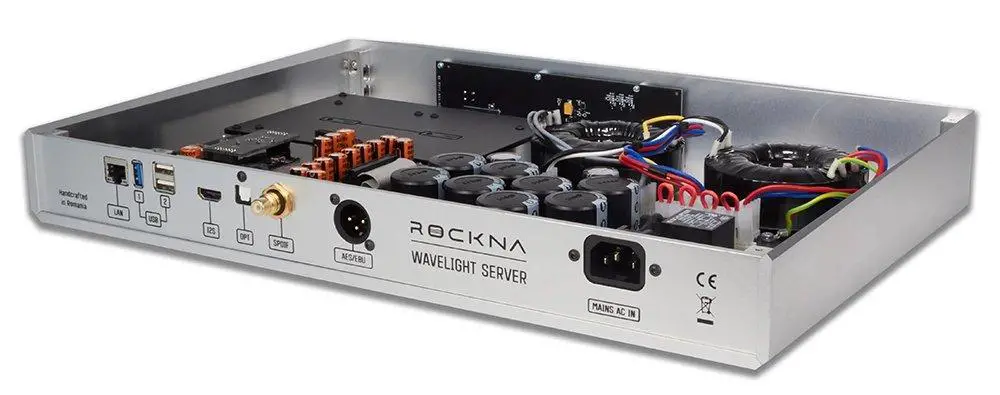
In terms of hardware, the Wavelight Server uses a low-power Intel CPU as its processing center, running a Linux operating system for DSP and audio management.
It is paired with an AMD 7-series FPGA (Field-Programmable Gate Array) chip as the audio processing engine, which can be upgraded via OTA in the future.
It features two sets of independent linear power supplies, each with its own toroidal transformer.
One set powers the CPU and SSD, and the other powers the FPGA and audio-related circuits such as the clock, separating the power supply paths to avoid mutual interference.
Wide Application, Expandability, and I2S Output
Jimmy specifically reminded me to note the Wavelight Server’s software adaptability and support.
Counting them, it supports not only Roon (Roon Core and Roon Bridge), AirPlay, UPnP, HQ Player, etc., but also streaming services like Tidal, Qobuz, Spotify, and internet radio. It also supports OpenHome and can even rip CDs via an external CD drive.
Especially the support for OpenHome, allowing users to implement multi-room control, is rare in the high-end streaming player and music server market.
As a retailer, Jimmy is very excited about this.
The Wavelight Server has a built-in SSD, starting from 2TB and up to 16TB (at an additional cost).
In addition, there is another SSD slot inside for expansion, and two USB 3.0 ports on the back panel for connecting external hard drives, ensuring ample storage for music.
Two other points that Jimmy highly recommends about the Rockna Wavelight Server are its rich digital output terminals. In addition to the common USB, coaxial, optical, and AES/EBU, there is also an I2S (HDMI) output. During my audition at HiFiReport, pairing it with their own Wavelight DAC using I2S was ideal.
Rockna/Audiobyte is also one of the manufacturers that strongly promotes I2S. Jimmy says that the I2S standard is superior to other traditional interfaces, and the sound is better than USB. However, due to different pin definitions among manufacturers, it is not yet widespread.
But the pin definition of the Wavelight’s I2S can be set, which increases the flexibility of pairing.
Dedicated App for Comprehensive Control
Another highlight is the well-designed control app for the Rockna Wavelight Server. The interface is clean and intuitive, with all function settings included.
Each digital output can be set to native format, upsampling, or converted to PCM or DSD.
Its PCM upsampling phase is adjustable. The supported service items can be enabled or disabled as needed. The app can also monitor the storage status of the built-in hard drive.
Apps for both iOS and Android devices are available. Just search for Rockna Wavelight Server to find them.
The Rockna Wavelight Server’s dedicated app has a clean layout and intuitive operation.
It allows users to select upsampling or transcoding for digital outputs, including DoP output via S/PDIF.
Additionally, the pinout of I2S is customizable, allowing for pairing not only with Rockna or Audiobyte products, but also with DACs from other manufacturers by setting the pinout, offering greater flexibility in use.
The app can monitor the used space of the built-in hard drive.
In the server function settings of the Wavelight Server, if you are a Roon user and want to use Roon to listen to music, you need to select Roon Server.
If you don’t use Roon, you can set it to MPD for music playback.
R2R Architecture DAC
As for the Wavelight DAC, Jimmy states directly that it is a rare R2R architecture DAC in the $7,000 USD price range. (Converted from 210,000 NTD).
Most common digital-to-analog converters use off-the-shelf DAC chips, employing Delta-Sigma pulse-density modulation to achieve digital-to-analog conversion.
R2R, on the other hand, uses a “R-2R” ladder network architecture composed of resistors, where the resistance of each stage is half of the previous stage. Therefore, this type of DAC is also known as a “Ladder DAC.”
R2R DACs rely on resistor voltage division to obtain the voltage value corresponding to each digital signal byte. When continuous digital signals are input, continuous voltage values are obtained, forming a waveform, thus achieving digital-to-analog decoding.
Rockna is one of the few manufacturers on the market that uses R2R DAC architecture.
R2R DACs are less common because the resistor array-based voltage divider circuits require very high precision resistors. Resistance errors can cause voltage division deviations, leading to distortion.
Therefore, the resistors used in these DACs are manufactured with particular rigor, which drives up their production costs.
In contrast, Delta-Sigma architecture DAC chips are widely available in the market. These chip giants are putting all their efforts into developing the best chips, achieving impressive specifications in terms of dynamics, bandwidth, signal-to-noise ratio, and distortion rate.
Rather than laboriously building an R2R DAC, it’s often easier to choose a reputable chip and design around it carefully. This is why R2R DACs are less common.
Femtosecond Precision, Over 100,000uF Filtering Capacitance
Rockna uses custom-made dual 25-bit R2R discrete DAC modules in the Wavelight DAC, operating with a Xilinx 7-series FPGA chip.
Future firmware updates can adjust the internal architecture of the FPGA and add other functions, enhancing the performance of the Wavelight DAC.
The Wavelight DAC employs memory buffering, digital phase-locked loop (DPLL), and custom input clock decoupling design, coupled with the Femtovox2 clock module, giving it femtosecond (300fs) precision. This effectively eliminates jitter-induced distortion, making the sound more “analog-like.”
The Wavelight DAC’s analog circuitry is entirely discrete and has ample power supply.
It has two built-in toroidal transformers, separating the power supply for digital and analog circuits.
The internal filtering capacitance exceeds a total of 100,000uF, which is sufficient even for an amplifier.
Input terminals include coaxial, optical, AES/EUB, USB type B, and HDMI (I2S), totaling 5 digital inputs, plus 1 set of RCA analog inputs, making the Wavelight DAC not only a DAC decoder but also usable as a preamplifier.
Analog outputs include one set each of RCA single-ended and XLR balanced outputs.
Overall, it is flexible and versatile in terms of application.
A Grand Setup in a Small Room
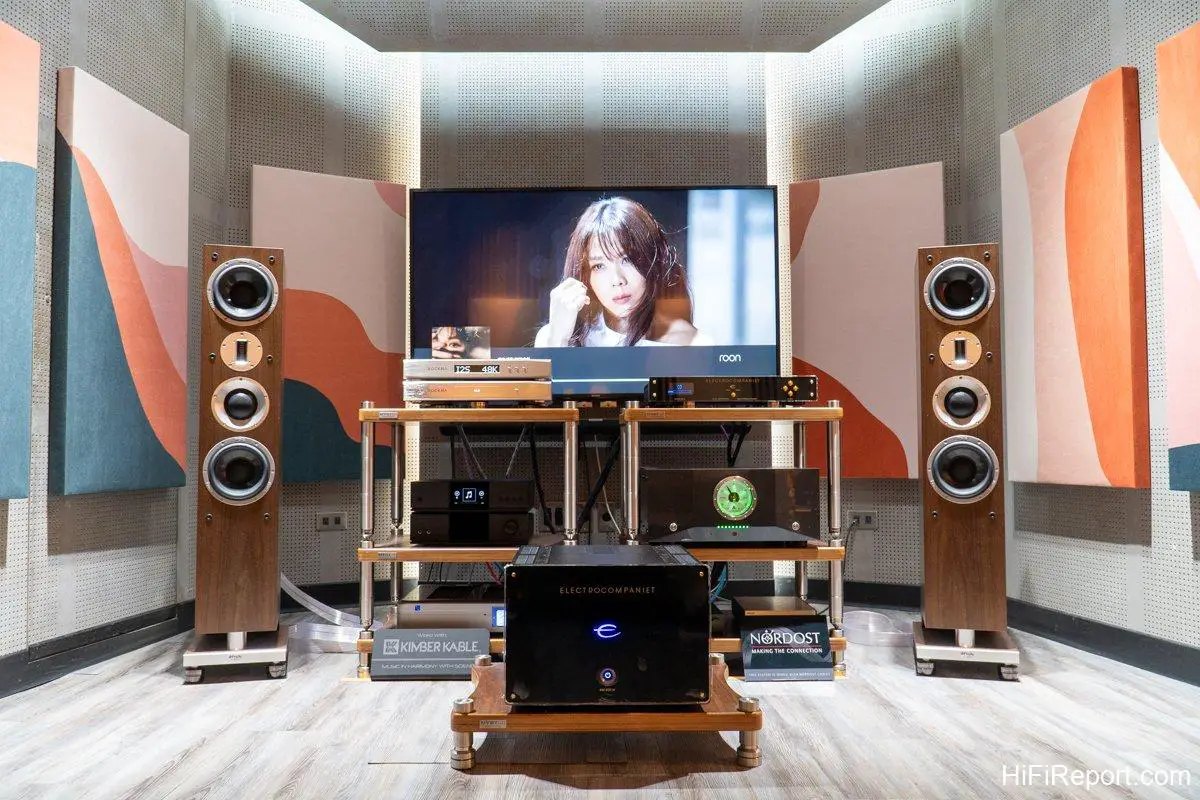
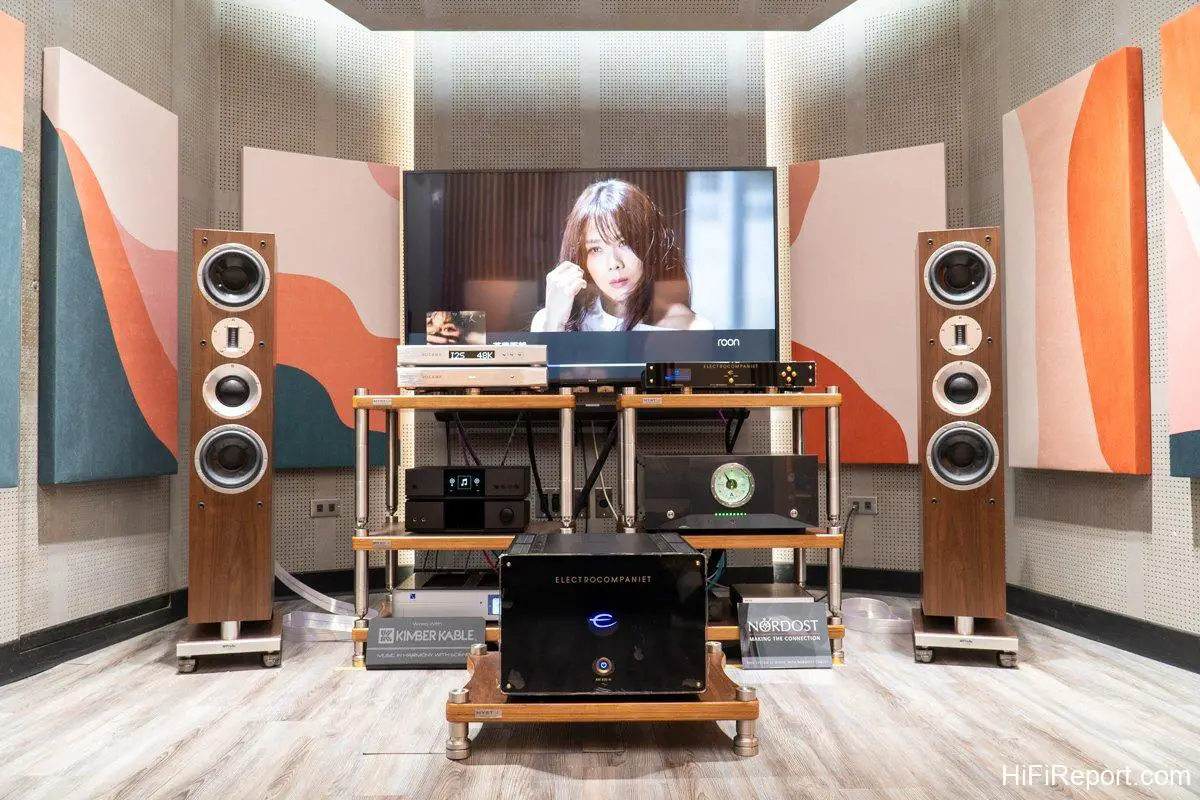
Jimmy’s system setup is as follows: Electrocompaniet EC 4.8 MK2 preamp, paired with two AW 800M power amps, driving ProAc K6 speakers in mono mode.
The Wavelight Server is used as a Roon Server/Core, playing files from Tidal, Qobuz, and HiFiReport’s NAS via Roon.
Speaker cables, signal cables, and power cables are from Esprit Audio.
To ensure network playback quality, a Melco S100/2 switch is added, powered by a Ferrum Hypsos linear power supply.
Both the Rockna Server and DAC are connected to a Stromtank S1000 battery power supply, aiming to provide the cleanest power possible.
Jimmy’s tuning approach leans towards a monitor style, striving for precise imaging and positioning, clear outlines and lines, and rich detail and information.
And he is accustomed to listening at low volumes, unlike the louder volumes often favored by many audio stores or enthusiasts.
HiFiReport’s listening room is not large, roughly around 430 sq ft, after deducting the acoustically treated walls and a corner restroom, similar to a room in many apartments.
I generally followed Jimmy’s preferred direction, listening mostly at low to medium volumes.
Clean, Transparent Soundstage with Excellent Dynamics
The Wavelight Server and DAC source system has a very clean and transparent sonic foundation, with smooth lines, abundant details, vivid colors, and a lively, dynamic presentation.
Listening to Dave Brubeck Quartet’s “Time Out” album, you can really feel the surging energy of the music.
In “Blue Rondo a la Turk,” Brubeck uses a 9-8 time signature. The piece begins with rapid piano runs, followed by the drums joining in a flurry, and the saxophone also trying to keep pace.
A simple theme is repeated again and again, interspersed with new themes, before reappearing, much like a rondo in classical music.
Paul Desmond’s saxophone both competes with the piano and leads out new themes, slowing down the music’s tempo.
The piano stops, the saxophone takes the lead, and the drums and bass provide a soft backdrop.
The brass texture of the saxophone is remarkably clear and vibrant.
As for the drums and bass in the background, although they are set back and played softly, they have clear outlines and forms.
Even though they are not loud or the main focus, they are exceptionally clear here.
This shows that the Rockna Wavelight extracts a substantial amount of information.
Hearing the Breath of Life in Music
Also an old jazz recording, listening to Oscar Peterson Trio’s “We Get Requests” album, this Verve recording, five years later than “Time Out,” has a noticeably richer, warmer tone and texture, with a slightly wider bandwidth.
Listening to “Quiet Nights of Quiet Stars,” the sound of the piano strings being brushed at the beginning is clean and crisp, followed by the rounded and solid piano playing.
The sound Jimmy has tuned is dense and clean.
Although it’s a small space, with speakers placed close to the side walls, the acoustic treatment of the walls and the large toe-in of the speakers make the sound accurate and clear.
Every note is solid and substantial, and the crystal-clear highs easily emerge.
Is this due to the ProAc K6’s ribbon tweeter? Or is it the Rockna Wavelight that contributes to this “lightness”? As for the drums and bass in the background, they are also clear and distinct, showing that this album is recorded better than “Time Out,” especially the bass notes, which are more complete, with detail and texture.
Similarly, the continuous rhythmic drive of the drums is full of life, perfectly embodying Jimmy’s phrase: “the breath of life.”
Focused Clarity and Rich Detail, Like Spotlights on a Stage
I must say, the Rockna Wavelight’s characteristics and direction are particularly well-suited for vocal reproduction.
Take Diana Krall’s “Live in Paris” album, specifically the standard “Let’s Fall in Love.”
What I heard at Jimmy’s place felt like being in a performance venue, with all the lights dimmed except for a few spotlights shining on the stage. The brightest one was on Diana Krall and her piano, and the other two, initially dim, then brighter, illuminated the guitarist and bassist.

What does this mean? Highly focused! Extremely clear! You’re probably familiar with this scene. Spotlights are very bright, and when they shine, every detail becomes visible.
That’s what I heard here.
The clear, crisp vocal lines, the characteristics and textures of her voice, were all meticulously and unmistakably presented, revealing every nuance.
For vocal detail, vibrato, and vocal texture changes, I like to find answers in Anne Sofie von Otter’s compilation album released by Naive.
French pronunciation is more forward in the mouth, making it nimble and elegant, with added guttural sounds, allowing for more detail comparison in French songs than in Mandarin songs.
Listening to “La vie en rose,” the song begins with a piano and bass introduction, then transitions to guitar accompaniment as von Otter’s voice emerges. The atmosphere is incredibly romantic.
Although classically trained, von Otter, singing this chanson classic, still adds vibrato at the end of phrases from time to time.
This vibrato brings out the chanson flavor.
I had heard the Wavelight DAC before. I had privately borrowed it for two weeks, but unfortunately, I didn’t manage to write a review article due to unforeseen circumstances.
Listening to it again here at HiFiReport, I truly learned a lesson – audio equipment is inanimate, but people are alive.
What kind of sound audio equipment produces ultimately comes back to the user.
My impression of the Wavelight DAC’s sound was grand, expansive, vibrant, colorful, rich, and full-bodied.
Here at HiFiReport, after Jimmy’s tuning, the sound became cleaner, more transparent, precise, and highly resolving. Even at low volumes, the entire musical picture is fully revealed.
In the middle section of “La vie en rose,” there is a short passage of double bass bowing, very deep, low, and clear.
Although it’s just a few bars, it’s a passage I often use for comparison.
The double bass I heard here had no issues with “low” and “deep,” meeting the standard expected of such a system.
However, the clarity of its sonic texture was exceptionally high, truly outstanding.
Another piece I often use to evaluate double bass is Diana Krall’s “Love Scenes” album, specifically “All or Nothing at All.”
The pizzicato double bass in this track made me turn to Jimmy and share, “This bass is incredibly clean.” I had assumed that speakers of the ProAc K6’s caliber would struggle to breathe in such a small space, with the bass likely to boom.
Unexpectedly, the bass I heard was exceptionally clean, deep and resolving.
Jimmy got up and introduced their listening room, explaining that the walls have diffusion panels on the outside, and are filled with sound-absorbing cotton inside. They also specially hung sound-absorbing panels at the first reflection points.
As for the corners of the wall behind the speakers, they were intentionally angled to avoid right-angled surfaces. This is what allows HiFiReport’s “small” listening room to have such clean sound.
Powerful and Fast Drums, Real and Realistic Vocals
Double bass is either bowed or plucked. Bowed bass produces a smooth, sustained, continuous undulation, while plucked bass produces notes that pop out one by one.
The pieces I mentioned earlier, while varying in bass presentation, were all on the softer side, reflecting the nature of the music itself.
It’s different with rock or blues.
Take the “A Star Is Born” movie soundtrack, for example. Songs like “Black Eyes,” “Out of Time,” and “Alibi” feature drums that are recorded solidly, powerfully, and full.
Such powerful drums, if played at high volumes with the ProAc K6’s presence, could easily become muddy due to room modes.
But the drums I heard at HiFiReport were exceptionally tight, with clear note definition and a distinct, fast impact.
I can’t pinpoint which element is responsible for this. What I heard was an entire system, the sound Jimmy had tuned, an outcome based on hearing more musical content and sonic information.
As for Lady Gaga and Bradley Cooper’s vocal characteristics, they were equally clearly laid out, with high realism in the presentation.
Highly focused vocals, with a vibrant intensity. When they sing passionately, the delivered vocals are like a jab to the face.
In “Shallow,” I fully experienced this intense emotion, immersed in the rich information, high-transparency soundstage, and cohesive, solid forms, feeling unexpectedly moved.
Clear Soundstage, Distinct Layers, and Organized Arrangement in Large Orchestral Works
I found Van Cliburn’s performance of Tchaikovsky’s Piano Concerto No. 1 on my iPad playlist, a version recorded with Kirill Kondrashin conducting the RCA Victor Symphony Orchestra.
The cover shown on the iPad was the Living Stereo SACD version. I initially didn’t pay much attention, thinking Roon’s cover art sometimes gets it wrong, or perhaps HiFiReport just thought this cover looked better.
Soon I realized it was indeed a DSD 64 DIFF file. I asked Jimmy beside me, “This is a DSD file, did you buy it?” I didn’t expect him to answer seriously.
Audio enthusiasts often share digital files, which is why record companies have shifted streaming to subscription platforms.
But this Van Cliburn recording was not.
Jimmy said he took advantage of a sale at Chia Chia Records and bought a pile of SACDs, then ripped them one by one into DSD files using a PS3. This album was obtained in that way.
This Living Stereo recording of Tchaikovsky’s Piano Concerto No. 1, heard at HiFiReport, also displayed a clear soundstage, distinct layers, and an orderly arrangement of instrumental sections.
In the first movement’s opening, the brass section introduces four descending notes, followed by the piano playing a powerful and steady rhythm, leading the strings to play the first theme, with the subsequent exposition work handed over to the piano.
Listening to the piano’s powerful notes, Van Cliburn, at just 24 years old at the time, imbued his playing with fervent youthful passion. The overt emotion left Tchaikovsky’s inner world with no chance to hide, nakedly presented to the world.
At medium-low volume, to have such a clear soundstage, even with a large-scale concerto, and for the piano to have such complete reproduction in terms of dynamic range, string resonance, and scale, was remarkable.
I rarely listen to this piece so “quietly,” and to still get so much information at low volume was truly eye-opening.
This is certainly related to Jimmy’s tuning, but the Rockna Wavelight Server also played a significant role.
Using Wavelight Server as Roon Server
I asked Jimmy about his experience using Roon Server on NAS, computers, or NUCs compared to using the Rockna Wavelight Server. Is there a big difference? “A huge difference.” Jimmy explained that NAS, laptops, computers, or NUCs/barebones systems, whether in terms of software or hardware, are not designed for music playback. Digital noise and electrical noise that affect sound reproduction are not considered in the design of these products.
“Using the Wavelight Server as the core, the sound is much cleaner.” Even Roon’s own Nucleus, in terms of sound cleanliness and refinement, cannot match the Rockna Wavelight. This is also why Jimmy, as a store owner, really likes the Rockna Wavelight – Rockna combines Roon Server, Roon Bridge, and streaming player into one machine, and it also has I2S output. Such a product is truly rare in the market.
Mediterranean Diet: Refreshing and Healthy
The Mediterranean diet, which has become very popular in recent years, emphasizes minimal, simple cooking and the intake of large quantities of vegetables, fruits, grains, nuts, beans, and root vegetables, paired with small amounts of red meat, mainly using olive oil for cooking and dressing.
Such Mediterranean cuisine is rich and colorful, visually appealing, and eating it helps cardiovascular health by reducing low-density lipoproteins and increasing high-density lipoproteins.
The Rockna Wavelight Server/DAC system gives me the feeling of an audio “Mediterranean diet.”
It organizes the myriad information in music, presenting it clearly and layered.
Without excessive, ear-grabbing, or deliberately attention-grabbing flavoring or coloring, it has a refreshing and healthy constitution, naturally and truthfully presenting the original essence of the music.
Listening to music like this, listening to this kind of music, perhaps, is healthier!
Specifications
**Rockna Wavelight Pre/DAC**
* Type: USB DAC & Preamplifier
* Digital Inputs: USB, S/PDIF coaxial, AES/EBU, I2S (LVDS), Toslink, HD-Link
* Analog Inputs: RCA, XLR
* Analog Outputs: RCA, XLR
* DAC Type: R2R 25 bit + Hybrid mode
* Signal-to-Noise Ratio: 117 dB
* Dynamic Range: 117 dB
* Output Impedance: 50 ohms
* Maximum Output: Single-ended 2.4 Vrms, Balanced 5.8 Vrms
* Dimensions: 430 × 300 × 55 mm
* Weight: 7.25 kg