
Rockport Avior II Loudspeaker Review
Before the audio exhibition, I visited HiFiReport Audio twice to audition the Rockport Atria II with two different system configurations. After the exhibition, I returned to HiFiReport to experience the larger Avior II. Initially, I assumed the Avior II would simply offer slightly better bass due to an additional woofer and a larger cabinet. However, I was mistaken. The Avior II is not just marginally better in the low frequencies; it elevates every aspect of musical performance, delivering a more authoritative and realistic listening experience.
Significantly Larger Scale Than Atria II
Rockport’s current lineup comprises five models, with the Taurus serving as a center channel speaker. The other four are floor-standing speakers, arranged in descending order of size: Lyra, Cygnus, Avior II, and Atria II. Having previously auditioned the Atria II at both Jia-Ying and HiFiReport Audio, I came to listen to the Avior II with the expectation of only a minor improvement. Yet, audio performance cannot be judged by imagination alone; actual listening reveals the true capabilities.
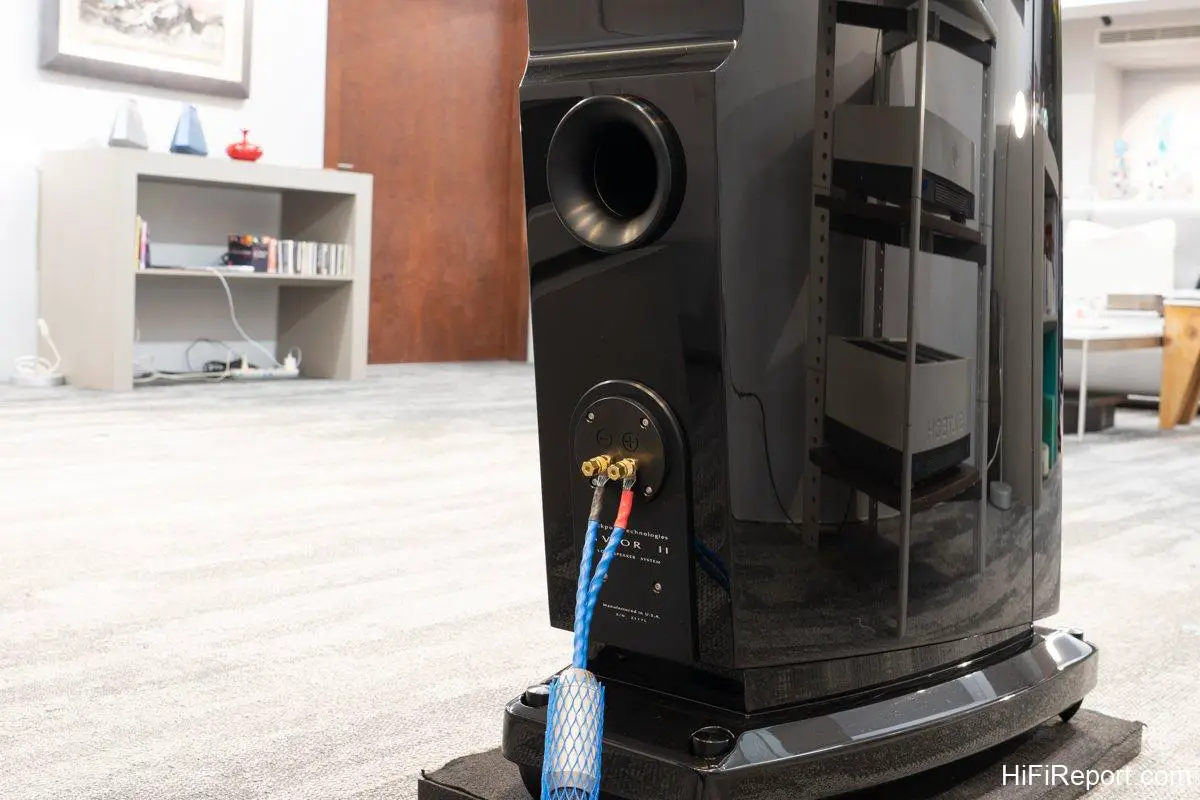
Comparing the specifications of the Atria II and Avior II, both extend to 30 kHz in the high frequencies. The Atria II reaches down to 28 Hz in the bass, while the Avior II extends even further to 25 Hz. In terms of efficiency, the Atria II is rated at 87.5 dB, and the Avior II at 89.5 dB. Both speakers share a similar cabinet construction, employing a sandwich structure of High-Density Fiberboard (HDF) with damping materials. However, the Avior II is 3 inches taller and 70 pounds heavier than the Atria II.
Looking solely at the specifications, one might perceive the Atria II as offering better value, with the Avior II seeming only marginally superior and pricier without substantial improvements.
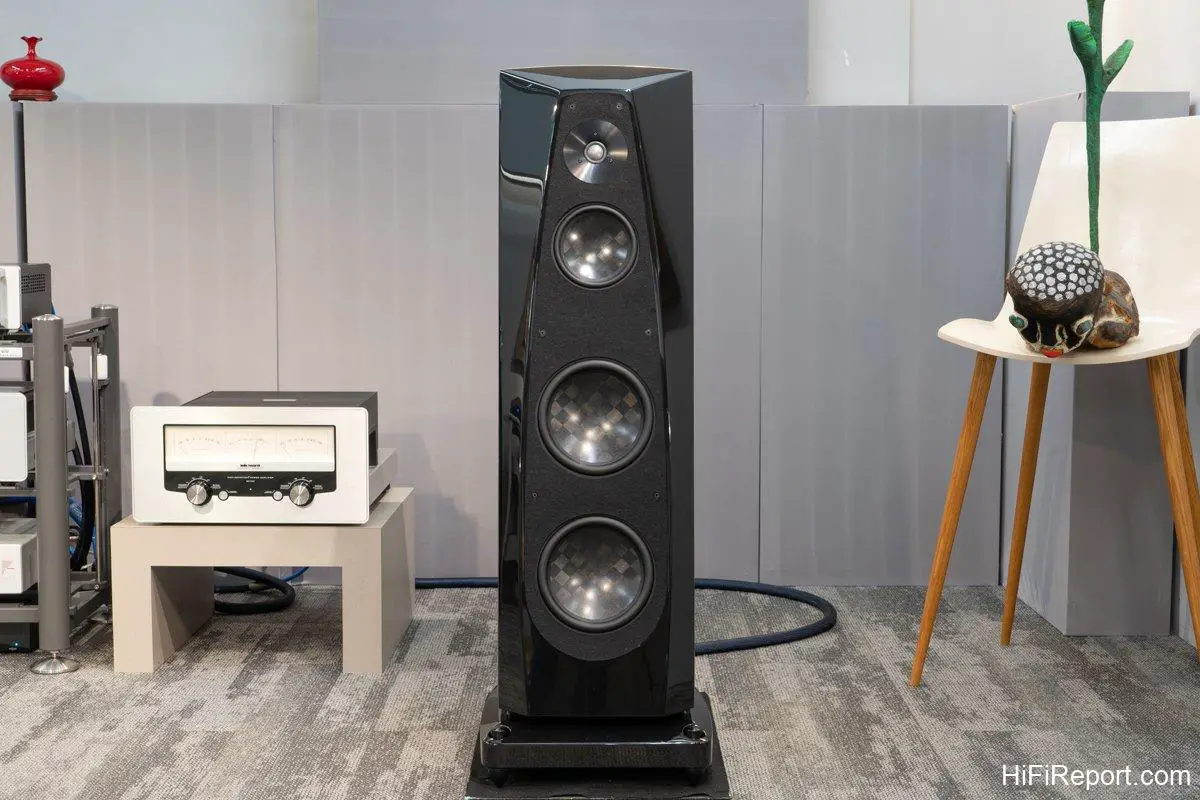
Indeed, I held a similar view before my audition at HiFiReport. However, after listening, it became clear that the Avior II’s authority in music reproduction significantly surpasses that of the Atria II.
Rockport: Leading Loudspeaker Design Trends
The evolution of Rockport speakers can be broadly categorized by their driver usage. Before 2000, Rockport utilized Dynaudio silk soft-dome tweeters paired with Eton mid-range and bass drivers. This driver combination was widely imitated. Consequently, post-2000, Rockport transitioned to custom-made drivers from Danish manufacturer Audio Technology. These bespoke drivers, unavailable commercially, were another trendsetting move, prompting numerous speaker brands to also tout “custom-made Audio Technology drivers.”
However, specifying and commissioning drivers with unique performance characteristics is not as simple as just saying “custom-made.” Rockport’s driver choices inspired imitation, indicating their leadership in high-end loudspeaker design, suggesting that adopting Rockport-like drivers could lead to excellent speakers.
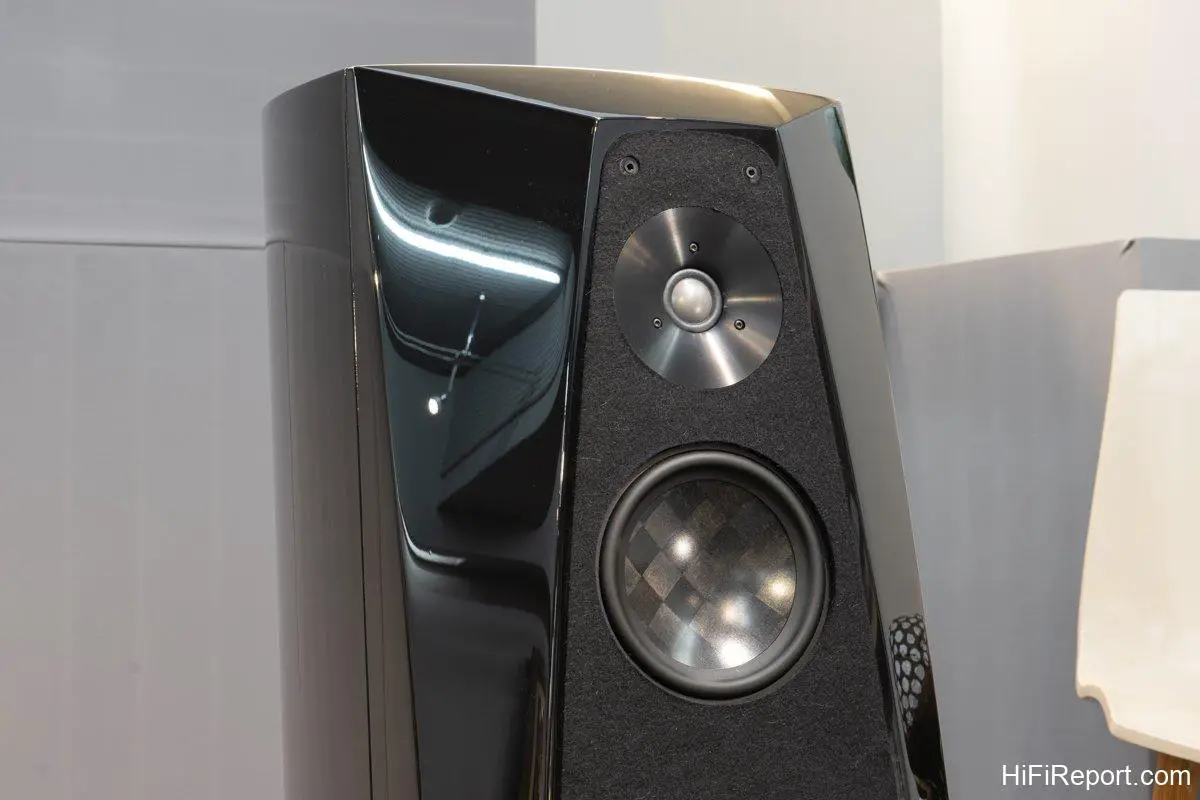
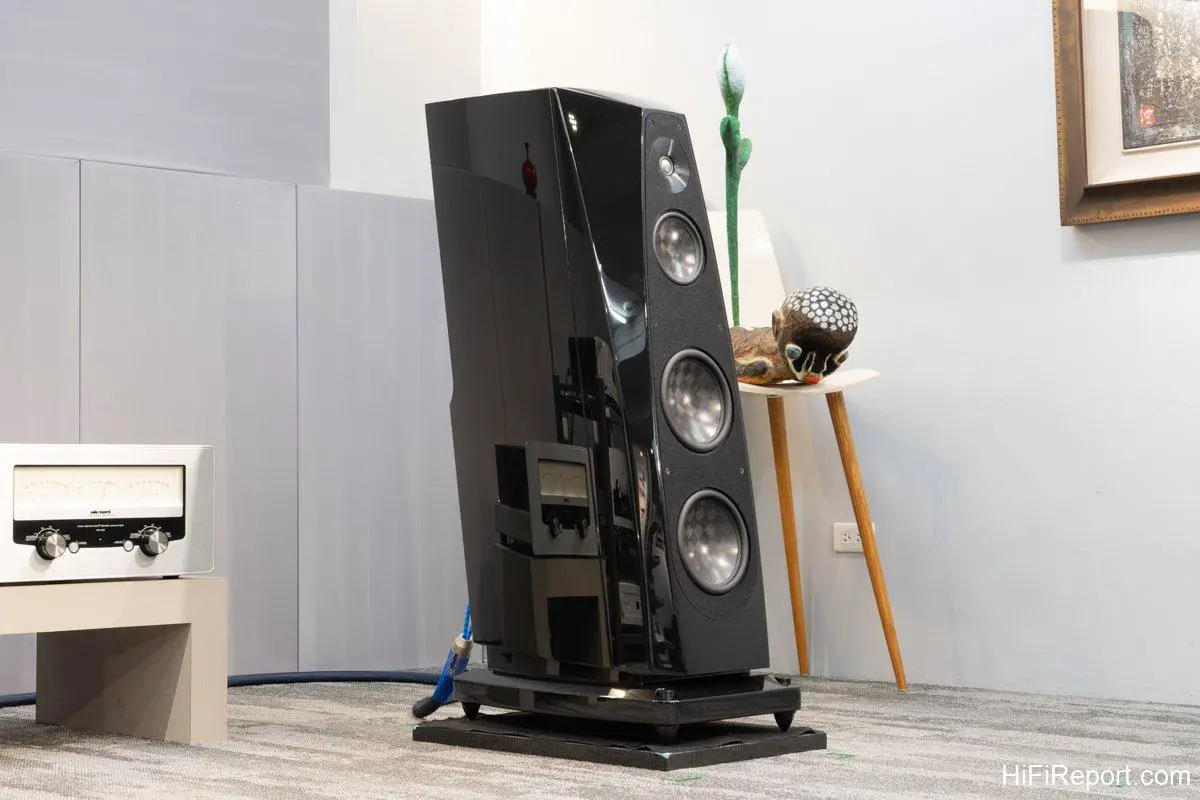
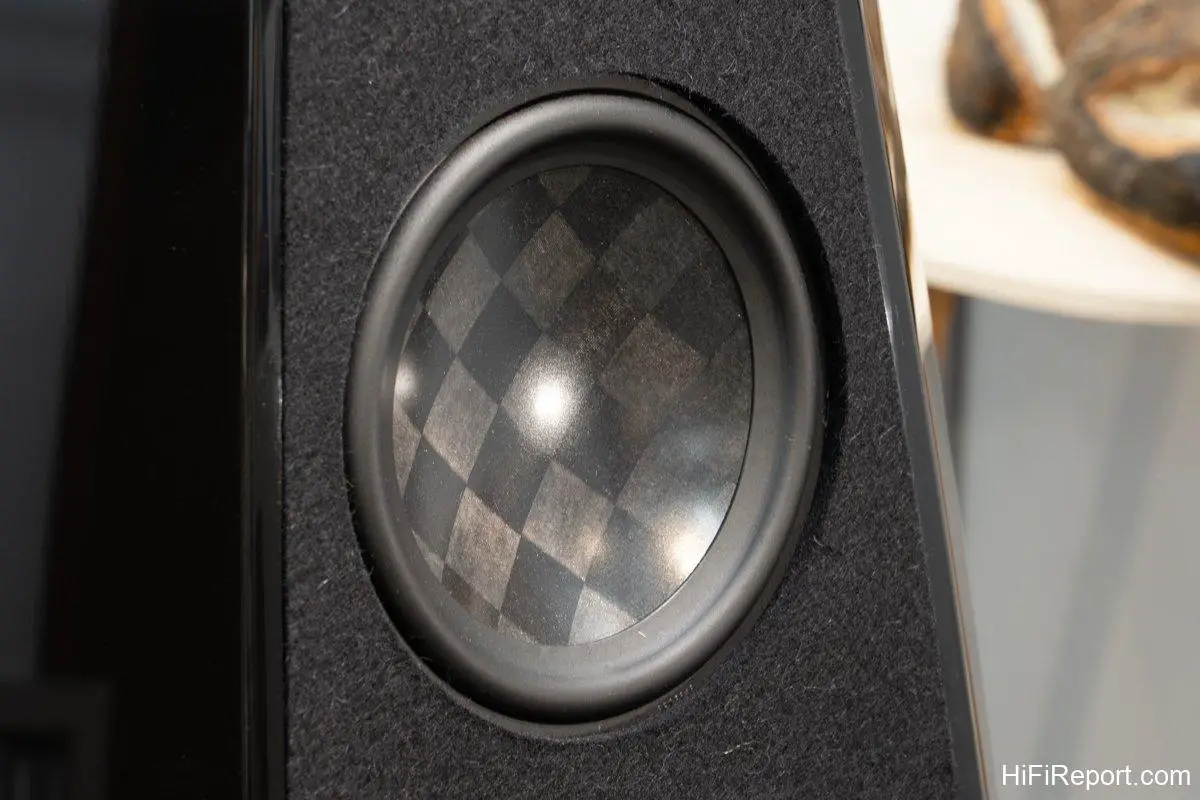
Being a pioneer is often a solitary path. Rockport’s innovations are frequently followed by others. Thus, after 2010, Rockport opted to manufacture their own drivers entirely, ensuring exclusivity. This marked the genesis of the first Avior. In 2017, the Avior II debuted, maintaining the same appearance but featuring new carbon fiber woven composite diaphragms for the mid-range and bass drivers, while retaining the beryllium tweeter. This iteration became the Avior II.
Sandwich Composite Cabinet Construction
For cabinet construction, the Avior II employs a HDF sandwich structure. HDF, denser and more rigid than commonly used MDF, offers superior vibration damping. However, a single material is insufficient to manage vibrations across the frequency spectrum. Rockport utilizes a sandwich structure, inserting damping material between two layers of HDF. This tri-layer composite structure provides more effective vibration control than solely using thick HDF. While HDF alone still resonates, combining it with damping materials effectively eliminates inherent resonances.
Rockport is not alone in using composite or sandwich structures to address resonance issues, but the expertise lies in the details. The key is to shift cabinet resonances outside the audible frequency range.
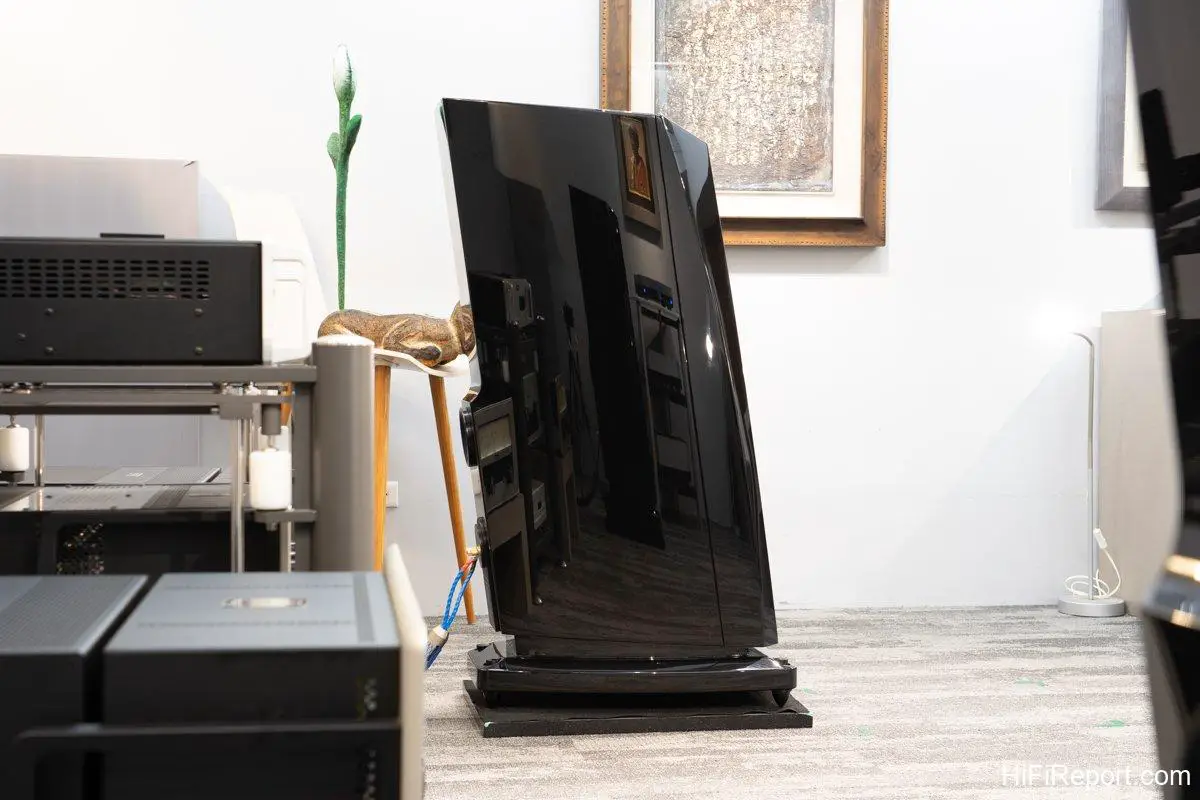
Vibrations from drivers transfer to the cabinet, and energy is conserved, leading to resonance. This additional energy from resonance is difficult to eliminate. Composite materials alter resonance characteristics, and by shifting the resonance frequency beyond the human hearing range, audible coloration is avoided.
While these principles are generally understood, the art lies in material selection and resonance management beyond audible frequencies. Rockport discloses the use of damping material between two HDF layers but keeps the specific damping material proprietary – their valuable know-how.
Cabinet Design: Acoustic Considerations
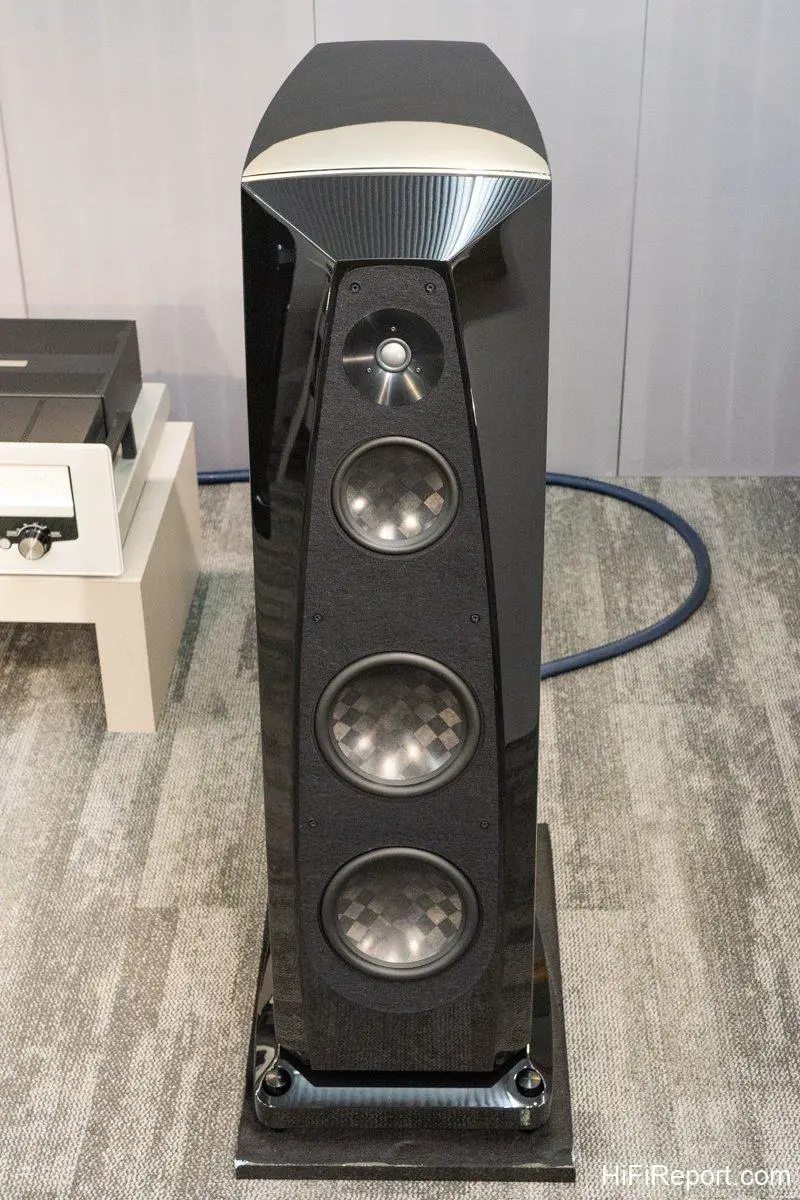
The Avior II’s cabinet shape remains virtually unchanged from the first generation, at least to the naked eye. However, the Avior II’s design is not merely aesthetic; it incorporates numerous acoustical principles. Four key aspects stand out: First, the sloped front baffle of the Avior II provides time alignment, ensuring high, mid, and low frequencies reach the listener’s ears simultaneously. Second, the front baffle’s width tapers from bottom to top, with edges nearly flush with the drivers, minimizing front baffle diffraction and enhancing image focus. Third, the design maximizes internal cabinet volume while minimizing the footprint, hence the narrowed upper front baffle, preserving ample internal volume. Fourth, the cabinet sides curve inwards towards the rear, eliminating parallel internal surfaces to prevent internal standing wave interference.
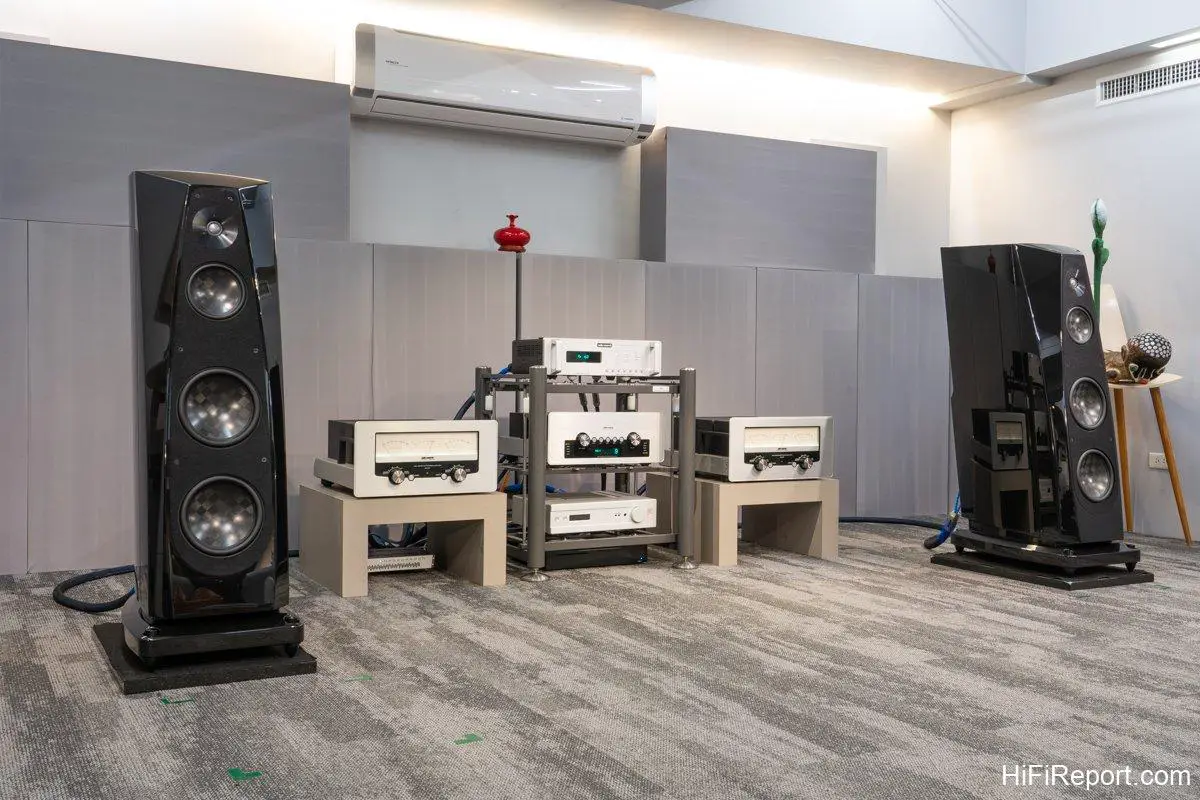
As you can see, the elegant Avior II embodies a wealth of acoustic design principles. Perhaps the original Avior cabinet was already highly refined, necessitating minimal changes for the Avior II.
Exceptional 6-inch Custom Midrange Driver
The pivotal upgrade in the Avior II is the newly designed 6-inch carbon fiber woven composite mid-range driver. Upon reviewing its specifications, I was eager to acquire a pair for experimentation. The bandwidth is exceptional! Rockport claims this mid-range driver spans six octaves with extremely low distortion, with both second and third harmonic distortion below -60 dB. Considering that an 88-key piano covers seven octaves, and this 6-inch mid-range driver encompasses six, practically the entire piano range (excluding the extreme top and bottom octaves rarely used), it’s a powerful core. Using it in a full-range speaker would be an intriguing experiment.
Consider the Avior II’s 6-inch mid-range driver as the musical heart, covering almost 80% of the piano’s frequency range. The remaining 20% is supplemented by the beryllium tweeter and dual 9-inch woofers, extending the frequency response at both ends. Because the 6-inch mid-range driver is so capable, the extensions at the high and low ends are achieved more effortlessly, leading to seamless integration.
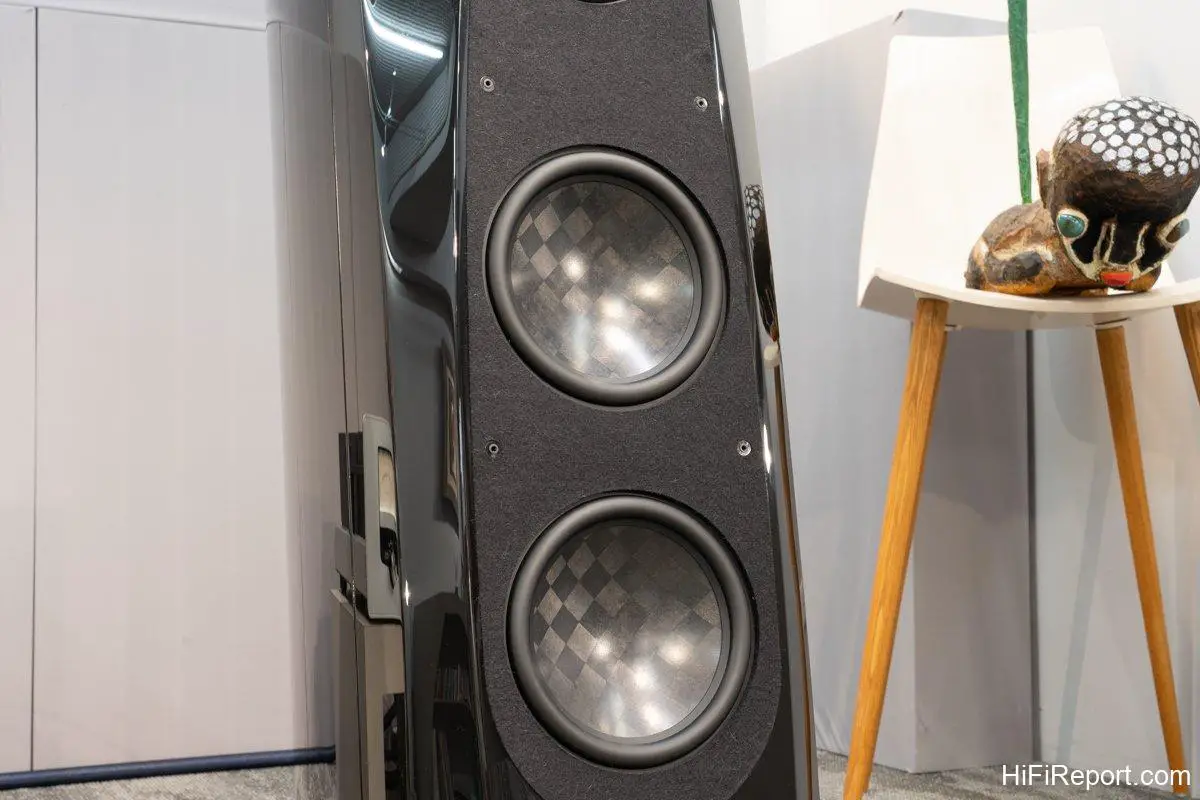
The crossover points for the high and low frequencies can be raised or lowered, moving them away from the ear’s most sensitive range. Conversely, if a mid-range driver has a narrower bandwidth, the woofer crossover point must be raised, and the tweeter must extend lower, potentially placing crossover points in the ear’s sensitive zone. Imperfections in frequency response around these sensitive crossover points become easily audible. Therefore, an exceptional mid-range driver is fundamental to a great speaker.
The carbon fiber sandwich diaphragm technology is also applied to the Avior II’s woofers. Equipped with dual 9-inch woofers, the speaker achieves better bass output, lower frequency extension, and increased efficiency. Compared to the single 9-inch woofer in the Atria II, the Avior II is 2 dB more efficient, making it more amplifier-friendly.
Full Audio Research System with Siltech Cables
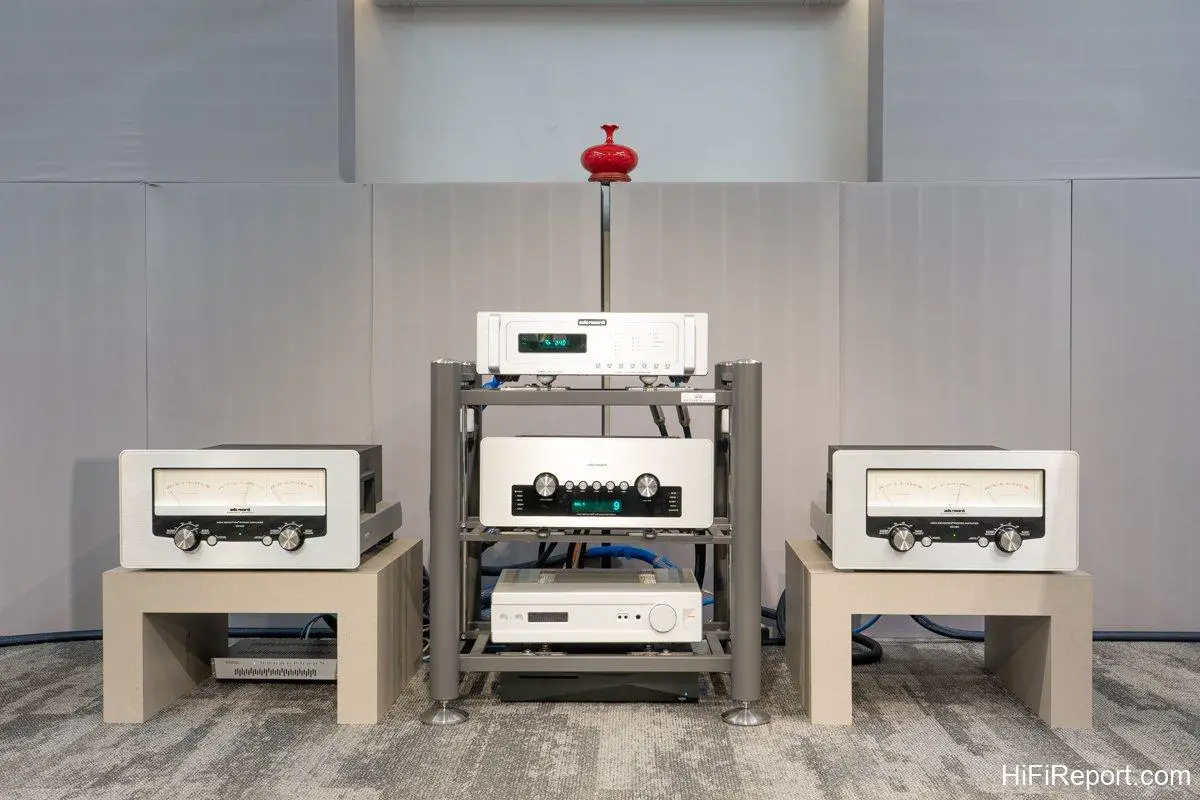
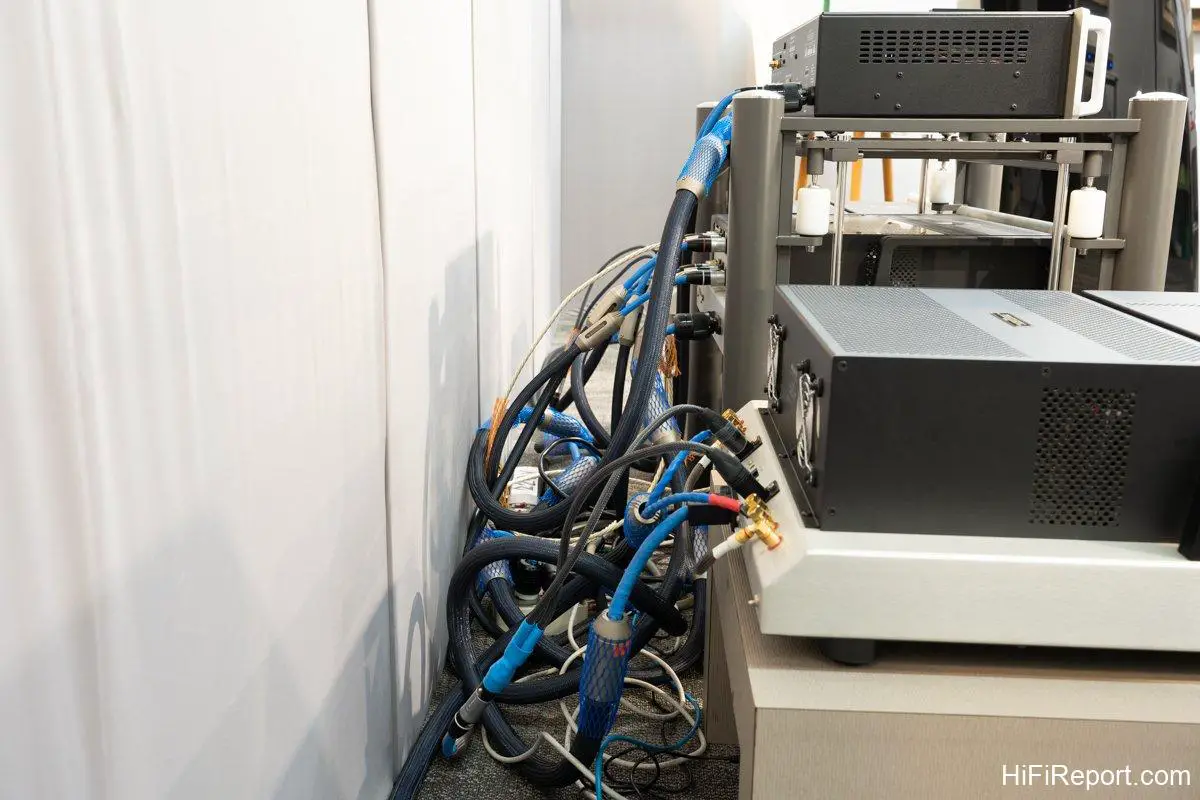
My audition setup at HiFiReport Audio featured an all-Audio Research system. The CD player was the CD6, the preamplifier the GS Pre, and the power amplifier the GS 150. A notable configuration was bridging the GS 150 stereo amplifier into mono blocks, doubling the output power and enhancing speaker control. Cabling was entirely Siltech, including Mountain power cords, Princess interconnects, and Double Crown speaker cables.
Since the CD6 offers selectable digital filter modes, I briefly compared a couple of tracks, settling on the “Slow” filter with upsampling enabled before focusing on the Avior II.
Why “Slow” filter and upsampling? It’s a personal preference whenever using Audio Research CD sources.
Effortless Authority and Realistic Sound
Starting with gentle jazz, I played Miles Davis’ “Cookin’ With Miles Quintet” (Prestige 7094), specifically the classic “My Funny Valentine.” The delicate piano notes accompanied by soft brush strokes on the drums, and Miles Davis’ bright trumpet melodies filled the room. Having previously auditioned the Atria II in the same space with the same record, I began with Miles Davis expecting only a “slight improvement” with the Avior II. I was wrong. The Avior II exhibited a spaciousness and ease that painted a relaxed jazz scene. This was not a “slight improvement,” but a more authoritative musical reproduction.
Recorded in 1956, the album is naturally from analog master tapes, a purely analog recording from start to finish. Even after digitization, the recording’s vintage character is discernible. The Avior II reproduced a clear and transparent soundstage, yet subtle master tape hiss remained audible, revealing high fidelity to the recording. Miles Davis’ trumpet was bright and penetrating, with the beryllium tweeter enhancing the vividness of the brass. The mid-bass fullness filled the soundstage richly and densely. The double bass notes were full and rounded. Contrasting with the bright trumpet, subtle breath sounds and mute variations were evident. While the timbre was similar to what I heard with the Atria II using the same record, the soundstage spaciousness, transparency, and image fullness were significantly more relaxed and effortless with the Avior II.
Indeed, this is the advantage of larger speakers. Though only 3 inches taller and with one additional 9-inch woofer, the Avior II demonstrably elevates the ease of music reproduction to a higher level.
The Atria II is still an excellent speaker, but in HiFiReport’s large listening room, the larger Avior II is even more in its element, relaxed and effortless. Listening at higher volumes is also effortless and stress-free. In contrast, pushing the Atria II louder can feel somewhat compressed, as if the amplifier is straining. Therefore, in smaller listening spaces, the difference between the Avior II and Atria II might be less pronounced, as their tonal balance is consistent. However, in larger spaces, the Avior II’s ability to create a more spacious and relaxed soundstage becomes clearly superior.
Exceptional Soundstage Depth and Width
Switching to Opus 3’s “Test CD 4,” a compilation focused on recording spatial cues, I listened to track 13, “Reunion Blues.” The Avior II effortlessly expanded the soundstage. Drums were centered and slightly recessed, piano slightly left, vibes right, and the double bass notes were large, focused, and anchored the rhythm. The drum strikes were crisp and clear yet not harsh, bringing out the vibrancy of jazz. The saxophone solo was beautifully focused. As the piano solo began, the band increased volume, building towards a crescendo, with the piano solo still softly humming along. The Avior II effortlessly presented these rich recording details, painting a lively and dynamic soundstage.
Comparing the Opus 3 and Prestige recordings revealed the Avior II’s ability to discern recording characteristics. The Prestige recording, from an old analog master, had rounder, fuller notes but less transparency and some background tape hiss. Opus 3, a digital recording emphasizing audiophile quality, was remarkably clean and transparent with precise soundstage positioning. The Avior II accurately conveyed the warmth of the analog master and the transparency of the Opus 3 audiophile digital recording.
Wide Soundstage, Clear Image Definition
The Avior II’s effortless soundstage reproduction was truly enjoyable with “Bach Trio.” HiFiReport’s speaker placement was clearly meticulously optimized. I could simply relax in the sweet spot and enjoy the speakers disappearing into the space, leaving only the music. The trio of cello, double bass, and mandolin presented a challenge due to the tonal similarity of the cello and double bass, both low-frequency instruments. The cello is more melodic, while the double bass is richer and deeper.
The Avior II’s mid-bass was not only full but also remarkably detailed. You could easily distinguish the cello and double bass, a key reason I often use this CD for auditions. Systems with insufficient low-frequency resolution can easily blend the timbres of these low-register instruments, lacking definition.
Furthermore, soundstage height is crucial for “Bach Trio.” The Avior II effortlessly presented an expansive vertical soundstage, creating a 3D image with height, width, and depth. When speakers disappear in the listening space, only the essence of the music remains, allowing for complete immersion.
Precise and Nuanced Musical Expression
Switching to Chen Pi-hsien’s “Mozart Piano Works,” I listened to the joyful “Sonata in C Major KV. 279 (189d).” Lively arpeggios opened the allegro, with piano notes sparkling as if freshly polished, pristine and bright on the Avior II. The left-hand bass arpeggios and the forward-moving theme, the balanced finger strength of both hands, demonstrated the pianist’s mature and polished technique. Within the bright and crisp notes, Mozart’s playful and joyous emotions were palpable.
The Avior II’s depiction of piano nuances was remarkably delicate. The brilliance of the right-hand treble and the groundedness of the left-hand bass, the full notes of the bass keys, and the subtle woody resonance of the piano were all present. The treble was not only bright but also revealed the upward lift at the end of phrases, the musical emotion captured from the pianist’s decades of accumulated skill. Listening through the Avior II, I could almost visualize Chen Pi-hsien’s focused expression during the recording, her concentration on her fingertips, and her joyful and fluent allegro performance.
Cross-Genre Recording Nuances are Clear
Next, I listened to Mutter and John Williams’ “Across the Stars,” specifically the familiar “Rey’s Theme.” The Avior II’s ability to reveal recording characteristics was again evident. The abundant bass immediately indicated the “enhanced” low frequencies typical of classical crossover recordings. In contrast, “Bach Trio” and “Mozart Piano Works” were recorded with a more classical approach, with a more natural and flowing sonic texture. “Across the Stars” had a richer mid-bass, enhancing the contrast with the violin’s linearity.
The bass enhancement in “Rey’s Theme” was immediately noticeable in the pizzicato double bass. The Avior II powerfully reproduced the full bass notes. The violin also seemed to have some compression applied, making its lines more prominent and lively, creating a more dramatic and exciting soundstage. As film score adaptations, these recordings naturally incorporate more effects to enhance the atmosphere. The Avior II clearly revealed these recording technique differences.
Accurate Opera Stage Presentation
The Avior II’s clear and authoritative soundstage reproduction also made listening to opera engaging. Netrebko and Villazón’s “La Traviata” from the 2005 Salzburg Festival live recording, specifically the famous “Brindisi” (Drinking Song), showcased the Avior II’s ability to render the string section with a light, graceful, and refined quality. Tenor Villazón began singing “Libiamo, ne’ lieti calici” from the right stage area, with the chorus slightly recessed. Soprano Netrebko followed with “Invan dunque трагнете gioie,” positioned slightly left.
The Avior II’s expansive soundstage reproduction brought a fresh sense of realism to the opera stage’s sonic movement.
While I was familiar with the recording and anticipated the singers’ stage positions, the Avior II’s accurate soundstage depiction was undeniably impressive.
Mahler’s Third Symphony: The Ultimate Test
Finally, I chose the most challenging CD to test the Avior II’s ability to convey orchestral grandeur: Bernstein conducting the New York Philharmonic in Mahler’s Third Symphony. I rarely use this CD for audio equipment testing because it’s so demanding, but the Avior II is no ordinary speaker and should withstand the challenge.
The first movement opens with a brass fanfare, eight French horns unleashing a rich tone, percussion driving powerfully forward, reaching a peak before subsiding into a slow march, with muted trumpets adding a sharp timbre. Waves of brass build and recede, followed by major-key music symbolizing summer, the “Pan awoke, Summer marched in” theme that shapes the first movement.
Is the music challenging? Yes! It took multiple listens and research to somewhat grasp Mahler’s musical intentions. On the Avior II, the dynamic contrasts highlighted Mahler’s dramatic expressions. The quietest passages were almost imperceptible, while full orchestral bursts were earth-shattering. The Avior II rendered the timpani’s powerful strikes with weight and elasticity, and the soundstage was vast and grand.
As the first movement approached its conclusion, affirming summer’s arrival, the orchestra became even more fervent. Alone in HiFiReport’s listening room, I was engrossed in the music. The bright and joyful major key theme of the finale, the march rhythm, the strings’ joyful expression, and the brass’s bright colors painted a vivid summer scene. Harp arpeggios, brass, percussion, and woodwinds accelerated excitedly towards the climax, ending the first movement with a thunderous roar. This movement, over thirty minutes long, was captivating on the Avior II. The wealth of musical detail, dynamic layers, and clear volume contrasts held my attention throughout the entire movement, far beyond just using the opening for a quick sound test.
Lasting Impression, Aspiration
People often ask what defines good audio equipment. I always say it’s equipment that makes you want to keep listening to music. Listening to the Avior II at HiFiReport, encompassing the full Audio Research and Siltech cable system, revealed a musically opulent presentation. The Avior II’s authoritative soundstage reproduction showcased the layers and dynamic contrasts of symphonic music with captivating allure. Even a brief encounter with the Avior II left a lasting impression and a strong desire for ownership.
Specifications
* Type: 3-way 4-driver bass-reflex floor-standing speaker
* Drivers: 1-inch beryllium dome tweeter × 1, 6-inch carbon fiber sandwich composite mid-range driver x 1, 9-inch carbon fiber sandwich composite woofer × 2
* Frequency Response: 25 Hz – 30 kHz (+/- 3dB)
* Sensitivity: 89.5 dB
* Impedance: 4 ohms
* Dimensions: 46.5 × 15 × 24.5 inches (H×W×D)
* Weight: 220 lbs (per channel)