
Rockport Atria II Review
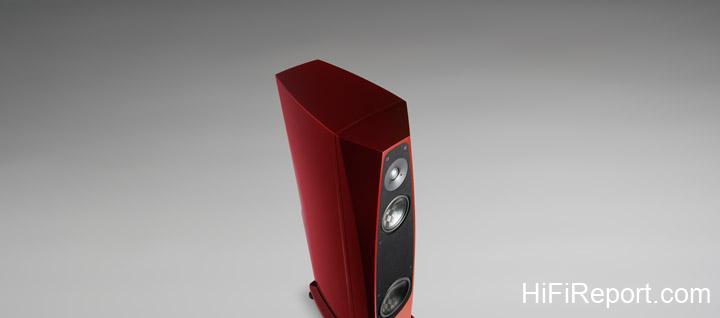
Rockport Atria II
Among the Hi-End audio manufacturers we’ve covered over the years, Rockport Technologies (hereafter referred to as Rockport) stands out as particularly memorable. I recall vividly our Editor-in-Chief’s trip to Maine, USA, in 2003 to interview the company. Audiophiles familiar with the brand know that Rockport sits at the absolute pinnacle of Hi-End loudspeakers, with price tags naturally reflecting this exalted status.
Such top-tier brands are often associated with an image of luxury, but the Editor-in-Chief’s description of founder and designer Andrew Payor in that report presented a picture far removed from my preconceptions of a high-end audio factory owner.
The Editor-in-Chief provided a lively account of Andrew in that article: “He drives a Toyota pickup truck, wears T-shirts and jeans, and finds a chicken sandwich with ginger ale a gourmet meal. His general living expenses are low. His home is surrounded by woods; his town of 3,000 residents has no upscale department stores or multiplex cinemas, only mountainsides of trees and serene bays and lakes.
Fresh breezes and moonlight are free to enjoy, so there is no need or pressure to scramble for a living.”
Given that Andrew manufactures such expensive loudspeakers, one might assume he would be making a significant fortune. Yet, his life is described as simple and tranquil. The stark contrast between these two images filled me with curiosity about both Andrew and the speakers he designs. After delving deeper into the company, I found the reasons behind this dichotomy were not so difficult to grasp.
Engineering and Manufacturing Excellence
Firstly, developing loudspeakers for Andrew is not primarily about making large sums of money, but about realizing a dream. Consequently, since founding the company in 1984, Andrew has maintained a micro-scale operation, insisting on crafting every pair of speakers by hand in small batches. This approach ensures that each pair leaving the factory maintains the highest possible quality. As a result, the waiting time from placing an order to delivery can be anywhere from three to six months.
Frankly, such a slow, meticulous production pace isn’t conducive to maximizing profits.
Secondly, despite being a micro-scale enterprise, Rockport has achieved many feats that larger manufacturers often cannot. Cabinet construction is a prime example. Most speakers utilizing aluminum cabinets are made by milling aluminum blocks and assembling the pieces. However, Rockport’s flagship Lyra employs a cast aluminum cabinet. Many believe that cabinets machined from solid blocks are more rigid, but this is not necessarily true. The primary reason for using billet aluminum is lower cost.
Creating molds for casting aluminum cabinets involves prohibitively high tooling costs. Why does Rockport choose the more expensive route? Because metal casting is the only way to achieve the immense, complex, one-piece cabinet structure of the Lyra speaker.
Developing molds is not a one-off process; the Lyra’s cabinet molds underwent three revisions before meeting Andrew’s exacting standards. For low-volume, high-end speakers, investing such significant R&D and manufacturing costs might never be recouped. Even large Hi-End audio companies are often unwilling to spend this much. Yet, Rockport achieved it without compromise. Does it pay off? I suspect that’s not Andrew’s main consideration.
His sole objective is to build the best loudspeakers possible.
Driver Design
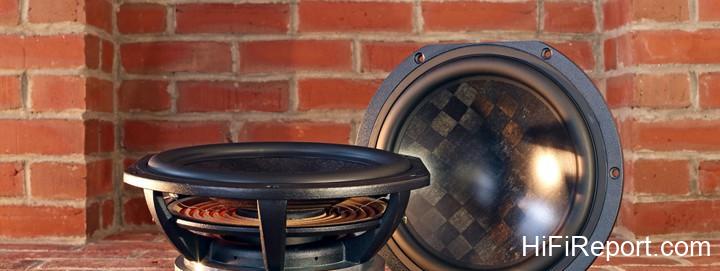
What surprised me was that the mid-range and bass drivers used in Rockport’s current lineup of four speaker models are all developed entirely in-house, from the ground up. Note that when I say “self-developed,” I don’t mean simply providing specifications to a driver manufacturer and asking them to build drivers to those requirements. I mean developing everything from scratch: the diaphragm, voice coil, surround and spider, magnetic system, and driver frame.
This is something most Hi-End speaker manufacturers find incredibly difficult to do.

Why does Rockport expend such enormous effort and cost developing drivers in-house? Wouldn’t it be simpler and cheaper to just buy the best drivers available globally? In fact, before 2011, Rockport did use drivers that were the result of collaborative development with Danish company Audio Technology. Audio Technology drivers are among the world’s best options.
To achieve a further breakthrough, Andrew realized that only by developing drivers entirely in-house could he reach the truly ideal state he envisioned.
You might wonder if Andrew possesses the highly specialized knowledge required for driver design. Rest assured, he does. Before dedicating himself to loudspeaker development, Andrew was an expert designer of turntables and tonearms. His System III Sirius turntable is considered a masterpiece, one of the pinnacles of vinyl playback. It’s no exaggeration to call Andrew a genius mechanical engineer, so designing loudspeaker drivers was well within his capabilities.
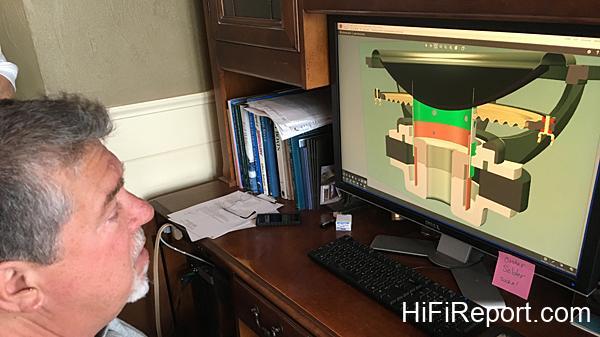
Furthermore, despite its small scale, Rockport is fully equipped with various 3D design software and simulation/analysis testing equipment. This allows Andrew to precisely design drivers that perfectly meet the specific needs of his speakers. This also underscores the massive investment Rockport puts into loudspeaker development.
Driver Technology Details
Let’s delve into the design features of Rockport’s current drivers. The mid-range and bass drivers used across all four current Rockport models are proprietary designs. Their mechanical structure and materials are fundamentally the same. Even the Atria II, the entry-level model under review here, uses driver designs consistent with the flagship, without compromise despite its lower price point.
First, the diaphragm: Since developing their own drivers in 2011, Rockport has used carbon fiber sandwich diaphragms. The Atria II’s diaphragm is an evolutionary version. The outer layer of carbon fiber has a diagonal weave pattern and is only 0.004 inches thick. This layer is first impregnated in a special epoxy formulation for curing and then precision-bonded under high temperature and pressure to the surface of Rohacell foam material.
The structure of Rohacell is filled with tiny air pockets, meaning its primary constituent is essentially “air.” It’s not only incredibly lightweight but also possesses excellent damping characteristics.
Using Rohacell for diaphragms isn’t uncommon; many Hi-End speaker manufacturers like Focal and B&W use this material. However, Andrew’s implementation of Rohacell involves more precise tuning. The key lies in the varying thickness of the diaphragm across its central and peripheral areas, which further helps to break up diaphragm resonances.
The completed carbon fiber sandwich diaphragm is the best performing mid/bass driver diaphragm in terms of stiffness-to-weight ratio that Rockport has ever tested, representing proprietary technology that is difficult for other manufacturers to replicate.
Beyond the diaphragm, the magnetic systems of Rockport’s mid and bass drivers are also meticulously designed, with particular attention paid to heat dissipation. This significantly enhances the drivers’ power handling capability under high power and sound pressure levels. The voice coil former is made of titanium alloy, a material with the highest processing difficulty and manufacturing cost.
This titanium former is not only robust and durable but also has minimal impact on the driver’s impedance variations. Only the most elite drivers on the market employ such a design.
Furthermore, Rockport’s mid and bass driver frames are cast aluminum and self-designed. Did you notice the keyword “cast”? Most manufacturers wouldn’t invest heavily in creating molds for these components that are invisible to the consumer. Yet, Rockport does so without compromise, demonstrating Andrew’s unwavering pursuit of perfection.
Tweeter and Waveguide
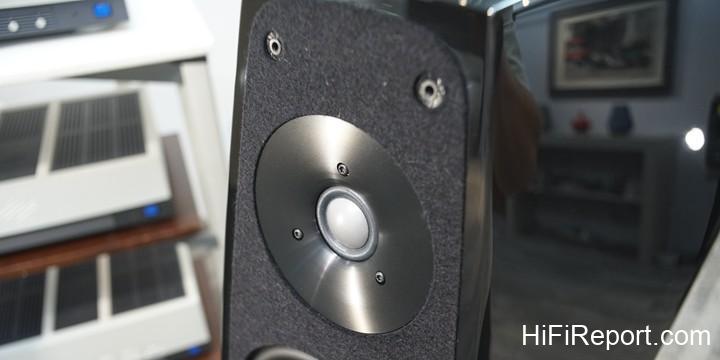
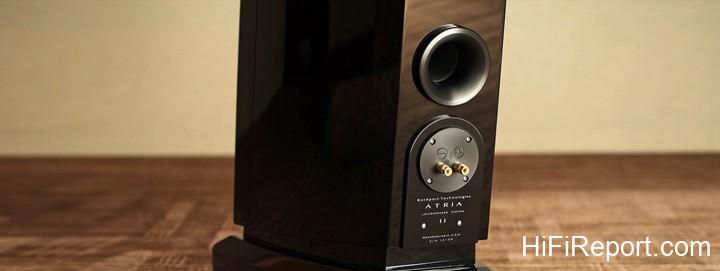
The beryllium diaphragm tweeter used in the Atria II comes from Scanspeak; it’s the only driver not manufactured by Rockport in-house. However, the custom-designed aluminum short horn waveguide surrounding the tweeter is specifically tailored by Rockport for this particular driver. This is one of the main differences between the Atria II and its predecessor.
Don’t underestimate this custom waveguide; it serves three crucial functions. Firstly, it controls the tweeter’s directivity, ensuring the sound dispersion near the crossover point is more closely matched to the mid-range driver. Secondly, this waveguide boosts the tweeter’s sensitivity by up to 5dB near the crossover frequency, effectively providing a form of mechanical crossover.
This allows for better integration between the tweeter and mid-range driver, resulting in more consistent energy and dynamics across their joint operating range. Thirdly, higher sensitivity means the tweeter is easier for the amplifier to drive, leading to significantly reduced distortion.
Simply put, while the beryllium tweeter itself isn’t made by Rockport, the addition of Rockport’s precisely calculated waveguide allows it to integrate seamlessly with the custom mid-range driver, fitting perfectly into the overall Atria II design.
Cabinet Construction
Having discussed the drivers, let’s move on to the Atria II’s cabinet design. Rockport’s most celebrated cabinet design is the double-layer cast aluminum structure used in the flagship Lyra. However, this exclusive cabinet technology is limited to the Lyra. The cabinets for the other three models are primarily constructed from HDF (High-Density Fiberboard).
At this point, you might feel a slight sense of disappointment, perhaps thinking an HDF cabinet isn’t particularly special. In an interview featured in issue 396 of our magazine, I specifically asked Andrew and Rockport’s current President, Josh Clark, about this. Josh emphasized that cabinet design is absolutely critical to sound performance and represents the single highest cost component of a Rockport speaker.
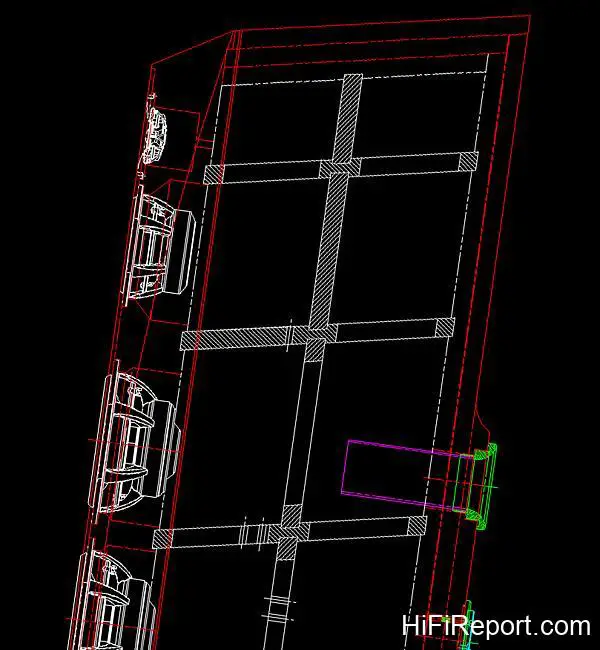
Although the Atria II uses an HDF cabinet, the front baffle alone is constructed from no fewer than four layers of HDF bonded together, resulting in a thickness of 10 centimeters (approximately 4 inches). Special damping material is used between the HDF layers, creating a structure similar to the Lyra’s sandwich cabinet. This brings the cabinet’s rigidity and damping characteristics close to the flagship Lyra’s level.
Could an Atria II HDF wooden cabinet truly approximate the performance of the Lyra flagship’s double-layer cast aluminum sandwich cabinet? To be honest, I initially thought Josh might be exaggerating. However, after testing and listening, I realized the Atria II’s cabinet is indeed rock solid. It remains utterly inert even when playing powerful low-frequency passages.
While its resonance suppression might not be identical to the Lyra’s, the Atria II’s incredibly low cabinet coloration is not far off. Josh’s comments in the interview were, in fact, not an exaggeration.
Delving further, the Atria II’s cabinet design is far from simply relying on thickness and weight. Its thickness actually varies, from a maximum of 4 inches (10 cm) to a gradually decreasing minimum of 2.2 inches (approximately 5.6 cm). This approach prevents resonance energy from accumulating at a single frequency, effectively reducing driver coloration interference.
Crossover Network
Crossover design is often a closely guarded secret for many top-tier speaker manufacturers, and Rockport is no exception. During my interview with President Josh, while he didn’t reveal the specific circuit topology, he did disclose four key points. Firstly, the crossover network for each Rockport speaker model is optimally designed for the specific characteristics of its drivers and cabinet.
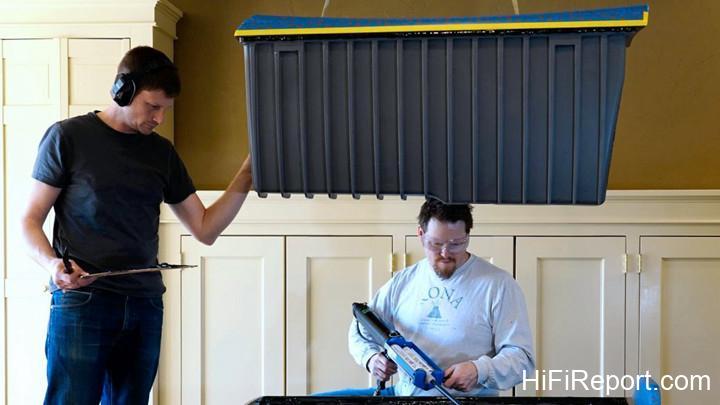
Secondly, *every single pair* of Rockport speakers must undergo individual testing and tuning of its crossover. All component tolerances must be reduced to within 1%, and the full-range phase response must be precisely aligned to a perfect state. Thirdly, all components in the crossover are point-to-point wired and hand-soldered, eliminating parasitic capacitance interference from printed circuit boards.
Fourthly, all crossover components are custom-ordered, including laboratory-grade precision parts.
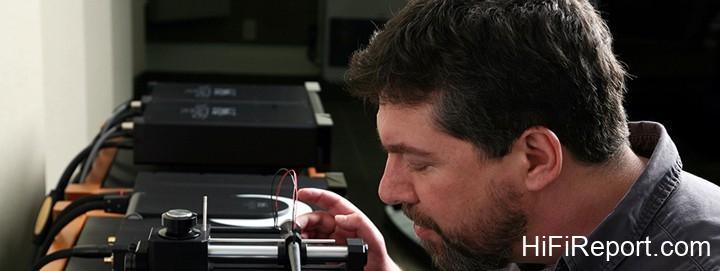
I was particularly surprised by Rockport’s insistence on finely tuning the crossover of every single speaker pair. This is a complex task because each component in a crossover is interrelated, and changing one affects everything. Josh explained they have developed a special standard operating procedure to perform crossover tuning more precisely and efficiently. But how is this actually done?
An overseas report once documented Andrew’s tuning process, mentioning that even altering the length of a component’s leads can affect the speaker’s phase characteristics. This highlights just how precise, complex, and time-consuming Rockport’s crossover fine-tuning is. The fact that every pair undergoes this tuning before leaving the factory demonstrates the extreme rigor of Andrew’s quality standards.
Listening Impressions
Over a decade ago, I had the opportunity to listen to Rockport’s Mira floorstanding speaker, which can be considered the predecessor to the Atria II. Although it was an early entry-level model for Rockport, its sound performance left a deep impression on me. What surprised me most was its bass performance.
I must be honest, the incredibly fast transients, uncompromising low-frequency impact, and exceptionally solid and high-density bass texture I heard then still serve as a reference standard for my audio system tests today. The reason I often use the track “Tricycle” from dmp to test bass is specifically to compare it to my listening experience with the Mira playing that same track back then. Has over a decade passed? Can I still remember the sound I heard all those years ago?
I can’t claim to remember the sound of every piece of equipment I’ve reviewed over the past decade, but the sound of that specific pair of Mira speakers is etched into my memory. Even though it was just an entry-level Rockport model, its bass performance was demonstrably uncompromising and reference-grade. Because that initial impression was so powerful, I can still vividly recall the listening experience whenever I think of it.

Compared to the Mira of yesteryear, the Atria II has, of course, evolved significantly in every aspect. However, I was most interested in the difference in the bass driver. The Mira’s bass driver was mounted on the side of the cabinet, while the Atria II’s is on the front baffle. I recall the Mira’s cabinet being very deep, and I always assumed the Mira’s bass driver was much larger than the Atria II’s.
However, upon checking, I found the Mira had a single 10-inch bass driver per channel, while the Atria II has a 9-inch driver. The size difference is actually not that large. What about the actual listening experience? I can tell you now: my low-frequency reference standard has been rewritten by the Atria II!
System Setup and Driving Characteristics
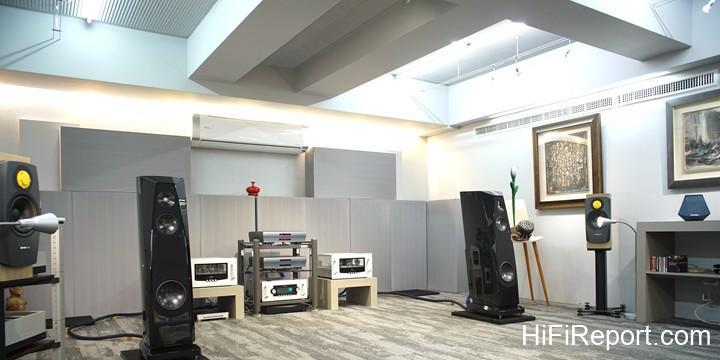
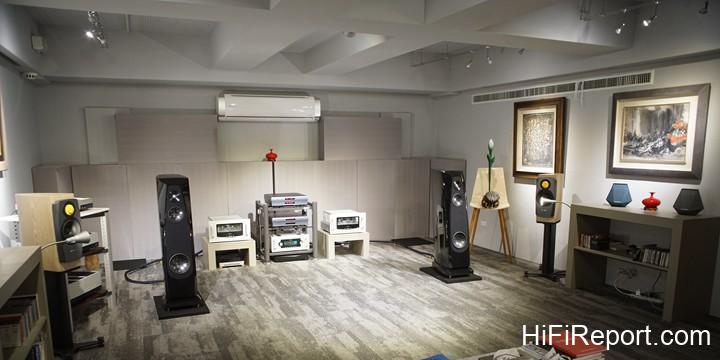
Before describing the listening experience further, I want to mention the reference system used for this audition at Tai Fu. I recall Rockport speakers typically being driven by solid-state amplifiers, but Tai Fu paired them with Audio Research tube amplification this time. This pairing isn’t surprising, as one of the main reasons they became the Rockport distributor was a recommendation from Audio Research. Do you remember David Gordon, the Audio Research brand ambassador who visited Taiwan?
This veteran with over 30 years at Audio Research is not only knowledgeable about technology but also about listening. His own home audio system uses Audio Research tube amplifiers paired with Rockport Atria II speakers! David Gordon’s strong recommendation gave Tai Fu the confidence to represent this top-tier speaker brand.
Can tube amplifiers drive the Atria II effectively? The manufacturer’s specifications indicate the Atria II’s minimum amplifier power requirement is only 50 watts. Josh mentioned in our interview that the impedance variation of Rockport’s current four models is very gentle, staying between 3 and 4 ohms, confirming they are not difficult to drive.
The Audio Research Reference 160M monoblocks used by Tai Fu for this session have an output power of 150 watts, which is more than sufficient to drive the Atria II. In fact, for 99% of the listening time during this session, I had the 160M monoblocks switched to triode mode, which reduces the output power by half to 75 watts. This was perfectly adequate for listening to most music genres with the Atria II.
Note that Tai Fu’s listening room is very large, and the speakers were positioned particularly far from the listening position. Driving the Atria II with the 75-watt triode output of the 160M tube amps in such a large space still produced abundant, full-bodied energy. This clearly indicates that the Atria II is genuinely not difficult to drive.
As for that 1% of the time spent with the 160M switched to pentode mode, what music was I listening to? The answer is precisely that track, “Tricycle.” To elicit the lightning-fast, explosively dynamic kick drum bass in such a large space with the Atria II definitely required higher output power. However, I must reiterate that switching the 160M to 75-watt triode output was sufficient for 99% of music genres.
What I hadn’t anticipated was how well the Audio Research tube amplifiers and the Atria II would pair. The natural, fluid sound quality, I believe, is closely linked to the Reference 6SE preamplifier. And the incredibly fine resolution of subtle musical variations and layering? That level of transparency and nuance is something I previously only associated with ultra-high-efficiency horn speakers or full-range speakers with no crossovers, driven by the purest single-ended tube amplifiers.
Musical Insights
Why do I say this? Let’s listen to Martha Argerich playing the Argentine composer Alberto Ginastera’s piano piece “Danzas Argentinas.” I listened to the live recording from the Concertgebouw in Amsterdam on Argerich’s album “Live from The Concertgebouw 1978 & 1979.” To be honest, the recording quality isn’t particularly audiophile-grade, but Argerich, being from Argentina, plays this piece with a special affinity.
The slow second movement is already beautiful, and Argerich’s spontaneous rhythmic sense enhances the sense of expansive, desolate vastness in the music. What is the experience like when listening with the Atria II? I was completely drawn into the music, as if instantly transported to the vast Argentine pampas, feeling the wave-like undulations of wind through the grass, fully immersed in the wilderness landscape depicted by the music.
I know the description above is quite abstract, so I should describe what I actually heard. Earlier, I mentioned that Argerich’s recording wasn’t particularly audiophile. By that, I meant the high-frequency piano touches seemed to lack layering and sparkle, and the decay wasn’t particularly rich, as heard on most systems before. However, playing it through the Atria II resulted in a completely transformative sound experience.

The high-frequency touches I heard now possessed a tonal quality as transparent and flawless as a diamond. The decay extended effortlessly and naturally, radiating a lustrous sheen that was both warm and transparent. Not only that, but the piano touches revealed incredibly delicate layers of vibration, so distinct they seemed almost visible!
Was this truly the same recording I previously considered not particularly audiophile? No, through the Atria II’s reproduction, the sound quality of this piece was incredibly pure and beautiful, with a richness of detail and layering I had never heard before. It sounded like a superb audiophile recording! I must confess, in over a decade of reviewing audio equipment, no speaker has ever allowed me to hear so much detail.
The key point is that this powerful resolving capability is not achieved by emphasizing harshness or artificial brightness in the high frequencies. All the details flow forth naturally and effortlessly, without ever feeling overwhelming or causing listening fatigue. This is yet another example of demonstration-level audio reproduction that I had never encountered before and which left an incredibly deep impression.
If you see me using this Argerich album to test equipment in the future, the unforgettable sound memory of this experience will definitely be on my mind.
Returning to what I said earlier, why did I mention horn speakers and full-range speakers? Because, among the audio systems I have heard, only horn speakers, which utilize compression drivers and horn loading, or full-range speakers, which eliminate crossover coloration, possess the potential for such astonishing detail retrieval and layering analysis.
The problem is that these two types of speakers have their own inherent physical limitations, while the Atria II is a multi-way crossover speaker with comprehensive expressive power.
Considering it from another perspective, for a multi-way crossover speaker, perhaps only by minimizing driver distortion, minimizing cabinet coloration, and eliminating the impedance and phase distortion introduced by the crossover can all the detail information hidden in a recording be fully revealed without loss or impediment. Theoretically, no speaker can achieve this perfectly, but the Atria II truly approaches this ideal state!
String Performance
Next, I tested string music. I will use four different violin recordings to illustrate the Atria II’s sound characteristics. First, I listened to Tseng Yu-Chien’s “Reverie,” an album I am familiar with. This album was recorded with close-miking, making the violin’s energy particularly strong and direct, resulting in a rather ‘hard’ violin sound.
The Atria II unrestrainedly presented Tseng Yu-Chien’s very focused and penetrating violin playing, but miraculously, the Atria II was also able to completely resolve the rigid texture in the violin sound. Most speakers’ mid-high frequencies have certain prominent frequencies, causing the violin to sound particularly sharp and harsh at the instant a certain note is played. The Atria II had absolutely none of this problem.
I believe many people might even find the Atria II’s treble to be too gentle, but that’s not the case. If you perceive the Atria II’s treble as milder, it’s because the Atria II’s mid-high frequencies are completely free from the harsh, irritating distortion that makes things sound rigid. Furthermore, the integration between the mid-range and tweeter is simply seamless.
Is the Atria II really that miraculous? I decided to challenge it with the “ultimate boss” of violin recordings. This is Singaporean violinist Ning Kam’s album “Transatlantic,” released in 2001. The violin recording on this album is even more direct than Tseng Yu-Chien’s, and there’s virtually no artificial reverb added in post-production.
Listening to track five, “Yankee Doodle,” I rarely use this piece to test speakers because on most speakers, the violin sound is dry and stiff, like sawing wood. Yet, I know that the inherent quality of the violin captured on this album is excellent; it just lacks a good speaker to reproduce that beautiful tone. The Atria II is such a speaker. Its reproduction of the violin sound is neither overly softened nor so sharp and stiff that it pierces your eardrums.

The Atria II’s reproduction is like walking a tightrope, balancing precisely at the point where the violin’s energy is strongest and most focused, but not yet reaching the threshold of compression or distortion. At this point, we can hear the most realistic playing energy, the most focused lines of performance, and the richest, most beautiful sheen, without feeling tense, harsh, or fatigued.
Among the speakers I have heard reproducing this piece, the Atria II is one of the very few that possesses such extraordinary mid-high frequency control and handling capability.
Next, I listened to the Artis Quartett Wien playing Webern’s “Langsamer Satz” for string quartet. This is a version I particularly like, but I always felt the string sound was a bit too thick when listening previously. Reproduced by the Atria II, it revealed a different aspect. The previously overly dense string lines became slender and focused. That slenderness absolutely does not equate to a thin sound; it still retains a three-dimensional fullness.
And that focus makes the variations in playing intensity more agile and distinct, while the texture of the violin sound becomes finer and smoother. In the past, when describing string sound, I often used terms like “focus” and “penetration” to describe string lines, energy, and texture. These terms can easily evoke the image of overly tense or compressed violin sound.
But if you hear the violin sound reproduced by the Atria II, you will understand that truly focused and penetrating violin reproduction does not sound tense or compressed; instead, it sounds incredibly realistic.
Listening to Leila Schayegh and Jan Schultsz playing Brahms violin sonatas, Leila Schayegh uses a replica baroque violin. Its tone is more delicate and restrained, lacking the full energy and rich expressiveness of a modern violin. Her playing technique also doesn’t employ lavish vibrato, which can often make listening feel monotonous and bland.
Played through the Atria II, however, it particularly highlights the delicate and pure texture of the baroque violin sound and fully reveals the layered variations between fortissimo and pianissimo. Even at the very end of a sustained note fading to the softest possible level, the subtle, threadbare decay is clearly rendered, fully showcasing the beauty of the baroque violin’s tone.
Bass and Orchestral Performance
It’s time to test the performance with bass and large-scale compositions. I’ve already described the Atria II’s performance with “Tricycle.” Reproducing sharp transients and explosive momentary impact is effortless for the Atria II. However, unlike my listening experience with the Mira years ago, the Atria II’s bass clearly possesses a richer, more distinct sense of layering. This characteristic is most evident when testing piano bass notes.
Listening to Alexandre Tharaud playing Rachmaninoff’s Prelude No. 1 on the album “Le Poete du piano,” the piano bass on this recording, while grand and immense in scale, felt somewhat loose in the lower registers. Playing it through the Atria II, the bass became tighter and more focused, regaining its clear and distinct layers. Note that tightened bass doesn’t mean reduced energy.
The Atria II not only delivered grand and powerful bass presence but also clearly and solidly reproduced the weighted impact of strong bass keystrokes. It’s hard to believe that the Atria II achieves such expansive and immense low-frequency scale with just a single 9-inch bass driver per channel.
Next, I listened to the fourth movement of Beethoven’s “Symphony No. 6” conducted by Giulini with the Los Angeles Philharmonic. Even at high volume, the Atria II maintained rich, stable layering and energetic brass and string tutti sections. The timpani strikes were like a raging storm, exciting and exhilarating, while simultaneously revealing the very transparent layers of the drumhead vibration and a very full and rich amount of low-frequency volume.
Soundstage and Vocals
The Atria II’s soundstage performance is noteworthy. When listening to piano recordings earlier, I already felt the Atria II’s soundstage was particularly open, faithfully rendering the scale of a large grand piano. With orchestral music, the width of the orchestra extended even beyond the two speakers. Note that Tai Fu’s listening room is very large, and getting floorstanding speakers of the Atria II’s size to produce enough energy in such a large space is a significant challenge.
Yet, the Atria II’s reproduction energy filled the entire room without being diluted. Even at high volume, it remained effortless and composed, maintaining a very stable rendition of the symphony’s power and layering.
Next, I tested vocals. First, I listened to American rock singer Lou Reed performing “Vanishing Act.” This is a very detailed recording. I first noticed the very thick and high-density vocal mid-range produced by Lou Reed’s chest resonance. The Atria II’s mid-range possesses excellent thickness, density, and fullness, which will surely satisfy audiophiles who enjoy vocal music. Secondly, I also heard very clear and direct sibilance and mouth sounds.
If sibilance is overly emphasized, it can easily become harsh, but the Atria II’s reproduction is not only clear but also incredibly natural and realistic, as if Lou Reed were truly standing center stage between the speakers.
Next, I listened to Naotaro Moriyama singing “Ningen no Mori.” This is a song I like very much, but it’s often not well-suited for playback on a Hi-End audio system. Why? Because this song has a popular music recording aesthetic with particularly high recording levels, which tends to make the sound quality feel too hard and rough when played on Hi-End systems.
It wasn’t until I played it through the Atria II this time that it miraculously restored the pure, clear, and soft qualities of Naotaro Moriyama’s beautiful voice.
Conclusion
Frankly, the phenomenon described above is difficult to explain theoretically. I have always believed that when ‘audio-ness’ (technical performance) is maximized and distortion is minimized, a speaker’s musicality will naturally emerge. Based on this premise, playing “Ningen no Mori” through the Atria II should have highlighted its flaws. However, the Atria II allowed me to hear the most beautiful aspects of Naotaro Moriyama’s voice. Could it be that the Atria II’s resolution isn’t good enough?

Absolutely not; the Atria II has the highest resolution of any speaker I have ever heard. Is the Atria II’s ‘audio-ness’ not good enough? Certainly not; the Atria II excels in every aspect of audio performance, scoring top marks across the board.
It is evident that even speakers with excellent characteristics, minimal distortion, and the finest components may not be able to reproduce the Rockport Atria II’s powerful musical infectiousness – its ability to draw the listener deep into the music. Through the Atria II’s reproduction, we hear the music itself, not the sound of the audio equipment.
It not only thoroughly excavates all the detail hidden within the recording but also fully presents the emotions that musicians and performers pour into the piece, allowing the listener to be completely immersed, body and soul, in the joy and emotion of the music. The Atria II is indeed the most musical speaker I have ever heard. Even compared to speakers with much higher price tags, the Atria II remains irreplaceable. And astonishingly, it is merely Rockport’s entry-level model.
Specifications
* Product Type: 3-way, 3-driver, bass-reflex floorstanding speaker
* Drivers:
* 1-inch Beryllium dome tweeter ×1

* 6-inch Carbon Fiber sandwich cone mid-range driver ×1
* 9-inch Carbon Fiber sandwich cone bass driver ×1
* Frequency Response: 28Hz–30KHz (-3dB)
* Sensitivity: 87.5dB SPL/2.83V
* Nominal Impedance: 4 Ohms
* Minimum Amplifier Power: 50 watts
* Harmonic Distortion (90dB, 1m):
* Less than 0.3% (100Hz-20kHz)
* Less than 1% (30Hz-20kHz)
* Dimensions (WHD): 317.5 × 1105 × 508mm (12.5 × 43.5 × 20 inches)
* Weight: 68 kg (150 lbs)
* Approximate Reference Price: ~$41,000 USD
Reference System
* Source:
* Playback Design MPT-8 SACD Transport
* Playback Design MPD-8 Dream DAC
* Amplification:
* Audio Research Reference 6SE Preamplifier
* Audio Research Reference 160M Monoblock Power Amplifiers
Key Features
* Sandwich structure cabinet combining HDF and special damping layers, with a front baffle thickness of 10 cm (approximately 4 inches). * Proprietary self-developed carbon fiber sandwich cone mid-range and bass drivers. Each channel relies on just one 9-inch woofer to deliver unexpected bass energy and scale. * Beryllium dome tweeter paired with a newly designed short horn waveguide for perfect integration between the tweeter and mid-range driver.
* Unparalleled detail retrieval and layering resolution.