
SOtM iSO-CAT6 Isolator Review
Network switches tailored for digital streaming have become some of the most sought-after products recently. SOtM’s audiophile-grade switches are known for their significant sonic improvements, offering various models and configurations that have attracted many enthusiasts. Beyond switches, SOtM offers a range of products related to digital streaming.
This review focuses on the iSO-CAT6 Network Signal Isolator, a device utilizing specially designed filter circuits to isolate network signals and noise, ultimately enhancing sound quality. The iSO-CAT6 features fully shielded network ports compliant with CAT6 specifications and is priced at USD 350. A Special Edition (SE) version of the iSO-CAT6 is also available, doubling the price to USD 700. The SE version notably includes three high-end network cables with distinct sonic characteristics.
The iSO-CAT6 can also be paired with SOtM’s high-end dCBL-CAT7 network cable, and for the most demanding audiophiles, a configuration using two dCBL-CAT7 cables with an iSO-CAT6 in between is also an option.
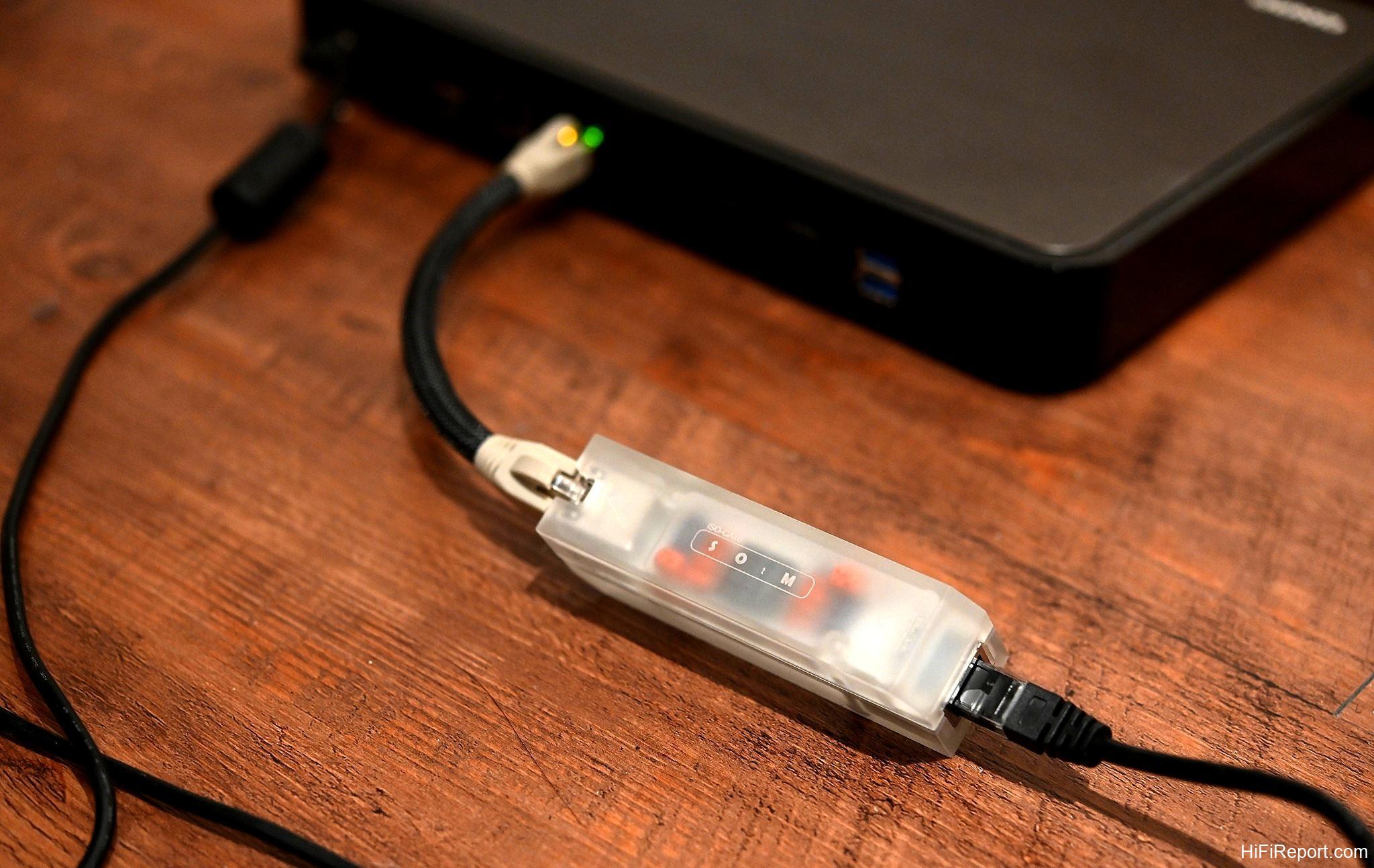
The iSO-CAT6 itself is a small, matte-transparent rectangular box. It connects between your router and your streaming device, with clear markings on the top for easy connection.
Installation Note
A crucial point to note during installation is that the iSO-CAT6, along with the included short network cable, should be connected to the device end. This configuration likely ensures that the iSO-CAT6 is positioned closest to the equipment, maximizing its noise isolation effectiveness. Initially, I made the mistake of connecting it incorrectly without consulting the manual, but later rectified it.

Pay attention to the markings on the iSO-CAT6’s two network ports, indicating the “Router” and “Device” sides to avoid incorrect connection.
SOtM iSO-Cat6 SE: Special Edition
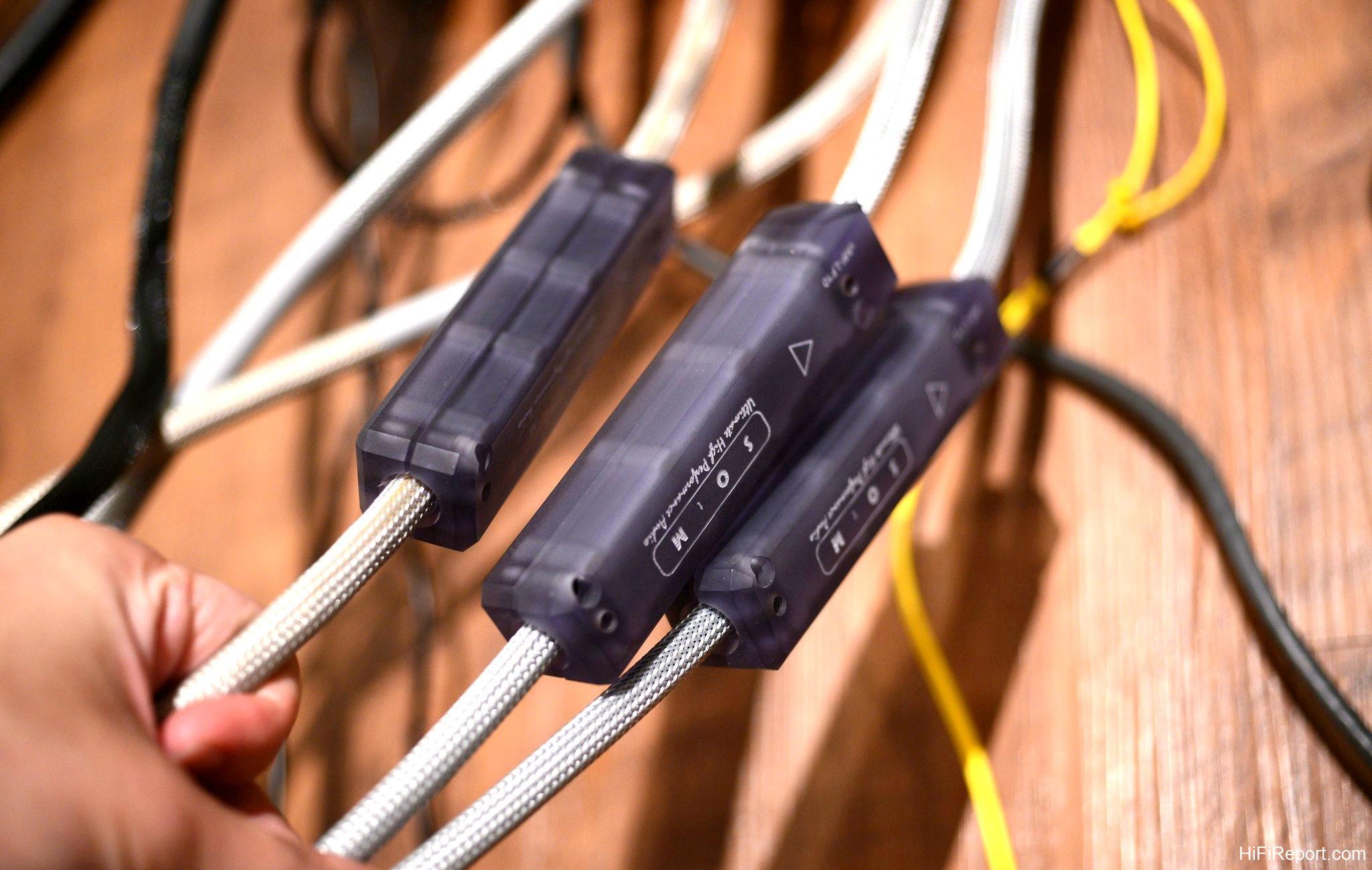
The Special Edition includes three 30cm network cables. SOtM believes that with such a short length, the connector has a greater impact than the cable itself. Consequently, these three cables share the same conductor but feature different network connectors, differentiated by colored shielding mesh.
* Black: High resolution and dynamic
* Grey: Moderate

* Dark Grey: Mild, comfortable
The MY-HiEND listening room already utilizes a SOtM switch. I was curious to hear the combined effect of adding the iSO-CAT6. After extensive comparisons, I can confirm that even with a SOtM switch in place, the iSO-CAT6 provides a noticeable positive impact. The sound becomes more focused and cohesive, image outlines are clearer, the background is blacker, and the overall sonic presentation is more transparent and dynamic.
For those yet to invest in a high-end switch, this small device is an excellent starting point. Even users with high-end switches will find that adding the iSO-CAT6 network signal isolator further enhances the sound. Its operational principle appears to differ from that of a switch, as the sonic improvements are in a different direction.
To clarify this, we specifically consulted SOtM regarding the distinct functions and principles of their audiophile-grade switch (sHN-10G), high-end network cable (dCBL-CAT7), and network signal isolator (iSO-CAT6).
SOtM’s Explanation
SOtM clarified that the primary function of the iSO-CAT6 is “isolation” of signal interference between devices. It “blocks” incoming noise and incorporates noise filtering. The network signal (data transmission) passes directly through it. In contrast, the filter box on the dCBL-CAT7 network cable does “not” have the signal pass through it; instead, it employs SOtM’s unique noise reduction filter design wrapped around the cable.
The sNH-10G network switch uses similar noise filtering specifically designed for network applications, akin to that in the iSO-CAT6. The sNH-10G can also be used with an external sCLK-EX clock to further improve sound quality and utilizes SOtM’s proprietary ULNR (ultra-low noise regulator) power circuitry designed for audio.
Complementary Improvement
These three products can be used together, each offering distinct improvements without conflict or redundancy, resulting in cumulative enhancement.
All SOtM products are fundamentally focused on electrical and electronic engineering to minimize interference that degrades sound quality. Their approach goes beyond simply swapping capacitors to alter the sound; it aims for fundamental improvements. Consequently, users of SOtM products consistently experience comprehensive sound enhancements, leading to a more authentic and musically engaging presentation.

Future iSO-CAT7?
An iSO-CAT7 is indeed planned. However, for music streaming, CAT6 is already sufficient. CAT7 or CAT8 are not as critical as effectively reducing noise that impacts sound quality. SOtM specializes in this area. Nevertheless, SOtM will release a 10Gbit version that will encompass CAT7 and CAT8 specifications.
SOtM dCBL-CAT7 network cable’s filter box is external to the signal path, wrapped around the cable.
Adding an iSO-CAT6 to the NAS network connection provides cumulative improvements.
Enhanced Imaging and Clarity (Ted Chen)
My evaluation of the SOtM iSO-CAT6 utilized the Special Edition. While the isolator box itself is identical to the standard version, the SE package includes three different network cables for connecting to the downstream device. These are intended for users to experiment with and subtly fine-tune the sound.

However, not wanting to waste the two unused cables, I decided to connect SOtM’s network cables to both ends of the isolator—one to the network switch and the other to the network streamer—reasoning that it couldn’t hurt. The evaluation directly compared this setup to our regular network cable. For listening, I chose “The Itch” from Kevin Moore’s album *Suitcase*. Listening with the regular network cable was already quite enjoyable, with no particular dissatisfaction.
It’s important to note that our listening room already uses a SOtM network switch as a fixed reference component. Upon switching to the SOtM iSO-CAT6, I didn’t notice significant changes in tonal character, soundstage size, or detail retrieval. However, there was a clear improvement in image projection and solidity. Vocals became more focused and impactful, and the dynamics were enhanced. The bass had more punch; it was quicker, tighter, and cleaner in its decay.
The overall background was undeniably blacker. Switching back to the regular network cable, I perceived a slight increase in noise. To be honest, it was subtle, but the difference was discernible. The vocal focus was also marginally less defined. These changes were subtle, not dramatic.
After repeated comparisons, it became apparent that while each individual improvement—imaging, clarity, transparency—was incremental and might be missed with casual listening, their cumulative effect resulted in a cleaner and more three-dimensional musical presentation.
Improved Sonic Density
For my evaluation, I listened to track 11 from the album *Camille & Julie Berthollet*, a rendition of Paganini’s famous Caprice No. 24 for solo violin, a technically demanding piece. This version, performed by the French Berthollet sisters, features a slightly adapted arrangement with orchestral accompaniment, offering a unique flavor. I compared two connection methods: one using our standard network cable and the other incorporating the SOtM iSO-CAT6 network signal isolator.
The sound quality with the standard network cable was already very good. However, the violin’s presentation was somewhat ordinary, pizzicato notes sounded slightly dispersed, and while the ensemble had tension, the overall impression was somewhat detached. Switching to the iSO-CAT6, the violin melody gained a denser texture. This was particularly noticeable in the legato passages with sixteenth notes, where the bowing and notes became unified. The sound became denser compared to the first setup.
In the pizzicato sections, the timbre gained thickness, as if a solid foundation was laid beneath the main melody. I personally prefer using streaming music platforms for listening due to the vast music library, numerous platforms, and overall convenience. However, the world of audio is incredibly vast, with countless equipment options, and every cable can influence the listening experience. The iSO-CAT6 made a significant difference.
If you enjoy streaming music, SOtM’s offering will undoubtedly elevate your music’s performance across various aspects. The device’s appearance is also appealing—a matte-transparent rectangular box with their logo, devoid of excessive ornamentation, simple and versatile.
SOtM iSO-CAT6 Network Signal Isolator Specifications
* CAT6 compliant
* Fully shielded network module ports
* High-quality isolation components
* Isolation rating: 1500Vrms, 0.5mA, 60sec

* No external power supply required
* Sonic characteristics: Quieter background, clearer and more three-dimensional imaging, increased dynamics
* Pairing suggestions: None, simply ensure the iSO-CAT6 is positioned closer to the equipment and that the “Device” and “Router” ports are correctly connected.
Test Equipment List
* Speakers: Marten Django XL
* Source: Weiss DAC501
* NAS: QNAP HS-251
* Amplifier: Esoteric F-03A 30th Anniversary Edition