
SOtM sNI-1G Network Expansion Card Review
For audiophiles seeking to elevate the performance of their Computer As Transporter (CAT) setups—utilizing a computer as a digital streaming source—several upgrade paths offer compelling results. Among these, the installation of dedicated USB and network expansion cards stands out as both straightforward and remarkably effective, particularly for desktop PC configurations. This approach bypasses the motherboard’s integrated USB and network ports, opting instead for dedicated hardware.
Why pursue this strategy? While these expansion cards interface with the motherboard via PCIe slots, they introduce a degree of isolation from the intricate noise and vibrations emanating from the motherboard itself. This isolation is crucial in minimizing interference and contamination that can compromise the integrity of audio signals entering and exiting the system.
From my experience, even budget-friendly, consumer-grade USB and network cards, costing merely a few hundred to a thousand NTD, can yield discernible sonic improvements. For those with more generous budgets, stepping up to audiophile-grade expansion cards, such as the SOtM tX-USBexp USB card I previously reviewed, unlocks an even more profound level of enhancement.
Now, catering specifically to the demands of high-fidelity streaming, SOtM introduces the sNI-1G network expansion card. Let’s delve into its capabilities and assess the sonic benefits it brings to the table.
Isolation Design Philosophy
Having experienced a range of SOtM products previously, I’ve developed a strong confidence in their engineering approach. So, when Cindy, the representative from SOtM, reached out to ask if I was interested in reviewing the newly launched sNI-1G, my answer was an immediate yes. Her follow-up question, however, took me by surprise: “Do you need the B+M Key or the A+E Key version?” This prompted me to wonder, could the sNI-1G be employing the M.2 interface instead of the more common PCIe? Indeed, it does utilize M.2.
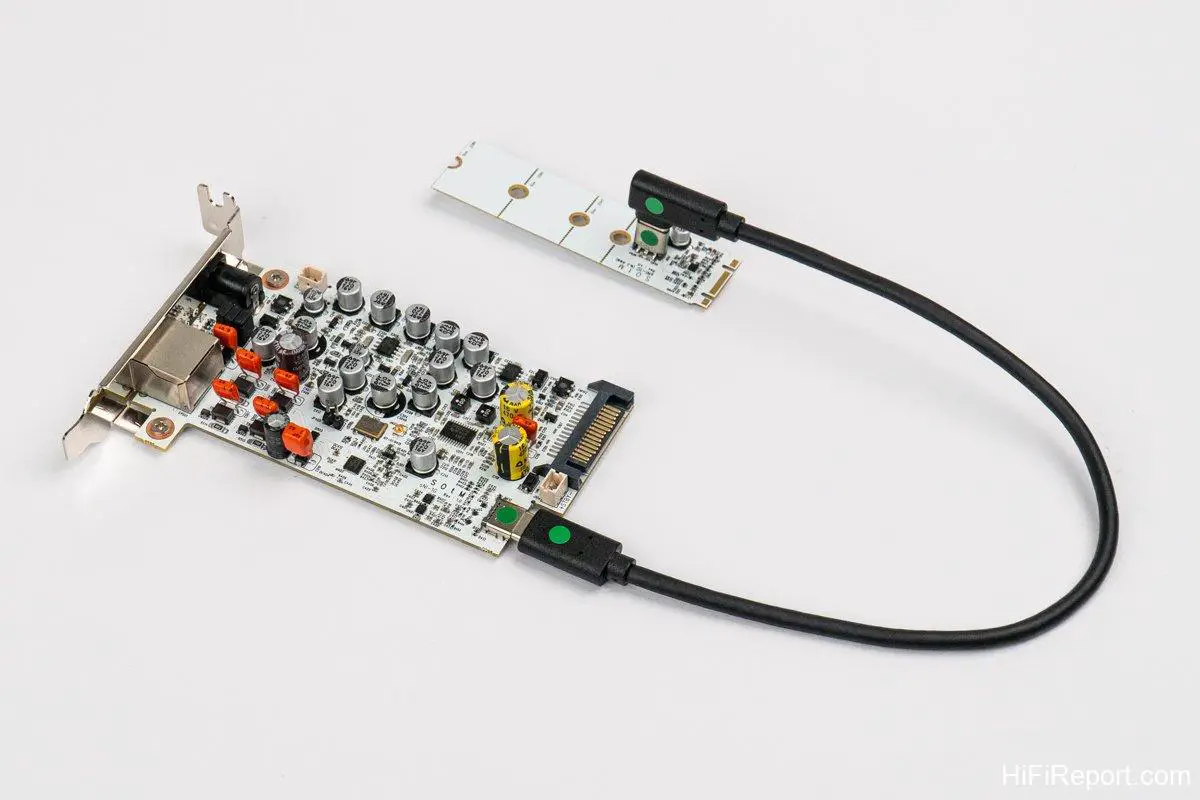
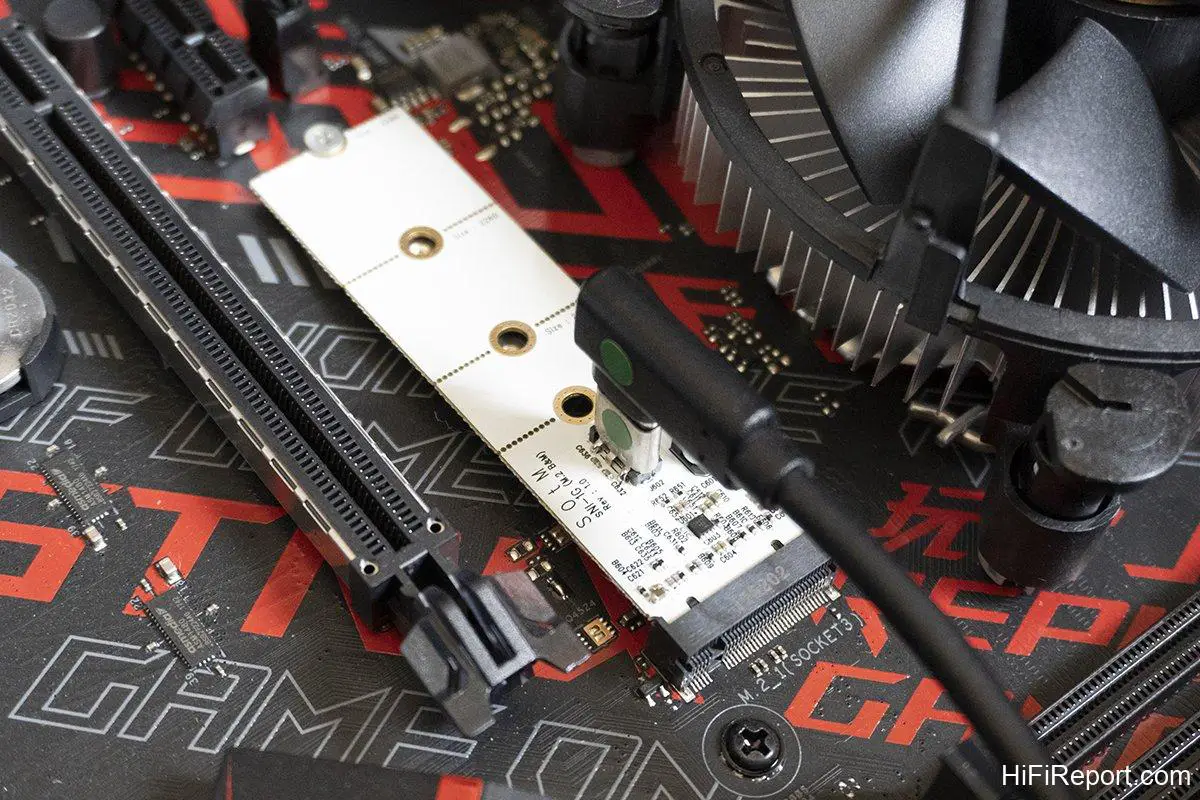
Despite its substantial appearance, the sNI-1G actually connects to the computer motherboard via a diminutive M.2 circuit board. A dedicated cable is essential to bridge the M.2 board and the primary sNI-1G board. It’s crucial to note that the sNI-1G remains fundamentally a PCIe network interface card, meaning your motherboard’s M.2 slot must be PCIe compatible.
Therefore, before considering the sNI-1G, verify three key aspects: 1. Does your motherboard feature an M.2 slot? 2. Is this M.2 slot PCIe compatible? 3. Is it a B/M Key or A/E Key type?

While this might seem slightly intricate, it’s a one-time setup process, and not overly cumbersome. Given that the sNI-1G is inherently a PCIe network card, why the “over-engineered” approach of using an M.2 intermediary? And what if your motherboard lacks an M.2 slot altogether? The primary rationale behind this design is to achieve thoroughgoing isolation.
According to SOtM’s official documentation, network cables are not merely conduits for data; they also introduce noise. This noise spectrum contains high-frequency components that can propagate along the signal path to the DAC, ultimately degrading audio fidelity. The sNI-1G is designed to act as a critical first line of defense, preventing noise ingress and shielding the computer motherboard from unwanted interference.
The connection between the sNI-1G main board and the M.2 board is established via a dedicated USB Type-C cable. SOtM explicitly mandates the use of the supplied cable, precluding alternatives, and emphasizes adherence to the prescribed connection orientation.
How exactly should it be connected? The provided USB-C cable features a straight connector on one end and a 90-degree angled connector on the other. Both connectors are marked with a green dot sticker. Corresponding green dot stickers are also present on the USB-C receptacles of both the sNI-1G main board and the M.2 board. During installation, the straight connector should be mated with the sNI-1G main board, and the 90-degree connector with the M.2 board, ensuring alignment of the green dots on the connectors and receptacles.
During my evaluation, I resisted the temptation to deviate from the recommended connection method to explore potential consequences. Following the manufacturer’s guidelines is invariably the prudent course of action.
Power Supply Flexibility
Power delivery is another significant pathway for noise to infiltrate audio systems. Conventional network expansion cards typically draw power directly from the PCIe bus—in essence, from the motherboard itself. This inherent dependency makes them susceptible to contamination from the motherboard’s diverse noise sources. To mitigate this, the sNI-1G incorporates a design that allows for external power, providing an additional layer of noise isolation.
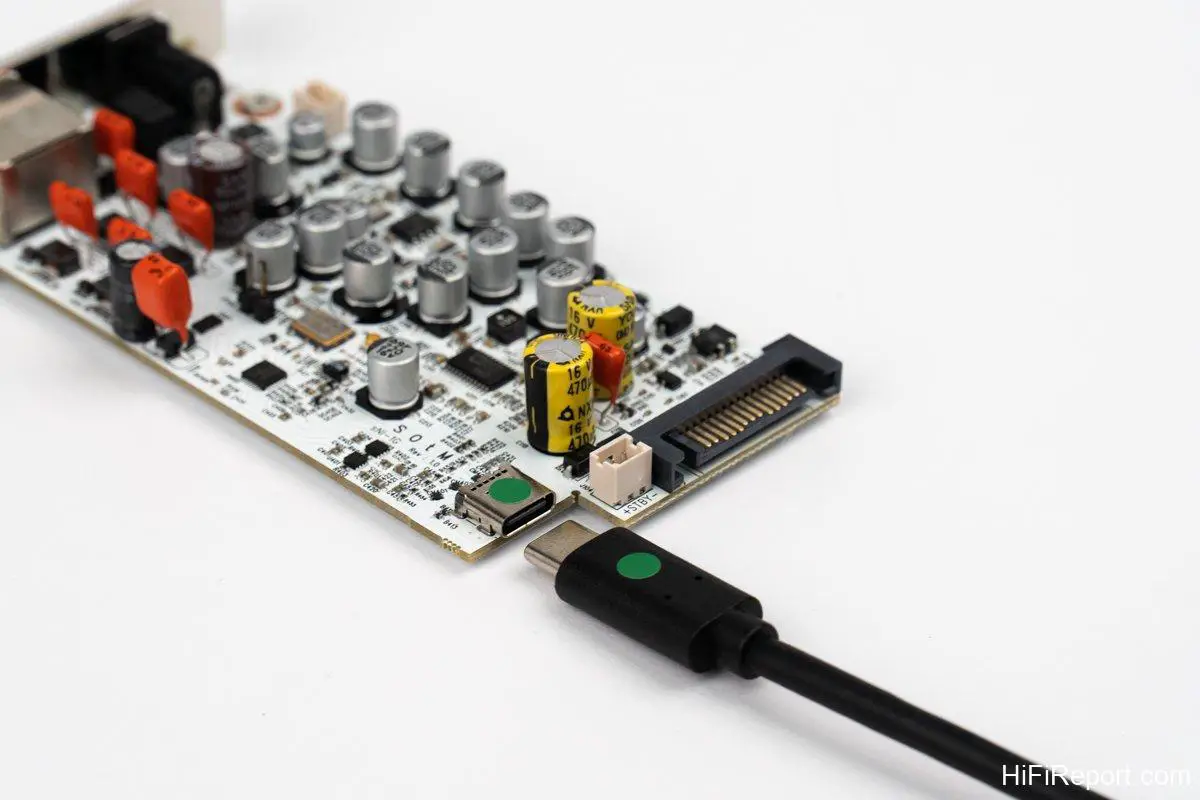
Adding to its versatility, the sNI-1G accommodates a wide range of external DC power inputs, from 6.5V to 12V, rather than being restricted to a single voltage. Furthermore, it utilizes the common 5.5 × 2.1 mm DC barrel connector, simplifying the process of sourcing a suitable high-quality power supply.
For users who may not have an external power supply readily available, the sNI-1G offers a fallback: it can be powered via a SATA power connector sourced from the computer’s ATX power supply. Simply connect a SATA power cable from the ATX PSU to the designated port on the sNI-1G.
Even when employing an external power supply, SOtM advises retaining the SATA power connection to the internal ATX power supply. This precautionary measure is intended to prevent potential damage to the network card and computer in the event of an unexpected external power interruption.
Beyond the benefits of cleaner power, the sNI-1G also provides the option to connect a more precise external clock source, opening avenues for further sonic refinement.
Enhanced Sonic Purity
Installation of the sNI-1G proved straightforward, akin to installing any standard expansion card. While it doesn’t occupy a traditional PCIe slot, it does utilize a PCIe slot position within the computer chassis for mounting.
My test PC runs on a Linux operating system, which natively supports the sNI-1G, eliminating the need for driver installation. This was confirmed upon booting, with the card functioning seamlessly right away. For Windows-based systems, drivers are required and readily available for download from the SOtM website.
To establish a comparative baseline, I installed an additional network card in the same PC. This card, sourced from an online auction site for just over 1000 NTD (approximately $30 USD), was advertised as server-grade and purportedly utilizes the same chipset as the Intel I340-T2. This card served as a direct competitor against the sNI-1G in my evaluation.
My PC was configured with Roon Bridge, transforming it into a Roon Ready streaming endpoint. Connectivity to my audio system was via USB to an Audionet DNP preamplifier, with music files streamed from a QNAP NAS acting as the Roon Core. A NuPrime Evolution One power amplifier was used for the listening sessions.
I began my critical listening with “Immediately Blessed,” track 7 from the “Blue Coast Collection – The E.S.E Sessions” compilation. This track features a minimalist arrangement of two guitars accompanying a male vocalist. The guitars are positioned distinctly in the left and right channels, with the vocals centered and slightly forward in the mix. The overall sonic character is transparent, clear, and subtly warm.
Through repeated A/B comparisons, a consistent pattern emerged. With the sNI-1G in place, the perceived image size of both vocals and guitars appeared to subtly diminish. This was not due to a reduction in scale, but rather a consequence of improved image focus, enhanced clarity, and more defined outlines. The resulting effect was a perception of smaller, more precisely rendered sonic images. This refinement notably improved the separation between the two guitars, while the vocals, now more tightly focused, gained apparent dynamic impact and more pronounced transient detail.
Furthermore, the sNI-1G imparted a heightened sense of sonic transparency, lowering the noise floor and creating a cleaner, more pristine background. This was akin to a dissipating haze, enhancing both soundstage depth and the overall three-dimensionality of the sonic image. The front-to-back layering of instruments also expanded, creating a more spacious presentation.
Beyond these improvements, the sNI-1G also extended low-frequency response. Subterranean bass notes, previously faint, became more clearly audible and naturally extended.
I also observed an increase in soundstage height and an enhanced sense of airiness in the upper frequencies. The treble range exhibited a delicate, effortless quality, contributing to a more comfortable and relaxed listening experience.
The darker, cleaner background facilitated a greater appreciation for subtle ambient cues, enriching the sense of realism and presence. The improved signal-to-noise ratio also translated to greater overall dynamic range.
Holistic Sonic Enhancement
The improvements afforded by the sNI-1G were immediately apparent, even with relatively simple musical material. The degree of enhancement was strikingly evident.
Moving to more complex recordings, I selected the RR Records album “Reveries,” featuring Eiji Oue conducting the Minnesota Orchestra. This album comprises a collection of exquisitely beautiful slow movements, including symphonic excerpts and piano transcriptions.
Many tracks on “Reveries” feature dense textures of layered string sections playing in unison at slow tempos. Without adequate resolution and separation, these passages can congeal into a homogenous mass of sound. This was precisely the characteristic of the comparison Intel network card. While initially sounding smooth, closer listening revealed a lack of clarity, limited transparency, and poor layering. The soundstage also felt constricted and lacking in spaciousness.
Switching to the sNI-1G yielded a dramatic transformation. The front-to-back layering of instrumental sections became remarkably distinct, and instrumental separation improved instantly. The soundstage expanded significantly in both width and height, and the three-dimensional quality of the sonic image sharpened considerably. The difference was truly profound. Beyond spatial enhancements, the sNI-1G imbued the music with a greater sense of air and atmosphere. Flute passages gained enhanced penetration, the subtle texture of bow-on-string friction became more pronounced, and the interplay between different string sections took on a more conversational quality. The entire system seemed to undergo an immediate and substantial upgrade.

In essence, the music became more alive. The “Reveries” album, dominated by slow, sustained string ensembles, often lacks dramatic dynamic shifts or tempo variations, potentially leading to a sense of blandness. However, the sNI-1G unearthed subtle nuances and micro-dynamic shadings, injecting the music with a newfound sense of imagery and atmosphere. Closer listening revealed a wealth of subtle variations, far beyond simple lyrical smoothness.
Next, I turned to Rodion Shchedrin’s percussive reimagining of the “Carmen Suite,” performed by Mikhail Pletnev conducting the Russian National Orchestra.
Compared to the reference network card, the sNI-1G elevated the level of excitement by several orders of magnitude. The music gained not only enhanced dynamics, energy, and impact, becoming powerfully assertive, but also a more vibrant and colorful tonal palette.
This work utilizes a vast array of percussion instruments, inherently rich in timbral variety. The sNI-1G further accentuated these timbral nuances, weaving a rich, exciting, and opulent sonic tapestry, significantly amplifying the listening pleasure.
Again, the sNI-1G contributed to clearer sonic outlines, a more tangible sense of instrumental presence, improved layering and separation, and a more holographic soundstage.
High-Fidelity Computer Audio
Finally, I auditioned streaming content from Tidal, and the comparative performance characteristics remained consistent. The reference network card consistently presented a sound that was comparatively blurred, flat, congested, and muddy. In contrast, the sNI-1G delivered greater image solidity, enhanced clarity, superior dynamic articulation, more transparent timbres, a cleaner sonic backdrop, a taller and wider soundstage, improved separation, and a more coherent frequency balance. The result was a significantly more engaging and emotionally impactful listening experience.
These sonic differences were immediately discernible and unambiguous. By addressing noise ingress at the network input stage, the sNI-1G effectively filters out noise at the source, improving overall signal quality. The cumulative effect of these front-end improvements manifests as a demonstrably enhanced sonic performance downstream.
Computer-based audio sources should not be dismissed as inferior to dedicated audio streaming devices. With careful implementation of appropriate techniques and components, a computer can indeed serve as a truly high-fidelity audio source.
Specifications
* Type: PCIe Network Expansion Card
* Support Specification: PCIe 1.1 or above
* Support Network Speed: 10/100/1000 Mbps
* Internal Power Supply: DC +12V / 1A
* External Power Supply: DC +6.5V to +12V
* Supported Operating Systems: Windows 7 and above, Linux