
Silent Angel Z1 Music Server Transport Review
Streaming playback has become a dominant force in the audio world in recent years. In my role as an audio reviewer, I’ve encountered a significant number of dedicated music servers. Frankly, few have truly captured my imagination and sparked a genuine desire for ownership. This isn’t due to any shortcomings in their performance, but rather their often prohibitive price tags. Enthusiasm is quickly tempered by financial reality. However, the Silent Angel Z1 music server turntable is a different proposition altogether. It not only ignites desire but also remains within the realm of attainability.
Supreme Silence: The Design Philosophy
Let’s begin with a simple overview of the Z1’s functionality. This is a music server *transport*, crucially lacking analog outputs. To enjoy music, it must be paired with a USB DAC, a streaming music player, or a Roon Ready device.
The Z1 is versatile, supporting both DLNA Server and Roon Server functionalities. By installing an M.2 SSD, or opting for a pre-equipped version (available in 1TB and 2TB capacities), users can store their music files directly and establish a personal music library managed by the Z1. For those who prefer network-attached storage (NAS), the Z1 seamlessly integrates with existing NAS setups for playback.
Even without local music files or a Roon subscription, the Z1 remains highly functional. It boasts Spotify Connect and AirPlay 2 compatibility, alongside direct playback of Tidal and Qobuz, catering to the vast majority of streaming preferences.
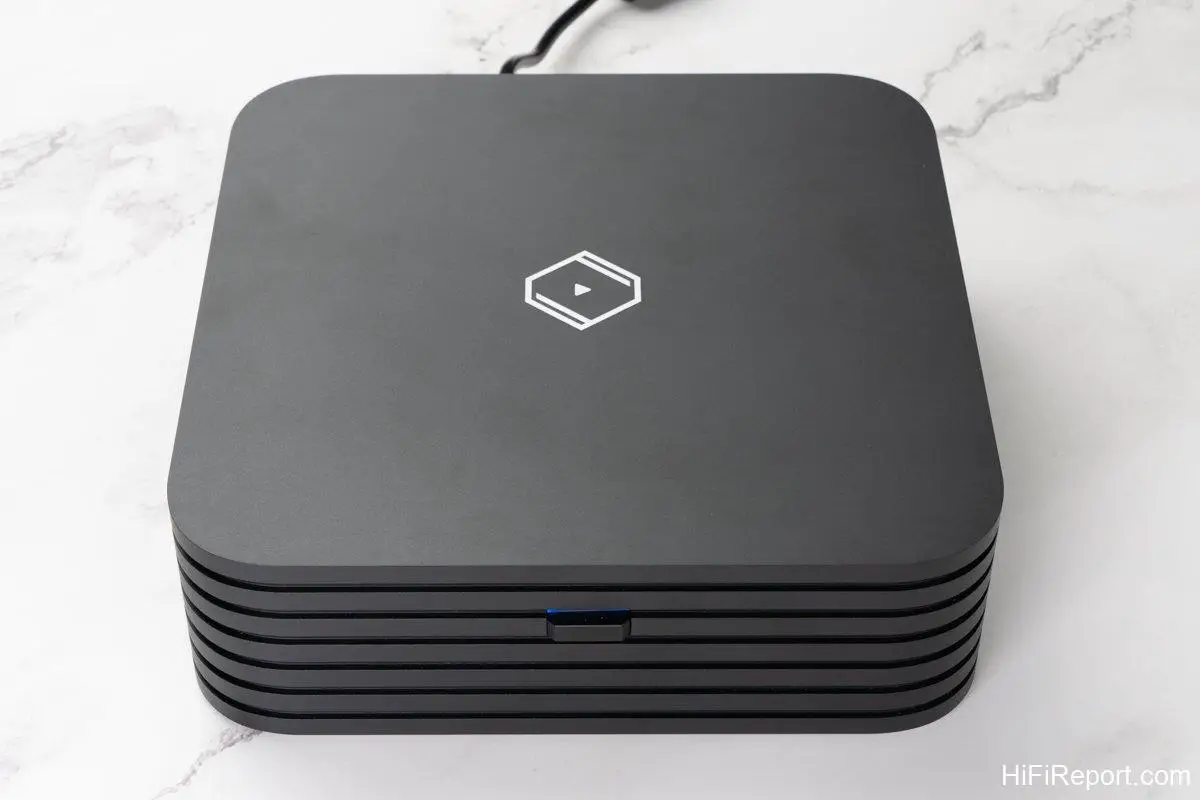
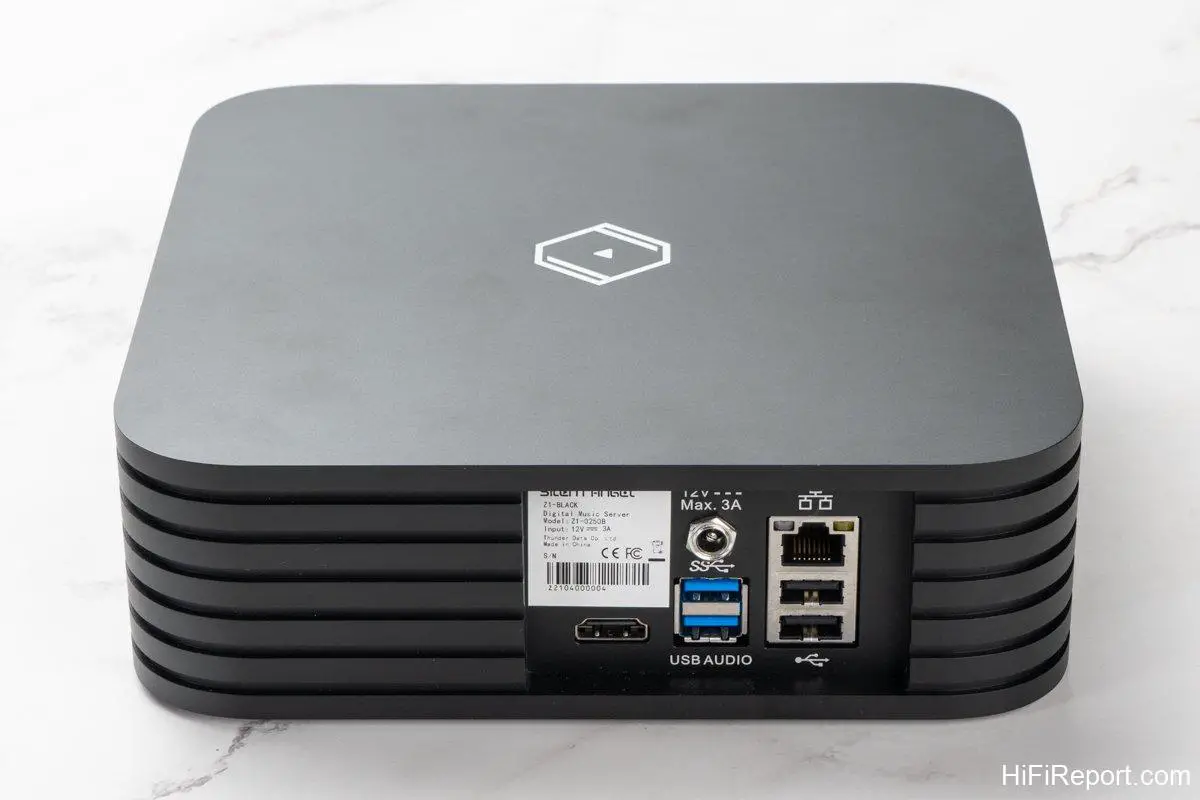
Beyond its comprehensive features, the Z1 is aesthetically refined. Its compact footprint, a mere 20cm square, mirrors the dimensions of a Mac Mini, albeit slightly thicker. This diminutive size ensures effortless placement in any listening environment.
The top cover is meticulously crafted from a solid block of CNC-machined aluminum. It directly contacts the CPU, acting as a passive heat sink for optimal thermal dissipation. This ingenious design eliminates the need for any cooling fans, resulting in truly silent operation, free from mechanical noise and vibrations.
Furthermore, the underside of this aluminum top cover incorporates precisely engineered grooves and channels. When the mainboard is installed, sensitive components and wiring are strategically positioned within these channels, effectively mitigating interference – a testament to thoughtful design.
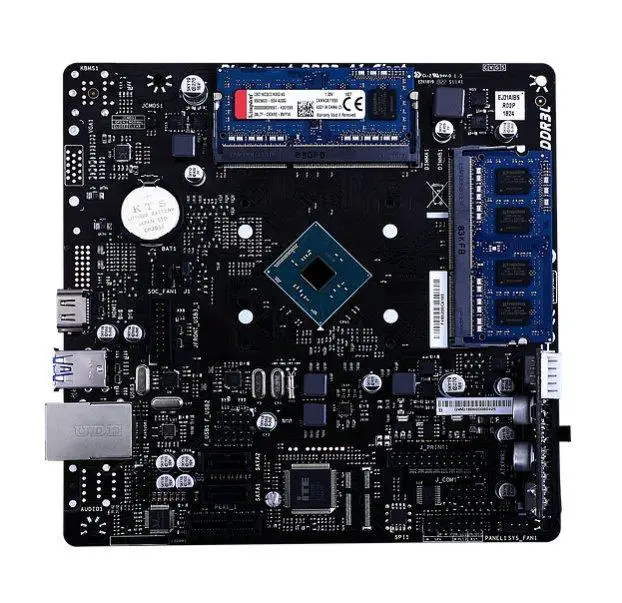
The heart of the Z1 lies in its custom-designed motherboard, purpose-built for audio playback, eschewing generic computer motherboards. The design prioritizes noise reduction and shortened signal paths to minimize any degradation of the delicate audio signal.
On the rear panel, among the four USB Type-A ports, one is specifically dedicated to USB DAC connectivity. This port features an isolated USB Audio circuit, engineered to minimize noise transmitted to the DAC, resulting in a cleaner sonic output.
Silent Angel has opted for an Intel ultra-low power CPU, typically found in mobile devices, with a mere 6W TDP (Thermal Design Power). The benefit? Lower power consumption translates directly to reduced power supply noise and less interference with surrounding audio circuitry.
Internally, the Z1 chassis is lined with industrial-grade EMI absorbing pads. These pads effectively soak up electromagnetic interference generated by the CPU and DRAM, preventing EMI reflections within the chassis that could contaminate sensitive network and USB audio signals.
In essence, the Z1 is meticulously engineered from the ground up to minimize noise and interference in every conceivable aspect, striving for the ultimate goal of sonic purity. The name “Silent Angel” is indeed aptly chosen.
Storage Options and Power Supply
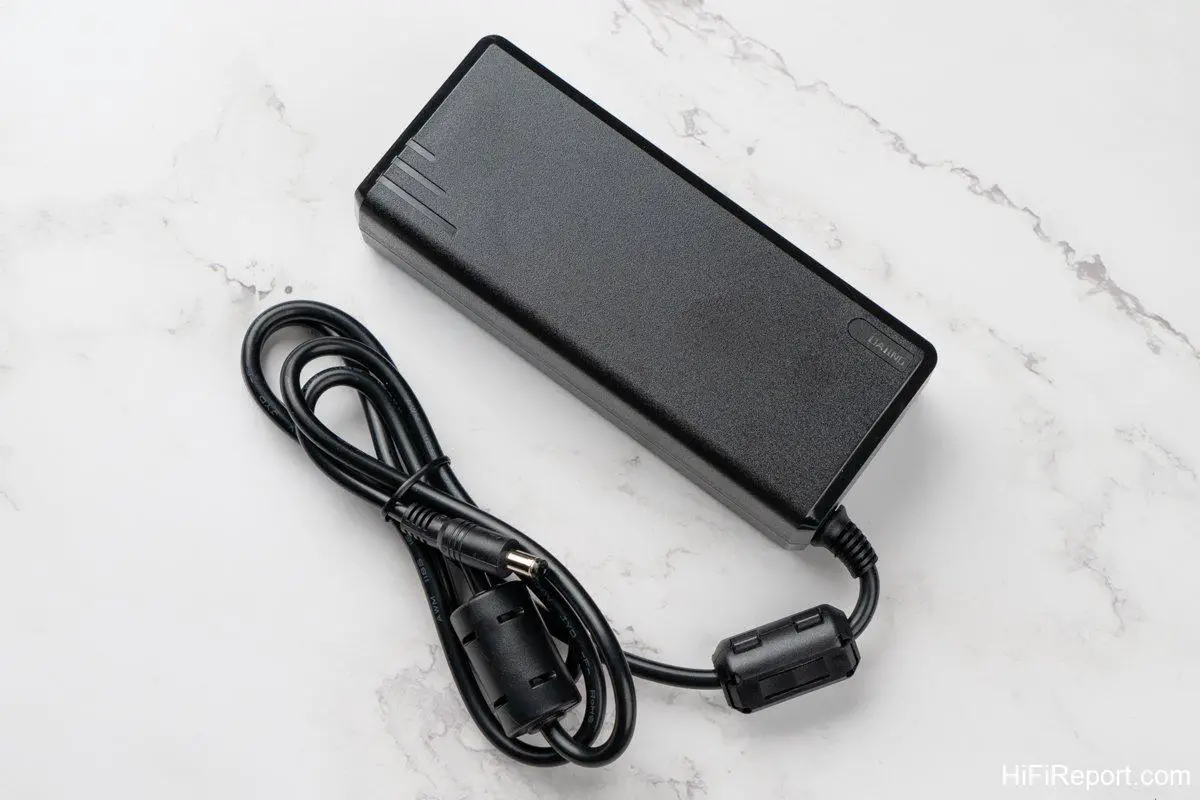
Power is supplied to the Z1 via a bundled external 12V switching power adapter, connected through a standard DC power jack. This external approach also provides users with the option to explore aftermarket power supply upgrades in the future.
Internally, the Z1 employs a sophisticated power regulation board to further refine the incoming 12V supply. While the power board is capable of delivering up to 160 watts, the Z1’s maximum power draw remains below 40 watts. This generous power headroom ensures exceptionally stable operation of all internal circuits.
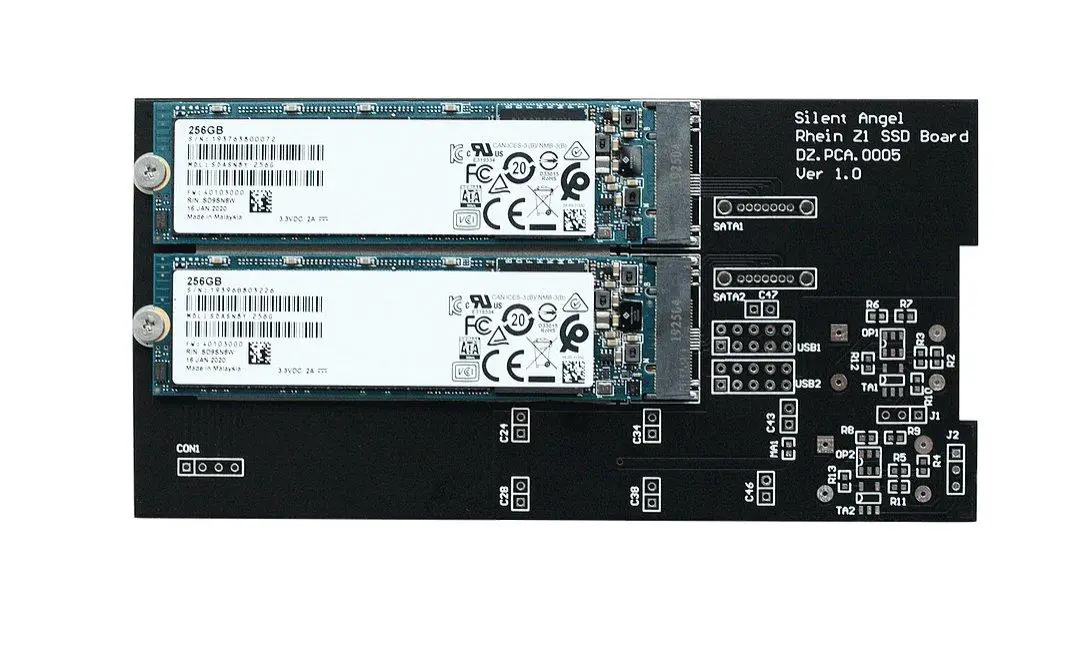
Let’s now consider storage options. The standard Z1 configuration includes a 250GB SSD, however, this is dedicated to the VitOS operating system and is not available for music storage. For users requiring local music storage, Silent Angel offers “NAS” versions pre-fitted with M.2 SATA SSDs in either 1TB or 2TB capacities. Alternatively, users can easily connect external USB hard drives to the Z1’s rear panel for expanded storage.
In today’s streaming-centric audio landscape, many listeners primarily rely on online streaming services and may not maintain extensive local music libraries. For such users, the standard Z1 configuration, without additional storage, should prove perfectly adequate.
VitOS: A Tailored Operating System
The operating system is just as critical to a music server’s performance as its hardware components. The Z1 is equipped with VitOS, a proprietary operating system meticulously engineered by Silent Angel specifically for music serving and streaming.
VitOS is optimized to maximize hardware efficiency, striking a balance between performance, stability, and low power consumption, while minimizing network latency.
To demonstrate VitOS’s superiority, Silent Angel conducted latency tests, comparing three platforms streaming music to the same Roon Ready endpoint. The results are publicly available on their website.
The platforms tested were: 1) Z1 running VitOS, 2) Z1 running ROCK (Roon Optimized Core Kit, Roon’s operating system for Intel NUCs, essentially the OS used in their Nucleus server), and 3) a Mac Mini running Roon Core. The VitOS-equipped Z1 outperformed the other two platforms across all latency metrics: average latency, maximum latency, latency standard deviation, and latency variation. These results unequivocally demonstrate that VitOS is not just another generic operating system.
As mentioned earlier, the Z1 offers versatile functionality. It can operate as a Roon Server or a DLNA Server, streaming to compatible Roon Ready or DLNA players. It can also serve as a streaming transport when connected to a USB DAC, or function as a Spotify Connect or AirPlay 2 output device. Managing these diverse functionalities is handled through the VitOS Manager app.
VitOS Manager is available for both Android and iOS. Once installed on a smartphone or tablet, the app automatically discovers the Z1 on the network, enabling configuration and software installation.
The VitOS Manager interface is remarkably clean and intuitive, devoid of convoluted menus or pages. Anyone can quickly master its operation.
*(Image: Screenshot of VitOS Manager app showing application installation options, with Roon Server and DLNA Renderer enabled).*
*(Image: Screenshot of VitOS Manager app showing Roon Server control with on/off switch and audio output selection).*
*(Image: Screenshot of VitOS Manager app showing output selection when multiple functions are installed).*
*(Image: Screenshot of VitOS Manager app showing USB Audio output optimization settings).*
Versatile Roles in Your System
Prior to formal listening evaluations, I needed to determine the Z1’s role within my system. Being a Roon subscriber with a QNAP NAS acting as my primary Roon Server, I could configure the Z1 as a Roon Ready endpoint, connecting it to a USB DAC to playback music stored on the NAS.
Alternatively, I could assign the Z1 as the Roon Server itself, allowing it to access and stream music from the NAS. For non-Roon scenarios, my NAS is equipped with MinimServer, enabling the Z1 to function as a DLNA Renderer (streaming player) to playback NAS-based music.
Among these three configurations, I subjectively found the DLNA Renderer mode to offer the most refined sonic performance, followed closely by the Z1 operating as a Roon Server, and lastly, as a Roon Ready endpoint. However, Roon’s user interface remains undeniably superior in terms of user experience. Therefore, for the primary listening session, I opted for the second approach: utilizing the Z1 as a Roon Server, streaming music files from my NAS.
Associated equipment for the listening tests included an Audiobyte Black Dragon DAC, EC 4.8 preamplifier, NuPrime EVO One power amplifier, and GoldenEar Grand Harmony loudspeakers. My reference source was a custom Linux-based computer, incorporating an Intel I340-T2 network card and a SOtM tX-USBexp USB expansion card.
Furthermore, I integrated other Silent Angel components during the evaluation, including two N8 audiophile-grade network switches connected in series. Both N8 switches were powered by F1 linear power supplies and placed atop S28 isolation footers. DC cabling was upgraded using Oyaide FTVS-408 pure silver coaxial cable with Oyaide DC connectors.
During the listening sessions, the Z1, NAS, and my reference computer were all connected to the N8 network switches.
A Sonic Revelation: Fresh and Refined
From the very first notes, the Z1 delivered a revelatory listening experience, immediately sounding cleaner, brighter, and more transparent than my meticulously configured computer-based audio transport. Detail retrieval and soundstage layering were noticeably enhanced.
Consider “Moon River” and “Days of Wine and Roses” from Erich Kunzel and the Cincinnati Pops Orchestra’s “Mancini’s Greatest Hits” collection. These pieces feature lush, gently swelling orchestrations, with layered strings and woodwinds providing a warm backdrop for the vocal melodies.
Through the Z1, the interwoven instrumental lines were rendered with exceptional clarity and separation, yet without sacrificing the essential harmonic blend and cohesiveness of the ensemble. The sonic character of the Z1 was immediately apparent: pristine, transparent, and possessing a captivatingly fresh and refined quality. In direct comparison, my computer-based system sounded comparatively veiled and muddied, its sonic texture immediately diminished.
These seemingly simple pieces are deceptively challenging to reproduce faithfully. Many tracks on the compilation are dynamically demanding, rhythmically complex, and densely orchestrated. In contrast, “Moon River” and “Days of Wine and Roses” might appear less overtly demanding, yet they present a more subtle test of a system’s ability to resolve detail and nuance. The Z1 excelled, revealing enhanced layering and separation, injecting a newfound vibrancy and fluidity into the music. The vertical soundstage expanded, creating a more open and airy presentation, while maintaining focus and solidity. Far from sounding flat or unengaging, the music was captivatingly rendered.
Moving to track 4, “It Had Better Be Tonight,” the increased instrumentation immediately revealed enhanced soundstage depth. The Z1 portrayed the depth perspective with greater precision, clearly delineating the front-to-back layering of the orchestra, resulting in a more expansive and immersive soundstage.
This track also highlighted the Z1’s impressive sense of pace and timing. Dynamics were rendered with agility and precision, with more clearly defined gradations of loudness.
Track 5, “Arctic Whale Hunt,” further showcased the Z1’s strengths. Its exceptionally clean sonic foundation allowed for the retrieval of even finer details, fully realizing the textural richness of the instruments. The sound became smoother, more lyrical, and imbued with a palpable sense of refinement.
The underlying reasons for these improvements are straightforward: the Z1’s meticulous design effectively minimizes noise, reduces interference, and lowers latency. The resulting signal reproduction is demonstrably cleaner and more accurate, allowing for the retrieval of a wealth of musical information previously obscured.
Image Solidity and Effortless Dynamics
Another defining characteristic of the Z1 is its exceptional image solidity. Listening to the soundtrack of the musical film “Les Misérables,” every nuance of vocal delivery – diction, sibilance, and breath – was rendered with remarkable clarity and precision, intensifying the dramatic impact.
The density, body, and chest resonance of the vocals were enhanced by the abundance of fine detail. The images were palpably three-dimensional, with sharply defined outlines, allowing the vocals to project forward from the orchestral accompaniment, drawing the listener deeper into the performance.
Beyond the vocals, the accompanying instrumental lines remained clearly discernible across the entire frequency spectrum, particularly the low-frequency textures. In “Valjean’s Soliloquy,” for example, the primarily string-based accompaniment, though often at a low volume, revealed a remarkably grounded and (chenwen – calm/steady) bass foundation. Through the Z1, the lower strings provided a clean, substantial, and resilient underpinning, steadily building atmosphere and emotional intensity towards the track’s powerful climax.
Moving to a more demanding orchestral work, Pierre Boulez conducting the Vienna Philharmonic in Mahler’s Symphony No. 5, the opening trumpet fanfare was positioned with pinpoint accuracy. The trumpet tone was pure, clear, and airy, with a lingering, ethereal decay. These opening twelve notes alone showcased the Z1’s impressive soundstage height and spaciousness.
Following the trumpet introduction, the full orchestra enters with a powerful, sustained chord. Through the Z1, this massive sound remained coherent and well-structured, with clearly defined layers, avoiding any sense of muddiness or congestion. The subsequent dynamic swells and contrasting passages, ranging from introspective quietude to soaring grandeur, were rendered with exceptional control and articulation. The Z1 effortlessly navigated the complexities of Mahler’s score, demonstrating its capability as a truly high-caliber source component. This single piece alone unequivocally confirmed the Z1’s credentials as a source worthy of the finest systems.
Unquestionable Value
Whether assessed by sonic performance, feature set, or build quality and aesthetics, the Z1 presents itself as an exceptional value proposition. Its hardware and operating system are purpose-engineered for streaming and music serving, and executed to a remarkably high standard. Frankly, few manufacturers in the audio industry possess such in-house design expertise.
In terms of playback interfaces, the Z1 offers broad compatibility, supporting both Roon and the ubiquitous UPnP/DLNA protocols. Users can therefore choose their preferred control interface for seamless operation and maximum flexibility.
The Z1 embraces popular streaming services, supporting Spotify Connect, AirPlay 2, and native Tidal and Qobuz integration via Roon and DLNA. It comprehensively addresses the needs of the modern streaming enthusiast.
Furthermore, for Roon users grappling with the question of Roon Server hardware – computer, NAS, or Roon’s own Nucleus – the Silent Angel Z1 emerges as a compelling and highly capable alternative.
Specifications
* Type: Music Server
* Storage Capacity: Standard version with 250GB SSD (system drive only), 1TB or 2TB versions available for music storage
* Power Input: DC 12V / 3A
* Interfaces:
* USB Audio × 1
* USB 3.0 × 1
* USB 2.0 × 2
* RJ45 Port × 1
* Dimensions: 200 × 200 × 65 mm (W×D×H)
* Weight: 6 kg