
Stax SR-L500 MK II and SRM-353X Review
Every time I listen to Stax electrostatic headphones, I find myself fighting a strong urge to buy them. This recent experience with the newly revised SR-L500 MK II paired with their dedicated SRM-353X amplifier was another close call.
There are two main reasons why Stax headphone systems are so captivating. First, the simple yet refined Japanese manufacturing craftsmanship is undeniably appealing. Second, the transparent and expansive soundstage offered by electrostatic headphones is truly exceptional, rarely matched by dynamic driver headphones. Each listening session rekindles that powerful desire to own a Stax system.
Electrostatic Heritage
The captivating sound of electrostatic headphones stems from their unique working principle. Their diaphragms are significantly lighter than those in dynamic headphones, resulting in an exceptionally open and transparent sound. Stax has been a steadfast pioneer in electrostatic headphone technology for decades, dedicating themselves to this niche market and establishing themselves as a classic brand.
For readers interested in delving deeper into the Stax story, HiFiReport previously conducted a group review of four Stax headphones. I recommend revisiting that article, “The Beauty of Electrostatic Headphones – Stax Group Review,” to appreciate the allure of electrostatic technology.
The SR-L500 MK II electrostatic headphones and SRM-353X amplifier I received are categorized by Stax as a “headphone system” when sold together, known as the SRS-5100. However, the original SRS-5100 system featured the first generation SR-L500. Now that we have the MK II second generation, it’s unclear if it’s still offered as a package. Historically, Stax paired headphones with appropriate dedicated amplifiers based on their performance level. However, they observed a trend of enthusiasts mixing and matching components, likely due to budget constraints, starting with higher-end Stax headphones and pairing them with more modest Stax amplifiers, with plans for future upgrades. Consequently, Stax has gradually moved away from bundled systems, opting to sell headphones and amplifiers separately. Therefore, while the SRM-353X is a natural partner for the SR-L500 MK II, exploring alternatives like the similarly priced, but tube-based SRM-006tS, could also yield excellent results.
A Setup I Couldn’t Resist
During a previous Stax feature, I had the opportunity to experience the first-generation SR-L500. In terms of value for money, it stood out as the best performer among the four Stax headphones we reviewed. Upon receiving the SR-L500 MK II, I joked with Editor-in-Chief, Tsai Cheng-Rong, that assigning this review to me was practically entrapment. Knowing my fondness for the original SR-L500 from the feature, tasking me with reviewing the upgraded MK II felt like a deliberate attempt to push me towards a purchase! And so, the SR-L500 MK II and SRM-353X arrived on my desk.
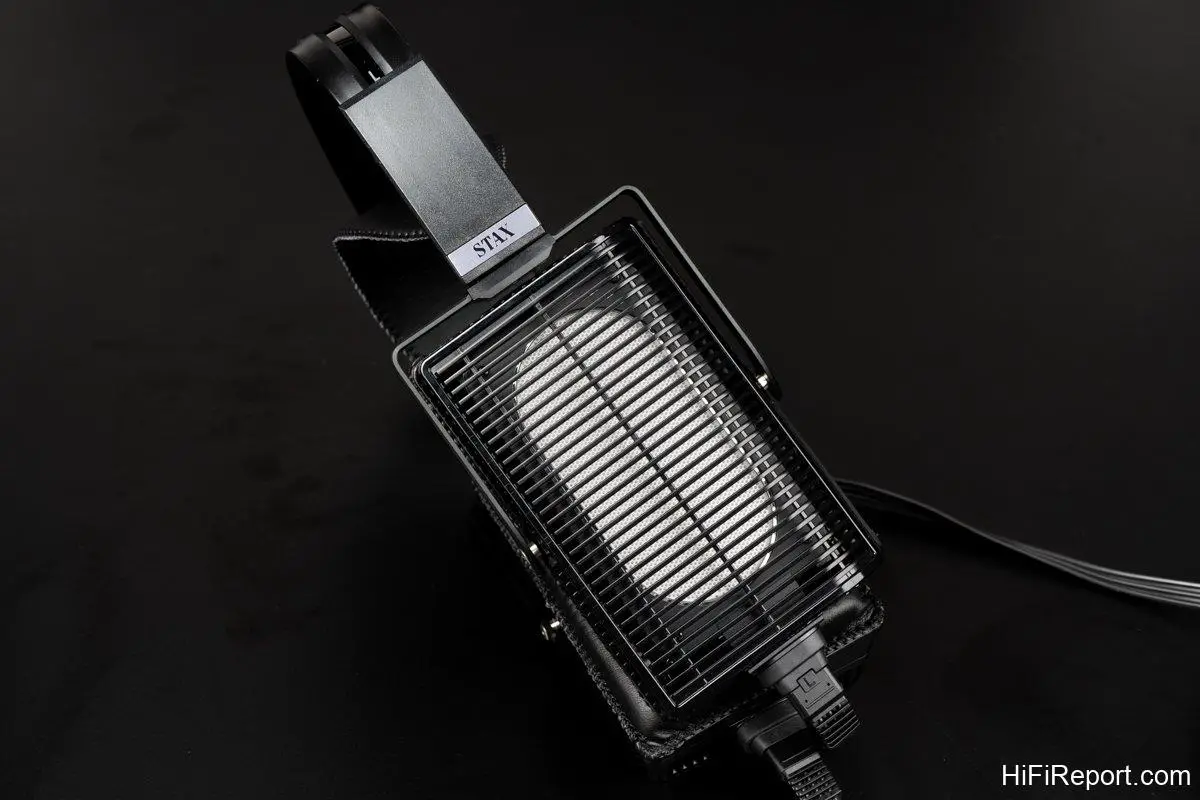
Despite being a second-generation product, the SR-L500 MK II appears visually almost identical to its predecessor. The update is remarkably subtle. Stax has focused on two key improvements: a detachable headphone cable design and a refinement to the stainless steel headband arc, subtly curving the ends. Both of these modifications represent meaningful upgrades rather than changes for the sake of change.
Detachable Cable Design
The adoption of a detachable cable design isn’t primarily about cable rolling for sonic tweaks, but rather about enhancing the headphone’s longevity and practicality.
The most common point of failure in headphones isn’t typically the drivers or diaphragms, but the cable connections. Frequent plugging and unplugging can strain the headphone connectors, and the cable itself, especially where it attaches to the earcups, can be damaged from bending, leading to internal wire damage and intermittent connections. By implementing a detachable cable, cable damage can be easily remedied by a simple cable replacement, eliminating the need for factory repairs.
Of course, the addition of detachable connectors also opens up the world of aftermarket cables for headphone enthusiasts who enjoy experimenting with different sonic signatures through cable changes.
The second key improvement is the subtle curve added to the headphone headband arc where it connects to the earcups. This refined shape allows the earpads to conform more naturally to the shape of the ears, improving the seal and enhancing low-frequency reproduction.
This subtle change is difficult to appreciate visually, but the difference becomes apparent when wearing the headphones.
HiFC Silver-Plated Copper Cable
Regarding the electrostatic diaphragm itself, significant advancements were already implemented in the SR-Lambda series refresh, which included the SR-L700, SR-L500, and SR-L300. Therefore, the SR-L500 MK II retains the same diaphragm technology, and the factory specifications remain almost identical. The frequency response is still 7 Hz – 41 kHz, and capacitance and impedance figures are unchanged. Other specifications, such as the 580V DC bias voltage and 118 dB maximum SPL, are also consistent between the first and second generations. The only difference is a minor weight increase of 5 grams for the SR-L500 MK II, bringing it to 471 grams, a negligible difference in terms of perceived wearing comfort.

A final notable design element of the SR-L500 MK II is its new headphone cable. It features a flat, 6-conductor design, utilizing silver-plated 6N oxygen-free copper conductors. Stax calls this material HiFC and emphasizes that it incorporates a trace amount of titanium. This addition is claimed to not only enhance signal transmission performance but also improve cable flexibility and user-friendliness.
Tube-Like Solid State Amplification
The dedicated amplifier for the SR-L500 MK II is the SRM-353X, Stax’s recommended pairing, as evidenced by their SRS-5100 system package. The SRM-353X employs a solid-state amplification circuit, utilizing ultra-low noise dual FETs (field-effect transistors) in a fully direct-coupled, pure Class A DC amplifier configuration. This design eliminates capacitors from the signal path, aiming for the purest possible sound quality and preservation of musical detail.
FET amplification is often lauded for its sonic characteristics being the closest to vacuum tubes among solid-state designs. Stax also offers several vacuum tube headphone amplifiers, suggesting the brand has a preference for warmer sonic textures. While I evaluated the SR-L500 MK II with the SRM-353X, potential buyers are encouraged to audition both solid-state and tube amplifier pairings at a specialist headphone store to discover their preferred sonic synergy.
The SRM-353X embodies the essence of Stax amplifier design with its elongated metal chassis, large central volume knob, power switch to the left, and two electrostatic headphone output jacks on the right. Stax has maintained this consistent industrial design aesthetic for years, with only minor variations in button and output jack placements, making them instantly recognizable as Stax amplifiers.
The seemingly simple metal housing is constructed from meticulously chosen materials. Stax consistently utilizes non-magnetic aluminum alloy for their chassis. This specially treated aluminum achieves a refined, understated appearance.
Dual-Layer Volume Control
The large central volume knob on the SRM-353X incorporates a clever dual-layer design for independent channel control. The upper layer controls the left channel, and the lower layer the right. During normal operation, both layers move in unison for standard volume adjustments. However, for fine-tuning left-right channel balance, the layers can be adjusted independently.

While channel balance adjustments are rarely needed, Stax provides this flexibility for users who may require it. Experimentation is encouraged. If you’re concerned about losing the calibrated balance, simply turn the volume down to minimum, rotate both layers to their minimum positions to reset to a neutral state with equal channel levels.
The SRM-353X offers both XLR and RCA inputs, as well as a Bypass RCA output. For direct connection from a DAP or DAC, either RCA or XLR inputs can be used. However, for integrating the SRM-353X into an existing audio system, the Bypass RCA output allows for a closed-loop connection. The signal can be input into the SRM-353X from the source, and then output via the Bypass RCA to a preamplifier (or integrated amplifier).
Desktop Listening Setup
Having covered the design highlights of the SR-L500 MK II and SRM-353X, it’s time to discuss their sonic performance.
Considering the likely usage scenario for the SR-L500 MK II and SRM-353X is desktop listening, rather than full-sized DACs, I opted for two digital sources: an A&K AK380 DAP directly connected to the SRM-353X, and an LH Labs Geek Out 2.0 USB DAC paired with a Macbook Pro. These configurations more closely represent typical “desktop listening” setups.
Electrostatic headphones require high bias voltage, unlike conventional headphones, making the SR-L500 MK II and SRM-353X a naturally matched pair. Impedance matching is not a concern; simply connect the cables and start listening. The SRM-353X also lacks any complex settings, offering plug-and-play simplicity.
However, when using DAPs or USB DACs, attention to volume level settings is important. DAPs have their own volume control, as do USB DACs. USB-powered DACs generally have lower output levels, with 2V being considered high and many closer to 1.4V. Therefore, with computer-based setups, aim for “full power” by setting the DAC output volume to maximum.

Volume Matching and Sonic Nuance
DAPs, on the other hand, vary in output voltage. Adjust the DAP’s fixed line output level appropriately. The volume control on the headphone amplifier is typically most linear around the 12 o’clock position. Therefore, initially set the SRM-353X volume knob to 12 o’clock and then adjust the DAP’s output level.
Using my AK380 as an example, with a maximum volume of 150, I set it to 130-140 and then used the SRM-353X for volume adjustments.
The volume level relationship between the source and amplifier can subtly influence the sound character. If the DAP’s output is lower, requiring more gain from the amplifier, the sound tends to be more transparent. Conversely, if the DAP’s volume is higher, reducing the amplifier’s workload, the sound can become richer and fuller. Experimenting with these settings can help you find your preferred balance between transparency and richness. However, be cautious of excessive input levels, which can lead to overdrive distortion.
Warm-Up Time for SRM-353X
Furthermore, as the SRM-353X operates in pure Class A, it requires some warm-up time after power-on. If auditioning the SR-L500 MK II and SRM-353X at a retailer, allow the amplifier some time to warm up, approximately ten minutes. Once the heatsink vents on top of the chassis become slightly warm, the sound will be more representative of its full potential. Ideally, allow at least 30 minutes for optimal performance, when the entire top surface and sides of the chassis are noticeably warm. Initially, the SRM-353X’s sonic profile might be slightly leaner, but the warmth and fullness will return as it reaches operating temperature.
Expected Transparency and Spaciousness
The transparent and spacious sound of electrostatic headphones is, of course, anticipated. The SR-L500 MK II and SRM-353X combination certainly delivers on this expectation. Listening to Mozart’s “Concerto for Two Pianos” K. 365, performed by Luppu and Preya, specifically the bright third movement, the string sections emerge with remarkable density and excellent left-right channel separation. Violins are positioned to the left, cellos and violas to the right, and the two pianos are centrally located, yet distinctly separated, with the lead piano slightly left-of-center and the accompanying piano to the right. The interplay between the pianos in their call-and-response passages is clearly rendered, creating a vivid musical dialogue. The rhythmic drive of the music is excellent.
The piano reproduction through the SR-L500 MK II and SRM-353X is characterized by clear note articulation and a satisfying sense of weight, avoiding any thinness. When the orchestra responds to the piano passages, the sonic weight increases, and the timpani strikes are rendered with ample depth. The overall stability of the soundstage is excellent.

The midrange and upper-midrange qualities are strengths of the SR-L500 MK II and SRM-353X pairing. The timbre is warm yet possesses a pleasing brightness. The subtle variations in finger pressure on the piano keys are clearly conveyed, encompassing both delicate and assertive touches. The dynamic shading and tonal nuances are meticulously presented. The individual voices of the two pianos are distinct and well-defined, avoiding any muddiness. The precise left-right separation and localization are hallmarks of the captivating sonic appeal of electrostatic headphones.
Impressive Stax Dummy Head Recordings
When listening to Stax headphones, exploring Stax’s classic dummy head recordings is essential. Listening to track three, “When A Man Loves A Woman,” the dummy head recording technique expands the spatial presentation of the SR-L500 MK II and SRM-353X to an astonishing degree, virtually dissolving the headphones from the listening experience.
The recording meticulously recreates a studio atmosphere. Musicians greet each other, their positions clearly discernible. The piano introduction emerges gracefully from the depths of the soundstage. The vocalist initially sings from the rear right, then moves to the front left, and then back to the rear right. All subtle shifts in the recording space are faithfully reproduced by the headphones.
The most startling moment occurs at 1 minute 58 seconds when the lead singer, caught up in the performance, sharply claps his hands. In a quiet listening environment, with the SR-L500 MK II and SRM-353X, you might instinctively turn around to check if someone clapped behind you. As the chorus begins after 3 minutes 10 seconds, with piano solos and accompanying handclaps, you acclimate to the realism. The handclaps sound as if they’re happening right beside you, extending far beyond the physical boundaries of the earcups.
This spatial realism is, of course, a product of the dummy head recording technique. Conventional two-channel recordings rarely achieve such expansive and realistic soundstages. However, when comparing dynamic and electrostatic headphones, the SR-L500 MK II and SRM-353X’s spatial presentation is undeniably superior.
Clean and Fast Bass
Many believe that electrostatic headphones lack the bass authority of dynamic headphones. However, recent Stax models have made significant strides in bass performance. To demonstrate this, listen to track six of the Stax album, “Gome With Kalifi.” The African drum rhythms are rendered with clean articulation. The diverse percussion instruments create a rich tapestry of African musical colors. The relative positions of the lead and backing vocals are clearly defined. The underlying African drums exhibit contrasting sonic textures, some bright and concise, others deep and resonant. This interplay of depth and brightness is conveyed with remarkable speed and clarity by the SR-L500 MK II and SRM-353X. The bass has excellent weight, and the distinct sonic character of each drum is clearly delineated, even capturing the subtle pitch variations of the drums.

I acknowledge that this is a Stax-produced reference recording designed to showcase their technology. However, listening to this Stax reference CD with the SR-L500 MK II and SRM-353X is sure to convert anyone to the electrostatic headphone system.
After listening with the Macbook Pro and Geek Out 2.0, I switched to the AK380 and listened to the “Blue Coast Collection” sampler, selecting Keith Greeninger and Dayan Kai’s “Looking For A Home.” I had two versions of this track on the AK380: DSD 2.8 MHz and 16bit/44.1 kHz. The SR-L500 MK II and SRM-353X demonstrated excellent resolution in distinguishing between these formats.
Format Resolution
Listening to the DSD 2.8 MHz file, the volume level seemed slightly lower, but the upper-midrange frequencies were noticeably smoother. The powerful guitar strums possessed a satisfying impact. The rhythmic foot-tapping accompanying the bluesy vocals and guitar, while subtle, was present beneath the main musical elements, resulting in a natural and flowing musical experience.
Switching to the PCM 16bit/44.1 kHz version, the volume level was immediately perceived as louder, and the recording’s reverberant characteristics became more prominent. The guitar and vocals also seemed closer, resulting in a slightly smaller soundstage compared to the DSD version, but with a more intimate recording perspective.
Using the SR-L500 MK II and SRM-353X to discern the subtle differences between music file formats is a common practice, as the expansive soundstage and rich detail retrieval of electrostatic headphones make them ideal tools for revealing nuanced sonic variations in recordings. Stax headphones also have a historical connection to the development of MP3 technology. Around 1995, German engineer Karlheinz Brandenburg led his research team in developing compressed music formats using psychoacoustic principles. Their goal was to create a unique computer algorithm to compress music files significantly while maintaining near-identical audio quality. The research team relied on Stax headphones in their work. In one instance, researchers became so engrossed in their listening sessions that they worked from day to night, oblivious to a break-in at their lab, which reportedly delayed their research progress.
For those interested in the history of MP3 development, Stephen Witt’s book, “How Music Got Free,” details the significant role Stax electrostatic headphones played in the MP3’s evolution.
High-End DAP Pairing
Compared to the computer and DAC setup, the AK380 offered a significantly richer sonic foundation. Classical music, in particular, gained weight and improved sonic density. For example, listening to Praja and the Academy of St. Martin in the Fields’ performance of Bach’s “Brandenburg Concerto No. 5,” the first movement opens with a stately theme from the string section. The musical phrasing is elegant and precise. The interplay between the flute and violin adds bright tonal colors. As the piano enters, the three solo instruments and orchestra engage in call-and-response passages, before transitioning to the piano-dominated section. Even with the SR-L500 MK II positioned close to the ears, the perceived soundstage extends well beyond the earcups, creating an expansive listening experience. The orchestra is positioned further back in the soundstage, the flute centrally located, the violin slightly left-of-center, and the piano firmly centered, asserting its dominant role in the concerto.
If you’ve never experienced electrostatic headphones, it might be difficult to imagine the SR-L500 MK II and SRM-353X creating a layered virtual soundstage that extends beyond the earcups, with clear separation between the piano, flute, violin, and orchestra. However, for those familiar with electrostatic headphones, the question is merely the extent of the virtual soundstage’s width. It’s difficult to quantify the precise width, as it varies with each recording. However, the SR-L500 MK II and SRM-353X perform exceptionally well. The more I listened, the more engrossed I became. I even invited colleagues to listen and experience the new generation of Stax electrostatic headphones for themselves.
Balanced Performance and Value
After spending time with the SR-L500 MK II and SRM-353X, I believe this combination represents Stax’s most balanced offering in terms of sound quality and value. While more affordable Stax headphones exist, they may not offer the same level of sonic transparency. Stepping up to higher-priced models requires a significantly larger budget for a noticeable upgrade. Therefore, in terms of the balance between sonic performance and price, the SR-L500 MK II and SRM-353X are likely the optimal pairing. I myself almost succumbed to the urge to keep a set in the editorial office as a reference. However, I resisted, knowing that the similarly priced SRM-006tS tube amplifier is another compelling option. Comparing the two might just push me over the edge!
If you’re interested in the SR-L500 MK II, I highly recommend comparing it with both the SRM-353X and SRM-006tS. Priced similarly, one is solid-state, and the other tube-based. Choosing the one that best suits your sonic preferences is the key!
Specifications
* **Stax SR-L500 MK II**
* Type: Electrostatic Headphones
* Frequency Response: 7 Hz – 41 kHz
* Electrostatic Capacitance: 110 pF (including cable)
* Impedance: 145 kΩ (including cable, at 10 kHz)
* Efficiency: 101dB / 100V r.m.s. 1 kHz
* Maximum SPL: 118dB / 400Hz
* Bias Voltage: 580V DC
* Earpads: Genuine Lambskin (skin contact area), High-grade synthetic leather (perimeter)
* Cable: Silver-plated 6N (99.9999%) oxygen-free copper HiFC, 6-conductor parallel layout, low capacitance wide cable, length 2.5 m
* Weight: 471 grams
* **Stax SRM-353X**
* Type: Dedicated Electrostatic Headphone Amplifier
* Frequency Response: DC – 90 kHz
* Distortion: < 0.01% (@1kHz) * Gain: 60 dB * Input Voltage: 100mV * Maximum Output Voltage: 400V r.m.s. / 1kHz * Input Impedance: 50 kΩ * Input Terminals: RCA x1, XLR x1 * Power Consumption: 30 W * Dimensions: 150 × 100 × 360 mm (WxHxD) * Weight: 3 kg