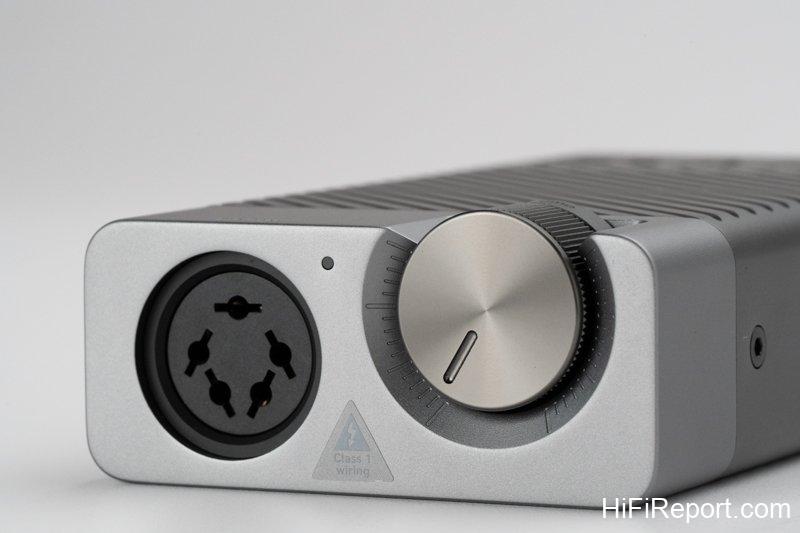
Stax SRM-D10 II Portable DAC/Driver Review
Do you listen to electrostatic headphones? Unlike dynamic headphones, electrostatic headphones boast a distinct charm in their sound reproduction. Their remarkable transparency and highly agile, expressive quality can be utterly captivating, drawing you deeper into the music with every listen.
Hailing from Japan, Stax is the undisputed expert in electrostatic headphones. For decades, they’ve dedicated themselves single-mindedly to the development of this technology.
Consequently, even though other manufacturers produce electrostatic headphones, some commanding even higher prices, Stax is practically synonymous with electrostatic headphones in the minds of headphone users and audio enthusiasts alike.
Unique Principle, Distinctive Character
Where does this mesmerizing transparency come from? And why can’t typical dynamic headphones quite match it? Let’s first explore the differences between electrostatic and dynamic headphones.
Standard dynamic drivers utilize a magnetic system comprising a magnet and a voice coil. When the audio signal current passes through the voice coil, it creates a magnetic field that interacts with the magnet, pushing and pulling the voice coil. This motion drives the diaphragm rigidly attached to the coil, resulting in sound.
Electrostatic headphones, however, are different. They employ a wafer-thin polymer film acting as the diaphragm, driven by electrical plates (also known as “stators”) positioned on either side.
When the audio signal voltage is applied to the stator plates, a dynamic “positive” and “negative” electrostatic field develops between them. This push-and-pull action on the incredibly thin and light diaphragm causes it to vibrate and produce sound.
Most headphones, whether dynamic, balanced armature, or planar magnetic, require electrical energy to be converted into magnetic energy, and then into kinetic energy.
Electrostatic headphones, conversely, convert electrical energy directly into kinetic energy. This direct drive results in a more immediate response and lower energy loss.
Ultra-Thin Diaphragm, Unparalleled Speed
A dynamic diaphragm not only has its own mass but also carries the weight of the voice coil.
An electrostatic diaphragm is different; it’s “unburdened,” free from a voice coil, and its diaphragm is extraordinarily thin and light. How thin? Stax specifies “less than 2 microns.”
To put that into perspective for Hi-Fi Report readers: a human hair is roughly 20-50 microns in diameter, while a red blood cell is 8 microns. 2 microns is approximately the size of a bacterium.
Such a thin and light electrostatic diaphragm can be precisely controlled by the electrostatic field applied by the plates, leading to unparalleled speed and responsiveness.
Uniform Electrostatic Drive, Minimum Distortion
Furthermore, the force applied to a dynamic driver’s diaphragm is not uniform during operation. The primary force is concentrated at the junction of the voice coil and diaphragm. If the diaphragm lacks sufficient rigidity, it can easily suffer from “cone breakup,” a significant source of distortion.
However, increasing diaphragm rigidity also increases its mass, an unavoidable issue with dynamic drivers.
In contrast, the electrostatic diaphragm is suspended between two plates. It has no physical contact and is exposed to a uniform electrostatic field. This eliminates issues of uneven force application, contributing to the inherently low distortion characteristics of electrostatic headphones.
Requires High Bias Voltage, Increasing Entry Barrier
If electrostatic headphones are so advantageous, why aren’t they as prevalent as dynamic headphones? The challenge lies in the drive requirement.
Electrostatic headphones need a specialized driver to convert the audio signal into a high voltage, typically hundreds of volts, to polarize the electrodes.
Stax drivers, for example, require a “bias voltage” of 580V to drive the diaphragm. This principle differs from standard headphone amplifiers, meaning electrostatic headphones cannot be driven by conventional amps and require a dedicated driver.
Given the already higher cost of electrostatic headphones, the necessity of purchasing a proprietary driver elevates the barrier to entry compared to regular headphones, naturally limiting their widespread adoption.
A Portable Driver Existed Last Century
Historically, electrostatic headphone drivers were typically separate, often desktop units. Even if their physical size was reduced, they still required mains power, limiting them to home use.
In 1995, Stax released the SRM-001, a portable driver sold with their SR-001 in-ear electrostatic headphones. This model is still sought after on the second-hand market today.
The SRM-001 was powered by two AA batteries. Fast forward to 2018, Stax introduced their first portable electrostatic headphone driver with a built-in lithium battery, which also included an integrated DAC. This marked the first time electrostatic headphone users could realistically take their headphones on the go. That was the Stax SRM-D10.
New Version Retains Look, Adds Refinement
Five years later, Stax has launched the second-generation SRM-D10 II, featuring improvements in specifications and performance.
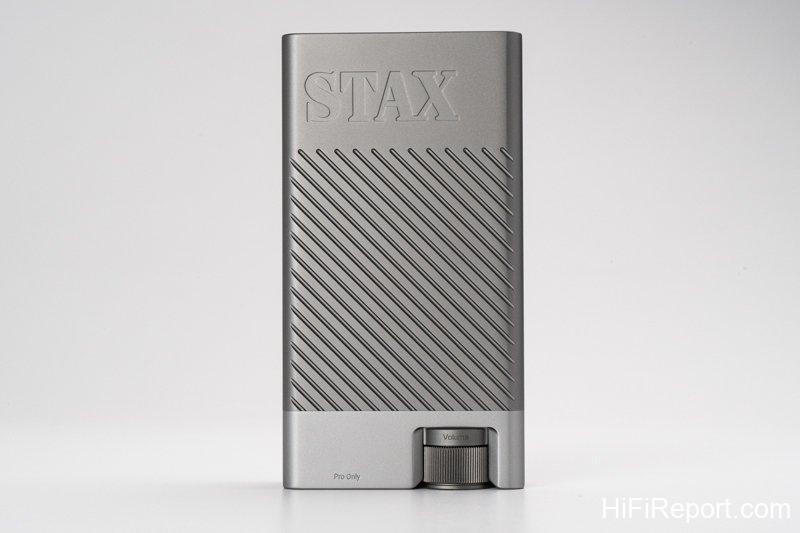
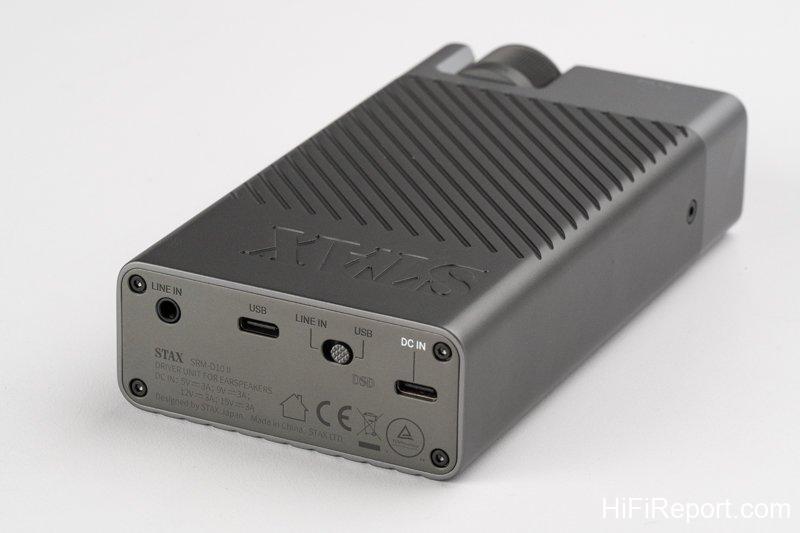
The SRM-D10 II maintains the predecessor’s design aesthetic, featuring an all-aluminum chassis. The size remains the same, and the layout of the headphone output socket and volume knob is identical.
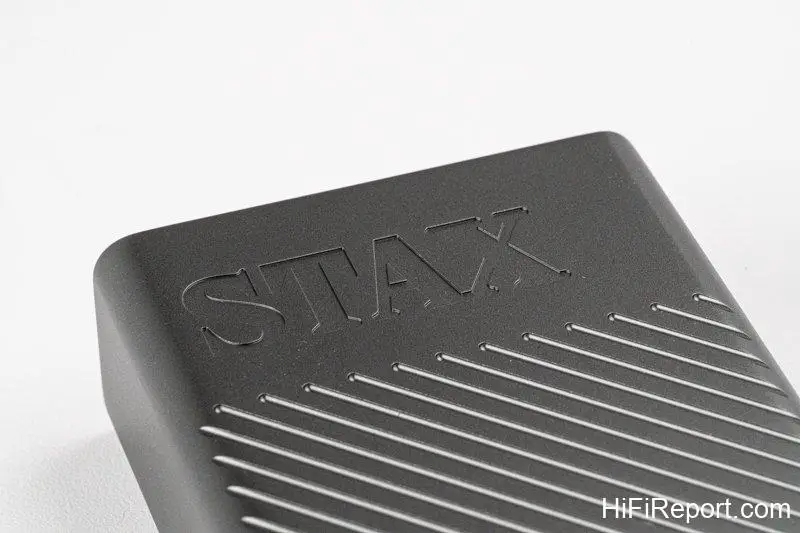
Only the Stax logo placement on the unit has been refreshed, with larger lettering giving it a grander appearance.
The overall switch to a titanium gray finish aligns better with contemporary aesthetics, undeniably enhancing its perceived quality.
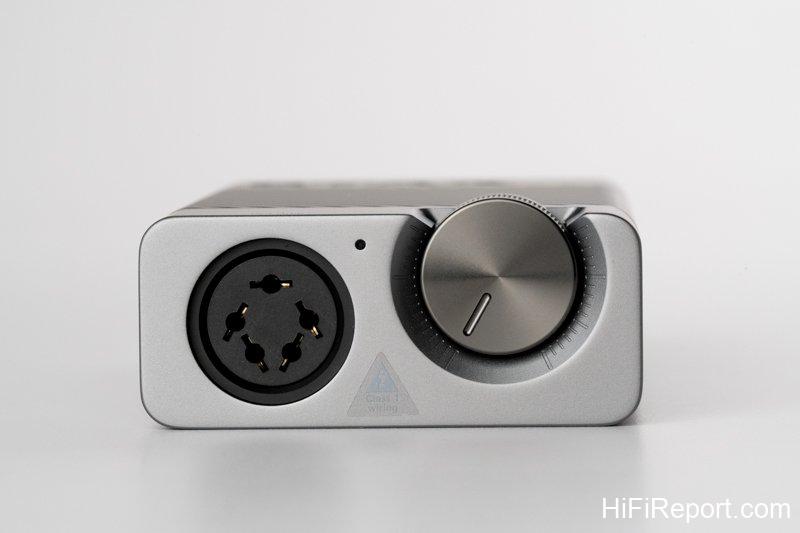
It retains the Stax 5pin Pro connector, compatible with all Stax Pro type electrostatic headphones. The output DC bias voltage is 580V, mirroring the specifications of Stax’s other desktop headphone drivers.
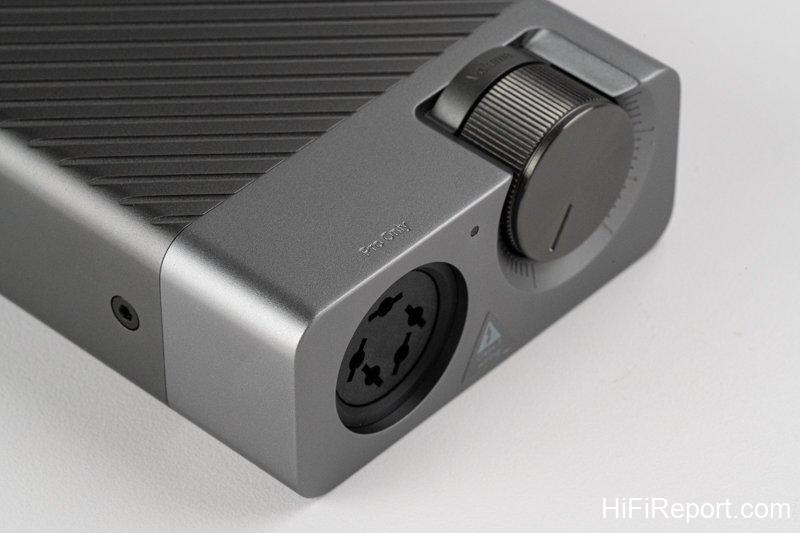
The volume knob doubles as the power switch. Turning it fully counter-clockwise to the stop position turns the unit off.
An LED indicator next to the knob displays the current status: blue when powered on, off when powered off, and red when charging.
USB Type-C for Charging and Digital Input
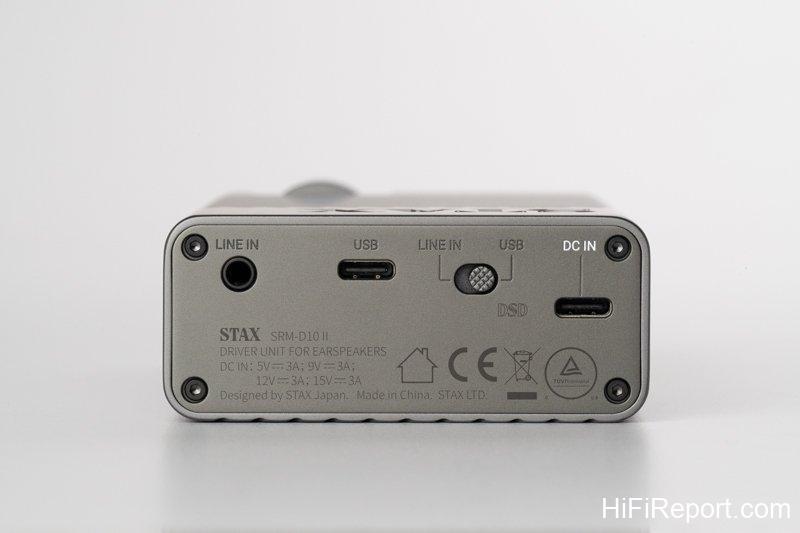
All connectors are located on the rear panel. There’s a 3.5mm analog input and a USB Type-C digital input.
A toggle switch on the right selects between these inputs.
The SRM-D10 II has a built-in DAC. If you use the digital input, you save on needing a separate DAC and its associated cost.
Another USB Type-C port on the right side is dedicated to charging. If the battery is low, you can connect a USB cable to charge while listening.
Compared to the previous generation’s microUSB digital input, the SRM-D10 II adopts the current mainstream USB Type-C, offering better transmission specifications.
The previous generation’s charging input used a DC 14V power adapter. If you lost or forgot the adapter, the SRM-D10 was rendered useless when the battery died. A broken adapter was even more problematic.
The SRM-D10 II’s switch to USB Type-C charging solves this issue. Charging is no longer a problem. Stax even thoughtfully includes a power adapter that supports PD fast charging, making them even more attentive than Apple in this regard.
DAC Chip Upgraded to AKM4493
The most significant improvement lies in the internal DAC circuitry.
The first generation used an ESS9018 decoding chip. For the SRM-D10 II, Stax has switched to Asahi Kasei’s AKM4493 DAC chip, capable of supporting digital audio up to PCM 32bit/384kHz and DSD256. This ensures full compatibility with high-resolution music files.
So, while it might appear that not much has changed between the two generations outwardly, the upgrades are indeed in crucial areas.
Paired with the Entry-Level SR-X1, Price and Quality Align
For the listening test, the headphones paired were Stax’s latest SR-X1.
Stax bundles the SR-X1 with the SRM-270S to form the SRS-X1000 system package, a consistent approach Stax has taken for years with its electrostatic headphone offerings.
In my review of that system, I described the listening experience of this exceptional value electrostatic setup. Even our Hi-Fi Report editor, Tsay Cheng-Rong, praised its sound quality and lamented that listening to it left him in a dilemma, wondering if he should acquire a set for himself.
The SR-X1 features a circular diaphragm and a simple, understated design. Yet, the sound unmistakably embodies the Stax character. What’s surprising, however, is its commendable bass performance, largely mitigating the traditional electrostatic headphone drawback of insufficient low frequency.
Despite being an entry-level model in the Stax lineup, its capabilities should not be underestimated; it is fully capable of revealing the nuances of recordings and source equipment.
Sound Performance Defies Battery-Powered Stereotypes
Portable headphone amplifiers (drivers) with built-in batteries like the SRM-D10 II often carry a stereotype: their sound is typically described as clean, transparent, detailed, and bright, with a tendency towards the upper mid-range and treble. The sound might be perceived as lean, tightly focused, and the bass relatively reserved.
Is that what you expected? I did. However, the SRM-D10 II delivered a performance that exceeded expectations.
Its sound is indeed clean, transparent, and bright, but it’s not lean. The bass isn’t deficient, the mid-range isn’t thin. Furthermore, the soundstage is impressively open, and separation is excellent.
Using a USB Type-C to Type-C cable, I connected the SRM-D10 II to my Macbook Air and played various music genres. The listening experience was thoroughly satisfying, with no sense of compromise due to its “portable” nature.
Piano Notes are Round, Jazz Drums Punchy; Brightness and Speed Satisfy
Listening to Jacques Loussier Trio’s “Bach Goldberg Variations,” the Stax SRM-D10 II and SR-X1 pairing unearthed all the delightful nuances within the album.
This French jazz group is renowned for transforming classical music repertoire into jazz trio arrangements.
If you’re familiar with these classical pieces, you can still discern the original melodies in their performances. However, through their rhythm, harmony, and thematic variations, their arrangements imbue the music with a fresh identity.
The piano navigates the melody, with Jacques Loussier not significantly altering the main melodic line. However, subtle rhythmic adjustments, added ornaments, and slight variations, combined with the jazz elements introduced by the bass and drums, are the source of the music’s novelty.
Sourced from Telarc, known for its warm and full-bodied piano sound, the upper registers exhibit a beautifully bright sheen, while the left-hand bass lines provide a stable foundation.
The texture of the individual notes is rounded, with a slightly crisp quality, all testifying to the high fidelity of this headphone system.
I must say, listening to piano through Stax electrostatic headphones provides a different sensation compared to dynamic headphones. Dynamic headphones tend to emphasize impact, whereas electrostatic headphones soften the piano tone, making the music sound more comfortable and relaxed.
This doesn’t mean the piano loses its energy, but rather that the force is applied more subtly.
A brief drum solo appears in Variation 29. After a series of descending piano lines, the “stage” is ceded to the drummer. Were you worried that the SRM-D10 II, as a portable amplifier, wouldn’t be powerful enough to render the fullness, power, and speed of the jazz drums? Or that the entry-level SR-X1 electrostatic headphones would sound too soft or light for drum performances? This particular variation provides ample evidence to the contrary for the Stax system.
Open Soundstage, Excellent Separation, Double Bass Dives Deep
The expansive soundstage created by the SRM-D10 II allows the music to naturally project outwards, establishing a virtual space that feels relaxed and free from constriction. Even for chamber music, this benefit is clearly audible.
Take, for example, the album “Bach Trio” by Yo-Yo Ma, Chris Thile, and Edgar Meyer. Like the Jacques Loussier album, it features arrangements of Bach, but this recording adheres to a classical style, arranged for cello, mandolin, and double bass trio.
Electrostatic headphones render plucked instruments with a light agility that dynamic headphones cannot fully replicate. Here, the mandolin sounds clear and articulate, its brief notes remarkably vibrant.
The interplay between the cello and double bass is also outstanding. These two low-pitched string instruments—the cello’s warm richness and the double bass’s deep, sometimes rough texture—are presented with a refined, smooth quality.
Despite being a battery-powered portable driver, the SRM-D10 II’s bass performance is highly satisfying. Whether it’s the pizzicato of the bass in jazz or the bowing of the double bass here, the system accurately portrays the substantial sound emanating from their large bodies and their deep low frequencies.
Vocal Reproduction Offers a Tube-Like Flavor
When playing back vocal performances, the SRM-D10 II’s sound gives me the impression of listening to a tube amplifier.

Stax also produces drivers with tube amplification. Compared to their solid-state units, I personally prefer their tube drivers; the sound is more agile, more vibrant, and also smoother and more fluid.
The SRM-D10 II is undoubtedly a solid-state device, yet its sound exhibits a certain (rich, smooth, moist), silky, and soft quality. Compared to the SRM-270S, which I recently reviewed, the SRM-D10 II’s sound is slightly fuller and richer.
Taking the example of the compilation “The Miracle of the Voice” featuring the soprano Natalie Dessay, whom I greatly admire, Dessay’s voice is sweet and agile, her vocal lines winding like a nimble serpent. Her coloratura, in particular, is both dazzling and dexterous, possessing a remarkable elasticity. Dessay’s timbre is sweet, her voice rounded, and her delivery of lyrical arias is always imbued with special charm.
Driven by the SRM-D10 II, the SR-X1 not only reproduces the rich details of her vocal production but also conveys the unique characteristics of Dessay’s voice.
The musical dynamics are also excellent. Sudden fortes don’t sound abrupt; the fluid transitions, even at high intensity, maintain an effortless quality without sounding strained.
The SRM-D10 II doesn’t just present these opera aria fragments in isolation; the accompanying orchestral passages are equally compelling. It effectively recreates the width and depth of the stage, and the soprano’s performance isn’t constricted or beamed directly into your head.
I genuinely appreciate this relaxed listening experience provided by electrostatic headphones. It feels as if the sense of spaciousness in electrostatics surpasses even that of open-back dynamic headphones.
Expansive Space, Harmonic Beauty in Choral Works
When listening to the soundtrack of the film “Warriors of the Rainbow: Seediq Bale,” the deep drumbeats in the piece “Encounter on the Rainbow Bridge” resonate like the knocking of fate’s door, like a cry of defiance against a cruel world, and also like a tribute to heroes and ancestral spirits.
The melody, unfurling through strings and pan flutes, is deeply emotional.
The poignant flute leads into a rich orchestral accompaniment, dominated by strings, augmented by percussion, and interwoven with mixing effects, creating an atmosphere and mood that is at once ethereal, desolate, and heroic.
The SRM-D10 II fully expands the expansive space in this piece, drawing the listener deeper into the narrative.
In “Hate Vanishes,” the chanting of the male tribal members begins with a solo leader, followed by the community joining in, and later incorporating percussion.
During the solo performance, the individuality is clearly portrayed. During the collective chant, a harmonious beauty in the blending voices is revealed.
Can Charge While Listening with No Apparent Deterioration; Phone Source Limited to iPhone 15+
Due to the high static bias voltage during operation, the SRM-D10 II gets quite warm when powered on, feeling like a well-heated hand warmer.
Holding it is fine, but if you place an ear thermometer directly on the chassis surface, it will display “HI” because it’s beyond the detection range.
If you’re familiar with Stax, you’ll know this is perfectly normal; electrostatic headphone drivers operate this way.
If you’ve been using it for a while and are unsure about the battery level, you can charge it simultaneously while playing. The indicator light will turn red.
Does charging affect the sound quality? I have to say I can barely perceive any deterioration.
If you wish to use your phone as a source, Android devices work fine. However, for iPhones, you need to pay attention to the model version.
Through testing, models from iPhone 15 onwards work seamlessly via USB-C to USB-C. However, iPhones still using Lightning, like the iPhone 14 Pro, are not supported.
Please use this information for reference only.
It’s Time to Step into the World of Electrostatic Headphones
Fairly speaking, the Stax SRM-D10 II is an affordable product with a thoroughly well-designed approach. It serves as an excellent “stepping stone” for easily entering the world of electrostatic headphones.
Even if you are already an electrostatic headphone user, the SRM-D10 II, as a portable driver with a built-in battery, remains a worthwhile option to consider. Owning it means your precious electrostatic headphones are no longer confined to your desk.
The integrated DAC significantly enhances its convenience. Your portable phone, tablet, or laptop can serve as the source. If it runs out of power, USB Type-C charging is incredibly convenient; you can even use a power bank. There’s truly no reason not to take it out.
With this update to the SRM-D10 II, Stax has gotten every aspect right.
If you didn’t get one before, now is likely the time. If you already own the first generation, the improved second generation is worth upgrading to. If you’ve been waiting on eBay for an SRM-001 but haven’t found that elusive unit, you really should set your sights elsewhere. And where should you look? To the SRM-D10 II, of course.
The SRM-001 is a legend from the end of the last century. The SRM-D10 II, however, is here to help you begin writing your own legend with you and your Stax, starting today.
Specifications
* Type: Portable DAC/Headphone Driver for Electrostatic Headphones
* Frequency Response: 20Hz~40kHz (-3dB)
* Input Level: 230mV
* Maximum Input Level: 10V
* Gain: 53dB
* Total Harmonic Distortion: <= 0.025% @ 1kHz~10kHz * Input Impedance: 10Kohms * Maximum Output Voltage: 200Vrms @ 100Hz~10kHz * Supported Sampling Rates: PCM 32bit/384kHz, DSD 256 * Output Bias Voltage: DC 580V * Inputs: 3.5mm Analog Input x1, USB Type-C x1 * Battery Life: Analog Input 4.5 hours, Digital Input 3.5 hours * Dimensions: 75 x 32 x 141 mm (WxHxD) * Weight: 475g