
Stein Music E-Pads Plus: Tuning Patches Review
Upon receiving the Stein Music E-Pads Plus, I must admit I was initially skeptical. “Could such a diminutive patch truly make a difference?” I wondered. Learning from Mr. Chen of Madison Audio that a single patch was all it took only amplified my disbelief. However, upon trying them, my skepticism dissipated. The positive impact of the E-Pads Plus was immediately apparent.
Simple Application
The realm of audio tuning devices is vast, with a myriad of approaches employed. So, what is the underlying principle of the E-Pads Plus? Stein Music’s literature doesn’t explicitly detail the mechanism. From my understanding, it operates at a molecular level. When applied to strategic points on audio equipment, accessories, or power components, it purportedly alters resonance characteristics, magnetic field effects, electrical properties, and more, ultimately resulting in audible sonic improvements.
The precise composition of the E-Pads Plus remains undisclosed, shrouded in secrecy. However, for discerning audiophiles, the theoretical underpinnings are secondary. Efficacy and practical application are paramount. Therefore, let’s delve directly into the practicalities: how to effectively utilize the E-Pads Plus.
In contrast to many tuning patches on the market typically sold in sets, the E-Pads Plus are packaged individually. Given their premium price point and single-patch packaging, precise placement is crucial for optimal results.
Mr. Chen of Madison Audio, drawing upon his extensive experience, shared several locations where he has observed particularly pronounced effects.
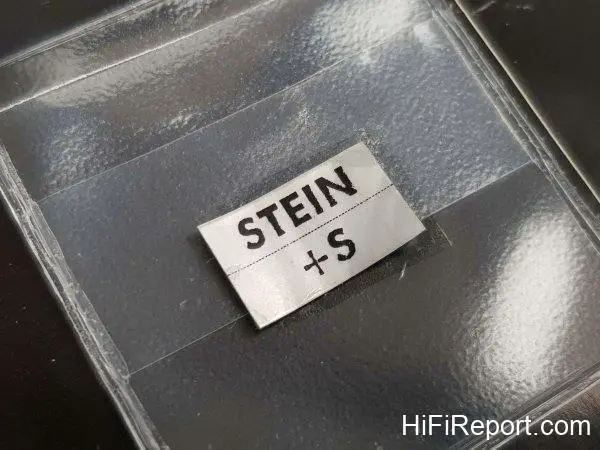
The E-Pads Plus packaging is straightforward. Each package contains a single E-Pad Plus, with clear illustrations on the packaging itself indicating suggested application areas. The visual cues make usage intuitive.
Let’s begin with source components. For tray-loading CD players, the E-Pad Plus can be affixed to the innermost ring of the disc tray, within the recessed area designed for smaller CDs. Ensure the patch is applied flat and parallel to the disc itself.
For top-loading CD players, placement options include the CD well or the underside of the top cover, again maintaining parallel alignment with the CD.
Turntables are also viable candidates for E-Pads Plus application. Suggested locations include the tonearm base, the tonearm tube’s root, and the motor housing – applicable to both direct-drive and belt-drive turntables.
Furthermore, the vicinity of the equipment’s AC power input socket is an excellent placement point for the E-Pads Plus, be it on source components, amplifiers, or phono stages. If you have additional patches after addressing the power input, consider applying them around signal input/output jacks.
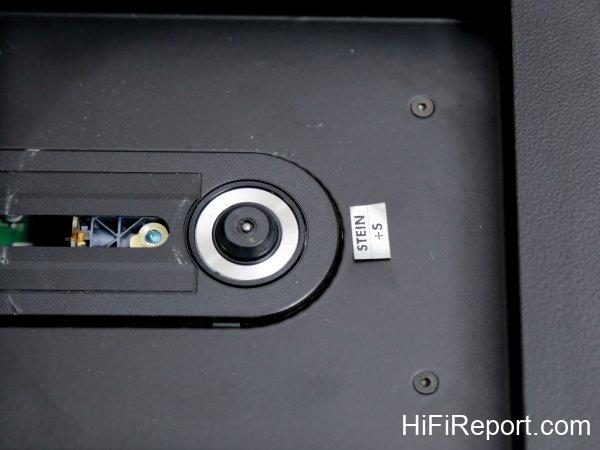
As illustrated in the photograph, depicting a North Star Design Model 192 MKII CD transport, the E-Pad Plus can be applied to the laser pickup mechanism’s cover plate, as close to the spindle as feasible, after opening the sliding cover.
Power distribution strips are also locations where the E-Pads Plus can yield noticeable benefits. Applying a single patch to the chassis near the AC input of the power strip allows all components plugged into it to benefit from the E-Pad Plus’s effects.
Beyond equipment, the E-Pads Plus can also be applied within the listening room itself. Large glass surfaces, such as windows, mirrors, glass picture frames, or even large flat-panel televisions, can benefit from a patch applied to a corner. This is said to mitigate undesirable sonic reflections within the listening space.

Can the E-Pads Plus be used on loudspeakers? Yes, indeed. Two potential locations are suggested: on the speaker’s back panel, centered between the positive and negative input terminals, and on the baffle board between different driver units.
Affixing the E-Pad Plus to the power strip’s AC input remains a highly recommended placement.
Enhanced Definition
With numerous potential placement points outlined, which is paramount? My recommendation is to experiment methodically, one location at a time, to discover the placement that yields the most pleasing sonic results to your ears.
The E-Pads Plus boasts robust adhesive properties and remarkable durability. Repeated application and removal, even up to ten times, poses no issue. This allows for iterative experimentation to pinpoint the optimal placement. Furthermore, concerns about long-term efficacy are allayed by the manufacturer’s claim that the E-Pads Plus retains over 90% of its effectiveness even after two decades of use.

The listening evaluation was conducted in the HiFiReport listening room. My methodology was to utilize a single E-Pad Plus, systematically testing it on various components to discern the sonic impact of its application.
My initial test focused on a CD player. The listening room houses a North Star Design Model 192 MKII CD transport, a top-loading design. I applied an E-Pad Plus to the laser pickup mechanism’s cover, positioning it as close to the spindle as possible. For the listening test, I selected “Christmas And Sousa Forever” performed by the Dallas Wind Symphony, track 1 from the “Burmester Art For The Ear” test disc. This is a celebratory march, driven forward by the rhythmic pulse of the bass drum.
With the E-Pad Plus in place, I immediately noted a greater clarity to the bass drum, its presence becoming more defined, imparting a more agile sense of pace to the music. The overall sonic picture brightened, enhancing transparency and allowing the soundstage to expand in depth.
Without the E-Pad Plus, the soundstage presented as more diffuse and less focused, with a degree of sonic disarray. However, with the patch applied, the soundstage gained depth, enriching the layering between foreground and background elements. The soundstage structure became more coherent, and the music acquired a more focused and impactful quality.

Improved Soundstage
Having observed the positive impact of the E-Pads Plus on the CD transport with the “Keep On Movin'” album, I turned my attention to power conditioning. I relocated the same E-Pad Plus to the chassis of an aluminum power strip, near the AC input. This power strip supplied power to the North Star Design Model 192 MKII transport, a USB DAC32, and a Linear Acoustic LAV-60 MKII integrated amplifier. For this test, I played “I’m So Lonely,” track 2 from Might Sam McClain’s “Keep On Movin'” album, a classic slow blues track featuring electric guitar, electric bass, drums, Hammond organ, and horns.
The effect was once again immediate and consistent with the previous observations. The soundstage’s three-dimensional presence was enhanced, with a sense of elevation. Sonic elements became more distinct, their spatial relationships clarified, and the placement of instruments within the soundstage, particularly those situated further back, became more precise.
Furthermore, the outlines of the guitar, bass, and vocals gained focus and prominence, exhibiting a sense of projection. Dynamic contrasts seemed amplified, injecting greater vigor into the music and enriching the overall listening experience.
Alternatively, applying the E-Pad Plus directly adjacent to the equipment’s AC input socket can also yield similarly significant improvements.
Next, I switched to a laptop as the source, connected via USB to the USB DAC32. My intention was to assess the impact of placing the E-Pad Plus directly above the USB input port on the DAC32. While changes were still discernible, they were less pronounced compared to the previous tests. Furthermore, I observed a slight dryness in the sound, making it less musically engaging. This observation underscores the importance of strategic placement for the E-Pads Plus to deliver positive sonic enhancements.
However, defining the “correct placement” is not absolute. A location that proves beneficial in System A might be detrimental in System B, contingent on system synergy and individual preferences. Therefore, user experimentation and critical listening are crucial. Intrigued, I then experimented by placing the E-Pad Plus on the laptop’s DC power input, and surprisingly, this too yielded positive results.
Finally, I evaluated two more placements: the laptop’s DC input and the AC input of the Linear Acoustic LAV-60 MKII integrated amplifier. Both locations yielded positive sonic improvements, consistent with the previously observed trends. The enhancements primarily centered around soundstage dimensionality, image definition, frequency balance, sonic separation, soundstage organization, and dynamic impact. From these observations, it’s reasonable to conclude that these are the core sonic attributes targeted by the E-Pads Plus. If these are areas you seek to refine in your system, the E-Pads Plus are certainly worth exploring. Don’t be concerned that a single patch might be insufficient; when strategically placed, even one E-Pad Plus can deliver noticeable improvements.