
Stenheim Reference Statement Review
The pursuit of Hi-End audio perfection is an endless journey. For the Swiss brand Stenheim, the Reference Statement embodies their current state-of-the-art engineering and stands as their declaration to challenge for the world’s best.
Challenging the Pinnacle of Hi-End
Stenheim was founded in 2010 by CEO Jean-Pascal Panchard and five audio engineers. Prior to Stenheim, these engineers all worked for renowned Hi-End audio brands, reportedly including Goldmund of Switzerland. This background explains why their first product line, Alumine, featured speaker cabinets made entirely of aluminum alloy. However, design expertise doesn’t automatically translate to market success. In 2013, Jean-Pascal Panchard took over as CEO, actively recruiting talent and integrating Swiss precision industrial culture to shape Stenheim’s company image, akin to that of a Swiss handcrafted watchmaker. This culminated in the 2014 launch of the Reference series, aimed at challenging the very peak of Hi-End audio.
Jean-Pascal has visited Taiwan three times, and on one occasion, I served as his interpreter, explaining Stenheim’s core philosophy. He outlined Stenheim’s three key technical features: aluminum alloy speaker cabinets, custom-made high-efficiency dynamic drivers, and sophisticated, meticulously engineered high-order crossovers. He asserted that Stenheim is unique in the audio industry for executing these three elements to the highest degree, pushing them to the extreme.

The Complexity of Extreme Loudspeaker Design
The key is “extreme”! Stenheim isn’t alone in using aluminum alloy for speaker cabinets; many brands favor this material. Custom high-efficiency dynamic drivers and precise crossovers are also commonly touted. But achieving the “extreme” level of performance is where the real challenge lies.
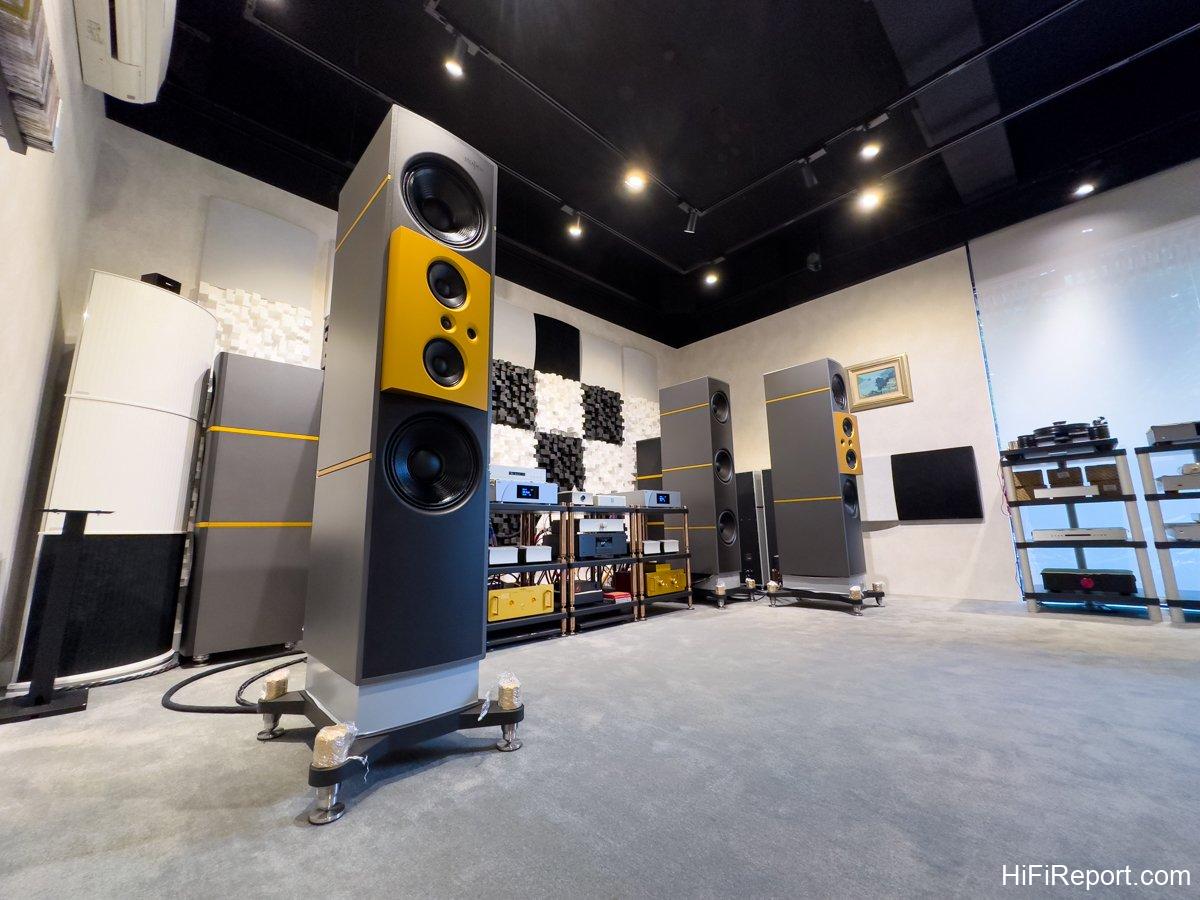
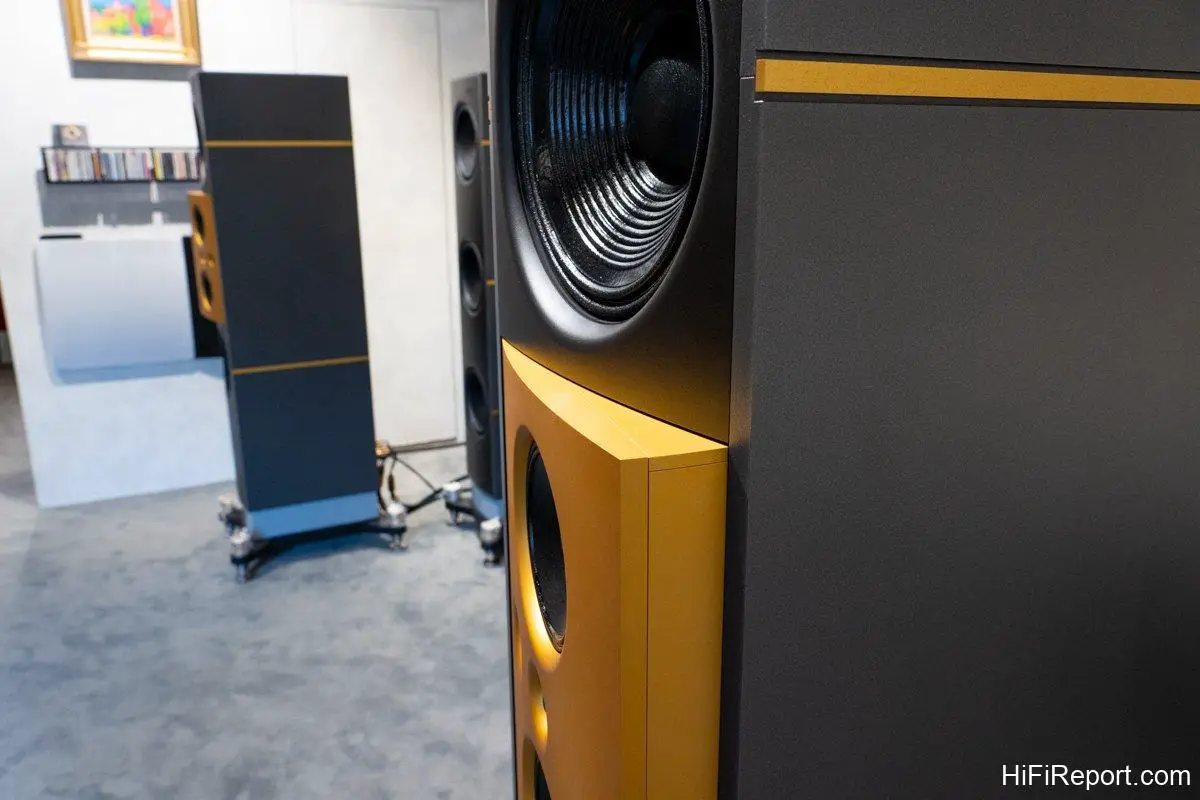
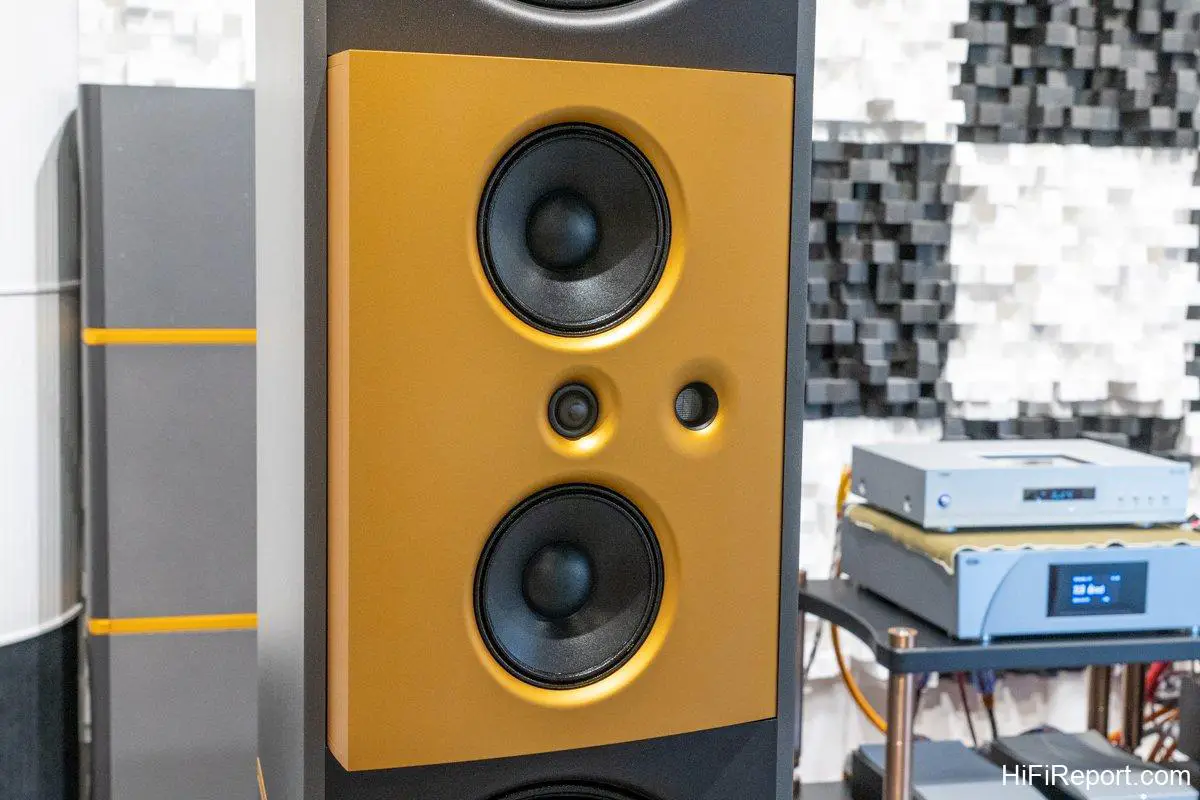
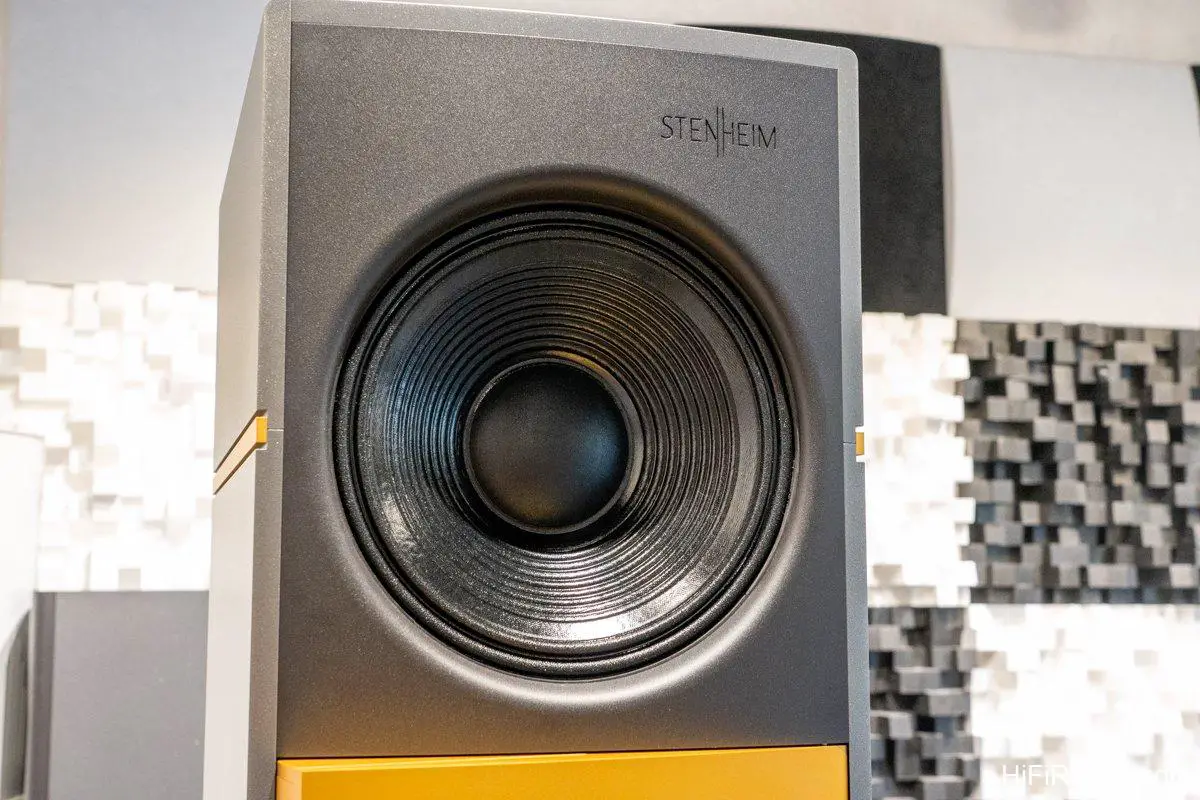
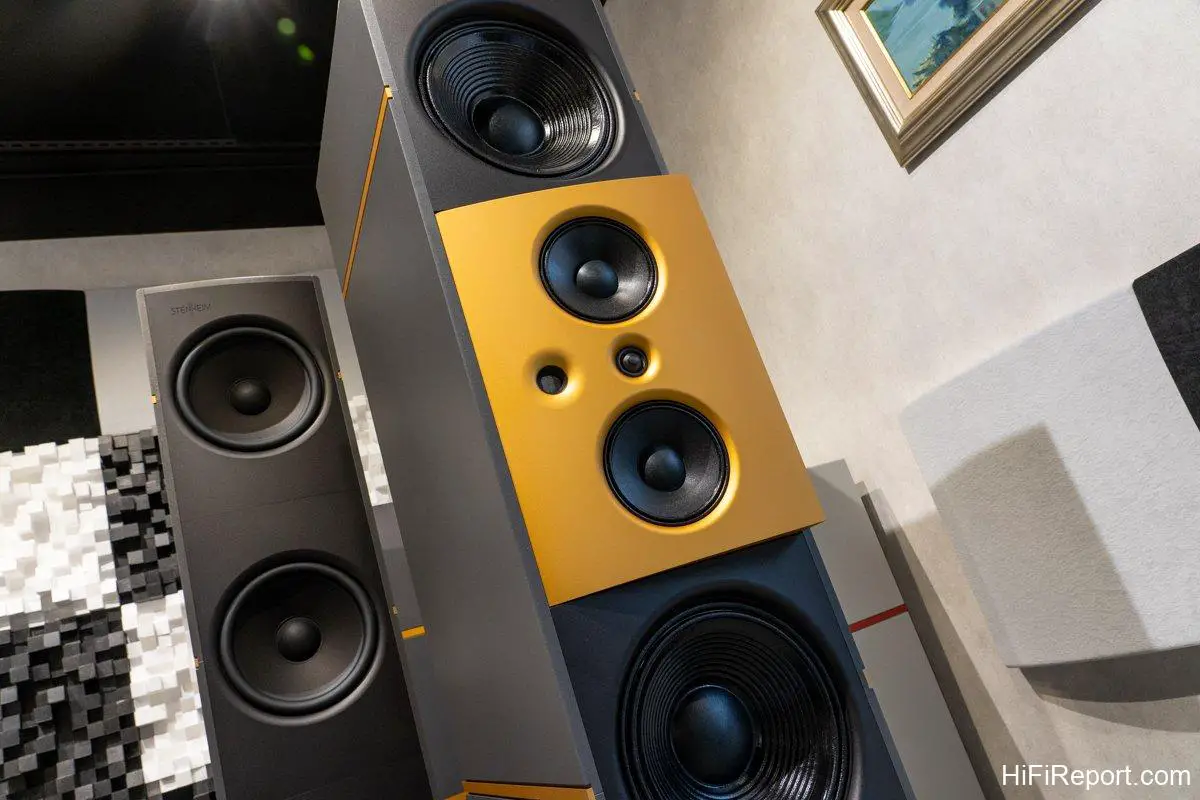
A glance at the Reference Statement’s imposing form immediately reveals its formidable presence, clearly a heavyweight contender. However, the design complexity is profound. Each channel employs a driver array comprising a ribbon super tweeter, a silk dome tweeter, two 6.5-inch midrange drivers, and dual 13-inch long-throw woofers, arranged vertically. Additionally, at the rear, there are two more woofers flanking a ribbon tweeter. The separate bass towers each house six 13-inch woofers, configured as two sets of three, driven by three independent amplifier modules. The bass towers alone require three power cords each. Furthermore, the main speakers and bass towers necessitate the Stenheim Bass Management System to seamlessly integrate their frequency response.
This five-way, four-piece behemoth of a speaker system results in each speaker weighing a staggering 300 kilograms.
Super Complex Sealed Cabinet Construction
Why so heavy? During my listening session at HiFiReport, I didn’t dwell on this question. It was only later, upon closer examination, that I realized the Reference Statement’s cabinet is not only a sealed design but also constructed from 24 independent enclosures. One can only imagine the intricate internal bracing and compartmentalization within the Reference Statement. However, Stenheim doesn’t explicitly showcase this internal complexity, which aligns with their philosophy. As stated in the Reference Statement’s official documentation: “Forget technology, simply experience music.” They encourage you to simply enjoy the music and forget the complex technology. Stenheim has already tackled the technical challenges that might hinder pure musical reproduction on your behalf.
The Reference Statement boasts an impressive frequency response, officially rated from 10 Hz to 100 kHz, with a high sensitivity of 96 dB. For a dynamic driver loudspeaker, this is a remarkable achievement, rivaling the efficiency of horn speakers.
Stenheim believes that high-efficiency dynamic drivers are crucial for preserving musical detail and fully realizing the beauty of recordings. To achieve maximum efficiency from dynamic drivers, each driver must be custom-made. The Reference Statement’s woofers come in two specifications: two are long-throw 13-inch units, while the woofers in the bass towers and the rear of the main speaker are of a different 13-inch specification. These are new woofers in the latest iteration of the Reference Statement. Stenheim hasn’t labeled this as a second-generation design, but rather a natural evolution.
The Challenge of 96dB Efficiency
Achieving 96 dB efficiency for the Reference Statement requires not only custom, high-specification drivers but also an exceptionally sophisticated crossover design. Stenheim’s preference for high-order crossovers further complicates the design and implementation, making high efficiency even more challenging to attain.
High-order crossovers are characterized by steeper roll-off slopes. A first-order crossover has a -6dB roll-off, second-order -12dB, and so on. A fourth-order crossover, with a -24dB roll-off slope, is considered high-order. Stenheim doesn’t specify the exact roll-off slope but mentions using high-order crossovers, suggesting it could be fourth-order or even higher. However, doubling the roll-off slope doubles the number of passive components required. More passive components typically mean greater signal loss. Therefore, Stenheim’s commitment to high-order crossovers while maintaining ultra-high speaker efficiency presents a significant design hurdle.
How does Stenheim overcome this? I don’t know. The manufacturer doesn’t provide detailed explanations – it’s their proprietary technical know-how.
Simplified Bass Management System
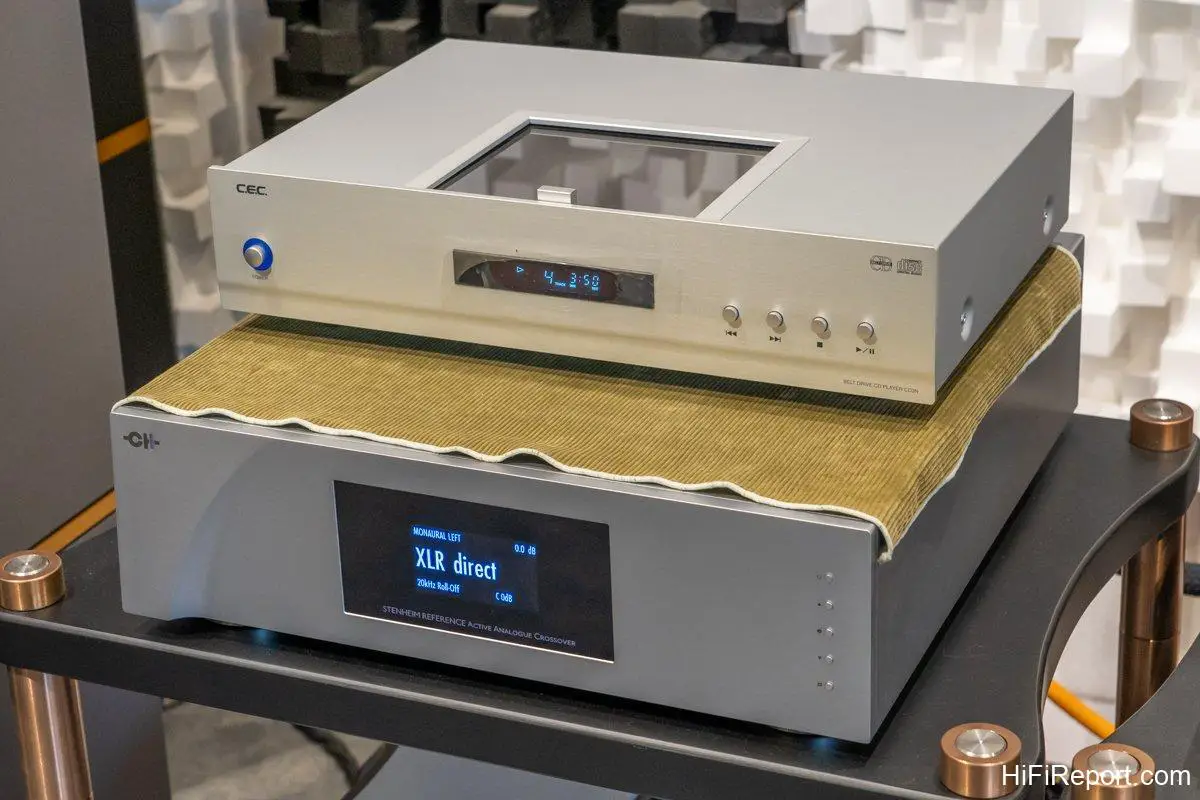
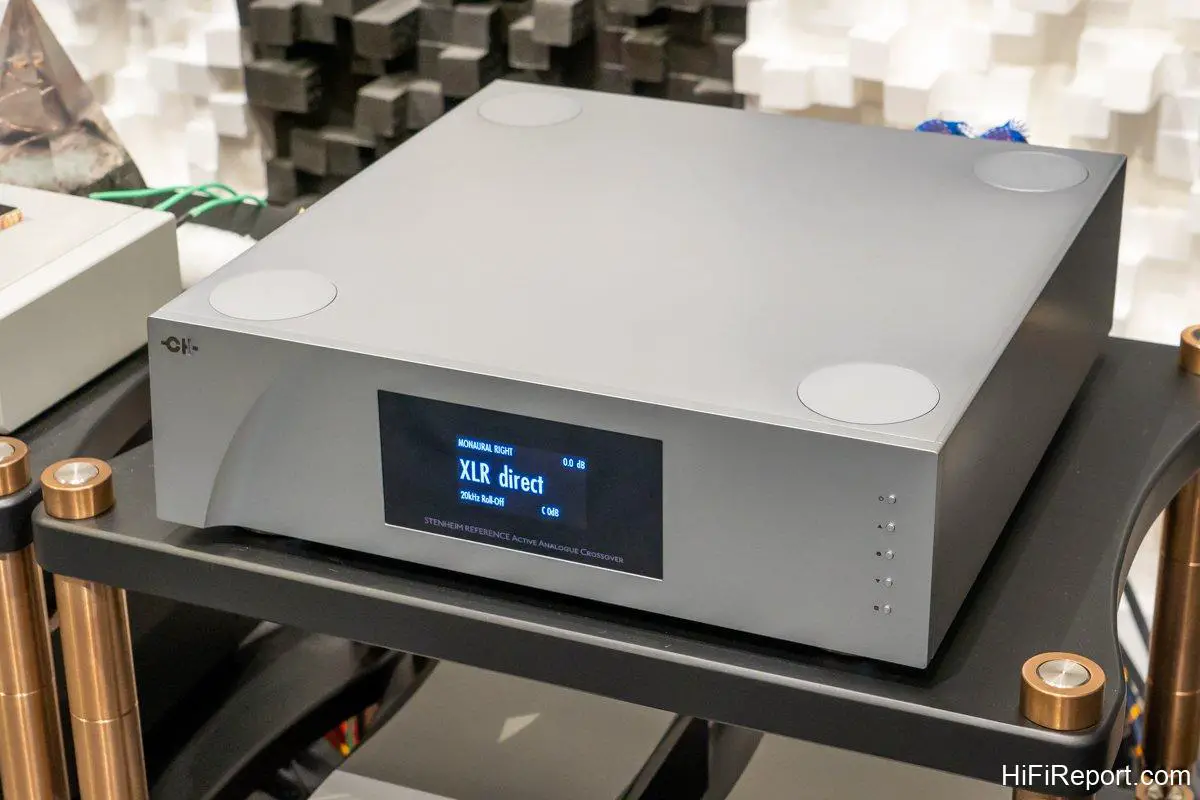
As a four-piece system, the Reference Statement incorporates the Stenheim Bass Management System between the main speakers and bass towers. This is an electronic crossover unit custom-made by Swiss manufacturer CH Precision. However, its adjustable parameters are limited. The crossover frequency is fixed, with only +/- 3 dB of bass level adjustment and a high-frequency roll-off filter available.
While electronic crossovers offer a wide range of adjustable parameters, Stenheim deliberately simplifies the adjustments to maintain the intended factory settings as closely as possible. The bass level adjustment is provided to accommodate room acoustics and user preferences. Additionally, a bass level adjustment knob is also available on the main speaker’s crossover for further fine-tuning based on personal taste.
One could delve deeply into the design aspects of the Reference Statement, and there’s much to explore. However, Stenheim’s concluding message for the Reference Statement—to simply enjoy the beauty of music and disregard the technical complexities— dissuaded me from elaborating on the design details. Indeed, the Reference Statement is an incredibly complex speaker system, but for those fortunate enough to own it, the focus should be on enjoying the music. Why dwell on *why* it sounds so good? It’s like owning a Ferrari supercar. You rev the engine, let the exhilarating roar ignite your adrenaline, and simply relish the thrill of high-speed driving on the track. There’s no need to scrutinize the intricacies of the V12 engine or its technical brilliance. The manufacturer has already addressed those technical challenges. Owning the Reference Statement is about immersing yourself in the music.

Top-Tier Speakers Tailored to Your Needs
During my audition at HiFiReport, the owner, Mr. Yang, mentioned that Stenheim’s high-end speakers can be customized. Considering these speakers rival supercars in price, meeting customer requests is a given. The reviewed Reference Statement pair was particularly hard-won. Ordered in August 2021, they only arrived in October 2022. In fact, this pair was already sold to a customer. The invitation to audition was simply to demonstrate the exceptional quality of the Reference Statement.
Mr. Yang at HiFiReport primarily uses equipment from brands he distributes. The source and amplification were all Mola Mola. The digital streaming DAC was the Tambaqui, the preamplifier was the Makua, and the power amplification was handled by four Kaluga monoblock power amplifiers. These compact amplifiers deliver a substantial 400 watts (into 8 ohms) and can double to 1200 watts into 2 ohms. Mr. Yang commented that, considering the Reference Statement’s status, even higher-end equipment would be fitting, but the Mola Mola system was already remarkably capable.

Setting up a complete Reference Statement system is no small feat. Each channel, including its dedicated base, weighs 300 kg. Unboxing alone is a major undertaking, let alone positioning them. Furthermore, each bass tower requires three power cords, totaling six for both channels. Adding the two power supplies for the Stenheim Bass Management System brings the total to eight power cords. These are connected via power conditioners, with the entire Mola Mola system powered by a GigaWatt PC-4 EVO+.
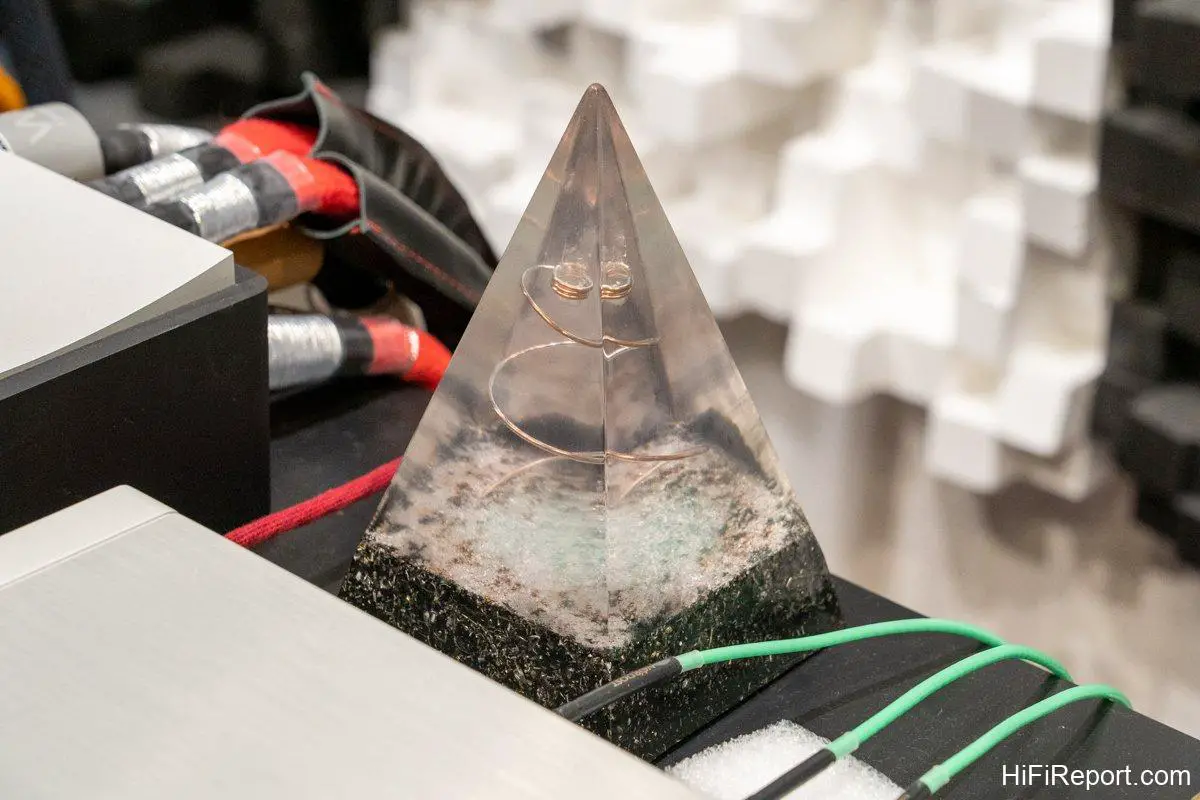
For my CD listening, Mr. Yang added a CEC TL-3N CD transport. I also noticed the meticulous attention to acoustic tuning at HiFiReport, including Nordost QRT devices and Orgosound products I hadn’t encountered before. These small pyramid-shaped objects are acoustic treatment tools for listening spaces, purportedly based on magnetic principles – quite esoteric. However, my focus was the Reference Statement, so I didn’t inquire further, intending to explore them another time.
Potentially Requiring a Larger Listening Space
With its four-piece configuration and bi-polar front and rear radiation design, setting up the Reference Statement is undoubtedly complex. Mr. Yang at HiFiReport invested considerable time in positioning. I briefly experimented, listening to a couple of tracks, and remarked to Mr. Yang, “The space might still be a bit too small. To truly unleash the Reference Statement’s potential, a larger listening room might be needed.”
This highlights the challenges of running a Hi-End audio business. A speaker system as massive and complex as the Reference Statement, brimming with musical energy, demands a large space with excellent acoustics for demonstration. Just like a supercar is built for the racetrack, not for aggressive driving on public roads.
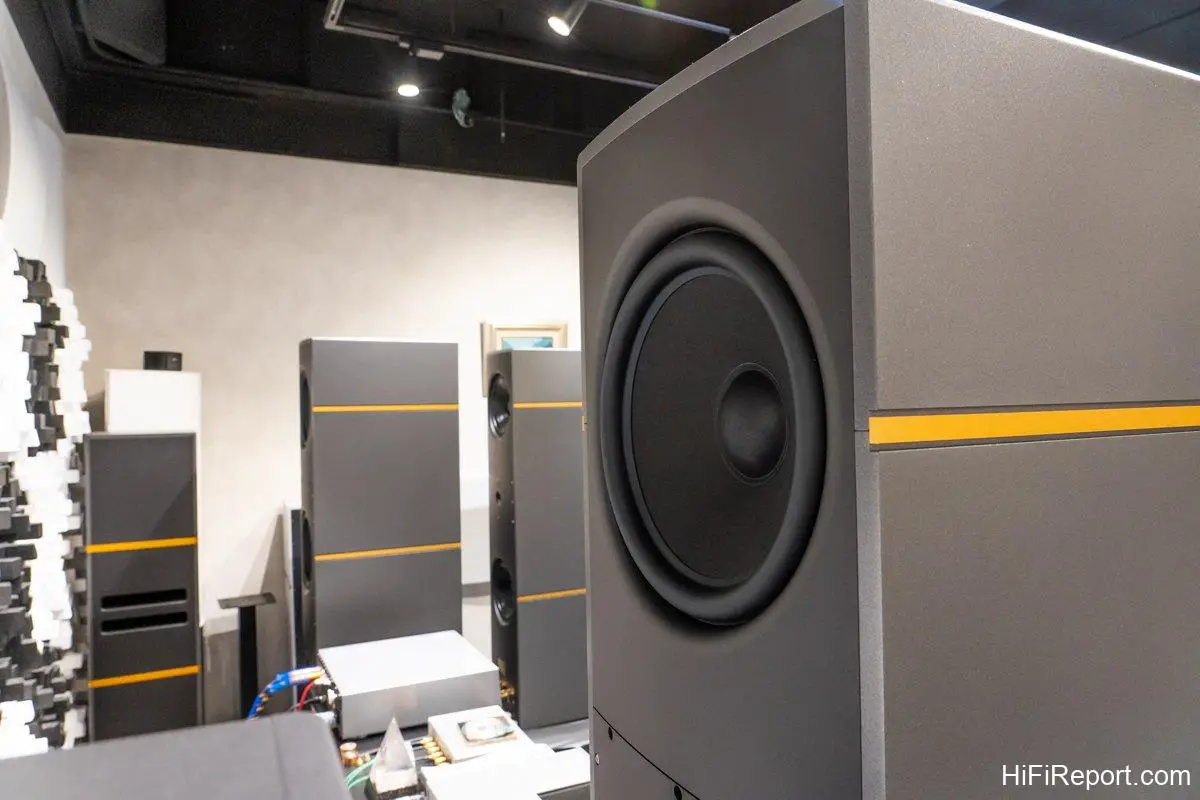
After listening to a few tracks, I suggested to Mr. Yang that moving the listening position slightly further back and raising the seat height might improve things. However, this in no way diminishes the Reference Statement’s inherent capabilities. While a larger listening space might better showcase its immense musical energy and dynamics, its nuanced detail was already evident, revealing the beauty of its sound even in this room.
I often say that the bass range is where speakers cost the most to get right. Sufficient driver surface area to move air, combined with ample cabinet volume, is needed to achieve true 20 Hz bass. The Reference Statement goes even lower, reaching down to 10 Hz, below the threshold of human hearing. Some might question the need for such low extension if it’s inaudible. The answer lies in the harmonics. While 10 Hz isn’t heard directly, its influence extends upwards through octaves, enriching the depth and fullness of the lower frequencies.
Effortless Listening to Rebecca Pidgeon
I began with Rebecca Pidgeon’s “Spanish Harlem.” The double bass pizzicato opening filled the soundstage with substantial, natural notes, full and clear, with an effortless, bouncy quality. This contrasted beautifully with Rebecca Pidgeon’s sweet vocals. When the piano joined in the second section, its touch was gentle, the piano notes possessing a warm glow. Percussion, strings, and guitar entered during the interlude. The Reference Statement expanded a beautiful soundstage with a sense of space. Even without playing at high volume, the musical detail was already rich, indicating excellent speaker linearity. It doesn’t need to be loud to reveal full and rich musical detail.
Without pausing the CD, I continued with “Remember Me.” Guitar chords resonated richly, yet the detail of the pick attack wasn’t lost, creating a lively rhythm. The multi-tracked recording effect layered two acoustic guitars. Rebecca Pidgeon’s voice was focused in the center of the soundstage. The reverberation of percussion instruments conveyed the recording space. The Reference Statement presented a relaxed and joyful musical expression. For a large speaker system of this caliber, playing Rebecca Pidgeon is mere child’s play, utterly effortless.
Relaxed and Comfortable Low Frequencies
Switching to Diana Krall’s “Live In Paris” concert recording, I listened to “Let’s Fall In Love.” The jazz guitar intro and Diana Krall’s vocals, reproduced through the Reference Statement, were truly relaxed and natural. As the piano, double bass, and drums joined, the swing atmosphere intensified. String and brass sections added to the big band feel. The Reference Statement expanded the musical panorama, yet the midrange richness and sonic density remained excellent. With large cabinets and numerous drivers—14 drivers per channel working in concert—each driver can operate with ease, collectively creating a relaxed and expansive musical scene.
For something with a heavier rock flavor, I chose Dire Straits’ “Money For Nothing.” This track’s soundstage is crafted through multi-track recording. The ethereal spatial effects in the intro, combined with the unique sounds of synthesizers, were rendered by the Reference Statement into a wide, 3D soundscape. Reversed-phase vocals further expanded the sense of space. Drums gradually built the atmosphere, culminating in the iconic guitar riff. Listening closely, there’s no pick sound—Mark Knopfler plays fingerstyle, hence the thick power chords. The drums were crisp, the kick drum thumping powerfully, with excellent low-frequency bounce. Again, the Reference Statement handled rock music with ease, a piece of cake.

Unique Toe-in Adjustable Mid-High Module
Moving to classical music, I started with Rachel Barton and Samuel Sanders’ “Homage To Sarasate,” selecting “Andalusian Serenade.” The piano’s lyrical arpeggios were rendered with substantial body by the Reference Statement. The piano’s image was spacious and grand, contrasting with the focused and articulate violin. The interplay between piano and violin was effortlessly presented. With fewer instruments, the proportions and positions were even clearer. I moved slightly forward and back in the listening seat, sensing the soundstage changes in the “sweet spot.” Mr. Yang, sensing my intentions, commented, “If you want the violin to be more focused and precise, you can adjust the projection angle of the mid-high frequency modules.”
Indeed, he’s an expert. A slight shift in listening position revealed my thought process. The Reference Statement is a large system, not easily moved. So, Stenheim equipped it with a unique feature: adjustable toe-in for the mid-high frequency modules. To make the violin more focused and prominent, you can increase the toe-in angle of the central module without moving the entire speaker. However, I found HiFiReport’s setup already excellent. My slight shifts in listening position were merely to confirm the subtle variations, so I didn’t ask Mr. Yang to make further adjustments.

Classical recordings often have lower recording levels than jazz or rock. So, I increased the volume while listening to “Andalusian Serenade.” Even with just piano and violin chamber music, the recording quality was excellent and demanding on the audio system’s refinement. At higher volumes, the piano needed to maintain its grand image, remaining full, rich, and substantial, contrasting with the violin’s brilliant and vibrant tone. The violin’s fortissimo passages needed to be bright and articulate without becoming harsh—a challenging test. However, the Reference Statement handled it effortlessly, allowing me to quickly immerse myself in the music, enjoying the dialogue between piano and violin, weaving a musically vivid scene.
Greater Orchestral Scale, Greater Capability
Time to increase the scale. I switched to Yuja Wang’s “Ravel Piano Concerto in G major,” with Lionel Bringuier conducting the Tonhalle Orchestra Zürich. The first movement, “Allegramente,” opens with sharp percussive sounds. The piano enters with flowing, unusual chords. Ravel’s incorporation of American jazz is evident in the piano glissandos, reportedly influenced by Gershwin. The wind instrument techniques also hint at “Rhapsody in Blue.” However, this concerto is not easy to reproduce. Besides the unique piano harmonies, there are clear, bright piccolo passages, and the main theme is presented by brass. An audio system needs sufficient low-end richness to convey the contrast between orchestral grandeur and piano concerto intimacy, fully expressing the music’s dramatic character.
Listening to the first movement of Ravel’s Piano Concerto in G major through the Reference Statement was pure enjoyment. I increased the volume further, to a level approximating a seat in the front five rows of a concert hall. The Reference Statement’s deep and expansive soundstage brought out the music’s dramatic vitality. The young conductor and pianist partnership resulted in a faster tempo, enhancing the music’s youthful energy. Yuja Wang’s virtuoso technique effortlessly navigated the rapid piano passages. At the climax, a resounding drumbeat brought back the main theme. That single drum strike, through the Reference Statement, was deep, powerful, and profound. The orchestra immediately returned to the theme, yet the drum’s resonance lingered, followed by quiet, nocturne-like passages. The sudden drumbeat then powerfully re-emerged, showcasing the Reference Statement’s low-frequency prowess again. If you have the opportunity to audition the Reference Statement at HiFiReport, listening to just Ravel’s Piano Concerto in G major might be enough to reveal the system’s incredible capabilities.
Finally, I brought out Shostakovich, listening to Ashkenazy conducting the Royal Philharmonic Orchestra in “Festival Overture.” The title itself suggests a celebratory, uplifting piece. It opens with a powerful brass fanfare, the full orchestra responding emphatically, gradually building the atmosphere into a lively, festive section. The Reference Statement presented a broad and vibrant orchestral panorama. The brass was bright and full-bodied, the strings sweeping across the soundstage in waves. The mid-high frequency clarity and brilliance heightened the festive mood, elevating the listening experience, yet the overall sound remained relaxed and effortless. The music transitioned from frenzied excitement to comfortable, softer passages, then built up layers of sound again, culminating in a glorious finale. The Reference Statement conveyed an exhilarating, triumphant spirit – simply superb.
Stenheim’s Pinnacle of Technical Achievement
To make a complex speaker system with so many drivers work in such cohesive harmony is an immense technical feat – Stenheim’s achievement with the Reference Statement. Moreover, the front and rear radiating design of the Reference Statement creates an even wider and deeper soundstage, resulting in a natural listening experience. However, I believe this level of performance isn’t achieved straight out of the box but requires professional installation and fine-tuning. If you have the chance to audition the Reference Statement at HiFiReport, beyond experiencing its sonic excellence, you can also learn valuable audio setup tips. HiFiReport are masters of audio system optimization, and picking up a few tricks could be very beneficial for your own system.
Specifications
**Stenheim Reference Statement**
* Type: 5-way, 14-driver, four-piece floorstanding loudspeaker
* Drivers: 2 x 1-inch aluminum ribbon super tweeters; 1 x 1-inch silk dome tweeter; 2 x 6.5-inch paper cone midrange drivers; 2 x 13-inch long-throw woofers; 8 x 13-inch woofers
* Frequency Response: 10 Hz – 100 kHz
* Sensitivity: 96 dB SPL/2.83V/1m
* Dimensions: 1890 x 370 x 560 mm (H x W x D)
* Weight: 300 kg x 4