
T+A SDV 3100 HV Network Streaming DAC & Preamplifier Review
What are the highest specifications for digital music files currently? DSD 512 and PCM 32 bit/348 kHz. However, the recording industry mostly remains at DSD 64 and 24 bit/192 kHz (or 24/96). Truly higher specification recordings are rare. HiFiReport Audio has specially curated five “native DSD256” (DXD 352.8; DSD256) music selections to experience the ultimate in digital music playback using the German T+A SD3100HV DAC. I was invited to join them after this DSD256 music menu was finalized.
NativeDSD for Pure DSD Recordings
Where can you find DSD256 music files? It’s not difficult; simply purchase and download them from NativeDSD. Of course, these are high-resolution music files that you pay for. Find the album, select the file format you want to purchase, such as two-channel or multi-channel, and specifications like DXD, DSD64, DSD128, DSD 256, or DSD 512. After selecting, the price will be automatically calculated (thoughtfully priced in NTD), add it to your shopping cart, checkout, and then you can download.
Note that because these are ultra-high specification digital music masters, the files are quite large, ranging from several gigabytes to tens of gigabytes. Downloading requires some patience.
The invitation to HiFiReport Audio to audition DSD256 music came just as the Level 3 alert began. I even asked if it was really okay to go. Fortunately, HiFiReport has several independent listening rooms. Although they are enclosed spaces, with fewer than five people indoors, it doesn’t count as a gathering. When I went to HiFiReport, including HiFiReport’s manager Mr. Chu and a colleague, there were only three of us in total. In the spacious second-floor listening room, maintaining social distance was easy. However, we had to wear masks. This was my first time listening to equipment at HiFiReport Audio while wearing a mask. Speaking with Mr. Chu felt a bit muffled and unfamiliar, but it was necessary for epidemic prevention. A little inconvenience is better than not being able to audition at all. Hopefully, listening to audio equipment with a mask at HiFiReport will be the first and last time.
Ultimate Digital Streaming System
Upon arriving at HiFiReport, the equipment was already warmed up and playing music. Without rushing into listening, I first chatted with Mr. Chu about the idea behind this DSD256 high-resolution master tape audition. Mr. Chu mentioned that current digital streaming is essentially a way to listen to music files, apart from physical media. However, the scope and forms of digital streaming applications are diverse, and the quality varies greatly. For example, downloading MP3 files online is also digital streaming, and using Spotify or Apple Music are other forms. For those who are more particular, they might choose Tidal, which offers higher file formats. HiFiReport, focusing on Hi-End audio, naturally wants to introduce customers to the most ultimate digital streaming experience.
What is the ultimate digital streaming? It’s purchasing and downloading high-end DSD recording files, playing them through a dedicated digital streaming player, and then decoding them with a high-end DAC. This is the most original and purest form of high-resolution digital streaming listening. Therefore, HiFiReport Audio arranged a “limited menu” this time, letting me listen to pre-prepared DSD256 recording files to experience the “state-of-the-art” digital streaming music playback.
Benefits of File Download over Real-Time Streaming
Compared to “real-time” online digital streaming, storing files on a NAS or the built-in hard drive of a digital streaming player is indeed a method of digital playback that reduces problems.
Although digital music subscription services are increasingly popular, Hi-End pursuit is not about market trends, but the best listening method in the eyes of audiophiles. Just like vinyl records, even after facing challenges from CDs and online music downloads, they still exist today and are becoming more and more Hi-End. Moreover, new digital technologies are being introduced to assist vinyl adjustment, making vinyl setup more precise. This attitude of not being afraid of trouble and pursuing the ultimate is the spirit of Hi-End audio.
Therefore, even though digital music subscription services are becoming more popular, they are still not easily reaching Hi-End standards. The main reason lies in the network transmission process. Whether it’s Spotify, Apple Music, or Tidal, from the music database to the DAC, the intermediate digital data cloud has to go through countless servers and switches. The reason it’s called a cloud is that the path is unclear, like being in a fog. Digital streaming players receive these “real-time transmission” music files, and although there are many correction technologies to restore and decode as much as possible, the uncertainty of network transmission means some problems are known and can be treated symptomatically, but some problems are unknown. Facing unknown problems, there is currently no solution. Therefore, returning to storing music files on your own NAS or hard drive is a simple solution to reduce problems.
T+A and Burmester System
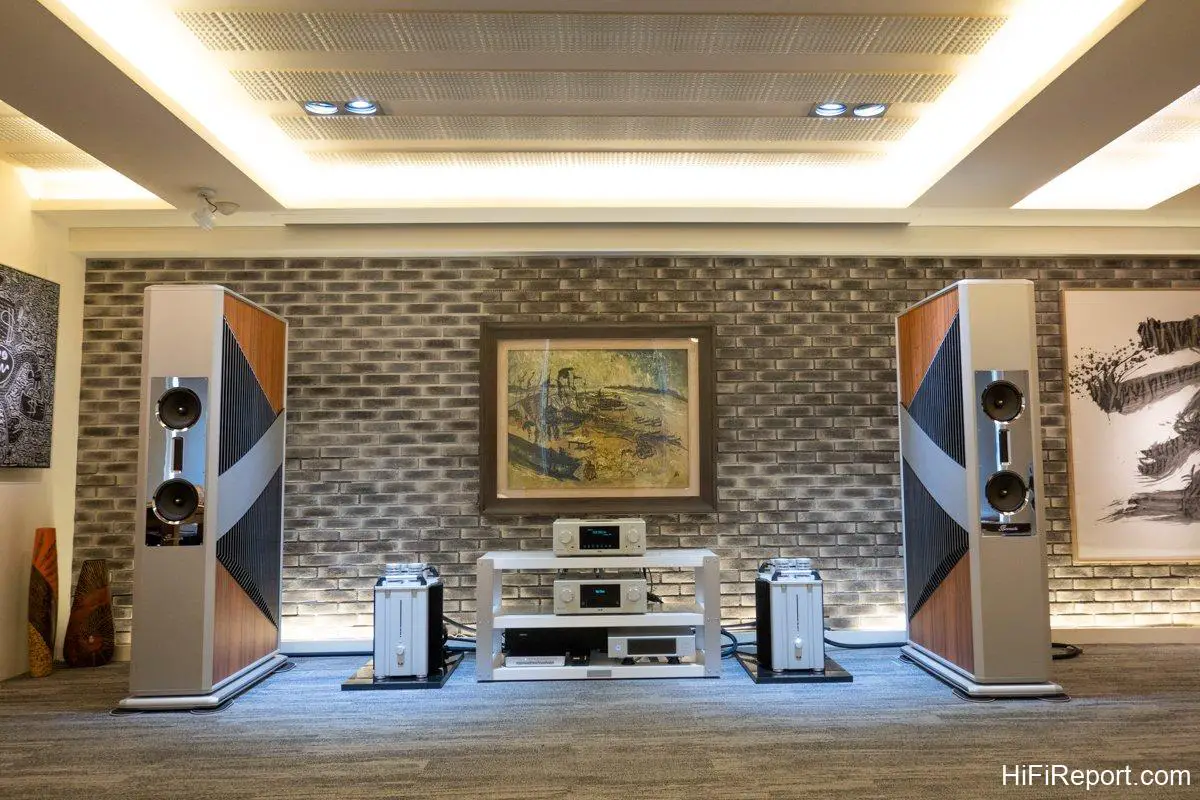
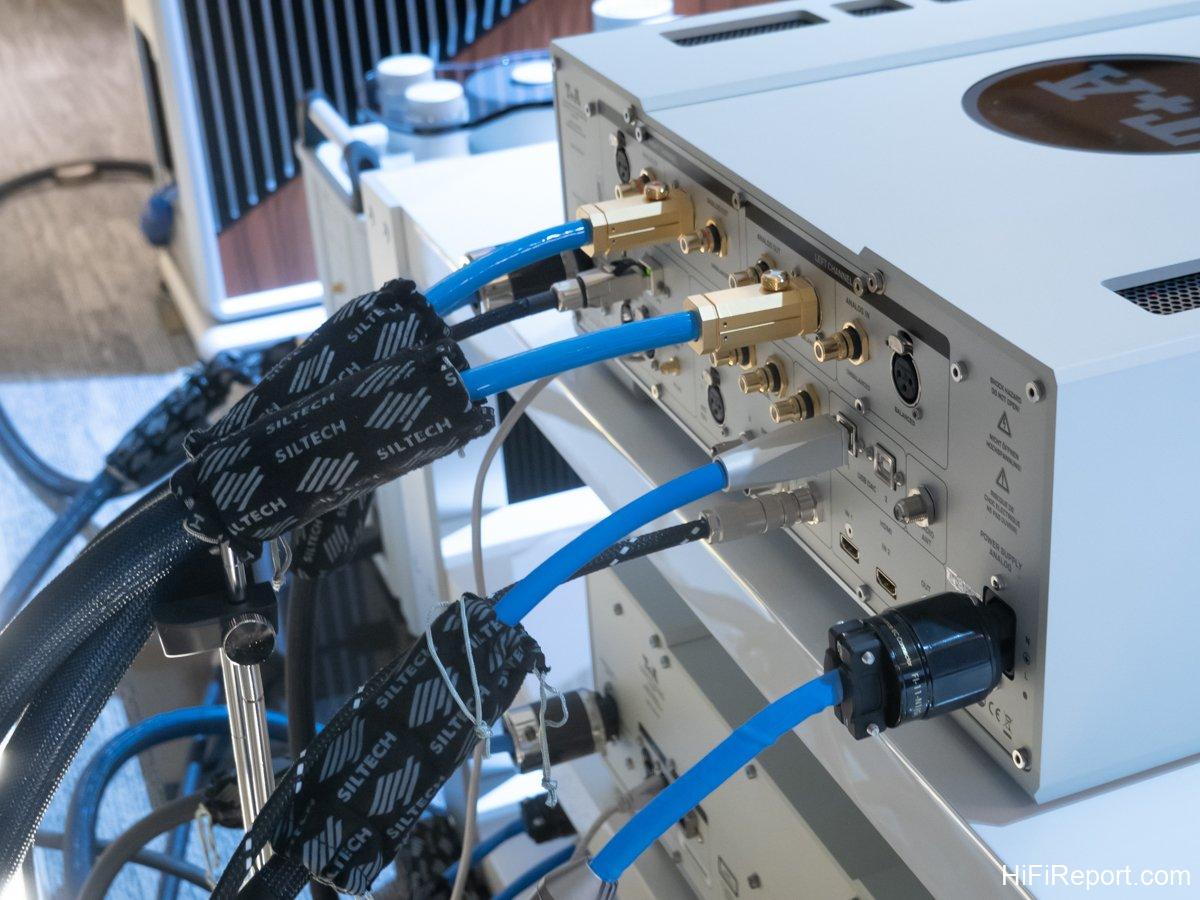
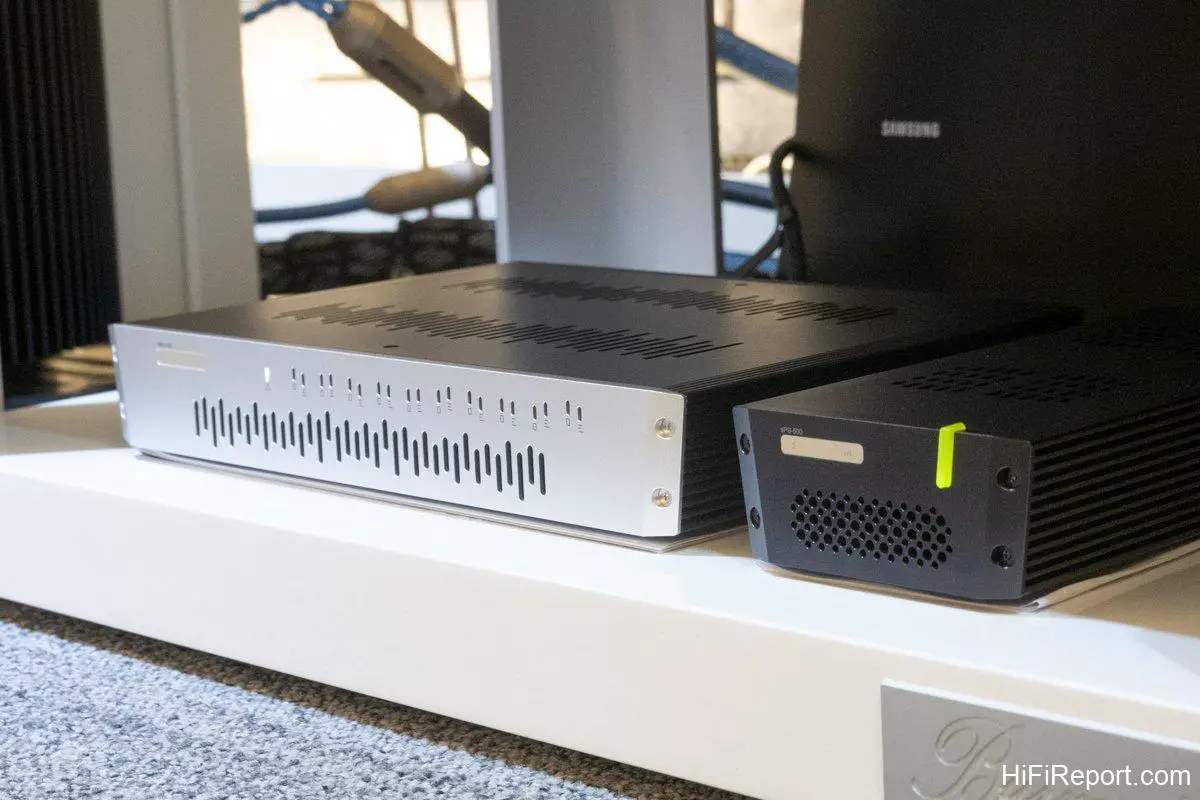
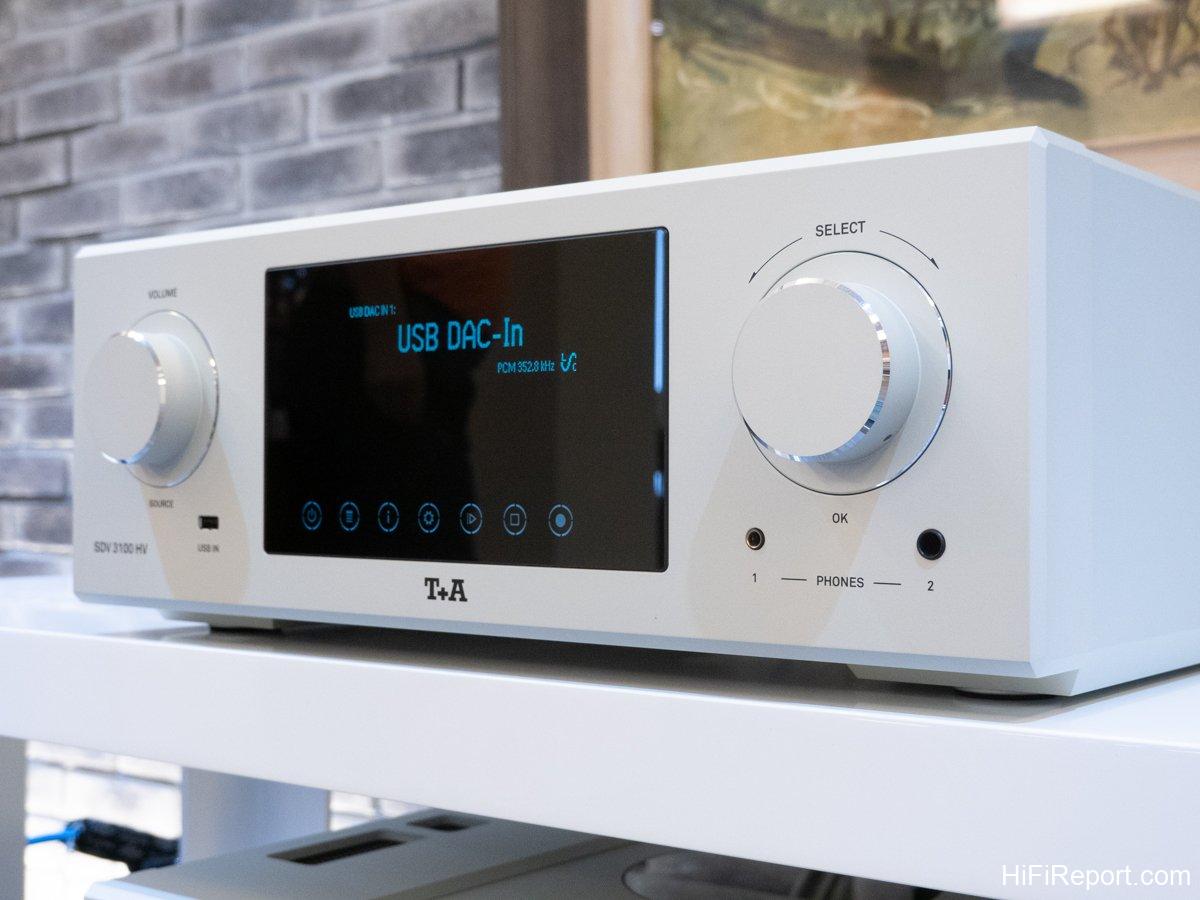
Let’s look at how HiFiReport Audio arranges music file transmission and playback within the local network: High-resolution DSD256 music files purchased and downloaded from the NativeDSD website are directly read by the Aurender N20 streamer, and sent to the T+A SDV3100 HV, which decodes them into analog signals.
For the analog amplification path, HiFiReport uses a direct-to-power-amp approach. The SDV3100 HV also serves as a preamp, sending the analog signal to the M40 HV, which drives the Burmester BC 350 flagship speakers.
Wow! Burmester BC 350! HiFiReport Audio has brought out such a grand setup to let consumers experience DSD256 ultimate digital music streaming. They have really invested heavily.
I had auditioned the BC 350 before in HiFiReport Audio’s listening room, but seeing the BC 350s on the second floor of HiFiReport, my first question was: “How were the speakers brought in?” Because HiFiReport’s staircase is not large enough, and the BC 350 is a one-piece design. Even with the outer box, it definitely couldn’t fit through the stairwell. I couldn’t figure out how they got the BC 350s up to the second-floor listening room at HiFiReport.
Mr. Chu cheerfully said, “We removed the windows!” Actually, placing the BC 350s on the first floor of HiFiReport would be beautiful and impressive, but Mr. Chu believes that the open space on the first floor has road noise interference, which would not show the best sound quality of the BC 350s. So, he decided to move them to the second floor. And it wasn’t just removing windows; they also had to find a crane. The speakers, still in their original boxes, were lifted to the second floor. After unpacking, the speaker boxes were (lifted out – assuming this was accidentally left in Chinese and means lifted out), and then the soundproof windows were reinstalled. What a huge project! Wait, if the BC 350s are sold? Wouldn’t they have to remove and reinstall the windows again? Yes, that’s right. There’s no other way. To pursue the ultimate in music reproduction, this is what it takes.
Five DSD256 Music Selections
Having covered the hardware, what music is on the “DSD256 music menu” prepared by HiFiReport this time? I’ll list them directly:
* “Mahler Symphony No. 1 ‘Titan'”
Thierry Fischer conducting the Utah Symphony Orchestra
* “Vivaldi: The Four Seasons”
Rachel Podger / Brecon Baroque
* “Beethoven Symphony No. 9 ‘Choral'”
Manfred Honeck conducting the Pittsburgh Symphony Orchestra
* “Shostakovich Symphony No. 5; Barber: Adagio”
Manfred Honeck conducting the Pittsburgh Symphony Orchestra
Original DSD256 Transmission (No Upsampling Conversion)
Before reporting on my experience listening to DSD256 digital masters at HiFiReport, I want to mention the “special” aspects of the software and hardware.
First, regarding the software, the native DSD256 recordings are two albums by Manfred Honeck conducting the Pittsburgh Symphony Orchestra, part of RR’s Fresh! series recordings. They emphasize native DSD256 recording and simultaneously record 2-channel and 5.1-channel versions. Both albums have been nominated for Grammy Awards, and “Shostakovich Symphony No. 5; Barber: Adagio” even won the 2018 Grammy Awards for Best Orchestral Performance and Best Engineered Album, Classical.
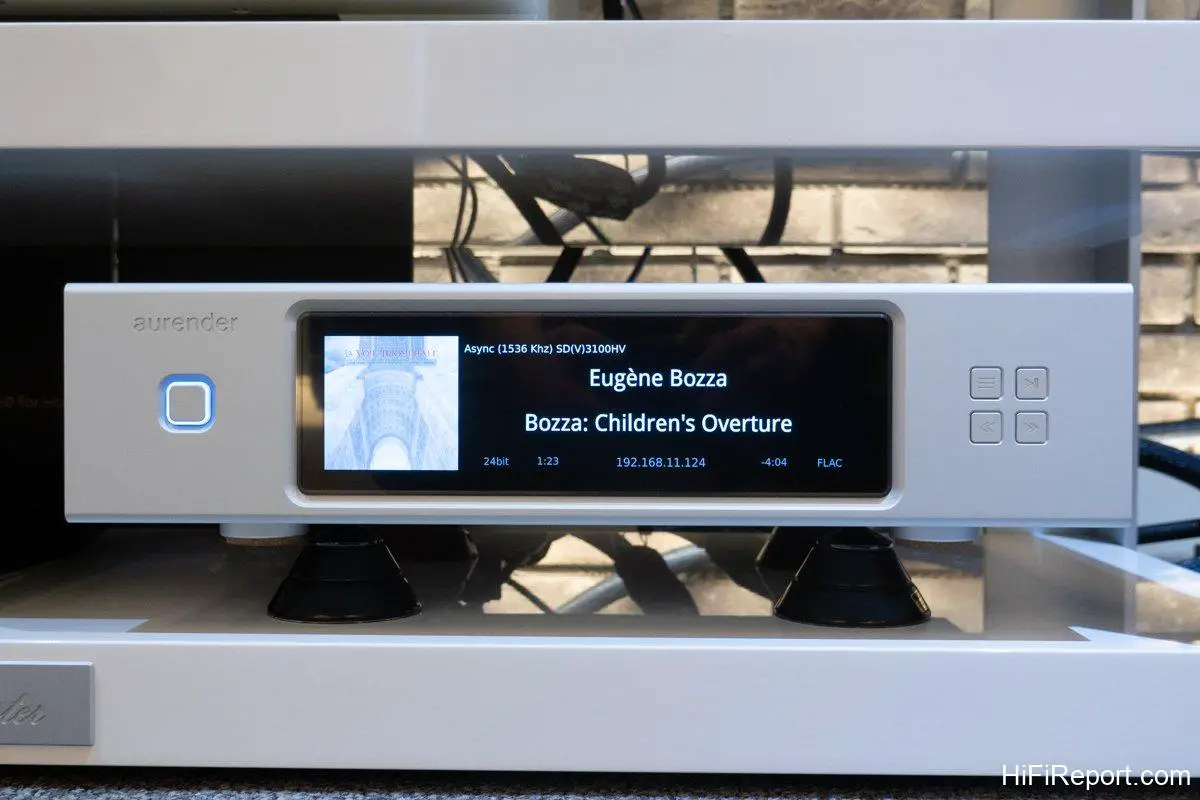
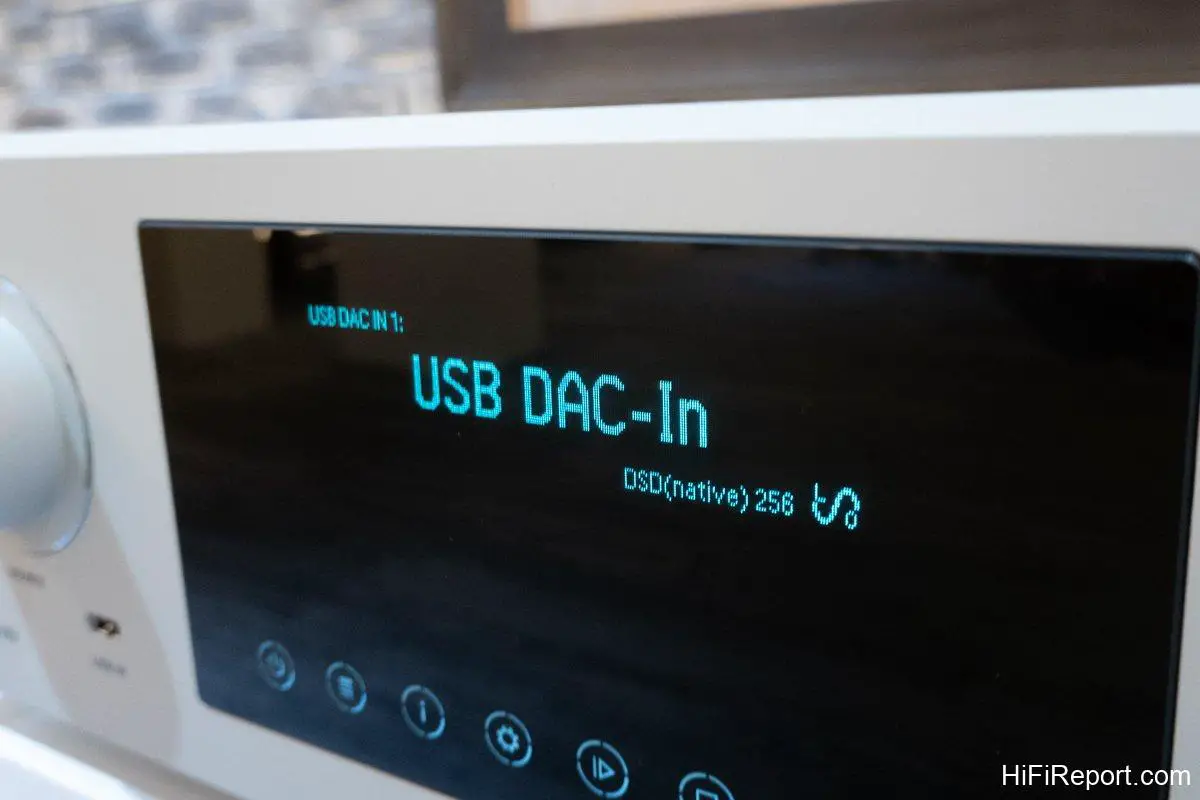
When playing these two albums, the Aurender N20 directly displays DSD256, while Mahler and Vivaldi are in DXD format, with the N20 displaying DXD 352.8.
Furthermore, when downloading files from the NativeDSD website, HiFiReport deliberately chose DSD256 instead of DSD512. This is because the recording information shows that the original recording is DSD256, not DSD512. Therefore, DSD512 is a music file that NativeDSD uses SRC sample rate conversion on. HiFiReport chose to purchase native DSD256, and when sending it to the SDV3100 HV, it also does not undergo any upsampling conversion, directly decoding DSD256 to maintain the original sound.
Regarding the hardware, the highlights are the Aurender N20 and SDV3100 HV. The Aurender N20 is the current reference equipment of Robert Harley, editor-in-chief of TAS in the US, and also Aurender’s current flagship digital streaming player, outputting DSD256 via USB.
Why not choose S/PDIF or AES/EBU? It’s simple, they cannot transmit DSD 256, only USB can transmit DSD256.
Mahler’s Grand Scale on Full Display
Starting with “Mahler Symphony No. 1 ‘Titan’,” I directly selected the fourth movement, titled “From Hell to Paradise.” The very first note is the orchestra’s roaring fortissimo, unveiling a scene of doomsday destruction. The BC 350s truly live up to their reputation as giant flagship speakers. The brass section and percussion instruments unleash waves of apocalyptic storms. Thierry Fischer’s tempo control is steady and composed. Through several surges of stormy waves, the orchestral energy is layered and built up. Repeated heavy blows come wave after wave, like the relentless strikes of fate, finally fading into silence as the timpani’s heavy beats gradually weaken. The relentless blows subside into tranquility, followed by the string section’s gradually rising melody, bringing out light, airy notes. Warm brass underpinnings and strings dancing in the air lead into a paradise-like scene, before transitioning into a development section of struggle and entanglement. Listening to this point, I stopped the music and listened again from the beginning, repeating it twice, effectively listening three times.
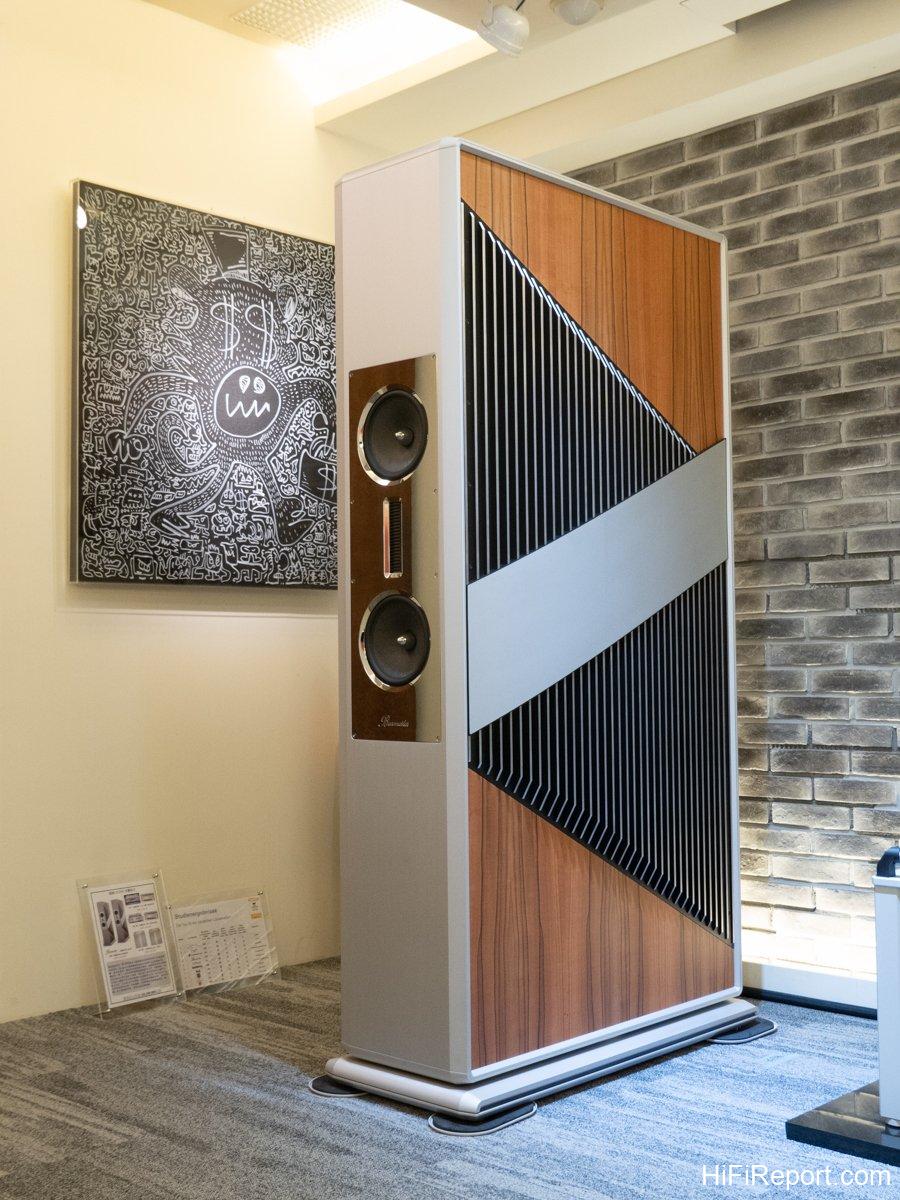
This is a piece of music that showcases the system’s grandeur and scale, with significant contrast. Rather than just listening to the DSD256 music file, I felt like I was listening to the overall sound performance of the entire system, especially the BC 350s. The BC 350s reproduced Mahler’s magnificent orchestral arrangement with a wide and substantial soundstage. Of course, the T+A M40 HV power amplifier’s solid and robust driving force is also a contributor behind the scenes. However, my first taste of DSD256 felt more like listening to T+A and Burmester, rather than DSD256 itself.
How was the sound effect? Fantastic! After the opening, the strings and brass sections roared in response to each other, with timpani pounding rapidly underneath, creating a stormy scene. Even in this stormy musical landscape, the BC 350s maintained clear layering, gradually increasing the music’s intensity and tension to its peak, and then the attack gradually weakened, with woodwinds murmuring, welcoming the light, floating strings, unveiling the veil of paradise.
Between light and heavy, T+A and Burmester jointly heightened the contrast. The undulating changes in musical expression became clear and delicate. Is this characteristic of both sonic quality and musicality a bonus brought by DSD256?
Vivaldi’s Delicate Strings
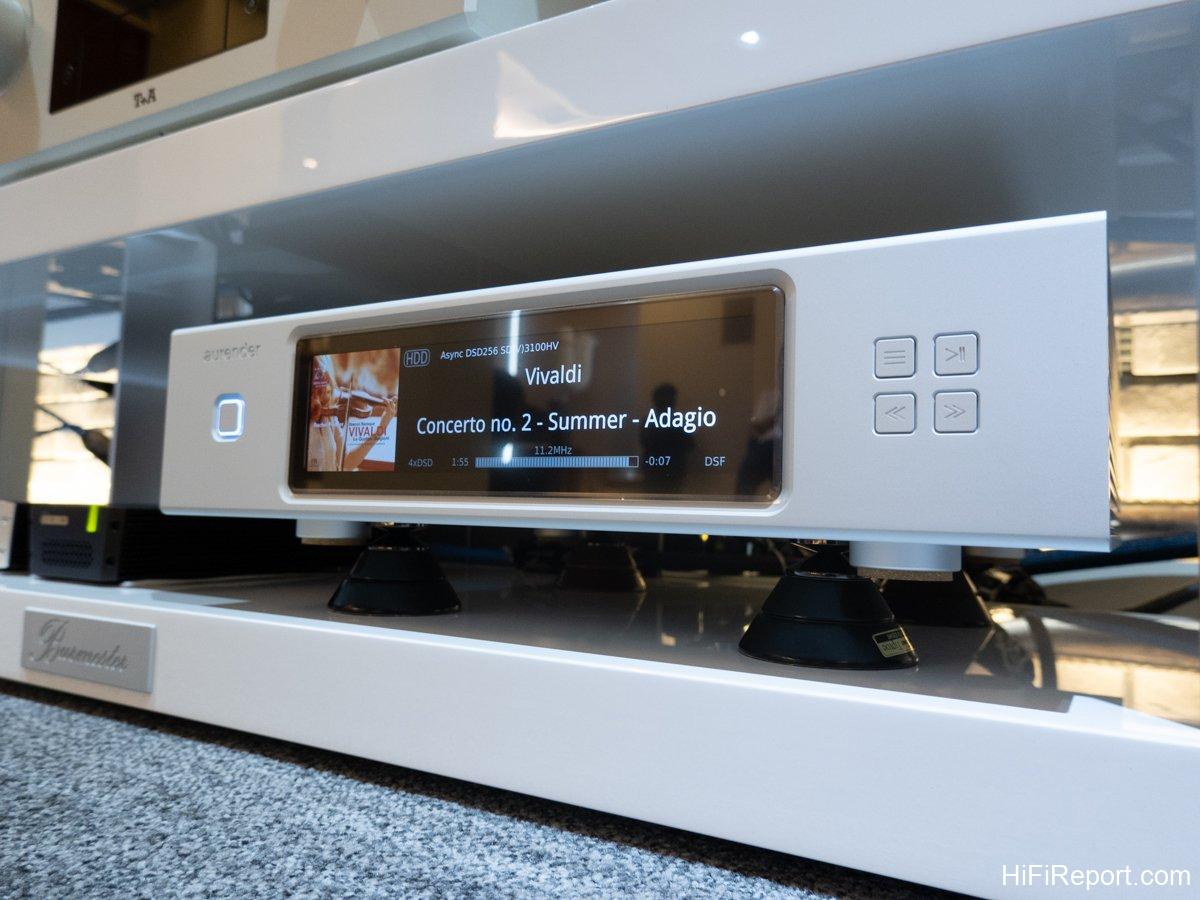
Continuing to listen, I switched to “Vivaldi: The Four Seasons,” listening to the agitation of “Summer.” The first movement of the music begins languidly, with the strings whispering softly, even dragging long tails, becoming slower and slower. Suddenly, it transitions into a rapid flow of notes, and the music comes alive. The scale of the string orchestra is much smaller than Mahler’s, but the BC 350s still have a clear and prominent representation of the soundstage layers. The fragmented sounds of the solo violin alternate and echo with the orchestra, transitioning into powerful notes, like a summer afternoon thunderstorm.
While listening to Mahler and Vivaldi, I hadn’t actually entered a state of focused music listening. Instead, I was experiencing the sonic performance of the entire system. Several times I operated the iPad, repeatedly listening to specific musical passages. Mahler showcased the strong-weak contrasts and musical layers of a large orchestra, while Vivaldi tested the texture of strings in the mid-high frequency range. T+A paired with BC 350s handled it effortlessly, presenting both the grand Mahler and the delicate, dense Vivaldi with ease. However, I felt that listening to these two pieces was more like listening to T+A and BC 350s, and I couldn’t yet perceive the specialness of DSD256. If there were PCM files available for comparison at this time, I would know the difference, but HiFiReport’s prepared music menu is purely for enjoyment, not for deliberate A/B comparison.
Settling Down to Beethoven
Switching to Manfred Honeck conducting the Pittsburgh Symphony Orchestra’s “Beethoven Symphony No. 9.” After listening to Mahler and Vivaldi, using “segments” of alternating and repeated listening, I knew my mood for listening to music hadn’t settled down yet. Without PCM and DSD comparisons, how could I know how amazing DSD 256 is? But at HiFiReport Audio, deliberately comparing the differences between these music files would be like going to a Michelin three-star restaurant, and while tasting the delicacies, not only critiquing them but also comparing them with other dishes. That would be truly “unreasonable.” So, switching to Beethoven, I decided to listen to the music in peace, and calmly listen to the entire fourth movement.
The SDV3100 HV panel displayed “DSD256.” Then, the fourth movement’s frenzied brass section opened the prelude, falling into the heavy response of the string section. Then, the introductions of the first, second, and third movements sounded in order, and were each negated one by one. Calming down to enjoy Beethoven, my state of mind entered the music. The BC 350s effortlessly expanded the broad orchestral soundstage. Even as massive, colossal speakers, they seemed to disappear into the space. From the quiet sound field, the cellos began to play the familiar “Ode to Joy,” and then the strings and woodwinds joined in harmony. The parts became richer and richer, waiting for the brass and percussion to join in. The theme of “Ode to Joy” was complete.
Beethoven: Classical and Romantic
With my mind calmed down for listening to music, the expressions of interaction between the conductor and the orchestra became more vivid. Manfred Honeck’s tempo control was steady, and when the percussion joined, it became decisive and firm. When the baritone sang “Ode to Joy,” the chorus’s response speed became a bit more brisk. The layers of the four-part mixed chorus, both male and female, had good stage presence in terms of front and rear positions. When the voices intertwined, the woodwinds hidden in the background were not obscured by the vocals. When the timpani strengthened the rhythm, the chorus sang even more passionately. The silence after the climax unfolded into a march.
Manfred Honeck increased the tempo, showcasing a spirited and uplifting sun song. It is indeed a modern conducting technique. Subtle differences in tempo enhanced the intensity of musical emotion, making the approach more romantic rather than rigidly adhering to classical dogma. When “Ode to Joy” appeared again, the accelerated tempo strongly emphasized the atmosphere of joy and jubilation.
The secular “Ode to Joy” sounded again, and then transitioned into Beethoven’s divine-like music, shifting from major to minor key, singing “Merciful Father, must dwell beneath the stars.” Returning to the major key, the conductor used a fast tempo to unleash secular passion. Beethoven is actually very worldly, embracing the masses with his music. The final variation, under a slightly faster tempo, seemed even more passionate. In the coda, the conductor slowed down the tempo of the chorus, presenting a grand sense of sacredness, and then used a fast-paced orchestra to conclude cleanly and decisively. Bravo! With a calm mind, the feeling of listening to music became deeper. The fourth movement of “Ode to Joy” is the final chapter of Beethoven’s symphony. Manfred Honeck’s rich tempo variations, within the classical framework, brought in more romantic elements, making the emotional expression richer. And at HiFiReport Audio, using the highest DSD 256 music files, through the meticulously configured Aurender, T+A, and Burmester system, what I heard was a sense of musical envelopment as if being in the recording studio, and an extremely realistic musical scene.
Struggle and Victory in Shostakovich
Shostakovich took the stage next. For Symphony No. 5, of course, I chose the fourth movement. The explosive orchestra was like a battlefield. Turning up the volume, the BC 350s displayed a magnificent scene. Manfred Honeck used a decisive tempo, urging the orchestra to charge forward. The peculiar harmonies brought out a cold, stark aspect, making the nerves tense. And these oppressive notes are all preparing for the bright chapter ahead, as if life must go through countless hardships to usher in true victory.
Shostakovich’s symphony has even greater dynamic range. The fortissimo is explosively grand, but in between, there can be chamber music-like scenes reminiscent of a string quartet. In the soft music, there are hidden undulations of desolation. The alternating changes in the music’s coldness and warmth, intensity, are even higher. Where the strings murmur softly, the bright notes of the harp bring in the theme of war. The timpani beating at the bottom gradually increases the music’s momentum. I knew the coda was coming soon. In the final struggle, what is greeted is the fruit of victory. Cymbals crash open the prelude to victory. Minor key notes struggle and sway, and when the tension reaches its peak, the victory theme bursts forth gloriously. The brass’s upward melody, accompanied by the timpani’s firm steps, marches towards the glorious and brilliant finale.
Barber’s “Adagio” Evokes Remembrance
Is this powerful Shostakovich thanks to DSD 256? While I was still pondering this question, Barber’s “Adagio” began the prelude. Oh, I forgot to stop the music, so it automatically played the next track. I put down my pen and notes, and focused on Barber’s music. The adagio that begins with strings floats in the air as if weightless. Thinking about it, it’s been a while since I last listened to this piece, because it always reminds me of the last time I heard Barber’s “Adagio”.
At Mr. Koo Chen-fu’s memorial service, Dr. Tsai Ke-hsin personally selected and played this music. Listening to it again at this moment, the same scene still emerges in my mind.
Barber’s “Adagio” is like a very long crescendo. The music at the beginning is light and (ethereal/floating – assuming this was accidentally left in Chinese and means ethereal/floating), boundless. The notes have little weight. With the crescendo, the layers of the string section become thicker and thicker, and also more and more tense. From the soft midrange, the harmony expands to both high and low ends. In the repeatedly surging melody, the tension of the music gradually increases. I know that the intense interweaving and surging of the string section at the end will make the emotions of remembering the deceased even stronger. But after a few years, encountering “Adagio” again at HiFiReport Audio, I should be able to control the surging emotions in my heart. But I was wrong. The (infectious power/emotional impact – assuming this was accidentally left in Chinese and means emotional impact) of music is so strong. After the string section reaches its peak, it gradually calms down, ending in silence, traceless.
Focused Listening and Musical Impact
After listening to five DSD256 music selections, did I understand where DSD256’s greatness lies? Actually, my mind is full of questions, because without comparison, I don’t know the difference. But also because there was no comparison, I was able to listen to music in peace. And did the emotions I gained from Beethoven, Shostakovich, and Barber’s music differ because of the music format? I don’t know, but I am very certain that what I heard at HiFiReport with DSD256 seemed to bring me closer to the recording studio. In the rich and vivid expressions of music, I felt the interaction of the recording scene, how the conductor skillfully prompted the orchestra to make subtle tempo changes, how the strings went from weak to strong, and how they disappeared into silence. These contrasts of movement and stillness in music are not only real, but also have a strong musical impact. But this requires the listener to focus on feeling, rather than simple A/B comparisons.
Worth a Dedicated Visit for Experience
I must admit that listening to Mahler and Vivaldi, I was still stuck in general comparisons, not calming down to listen to the music. But after listening to Beethoven, Shostakovich, and Barber, I want to say that the DSD256 ultimate digital streaming system that HiFiReport Audio has presented is worth a dedicated visit to personally understand its subtleties. This is a super audio system at the multi-million dollar level, waiting for attentive ears to witness the minds of great musicians.
Equipment Specifications
**T+A SDV 3100 HV**
* Type: Network Streaming DAC & Preamplifier
* Analog Outputs: RCA x 1; XLR x 1
* Digital Output Terminals: 1 x Coaxial, IEC 60958 S/P-DIF (LPCM)
* Digital Input Terminals:
* 1 x AES-EBU 32…192 kHz / 16-24 Bit
* 6 x S/P-DIF: 2 x Coaxial; 2 x BNC 32…192 kHz / 16-24 Bit; 2 x Optical 32…192 kHz / 16-24 Bit
* 2 x USB DAC (Supports up to 768 kHz (PCM) and DSD 1024 file formats, supports asynchronous file transfer. For Windows PC playback of DSD512 and DSD1024, appropriate software is required.)
* 2 x USB Storage Device (Stick or HDD)
* 2 x HDMI IN, 1 x HDMI OUT with ARC
* 1 x IPA (LVDS)
* LAN, Antenna input for WLAN and FM, 2 x H-Link
* DAC Section:
* PCM: Double differential quadruple converter, with four 32-bit Sigma-Delta D/A converters per channel, conversion rate 705.6 / 768 kHz.
* DSD: T+A True-1Bit DSD D/A Converter, supports up to DSD 1024, native bitstream
* Upsampling: T+A-Signalprocessor – synchronous upsampling, four adjustable upsampling algorithms (FIR short, FIR long, Bezier/IIR, Bezier)
* Analog Filter: Phase-linear third-order Bessel filter, 60 or 120 kHz crossover frequency
* Frequency Response:
* PCM 44.1 kSps: 2 Hz – 20 kHz
* PCM 48 kSps: 2 Hz – 22 kHz / DSD 64: 2 Hz – 44 kHz
* PCM 96 kSps: 2 Hz – 40 kHz / DSD 128: 2 Hz – 60 kHz
* PCM 192 kSps: 2 Hz – 80 kHz / DSD 256: 2 Hz – 80 kHz
* PCM 384 kSps: 2 Hz – 100 kHz / DSD 512: 2 Hz – 100 kHz
* PCM 768 kSps: 2 Hz – 120 kHz / DSD 1024: 2 Hz – 120 kHz
* THD: < 0.001 % * Signal-to-Noise Ratio: > 117 dB
* Channel Separation: > 110 dB
* Streaming Player Section:
* File Formats: MP3, WMA, AAC, OGG Vorbis, FLAC, WAV, AIFF, ALAC / UPnP AV, T+A Control
* Sample Rates: PCM 32 to 192 kHz, 16/24 Bit; MP3 up to 320 kBit, variable or constant bit rate
* Supported Services: Tidal, Deezer, qobuz (Subscription required)
* Features: Gapless Playback for MP3 (Lame), WAV, FLAC
* T+A Control App for iOS and Android
* Interfaces: LAN: Fast Ethernet 10/100 Base-T, WLAN: 802.11 b/g/n
* Radio Section:
* Radio: Airable Internet Radio Service (> 11000 stations worldwide)
* FM, FM-HD: 168 -240 MHz (Band III); sensitivity 2.0 µV, S/N > 96 dB
* DAB, DAB+: 168 -240 MHz (Band III); sensitivity 2.0 µV, S/N > 96 dB
* Features: RDS/RDBS, Station name (PS), Program type (PTY), Radiotext (RT)
* Bluetooth Standard / Codec: A2DP (Audio), AVRCP 1.4 (Control) / aptX®, MP3, SBC
* Headphone Amplifier Section:
* Headphone Outputs: 6.3 mm Jack (20 Ohms) and 4.4 mm Pentaconn (8 Ohms)
* Dimensions: 170 x 460 x 460 mm (H x W x D)
* Weight: 26 kg