
TEAC NT-505 Music Streaming DAC + CG-10M Master Clock Review
Since the introduction of its 5 series, TEAC has dominated the market with exceptional value, creating a sales phenomenon. This new generation of the 5 series elevates performance even further.
Compared to its predecessor, the NT-503, the NT-505 boasts significant upgrades: a newer VERITA AK4497 DAC chip, top-tier decoding capabilities reaching DSD 24.5MHz (DSD512) and PCM 384kHz / 32bit, expanded PCM and DSD digital filter options, high-quality Bulk Pet USB transfer technology, MQA support, Roon compatibility, enhanced Bluetooth transmission with LDAC™ and aptX™HD, and a dedicated headphone amplifier circuit now featuring a 3.5mm 4-pole terminal. It’s a truly impressive offering.
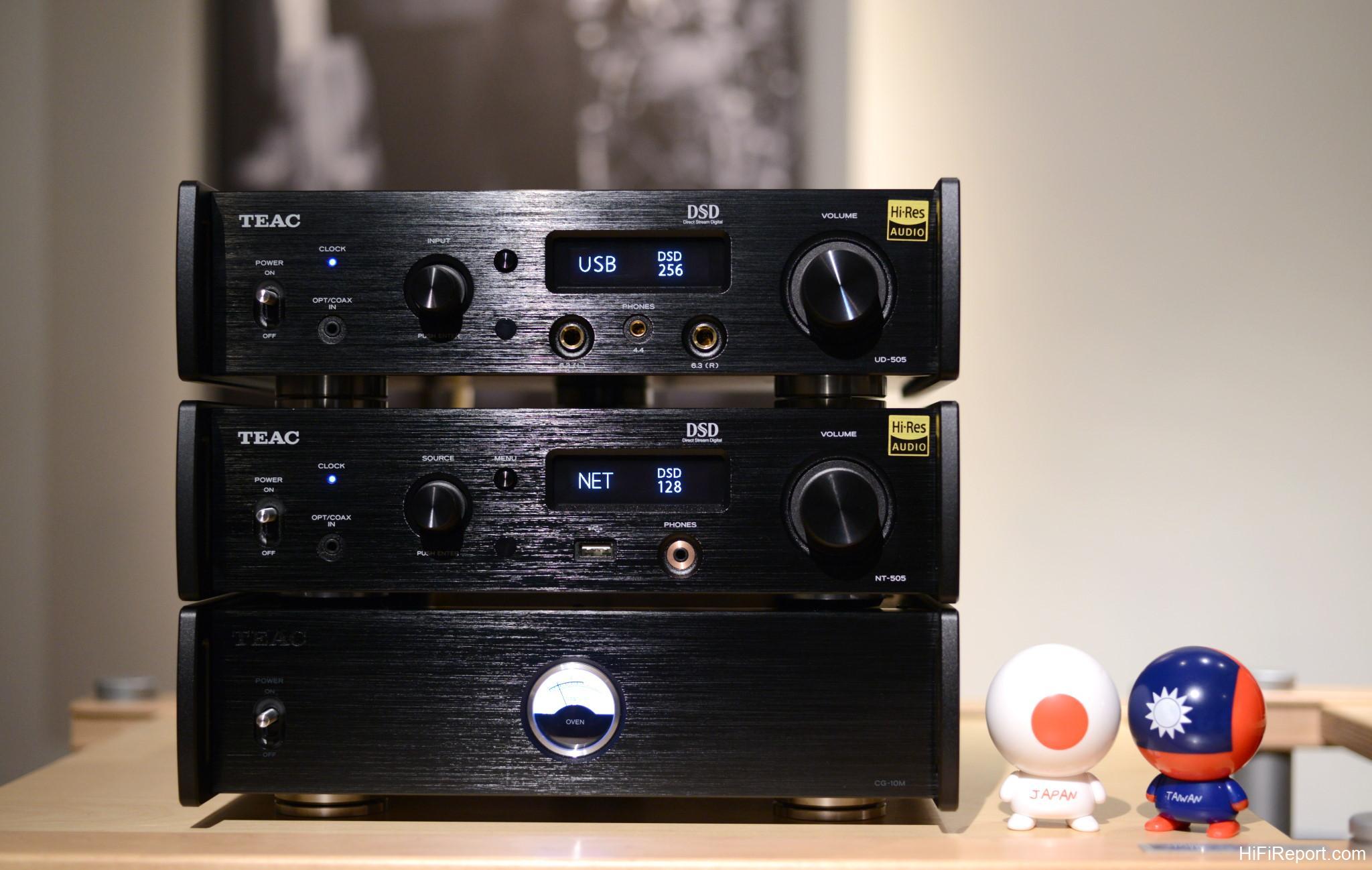
Alongside the new 5 series, TEAC also unveiled the CG-10M master clock, which was also included in this audition.
The TEAC HR Streamer APP provides convenient control and playback of music from network devices, such as NAS drives, or online streaming services like TIDAL and Qobuz. Operation is intuitive and fluid.
Airplay streaming is also supported.
Support for the high-resolution MQA (Master Quality Authenticated) format is included.
MQA albums can be played directly from TIDAL.
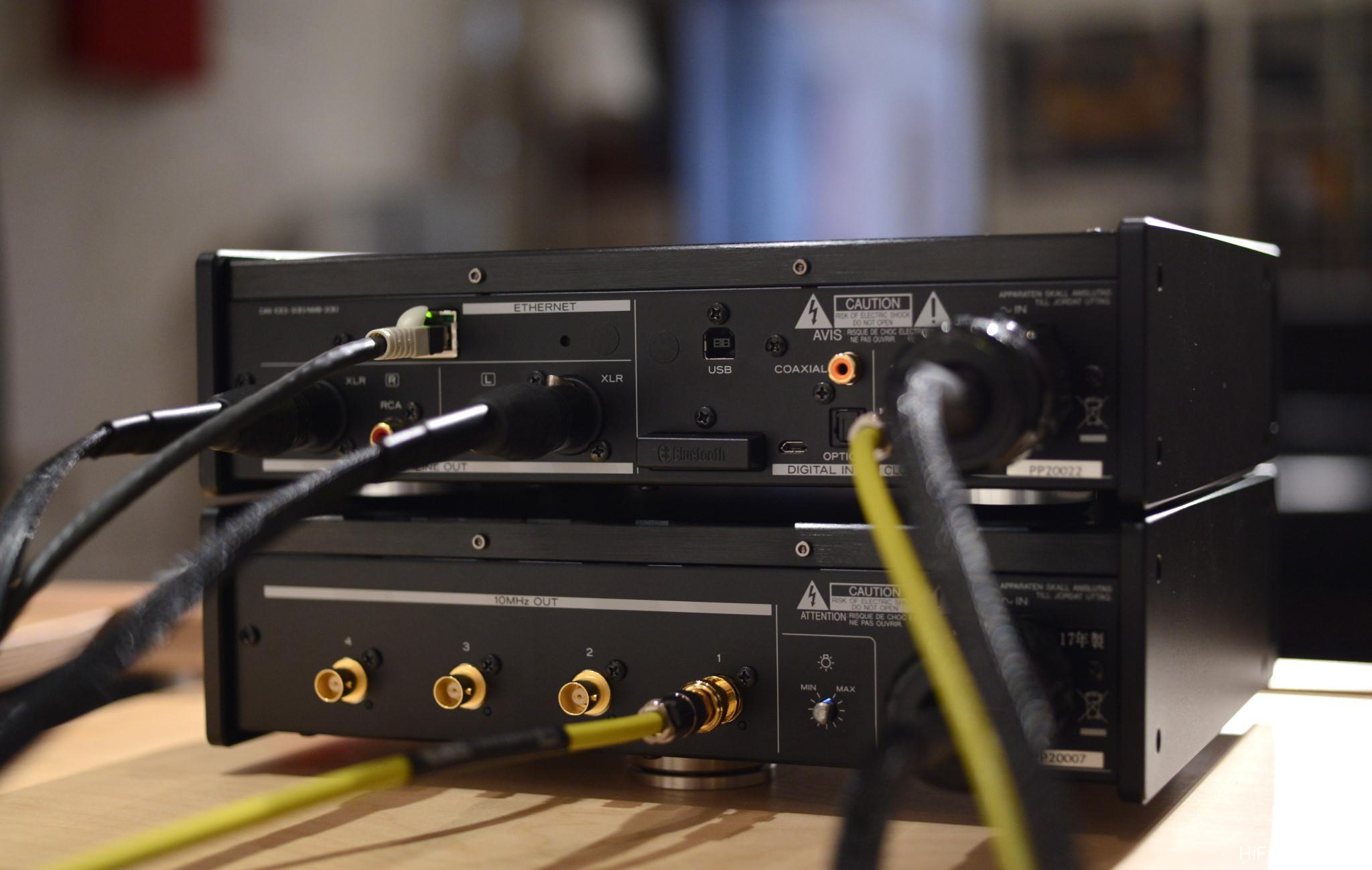
The NT-505 offers both RCA and XLR analog outputs, alongside digital inputs including network, USB, coaxial, and optical. A clock input and Bluetooth module are also provided.
Native Playback of DSD 512/22.5MHz High-Resolution Music Achieved
Like the UD-505, the TEAC NT-505’s USB DAC section is capable of decoding DSD 512/22.5MHz. Just how high resolution is this format? DSD 64/2.8MHz is the standard for SACD, and DSD 512 is eight times that of DSD 64. In other words, it boasts a sampling frequency eight times greater than SACD. Impressive, right? To play formats exceeding DSD 128, it’s necessary to install TEAC’s proprietary driver and use their playback software.
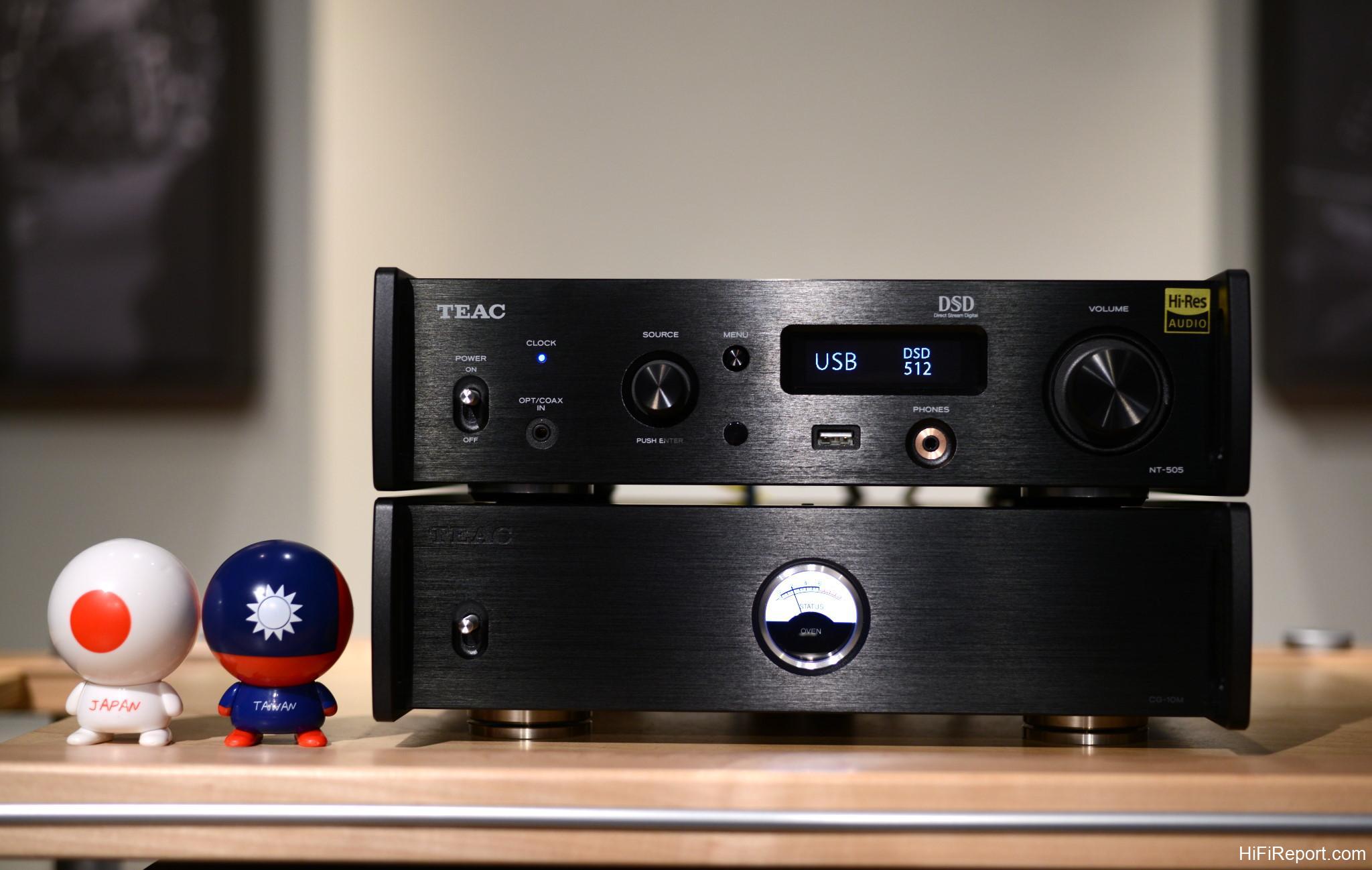
This is a simple process, readily available for download from their official website. The biggest challenge in playing DSD 512 is the scarcity of music available in this format. Currently, even DSD 128 is rare, DSD 256 is even more so, and DSD 512 is virtually non-existent in commercially available music. After extensive searching with the help of Google, I finally located a DSD 512 music file and successfully played it.
However, the significance here is more about demonstrating hardware capability than practical music enjoyment!
To play formats exceeding DSD 128, installing TEAC’s own driver and using their playback software is required. This is easily done with a download from their official website.
The “Inner Beauty” of the TEAC NT-505
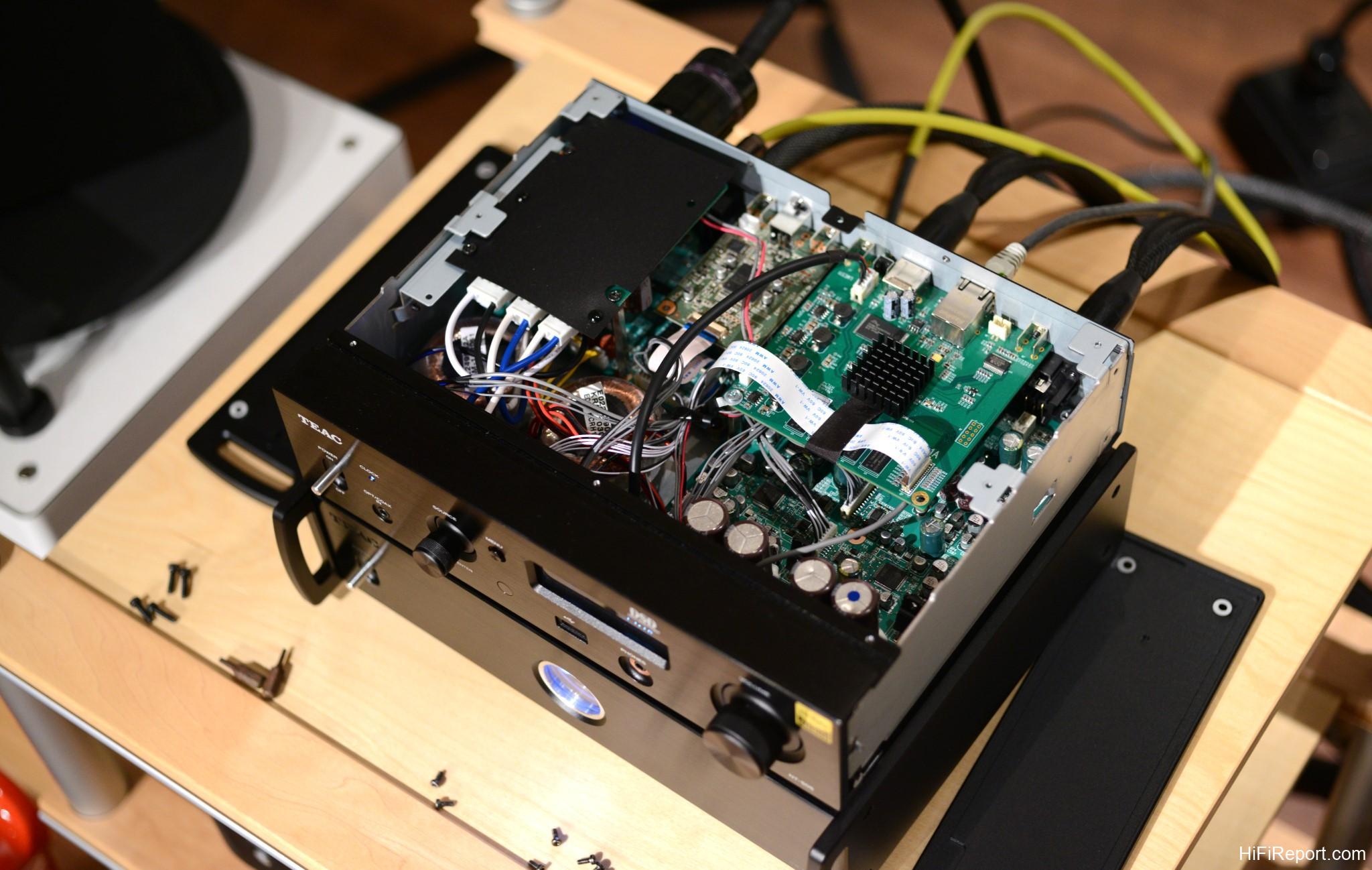
I am quite familiar with the “inner beauty” of TEAC’s 5 series, having opened up the very first generation model. The latest NT-505 maintains the same core structure and internal circuit layout as its predecessors, but the specifications and technology have advanced dramatically. Upon opening the NT-505, you’ll be immediately struck by the 8mm thickness of the solid aluminum side panels. For a component at this price point, such robust construction is remarkable.
The key distinction between TEAC and its high-end Esoteric sibling, in my opinion, lies in TEAC’s pursuit of boundless possibilities within a defined budget. They maximize the use of high-quality components within a half-size chassis, making efficient use of limited space. The NT-505 features a dual-mono, fully balanced design with a two-layer circuit board arrangement – a common approach in both TEAC and Esoteric designs.
The upper layer primarily houses the network, USB DAC, and power filtering circuits, while the lower layer accommodates the analog amplification circuits, Bluetooth module, digital inputs, clock circuitry, and dual toroidal transformers.
Here are some key internal design features:
* Audiophile-grade Asahi Kasei VERITA AK 4497 DAC chip, capable of decoding up to DSD 24.5 MHz and PCM 768 kHz/32 bit. * OSRD (Over Sampling Ratio Doubler) technology, significantly reducing noise outside the audio bandwidth. * End-to-end dual-mono design, extending to the power supply, D/A conversion, and analog output stages. * Independent digital and analog circuit boards to minimize interference.
* RDOT-NEO (Refined Digital Output Technology NEO), upsampling PCM signals up to 384 kHz/32 bit and DSD to 24.5 MHz. * Bulk Pet USB technology, substantially improving USB transmission efficiency and enhancing sound quality. * TEAC-HCLD (High Current Line Driver) circuit, employing two circuits per channel to boost current supply capacity, increasing dynamics without distortion.
* TEAC-QVCS (Quad Volume Control System) four-circuit volume control, with 100 steps of 0.5dB increments, allowing for exceptionally fine volume adjustments.
Precision Timing Accessible to All
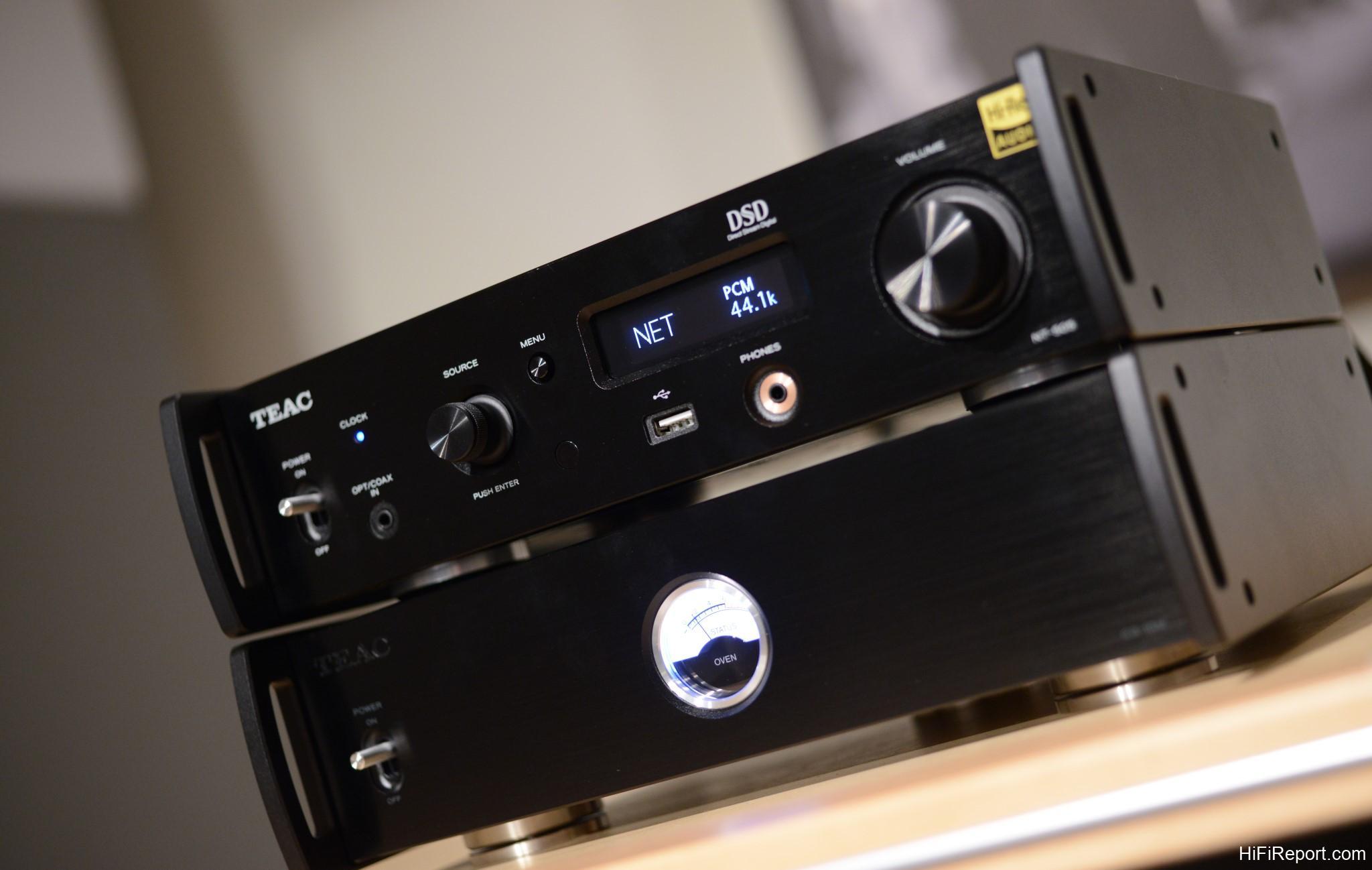
Beyond SACD/CD players, master clock generators have long been a core product category for Esoteric. Anyone who has experienced the impact of an external precision clock understands the significant sonic improvements it brings. Now, TEAC, Esoteric’s sister brand, has released its first affordable master clock generator, making the benefits of enhanced timing accessible to a wider audience.
The popular TEAC 5 series, including the newly released UD-505 USB DAC and NT-505 network streaming DAC, are equipped with a 10MHz clock input (CLOCK SYNC) as standard, allowing for connection to the CG-10M. Of course, the CG-10M is compatible with any device featuring a 10MHz clock input, not just TEAC products.
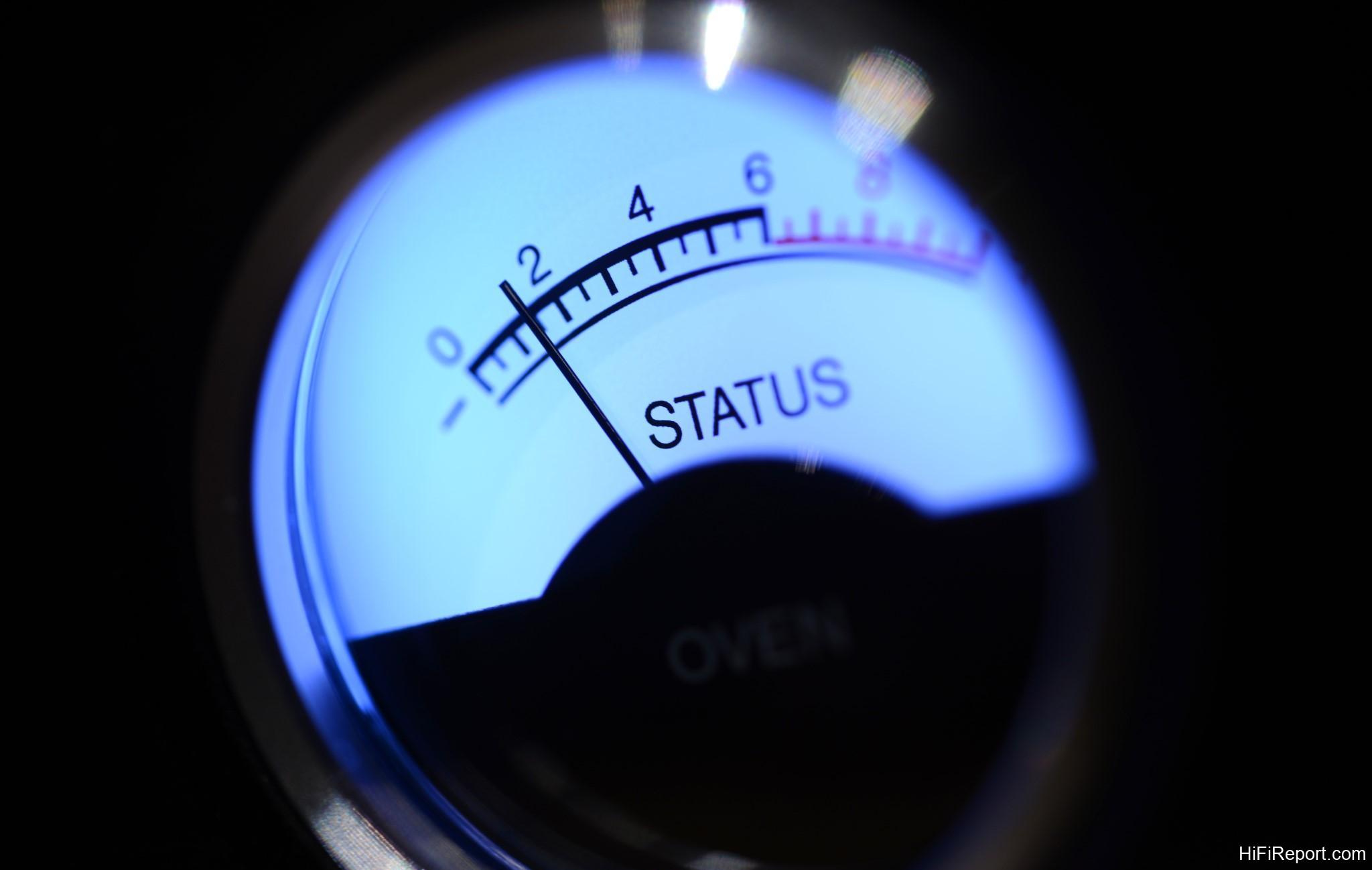
The CG-10M primarily utilizes a high-quality OCXO (Oven Controlled Crystal Oscillator) to generate a highly accurate 10MHz clock signal, boasting frequency temperature characteristics within ±3 ppb and frequency precision within ±0.1 ppm. An analog meter on the front panel displays its operational status, and the meter’s brightness is adjustable. The CG-10M can simultaneously output four 10MHz clock signals to synchronize up to four devices.
It’s important to note that the output impedance is 50Ω, and it takes approximately 10 minutes to reach a stable operating temperature.
Tried and True, Absolutely Indispensable
I have personally experienced the benefits of external master clocks numerous times, particularly with high-end systems from Esoteric and dCS. Once you’ve heard the improvement, it’s impossible to go back. The enhancement is undeniably comprehensive and significant. However, I hadn’t yet explored this in more affordable systems. With the TEAC 503 series, TEAC subtly hinted at the potential for external clock integration, including a clock input.
However, at that time, there were no affordable clock options available; only high-end Esoteric models existed. It was unlikely that TEAC users would consider pairing their systems with Esoteric clocks. With the launch of the TEAC 505 series, the manufacturer finally released the TEAC CG-10M master clock concurrently, providing TEAC users with an upgrade path.
The most intriguing question was whether the clock upgrade would deliver similar sonic benefits in an affordable TEAC system as it does in high-end systems. After extensive A/B testing, the answer is a resounding yes, and the improvement is remarkably clear. The NT-505 allows for easy selection of whether to use an external clock signal, making comparisons straightforward. Connecting the TEAC CG-10M master clock immediately brings instruments and vocals into sharper focus and control.
In comparison, without the external clock, the sonic image is slightly looser and more diffuse. The overall sonic texture is noticeably refined, background noise diminishes, and the layers of detail become more distinct. Even in a system like the TEAC, the clock upgrade provides a substantial and undeniable enhancement. Once you experience it, there’s no turning back!
Balanced Neutrality, Swift Transient Response
Listening to “Akdong Musician (AKMU) – PLAY,” a Korean sibling duo, reveals the NT-505’s sonic character. AKMU, also known as “Music Child Musician”, comprises brother Lee Chan-hyuk and sister Lee Su-hyun, both very young and exceptionally talented. The brother is gifted in songwriting, arranging, performing, and singing, while the sister possesses a uniquely pure, clear, and vibrant voice.
PLAY, their debut full-length album released in 2014, is frequently heard in Korean restaurants and shopping centers. The second track, “200%”, depicts the emotions of young love with an upbeat, breezy rhythm, evoking a summery feel. The NT-505 maintains the consistent sonic signature of the 5 series: balanced neutrality with a fast transient response, achieving a perfectly judged equilibrium.
Impactful Low Frequencies
Playing “Mark Ronson – Uptown Special,” specifically track 4, “Uptown Funk,” a collaboration with superstar Bruno Mars, demonstrates the NT-505’s bass capabilities. This track, infused with a strong Boogie/Funk retro vibe, is undeniably catchy and showcases impressive dance choreography. Playing pop and rock music can be as demanding on a system as classical music. The musical elements are often complex, and the tempo is typically faster.
If the equipment lacks balance or speed, the sound can become cluttered and harsh. As mentioned earlier, the NT-505 excels in both balance and speed, presenting no issues here. What stood out to me was the impactful punch of its low frequencies, lending a dynamic and energetic quality to the music.
More Direct Sincerity
Listening to folk-country singer Joan Baez’s “Diamonds and Rust in the Bullrings,” particularly the opening track “Diamonds And Rust,” one of her most famous songs, written as a reflection on her relationship with Bob Dylan, highlights the NT-505’s transparent nature. Joan Baez is a powerful vocalist, with many of her albums recorded live to capture the energy. Her voice is distinctive – soaring and resonant, capable of both lyrical tenderness and powerful outbursts.
Her vocal delivery is rich in emotional nuances. The NT-505’s sound is direct and unpretentious, devoid of artificial coloration. It faithfully conveys Joan Baez’s vocals, the guitar accompaniment, and the palpable enthusiasm of the live audience without reservation. This honest, unembellished presentation is the most direct path to emotionally engaging the listener.
Harmonious Sound is Simply Beautiful
Listening to British violinist Rachel Podger performing Vivaldi’s “La Stravaganza” violin concertos, Op. 4, showcases the NT-505’s refinement. “La Stravaganza” is a collection of concertos in a distinctly classical style. The solo violin parts feature elaborate and technically demanding passages, while the orchestral accompaniment provides fresh and natural harmonies, resulting in twelve captivating and sonically rich works.
Channel Classics’ owner and recording engineer, Mr. Sack, chose to record in a Polish church, resulting in exceptional recording quality. The listener can fully appreciate the beautiful and harmonious resonance of the violin, with a pure and delicate timbre.
TEAC UD-505: Striking Similarity to the NT-505
TEAC’s 5 series initially launched with the USB DAC (UD) series, with the NETWORK (NT) series following later. Their functionalities are remarkably similar, and discerning the differences requires careful examination.
* The UD-505 is primarily a USB DAC, lacking network streaming capabilities. Intriguingly, the NT-505 *does* incorporate USB DAC functionality. * Both units utilize dual Asahi Kasei AKM VERITA AK4497 DAC chips at their core. The USB DAC section in both models decodes up to DSD22.5MHz and PCM768kHz/32bit (playback of DSD128 and above requires driver installation and TEAC HR Audio Player software). I tested with DSD256 (11.2MHz) files, and playback was smooth and problem-free.
* Both feature the latest Bluetooth codecs (LDAC™, Qualcomm® aptX™ HD, aptX™, AAC, SBC). The previous generation UD-503 lacked Bluetooth connectivity. * Looking at the rear panel inputs and outputs, the only difference is the NT-505’s network input, which is replaced by an RCA Line input on the UD-505. * On the front panel, the main distinctions are in the headphone outputs. The UD-505 offers separate 6.3mm outputs for left and right channels, along with a 4.4mm 5-pole Pentaconn output.
The NT-505 features a 3.5mm 4-pole output. The NT-505 also adds a USB TYPE A port for reading music files from USB drives. * Other technologies, such as digital filters, 10MHz clock input, TEAC-QVCS, TEAC-HCLD, etc., are identical in both models. * An interesting detail: I noticed the footers differ across the three units. The UD-505 has the best footers, followed by the CG-10M, with the NT-505 having the most basic ones.
Ultimately, it’s unlikely anyone would purchase both the NT-505 and UD-505 for the same system. If network streaming is a requirement, the NT-505 is the clear choice.
TEAC NT-505 Music Streaming DAC Key Specifications
* Unbeatable specifications and build quality for its price, with few competitors.
* Supports DSD 24.5MHz (DSD512) and PCM 384kHz / 32bit.
* Comprehensive features including streaming, USB DAC, Airplay, and Bluetooth.
* Multiple PCM and DSD digital filter options.
* Balanced circuit design and outputs.
* Sonic Character: Balanced and neutral.
* Pairing Recommendations: Highly versatile. Strongly recommend auditioning with the CG-10M master clock for a significant sonic upgrade.