
Way Cable Network Cable Review
In 2020, the HiFiReport editorial team upgraded to the Ansuz d-TC Supreme network switch, elevating network streaming to a level comparable with CD and vinyl. This experience revealed that the network switch was a bottleneck in digital streaming. Only after addressing this issue did I feel confident in evaluating network cables.
Having auditioned the Way Cables Mind network cable, I am even more convinced that both network cables and network switches are crucial for achieving excellent sound quality in digital streaming. Addressing both aspects together can unlock the vibrant and rich musicality of digital streaming.
Serbian Cable Newcomer
Way Cables hails from Serbia and was established around 2013-14. (Bo Audio) introduced the brand to the market in 2019, and this is my first experience with Way Cables’ products.
Due to the relatively recent market introduction, Miroslav Popovic, the head of Way Cables, has not yet had the opportunity to visit. I also missed meeting the original manufacturer at the 2019 Munich High End Show, so Way Cables is still somewhat unfamiliar to me. However, the newly launched Mind network cable is packed with design features and generates considerable buzz.
Despite being a newcomer in the cable industry, Way Cables excels at creating “professional terminology.” Essentially, every aspect of their cable construction, from conductors and stranding to insulation, shielding, and sheathing, is described using Way Cables’ proprietary terms. Even their handmade manufacturing process is termed FNICA-WAY. These proprietary terms are all trademarked. Any material or technique with the suffix “WAY” is Way Cables’ intellectual property and cannot be infringed upon.
Lightweight and Flexible Design
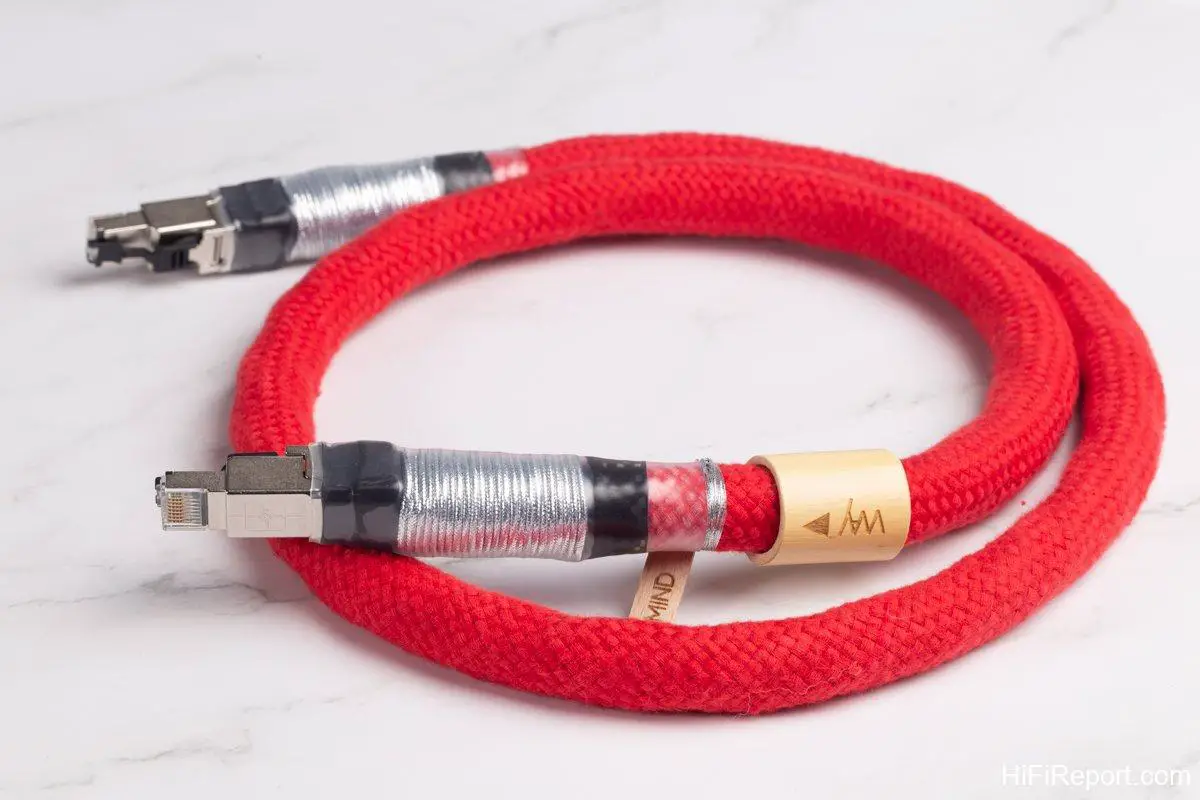
Looking at photos alone, the Mind network cable might appear much bulkier than typical network cables. However, upon handling the Mind cable, you’ll find it surprisingly light—certainly lighter than its appearance suggests. Furthermore, the cable is remarkably flexible. The vibrant red exterior is a signature element of Way Cables’ aesthetic. Several of their interconnects, power cables, and speaker cables also feature the same striking red sheathing. A complete set of red Way Cables would undoubtedly be visually impressive.
At the 2019 Munich High End Show, Way Cables collaborated with Swiss brand CH Precision, showcasing a full loom of their red cables.
Is the red cable merely for aesthetic appeal? Certainly not. Way Cables designs every aspect of their cables with purpose. And it is a good time to revisit the fundamentals of cable design.
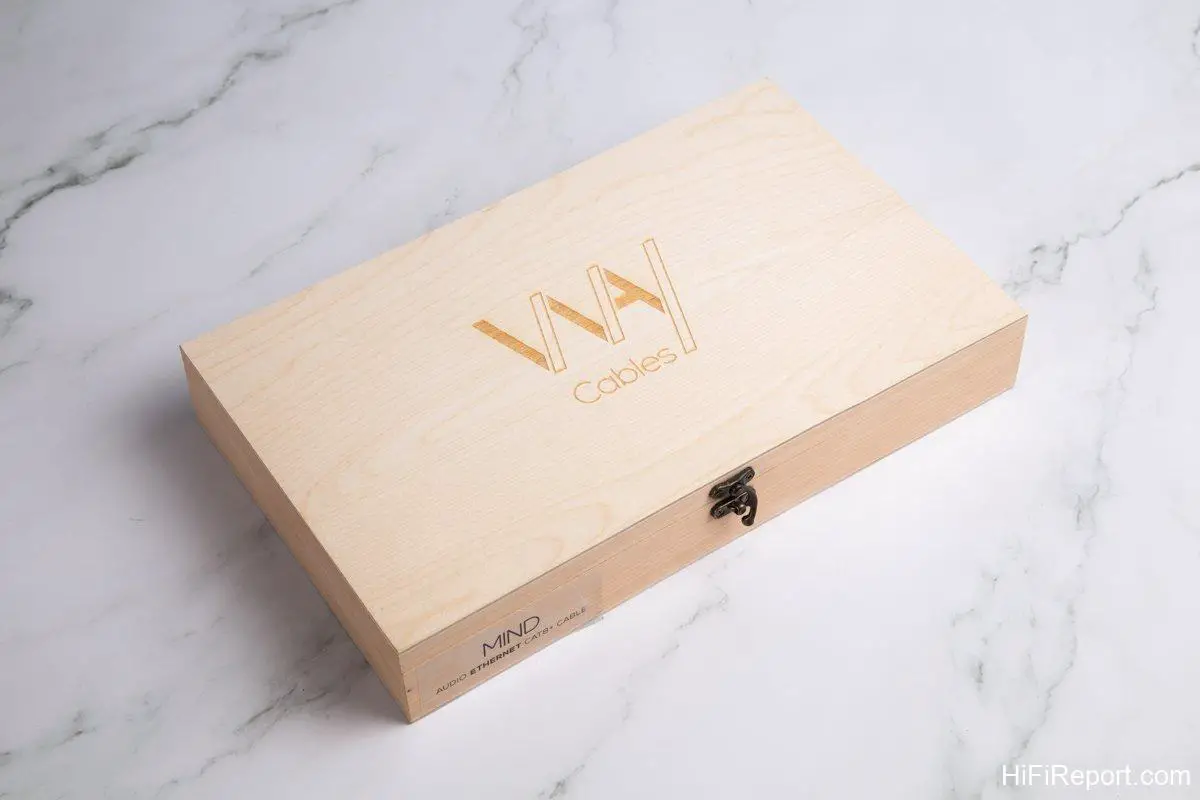
Let’s start with the specifications. The Mind network cable is a Cat8 specification cable. This standard was released by the Telecommunications Industry Association (TIA) in 2016, achieving transmission rates of 25 Gbps and 40 Gbps, with a bandwidth of 2000 MHz. These numbers alone might only convey “fast speed” and “large bandwidth,” but a comparison will illustrate just how impressive Cat8 is.
Superior Cat8 Specifications
Most home network cables are Cat5 or Cat6. Cat5 has a transmission rate of 1000 Mbps and a frequency of 100 MHz, while Cat6 also has a transmission rate of 1000 Mbps but a bandwidth of 250 MHz. In contrast, Cat8’s transmission rate is measured in Gbps, exceeding speeds by over a hundredfold, and its 2000 MHz bandwidth is 8 to 20 times greater. This highlights the superior specifications of Cat8.
Why isn’t Cat8 more common in home use? The reason is transmission distance. Cat5 and Cat6 have a transmission distance of approximately 100 meters, whereas Cat8 is limited to 30 meters. Therefore, Cat8 network cables are primarily used in data centers for cloud databases, where ultra-high-speed transmission is needed over shorter distances.
Using Cat8 for audio and video signal transmission in a home audio system is akin to having an airport runway for a single car to speed down. Signal congestion is simply not a concern.
5N Single Crystal Silver Conductor
While Cat8 is an industrial standard, Way Cables approached the Mind network cable with the discerning ear of a high-end audio cable designer. Let’s delve into the design of the Mind network cable, inside and out.
The Mind network cable utilizes 5N single-crystal silver conductors, specifically single-core conductors. Way Cables refers to this as UXD5-WAY. Each conductor has independent multi-layer shielding. As it’s a network cable, Mind contains 8 conductors internally, each with a 22.51 AWG gauge. The manufacturer designates this configuration as EQL-WAY, signifying that each conductor has an identical gauge.
Upon handling the Mind network cable, you’ll notice its exceptional flexibility. This is attributed to what Way Cables calls UXD-WAY: Unique Xtreme Damping System. This system is designed to isolate against vibration, noise, and electromagnetic interference, featuring a separated and multi-layered shielding architecture.
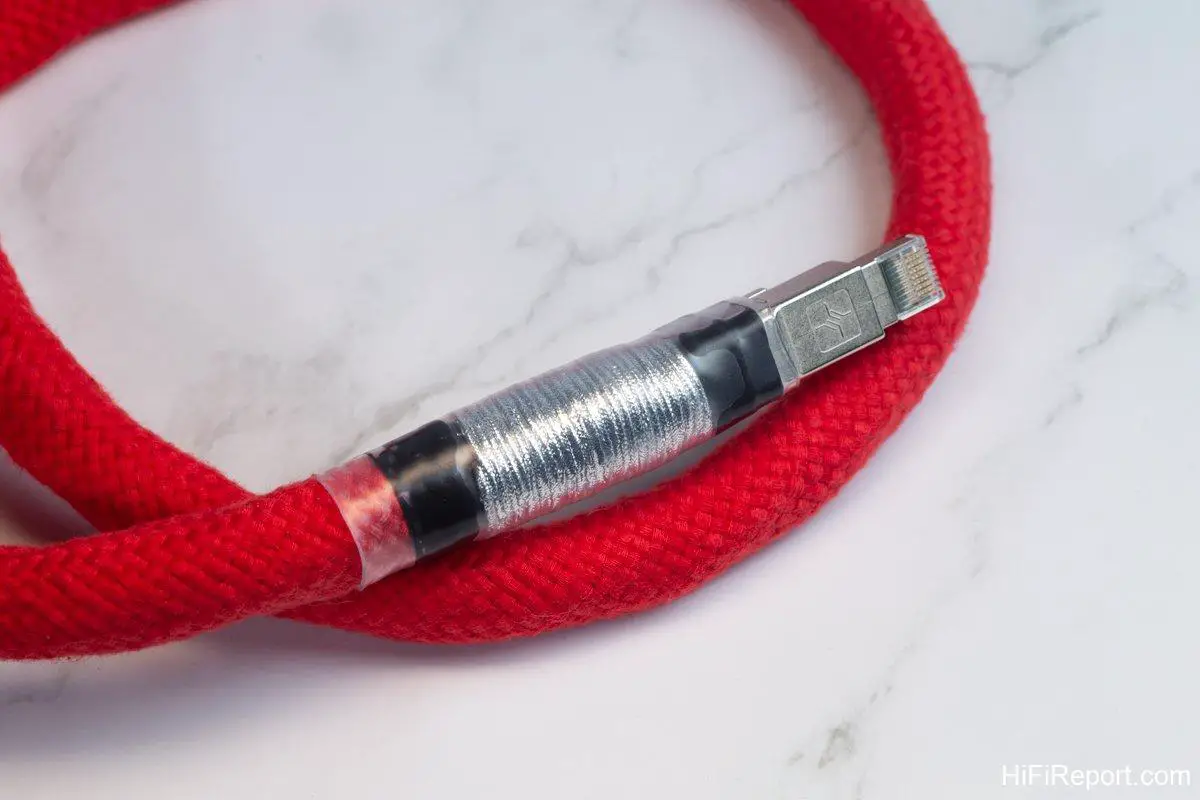
Another factor contributing to the Mind network cable’s flexibility is the insulation material: natural pure cotton.
Natural Cotton Insulation
Way Cables employs natural pure cotton for insulation, terming it COT-WAY. The insulation material significantly affects a cable’s capacitance. To minimize capacitance, the dielectric constant of the insulation material should be as low as possible.
What insulation material has the lowest dielectric constant? Air, with a dielectric constant of 1.0k. Natural pure cotton? 1.3k. Are there other materials for comparison? During a visit to In-Akustik in Germany, their technical director discussed dielectric constants of insulation materials. Common PVC is around 3.5~4.5k, PE is approximately 2.2~2.4k, and Teflon is 2k. Looking at these figures, natural pure cotton, with a dielectric constant of 1.3k, indeed surpasses PVC, PE, and Teflon, except for air.
The use of natural cotton for insulation leverages its low dielectric constant to reduce cable capacitance. For shielding, Way Cables employs multi-layer aluminum foil and a pure copper braid. While aluminum foil shielding is already highly effective, Way Cables takes a dual approach, combining multi-layer aluminum foil with a pure copper braid to prevent any external EMI/RFI noise from infiltrating the cable.
Premium RJ45 Connectors
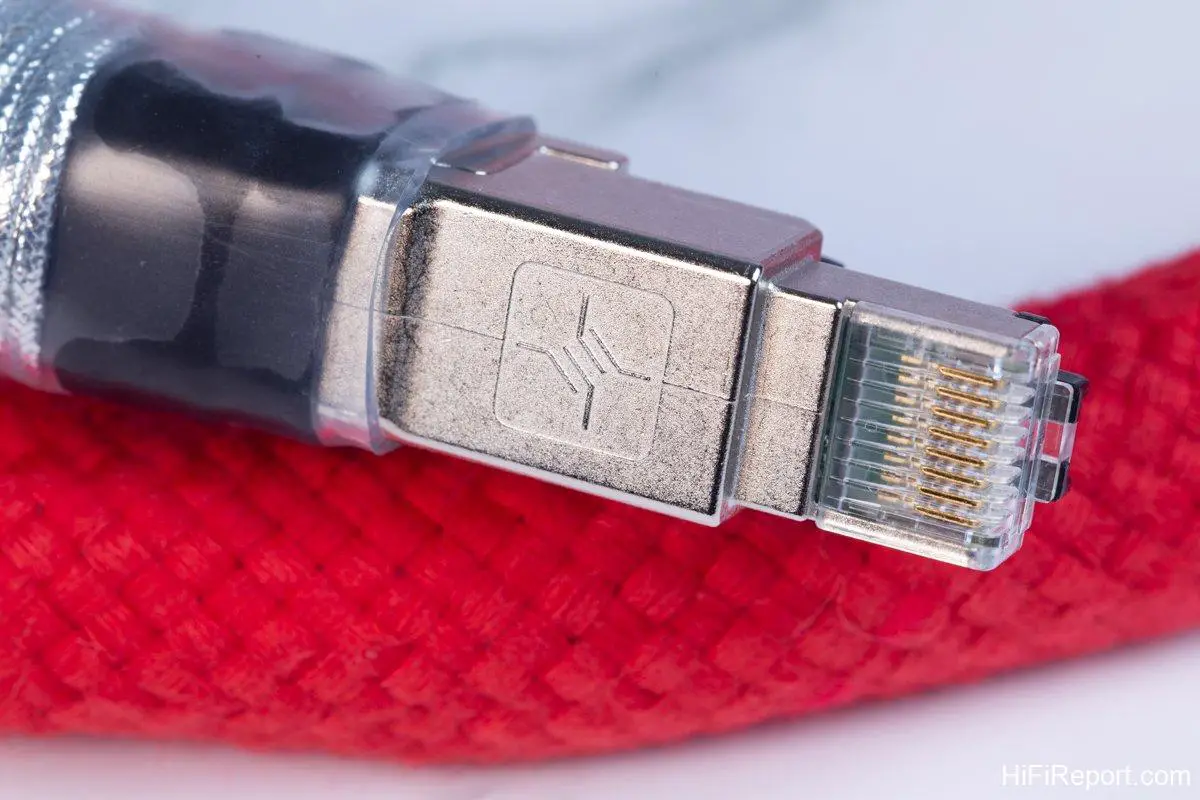
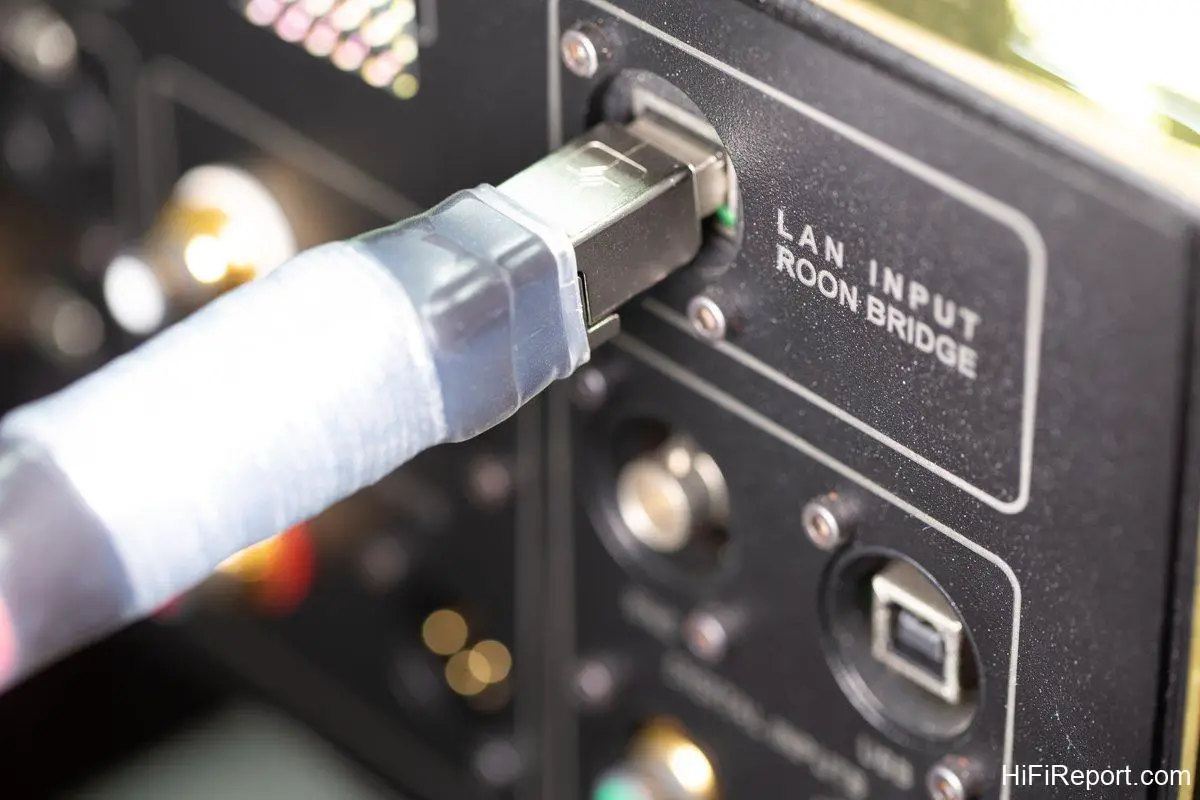
Finally, let’s discuss the connectors on the Mind network cable. Way Cables utilizes top-tier RJ45 connectors from the German manufacturer Telegartner. These German-made RJ45 network connectors are arguably the best available for purchase, hence their popularity in many high-end network cables. The Mind network cable uses the version with gold-plated contacts.
The connection method is crimping, without solder. At both ends of the connectors, there are natural bamboo decorative rings and hand-wound silver coils.
As you can see, even a network cable like the Mind has so much to discuss. While the numerous registered proprietary technology terms might seem like Way Cables is emphasizing storytelling, a deeper look into the technical aspects reveals that every detail is well-reasoned. From conductors and insulation to shielding and sheathing, Way Cables has meticulously addressed almost every fundamental aspect of cable design. The Mind is truly a meticulously crafted network cable.
Noticeable Upgrade in Sound Quality
The auditioning of the Mind network cable took place in the HiFiReport listening room, using the MSB Discrete DAC (equipped with a network input module). The Mind network cable connected the Ansuz d-TC Supreme switch, serving as an intermediary between the NAS and the external network. Amplification was provided by the Linear Acoustics LAV 60 MK II, driving Wilson Audio Alexia 2 loudspeakers.
Our original network cables were self-made “Guanghua brand” cables, DIY products, allowing us to cut network cables to the required lengths. However, after auditioning the Mind network cable, I am seriously considering incorporating high-quality network cables into our reference system. The effect of the Mind network cable was genuinely significant. Simply swapping in this network cable resulted in a more expansive soundstage, clearer imaging, more focused sonic images, and an overall more vibrant and brilliant musical presentation. It turns out that network switches aren’t the only bottleneck; network cables also have a substantial impact.
Immersive and Spacious Soundstage
I want to use Eva Cassidy’s “Live At Blues Alley” as an example. This live concert recording from January 1996 at the Blues Alley jazz club in Georgetown is a favorite Eva Cassidy album of mine. Sadly, Eva Cassidy passed away from cancer just ten months after this album was recorded, making it arguably her last recorded performance. The quality of the live recording is so exceptional that one would never imagine Eva Cassidy’s untimely passing.
Listening to this live recording with the Mind network cable in place, the musical background becomes even blacker.
For example, during “Bridge Over Troubled Water,” the subtle clinking of glasses in the background of the jazz club, hidden within the arpeggiated chords of the electric guitar, enhances the atmosphere of the live recording. Eva Cassidy’s pure and bright vocals float in the air. When the electric bass and drums join in, the entire sense of stage presence becomes fuller.
The most captivating aspect of audio is its ability to transcend time and space, making you feel as if you’re back at the recording venue. With the Mind network cable, this sense of live music realism is intensified.
High-Resolution Streaming Advantage
The advantage of digital streaming over CD lies in high-resolution master recordings. I switched to Eagles’ classic “Hotel California,” listening to a 24/192 file. The twelve-string steel-string guitar solo opens the track, with the electric bass providing a solid low-frequency foundation. The drum kit hits the cymbals, and after two heavy bass drum strikes, Don Henley begins singing. Muted electric guitar strumming is on the right, twelve-string guitar on the left, and electric guitar power chords in the center.
“Hotel California” is a song I’ve loved since I was young, incredibly familiar. However, with the Mind network cable, the musical vibrancy elevates the listening experience even further. Don Henley’s vocals are genuinely heartfelt, and the band’s rich arrangements heighten the rock atmosphere.
I also want to mention a classic audiophile recording, Muddy Waters’ “Folk Singer.” This is frequently used as a demonstration track at audio shows. I listened to the 24/96 high-resolution file.
With the Mind network cable, not only does the soundstage widen, but the sonic images also become more focused and refined. You can almost count heads on stage. The opening steel-string guitar, played with slide fingerpicking chords, has the subtle sound of steel strings buzzing. As Muddy Waters sings “My Home Is In The Delta,” his thick, Southern-accented vocals are firmly centered in the soundstage. A second guitar accompanies on the right, while bass and drums are positioned on the left. Previously, using ordinary DIY network cables, the soundstage configuration was audible, but the detail rendering was relatively blurred and indistinct. Switching to the Mind network cable, the sense of realism and clarity in the soundstage imaging is significantly enhanced.
Precise Instrument Placement
The expansive soundstage and precise imaging are so defined that you can almost count the musicians when listening to string quartets. I selected a recording by Engegardkvartettn from Norwegian label 2L, a 24/352.8 master recording of Haydn’s String Quartet Op. 76, No. 5, fourth movement, Allegro. This is a spirited movement. The quartet’s subtle breaths cue the start, followed by unison double-stop motifs from the four string instruments, repeated twice, then three times in succession, leading into a rapid melody. First and second violins are on the left, viola and cello on the right. You can easily pinpoint each instrument.
Even in this spirited, fast-paced Allegro movement, the clear instrument placement afforded by the Mind network cable makes the interplay of voices and dynamic shifts even more dramatic. The soaring violins on the left and the deep cello on the right respond to each other in the rapid melody. The same musical phrases are tossed back and forth, high and low, left and right, creating a truly vivid musical picture.
Authentic and Powerful Bass
Finally, I want to use Valery Gergiev conducting the Kirov Orchestra in Stravinsky’s “The Rite of Spring” to describe the Mind network cable’s bass performance.
I want to emphasize that the Mind network cable doesn’t artificially boost the bass. Instead, it faithfully reproduces the bass authority inherent in the recording, contrasting beautifully with the bright and spacious mid-high frequencies, creating a magnificent musical landscape.
“The Rite of Spring” begins with a prelude of strange sounds, followed by the awakening of spring, launching into explosive musical scenes. Previously, with DIY network cables, the bass sounded somewhat boomy, voluminous but lacking control. With the Mind network cable, the increase isn’t in bass quantity but in controlled speed, making the bass more articulate and enhancing the musical tension of “The Rite of Spring.”
Brass and woodwinds emerge from the depths of the soundstage, while strings strike their bows rhythmically. Amidst the dissonant harmonies, there’s even the shimmering sound of a triangle. “The Rite of Spring” is very modernistic music. The unconventional harmonies might not appeal to everyone, but with poor audio reproduction, it can sound like noise, unbearable to listen to. The Mind network cable clarifies the musical lines, enhancing the contrast between high and low frequencies, allowing us to better enter the composer’s (mad, wild) musical imagination. Stravinsky’s spring is truly an aesthetic of violent music!
Addressing Digital Streaming Bottlenecks
Although this is my first encounter with Way Cables, and with a network cable, a product category I’m relatively less familiar with, the Mind has changed my perspective on network cables. In the world of digital streaming, network switches and network cables may be bottlenecks that need to be addressed together. Just adding one Mind network cable has yielded a noticeable improvement. I can’t help but wonder: what if I added two? What if I replaced the network cable connecting the NAS to the switch with another Mind cable? It’s highly likely that a high-quality switch, combined with two Mind cables, could resolve local network connection bottlenecks.
And what about three? Replacing the network cable connecting the external network AP to the switch with a Mind cable as well? Wouldn’t that solve the digital streaming connection bottleneck for cloud listening?
Highly Recommended
I don’t have the answers, as I only have one Mind cable, used on the most critical digital streaming player. Even with just one, the upgrade is significant, making the music more vibrant, brilliant, and lively.
If you already own a high-quality digital streaming player and are seeking an upgrade network cable, the Mind is worth trying. Its ability to expand soundstage depth and width, and to sharpen sonic image focus, is impressive. You’ll know its worth once you’ve experienced it.
Specifications
* Type: Cat8 Digital Network Cable
* External Shielding: UXD5-WAY Damping and Shielding
* Conductor: EQ:-WAY 5N Single Crystal Silver Single-Core
* Conductor Gauge: 22.51 AWG / 0.29 mm square (per strand, 8 strands total)
* Insulation: COT-WAY (1.3 Dielectric Constant)
* Shielding: Multi-layer Aluminum Foil and Pure Copper Braid
* Network Connector: Telegartner RJ45 Connector
“`