
WiiM Amp Wireless Streaming Integrated Amplifier Review
Following the widespread acclaim of the WiiM Pro and WiiM Pro Plus wireless streaming players, WiiM has swiftly launched the WiiM Amp. Building upon their already comprehensive streaming capabilities and user-friendly operation, the WiiM Amp adds practical amplification power. Simply connect your speakers and immerse yourself in the world of online music. Furthermore, with HDMI ARC connectivity, it seamlessly integrates with your TV, bridging the gap between audio and home theater entertainment. Crucially, the WiiM Amp boasts a refined aesthetic and build quality, yet its price tag is just over ten thousand NTD, representing exceptional value.
Size Comparable to Mac Mini
It might be challenging to grasp the WiiM Amp’s dimensions from photographs alone. To provide a clearer perspective, consider this comparison:
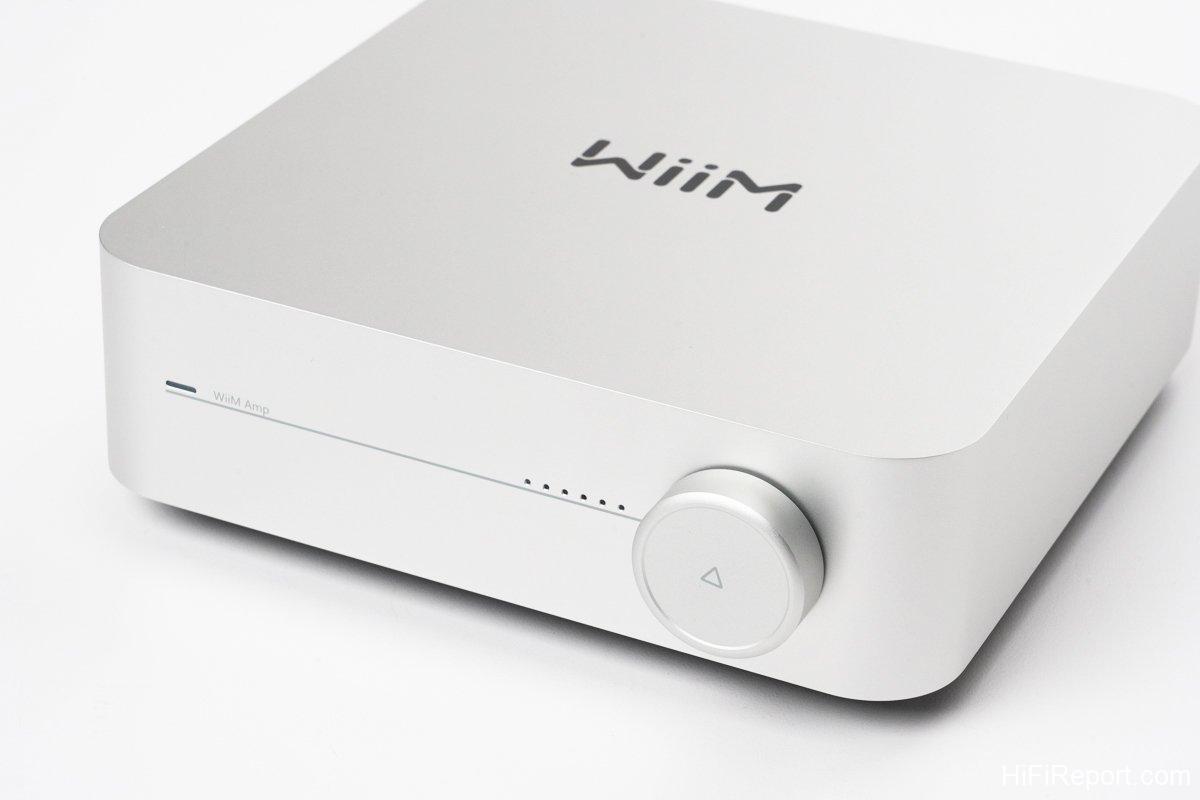
The WiiM Amp measures 19cm in both width and depth, while the Mac Mini is 19.7cm wide and deep. Thus, the WiiM Amp is roughly the size of a Mac Mini. It is slightly thicker at 6.3cm compared to the Mac Mini’s 3.58cm, but overall, it remains remarkably compact. Its diminutive size allows for effortless placement in virtually any nook, optimizing space utilization.
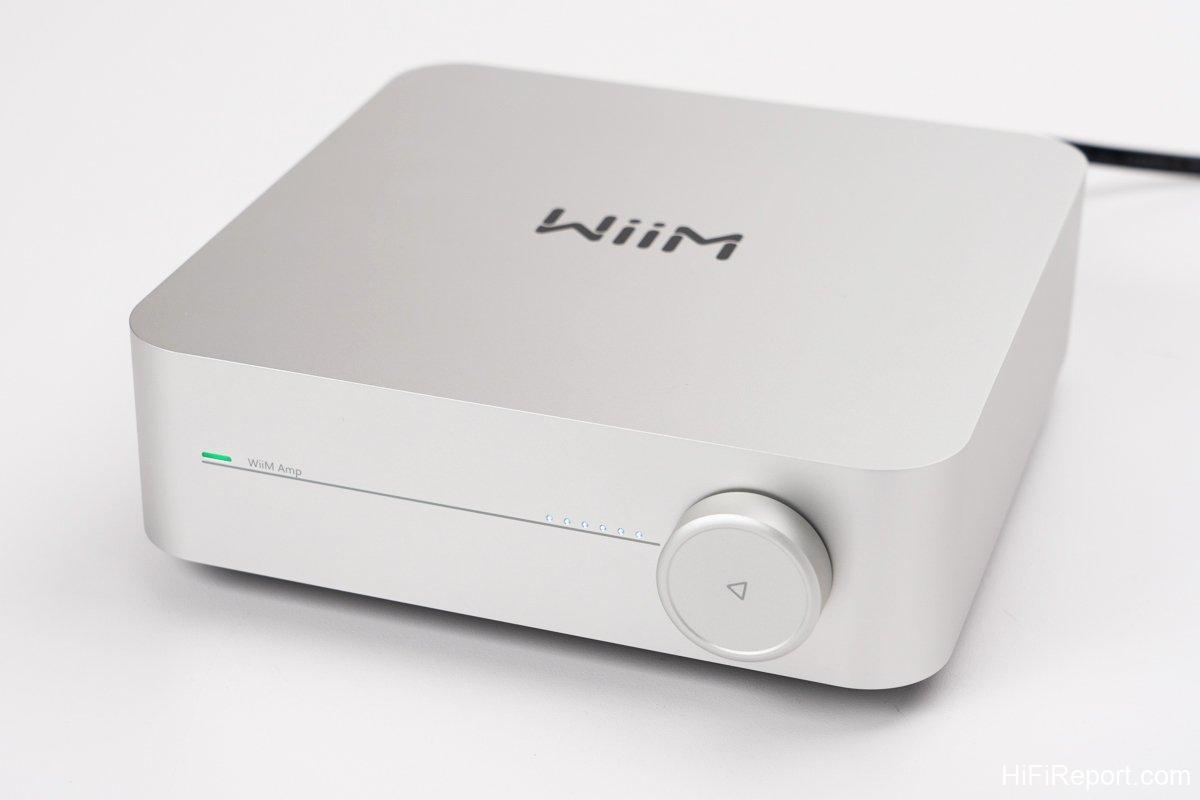
The WiiM Amp shares the Mac Mini’s minimalist design ethos. However, to assert its identity as an amplifier, a multifunction knob has been thoughtfully incorporated into the front panel. This knob serves dual purposes: volume adjustment and basic playback control.
Volume adjustments can be made via the knob, the WiiM Home app, or the included remote control.
When the volume is altered, a row of small LEDs to the right of the knob illuminate or dim, visually indicating the volume level to the user.
Subwoofer Output with Crossover Control
Turning to the rear panel, we find a well-considered array of connections.
From left to right, the first is an 8-shaped AC power inlet. The WiiM Amp’s direct AC power consumption is a significant advantage, eliminating the clutter of an external power adapter – simply plug in a standard power cord.
Above the power inlet is an HDMI input with ARC (Audio Return Channel) functionality. Connecting to a TV via HDMI ARC allows the WiiM Amp to receive audio signals from the television. It’s important to note that it accepts only stereo PCM audio, and does not support Dolby Digital or DTS formats.
Next are an RJ45 Ethernet port and a USB-A port. The WiiM Amp offers versatile network connectivity via wired Ethernet or dual-band Wi-Fi (2.4GHz and 5GHz). The USB port enables direct playback of music files stored on USB drives.
Further along, three additional connection options are provided: a set of RCA analog stereo inputs and a TOSLINK optical digital input. These accommodate a wide range of audio sources commonly found in home audio setups.
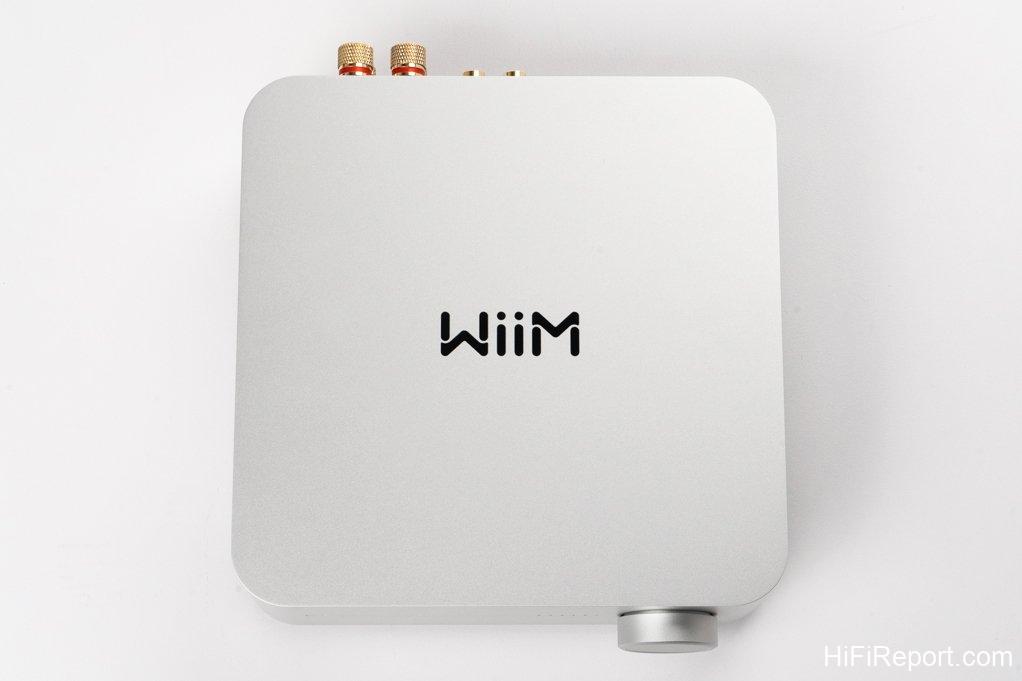
Notably, the WiiM Amp includes an RCA subwoofer output, allowing users to connect an active subwoofer to augment low-frequency performance. Impressively, the subwoofer output’s volume, crossover frequency, and phase (0/180 degrees) are all adjustable via the WiiM Home app. The crossover frequency offers a broad adjustment range, continuously variable from 30Hz to 250Hz. This extensive range ensures seamless integration with subwoofers of various sizes, achieving a smooth frequency response transition.
For amplification, the WiiM Amp utilizes a Texas Instruments TI TPA3255 Class D amplifier chip. This robust amplifier delivers a practical 60 watts per channel into 8 ohms, or 120 watts per channel into 4 ohms. Paired with an ESS 9018 DAC chip, distortion and noise are kept to a minimum, more than sufficient for everyday listening enjoyment.
Comprehensive Streaming Features
Inheriting the technology of the acclaimed WiiM Pro Plus, the WiiM Amp naturally boasts a wealth of streaming capabilities.
The WiiM Amp supports a wide array of network streaming protocols, including Chromecast Audio, AirPlay 2, Roon Ready, Spotify Connect, Tidal Connect, and DLNA. This practically covers every conceivable streaming application.
WiiM’s dedicated app is equally robust, integrating a multitude of streaming platforms such as Qobuz, KKBox, Amazon Music, iHeartRadio, TuneIn, Napster, and Deezer. A vast universe of music is readily accessible.
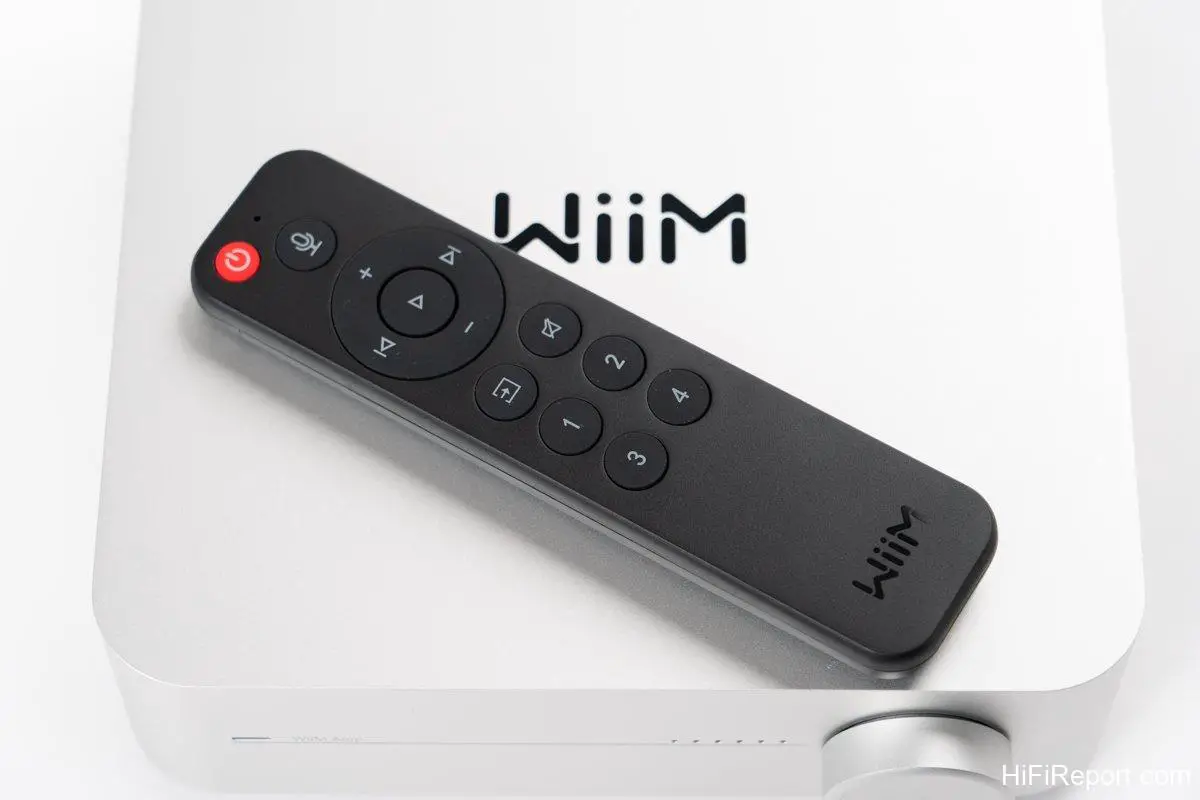
For convenient, everyday control, the WiiM Amp includes a Bluetooth voice remote control. Pairing is easily accomplished through the WiiM Home app, which also displays the remote’s battery level.
Bluetooth connectivity eliminates the need for line-of-sight aiming, and voice control further enhances user-friendliness.
Intuitive App Control
To delve into finer functionalities, the following section utilizes screenshots from the WiiM Home app for illustration.
The WiiM Amp supports a variety of streaming methods and music platforms, including BBC Internet Radio, TuneIn Radio, and Tidal, all controllable directly through the WiiM Home app.
The app also facilitates input source switching, and these operations can also be performed using the included remote.
The WiiM Amp provides dual EQ options: a 10-band graphic EQ and a parametric EQ, offering extensive sound customization possibilities.
Alternatively, users can select from preset EQ modes for instant sonic tailoring.
[Figure Left]: To ensure it becomes an indispensable part of your daily routine, the WiiM Amp features a built-in alarm clock. You can set your preferred music, internet radio station, or podcast as your wake-up soundtrack, with customizable volume and duration.
[Figure Right]: Beyond volume adjustment, the WiiM Amp’s subwoofer output allows for crossover frequency and phase adjustments, continuously variable from 30Hz to 250Hz.
[Figure Left]: The WiiM Amp supports not only stereo playback but also mono or left/right channel output, providing significant flexibility for multi-room setups.
[Figure Right]: Maximum volume limiting, left/right channel balance, fade-out, and fade-in are also among the WiiM Amp’s fundamental functions.
Neutral and Versatile Sonic Character
The listening evaluation was conducted in the HiFiReport listening room. To thoroughly understand the WiiM Amp’s characteristics and sonic signature, two pairs of bookshelf speakers were intentionally chosen: the Klipsch RP-600M II and the Divini KIT-M. An Intel NUC i3 Roon Rock served as the source, leveraging the WiiM Amp’s Roon Ready capability for playback.

A wired network connection was employed throughout the listening sessions.
The Klipsch RP-600M II, with its horn tweeter and high 94.5dB sensitivity (significantly higher than the Divini KIT-M’s 87dB), allowed the WiiM Amp to operate with remarkable ease, exhibiting an expansive and dynamic soundstage that belied its compact size.
Thanks to the RP-600M II’s 6.5-inch woofer, the WiiM Amp delivered a substantial bass presence, characterized by appropriate elasticity, clear definition, and well-defined layers. There was no hint of muddiness or sluggishness, immediately indicating the WiiM Amp’s commendable driving capabilities.
Furthermore, the WiiM Amp showcased the RP-600M II’s horn tweeter’s inherent high resolution. Vocals and instruments alike possessed clear and distinct outlines, with palpable texture and detail, enhancing the music’s emotional impact.
The RP-600M II’s high sensitivity and ample bass, combined with the horn’s wide dispersion, meant that even with the diminutive WiiM Amp, satisfying sound levels could be achieved in larger spaces. For a more intimate and refined listening experience, the WiiM Amp and Divini KIT-M presented an alternative pairing.
Rich Tonal Texture
Switching to the KIT-M speakers, the listening position was moved slightly closer, and the speakers’ spacing was adjusted accordingly. As before, a well-defined soundstage and appropriate tonal balance were quickly achieved, reaffirming the WiiM Amp’s inherent sonic merits and highlighting the rapid advancements in Class D amplification technology.
Playing Vivaldi’s “The Four Seasons” violin concertos by the Musica Antiqua Köln ensemble, the initial impression was one of pleasant surprise: “The sound quality is genuinely impressive!” The violin’s timbre was naturally bright and clear. While possessing a slightly drier texture rather than a lush, smooth character, the tonal accuracy was excellent, and the richness of texture and detail was more than sufficient, avoiding any sense of sonic blandness or monotony.
In the first movement, “Allegro,” of “Spring” (track 1), the WiiM Amp conveyed a light and lively musicality. Bass lines were clearly defined, agile, and never blurred. Sufficient weight was present, preventing any sense of sluggishness or clumsiness in the musical flow. In the third movement, “Presto,” of “Summer” (track 6), the tense atmosphere of an approaching storm and the clash of thunder and lightning were effectively conveyed.
While perhaps not exceptionally rich in terms of reverb and spatial decay, these aspects were appropriately rendered, conveying a sense of the recording venue’s acoustics and exhibiting commendable detail retrieval.
Excellent Relative Dynamics
Listening to “Duet,” the double piano album by jazz giants Chick Corea and Japanese pianist Hiromi Uehara, through the WiiM Amp and KIT-M speakers, the clarity of the piano timbres was satisfying. The recording’s airiness was also rendered with pristine clarity, avoiding any sense of muddiness.
The album features numerous fast-paced pieces with rapid exchanges between the two pianists, unleashing a torrent of notes. The WiiM Amp handled these passages with clarity and fluidity, lending a vibrant quality to the music.
While the absolute dynamic impact of each key strike might not be the most forceful – not absolute power, but rather the relative dynamic gradations were exceptionally well-rendered. This resulted in a sound that was still dynamic and engaging, never becoming flat or lifeless.
This is no small feat for such a diminutive amplifier.
Switching to vocals, Huang Xiaohu’s album “Existence” was selected.
The WiiM Amp rendered her vocals with considerable expressiveness, which is central to the Huang Xiaohu listening experience.
This expressiveness stems from the pleasing vocal weight, clear outlines, and tangible presence, allowing for a distinct vocal image to be projected within the soundstage. Subtle vocal nuances, vibrato, and dynamic inflections were all faithfully conveyed, creating a captivating listening experience.
Furthermore, not only vocals but also accompanying instruments possessed good weight, particularly the bass, which was substantial and remained present even at low listening levels, avoiding any top-heavy or lightweight sonic character.
Finally, with “The Guitar Trio” featuring guitar masters Paco de Lucia, Al Di Meola, and John McLaughlin, the WiiM Amp continued to articulate the fingerstyle guitar dynamics with clarity. Notes were well-defined and projected, and the tonal qualities were accurately rendered with satisfying weight and musicality.
Moreover, the separation between the three guitars was excellent. The mixing engineer’s intentions were clearly revealed, with each guitarist’s contribution distinct. The tonal differences between the three guitars were unmistakable, avoiding any sense of sonic blending. This level of performance allows for attentive and rewarding musical appreciation.
A Compelling Choice
Thanks to rapid advancements in digital technology, Class D amplification, and manufacturing processes, we can now access greater convenience and improved sound quality at more accessible prices than ever before. The WiiM Amp exemplifies this trend. It supports virtually every streaming service imaginable, connects seamlessly to TVs for enhanced viewing experiences, offers user-friendly operation, and synergizes effectively with a wide range of smaller loudspeakers. Its sound is accurate, engaging, and remarkably well-rounded. At this price point, are there truly other compelling alternatives?
Specifications
* **Type:** Wireless Streaming Integrated Amplifier
* **Power Output:** 60 Watts per channel into 8 Ohms, 120 Watts per channel into 4 Ohms
* **Supported Music Formats:** MP3, AAC, ALAC, APE, FLAC, WAV, WMA, OGG
* **Home Theater Audio Format:** Stereo PCM (Dolby Digital or DTS not supported)
* **Wireless Network:** 802.11 ac (2.4GHz / 5GHz)
* **Bluetooth:** v5.1 / SBC and AAC codecs
* **Inputs:** HDMI ARC, Analog RCA, SPDIF Optical, USB
* **Output:** RCA Subwoofer
* **Power Supply:** AC Input
* **SNR:** -98 dB
* **THD+N:** 0.002%
* **Dimensions:** 190 × 190 × 63 mm
* **Weight:** 1.84 kg