
Wilson Audio Alexx V Review
In 2016, Wilson Audio unveiled the original Alexx loudspeaker. Five years later, in 2021, they introduced the Alexx V. Although designated as the second generation, the extent of upgrades and revisions in the Alexx V is unprecedented in Wilson Audio’s history. This transformative leap began with the WAMM Master Chronosonic.
Wilson Audio is not known for rapid model changes, but the 2017 launch of the WAMM Master Chronosonic sparked a revolution in design. This flagship product accelerated the trickle-down of high-end technologies throughout the Wilson Audio range. This was evident in the 2018 release of the Sasha DAW, followed by the all-new Chronosonic XVX in 2019, and then the Alexx V in 2021. The evolutionary trajectory of these three speakers is rooted in the design principles pioneered by the WAMM Master Chronosonic, gradually disseminating top-tier engineering to more accessible models.
Which speaker will be upgraded next? While I can only speculate, the Alexia 2 seems a likely candidate. Such an update would undoubtedly present an internal debate here at HiFiReport, as we consider whether to upgrade our own reference loudspeakers.
But how exactly does the WAMM Master Chronosonic serve as a blueprint? Examining the Chronosonic XVX and Alexx V reveals a significant design shift: the skeletal, open-architecture framework supporting independently housed driver modules.
WAMM stands for Wilson Audio Modular Monitor. Nearly forty years ago, the original WAMM already embodied modularity, with high, mid, and low-frequency drivers housed in separate, adjustable modules, allowing for precise time-domain alignment. This has been Wilson Audio’s consistent design philosophy for decades, relentlessly pursuing the core ideal of time-domain accuracy to near perfection.
Evolution from Sasha DAW to Alexx V
The first-generation Alexx launch event was presented by Trent Workman, then Wilson Audio’s International Sales Manager. In 2018, the Sasha DAW unveiling was personally hosted by Daryl Wilson, the current CEO. Daryl again graced the launch of the Chronosonic XVX in 2019. Reviewing the content from these three significant Wilson Audio product launches reveals the evolutionary path leading to the Alexx V.
Wilson Audio’s core design principle is time-domain accuracy. The key message highlighted in the original WAMM Master Chronosonic introduction was simply: “It’s About Time.”
In the art of music listening, time is paramount. Without focusing on the music, closely following each note and melodic progression, it’s difficult to delve into the profound depths of musical experience. Similarly, in the art of music reproduction, if the timing is misaligned—if high, mid, and low frequencies do not reach the listener’s ears simultaneously—it becomes challenging to achieve the “suspension of disbelief” that creates a truly lifelike sonic illusion. Since founding Wilson Audio in 1974, Dave Wilson relentlessly pursued the most precise time-domain accuracy.
In 2016, Dave Wilson passed the CEO torch to his son, Daryl Wilson, to focus on the WAMM Master Chronosonic project. Prior to assuming the CEO role, Daryl had spent many years in the factory, participating in the development of numerous significant products. The first-generation Alexx was primarily spearheaded by Daryl.
During the Alexx development phase, Dave Wilson was deeply engrossed in the WAMM Master Chronosonic, spending most of his time at home researching and experimenting. Daryl recounted how he would work on Alexx at the Wilson Audio factory during the day and then discuss the WAMM Master Chronosonic with his father, Dave, in the evenings. Daryl described this period as one of the most unforgettable times of his life. His father’s lifetime of speaker design knowledge was poured into the WAMM Master Chronosonic, and each late-night discussion about speaker design philosophy sparked numerous inspirations that Daryl applied to the Alexx project.
Chronosonic XVX Technology Inheritance
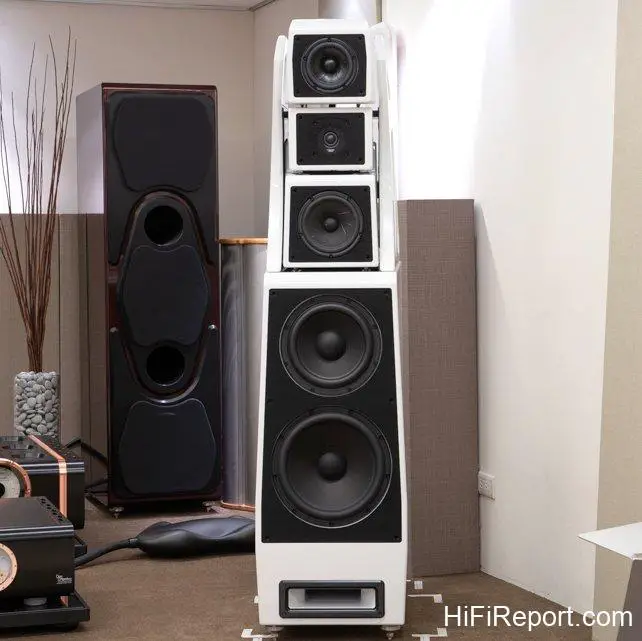
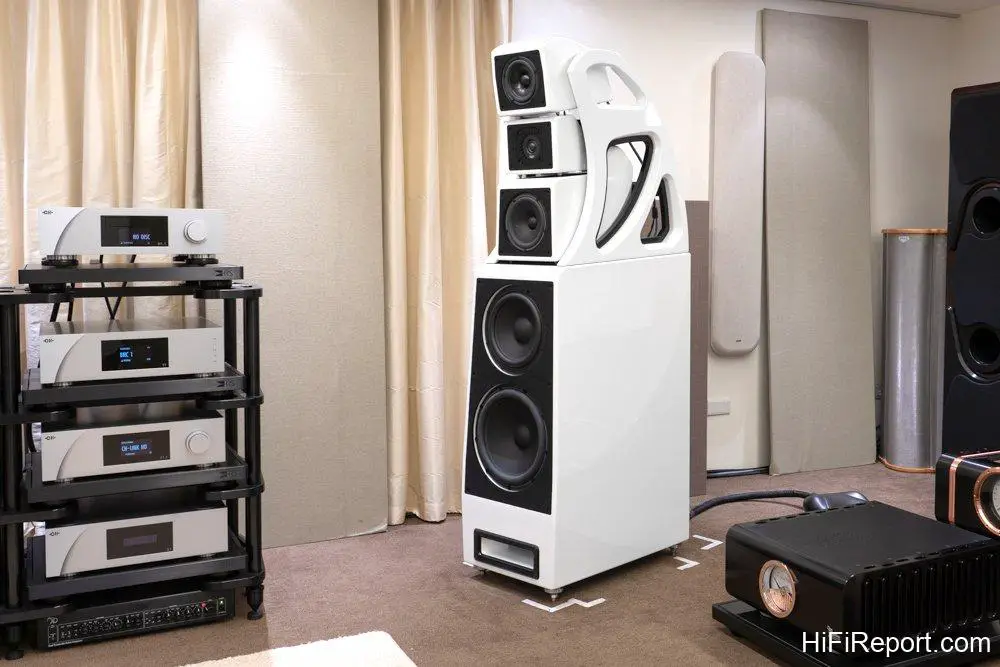
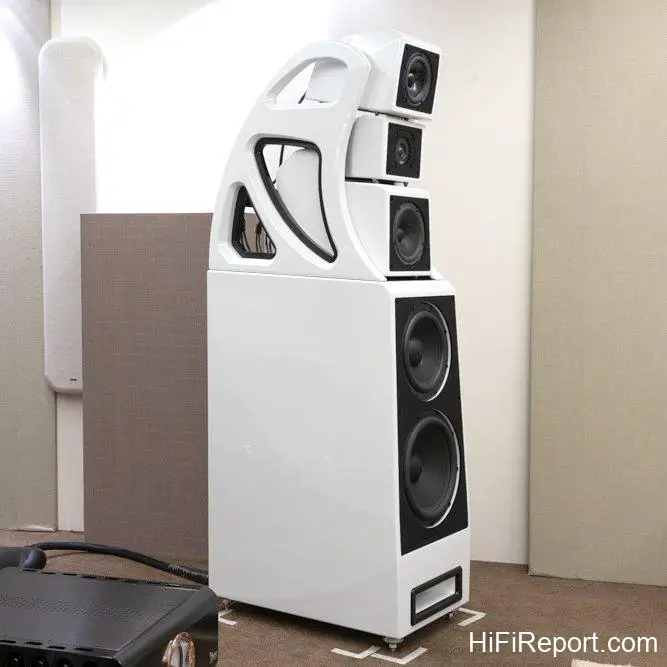
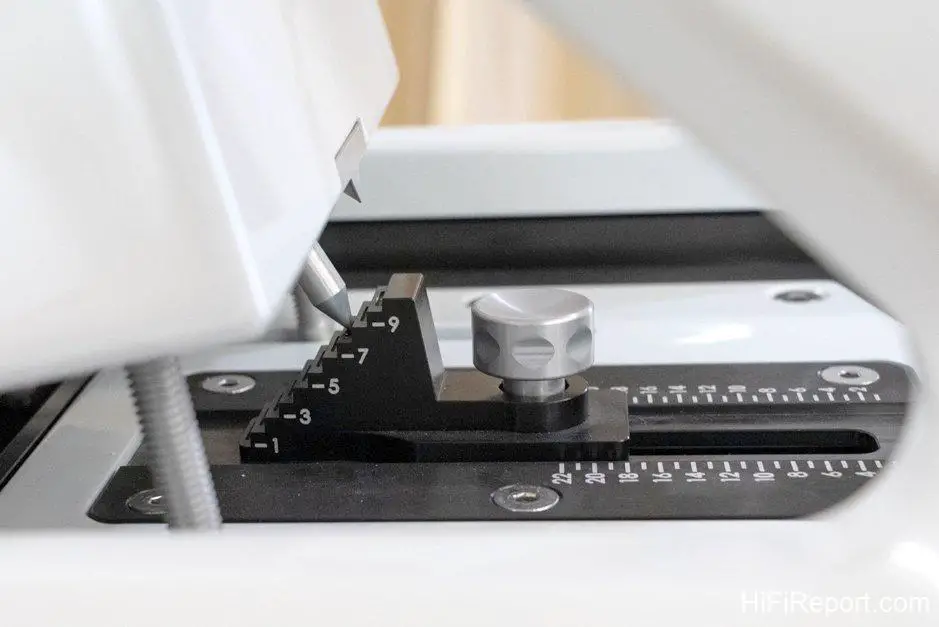
What about the new Alexx V? We see even more direct inheritance from the WAMM Master Chronosonic, as well as Daryl’s own independently developed Chronosonic XVX, integrated into the Alexx V. The most visually striking change is the skeletal, open-architecture framework, supporting a tweeter module and two midrange modules. These modules can be precisely adjusted fore and aft, allowing for fine-tuning of time-domain accuracy based on the listening room and position. Furthermore, the Alexx V inherits virtually all the high-end technologies from the Chronosonic XVX that could be practically implemented, which is truly exciting.
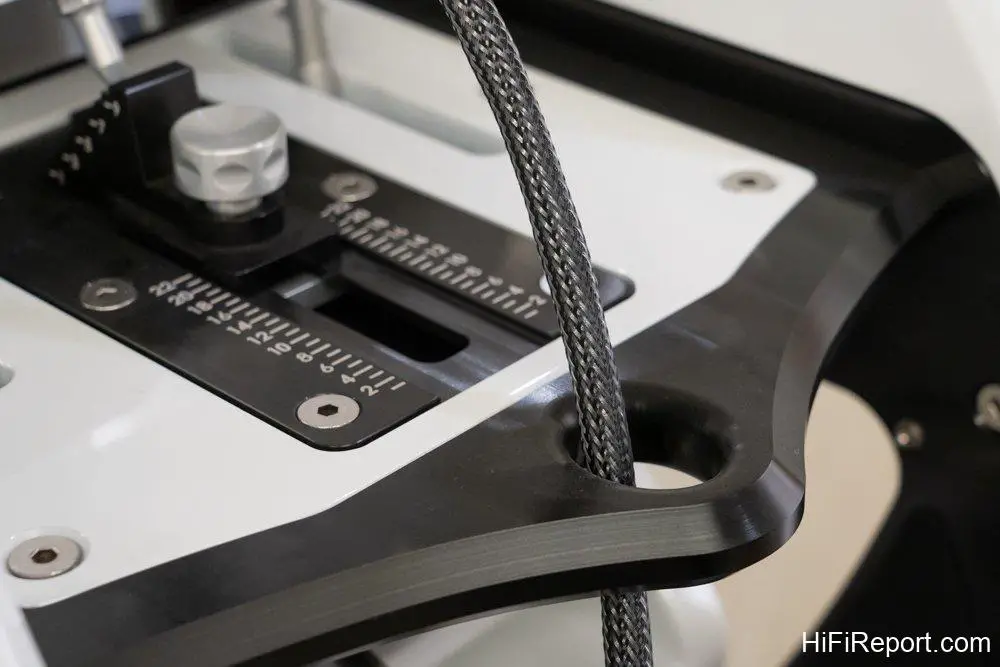
Modular, adjustable enclosures are a hallmark of Wilson Audio. Higher-end models offer greater adjustability and precision. In terms of time-domain adjustment precision, the WAMM Master Chronosonic is the most precise, achieving within 2 milliseconds (ms), the Chronosonic XVX within 5 ms, and the Sasha DAW within 8 ms.
What about the Alexx V? The manufacturer hasn’t released specific figures, but it likely falls between 5 ms and 8 ms, probably very close to the Chronosonic XVX figure. This is plausible because the Alexx V has only one fewer driver than the Chronosonic XVX, resulting in slightly fewer adjustment options, theoretically approaching flagship-level performance.
The significance of a few milliseconds might seem abstract to most people. How does such precise time-domain correction impact music reproduction? Human ear sensitivity to time-domain errors is remarkably high, down to 10 ms. This means that if the time difference exceeds 10 ms, the perceived sound will feel artificial. Conversely, if the time difference is below 10 ms, the sound will be perceived as remarkably real. Therefore, Wilson Audio speakers mentioned above, with time-domain errors adjustable to below the threshold of human perception, can create a truly believable, lifelike soundstage.
Precision Adjustable Modules
If time-domain accuracy is a top priority, Wilson Audio stands as a unique choice. Currently, no other speaker brand offers such meticulously fine-tuned adjustments. While some speakers allow for angle adjustments and others for height adjustments, no other brand provides the level of precise time-domain adjustment found in these three Wilson Audio models.
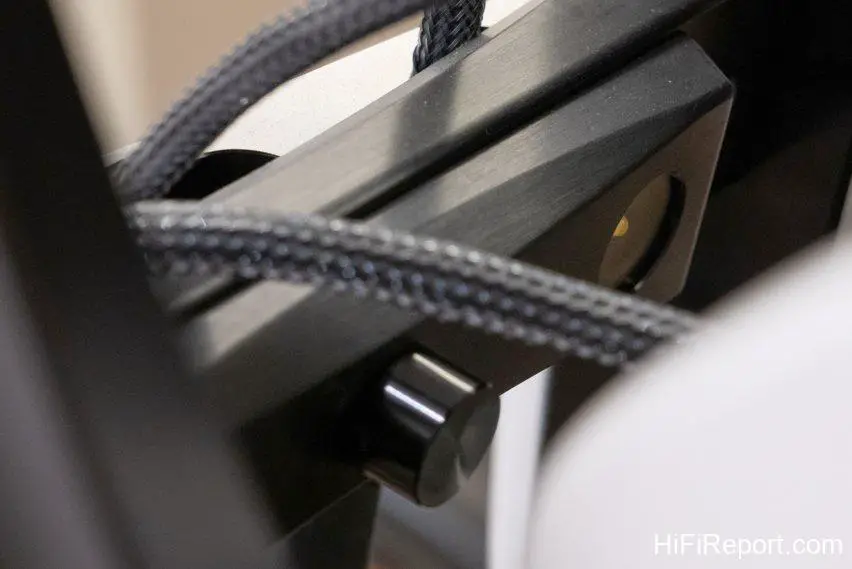
The skeletal, open-architecture framework also offers another significant advantage: eliminating cavity pressure from the rear of the enclosure. In modular Wilson Audio designs, support structures are essential for securing the modules. However, the space between the modules and the supports can create cavity pressure. Initially, I was unclear about this phenomenon. It wasn’t until the Alexia 2 was installed in our listening room that I noticed, while talking to another editor near the speakers during cable installation, that the sound in the space behind the speakers sounded different. This was cavity pressure. The skeletal, open framework effectively dissipates this accumulated sonic energy, removing this subtle coloration.
From the 2016 launch of the Alexx to the 2021 arrival of the Alexx V, despite only five years separating them, the Alexx V represents a transformative evolution. Beyond the skeletal framework, which visually aligns the Alexx V more closely with the Chronosonic XVX, it also reveals Wilson Audio’s future design direction. The Sasha DAW already incorporates open-architecture side panels, suggesting that the Alexia 2’s evolution will likely also embrace this design principle.
CSC Carbon Tweeter
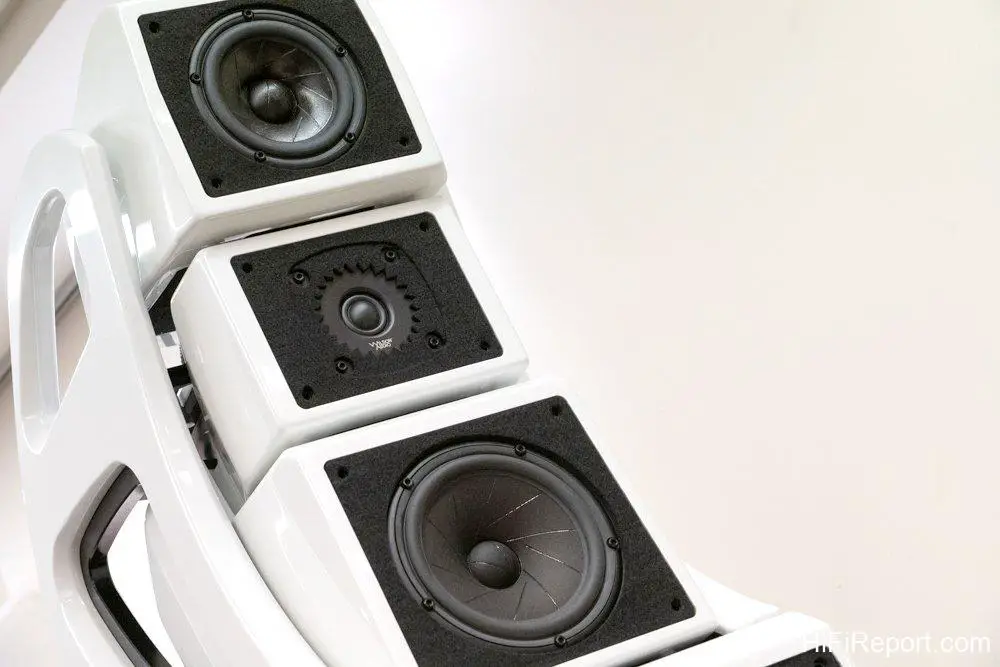
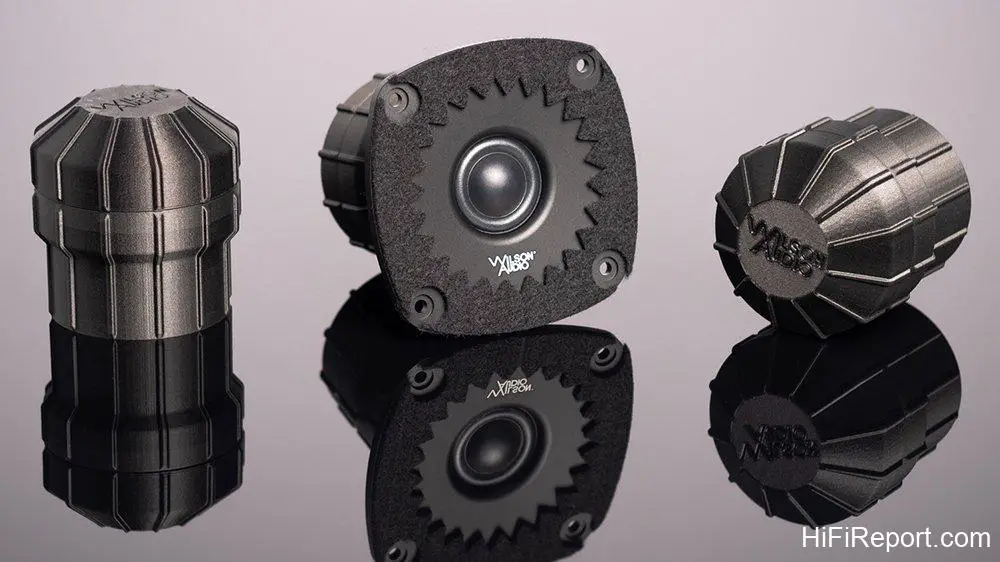
In terms of drivers, the Alexx V retains a three-way, five-driver configuration. However, the tweeter is upgraded to the CSC (Convergent Synergy Carbon) silk dome tweeter, replacing the previous CST (Convergent Synergy Tweeter).
Visually, the CSC tweeter appears similar, with the same starburst-pattern felt damping surrounding the silk dome. However, the rear chamber of the CSC tweeter is constructed from carbon fiber, using 3D printing technology. Sealing the tweeter’s rear chamber effectively eliminates back-wave interference, and the Alexx V’s tweeter is also housed in a sealed module, both aimed at maintaining the purity of high-frequency reproduction.
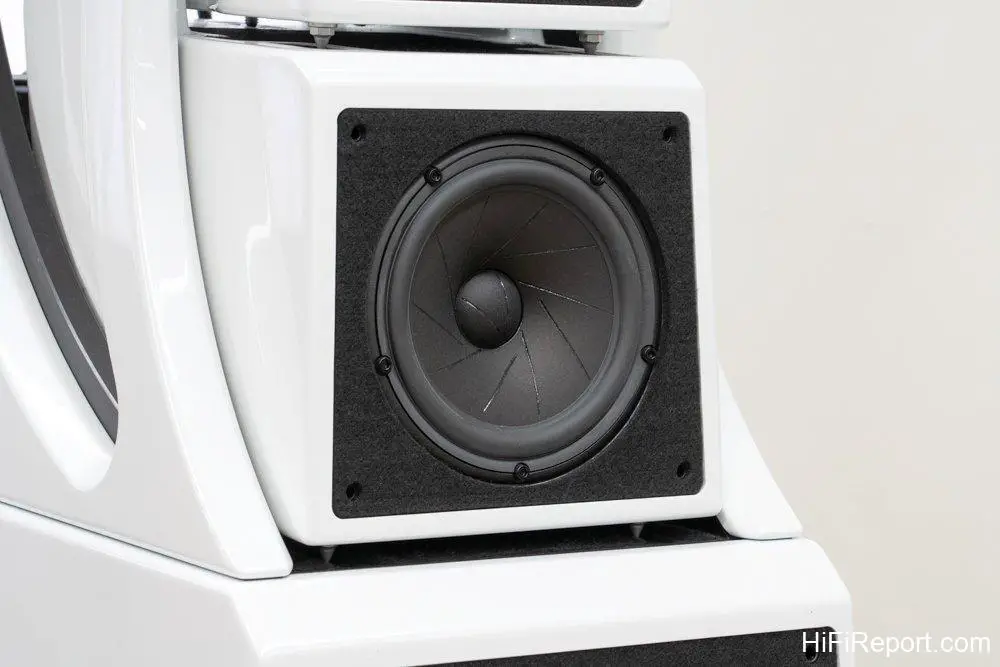
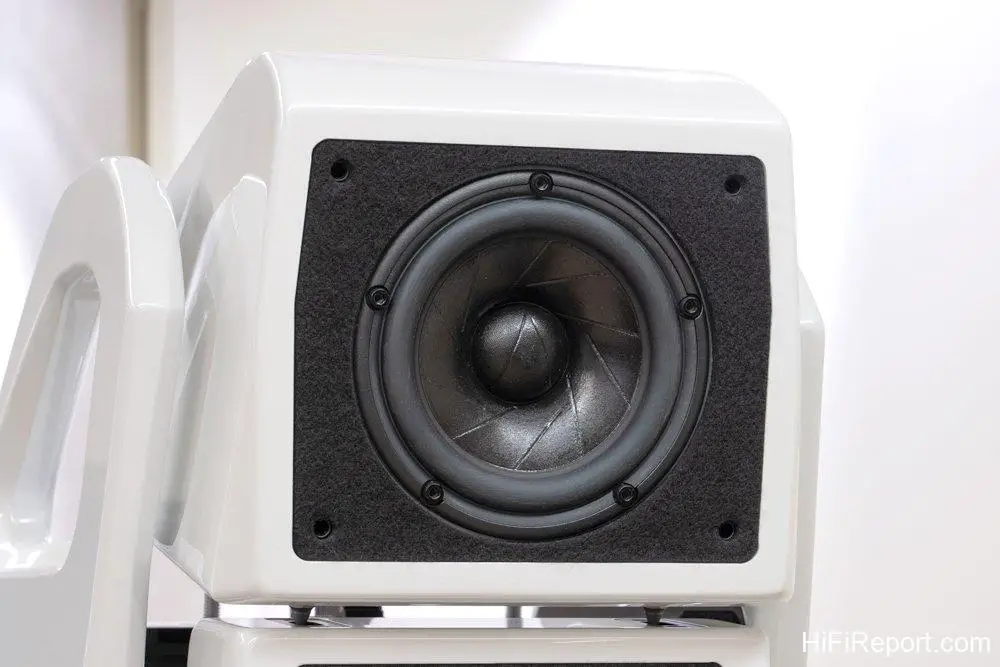
The original Alexx employed an asymmetrical MTM (Midrange-Tweeter-Midrange) driver arrangement, which the Alexx V retains. Above the CSC tweeter module is a 4-inch midrange, and below it is a 7-inch midrange. This 7-inch midrange is shared with the Chronosonic XVX, featuring an Alnico QuadraMag magnet system.
Alnico QuadraMag Midrange
The 7-inch Alnico QuadraMag midrange driver first debuted in the Chronosonic XVX. The Alexx V is only the second Wilson Audio speaker to incorporate this exclusive driver. The origins of this driver trace back to the WAMM Master Chronosonic, but initial prototypes exhibited excessively low efficiency. It took over a year of further research and development to arrive at the unique quad-magnet arrangement, which effectively boosted magnetic force and achieved practical efficiency. Its development was truly hard-earned.
The 4-inch midrange driver atop the Alexx V is essentially the same as the 4-inch midrange used in the WAMM Master Chronosonic, although minor refinements were made to ensure seamless sonic integration between the two midrange drivers.
Delving into further detail, the 4-inch midrange enclosure module features rear venting, while the 7-inch midrange module is vented at the bottom. This, combined with the sealed tweeter enclosure, is designed to harmonize the sonic characteristics of the midrange and tweeter through a combination of different enclosure types.

XLF Port for Bass
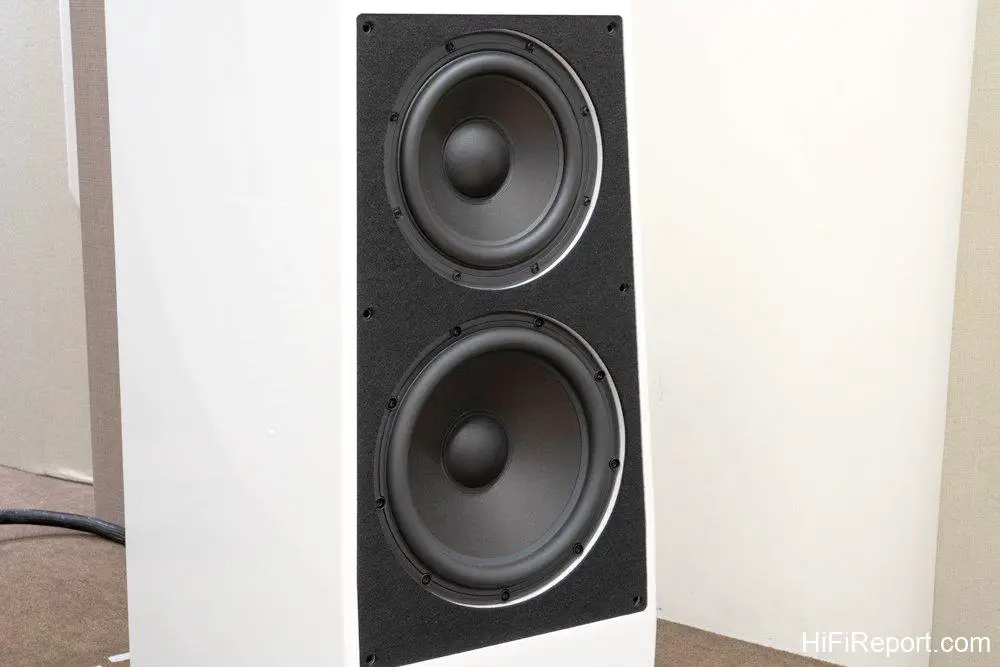
The Alexx V’s bass module retains the same driver sizes as its predecessor, with 10.5-inch and 12.5-inch woofers. These are likely directly “borrowed” from the WAMM Master Chronosonic. The bass reflex port utilizes the XLF Port, which allows for configuring the port opening to fire either forward or backward.
If the speakers are positioned close to the rear wall, it’s advisable to orient the bass reflex port forward. If there’s ample space behind the speakers, directing the port rearward can enhance the speaker’s adaptability to the listening environment.
It’s important to note that the Alexx V’s bass reflex port isn’t simply a basic slot. It incorporates a specialized internal waveguide profile designed to accelerate airflow and reduce turbulence noise. Every detail is meticulously considered.
Material Composition
Drivers must be securely mounted within enclosures, and Wilson Audio enclosures are entirely constructed from specialized composite materials, blending three different types to optimize rigidity and damping according to structural demands.
These three composite materials are X-Material, S-Material, and V-Material. X-Material boasts the highest rigidity and is the most widely used high-rigidity composite material by Wilson Audio, originating with the X-1 Grand SLAMM. However, after years of research, the material formulation has undergone subtle refinements, the specifics of which Wilson Audio has never disclosed.
S-Material is employed for the front baffle of the midrange driver module. The manufacturer states that its damping characteristics are similar to X-Material, but the composite formulation is slightly different, specifically tailored for the characteristics of midrange drivers.
V-Material is Wilson Audio’s latest composite material innovation, possessing exceptionally high damping properties, designed to eliminate minute enclosure vibrations. In the Alexx V, V-Material is placed on the skeletal support structure and atop the bass driver module, utilizing its high damping to suppress vibrations at module contact points.
Acoustic Diode Feet
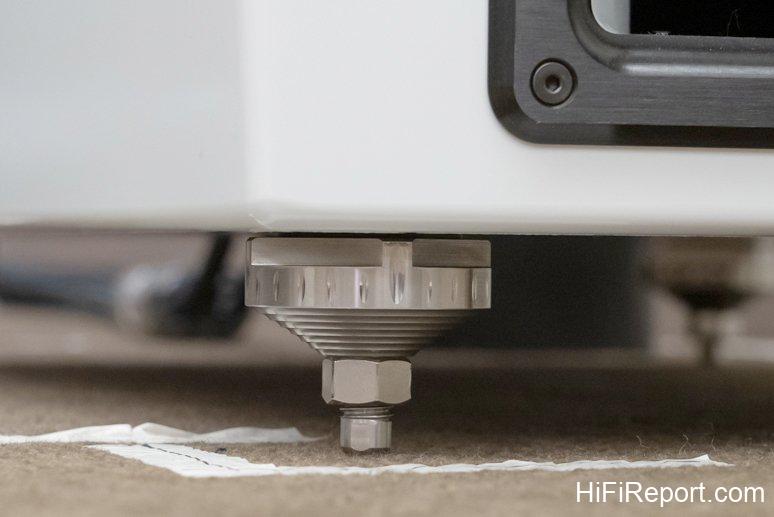
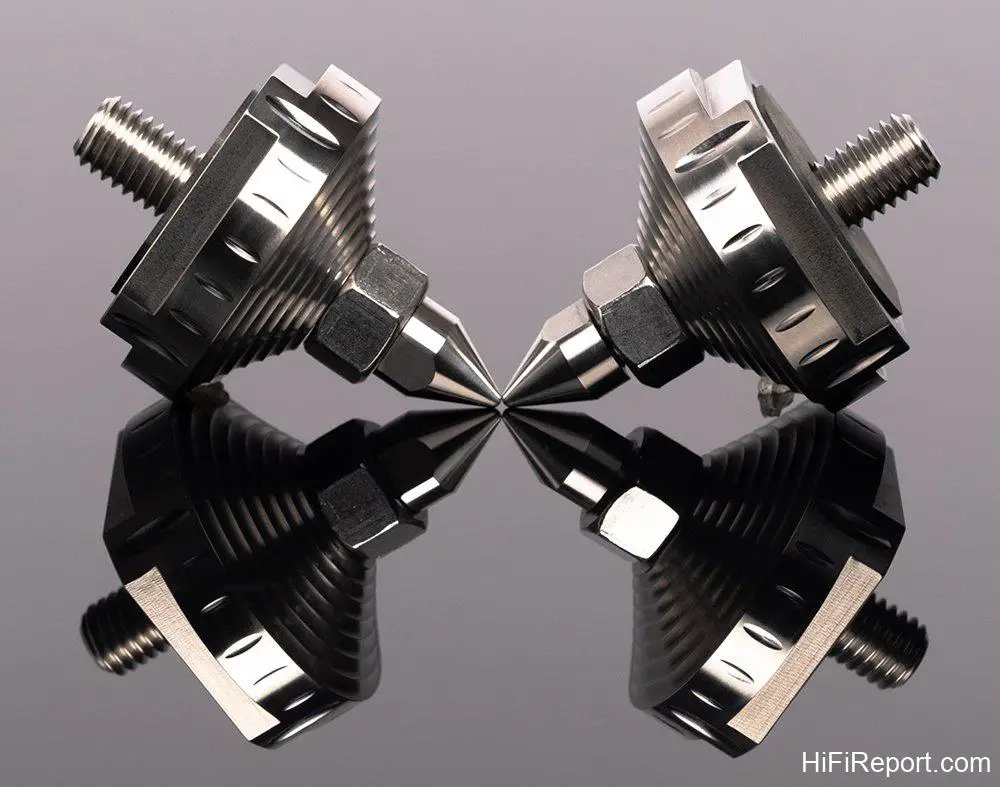
Specialized damping extends to the Alexx V’s feet. The standard feet are Wilson Audio Acoustic Diodes, a newly introduced upgraded foot design. After auditioning them, I was so impressed that I immediately purchased a set for my Alexia 2, and the improvement was significant.
The Acoustic Diode foot itself is constructed from austenitic stainless steel, combined with V-Material, forming a diode-like structure. Just as a diode allows current flow in only one direction, the Acoustic Diode is designed to allow vibration to dissipate in one direction, eliminating the detrimental effects of up-and-down resonance.
With the skeletal framework, drivers, enclosure modules, composite materials, and feet covered, we now turn to the crossover. Wilson Audio’s crossover design remains perpetually enigmatic, completely encapsulated in epoxy resin. The manufacturer also doesn’t disclose crossover frequencies. However, given the driver modifications in the Alexx V, the crossover network is undoubtedly redesigned. Its secrets remain closely guarded.
Top-Tier System
While the specific changes within the crossover remain unknown, and crossover frequencies are undisclosed, the Alexx V definitely utilizes Wilson Audio’s bespoke capacitors.
Previously, Wilson Audio used custom-made capacitors from Rel-Cap, an American manufacturer. However, in 2018, Rel-Cap’s octogenarian owner decided to retire. Daryl Wilson acquired the company, sent personnel for training, and relocated the factory from California to Utah, making it an integral part of Wilson Audio. Consequently, the Alexx V utilizes Wilson Audio’s own bespoke, handcrafted capacitors, custom-designed specifically for the Alexx V and unavailable for purchase elsewhere.
Performance enhancements in the Alexx V’s crossover include two key aspects. First, efficiency is improved. The Alexx has a sensitivity of 91 dB, while the Alexx V is rated at 92 dB. Second, impedance variation is reduced. The nominal impedance remains 4 ohms, but the Alexx’s impedance dips as low as 1.5 ohms, whereas the Alexx V’s minimum impedance is only 2 ohms. This relatively smaller impedance swing is more amplifier-friendly and easier to drive.
Features carried over from the Chronosonic XVX to the Alexx V include the cable management system at the rear of the speaker, also equipped with Coolfall Lighting LED lights. When fully charged, these lights provide 80 hours of illumination, helpful when adjusting enclosure module positions in dimly lit environments.
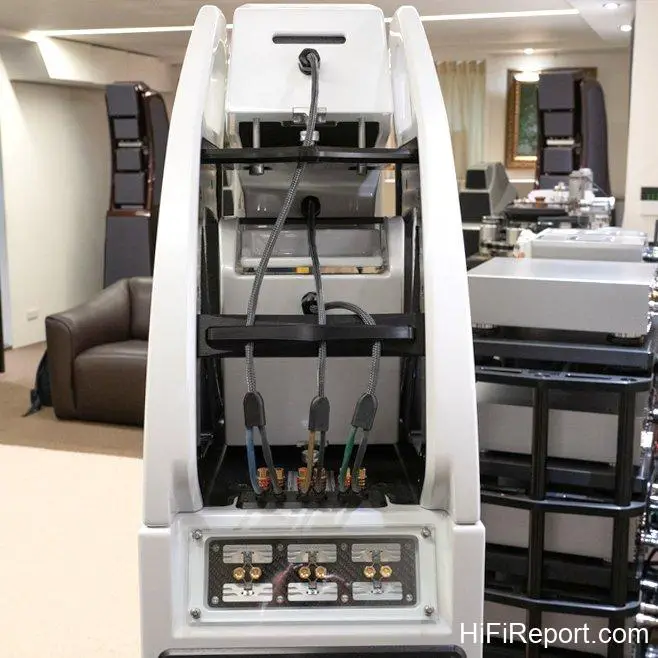
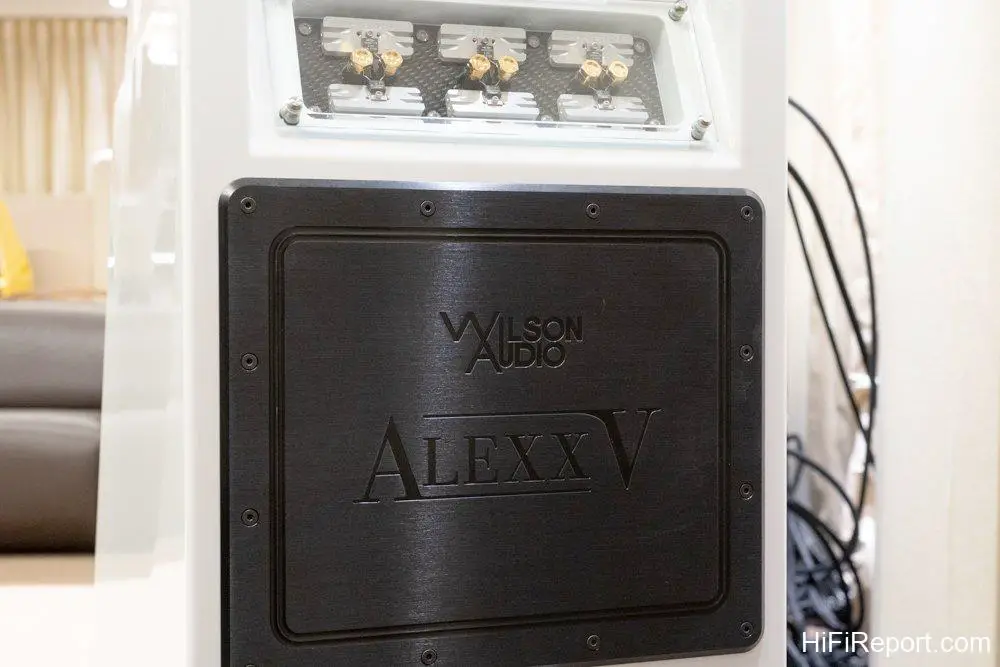
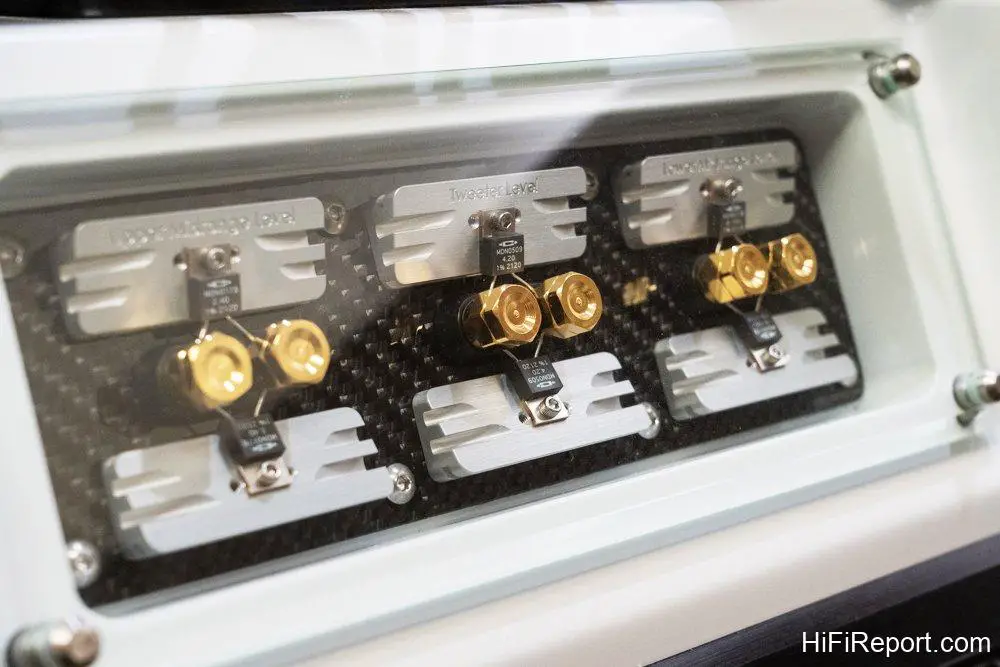
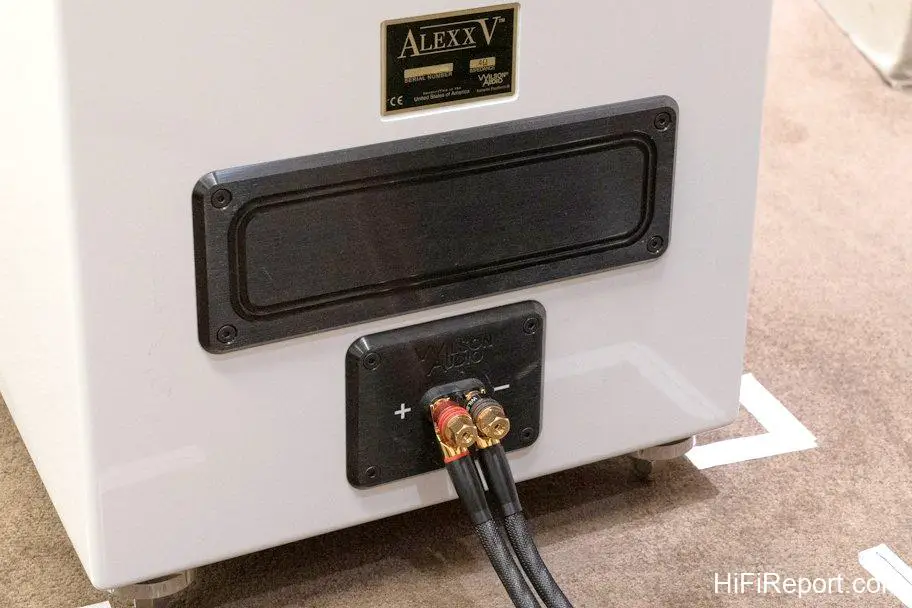
The bass module features a transparent back cover, revealing internal resistors. For fine-tuning high, mid, and low-frequency balance, these resistors can be swapped. Internal passive components are upgraded with gold-plated leads, and the speaker terminals are Wilson Audio’s new custom design, compatible with both banana plugs and spade connectors.
Is this a notable feature? Our Alexia 2 only accommodates spade connectors, but the Alexx V adds banana plug compatibility. Wouldn’t you consider that a noteworthy improvement?
Live Recording Sensation
The Alexx V boasts numerous advancements, which I’ve attempted to summarize concisely. With the technical features outlined, it’s time to delve into the Alexx V’s musical performance.
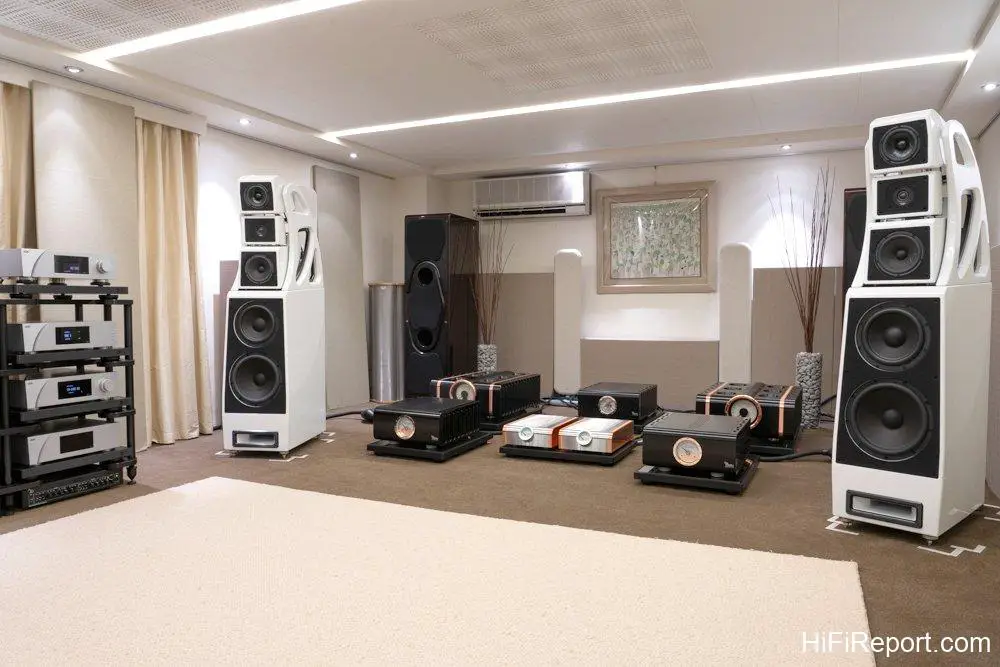
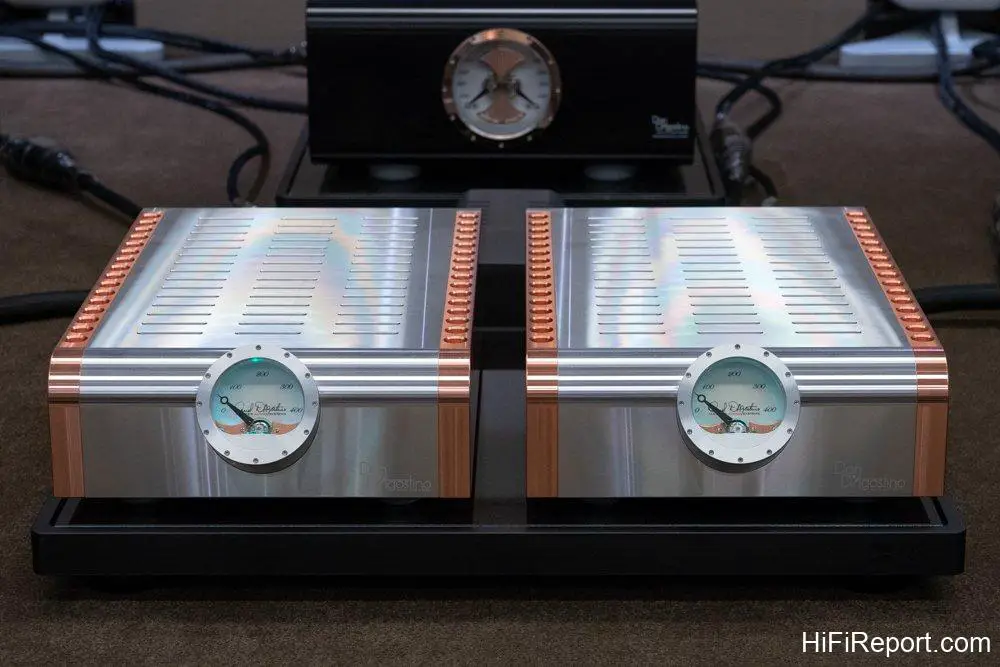
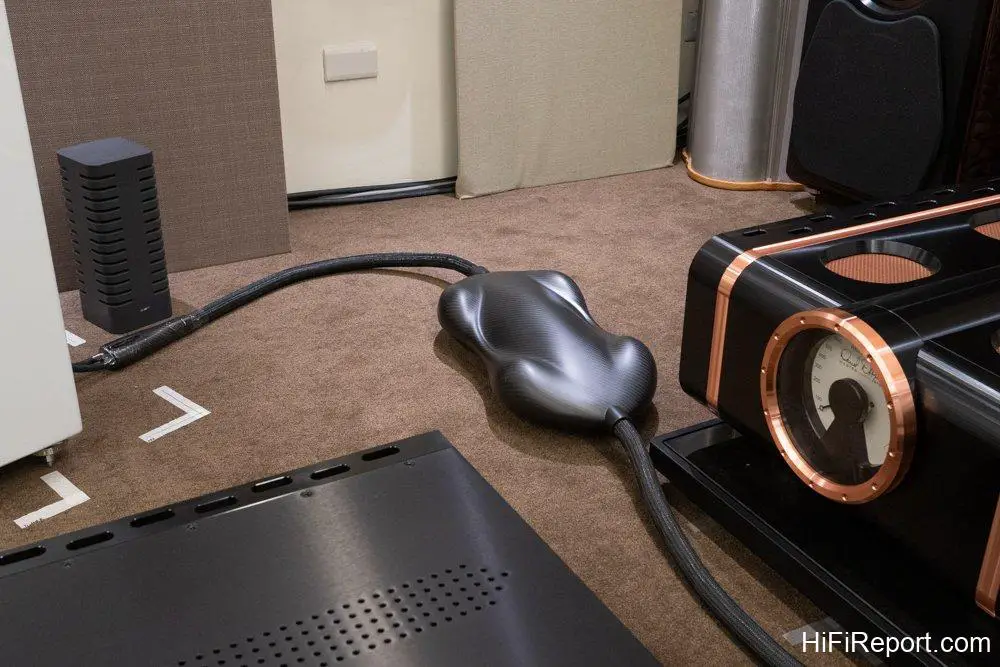
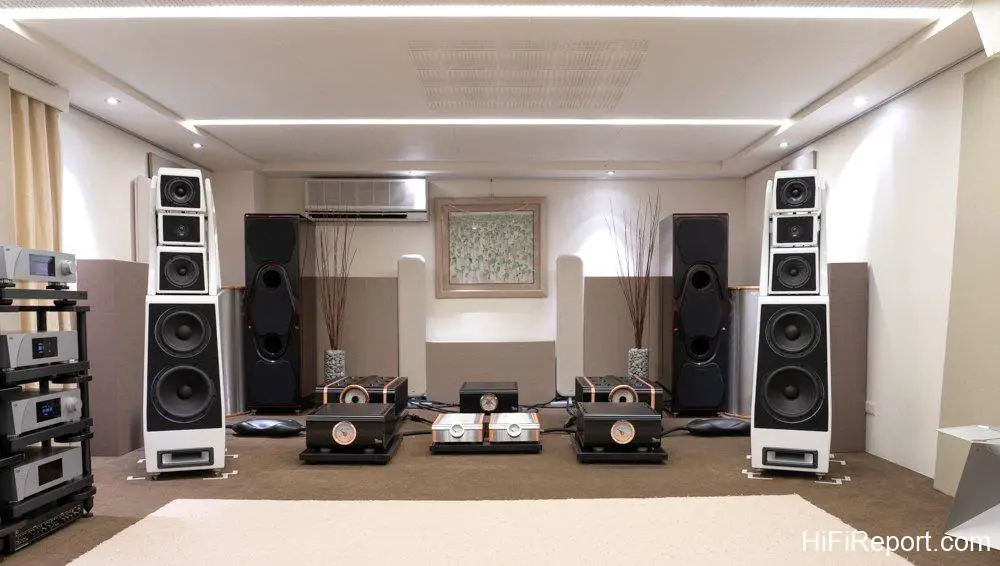
The system assembled for this audition was truly a dream setup. The digital source was a full suite of Swiss CH Precision components, using the D 1.1 transport paired with the C 1.1 DAC, augmented by the T1 master clock. Amplification came from American Dan D’Agostino, with the Momentum HD preamplifier and Momentum M400 monoblock power amplifiers. Cabling was a complete loom of American Transparent Cable, all from the latest G6 generation. Gazing at the robust and beautiful Magnus Opus speaker cables, along with the exquisitely crafted electronics, was genuinely breathtaking.
When evaluating a large system, I typically start with smaller-scale music. The M400 delivers 400 watts per channel into 4 ohms, doubling to 800 watts into the Alexx V. If the Alexx V’s impedance dips to its minimum of 2 ohms, the M400 can output a staggering 1,600 watts to cope. Driving the Alexx V to thunderous levels shouldn’t be a problem. However, Wilson Audio’s forte, thanks to its time-domain precision, lies in its realistic soundstage rendering. Therefore, I began with intimate music, starting with Katja Werker’s “Contact Myself 2.0.”
Tigerfish Records marketed “Contact Myself 2.0” as “Live at Stockfisch,” emphasizing its live in-studio performance recording. Isn’t all studio recording done in a studio? What’s the distinction? Note the “live performance” aspect, rather than multi-track recording. The aim is to capture a performance as close to a live concert as possible, while maintaining the quiet background of a studio recording.
From the opening track, “Yes,” the Alexx V presented exceptional channel separation. This is undoubtedly not solely attributable to the Alexx V; the exceptional caliber of the front-end components contributes significantly to the outstanding channel separation. However, with the Alexx V meticulously adjusted, with time-domain alignment optimized for the listening position, its precise soundstage rendering is truly remarkable. Katja Werker’s fingerpicked guitar chords were positioned slightly to the left, while another steel-string guitar providing accompaniment and ornamentation was on the right. Katja Werker’s vocals were anchored precisely in the center.
Searching for Katja Werker on YouTube will easily yield live performance videos of “Yes” in the recording studio. Multiple microphones are set up in the studio, capturing not only a near-live spatial ambiance but also individual mics for vocals, guitar, and bass guitar. Consequently, what we hear in “Yes” is both the forest and the trees. There’s the spatial context of a live performance, the relative positions of the musicians within the soundstage, and incredibly rich detail in the guitar playing. Listening through the Alexx V is truly like being present at the live recording session, with healthy and realistic image proportions. The images are not exaggeratedly large, but rather like two people performing intimately before you, with guitar timbres and playing nuances both rich and natural. The sense of a live musical event is palpable.
Outperforming Reference Speakers
After a brief audition of the Alexx V’s capabilities, I was stunned: how could it outperform the Alexia 2 by such a margin? Oh no, I’m starting to seriously consider an upgrade! But hold on, HiFiReport’s listening room might not be large enough. Switching to the Alexx V might even necessitate a larger listening space. I must resist impulsive decisions! But how could the Alexx V surpass the Alexia 2 so dramatically? The relaxed atmosphere of the studio live recording, the accurate image proportions, and the natural and authentic musical aura were captivating. The detail and impact of guitar plucking were so clear, with both guitar resonance and note articulation beautifully rendered. It felt as if I was transported to the recording studio – utterly incredible.
“Contact Myself 2.0” is a relatively recent recording. I switched to older jazz recordings to test the Alexx V. High-resolution and high-separation audio systems can sometimes amplify the flaws in older recordings, making them sound thin and harsh. Let’s put the Alexx V to the test! Listening to “Cookin’ With Miles Davis Quintet,” a 1957 vintage analog recording, “My Funny Valentine” opens with gentle piano chords and soft jazz brushwork. The Alexx V conveyed the warm tonality of the vintage analog recording. Note articulation was more substantial, and within the expansive soundstage, the larger image presentation made the instruments sound fuller and more rounded.
The warm timbres of the piano and double bass contrasted beautifully with Miles Davis’ muted trumpet playing. Subtle tonal variations, the slight movements of the mute, and the delicate breath sounds within the musical phrasing were all captured. Tightening the mute would sharpen the tone, all part of Miles Davis’ deliberate manipulation of musical emotion. Through the Alexx V, Miles Davis’ trumpet expressions were remarkably vivid.
This is a CD I know intimately, having listened to it countless times on my own system. However, through the Alexx V, the nuanced musical expressions were even more lifelike. Even the fingerboard shifts in the double bass plucking were rendered with such clarity and liveliness, both realistic and detailed.
Instrument Accuracy
Moving to classical music, I didn’t immediately push the Alexx V to its dynamic limits, starting with “Piazzolla for Two,” listening to “Historie du Tango.” A duet for guitar and flute, the music might seem simple, but the subtleties of soundstage reproduction go far beyond simply placing the flute on the left and the guitar on the right. The Alexx V not only precisely placed the two instruments but also accurately conveyed their vertical positioning. The guitar on the right was lower, while the flute on the left was higher. It was easy to imagine the guitarist seated and the flutist standing. Furthermore, as the tango music’s emotional intensity ebbed and flowed, the flute’s perceived height seemed to shift, as if the flutist’s body swayed with the tango rhythm. The percussive effect of the guitarist tapping the guitar body projected forward from the instrument. These intricate recording details weren’t entirely unheard before, but through the Alexx V, they were presented effortlessly and vividly.
Next, I played another classic recording, the collaboration between Szeryng and Rubinstein on Beethoven’s Violin Sonatas “Spring” and “Kreutzer,” focusing on the third movement of the “Kreutzer” Sonata. The tense Presto felt like a contest between piano and violin. The music begins with piano chords, followed by the violin’s anxious melody, with the piano closely shadowing. When the piano takes over the melody, the violin embellishes, unfolding a heated exchange between the two instruments, pursuing and responding to each other.
The Alexx V precisely rendered Szeryng’s piercing violin with a beautifully focused image, while Rubinstein’s piano provided a broad and rich foundation. In their interplay, Rubinstein’s rapid figurations possessed a buoyant quality, mirroring Szeryng’s violin.
Unlike traditional Classical-era sonatas where piano and violin are primarily collaborative, Beethoven intentionally created both collaboration and conflict between the two instruments in the “Kreutzer.” The music isn’t just about peaceful and dignified expression; it also contains intense, forceful energy. The Alexx V vividly conveyed the collaborative yet confrontational musical dialogue between these two masters. Of course, the Alexx V also faithfully rendered the recording’s vintage character. The digital remastering of this recording tends to be somewhat dry in tone. The Alexx V didn’t gloss over this, allowing Szeryng’s violin to sound even more incisive and assertive in its interplay with Rubinstein’s piano.
Violin and Piano Duet
It was time to unleash the full scale. I played Mutter and John Williams’ “Across the Stars,” a classical crossover recording that incorporates more modern production techniques, particularly reinforcing the low frequencies to enhance the music’s dramatic impact.
Take “Rey’s Theme” from “Star Wars: The Force Awakens.” The violin’s pentatonic melody evokes the heroine’s humble origins. Fragmented violin motifs emerge in the center of the soundstage, and the Alexx V conveys the violin’s delicate touch. Subsequently, the orchestra’s pizzicato and the pizzicato of the double basses create a striking contrast. As the orchestra enters, the violin’s sound becomes more focused, smoothly playing the melancholic theme. The broad brass underpinnings create a vast orchestral soundstage on the Alexx V, while the violin, with its clear lines and focused image, remains centrally anchored. The two are in contrast, in opposition. The violin represents Rey, while the orchestra embodies destiny, surrounding Rey.
“Across the Stars” is a CD I know intimately, yet through the Alexx V, the orchestral soundstage’s breadth and depth seemed to extend beyond the confines of the listening room. The speakers completely disappeared. The centrally focused violin image was vibrant and alive, with rich tonal variations. Mutter’s tonal shifts involve not only left-hand finger vibrato, but through the Alexx V, I could even discern the nuances of right-hand bow pressure and angle changes. These subtle right-hand movements create profound musical expression. Many speakers can reproduce left-hand vibrato, but capturing the nuances of right-hand bowing technique is an exceptionally challenging detail to resolve.
Powerful Bass Impact
I listened to all the CDs I brought, still wanting more, regretting that I hadn’t brought more music. I initially planned to conclude with Mahler, but instead, I played “VTT2,” which delivered an unprecedented auditory shock, fully demonstrating the Alexx V’s realism and authority in bass and full-range music reproduction. Virtual Tech Tones is a jazz-rock fusion band, and their title track “VTT2” is undoubtedly a torture test for any audio system.
“VTT2” begins with a funky electric bass solo, showcasing superb technique and powerful dynamics. The variations in slapping and popping techniques were rendered with explosive bass impact by the Alexx V. As the electric bass riffed intensely, notes cascaded like raindrops, and the Alexx V exhibited no hint of ambiguity. The bass response was fast and articulate. Even at very high listening levels, the bass modules showed no signs of compression or distortion, instead clearly resolving the electric bass’s rapid and clean note articulation. I could even perceive the effect of the compressor the bassist was using, making the bass notes even more distinct and defined.
This was the last track I listened to on the Alexx V, but I repeated it two or three times, at different volume levels. The Alexx V demonstrated highly linear musical reproduction capabilities. At high volumes, it exhibited top-tier dynamic contrast reproduction, with massive bass quantity yet with speed and impact. At more comfortable listening levels, I could still appreciate the rich effects of the recording’s production. Even at low volumes, the Alexx V didn’t sound timid or restrained. While the deepest bass extension might be less pronounced at lower volumes, the electric bass’s crisp articulation remained powerful and engaging even at low listening levels.
Redefining Reference Grade
An afternoon listening to the Alexx V – was it satisfying? Extremely satisfying, yet tinged with the melancholy of knowing I wouldn’t be able to listen to the Alexx V regularly. After the music finished, I approached the Alexx V for a closer inspection. The WilsonGloss special finish, under the light, revealed subtle layers of gloss. The craftsmanship is truly exquisite. Its musical reproduction capabilities have redefined my perception of “reference grade.” I’m genuinely tempted to upgrade, but it’s a significant undertaking, not something to be decided lightly. However, the Alexx V’s near-perfect musical realism and nuanced musical expression have left a profound impression. It has shown me that my audio journey still has a higher “reference grade” peak to pursue and strive for. There’s still so much more to explore, learn, and experience.
Specifications
* Type: Three-way floorstanding speaker with mixed enclosure design (sealed and bass reflex)
* Drivers: 1 x 1-inch soft dome tweeter (sealed enclosure), 1 x 4-inch midrange (rear-vented bass reflex), 1 x 7-inch midrange (bottom-vented bass reflex), 1 x 10.5-inch woofer, 1 x 12.5-inch woofer (XLF port, adjustable front/rear firing)
* Sensitivity: 92 dB (2.83V @ 1m/1kHz)
* Impedance: 4 ohms (minimum 2 ohms @ 250 Hz)
* Frequency Response: 20 Hz – 32 kHz (+/- 3 dB)
* Dimensions: 1610 × 400 × 680 mm (H×W×D)
* Weight: 226.8 kg (per channel)