
Diva Audio EX-Mini Network Switch Review
Taiwanese brand Diva Audio previously released the EX-7 audiophile-grade network switch, which delivered a stunning performance, easily ranking among the best switches currently available. However, its price point also placed it in an echelon far beyond the reach of most enthusiasts.
To extend the benefits of their unique technology to a broader spectrum of audiophiles, Diva Audio streamlined the circuitry of the EX-7, retained its core design principles, and introduced the smaller EX-Mini. This new model boasts a significantly more accessible price tag. But how does it sound? Read on to find out…
CNC Machined Aluminum Chassis
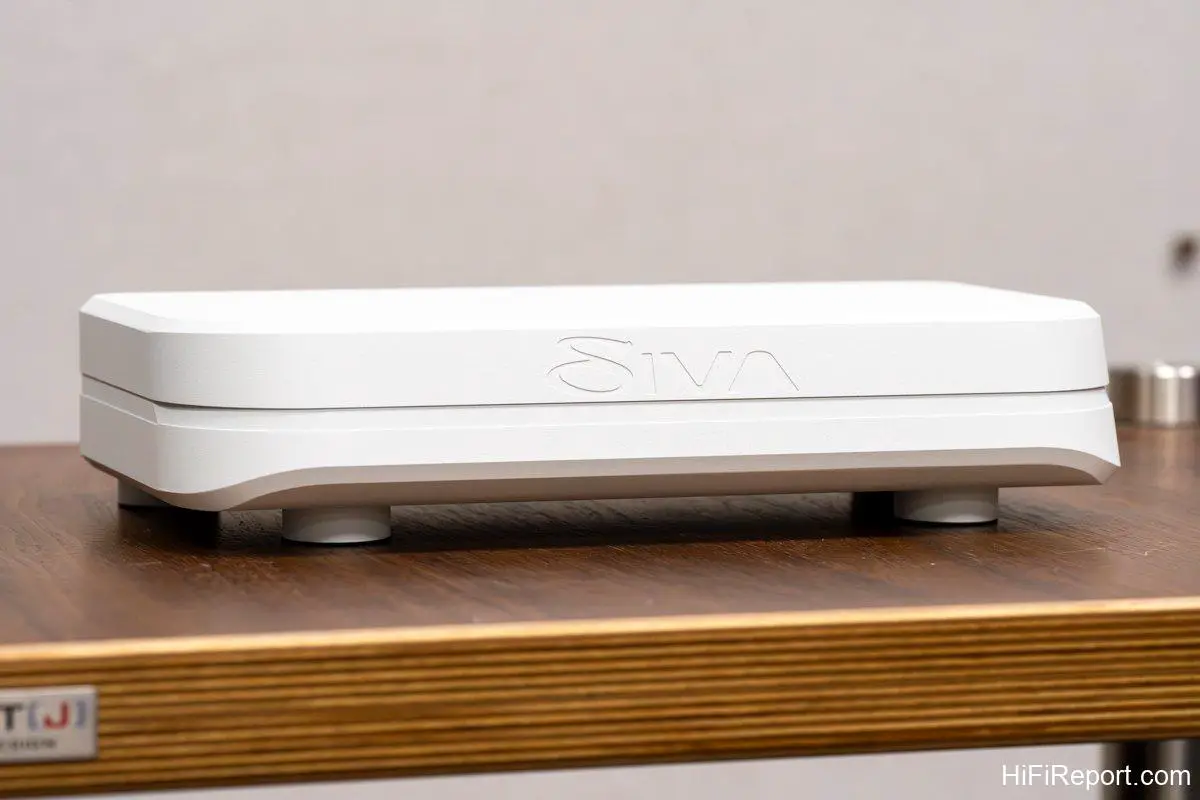
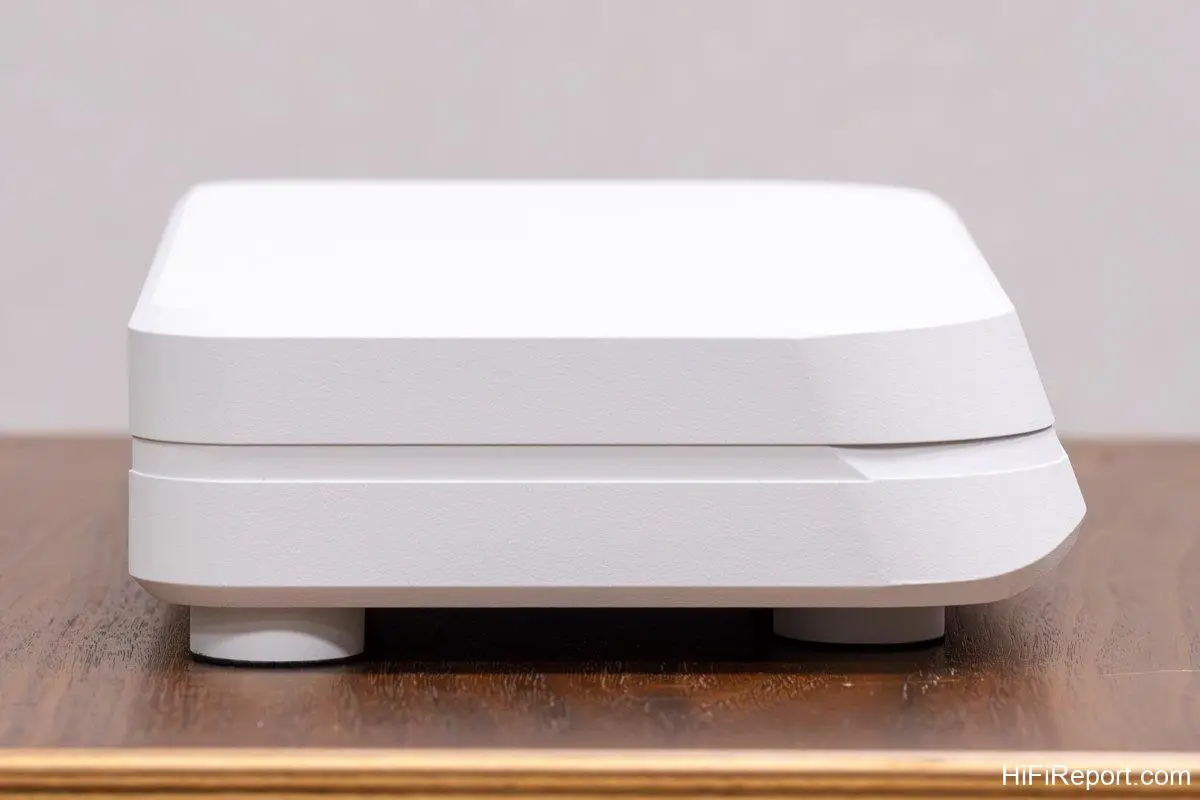
While considerably smaller than its EX-7 sibling, the EX-Mini still feels remarkably substantial in hand, akin to holding a brick. This heft is attributed to its chassis, meticulously CNC machined from a solid block of aluminum rather than conventional aluminum or steel sheets. This construction method inherently results in a weighty and robust enclosure.
Furthermore, the surface finish deviates from the commonplace anodizing or brushed textures, opting instead for a special multi-layered paint, applied both inside and out. This unique coating imparts a distinctive tactile feel and contributes to the mitigation of chassis resonance.
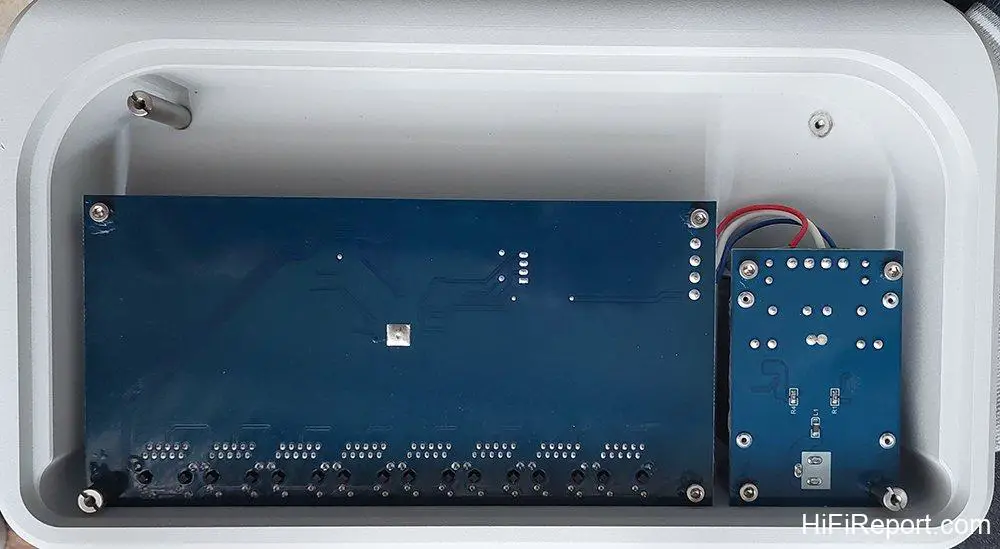
Compared to its “big brother,” the EX-7, what aspects have been streamlined in the “little brother” EX-Mini? The primary changes lie in two key areas: the power supply and the clock.
A significant portion of the EX-7’s expansive chassis was dedicated to housing a linear power supply, incorporating proprietary technology that naturally added to its cost. By omitting this internal linear power supply, a substantial price reduction was achieved.
In its place, the EX-Mini adopts an external power supply configuration. This design choice presents an advantage: users are afforded the flexibility to experiment with aftermarket power supplies should they wish to explore alternatives to the included switching power supply.
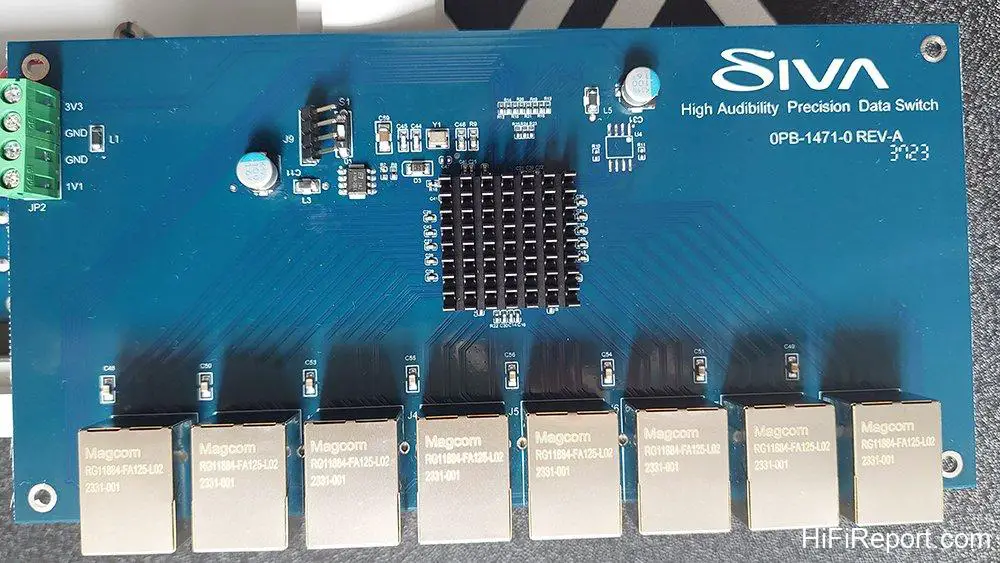
Additionally, to align with its more accessible price point, the EX-Mini utilizes a clock circuit commensurate with its target market.
Proprietary Technology and Premium Components
Given these modifications, can the EX-Mini still deliver exceptional network switch performance? The answer is a resounding yes. The core switching circuitry remains fundamentally unchanged, retaining the essence of its acclaimed predecessor.
The EX-Mini is developed by Magcom, a company specializing in magnetic components, particularly for the information and communication technology sectors. Magcom’s expertise encompasses magnetic components for xDSL routers, Ethernet LAN transformers, and the design and manufacturing of connectors such as RJ45, USB, HDMI, and SPE.
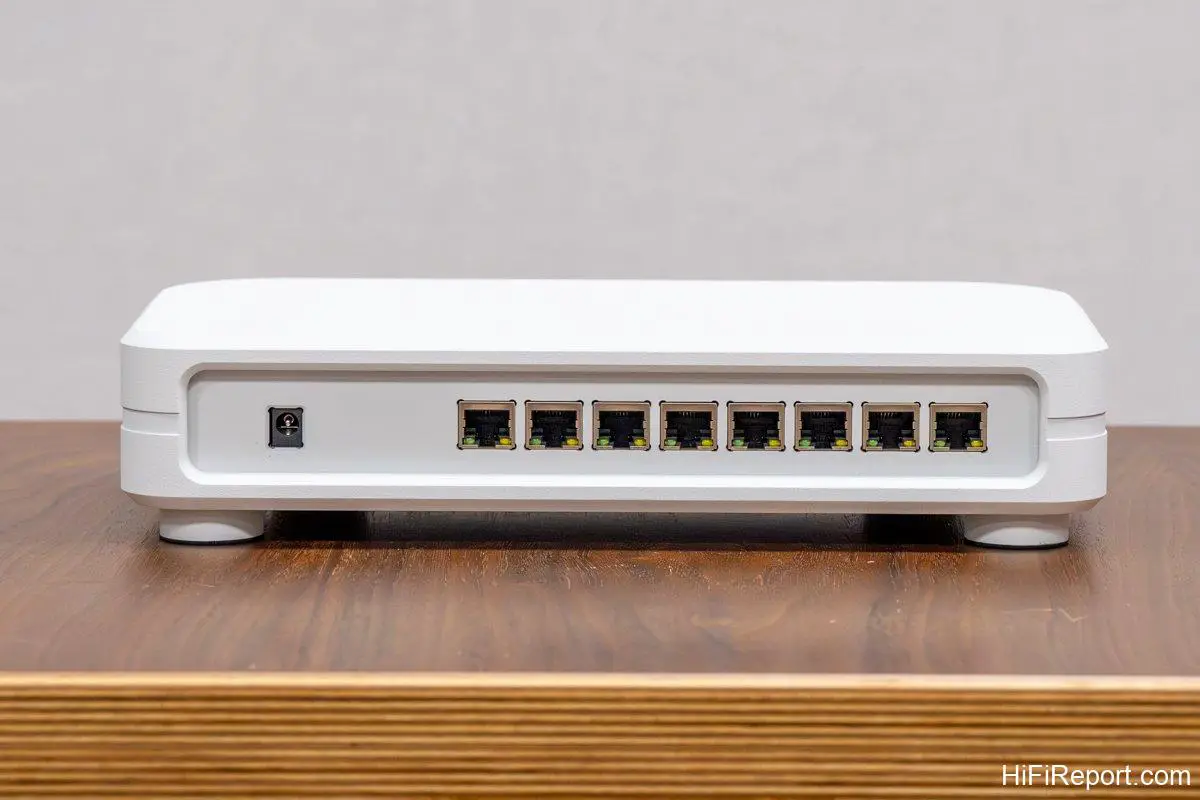
The technology employed by Magcom in the Diva EX series switches leverages their prowess in telecommunications-grade magnetic components and incorporates the principles of the “Miller effect” to enhance data transmission quality across each network port.
The Miller effect, in essence, describes the amplification of capacitance between the input and output of an amplifier circuit, which can influence signal transmission characteristics. Magcom ingeniously applies this principle within the EX series switches to optimize frequency response and minimize jitter, ultimately resulting in enhanced detail retrieval from the digital audio stream.
Crucially, the key components within the EX-Mini are designed and manufactured in-house by Magcom. The eight RJ45 network ports, for example, integrate magnetic components (isolation transformers) specifically engineered to effectively filter out network noise. This design achieves minimal insertion loss, return loss, and crosstalk loss, thereby maximizing data transmission efficiency and ensuring the integrity of packet signal transmission.
Enhanced Detail Retrieval
The listening evaluation was conducted in my home listening room. The source component was an Audiolab 9000N streaming player, with music files served from a PC acting as a Roon Core. Both the 9000N and the PC were connected to the EX-Mini. The reference network switch used for comparison was a QNAP QSW-308S.
Amplification and loudspeakers consisted of a Holo Audio Serene preamplifier, NuPrime Evolution STA power amplifier, and Aurum Cantus Grand Harmony loudspeakers.
I commenced the listening session with small ensemble music, selecting Anne-Sophie Mutter’s performance of Mozart’s Piano Trio No. 6, second movement, “Andante cantabile.” The simplicity of the instrumentation in this piece facilitates the discernment of subtle sonic differences.
Through repeated A/B comparisons, the EX-Mini demonstrably elevated the richness of detail. The lingering resonance of strings after the bow lifts, for instance, became more protracted and nuanced. The cello’s body resonance gained a fuller, more sonorous quality, the characteristic “rosin” aroma becoming more pronounced, lending a sweeter timbre to the instrument. Furthermore, spatial reverberation cues were enriched, deepening the soundstage and elucidating the spatial contours of the recording venue.
Additionally, the delineation of string lines and the articulation of piano notes became more distinct and solid, exhibiting improved density and dynamic impact. Cumulatively, these improvements resulted in a more vibrant and engaging musical expression, a more authentic tonal palette, more tangible sonic images, and an elevated sense of overall sonic texture.
In direct contrast, the reference switch exhibited a slightly grainy tonal texture, with a touch of roughness around the edges of sonic images, and a less fluid sonic presentation, particularly noticeable in the upper registers. The soundstage appeared flatter, the sonic presentation somewhat lighter and less anchored, the lower frequencies less substantial, and the overall sonic density less pronounced.
To be clear, the reference switch is by no means subpar; however, the comparison unveiled clear distinctions. The soundstage presented by the reference switch felt less cohesive, separation between instruments was less defined, and the relative positioning of instruments and the sense of depth were less clearly articulated. In essence, the sound was rendered as more ordinary and less captivating.
Improved Image Focus and Definition
Subsequently, I transitioned to larger-scale orchestral music, choosing Yuri Temirkanov’s rendition of Rimsky-Korsakov’s “Scheherazade” with the St. Petersburg Philharmonic Orchestra.
The reference switch presented a soundstage that was expansive and open, conveying the grand scale of the symphony, but with a somewhat shallower depth of field and a flatter rendering of instrumental sections.
The EX-Mini, in contrast, also projected an open soundstage, but distinguished itself with exceptional sonic cohesion. This cohesiveness manifested as more focused and defined sonic images, enhanced separation between instrumental sections, and more precise instrument localization within the soundstage.
The opening orchestral tutti passages exhibited improved energy and impact, with the perceived sonic weight seemingly increased due to the enhanced detail retrieval.
Following the opening tutti, a violin solo ensued, followed by an ensemble passage from the string section. Again, the reference switch rendered the violin line with a degree of edginess, lacking the smoothness of the EX-Mini, and exhibiting less solidity and dynamic presence. The string ensemble’s bowing texture was less refined, exhibiting a subtle roughness that diminished the seamlessness of the undulating musical phrases.
In comparison, the EX-Mini delivered superior textural refinement, more vivid musical expression, and rendered subtle nuances with greater fidelity. The background was perceived as deeper and quieter, and sonic outlines and images were more sharply defined. In essence, the upgrade felt akin to stepping up to a higher tier of audio equipment.
An Upgrade for Streaming Audio Quality
Another compelling example came from RR Recordings’ “From the Age of Swing,” featuring a collective of jazz luminaries performing iconic swing era tunes. The ensemble included piano, bass, drums, guitar, trumpet, saxophone, clarinet, and trombone.
Through the EX-Mini, the sonic backdrop was rendered with pristine clarity and an inky black silence. Instrumental images were focused and well-defined, possessing a timbre that was lucid, crystalline, and sweetly resonant. The decay of instrument notes was more prolonged and natural, piano keystrokes were more grounded and authoritative, the lower frequencies exhibited greater stability, and the shimmer of cymbals was enhanced, exhibiting greater brilliance and refinement. The dynamic peaks of instrumental fortes were more impactful, and transient response was improved. In short, the overall sonic presentation was elevated to a higher plane, making the music more captivating and involving.
Conversely, the reference switch presented a background with a slight haze, lacking the transparency of the EX-Mini. The sonic presentation felt less cohesive, instrumental outlines were less clearly delineated and somewhat flattened. The contrast between musical peaks and valleys was less pronounced, thereby diminishing the overall vibrancy and immediacy of the musical performance.
If you consistently find your streaming audio system lacking in ultimate sonic refinement, struggling with pinpoint accuracy, exhibiting a less than precisely defined soundstage or instrument placement, suffering from a degree of background haze, or even presenting a slightly “dirty” tonal quality, the bottleneck often resides within the network switch. The solution is straightforward: upgrade your network switch. And Diva Audio’s EX-Mini stands as a compelling contender among the leading options available.
Specifications
* Type: Network Switch
* Network Ports: RJ45 × 8
* Transmission Standards: 10Base-T, 100Base-TX, 1000Base-T
* LED Indicators: 1000Mbps / Green, 10/100Mbps / Orange
* Power Input: 9V DC
* Dimensions: 280 × 61 × 168 mm (W × H × D)