
elos EMP Review
Navigating the industry with a hands-on, exploratory approach, Xiao Lin came to a crucial realization: to truly make a mark, he needed to create something unique, something others hadn’t conceived.
Fate intervened, bringing technical expertise his way, enabling him to realize his imaginative ideas. In a market often characterized by repetition and predictable products, Xiao Lin carved a niche by developing truly distinctive offerings.
This approach transformed Telos’s reputation and standing.
The Telos Enchanting Music Player utilizes a Raspberry Pi at its core, enhanced by a robust linear power supply developed in-house. Optional upgrades include Telos’s QRT module and Schumann wave antenna, with the possibility of adding a DAC board for analog output, and a pre-selected ScanDisk 1TB solid-state drive.
It embodies modular customization and Telos’s proprietary technologies.
This EMP even represents the tangible embodiment of Xiao Lin’s Hi-Fi philosophy.
What are these distinctive products? They are none other than their QNR Quantum Noise Reducer and GNR Quantum Grounding Noise Reducer.
When I first entered the media industry, I met Xiao Lin at an audio exhibition. Listening to him explain the principles and applications of QNR and GNR, I remained somewhat perplexed, merely recording his words and reciting them verbatim.
These concepts were remarkably novel, unheard of in the audio world—truly innovative products.
Xiao Lin possesses this unique ability to conceive of things others simply don’t.
And, importantly, they are effective.
Beyond his own Telos brand, he expanded into distribution, acquiring a portfolio of prestigious brands including TIDAL, Absolare, Lampizator, Acoustic Revive, Stillpoints, and Perreaux.
These are not ordinary brands; they are all substantial and respected names.
Through distributing these brands, Xiao Lin gained valuable insights from the original manufacturers. He then channeled these learnings back into his own product development.
This virtuous cycle fueled the growth of both his distribution business and Telos’s own product line.
Each product iteration demonstrates technological breakthroughs and advancements.
This is Xiao Lin, Lin Zhongliang.
This is Sheng Kai Telos.
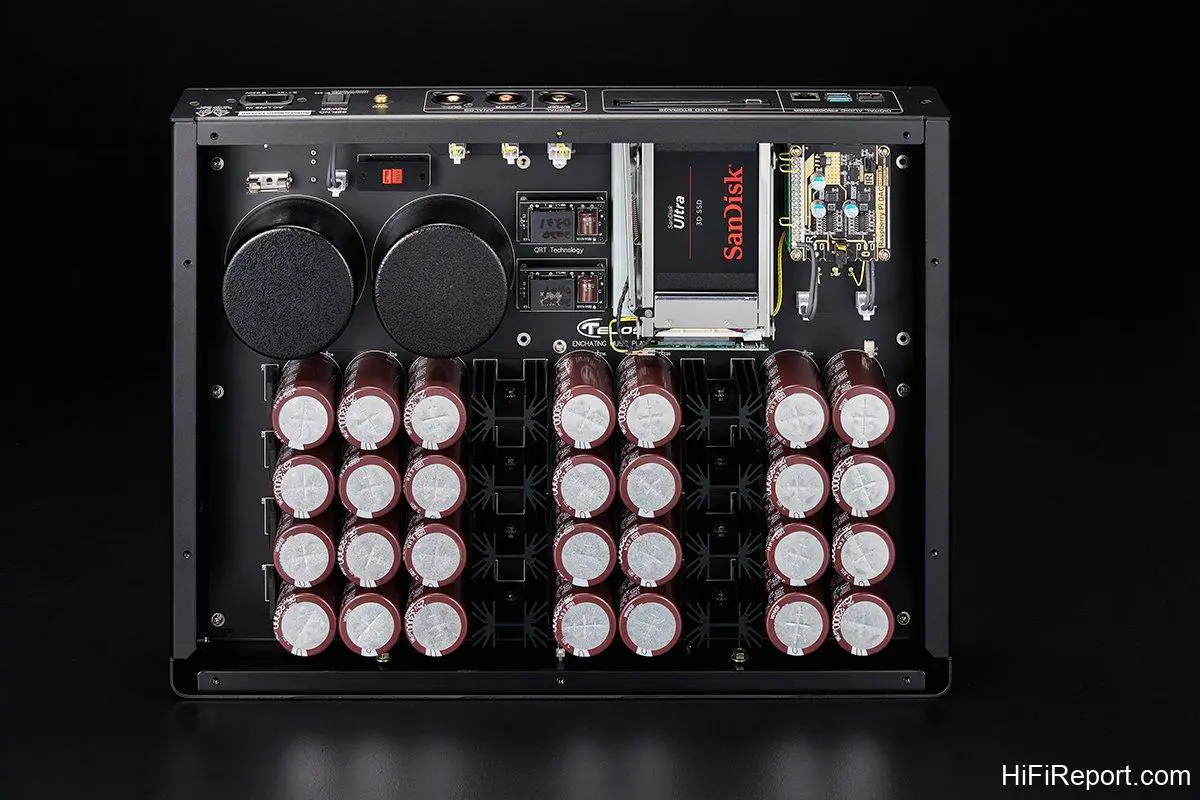
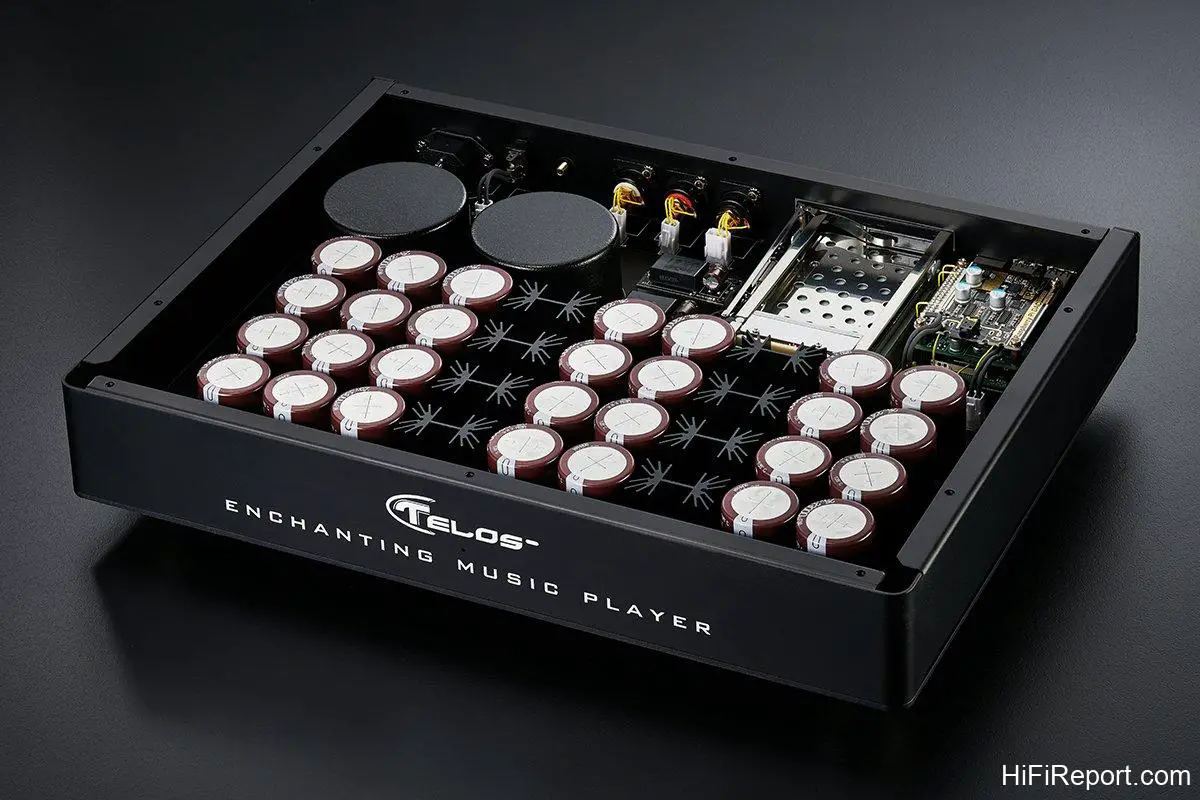
This photo shows the inside of the chassis, excluding the SSD and Schumann wave antenna.
Visible in the upper left are two cylindrical metal housings concealing custom toroidal transformers. All windings use copper wire produced to Sheng Kai’s specified process, ensuring correct directionality.
The manufacturer refers to these as unidirectional transformers.
Xiao Lin mentioned that his experience distributing top-tier brands truly opened his ears to what constitutes exceptional sound quality.
This realization has been immensely helpful in his product development.
“Two years ago, Akira was my benchmark. But when the La Assoluta, with its 8Hz to 200kHz bandwidth, arrived, I realized there are worlds beyond worlds.” La Assoluta broadened his auditory horizons, revealing product limitations and pointing towards future development directions.
Xiao Lin’s commitment to continuous learning extends beyond high-end audio. He has also dedicated himself to learning English, now capable of direct communication with international manufacturers without translation.
The Xiao Lin of today is markedly different from his earlier self.
His solid footing in the industry breeds confidence, and he possesses a clear vision of his goals and actions.
Meeting him, you’ll be struck by the gleam in his eyes and perhaps the slight perspiration on his brow from his energetic pace. His hearty laughter and straightforward manner are infectious.
This is the kind of person who created Telos.
And only such a person could create the Telos EMP.
Raspberry Pi: Extreme Edition
What makes this EMP so remarkable? Frankly, in essence, it’s quite simple.
The EMP is fundamentally a music server built around a Raspberry Pi.
To put it even more bluntly, the EMP is essentially a Raspberry Pi with an over-engineered linear power supply.
EMP, at its core, is a Raspberry Pi.
Unconvinced? I understand. How can such an inexpensive Raspberry Pi justify a much higher price tag? Is it simply a power supply and chassis that inflates the cost tenfold? You’re entitled to your skepticism, but allow me a few minutes to elaborate.
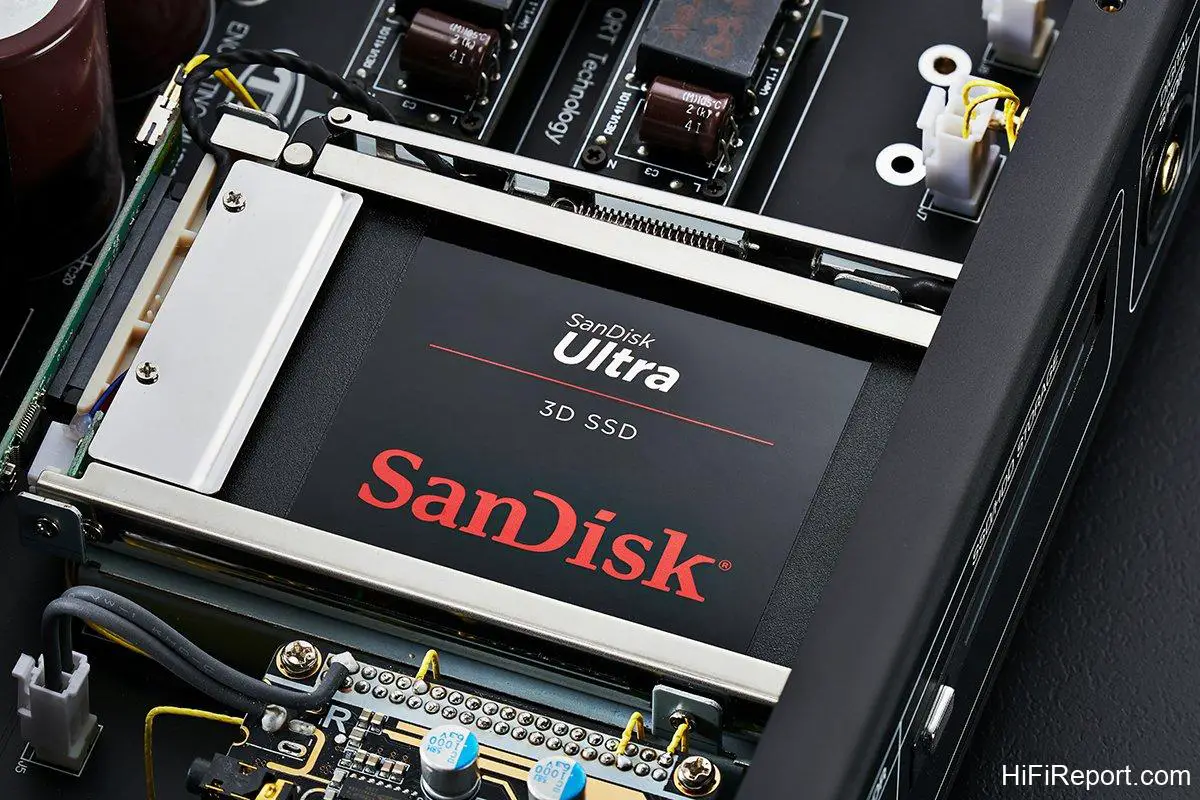
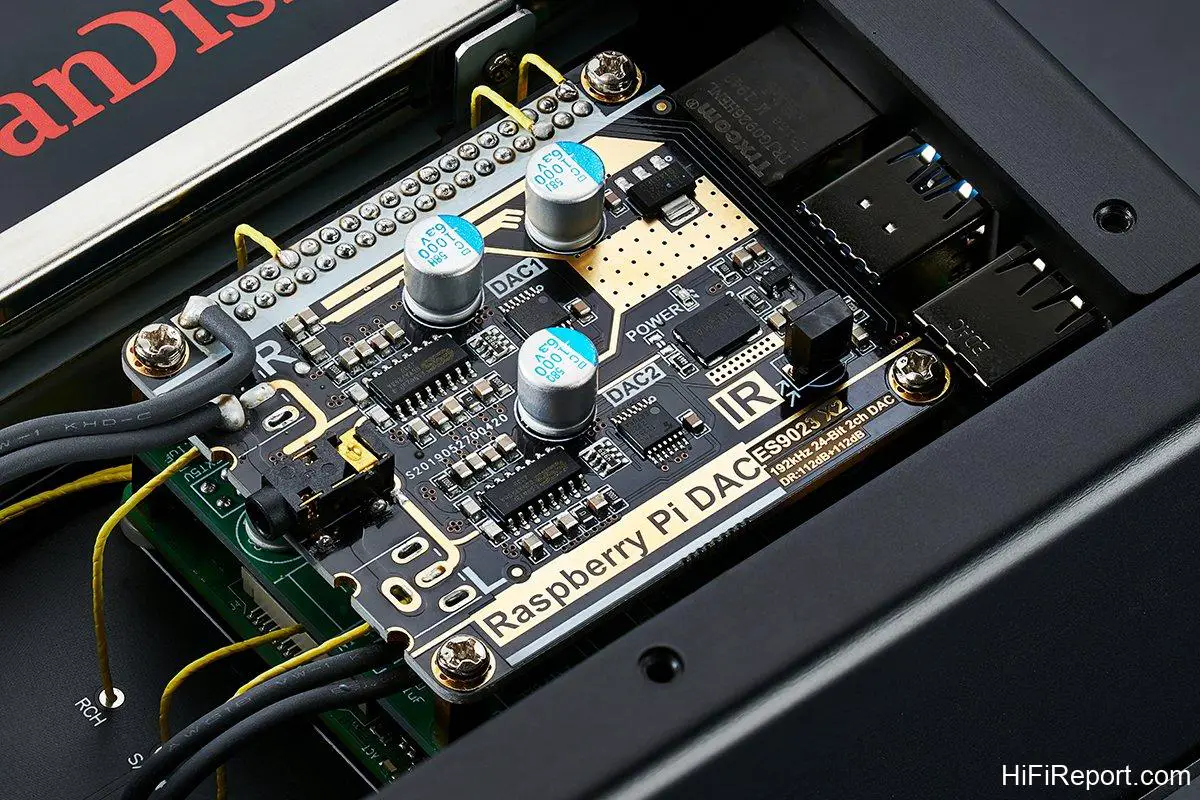
Here are three circuit boards: the two green boards below are the Raspberry Pi, and the black board above is the Raspberry Pi DAC, featuring two ESS ES9023 DAC chips, supporting up to 24bit/192kHz.
Extreme Engineering: Power Isolation
The power supply within the Telos EMP is unlike any linear power supply I’ve ever encountered.
I dare say, considering typical manufacturer profit margins, no one else would undertake such an extravagant design.
This level of power supply is uniquely Xiao Lin’s creation; no one else would do this.
Absolutely no one.
Firstly, he isolates the power supply for the EMP’s internal digital, analog, and hard drive sections.
A Raspberry Pi is essentially a mini-computer. In typical desktop computers, the main power supply connects to the motherboard, and other components draw power from there. However, Xiao Lin insists on separate power supplies.
Power isolation is a well-regarded principle in high-end audio, minimizing interference between different sections. The Telos EMP fully embraces this philosophy, with complete internal power isolation: digital circuits are powered separately from analog, and both are isolated from the hard drive power.
Extreme Engineering: Massive Capacitance
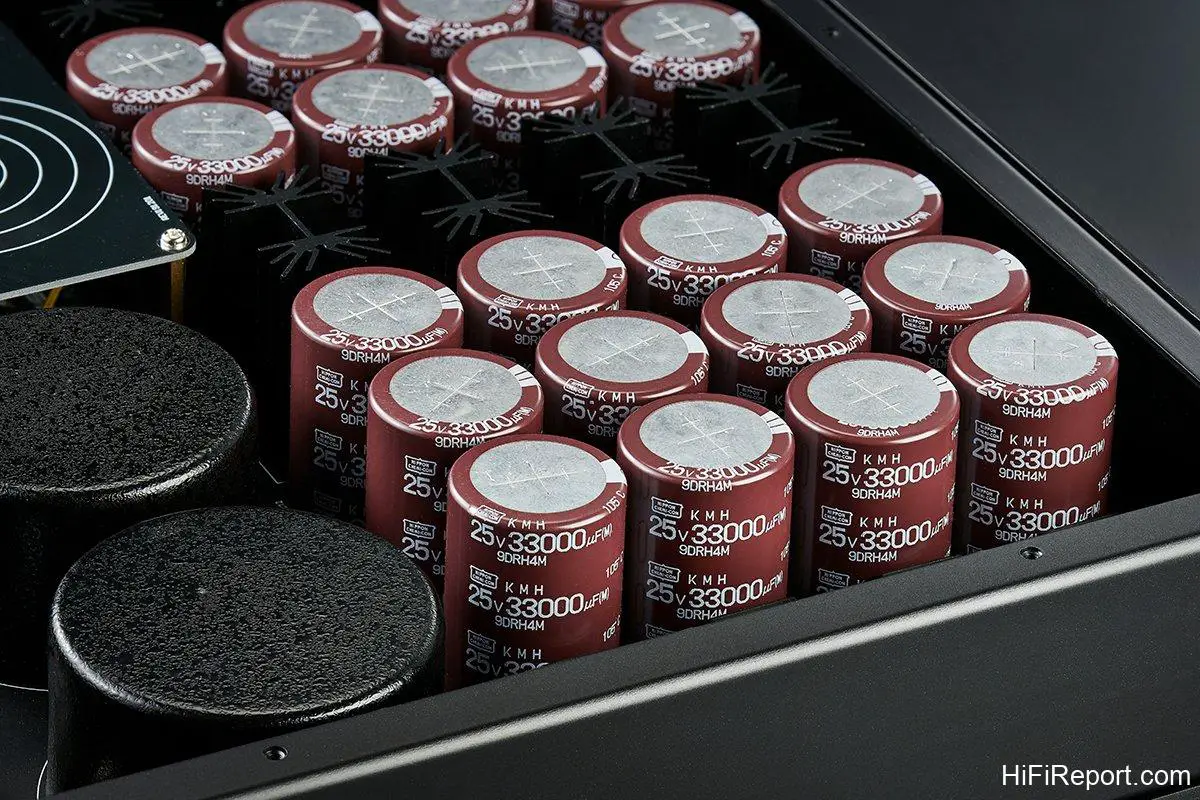
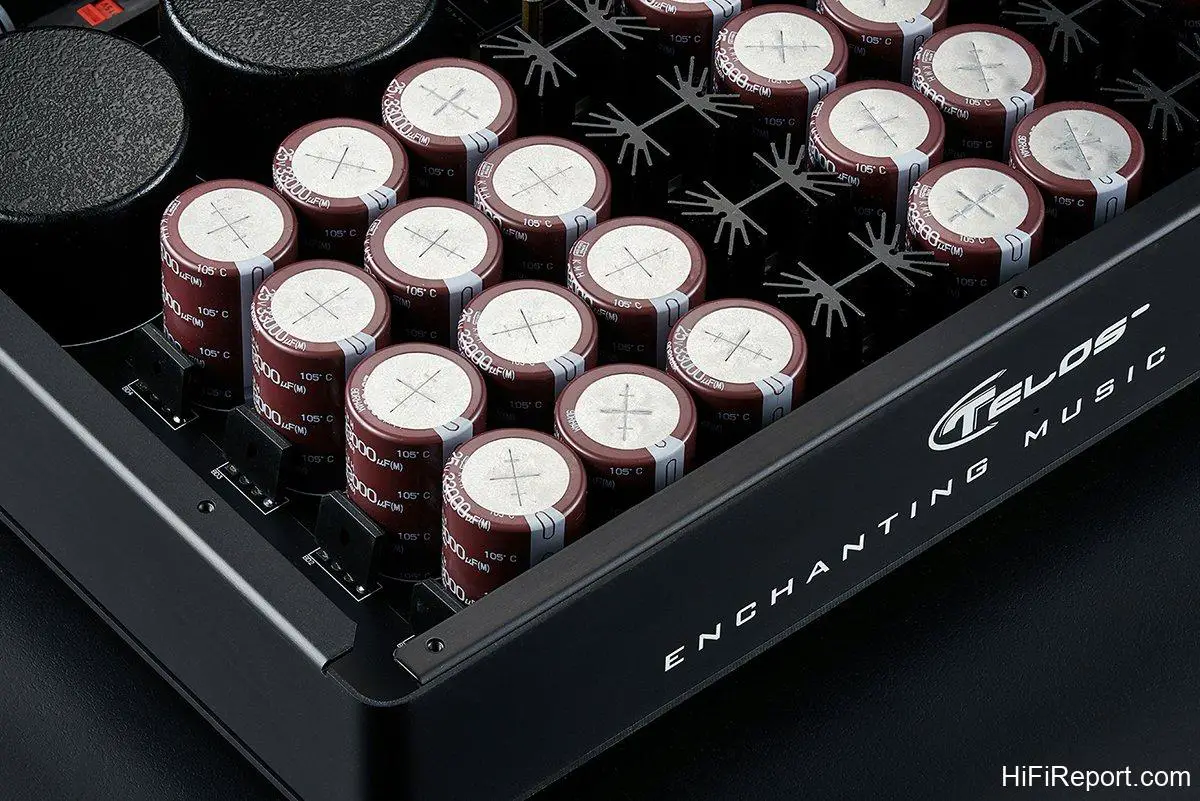
Upon lifting the chassis cover, anyone would be astonished by the capacitor array, totaling a staggering 924,000uF.
Let’s reiterate that figure: nine hundred and twenty-four thousand microfarads.
Such capacitance would be ample for a power amplifier, yet Xiao Lin employs it to power a Raspberry Pi.
This is why I describe the EMP as having a “crazy” power supply.
The power from the transformer is rectified to 17V DC, then regulated twice, first to 11V, then to 5V, before finally powering the Raspberry Pi and hard drive.
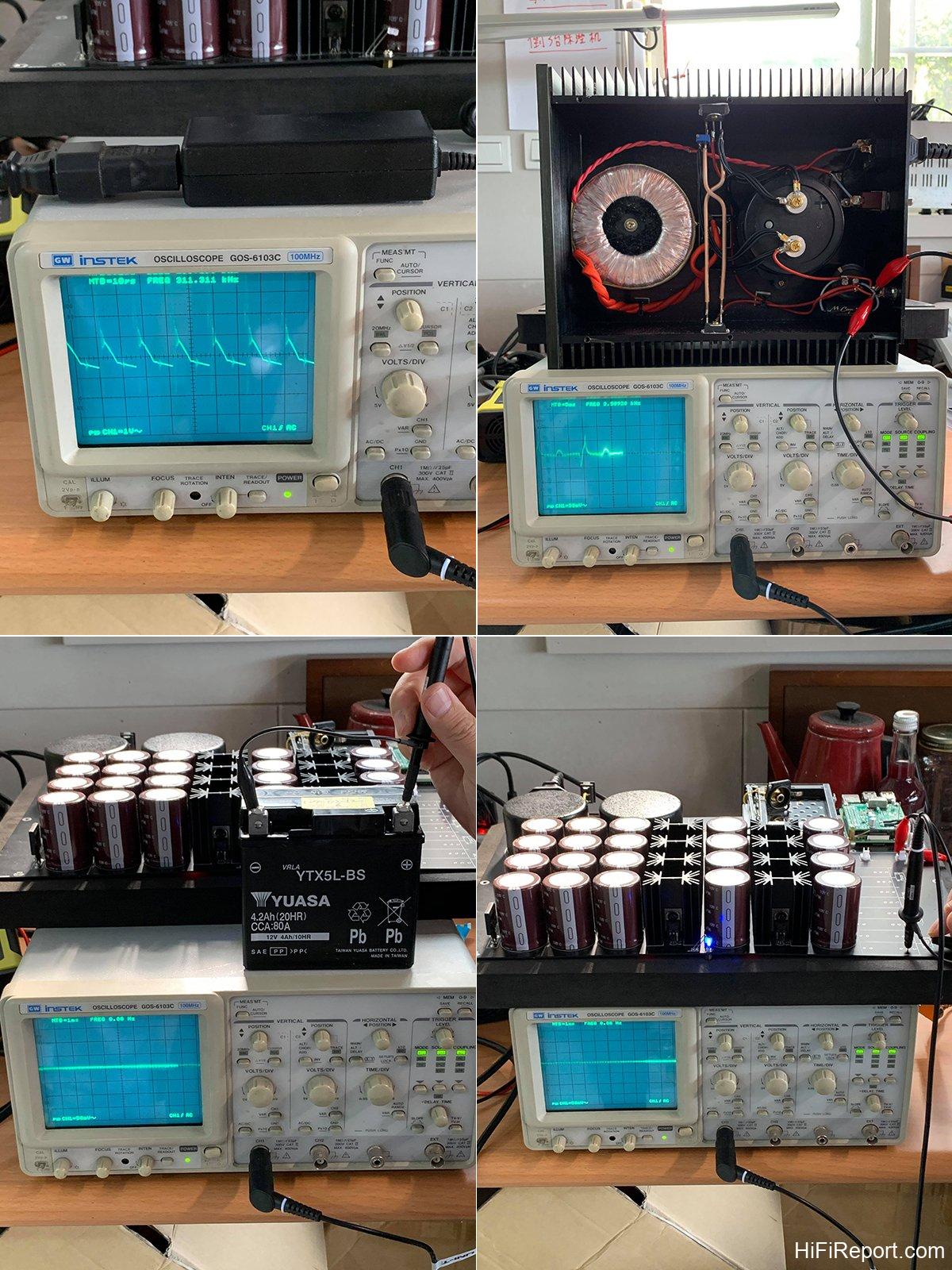
How clean is this linear power output? Xiao Lin provides in-house test photos as evidence. According to oscilloscope readings, this linear power supply exhibits virtually no noise, as clean as battery power. It surpasses both switching power supplies and even boutique linear power supplies available on the market.
The preceding two points, while impressive, could be emulated by determined competitors.
However, what follows is far more difficult to replicate.
The EMP’s linear power supply boasts an astonishing 924,000uF of capacitance, utilizing 28 capacitors rated at 25V and 33,000uF each.
Power from the transformer is rectified to 17V DC, then regulated twice, first to 11V, then to 5V, before powering the Raspberry Pi and hard drive.
Extreme Engineering: Quantum Noise Reduction
In the realm of audio tuning, different manufacturers prioritize various aspects. Xiao Lin’s approach centers on three fundamental pillars: phase, polarity, and directionality.
He consistently emphasizes the importance of these three elements. Sheng Kai’s products and Telos’s integrated services are all focused on these principles.
Phase refers to whether the sine wave of the AC power signal exhibits drift or distortion. Phase drift is visible on an oscilloscope as a back-and-forth movement of the sine wave. Problematic power inevitably compromises audio quality.
Telos’s QNR Quantum Noise Reducer addresses household mains phase issues.
The QNR detects the 60Hz sine wave of the AC power and compensates to correct phase drift and distortion.
The Telos EMP can be optionally equipped with two QRT modules, the same modules used in the QNR, effectively mitigating phase distortion.
This feature is unprecedented in the industry.
Polarity concerns the power polarity of equipment. If the hot and neutral wires are reversed upon entering the device, it negatively impacts sound performance. The most noticeable issues include soundstage widening and diffusion, a lack of sonic weight, and an unnatural sound field.
This can be checked using a multimeter to measure the ground voltage of the equipment chassis. If the polarity is reversed, simply swap the hot and neutral wire connections at the power socket inside the device.
Approximately 70% of the chassis interior is dedicated to the power supply, underscoring the immense impact of power quality on sound performance, far exceeding our common perception.
Extreme Engineering: Unidirectional Design
The final pillar is directionality.
Every audiophile knows that cables are directional and should be connected according to the manufacturer’s markings.
However, Xiao Lin has a different perspective.
He produces his own cables and has done so for many years. Initially, he overlooked this aspect, but later discovered that wire manufacturers don’t always draw wire in a consistent direction. This results in a disorganized crystal structure in oxygen-free copper.
Xiao Lin developed a proprietary manufacturing process, requiring Telos cable manufacturers to adhere to it. All wire drawing must be performed in a single direction.
Therefore, the directionality markings on Telos cables are genuinely meaningful.
How to determine directionality for other brands’ cables? Xiao Lin has his own method, but for the average user, with speaker cables or RCA interconnects, try both directions and choose the one that sounds more coherent and pleasing.
This directional requirement is something other manufacturers simply don’t achieve.
All internal wiring in the Telos EMP adheres to correct directionality, even down to the orientation of fuses.
And where is the longest wire in any piece of equipment? In the transformer! Xiao Lin’s custom transformers utilize Telos-specified enameled wire, produced using their unidirectional process.
Completed transformers undergo listening tests to confirm correct directionality.
“We use unique unidirectional transformers,” he states.
Extreme Engineering: Schumann Wave Generator
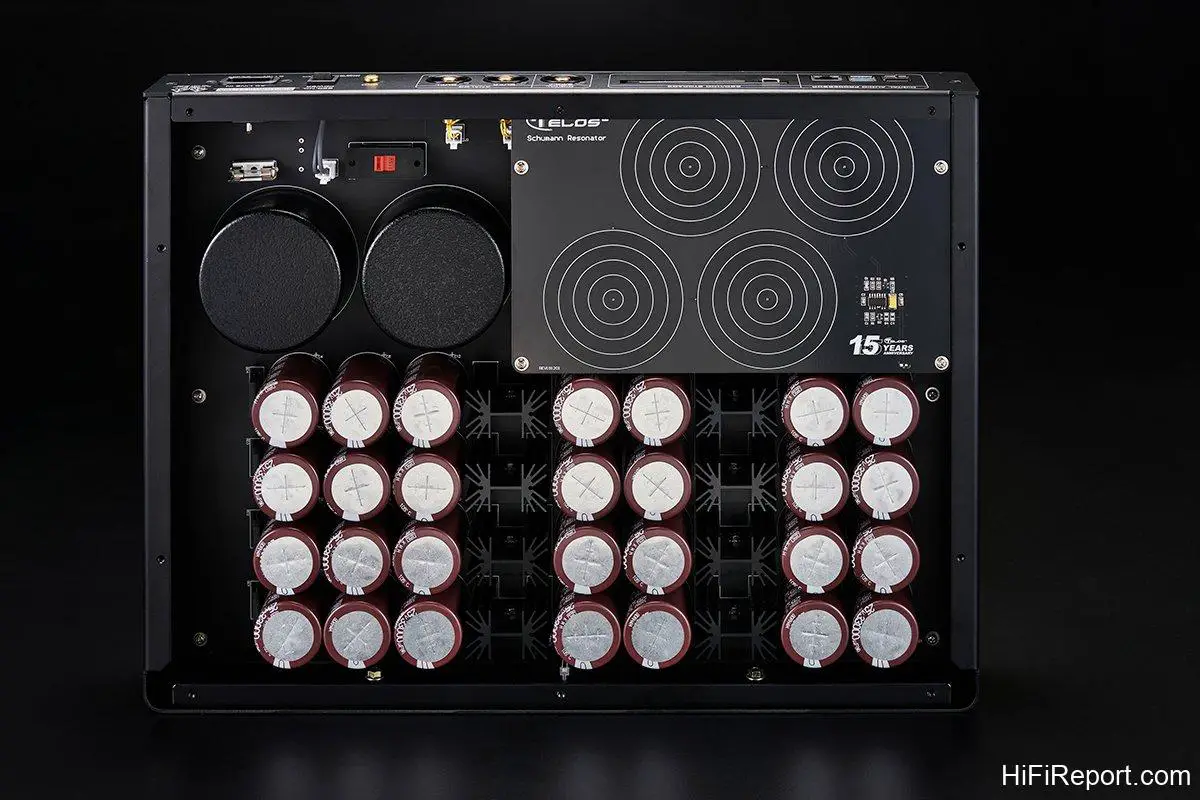
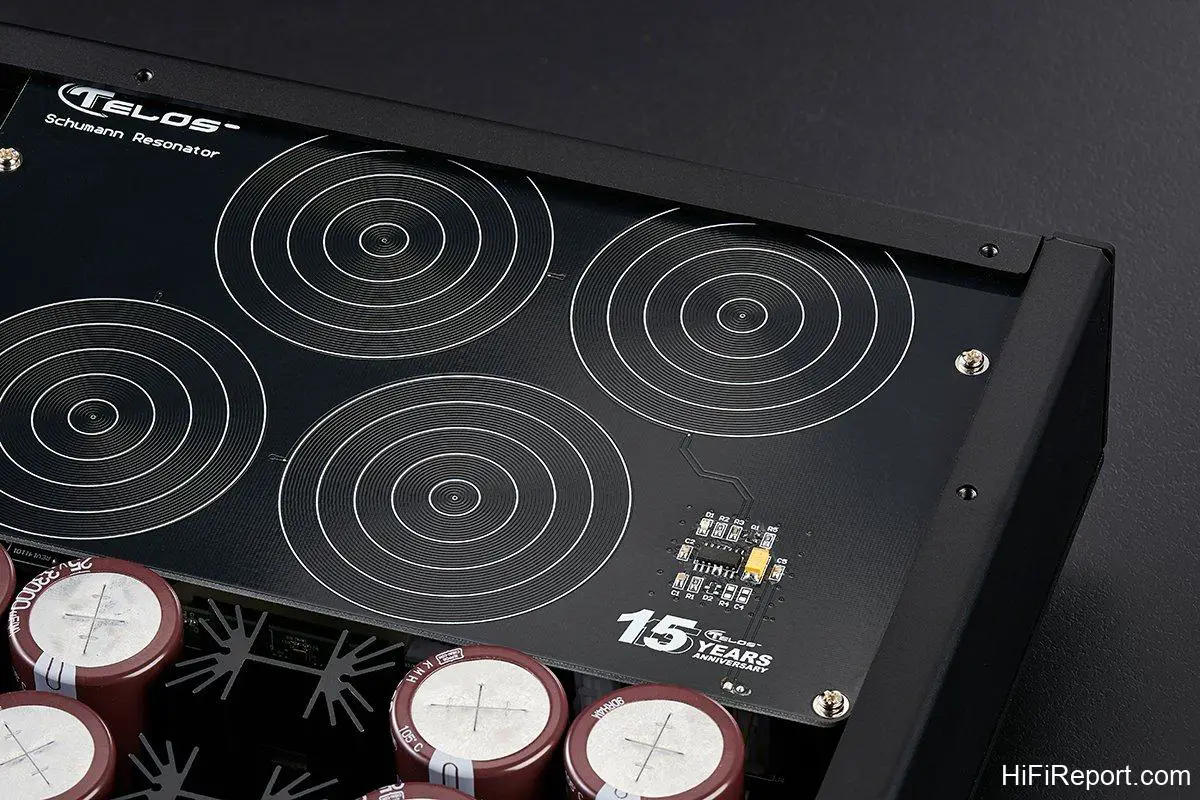
Beyond phase, polarity, and directionality, Xiao Lin also designed a “15th Anniversary Module”—a Schumann wave antenna—generating an 8Hz ultra-low frequency signal.
Experiments suggest that introducing such ultra-low frequency resonance into a space influences our sensory perception, including subjective auditory experience.
Xiao Lin claims that adding Schumann wave resonance enhances bass performance, extending it and making it sound more natural.
This 15th Anniversary Module is an optional upgrade, priced at NT$15,000 (approximately $465 USD), like the QRT module.
Several audio manufacturers offer Schumann wave generators, but why hasn’t anyone thought of integrating one into audio equipment? This is why I say that while the Telos EMP is based on a Raspberry Pi, it is an entirely innovative product.
This is Telos Sheng Kai’s 15th Anniversary Schumann wave antenna module, also utilized in other Telos products as an optional add-on.
100 Units Limited Edition: Gratitude
This raises a question: Why would Telos, a company primarily focused on tuning products, launch a music server? Are they transitioning into audio equipment manufacturing? As I mentioned, Xiao Lin always has a clear understanding of his goals and actions.
The Telos EMP is a commemorative product celebrating Sheng Kai’s 15th anniversary, limited to just 100 units.
“We genuinely only intend to produce 100 units. It’s a way to give back to our friends who have supported us over the years, offering them a music server that embodies the Telos spirit.” Xiao Lin possesses excellent Lampizator DACs but lacked a comparable front-end source product.
Many customers who purchased DACs asked for pairing advice, but without selling source components, his recommendations were limited.
So, he decided to create his own.
“My aim with the EMP is to provide customers with a reliable, high-quality source that can complement their high-end systems.” Xiao Lin’s statement is not hyperbole.
Developing the EMP was no easy task. Leveraging his experience with distributed high-end equipment, the EMP was designed from the outset to meet high-end standards.
“Its sound must be worthy of pairing with a Pacific DAC, with a La Assoluta.” Therefore, when Xiao Lin delivered the EMP to our office, it was accompanied by Lampizator’s flagship Pacific DAC.
The standard Telos EMP is purely digital. Analog output is available as a custom-order option.
The analog output relies on the Raspberry Pi’s DAC, readily available online.
It utilizes two ESS ES9023 chips, a practical and straightforward chip that integrates I/V conversion and analog amplification, outputting voltage directly from the ES9023 to the output terminals.
For purely digital applications, the digital version offers selectable output connectors, with RCA coaxial being the most common. BNC is also an option.
The Telos EMP is essentially a bespoke product, customizable with analog or digital outputs according to individual needs.
Experiencing Sheng Kai’s System Check-up
I was fortunate to have two EMP units to audition.
Xiao Lin delivered a fully equipped version with analog output to our office in April.
A few days later, he messaged me, proposing to bring another EMP to my home, allowing me to listen in both environments.
Was he pressuring me for a review? I felt a bit anxious.
To expedite publication, I adjusted my work schedule to prioritize his review.
But why insist on delivering the equipment to my home? I live in the southern district of Taipei, while Sheng Kai’s headquarters are in Danshui, a round trip of dozens of kilometers. I felt bad about them making the trip, feeling it was excessive.
However, out of courtesy and curiosity, I agreed to Xiao Lin’s proposal.
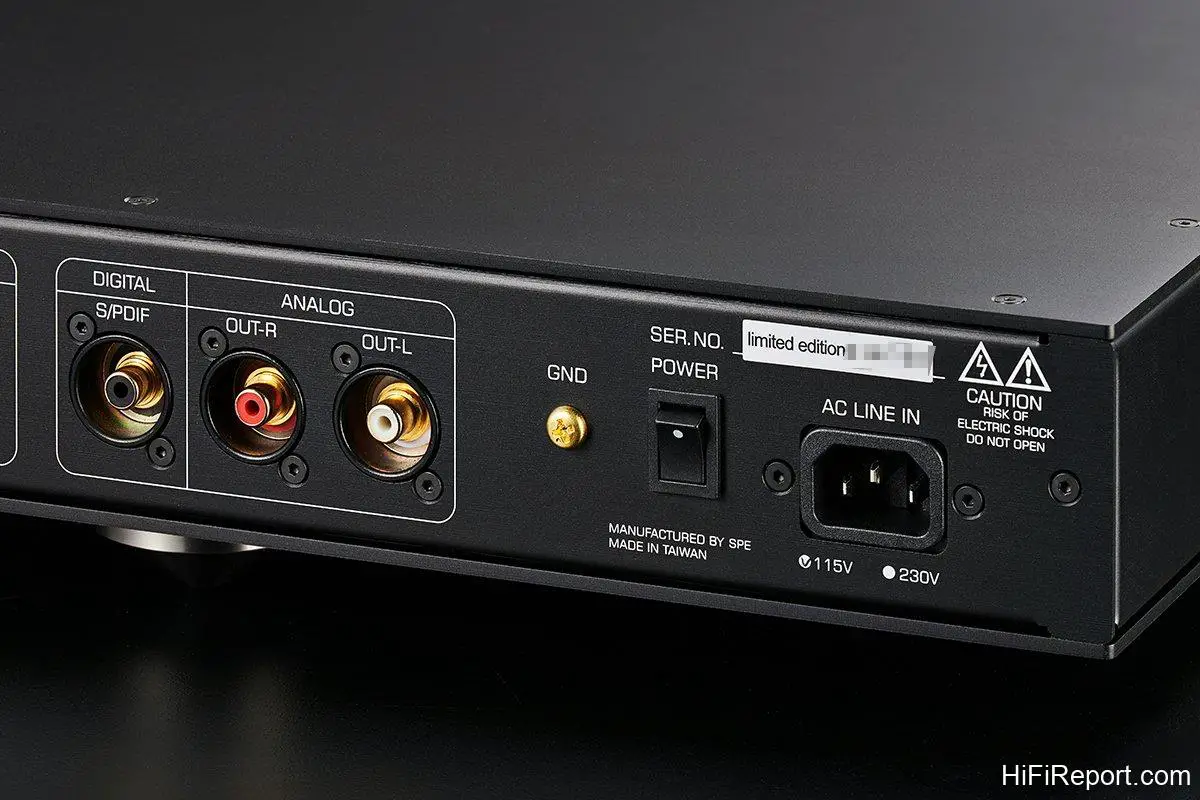
Pictured is the fully equipped top-tier EMP version, including analog output. S/PDIF digital output options include RCA coaxial and BNC. Telos emphasizes grounding; the EMP features a grounding screw for use with their Telos GNR.
System Check-up: Phase Inspection
Xiao Lin and his colleague, Guoyang, arrived punctually.
Upon entering, setting down their toolbox and the EMP box, without even pausing to rest, Xiao Lin immediately asked, “Where’s your electrical panel?” I led him to the panel, and he retrieved a portable oscilloscope from his toolbox, climbed a ladder, and began inspecting the electrical panel.
After taking measurements, he showed me the readings: “Your audio circuit’s power is quite good, minimal phase drift.” Ah! This was Sheng Kai’s service in action, a live demonstration.
No wonder he insisted on visiting my home.
System Check-up: Polarity Inspection
With power phase confirmed to be fine, he proceeded to the next step: checking equipment polarity.
Using a multimeter, he examined my system components and identified that my Lavardin IS Reference integrated amplifier had reversed polarity.
He had me listen to it with a non-grounded power cord, reversing the plug orientation. Indeed, reversing the polarity resulted in a more focused soundstage, lower and more stable imaging, and a greater sense of weight.
How to correct reversed polarity? Open the chassis and reverse the hot and neutral wire connections at the power socket.
And thus, the second step—polarity—was confirmed and addressed.
System Check-up: Directionality Inspection
Next, he examined the directionality of the main cables in my system.
He suggested I reverse the signal and speaker cables to test.
The result was astonishing.
I had always connected cables according to the manufacturer’s directionality markings. However, Xiao Lin’s suggested reversal yielded a smoother, more pleasing sound.
His reasoning, as explained earlier, was compelling.
Following this experience, I will always test both directions for RCA interconnects and speaker cables, provided there are no connector compatibility issues.
Some audio matters are not about belief, but about experimentation.
Only through testing can one truly know.
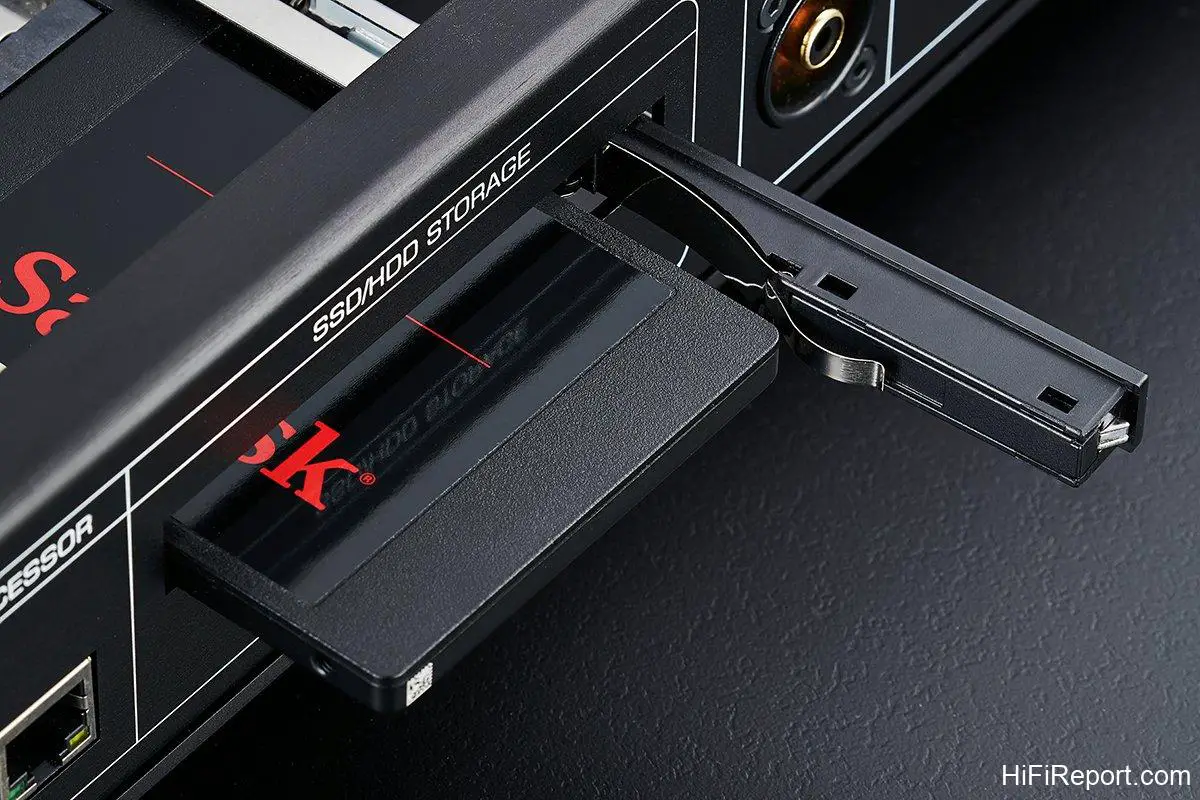
Equipping the EMP with an optional SSD transforms it from a digital transport into a full-fledged music server capable of storing files. The manufacturer offers a ScanDisk 1TB SSD upgrade for an additional NT$4,050 (approximately $125 USD).
Streaming? No Fear! Sheng Kai Guarantees Setup
Having addressed the aforementioned issues, Xiao Lin then had Guoyang unpack the EMP and configure it.
Telos utilizes the Volumio system, designed for Raspberry Pi. The SSD, if ordered, comes pre-installed.
All I needed to do was download the Volumio app on my phone.
For Roon users like myself, installing the Roon Bridge plugin is also necessary.
Volumio provides numerous Raspberry Pi plugins available for download, installable via smartphone connection.
Many audiophiles are unfamiliar with networking and apprehensive about network streaming.
In reality, streaming playback primarily requires familiarity with the app interface. Once you understand how to find and play tracks, no music playback method is simpler than digital streaming.
However, while playback is straightforward, setup can be a challenge for audiophiles.
I’m unsure if other manufacturers offer comprehensive setup assistance.
But purchasing a Telos EMP guarantees complete setup support from Xiao Lin.
And often, if geographically feasible, Xiao Lin is willing to personally visit the customer’s home, as he did with me.
He not only sets up the EMP but also performs a “system check-up.”
He earnestly explained, “This special treatment isn’t just because you’re a media editor. My customers are like family. I do this to ensure everyone operates at the same level of understanding.” He referred to the three essential elements: phase, polarity, and directionality.
Buying Telos products means purchasing a complete Sheng Kai service package.
My lengthy explanation aims to highlight the unique nature of the Telos EMP. It features distinctive design elements, possesses an unparalleled lineage, and, importantly, embodies Xiao Lin’s audio philosophy, serving as an entry point to understanding Telos’s ethos. It represents Xiao Lin’s sincere gratitude to Sheng Kai’s loyal customers and a declarative product for their 15th anniversary.
The interface is remarkably simple. An RJ45 network cable provides network connectivity, while USB 3.0 ports serve as USB outputs to DACs or for connecting external storage devices.
Effortless Musical Flow
Returning to the Telos EMP itself.
Regardless of its architecture or Raspberry Pi core, these are secondary considerations.
All music servers are essentially computers. The Raspberry Pi, being a mini-computer, is a viable solution for music servers.
What happens when a simple Raspberry Pi architecture is paired with Telos’s custom-engineered power supply and QRT/Schumann wave modules? The result is extraordinary.
The Telos EMP delivers a clean, powerful, full-bodied, transparent, clear, and layered sound.
My personal home setup uses an Auralic Aries Mini, which functions as a digital transport, a bridge for digital streaming, and can accommodate an internal SSD for server functionality (Sheng Kai offers an optional ScanDisk 1TB SSD; without it, the EMP is a streamer; with the SSD, it becomes a music server).
I’ve experimented with upgrading its power supply to a KECES P3 linear power supply, which significantly improved upon the stock switching power supply, yielding sonic characteristics similar to my description.
However, even with this power supply upgrade, it still falls short of the Telos EMP.
The EMP is cleaner, more powerful, fuller-bodied, more transparent, clearer, and more layered.
Pairing the EMP with a Pacific DAC and Accuphase E-800 amplifier driving Wilson Alexia 2 speakers at the office produced an astonishing sound.
I would describe it as digital music with an analog essence.
This analog quality isn’t characterized by warmth, coloration, softness, or gentleness. No, the Telos EMP doesn’t possess those traits.
The EMP’s analog nature lies in its fluidity. In gentle, melodic passages, it exhibits effortless flow. In sudden dynamic shifts from soft to loud and back again, the fluidity remains.
These dynamic variations are natural, effortless, and unforced.
High-quality analog systems, whether vinyl or tape, possess this characteristic of unwavering fluidity.
This is the strong impression the EMP left on me.
Clean Background, Powerful Dynamics, Superb Fidelity
For instance, listening to Kondrashin conducting the Royal Concertgebouw Orchestra in “Scheherazade,” the opening of “The Sea and Sinbad’s Ship” features powerful, unified low-frequency chords, the majestic and warm timbre of the trombones, and the deep foundation provided by the tuba. The King’s motif is truly imposing.
After a brief woodwind interlude, the delicate and charming violin enters, portraying Scheherazade telling her tales. The dynamic contrast between these sections is immense, and the EMP handles these dramatic shifts with remarkable ease.
As I mentioned, it provides a highly fluid listening experience, reminiscent of analog equipment.
The violin’s storytelling is captivating, with every vibrato nuance exquisitely rendered.
The string section swells, dense and luminous like ocean waves, carrying Sinbad’s ship, rising and falling, ascending and descending.
Pizzicato violins evoke shimmering waves, while woodwind melodies mimic seabird cries.
The imagery is vivid.
The EMP’s sonic background is exceptionally clean and devoid of noise.
Are you wary of digital equipment’s potential for harshness or sterility? The Telos EMP avoids these pitfalls.
Furthermore, the EMP’s dynamic contrast is not only powerful but also incredibly fast and responsive, providing the finest digital streaming experience.
Direct and Lively Analog Output, Excellent Value
How does the EMP’s analog output fare with the same music? Using the EMP’s built-in Raspberry Pi DAC for decoding, the sound remains excellent. The previously mentioned characteristics—powerful, full-bodied, robust, and rich—are still present. However, compared to the Pacific DAC, while more direct and seemingly livelier, the sonic texture is slightly less refined.
The Pacific DAC imparts a richer, more nuanced sonic texture, lending a more delicate and noble quality. The King sounds even more regal and majestic; Scheherazade, even more charming and beautiful.
In terms of soundstage, the Pacific DAC creates a deeper, more layered stage with better defined and more three-dimensional instrument images.
The Pacific, however, is Lampizator’s flagship DAC, priced near 30,000 Euros (approximately $32,000 USD). It’s precisely because of its exceptional quality that the King sounds more like a King, and the Queen more like a Queen.
This overhead view clearly shows the Telos EMP’s internal layout. The two modules with black squares to the right of the power transformer are Telos’s QRT modules, effectively addressing power phase distortion.
Playback Software Comparison: Volumio vs. Roon
Let’s compare further.
The preceding listening impressions were based on playing files from the EMP’s internal hard drive using Volumio. What about Roon? Using the same file source, different playback software surprisingly yields noticeable differences.
Roon playback exhibits a brighter and livelier sonic character, while Volumio leans towards a noticeably fuller and more substantial sound.
Which do you prefer?
Independent HDD Power: Superior Sound
The comparisons continue.
Although I didn’t have the same track files on my NAS, Tidal did.
Regardless of file format or digitization process, for lossless 16bit/44.1kHz files, Tidal’s sound quality is demonstrably inferior to files stored on the internal hard drive.
Files from the internal hard drive sound fuller, more solid, more three-dimensional, weightier, and exhibit more pronounced dynamics and seemingly better bass. The volume level is also a few dB higher.
Xiao Lin explained that this is related to the EMP’s dedicated power supply for the internal hard drive.
Hard drives consume minimal power. Few designers would provide such “over-engineered” power supplies for music servers like Xiao Lin.
The independently powered solid-state drive enhances the EMP’s dynamic range and bass performance when playing internally stored files.
The sonic advantages are clearly superior to streaming files.
Allow One Hour Warm-up
One more interesting point.
Due to the Telos EMP’s large power supply capacitance, it requires “charging” time.
How long? At least one hour of warm-up is recommended each time it’s powered on.
Xiao Lin didn’t mention this when he first delivered the EMP to the office, only informing me at my home.
On-site verification confirmed this.
When initially powered on, I didn’t perceive any issues with the Telos EMP. This super-powered EMP immediately outperformed my Aries Mini right out of the box.
After an hour, revisiting the tracks we had played earlier, the smoothness, fullness, three-dimensionality, layering, and weight of the sound all improved noticeably.
However, this still wasn’t its optimal state.
“After eight days, the sound will be even better,” Xiao Lin confidently stated, repeating it several times before leaving.
I must admit, after eight days, I had long forgotten the initial sound.
Therefore, I can verify the “one-hour warm-up” effect, but the “eight-day warm-up” benefit remains inconclusive for me.
The densely packed interior of the Telos EMP is captivating, reflecting a design philosophy rooted in the perspective of a dedicated audiophile.
Beyond Limited Edition: New Brand Incoming
I genuinely admire the Telos EMP’s performance. Were it not for budgetary constraints, I would seriously consider purchasing one for myself.
Just as I was lamenting this, Xiao Lin told me to wait, as there might be another opportunity.
The Telos EMP music server is indeed a limited edition, with only 100 units being produced, and no further production planned under the Telos brand.
However, Xiao Lin will launch a new brand to carry on the “EMP experience.”
“We will maintain Telos’s focus on tuning products. New powered equipment will be launched under a new brand to differentiate them.” Xiao Lin’s strategy is clear.
Anticipated Music Servers and DC Power Supplies
The first wave of products under the new brand can be seen as extensions of the Telos EMP.
Firstly, music servers based on the EMP blueprint will be released. Product tiers will be segmented based on their experimental findings, with the Telos EMP standard version becoming a mid-tier offering, flanked by a monstrous flagship version and a simplified entry-level version.
Xiao Lin suggested that for users like myself, who own USB DACs and primarily use DACs as digital hubs, the simplified version with only USB output would suffice.
Users needing analog output or other digital output connectors can choose the standard or flagship versions based on budget and system matching (having seen photos, I’m tempted to call the flagship version the “Monster Edition” or “Godzilla Edition”).
Furthermore, the Telos EMP, at its heart, is a “Raspberry Pi plus a super power supply.” If this super power supply could be offered as a standalone product, it could benefit other DC-powered equipment, enabling them to achieve the same explosive evolution as the EMP’s Raspberry Pi.
The potential applications are vast. Your network switch (if you stream, upgrading to an audiophile-grade switch is essential—the difference is significant!), WiFi router (if your streamer relies on wireless transmission, choose a high-quality WiFi router), or external power supply phono stages, digital streamers, DACs, and even your NAS, all have the potential for sonic improvement through power supply upgrades.
Are you intrigued? I am very interested. If these power supplies become available, I have several components that could benefit.
And considering the Telos EMP’s performance, with Sheng Kai’s super power supply enabling the Raspberry Pi to perform at this level, how can one not eagerly anticipate these standalone power supplies?
This is an internal test photo provided by Sheng Kai.
Top left: Switching power supply with noticeable ripple.
Top right: Commercially available linear power supply, with significantly reduced ripple, but still imperfect.
Bottom left: Battery power, virtually ripple-free.
Bottom right: Telos linear power supply, also used in the EMP, exhibiting cleanliness comparable to battery power.
This illustrates the Telos EMP’s core strength: power!
EMP: 15 Years in the Making
I’ve covered everything I wanted to say about the Telos EMP Music Server.
This time, instead of focusing extensively on musical notes, I’ve delved more into the machine itself and Xiao Lin’s story.
As I mentioned, Telos embodies Xiao Lin’s pursuit of sonic aesthetics. From the beginning to their 15th anniversary, Xiao Lin’s personal growth is reflected in each successive generation of Telos products.
The culmination of 15 years of refinement is the Telos EMP. As Telos’s foray into a new product category, it serves as a milestone, prompting us to look forward with anticipation to Sheng Kai’s next 15 years.
Telos launched the 15th Anniversary EMP Music Server, limited to 100 units, as a token of gratitude to their long-time supporters.
In the future, Sheng Kai will introduce music servers and external linear power supplies under a new brand, offering products in different tiers to cater to various consumer needs and budgets.
We eagerly await what’s to come.
Specifications
* Type: Raspberry Pi core music server
* Digital Processing Terminals: USB 3.0 x 2; RJ45 x 1
* Digital Audio Output: Coaxial, Optical, AES/EBU (Selectable)
* Analog Audio Output: RCA x 1
* Dimensions: 430 x 320 x 90 mm (W x D x H)
* Weight: 8kg