
Esoteric N-01XD SE Review
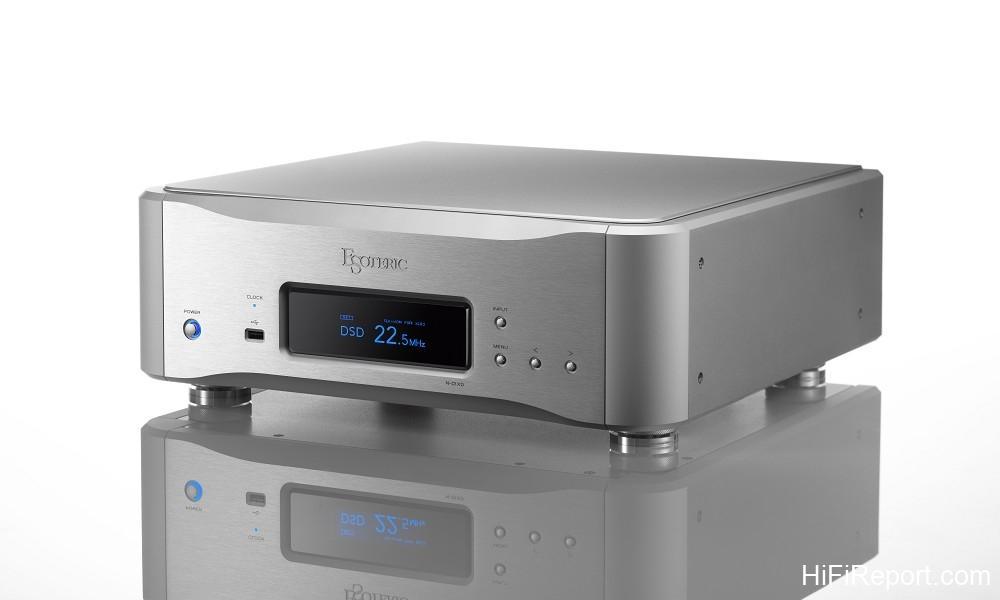
Among current streaming players, the N-01XD SE offers arguably the highest compatibility with music files and digital audio formats. It supports DSD music files up to 22.4MHz and multi-bit Hi-Res music files up to 384kHz/32bit. Its main streaming capabilities include Tidal, Spotify, Qobuz, and Roon Ready.
This unit allows users to stream music from the internet, and it can also play music files shared within their local network from sources like NAS drives, music servers, computers, and mobile devices. The N-01XD SE can also function as a local music library itself by connecting USB storage devices, compatible with common formats like NTFS for USB hard drives and exFAT for USB SSDs.
Functionally speaking, the N-01XD SE and the N-01XD are nearly identical. So, where exactly does the evolution of the N-01XD SE lie? I believe examining the internal circuitry provides the most concrete answer.
Inside the N-01XD SE: Power Supply Design
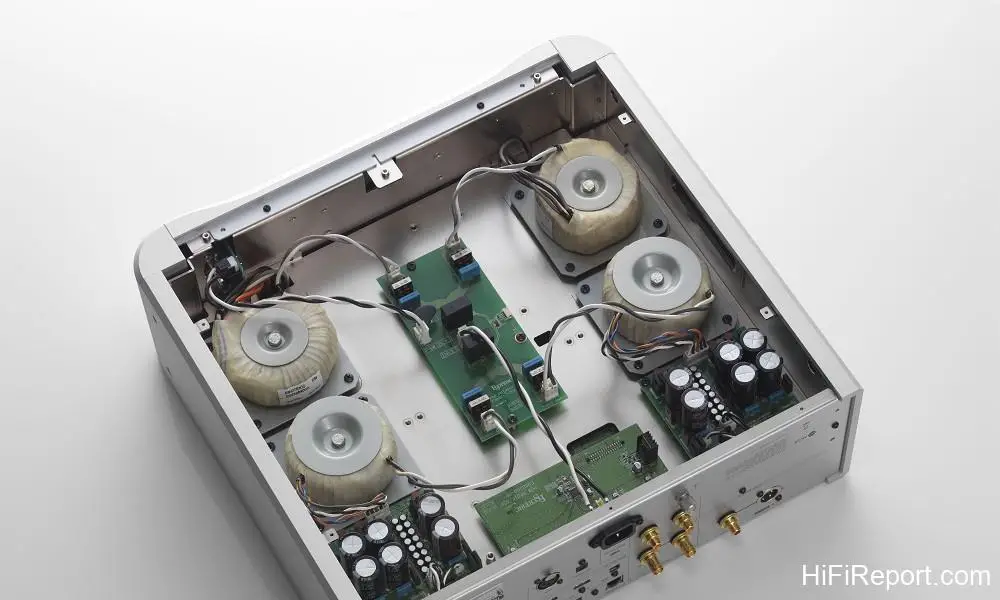
The N-01XD SE’s circuitry is divided into two layers, top and bottom, completely separated by a metal partition (as shown in the diagram). The lower layer houses the power supply circuits, including four toroidal transformers. One transformer and its dedicated power board supply the network module, while another transformer and board power the digital mainboard.
This strict separation of digital power supply paths eliminates the possibility of digital noise contaminating the audio signal through power lines.
The remaining two toroidal transformers are dedicated to powering the left and right channel audio circuits, respectively. Each connects to a power board located at the rear of the lower level for rectification, filtering, and multiple stages of regulation before feeding the audio circuit boards on the upper layer.
This layout clearly indicates a complete dual-mono construction, where the left and right channels are entirely separate and independent from the power transformers onwards, including the audio circuitry itself. This structure effectively eliminates crosstalk and improves channel separation, resulting in a wider soundstage.
The Core Audio Circuitry and Key Technologies
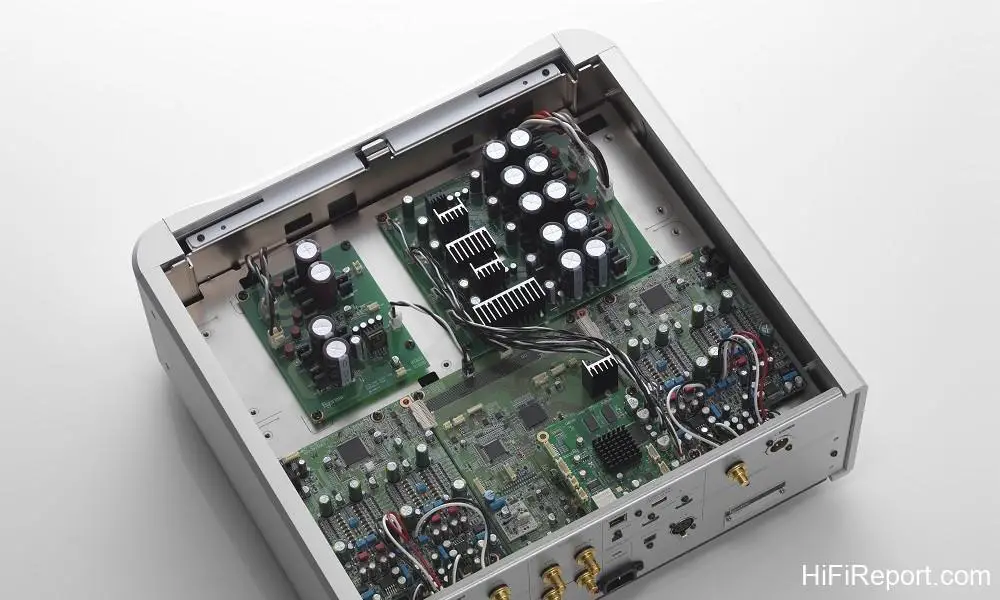
All audio-related circuitry is located in the rear half of the upper layer (as shown in the diagram). The digital mainboard occupies the center. Positioned closest to the rear panel is the network music playback engine handling network and USB HDD input, the receiving interface for various digital audio inputs, and both the internal clock circuit and external clock input. Here lies a significant upgrade compared to the N-01XD: the “discrete clock”.
This term is commonly used, though “discrete” in electronics refers to circuits built from individual components (like resistors, capacitors, inductors, transistors, diodes, etc.) rather than integrated circuits (ICs). This approach gives designers complete freedom, unconstrained by the structure and characteristics of IC chips.
The N-01XD SE adopts the circuit design concept of Esoteric’s flagship clock generator, the Grandioso G1X “Master Sound Discrete Clock”. It uses carefully selected, high-quality discrete components (such as large crystal oscillators) to build an independent clock sub-board. This results in a more precise clock and, consequently, higher sound quality.
The core of the digital mainboard is a Xilinx Spartan FPGA chip. Its primary role is to process the digital audio signals from the digital interface and network music playback engine mentioned earlier. This allows users to select upsampling options for PCM audio, converting it to 2x, 4x, 8x, or 16x sample rates. They can also “change the flavor” by converting PCM to DSD before digital-to-analog conversion.
The digital audio signal output from the digital mainboard first passes through a digital isolation circuit on the left and right channel DAC boards. This circuit only allows the digital audio to pass while directly blocking noise originating from the digital mainboard. Following this is a signature feature of Esoteric’s top-tier digital sources in recent years, natively derived from the flagship Grandioso D1X SE DAC: the “Master Sound Discrete DAC”.
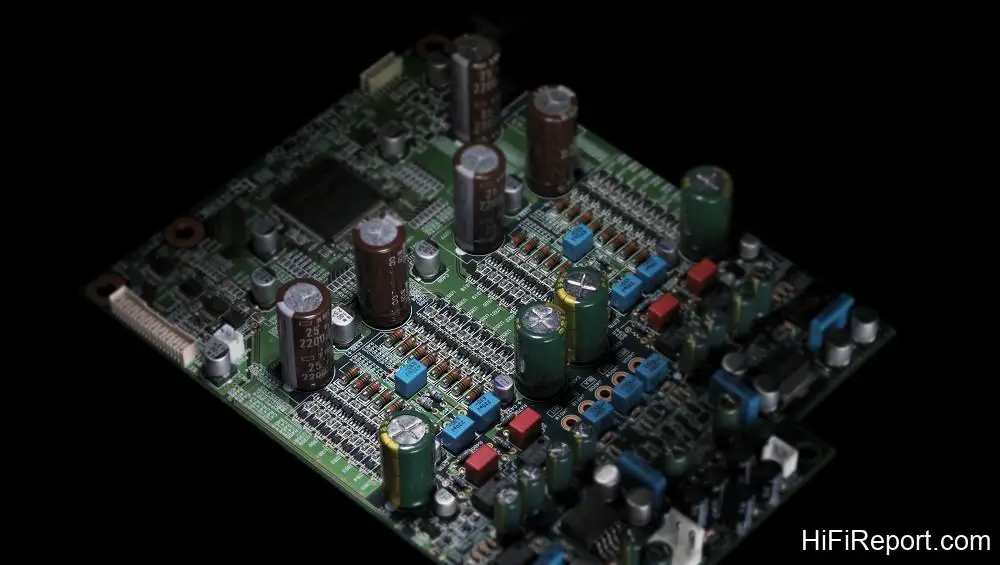
Instead of using off-the-shelf DAC chips, this system uses a Spartan FPGA chip to perform delta-sigma modulation, converting the input digital audio into multi-bit PWM. This PWM then controls multiple Discrete DAC circuits, each composed of 8 flip-flops, resistors, and other discrete components.
Upon close examination of the N-01XD SE (as shown in the diagram), I noted that each channel features four sets of Discrete DACs (the lower model N-05 XD has two sets per channel). This design is not only a full dual-mono, fully balanced configuration but also employs a Parallel DAC structure with double the number of DACs, effectively doubling the dynamic range (a 3dB improvement).
Seeing the DAC circuit structure firsthand, I fully understood that Esoteric’s website description stating its goal is to “perfectly reproduce the dynamics and energy of music” is not mere marketing but a reflection of the actual implementation.
Advanced Componentry and Further Refinements
In terms of component selection, the grade and precision of the discrete components used in the N-01XD SE’s DAC circuit are very close to those in the Grandioso series. Another crucial point is the low-pass filter and output buffer amplification circuits located after the Discrete DAC circuit.
While the previous N-01XD used high-priced OP Amp chips for its active components, the N-01XD SE utilizes the IDM-01 (Integrated Discrete-Amplifier Module), a circuit developed by Esoteric for their flagship preamplifier, the Grandioso C1X.
This Esoteric-developed amplifier module features select discrete components and an extremely shortened audio path. The resistors and capacitors used in the low-pass filter were chosen after extensive listening evaluations. Their aim is to give this unit a lively, realistic presence. The IDM-01 and the aforementioned “discrete clock” are precisely the main upgrades of the N-01XD SE compared to the N-01XD.
Listening Experience and Performance
For this review, I paired the N-01XD SE with an Esoteric G-05 clock generator, a Linear Acoustic LAV-120 integrated amplifier, and Pioneer S-1EX floorstanding speakers. After sufficient warm-up (one main purpose is allowing the clock oscillator to reach stable operating temperature), I first compared the difference between using the N-01XD SE “with or without the G-05”.
Honestly, provided the audio system is properly tuned and performing optimally, such a comparison yields a definitive answer within 30 seconds. With the G-05 connected (and the N-01XD SE set to CLOCK IN), there was a noticeable improvement in imaging focus, sonic dynamism, and soundstage transparency. Listening to the N-01XD SE alone, I already felt everything was “quite excellent,” but comparison truly highlights the difference.
After hearing the Esoteric G-05 and N-01XD SE combination, I would absolutely never disconnect the G-05!
We usually expect higher-tier digital sources from the same manufacturer to have more stable, weighty bass and richer detail in the midrange and treble. Indeed, comparing the N-01XD SE to the N-05XD, which I formally reviewed earlier, there is precisely this difference, and the gap is significant enough to be confirmed even without direct comparison.
However, the difference in class extends beyond this. From the moment the music began, I perceived a vibrant, agile musical beauty from the N-01XD SE. It was extremely fresh and pure. Even at a comfortable, non-fatiguing volume, it allowed the listener to clearly hear a wealth of sonic information, especially the subtle sounds present in the musical performance space.
There was no hint of hardness, yet the outlines of the images and the fine textures were rendered with such clarity, allowing the listener to easily and concretely perceive the music’s visual aspect purely through hearing.
I believe the combination of the N-01XD SE and G-05 is one of the best streaming sources available today, regardless of price. I cannot find a single item to deduct points from in the “Twenty Aspects of Audiophile Sound”.
Exploring the Sound Tuning Options
Beyond its high sound quality appeal, if you’re someone who likes to experiment, it offers continuous “honeymoon” excitement, maintaining the thrill of a new component. This is because the manufacturer understands the desire of enthusiasts to “change the flavor”.
By fully utilizing the Digital FPGA on the digital mainboard and the DAC FPGA in the DAC circuits of the N-01XD SE, even with music files at CD-quality 44.1kHz or 48kHz sample rates, you can create up to 27 different sound-tuning combinations. The relevant options and audible differences are as follows:
UPC: Options include ORG, 2Fs, 4Fs, 8Fs, 16Fs, and DSD. The numbers indicate upsampling the sample rate to integer multiples of 44.1kHz or 48kHz. It can also convert multi-bit audio to DSD. My feeling is that ORG sounds the most lively with brighter treble. Higher sample rate multiples make standard music files sound more like Hi-Res recordings, maintaining transparent and open spatiality. The midrange and mid-bass become fuller, and the treble becomes denser and smoother.
DSD, on the other hand, provides a “full analog flavor,” sounding like tape without hiss. The spatial presence isn’t as expansive as the five PCM modes, but the density is clearly higher, and the sound is warm, smooth, and very engaging. This is the mode I would choose for regular listening.
If UPC is set to DSD or if playing DSD files directly, the unit also offers four DSD filter modes (DSDF): OFF, F1, F2, and F3. OFF applies no low-pass filtering, while F1 to F3 apply low-pass filtering with progressively decreasing cutoff frequencies. Naturally, OFF sounds more open in the ultra-high frequency range, but I heard a slight hiss in this band (likely due to inherent DSD modulation noise). Switching to F1 resolved this completely.
Next is PCMM, which offers three Delta-Sigma modulation modes. The modulation frequency decreases from M1 > M2 > M3, while dithering increases in the opposite direction. Users don’t need to understand the principles of delta-sigma modulation; simply comparing the sound is sufficient. I found the differences between the three modes to be quite noticeable: M1 provides the densest and richest sound, M3 is the clearest and most refreshing, and I personally preferred M2, which falls between the two.
The pleasure this unit gave me went beyond the highest sound quality level; it allowed me to constantly change the sonic character according to the type of music and my current mood. Its tuning options are completely unlike those of other products where differences between sound modes are only slight. As long as the user’s system is relatively neutral and sensitive, the options and modes mentioned above each present their own distinct sonic personality.
Conclusion: A Top-Tier Streaming Player
This makes the user feel like they don’t just own one top-tier streaming player, but rather several high-end streaming players that can be swapped out at any time. I confidently state that the Esoteric N-01XD SE is the high-end source I have actually tested in recent years that has provided the most listening enjoyment, bar none.