
Farad Super 6 Review
Given the name “Farad,” it seems the company intended to use supercapacitors for their power supplies right from the start. Farad is, after all, the unit of capacitance. Audiophiles often talk about the capacitance of an amplifier’s filter capacitors in µF – the larger the value, the more ample the power supply. Here, the “F” stands for Farad.
Farad hails from the Netherlands and was founded by Mattijs de Vries. So, who is this man? Mattijs is a master of electronic design, specializing in analog circuits, PCB design, microcontroller control, and related embedded software. He previously founded Pink Pro Electronic Design and Consultancy, a company dedicated to providing customized designs and solutions. With over 25 years of experience in the audio industry, he also founded the high-end music streamer brand Pink Faun in 2006.
In 2018, Mattijs made a significant discovery in linear power supply technology. By utilizing supercapacitors, he created ultra-low noise, high-bandwidth power supplies, leading to the birth of the Farad brand.
Farad’s inaugural product was the Super3. Rumor has it that upon its release, it quickly gained popularity. Relying solely on word-of-mouth within audiophile communities, thousands of units were sold within three years, cementing Farad’s reputation.
The “3” in Super3 refers to its maximum rated current of 3A, sufficient for the vast majority of network switches, wireless routers, DACs, or digital players.
Following the Super3, Farad introduced the Super10, with a rated current of 10A, targeting audiophiles who use NAS drives as music servers. They also developed the SuperATX, a linear power supply designed for computer ATX specifications, allowing computer audiophiles to build the most high-end computer-based sources or music servers.
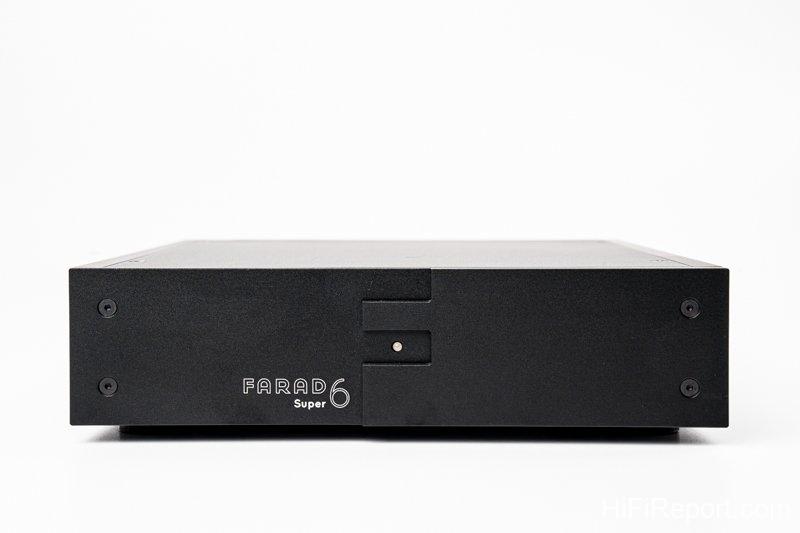
The subject of this review, the Super6, is Farad’s latest offering. It provides a 6A output, perfectly bridging the gap between the Super3 and Super10, making Farad’s product line more comprehensive and complete.
What about voltage? Farad strictly offers single-voltage outputs. One Super6 unit is designed to power only one piece of equipment. This design choice is, of course, driven by sonic performance, as a unit required to output multiple voltages would necessitate design compromises that could affect the quality of the output power.
The Super6 is currently available in standard versions offering six different voltages: 5V, 9V, 12V, 15V, 19V, and 24V. Custom voltages between 5V and 24V are also accepted upon request.
Four Key Design Elements
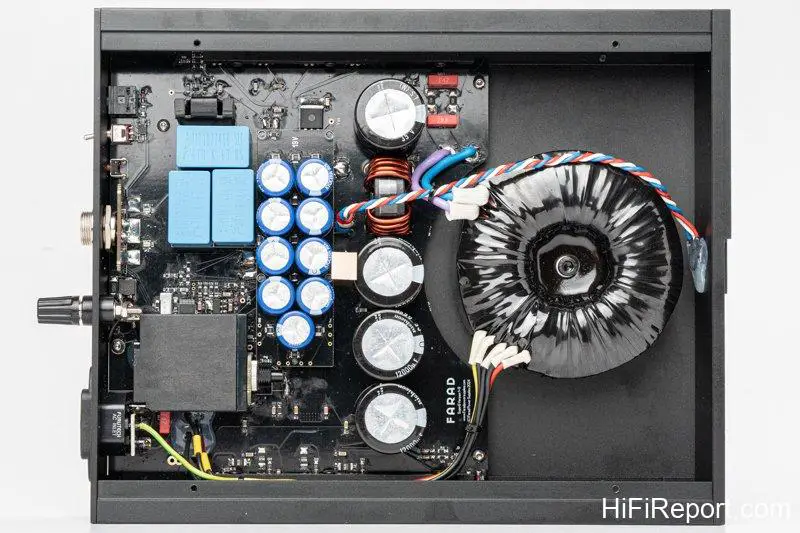
Looking at the Super6’s design, four main aspects stand out: the use of π-filters to reduce high-frequency noise, employing film capacitors in the output stage, using a thermal-magnetic circuit breaker instead of a fuse, and the integration of supercapacitors.
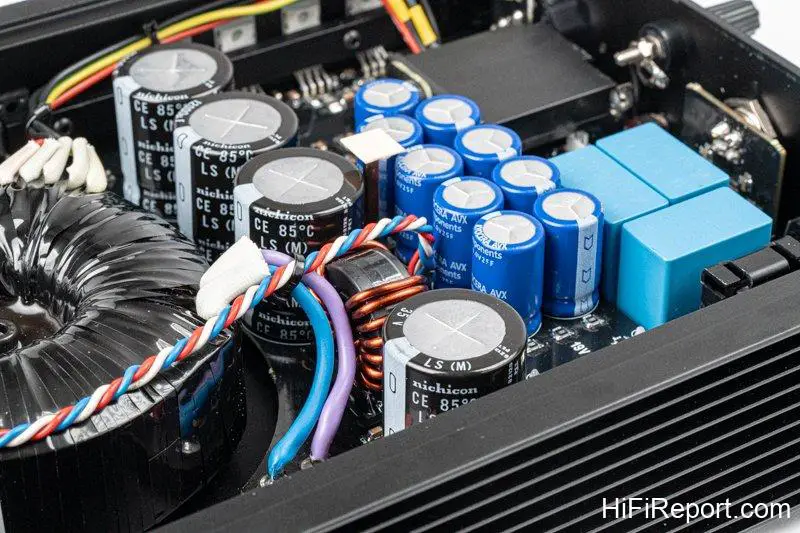
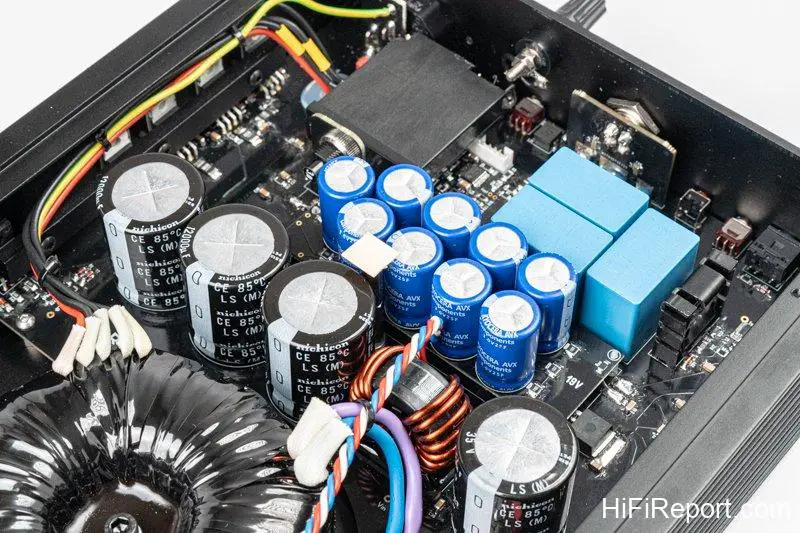
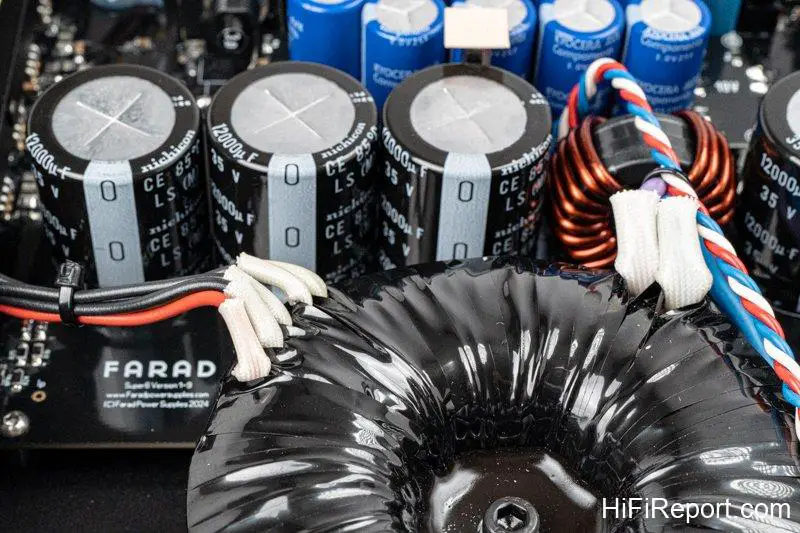
The π-filter is a common filter type consisting of two capacitors and one inductor. The Super6 specifically utilizes low-ESR capacitors and high-frequency common-mode chokes to form six sets of π-filters. These filters target both the input power and the rectified output power, effectively reducing ripple and high-frequency noise.
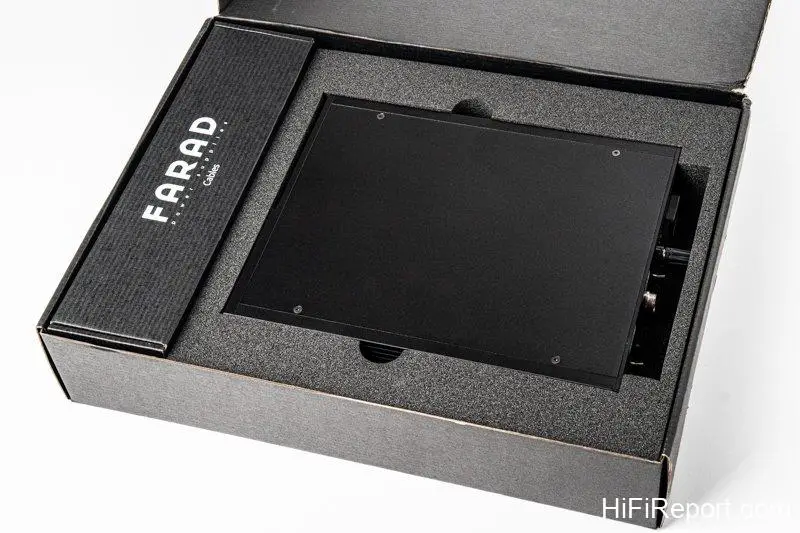
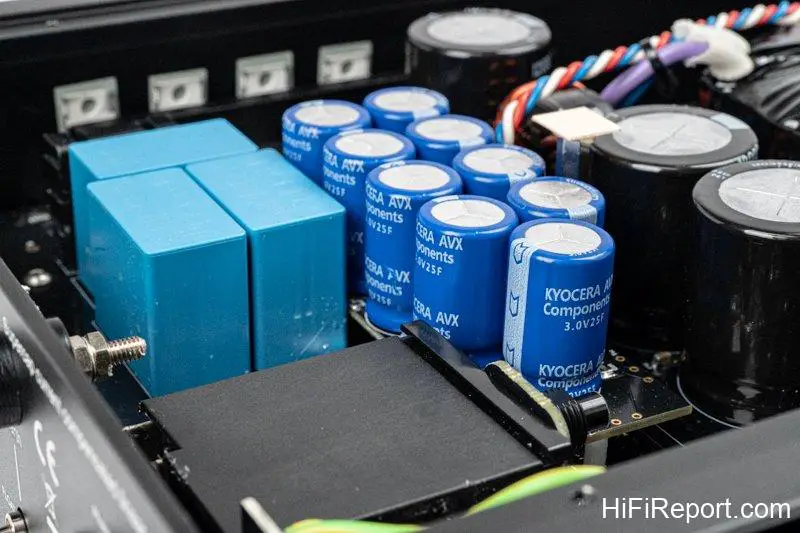
In the output stage, the Super6 employs 150µF MKS film capacitors instead of electrolytic capacitors. MKS capacitors are highly reliable, stable in operation, feature low ESR, and offer excellent fast output characteristics across the entire frequency range.
For safety, the Super6 includes microprocessor-controlled protection measures. If the demanded current exceeds the maximum output current, or in case of a short circuit or overheating, the protection circuit activates. Its safeguard is a thermal-magnetic circuit breaker, chosen specifically over traditional fuses. Farad states that this decision was made after countless listening comparisons, finding the thermal-magnetic circuit breaker to sound better than any fuse they tested. An added benefit is its reusability, unlike a fuse which requires replacement after blowing.
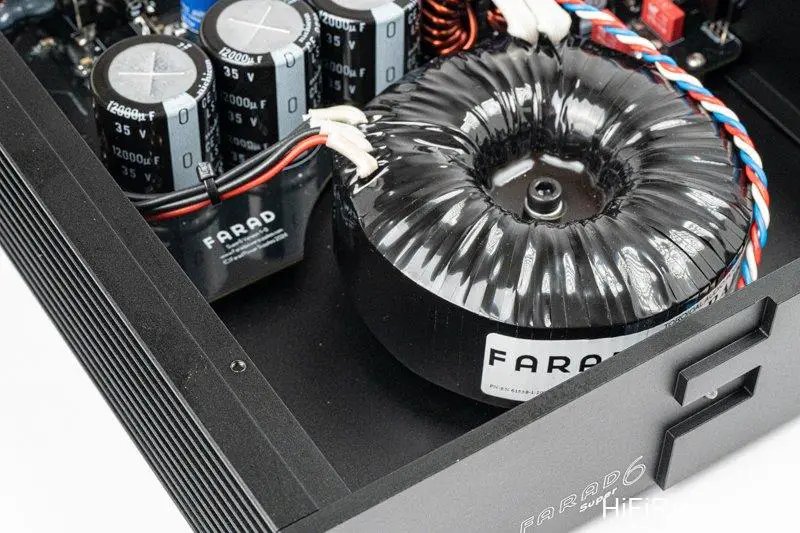
The most crucial and unique design element of the Super6 is its integration of supercapacitors (Electrostatic double-layer capacitors, EDLC). Supercapacitors boast energy density hundreds or even thousands of times higher than traditional electrolytic capacitors. While their energy storage isn’t yet comparable to batteries, their charge and discharge speed is significantly faster, and they can endure far more charge-discharge cycles than batteries.
Simply put, supercapacitors offer ample capacitance, rapid and powerful output capability, and low ESR. The Super6 utilizes supercapacitors to replace batteries, providing stable and pure power to the downstream ultra-low noise linear voltage regulator, without the drawbacks associated with batteries.
Attention to Cables
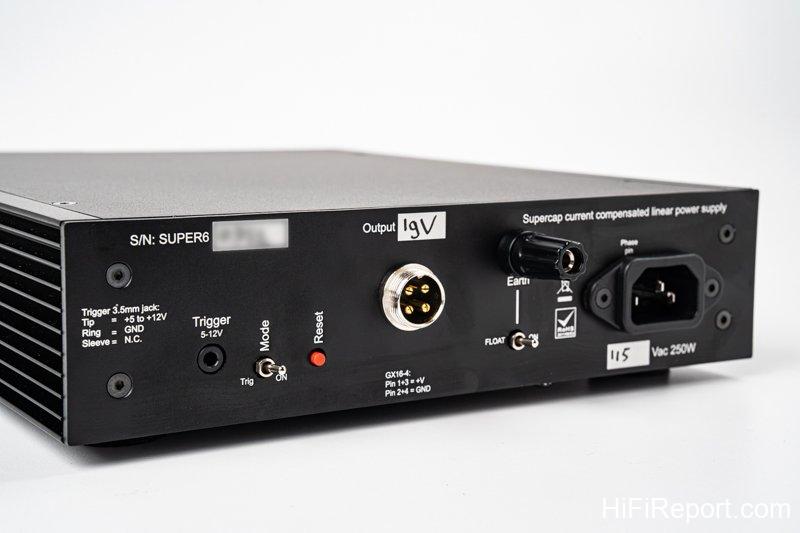
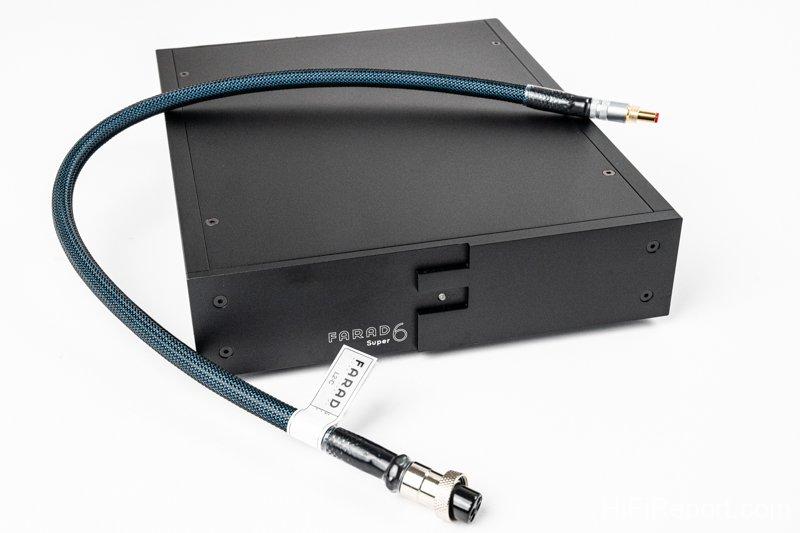
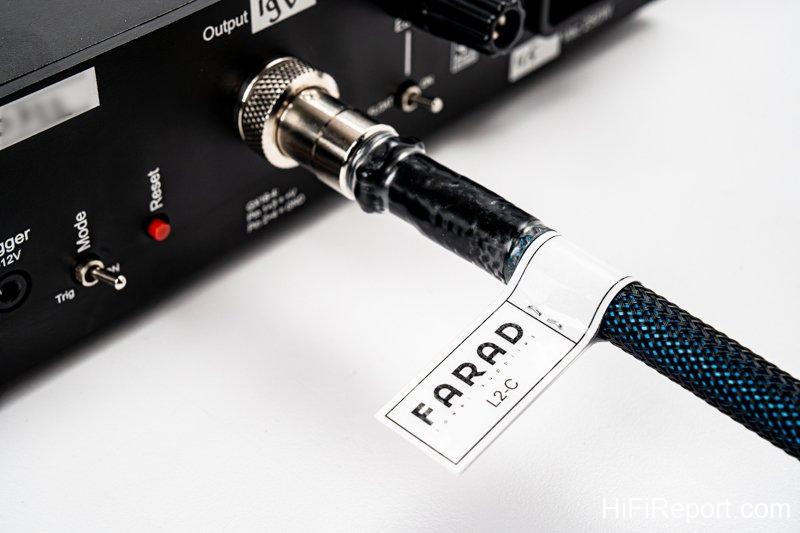
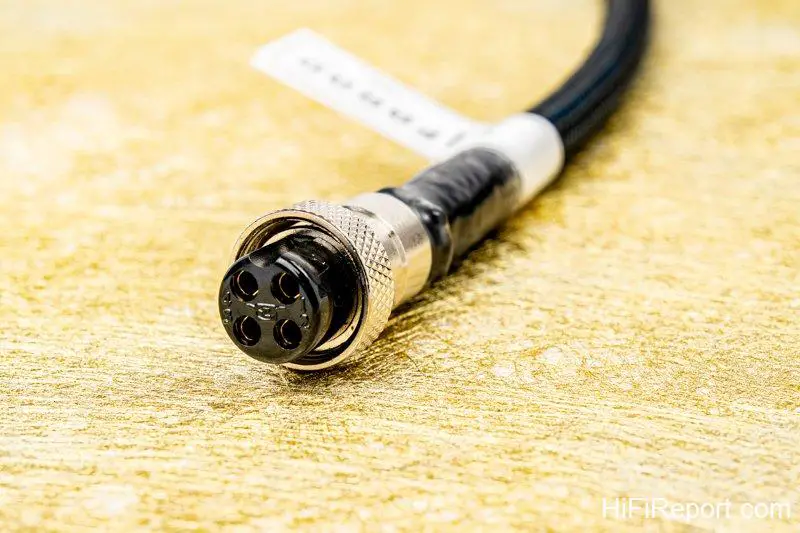
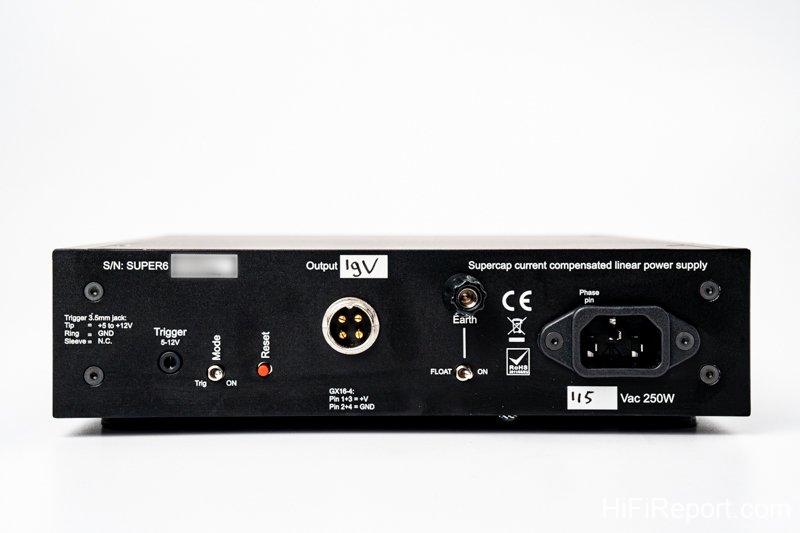
Regarding the output power cable, the Super6 doesn’t use the common cylindrical connectors on the unit side. Instead, it features a GX16-4 connector. This connector has four relatively thick pins, providing a larger contact area than cylindrical connectors, which helps reduce output impedance.
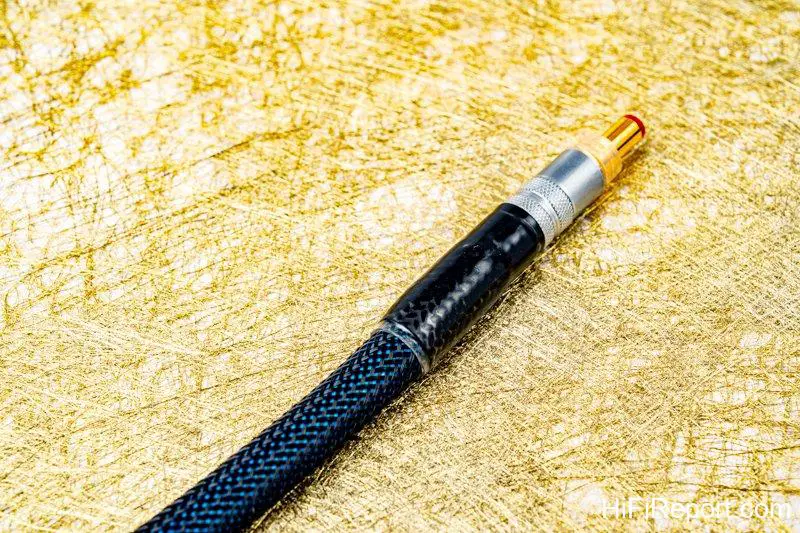
The other end of the power cable uses Oyaide gold-plated cylindrical connectors, available in two specifications: 5.5/2.1mm and 5.5/2.5mm. Before ordering, make sure to check the socket specification of your equipment.
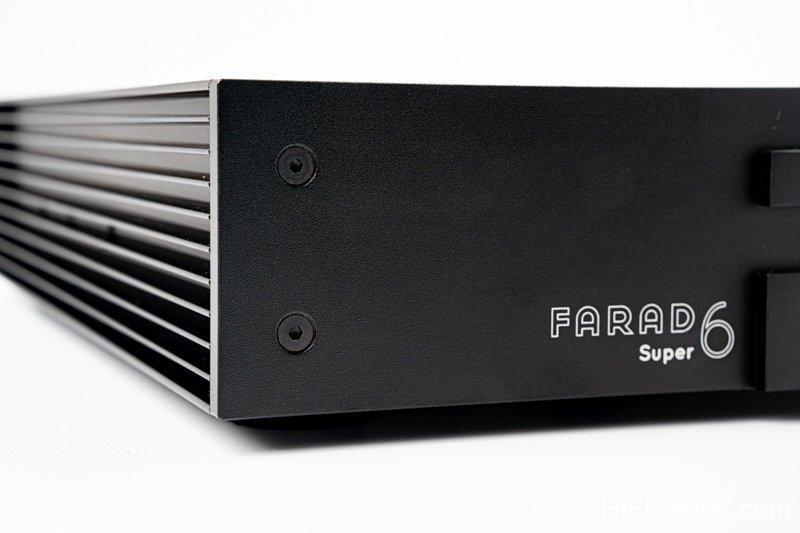
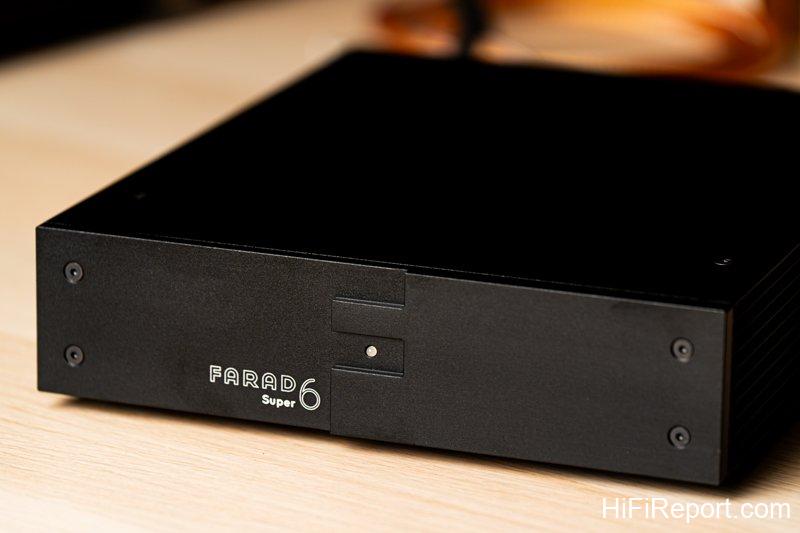
Observing the Super6’s exterior, neither the front panel nor the rear panel has a power switch. Plugging in the power cable immediately powers the unit on. When plugged in, the LED in the center of the front panel will flash blue and green a few times, then turn red, and slowly dim. This isn’t a fault; it indicates the Super6 is charging its supercapacitors. After about ten to twenty seconds, when the capacitors are fully charged, the LED will turn blue, signifying that the Super6 has completed its startup and is supplying power.
The rear panel of the Super6 features a “RES” button. What’s its purpose? It’s for restarting. When the powered equipment needs a reboot, for example, if your home network is having issues, restarting the switch often solves the problem. Since most switches lack a power switch, you don’t need to unplug the power cable. Simply press the RES button to restart the switch.
Furthermore, the Super6’s rear panel includes a ground switch, with options for “Float” (floating ground) and “On” (grounded). Users can experiment by switching between them. If you wish to connect an external ground box to the Super6, there’s also a terminal provided on the rear for easy connection of an external ground wire.
The Super6’s user manual also mentions a run-in period. The Super6’s run-in characteristics are quite unique. According to the manufacturer, a brand new Super6 will exhibit the expected sonic improvements and characteristics upon initial use. However, after approximately 500 hours of continuous use, the sound quality may start to degrade, becoming flat and dull. Then, after another 250 to 300 hours, the sound begins to improve again, becoming smoother, more effortless, denser, and eventually settling into its final state after completing the run-in process.
This means that if you start using a new unit and suddenly notice the sound deteriorating, don’t rush to judge it – this is a necessary part of its process.
A Source Upgrade
The Super 6 has a maximum output of 6A, which is sufficient to power an Intel NUC mini-PC. For this review, I specifically requested a 19V version to power my NUC i3 Roon Core. The reference power supply for comparison was the standard switching power adapter that came with the NUC.
I connected the NUC via USB cable to a Holo Audio Spring 3 DAC, followed by a Holo Audio Serene preamp, a NuPrime Evolution STA power amplifier, and Aurum Cantus Grand Harmony speakers.
I played “Immediately Blessed” from a Blue Coast Records compilation. The song features two acoustic guitars accompanying a male vocalist, with a second male vocalist joining for harmonies in the later part. The arrangement is simple, the recording is rich in detail, and subtle dynamics are clear, making it easy to discern system changes.
After just one or two comparisons, it was immediately clear: the Super6 significantly eliminated impurities from the sound foundation, making the sound cleaner, the air more transparent, and the music more vibrant. To describe it in one sentence, it felt like upgrading to a much higher-quality source component – the sound gained noticeable refinement and texture.
Switching back to the NUC’s standard power supply, the soundstage was lower and wider, and its shape and boundaries were less defined, with shallower depth. The texture of the guitar fingerpicking wasn’t as clear, or rather, the outlines weren’t as distinct, and the dynamics felt more blurred. The tone was less transparent, the texture wasn’t as pure, and the sound even had a slight muddiness or haze, appearing somewhat edgy. Faster successive notes sounded more glued together, with less distinction between individual notes. The brilliance of the steel-string guitar’s high frequencies was slightly lacking, and the tone felt a bit dark. When the vocals reached a strong point, they seemed a bit forward and uncontrolled, with less defined contours.
These were the results obtained through comparison. However, without comparison, the standard power supply didn’t sound bad at all; the sound was quite lively. But when compared, the difference was stark. Using the Super6 brought about a noticeable change – the sound became lighter, more refined, more beautiful, the tone clean and clear, the music flowed better, dynamic fluctuations were vivid and effortless, making the listening experience smoother, more comfortable, and ultimately more engaging.
Essentially, from just this single track, it was enough to prove that the Super6 is well worth its price. It elevates the NUC from being just a standard computer to a respectable audio-grade source.
Organized Soundstage
Taking Stewart Goodyear’s performance of Tchaikovsky’s Piano Concerto No. 1, First Movement as another example, playing with the NUC’s standard power supply clearly resulted in a shorter, wider soundstage. This reduced the separation between high, mid, and low frequencies, making the sound feel a bit messy. The iconic four-note figure followed by a short note at the beginning of the piece, played by the orchestra in unison, lacked dynamic layering – it seemed to jump straight to the maximum intensity with less variation in gradation. The sound even had a slightly broken or collapsed quality, appearing loose and flattened. The depth of the soundstage, the palpability of the sonic images, the separation between different sections of the orchestra, the shaping of the soundstage boundaries… all were less defined.
Switching to the Super6, the previously suboptimal aspects were instantly and dramatically improved, just as if an entirely different source had been introduced.
Next, I played the soundtrack to the movie “Top Gun: Maverick.” The first and second tracks feature a grand, expansive musical scale and substantial low-frequency presence. With the enhancement from the Super6, the subtle yet deep drumbeats at the very beginning of the first track felt more profound, with longer decay and a more open sense of space. The constantly building bass in the second track presented with clear texture and rich layering, allowing for better distinction between different instruments and sound effects. The soundstage lifted and widened, the structure of high, mid, and low frequencies became clearer, and the overall sound felt more organized.
If you enjoy listening to complex, large-scale music, the Super6 proves even more indispensable.
Elevating NUC Performance
The NUC is a consumer-grade mini-PC, affordable and accessible to everyone. It serves well as a Roon Core or other types of music servers, offering convenience while maintaining a certain level of audio performance. With proper system matching and tuning, it can certainly function as an audio source.
However, you wouldn’t know the difference until you compare. The NUC’s sound quality still has significant room for improvement, and power is a key factor. The Super6 provides a shortcut to upgrading that power.
Do you want to take the stairs or the elevator? The answer should be pretty clear by now, shouldn’t it?
Specifications
* Farad Super6
* Type: DC Power Supply
* Output Voltage Versions: 5V, 9V, 12V, 15V, 19V, 24V (Other voltages between 5V and 24V available for custom order)
* Dimensions: 215 × 52 × 290 mm (W×H×D)
* Weight: 3 kg