
Ideon 3R USB Renaissance MK2 Black Star Review
The name is quite intriguing, primarily because a direct translation is challenging. The original English phrase is “3R USB Renaissance mk2 Black Star.” You might ask, how should one translate “Renaissance” here? The most common meaning that comes to mind is “the Renaissance,” referring to the historical period, used as both a noun and adjective. However, a literal translation feels out of place. Consulting Webster’s Dictionary reveals three definitions. The first pertains to the historical Renaissance. The second is a derivative meaning, as seen in phrases like the “vinyl renaissance”. The third definition points to “rebirth” or “revival.” Therefore, in my humble opinion, “regenerator” seems to be the most fitting term.
Connecting Streamer and DAC
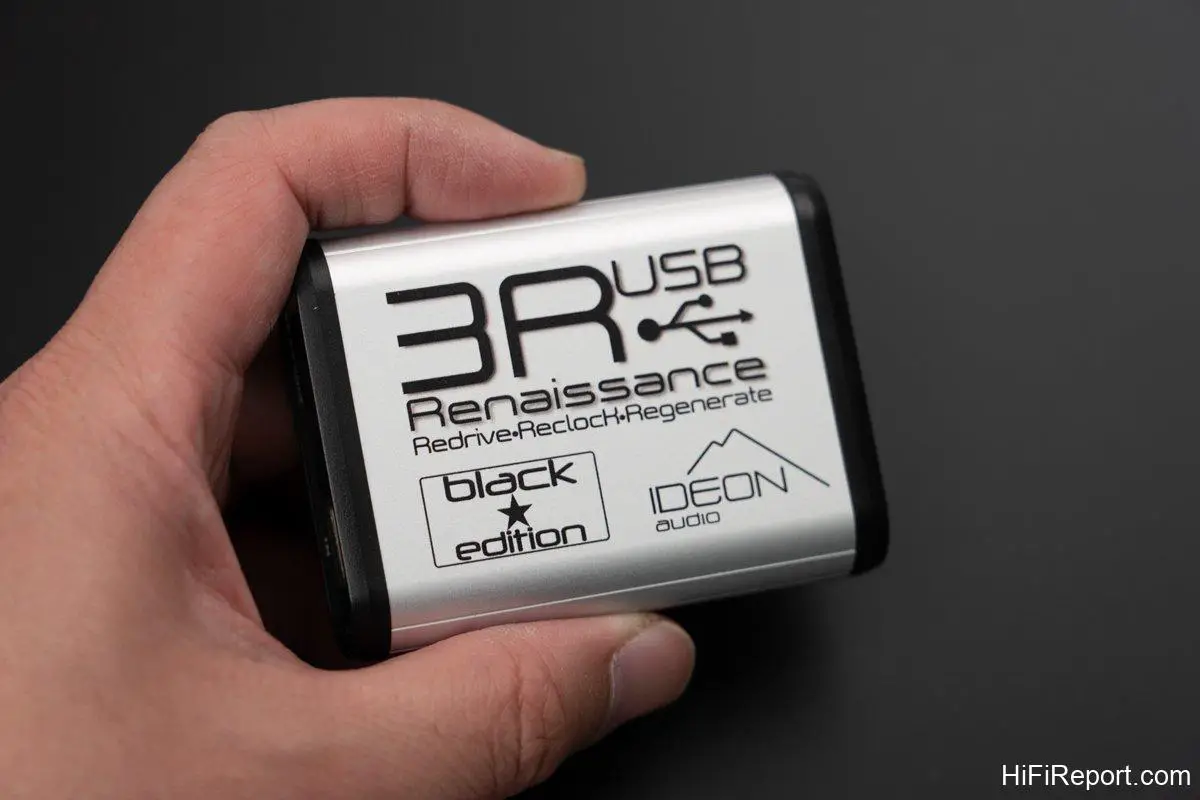
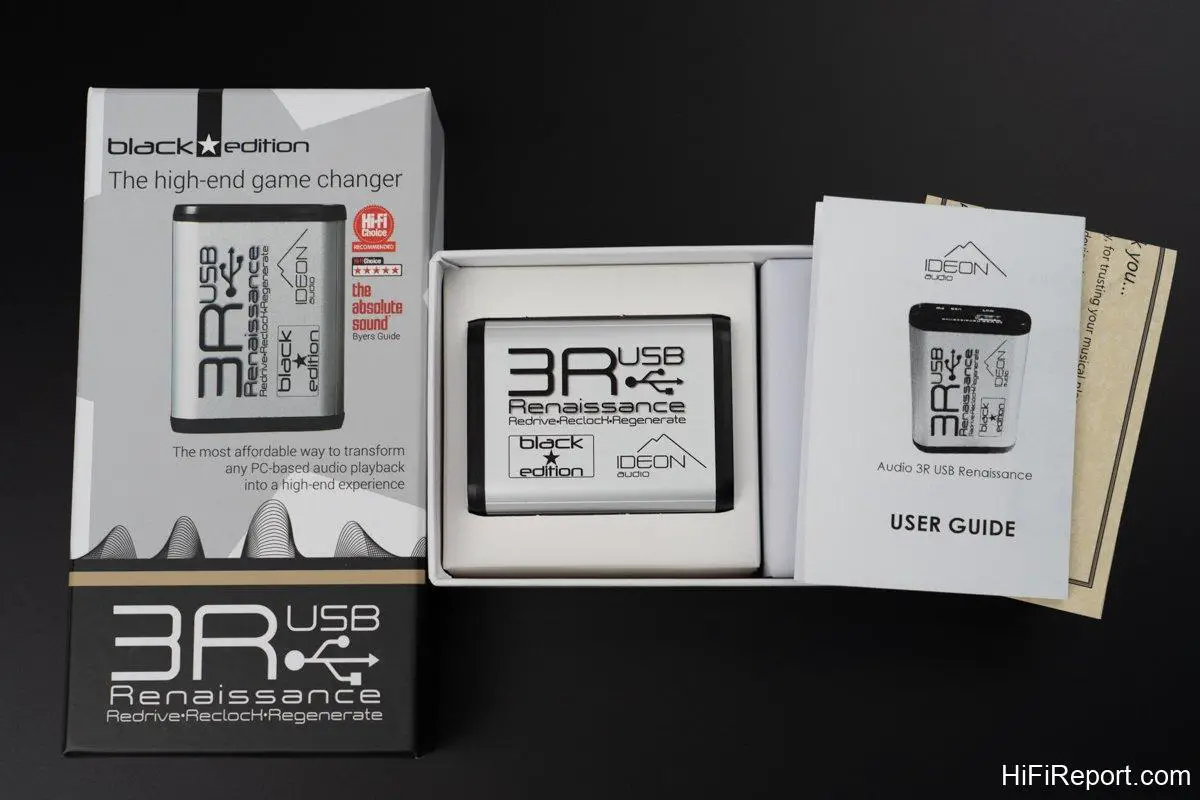
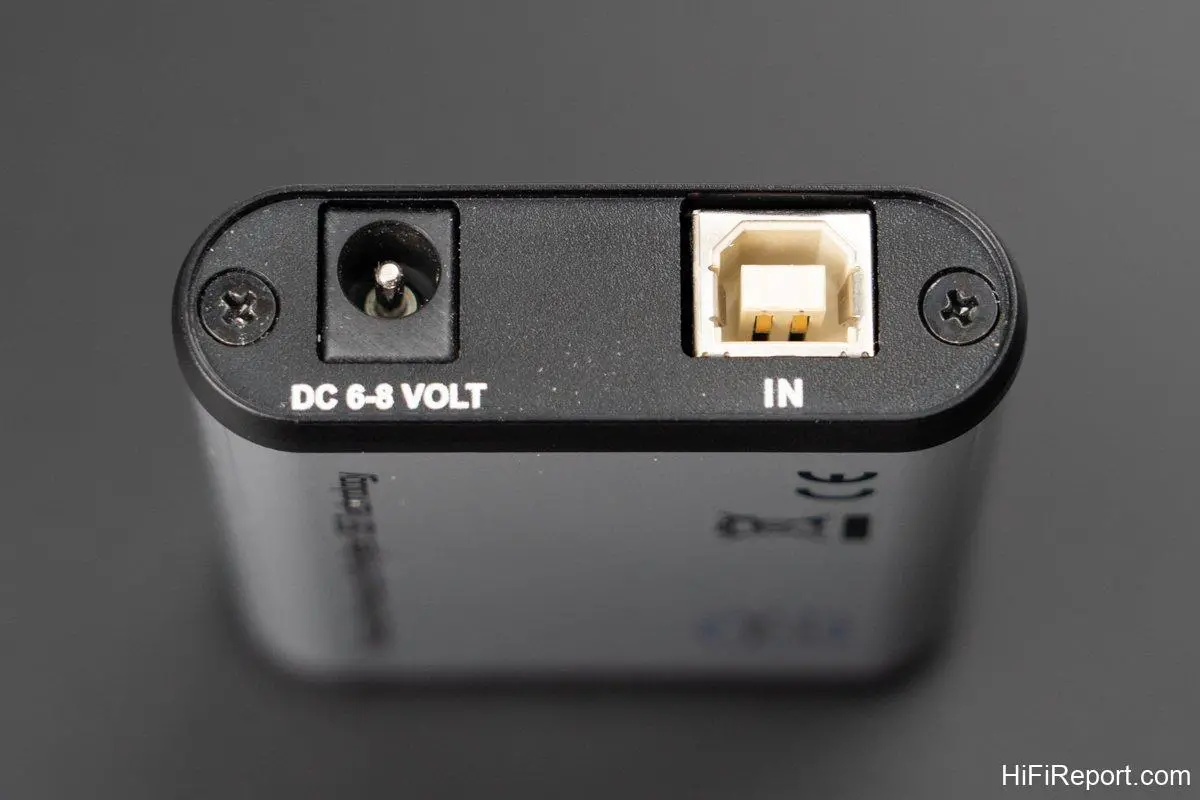
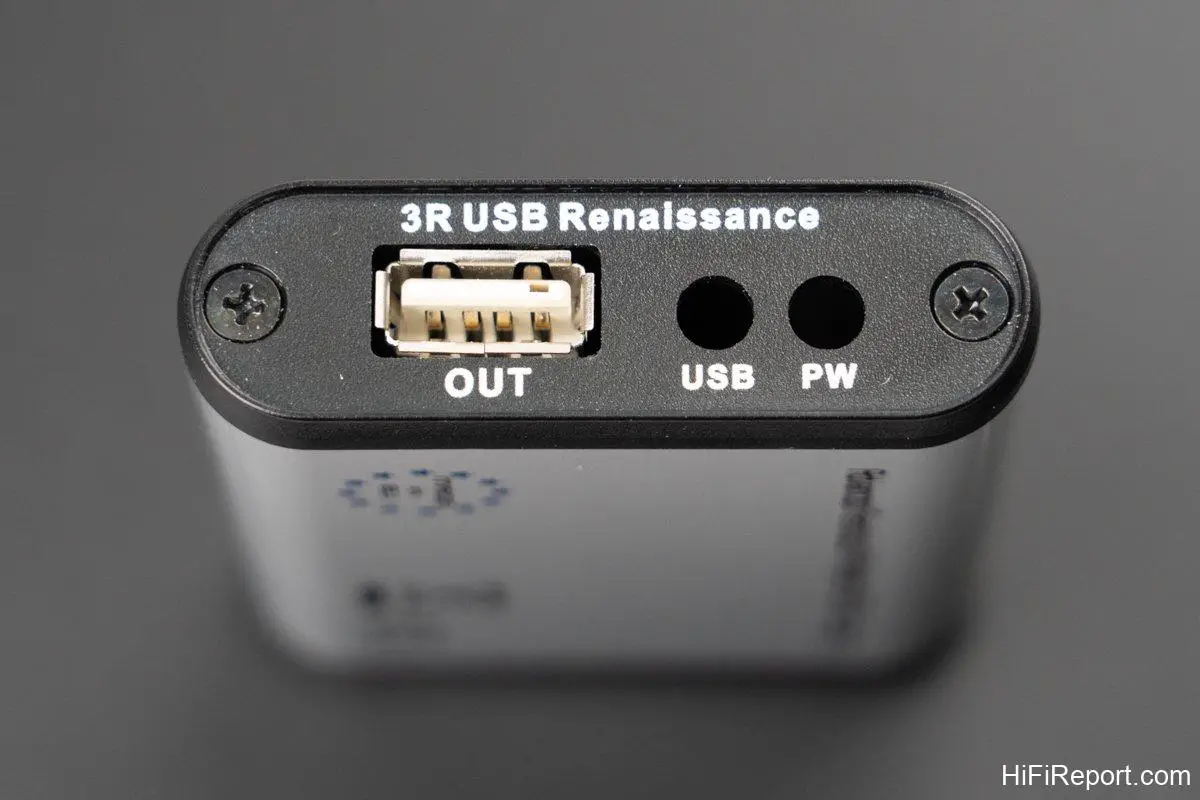
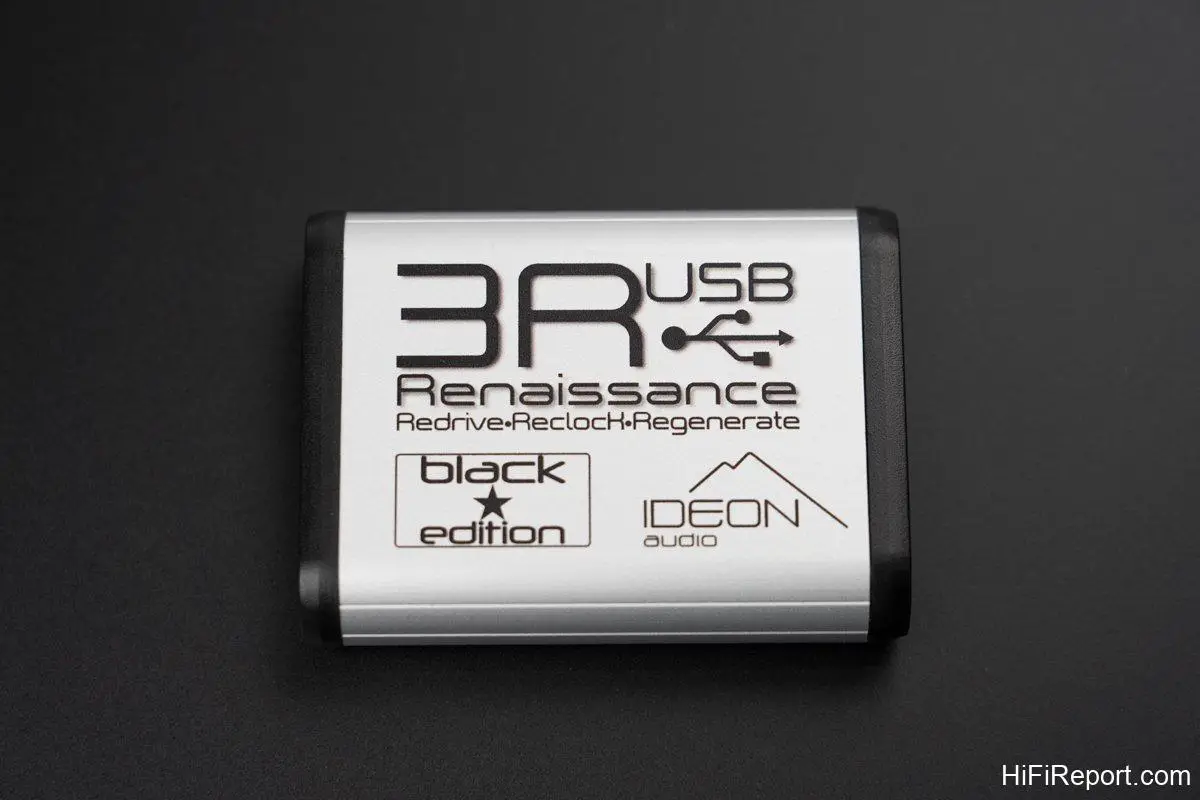
What exactly is this device? Upon unboxing, you’ll find a compact unit, roughly the size of a slightly thicker business card holder, encased in an extruded aluminum chassis with smoothly rounded edges. It’s remarkably lightweight, tipping the scales at a mere 65.89 grams. The sides host a power input alongside USB ports – a type B input on one side and a type A output on the other. Furthermore, red and blue indicator LEDs are present; a blue light illuminates upon power connection, while a red light signals a USB input device connection. The device’s simplicity is striking. But what is its function? Essentially, it’s a processor designed to be placed in the signal path between a USB streamer/music server and your DAC. Whether your streamer is a custom-built computer, a Raspberry Pi, an Intel NUC, or a commercial music server equipped with USB output, the connection sequence is straightforward: USB cable from your source to the Ideon 3R USB Renaissance MK2 Black Star, and then from the 3R to your USB DAC.
3R Technology Explained
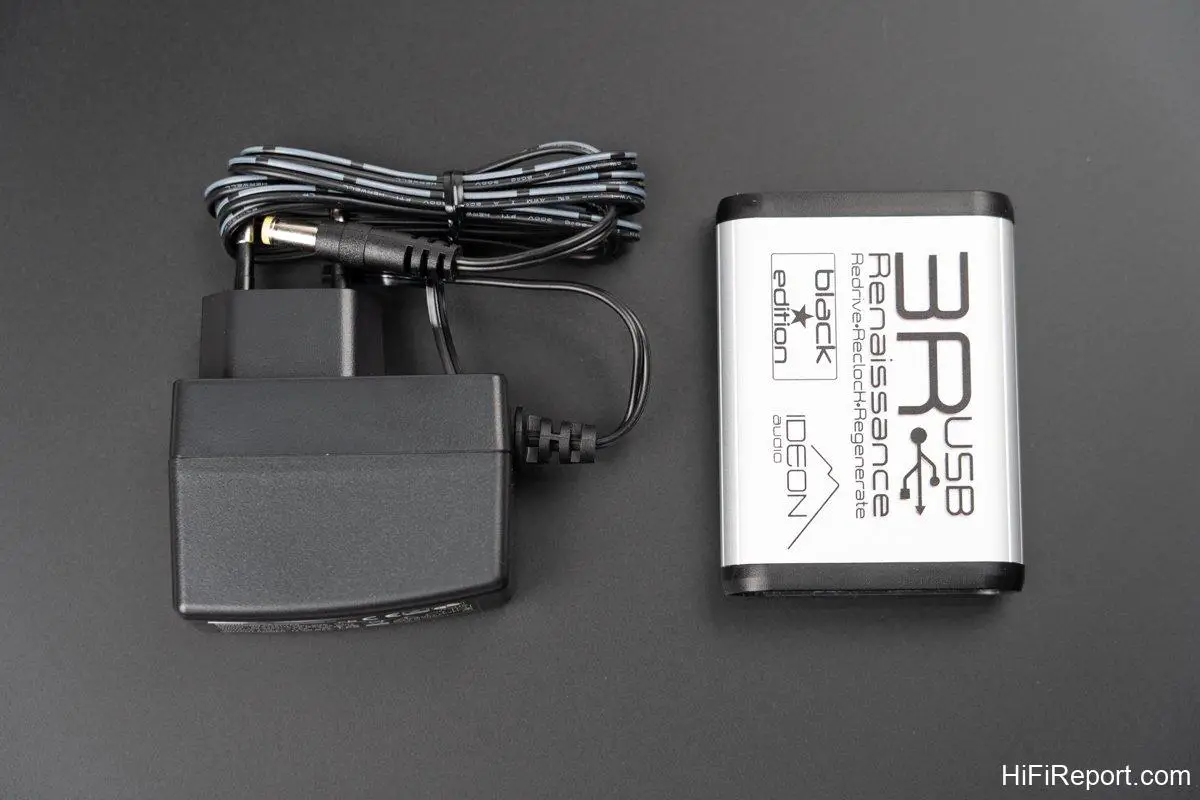
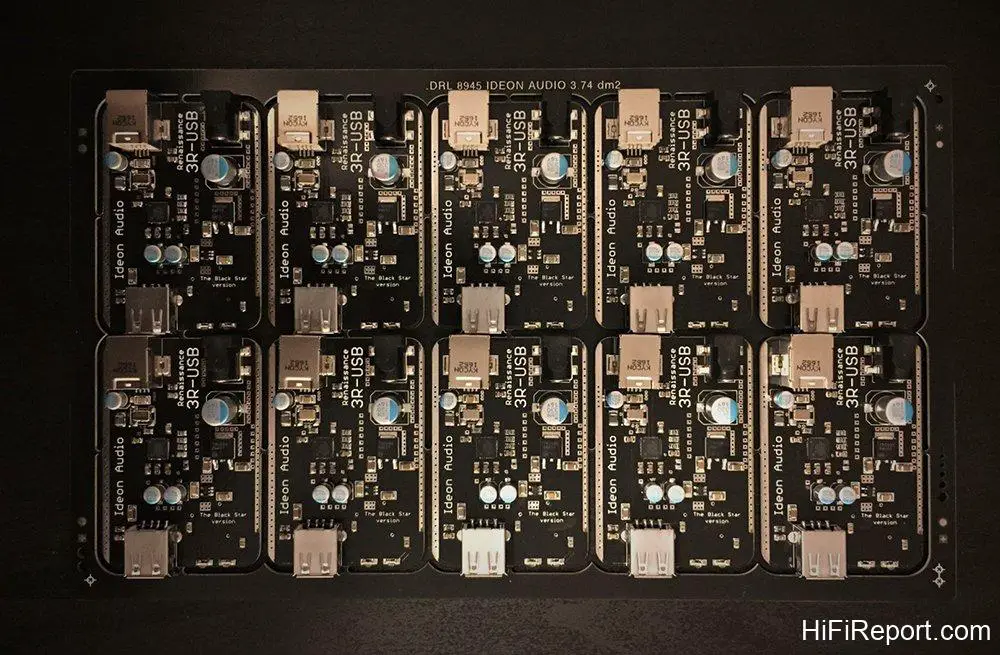
What exactly does it do? The manufacturer states that “3R” stands for three key processes, all starting with the letter “R”: Redrive, Reclock, and Regenerate. In essence, it’s designed to redrive, reclock, and regenerate the USB signal. At the heart of the device lies a cutting-edge programmable chip, running proprietary firmware developed by Ideon. This chip is engineered not only to accelerate the USB signal but also to implement precise time-base correction. Internally, the 3R MK2 Black Star utilizes ultra-low ESR solid capacitors and incorporates an exceptionally low-noise voltage regulation circuit. To further minimize jitter, it features a new femtosecond-level oscillator, ensuring both low jitter and low phase noise. Ideon has previously released a 3R USB Regenerator, but this MK2 Black Star version boasts optimized circuitry and a shortened signal path. Power is supplied externally via a bundled European plug power adapter. Users in other regions will need to use a plug adapter or acquire a 7.5V power supply with a compatible plug.

Reclocking, Re-energizing, Redriving
Delving into its operation, the 3R MK2 Black Star employs internal USB input/output driver chips that reclock the incoming signal, followed by chip-driven signal amplification. This latter aspect echoes a past trend in digital audio tweaking – inserting a USB hub between the computer and DAC to bolster signal integrity. However, the 3R goes further by incorporating reclocking and reducing jitter. While the 3R derives its power from an external source, the incoming power still undergoes voltage regulation and distribution via internal power circuitry. Ideon has clearly paid close attention to these crucial details.
Enhanced Sound Performance
I conducted listening tests using a MacBook Pro as a source, directly feeding an Audiobyte Black Dragon DAC, and utilizing Roon to stream music from Tidal and Qobuz. The difference with and without the Ideon 3R MK2 Black Star in the signal path was immediately apparent. With the 3R in place, the sound became more focused and cohesive, individual instrument and vocal images gained sharper definition, and overall separation improved. The soundstage also underwent a transformation, most notably in its depth, with a more clearly delineated front-to-back layering of the musical presentation. The tighter sonic focus also extended to the lower frequencies, resulting in improved bass definition and enhanced low-end resolution.
Detail and Nuance
Listening to Diana Krall’s “Live in Paris” album provided a clear illustration. Subtle details in Diana Krall’s pronunciation and vocal articulation became more distinct and nuanced. While direct output from a MacBook Pro isn’t an audiophile’s ideal starting point, incorporating the Ideon 3R MK2 Black Star injected a newfound cleanliness and vibrancy into the music, significantly enhancing transparency. Drum sounds became more impactful and solid, with each drum strike rendered with greater clarity and precision, particularly evident during the drum solo in “Devil May Care.” Both piano and guitar exhibited well-defined sonic textures. While a piano is an acoustic instrument and a guitar can be electric, both were reproduced with clearly articulated notes. Without the 3R, are these not still individual notes? Of course, they are. The piano remains a piano, and the guitar a guitar. However, with the 3R in the chain, these notes gain enhanced clarity and a natural, almost luminous quality. The difference is subtle, yet profoundly impactful – it’s a matter of refinement.
Enhanced Musicality
Speaking of nuance, my thoughts naturally turn to classical music. While jazz excels in atmosphere, the brilliance of classical performance often resides in the most delicate details. On Qobuz, I discovered Daniel Lozakovich’s new album “Spirits,” a digital-only release available solely on streaming platforms and for digital download. This violinist, born after the turn of the millennium, is one to watch – if he performs near you, tickets are a must. His recording of Beethoven’s Violin Concerto at the age of 18 showcased a free-spirited yet confident performance, brimming with youthful energy that captivated many. “Spirits” features a collection of well-known shorter pieces. The artistry in performing such works lies in the performer’s meticulous attention to subtle details, unearthing new facets of familiar melodies and imbuing them with personal expression. Lozakovich isn’t a performer known for cold precision; instead, each phrase seems both spontaneous and meticulously crafted. In “Salut d’amour,” he delivers a seemingly straightforward rendition, while legato passages reveal a seamless, uninterrupted technique, drawing the listener into a dreamlike state carried by the music’s ebb and flow. In the arrangement of Debussy’s “Clair de Lune” from the Bergamasque Suite, the violin melody unfolds and blossoms against the backdrop of the piano’s soft, suggestive harmonies. Lozakovich’s playing here is unpretentious, utterly natural, poetic, and lyrical, effectively transporting Debussy’s moonlight into my listening room. You might notice I’ve written at length without focusing on sonic attributes. Indeed, when listening to “Clair de Lune” with the Ideon 3R MK2 Black Star, and even throughout the entire 28-minute album, I found myself completely immersed in the music, oblivious to sonic dissection or equipment evaluation. The music was simply beautiful, truly beautiful. The 3R is the first Ideon product I’ve encountered, and also the most affordable and accessible. It offers a glimpse into Ideon’s sonic philosophy. This natural and pure sound, this elusive yet captivating musicality, is incredibly valuable. To listen to audio equipment and forget the music, to write audio reviews and lose sight of the music, to tweak audio systems and neglect the music – such misplaced priorities are, to me, a profound disservice to the art of music itself.
Benefits Beyond Laptops
While the improvements observed with the MacBook Pro are noteworthy, they might be expected. More surprisingly, I also evaluated the Ideon 3R MK2 Black Star with the Telos EMP (Enchanting Music Player), a Raspberry Pi-based streamer meticulously engineered by HiFiReport with extensive power supply optimizations. The EMP already boasts a remarkably clean and refined sound, the result of HiFiReport’s dedicated efforts to achieve a full-bodied, solid, powerful, and dynamically expressive sonic signature, particularly impressive in larger, high-resolution systems – a fact readily apparent to anyone who has experienced the HiFiReport demo rooms at audio shows. However, even with the already excellent EMP, incorporating the Ideon 3R MK2 Black Star still yielded a perceptible improvement. While the MacBook Pro’s native output tends to be somewhat veiled, less defined, and softer in presentation, the 3R injected clarity, transparency, and improved articulation. With the EMP, the effect was more nuanced, adding a further layer of refinement. On its own, the EMP projects a more robust sound, but with the 3R in the chain, the sound becomes more focused and controlled, enhancing the retrieval of subtle details. Furthermore, the soundstage expanded in both depth and width, mirroring the effect observed with the MacBook Pro, and enhancing the layering and dimensionality of the sonic image.
Minor Drawbacks
To present a balanced perspective, it’s important to address any potential downsides. Are there any shortcomings? Yes, there are a couple worth mentioning. First, the 3R MK2 Black Star is incredibly lightweight. Weighing under 69 grams, its diminutive mass makes placement somewhat precarious, and it can easily be moved around by the connected cables. If you encounter this issue, consider using a bit of Blu-Tack or similar adhesive putty to secure it. Second, the 7.5V power requirement is rather unusual and inconvenient. In the realm of audiophile-grade linear power supplies, finding a 7.5V output option is surprisingly difficult. You’ll find 7V and 9V options readily available, but 7.5V is conspicuously absent. Unless you opt for a continuously adjustable LPS like the Ferrum Hypsos, or undertake a custom build, most standard fixed-output linear power supplies won’t be compatible. I attempted using a KECES P6 linear power supply, which offers 7V and 9V outputs, but lacks a 7.5V setting. While the 3R MK2 Black Star powered on with the 7V output, the sonic performance suffered, becoming weak, lacking in dynamics, and losing detail, actually sounding inferior to the stock power supply. This 7.5V input voltage requirement is a significant consideration.
Stepping Stone to Higher Performance
For those seeking even greater performance, Ideon offers a range of higher-end “3R” devices, including the 3R Master Time Black Star, Eos Time, and the flagship Absolute Time and Absolute Time Signature V models. This product family underscores Ideon’s commitment to the “3R” principles – their dedication to time-base accuracy, precise USB signal transmission, and the elimination of digital noise are clearly paramount in their design philosophy.
Affordable and Effective Upgrade
In conclusion, the Ideon 3R MK2 Black Star is undeniably a “useful and effective” component. If you own a modestly priced system that relies on USB-based digital streaming, especially if your streamer is a computer, CAS, or similar architecture, the Ideon 3R offers a significant sonic upgrade at a relatively modest cost – an improvement that is likely to become addictive once experienced. You really should give it a try. If you find the model reviewed here too entry-level, Ideon offers a range of more advanced “3R” products ready to take your system even further. And thankfully, those higher-end models likely sidestep the 7.5V power supply consideration. Hmm, should I keep this one?
Specifications
* Type: USB Signal Regenerator
* Input: USB Type B (High-Speed 2.0, 400Mb/s)
* Output: USB Type A (High-Speed 2.0, 400Mb/s)
* Supported Formats: PCM, DSD