
Leak Stereo 230 Review
My visit was specifically to audition the Leak Stereo 230.
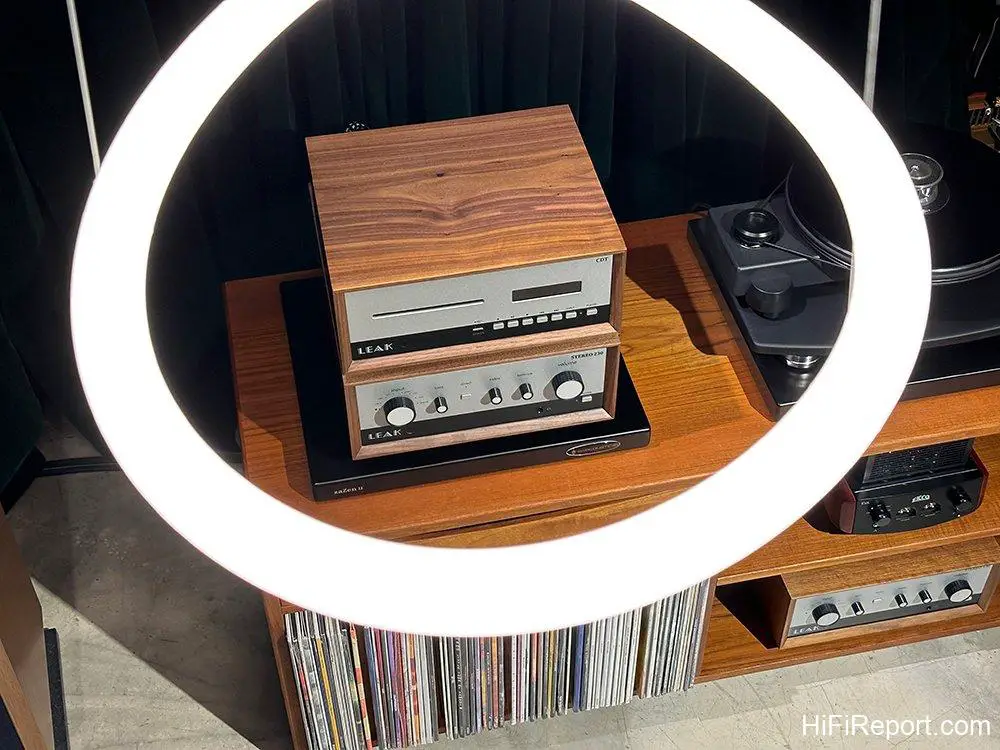
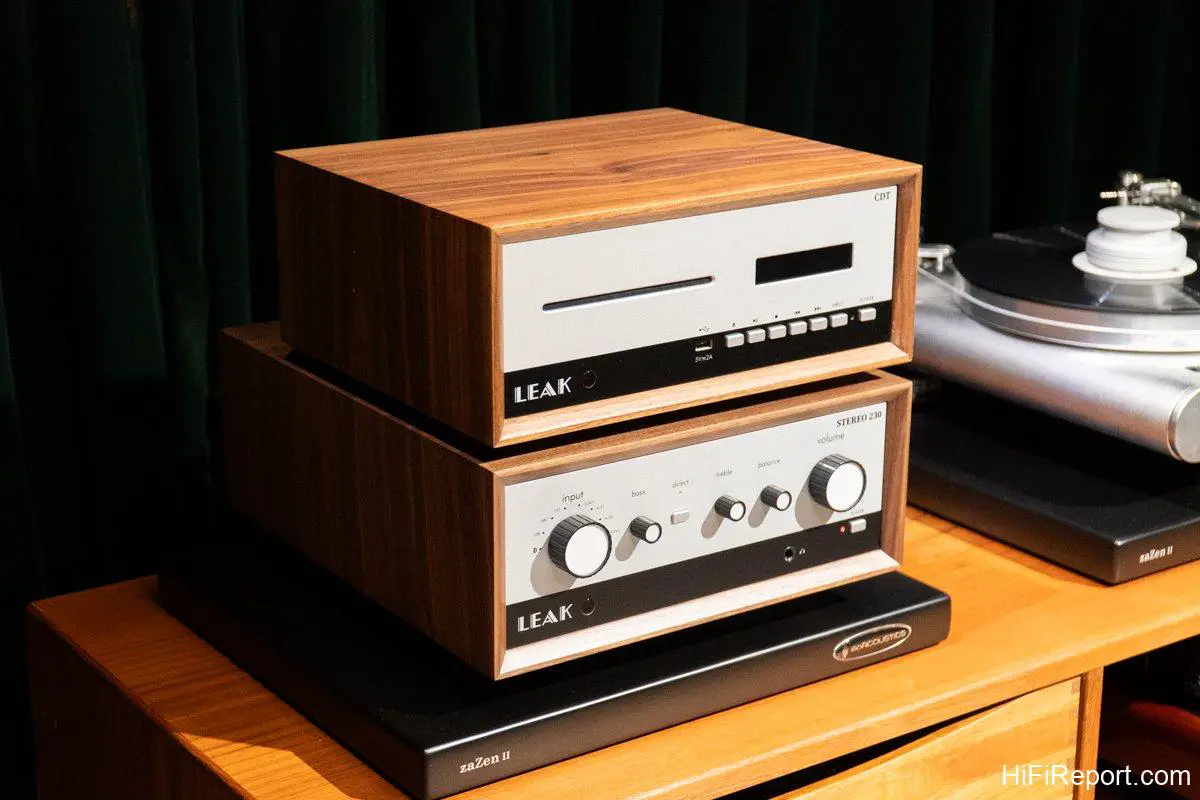
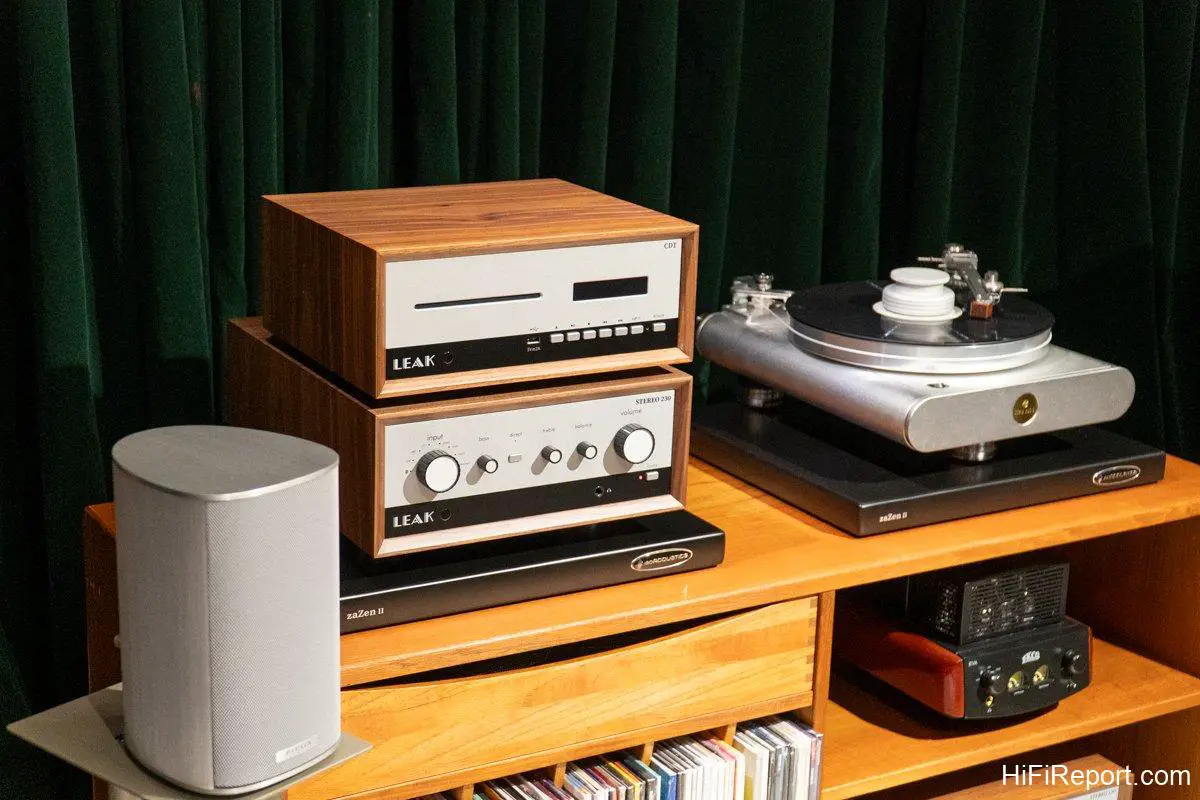
The venerable British brand Leak, resurrected after half a century of silence by IAG, has made a comeback. Their initial offerings, the Stereo 130 integrated amplifier and CDT CD transport, are products I’ve previously experienced, reviewed, and even owned.
IAG Group has successfully tapped into the classic essence and retro charm of Leak, rekindling the audio memories of a generation. They’ve reshaped and revitalized the brand for today’s audiophile.
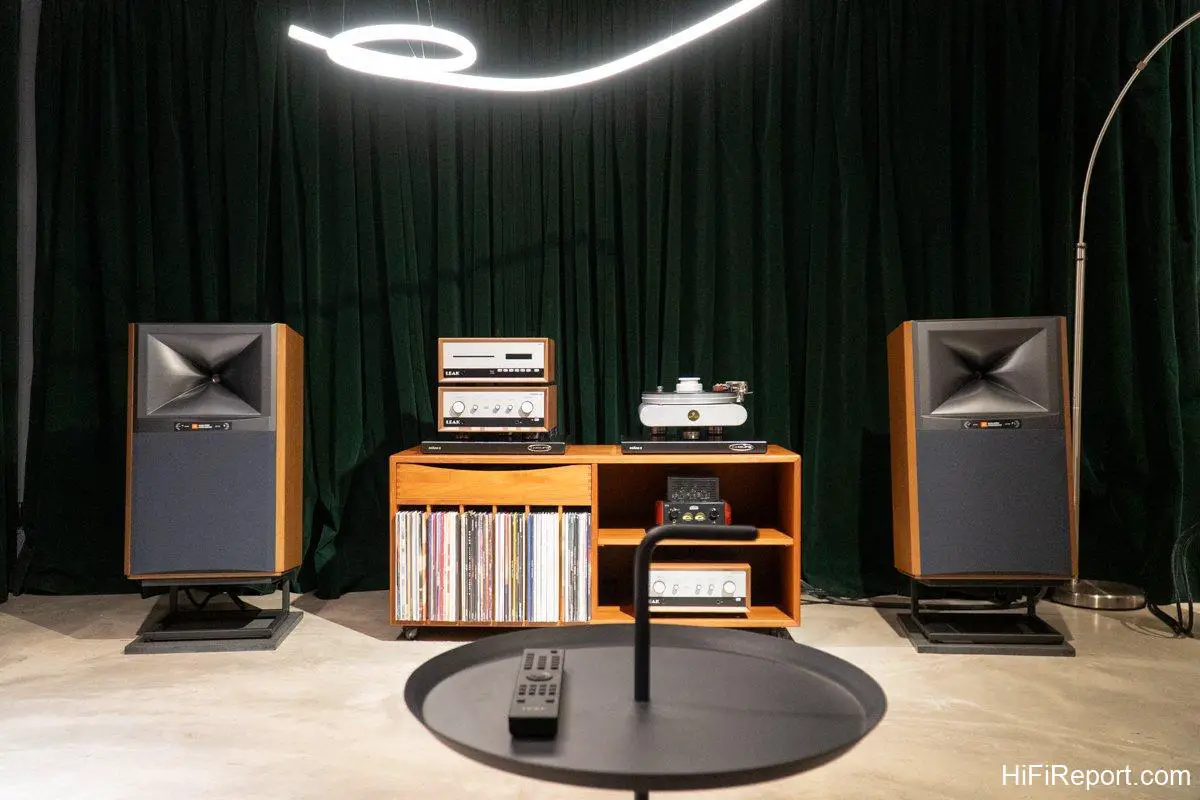
I confessed to Li Jiaqing that without IAG’s revival, Leak would have remained unknown to me.
He responded with a hint of pride, “I knew about them before. Their new designs are faithful to the look of their vintage equipment.”
A vintage audio enthusiast since his student days, he was well aware of Leak’s prestigious history. Now, with Leak’s resurgence, he’s thrilled to promote the brand once again. The silver front panel of the Leak, with its black lower section and classic “Leak” logo, exudes understated elegance.
Opting for the wood-clad version elevates the aesthetic further, ensuring seamless integration with various interior styles, from European classic to Nordic minimalism and American country.
(I struggle to picture Leak fitting into modern, industrial, or pop-art decors, but beyond those, it should be a safe bet.)
Increased Power Output
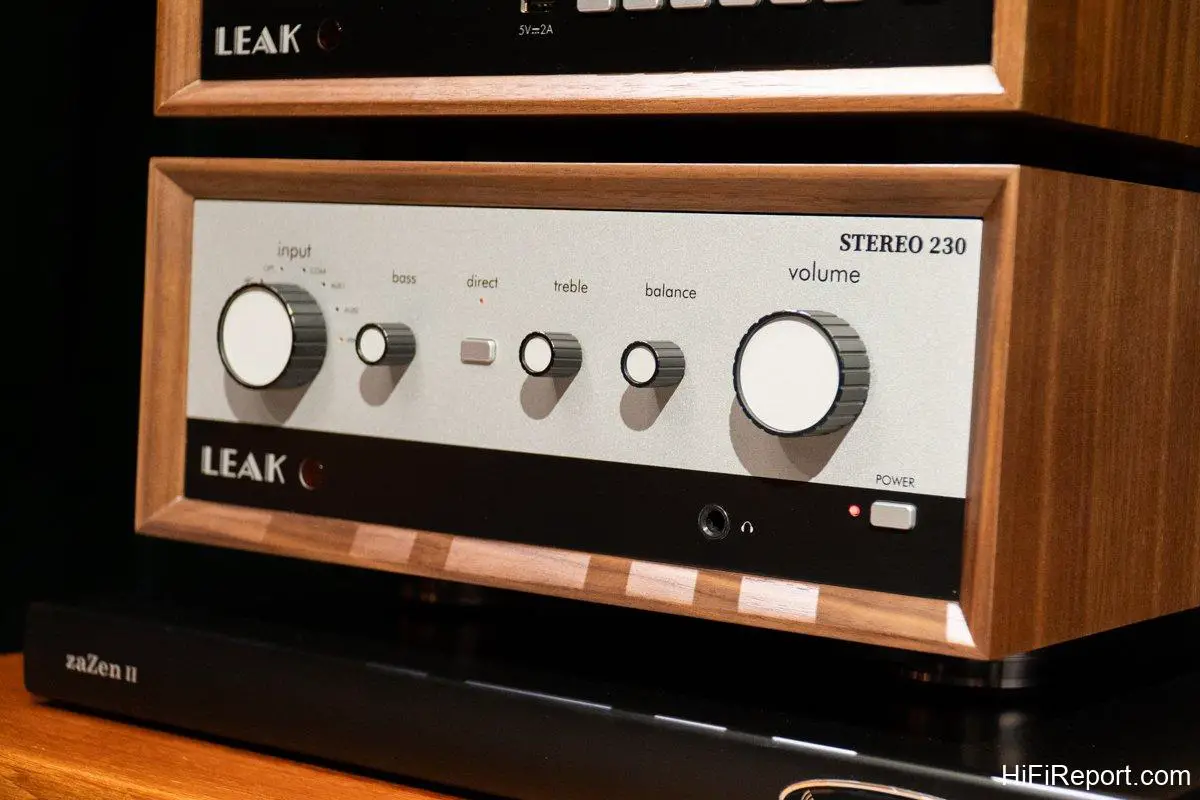
The new Stereo 230 integrated amplifier shares a near-identical appearance with the Stereo 130, but boasts increased power, expanded functionality, and broader application versatility.
Firstly, the Stereo 230’s power output has been boosted from the Stereo 130’s 45W to 75W (into 8 ohms), and a robust 115W into 4 ohms. This makes speaker pairing less critical and ensures effortless musicality.
Upgraded DAC Chip
Secondly, the DAC chip within the Stereo 230 has been upgraded. While the Stereo 130 employed the ES9018K2M, the Stereo 230 utilizes the newer, higher-grade ES9038Q2M.
This updated decoding core enables the Stereo 230 to support D/A conversion up to PCM 32bit/384kHz and DSD256.
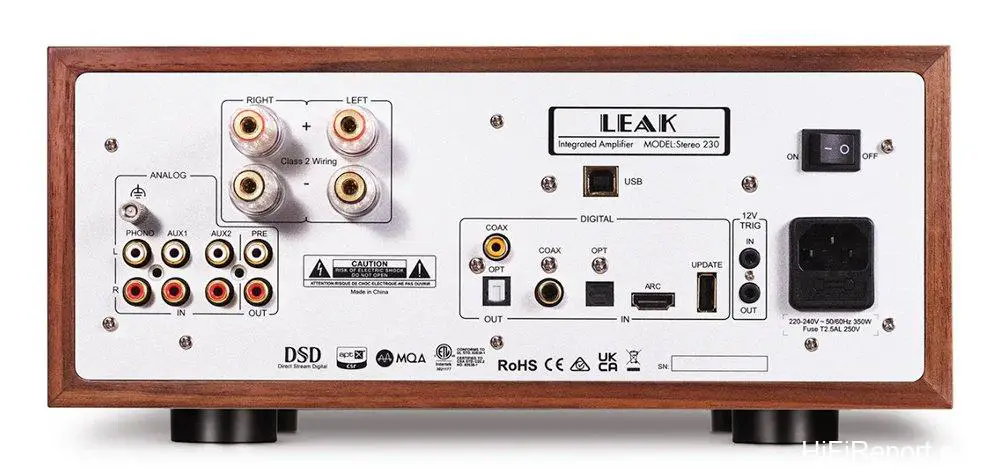
Digital inputs include one each of optical, coaxial, HDMI, USB Type-B, and USB Type-A.
The USB Type-B port connects to computers or streaming devices and is Roon Tested certified.
The front-panel USB Type-A allows for direct playback from external storage devices like hard drives or USB flash drives.
HDMI ARC Connectivity
Speaking of digital inputs, the addition of HDMI ARC on the Stereo 230 is a significant enhancement.
This feature seamlessly integrates the Stereo 230 into home entertainment systems.
Users can connect it to their TVs and enjoy enhanced audio for streaming services like Netflix and Disney+.
The Stereo 130 lacked HDMI, limiting TV connectivity to optical or coaxial, contingent on TV or set-top box compatibility. HDMI ARC simplifies this significantly.
Comprehensive Analog Connectivity
The Stereo 230 doesn’t skimp on analog connectivity either.
Two pairs of RCA analog inputs accommodate external source components.
A built-in MM phono stage and dedicated RCA phono input cater to vinyl enthusiasts.
Furthermore, an RCA pre-out allows for connection to external power amplifiers for bi-amping setups or for integrating a subwoofer to augment low-frequency extension and texture.
These options significantly enhance system flexibility and upgrade potential.
Adding to its versatility, the front panel features a 6.3mm headphone jack, compatible with headphones ranging from 16 to 600 ohms.
The manufacturer proudly claims the Stereo 230’s headphone output rivals dedicated headphone amplifiers, delivering high-speed output and slew rate for dynamic and detailed headphone listening.
For those late-night listening sessions when loudspeakers are inappropriate, headphone connectivity is a welcome feature.
Tone and Balance Controls
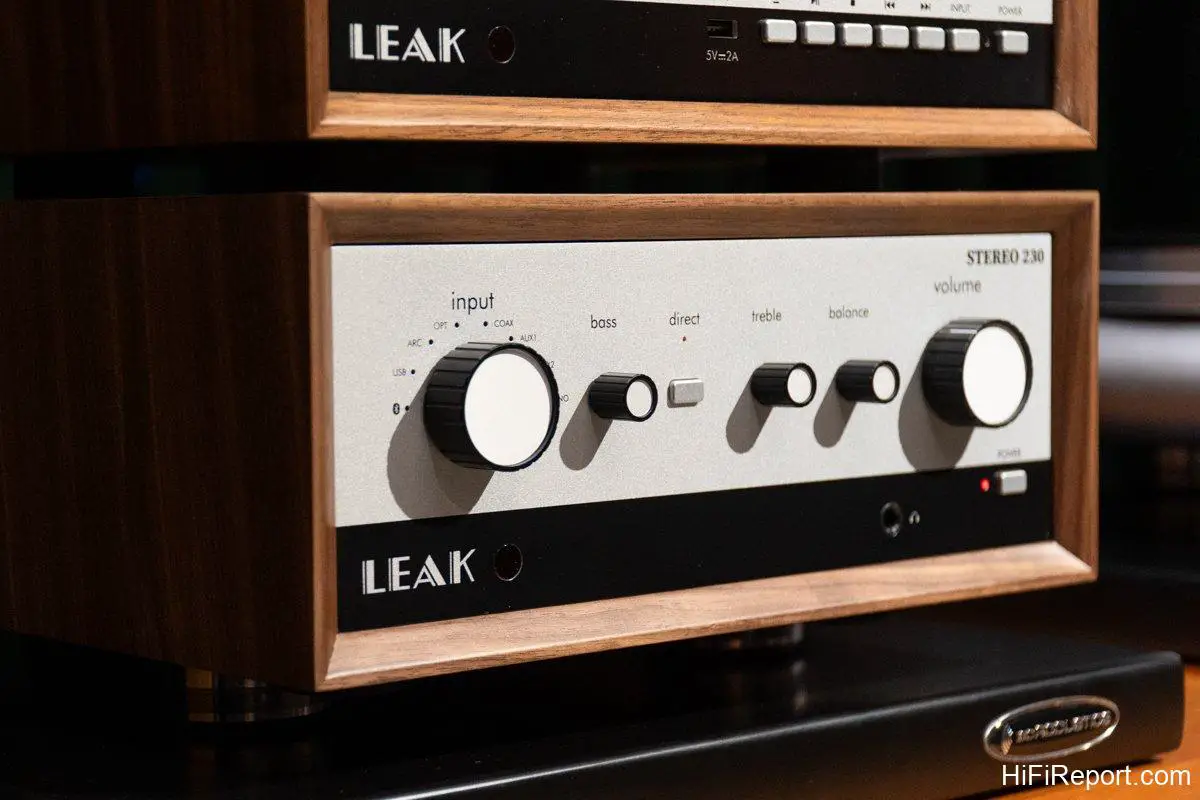
Another user-friendly design element shared with the Stereo 130 is the inclusion of front-panel treble and bass adjustments, along with a left-right channel balance control.
These controls allow users to tailor the sound to their preferences and fine-tune the audio to suit room acoustics for optimal listening.
For purists seeking unaltered sound, engaging the “Direct” button bypasses all EQ circuitry.
HiFiReport Audio points out that typical home environments are often not symmetrical. If one side of the listening space is bounded by a wall while the other is open, the walled side may exhibit greater energy concentration, potentially skewing the soundstage.
HiFiReport’s listening room also presents this issue. While often omitted in modern amplifiers and receivers, these tone and balance controls, common in older equipment, remain practical in many real-world scenarios.
However, if EQ and balance adjustments are not needed, engaging the “Direct” mode is highly recommended.
Direct mode noticeably cleans up the sound, widens the soundstage, sharpens imaging, clarifies instrumental lines, and enhances tonal purity.
The difference is significant; simply setting the bass, treble, and balance knobs to their center positions is insufficient. If not needed, engage “Direct.”
Matching with Compact Speakers
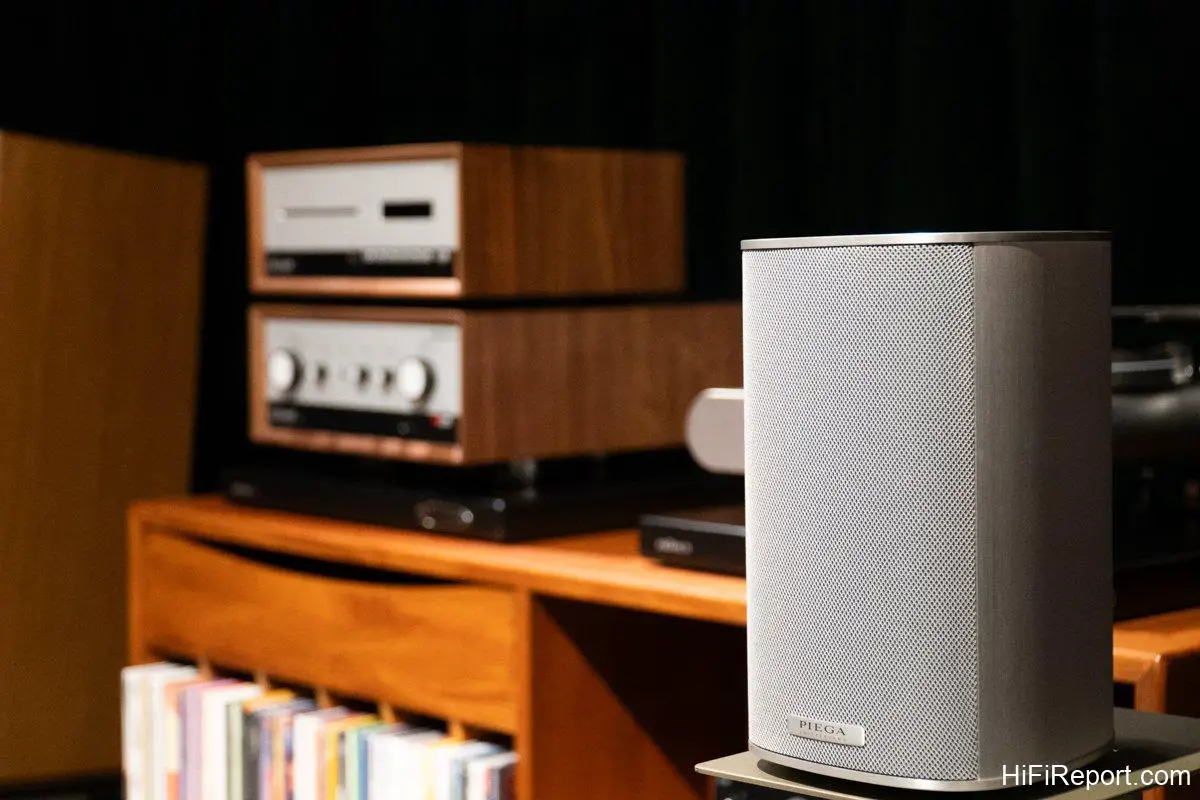
What loudspeakers were chosen for this audition? HiFiReport opted for the Swiss-made Piega ACE 30 bookshelf speakers.
These are undeniably charming speakers, featuring rounded cabinets to minimize parallel surfaces and constructed from aluminum alloy, lending a sleek and modern aesthetic.
The driver complement includes a Piega AMT-1 Air Motion Transformer tweeter paired with a 120mm MDS mid-bass driver in a sealed enclosure. Despite their compact size, they are capable of producing a surprisingly large soundstage and impressive SPLs, forming substantial sonic images.
HiFiReport Custom Cables
HiFiReport is a dealer for Nordost cables, yet I noticed that Jiaqing used different cables for the Leak Stereo 230 system.
“What cables are these?” I inquired. “These are all custom-made by me,” he replied.
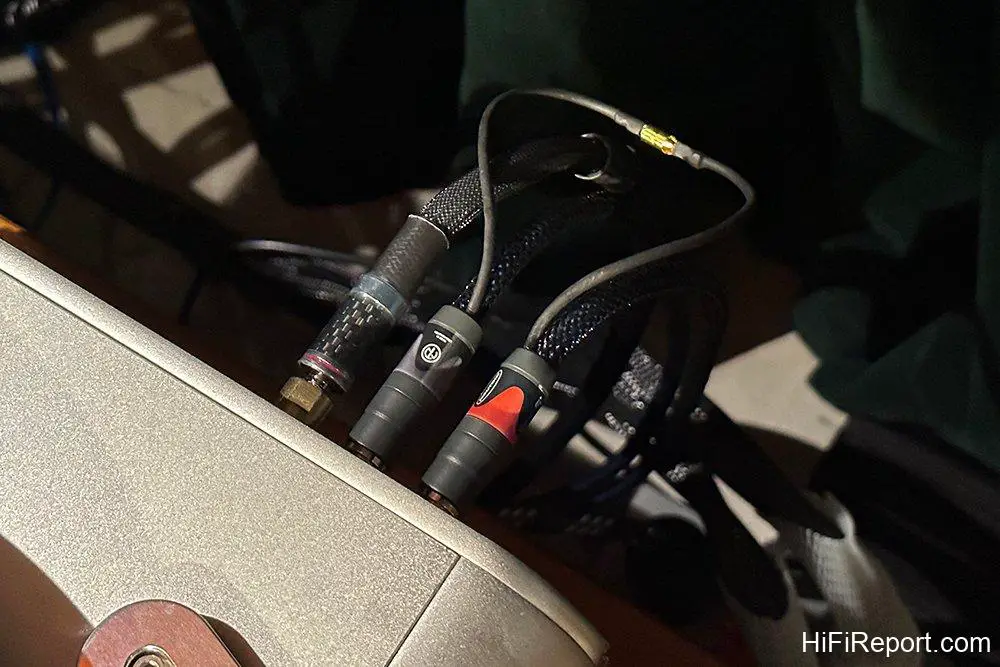
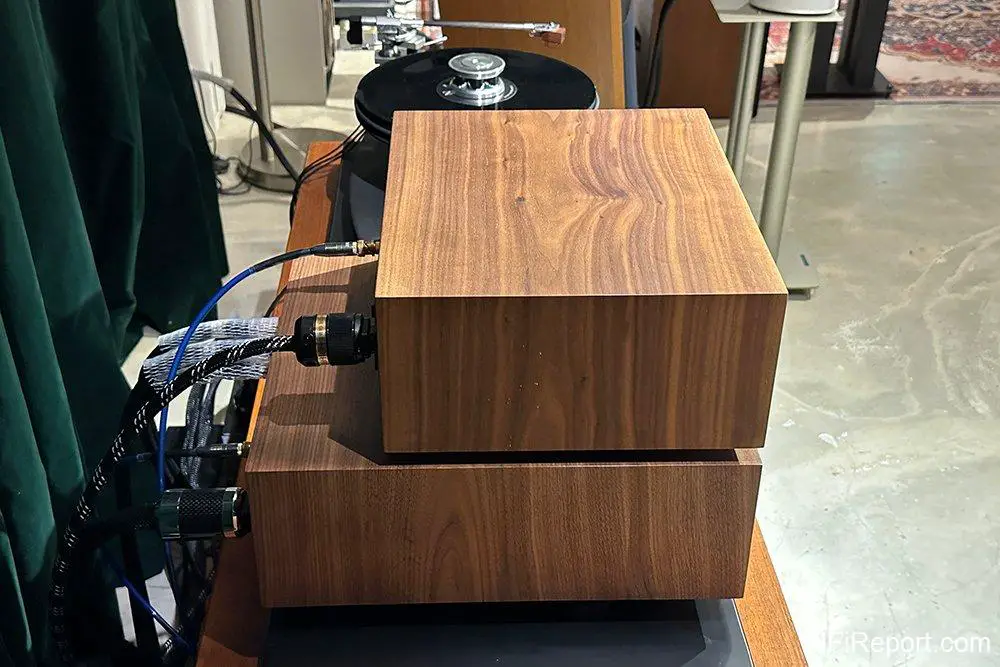
Jiaqing utilizes single-crystal copper wire and non-magnetic stainless steel connectors with carbon fiber housings, leveraging his years of experience and expertise to craft his own cables.
On the day of my visit, the system employed HiFiReport’s custom cables throughout, with the exception of a Nordost Blue Heaven coaxial digital cable connecting the CDT to the Stereo 230.
Rich Vocals and Piano Tone
Jiaqing is a big fan of Chie Ayado, and he started with her album “To You.”
The Piega ACE 30’s sonic energy is remarkable. Despite their diminutive size, they produce a substantial sound, particularly in the vocal range. The vocal image is full-bodied and rich, completely disproportionate to their physical dimensions.
The ACE 30s were positioned roughly in line with the larger JBL 4349s behind them, even slightly wider apart in terms of their center lines. Yet, they convincingly rendered Chie Ayado’s deep and resonant voice.
The piano tone was equally full and possessed a beautiful, lingering sustain, imbued with a gentle, warm glow.
Jiaqing chimed in, mentioning his recent immersion in Piega speakers and his captivation by their inherent sonic radiance.
Excellent Off-Axis Performance
I moved around HiFiReport Audio’s space, stepping away from the prime listening position. Even off-axis, the ACE 30s maintained a full, solid, and detailed sound.
Sharing my observation with Jiaqing upon his return from a phone call, he concurred, “Yes, I appreciate that aspect as well.” Most people don’t always listen to music rigidly seated in the sweet spot. More often, listening occurs while moving around or multitasking.
The ACE 30’s ability to fill the room with sound is truly impressive for their size.
Lively Percussion and Detail
Switching to my own CDs, after Chie Ayada, I wanted to explore the deeper, richer vocals of Cassandra Wilson.
I played her collaboration with Jacky Terrasson, “Rendezvous.” The opening track, “Old Devil Moon,” showcased Cassandra Wilson’s captivating voice, but my attention was equally drawn to the percussion and piano.
The congas and tambourine sounded vibrant and dynamic. Even subtle, delicate sounds were clearly rendered.
The crystalline piano was exquisitely beautiful, perfectly illustrating the “radiance” that captivated Jiaqing.
In “Tennessee Waltz,” Cassandra Wilson’s vocals were both narrative and wistful, imbued with a touch of nonchalance, languor, and smoky allure.
However, the bass, despite the ACE 30’s best efforts, was limited by the small cabinet and driver size. It couldn’t quite reproduce the recording’s taut, supple, and deep bass texture, sounding slightly loose instead.
I decided to change genres, realizing what type of music would truly shine on this system.
Piega’s Signature Sound
The system’s refinement became apparent with chamber music.
Listening to Liza Ferschtman’s violin and Inon Barnantan’s piano performing Beethoven’s Violin Sonata No. 10, the system truly excelled.
Ah, this was wonderful. While the Piega ACE 30 is Piega’s entry-level speaker, it’s still unmistakably a Piega, possessing the essence of Swiss loudspeaker design.
The violin’s lines were clear yet smooth, radiating a beautiful sheen.
The piano was bright and solid, capable of dynamic bursts during fortissimo passages.
Sitting there, immersed in the dialogue between violin and piano, was pure bliss.
This piece itself is inherently joyful, and the atmosphere at HiFiReport amplified the relaxed and comfortable listening experience.
Speaker Swap, New Perspective
Why have I been focusing so much on the Piega ACE 30? Isn’t the Leak Stereo 230 the star of this review? After listening to several CDs, I took advantage of Jiaqing’s absence while he attended to some walk-in customers. I moved the ACE 30s aside and replaced them with the JBL 4349s that were behind them.
This speaker swap immediately revealed the capabilities of the Stereo 230.
Stereo 230 Drives High-End Speakers
While the JBL 4349 is a studio monitor, it’s perfectly suitable for home use and sounds excellent.
JBL and Piega represent different sonic philosophies. My intention wasn’t to compare the speakers themselves, but to experience the impact of the 4349’s 12-inch woofer.
With the 12-inch woofer engaged, the Stereo 230 shed its outwardly genteel demeanor. I played Vladimir Ashkenazy conducting the Philharmonia Orchestra in Sibelius’s “Finlandia.” The brass section entered with a short motif of “long-short” notes, like a sigh of resignation or heavy footsteps. The timpani rolls resonated with simmering anger.
On the 4349s with their 12-inch woofers, the piece sounded grand and powerful.
Especially during the narrative of struggle after the introduction, the performance was captivating.
Despite its classic and understated appearance and a modest 75W power rating, the Leak Stereo 230 driving 12-inch monitor speakers revealed an impressive sense of scale and musical completeness. At its price point of approximately $2000 USD, paired with speakers costing nearly $10,000 USD, it didn’t sound underpowered in the slightest.
Jiaqing returned, slightly concerned to see the system reconfigured.

Sensing his apprehension, I reassured him, “It’s perfectly normal. If Leak sends equipment to our editorial department, we would also use different speaker pairings to evaluate it.” With only the ACE 30s, I could only comment on their performance. Switching to different speakers revealed the true strengths of the Stereo 230.
Versatile Music Performance
JBL’s soul is rooted in rock music.
I put on the “A Star Is Born” soundtrack, starting with Bradley Cooper’s opening song after swallowing a pill and taking the stage. The electric guitar was fiery, the drums impactful, and the overall energy explosive.
Hearing the Leak Stereo 230 reproduce “Black Eyes” with such ferocity was like witnessing a refined gentleman in a suit suddenly shed his jacket to reveal a ripped physique and step into an MMA cage.
It was equally captivating with ballads. The emotionally charged “I’ll Never Love Again,” with its opening piano chords and Lady Gaga’s drawn breath, was vividly rendered.
HiFiReport Audio’s location above a record label office meant constant meetings and conversations upstairs throughout my audition. (They were probably more tolerant of my loud music than I was of their noise). Yet, those subtle inhalations were clearly audible.
The song’s initial high notes, sung in a breathy falsetto, gradually built in intensity. The drums entered, deliberate and powerful, followed by strings, enriching the sonic texture and weight. Lady Gaga’s vocal power intensified in tandem.
As the emotional tension peaked, the recording abruptly transitioned to a scene of Bradley Cooper’s character, Jack Maine, composing music. The soundstage narrowed to mono, focused centrally, creating a dramatic emotional shift.
After the track finished, Jiaqing, seated behind me, remarked, “I absolutely love this movie, and it made me appreciate Lady Gaga again.” For the reasons why, you’ll have to visit HiFiReport and ask him yourself.
Ultimately, it’s all about the music.
When you hear music, are moved by it, and are touched by it, then the hi-fi system has served its purpose.
Much like car commercials portray a vehicle bringing family happiness, hi-fi systems are also about your joy and well-being.
Capable Phono Stage
After extensive CD listening, I wanted to test the Stereo 230’s phono stage.
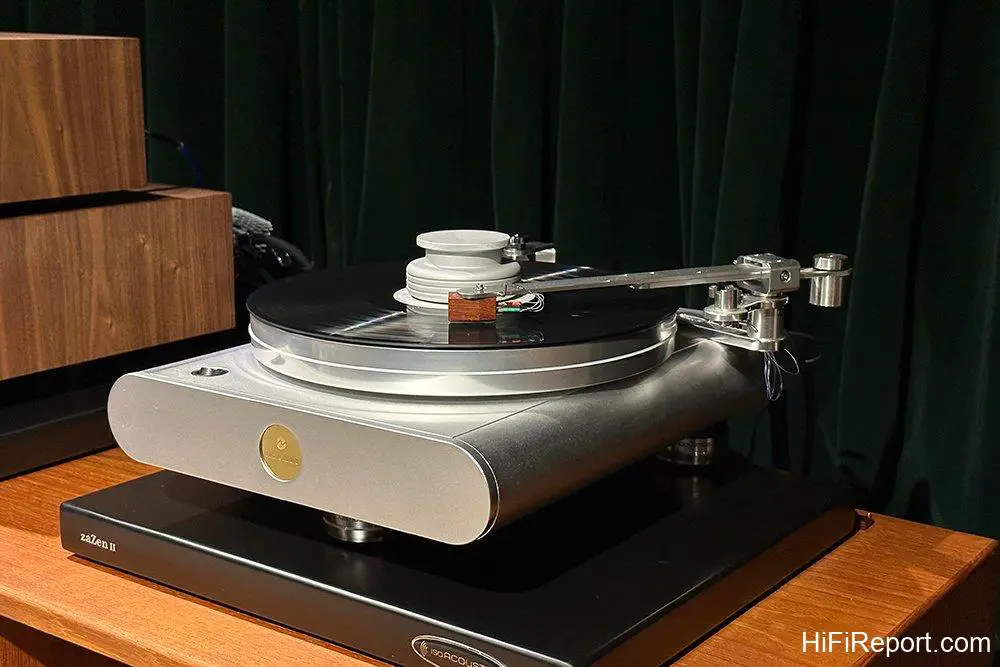
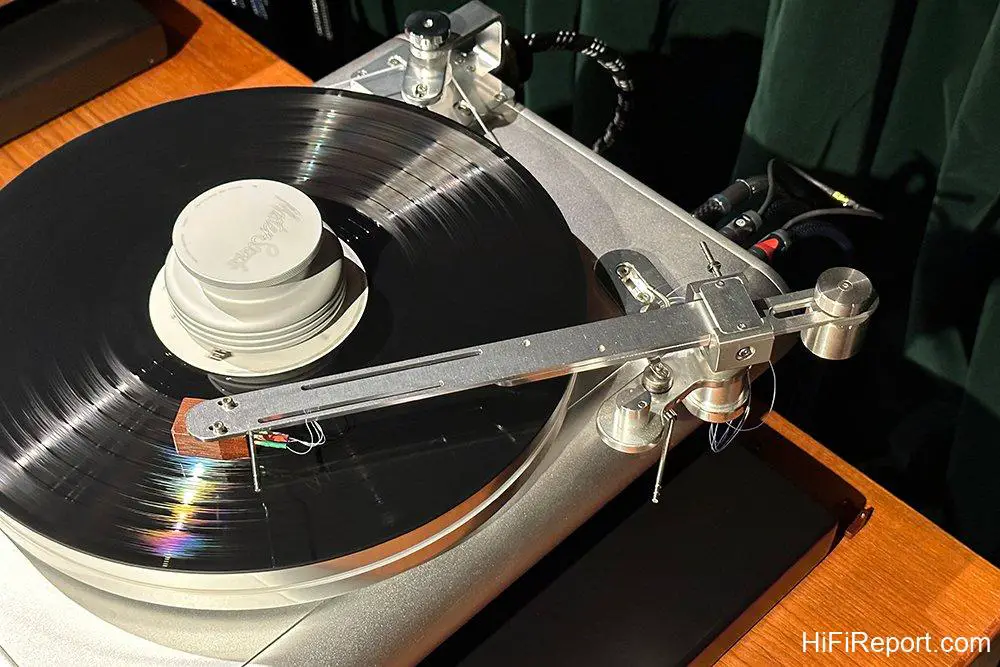
HiFiReport had a Zorin TP-S0 entry-level turntable equipped with a Grado Platinum 3 diamond stylus cartridge (high-output version).
The tonearm cable was intriguing – HiFiReport’s custom cable included an additional grounding wire at the input end. Users can choose to connect or disconnect these “pigtails” for the left and right channels. “Connecting them makes the sound more focused, while disconnecting them creates a more spacious sound,” Jiaqing explained.
He then put on a Chie Ayado record, this time “Fifty,” her personal album released at age 50, featuring jazz standards. Ayado’s self-accompanied vocals showcased her liberated control over tempo and rhythm, lending fresh interpretations to familiar tunes.
The vinyl playback exhibited high resolution, ample detail, and a clean, transparent sound.
I must admit, I can’t definitively assess the individual contributions of the Zorin TP-S0, Grado Platinum 3 cartridge, or Leak Stereo 230’s phono stage.
However, I can confidently say that this combination made Chie Ayado’s singing sound utterly delightful.
Home Listening Experience
As Chie Ayado’s voice filled the room, I packed my bag, bid farewell to Li Jiaqing and HiFiReport Audio.
The record label meeting upstairs was still ongoing. I honestly didn’t mind the background conversations during my listening session. In fact, it felt more authentic.
This reflects the overall impression of HiFiReport Audio and the Leak Stereo 230.
HiFiReport hasn’t created a typical audiophile-style listening room, yet listening to music here feels more relaxed and enjoyable.
The Leak Stereo 230, unlike many high-end components that prioritize separation and specialized functions, embraces versatility. It includes everything, even tone controls often deemed “unfaithful” by purists.
But it’s precisely this all-in-one nature of the Stereo 230 that makes listening to music easier, more pleasant, and more carefree – just like coming home.
Specifications
* **Leak Stereo 230**
* Type: Integrated Amplifier
* Output Power: 75W @ 8 ohms; 115W @ 4 ohms
* Analog Inputs: RCA x3, RCA (MM) x1
* Digital Inputs: Coaxial x1, Optical x1, HDMI ARC x1, USB x1, Bluetooth (aptX/aptX LL)
* Analog Outputs: RCA Pre out x1, 6.3mm Headphone Output x1, Speaker Output
* Digital Outputs: Coaxial x1, Optical x1
* Built-in DAC: ES9038Q2M 32bit DAC
* Maximum Decoding Support: Optical/Coaxial 192kHz, USB 768Hz PCM/DSD512
* Frequency Response: 20Hz-20kHz
* Signal-to-Noise Ratio: Preamp/ >110dB, DAC/ >115dB, Power Amp/ >109dB
* Dimensions: 328 x 147 x 414 mm
* Weight: 12.7 kg (with wood enclosure), 11.1 kg (without wood enclosure)
* Price: $2012 USD (approximately)
* **Piega Ace 30**
* Type: 2-driver, 2-way bass reflex bookshelf speaker
* Drivers: Piega AMT Air Motion Transformer tweeter × 1, 120 mm MDS mid-bass × 1
* Frequency Response: 50 Hz – 40 kHz
* Sensitivity: 87dB
* Impedance: 4 ohms
* Recommended Amplifier Power: 20W-150W
* Dimensions: 220 × 140 × 160 mm (H x W x D)
* Weight: 3 kg