
Marantz Model 60n Streaming Integrated Amplifier Review
Marantz’s two-channel integrated amplifiers broadly fall into two categories: pure analog amplifiers that exclude DACs, and those that include built-in DACs and even digital streaming capabilities.
The former appeals to users seeking a purer listening experience, who can then source their components separately. The latter, however, caters to consumers who value convenience and minimalism, aiming to achieve maximum functionality with the fewest devices.
The distinction between these two product lines lies in whether the model number ends with an “n.” Models with an “n” incorporate DAC and streaming functions, while those without are purely analog integrated amplifiers.
For instance, the Model 60n, which we are reviewing, is a streaming integrated amplifier that encapsulates a multitude of functions.
Meticulous Exterior Design Enhances Visual Appeal
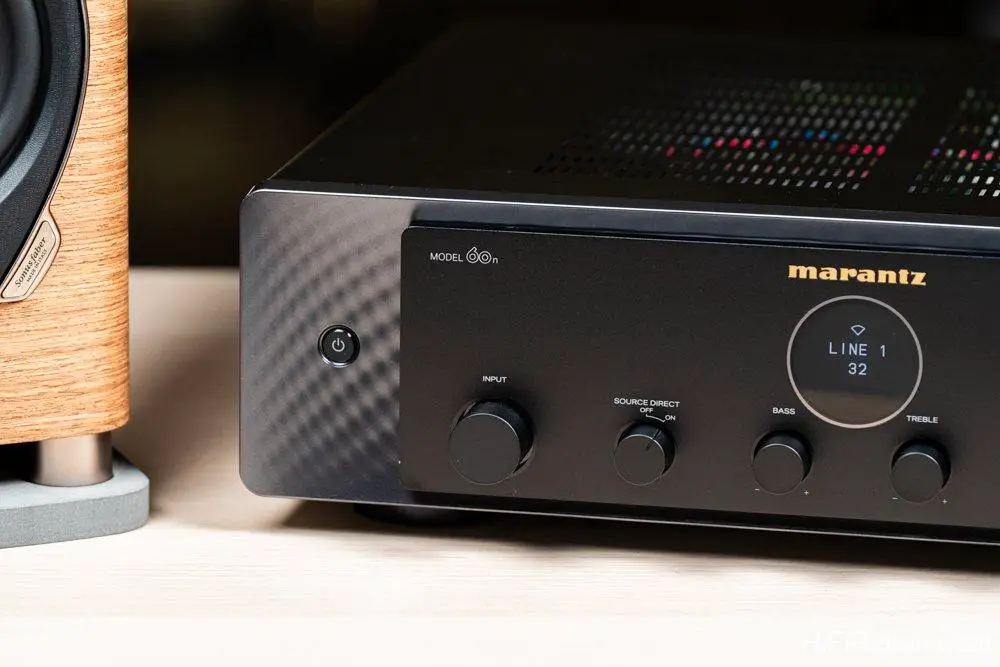
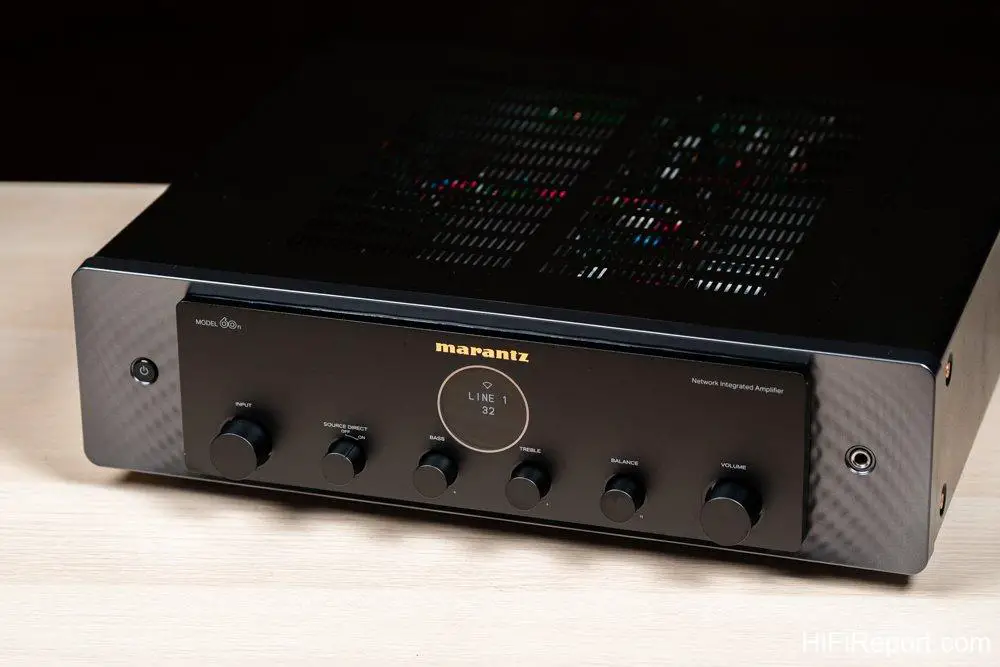
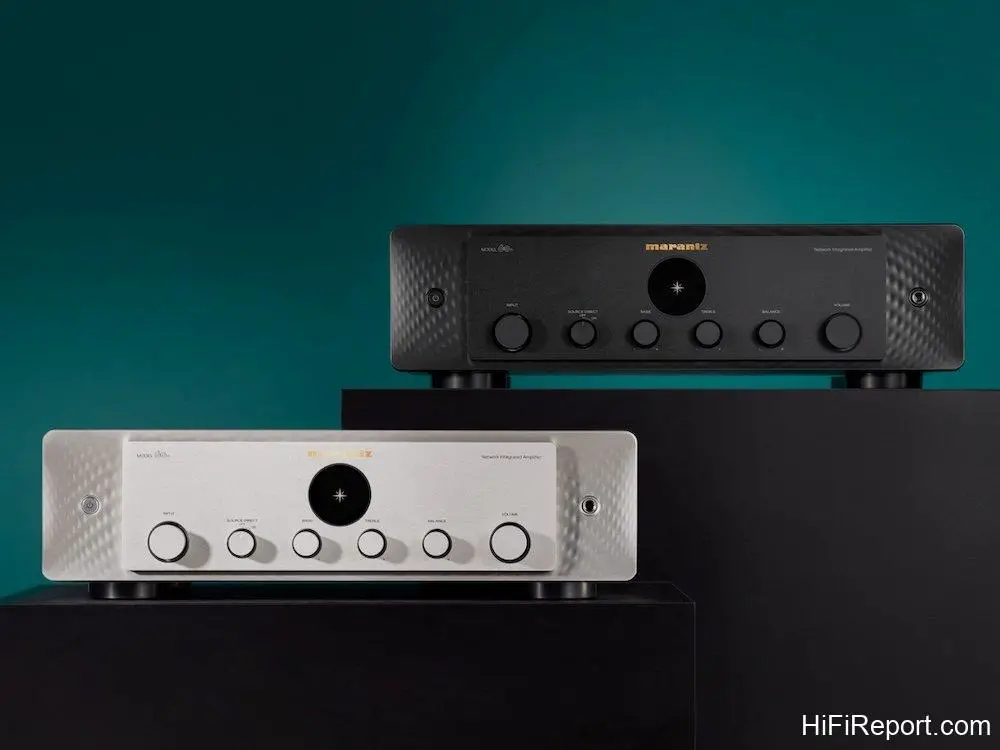
The Model 60n’s aesthetic follows Marantz’s prevailing design language of recent years, featuring a double-layered, suspended front panel.
When I say “suspended,” I don’t refer to a mechanical suspension, but rather a visual impression of floating.
Marantz achieves this by employing a curved, concave panel with a texture resembling fish scales, which creates varying layers of light and shadow when illuminated.
This is complemented by a main panel that appears to “float” above it, housing the display and control knobs. This design effectively creates a richer visual depth.
Furthermore, upon closer inspection, the layout of the front panel, including the size of the knobs and the placement of the power switch and headphone jack, is perfectly symmetrical.
Combined with the centered circular display, this design embodies a harmonious blend of rectilinear and circular elements, showcasing symmetrical beauty.

It’s rare to find equipment in this price range that dedicates such effort to the design of the chassis’s front panel; Marantz truly excels here.
A Commitment to Quality: 60W Class AB Amplification with Exclusive HDAM Modules
As an integrated amplifier, the Model 60n utilizes Class AB amplification, delivering 60W of power per channel (increasing to 80W into 4 ohms). This output is only slightly less than the Model 40n, its higher-tier sibling, which offers 70W.
For consumers, the difference between 60W and 70W is virtually imperceptible.

Moreover, the amplification circuitry incorporates Marantz’s renowned HDAM (Hyper Dynamic Amplifier Module) modules. These are proprietary discrete amplifier circuits designed to reduce noise and distortion, enhance speed and dynamics, and improve detail and sound quality.
Shielded Toroidal Transformer, Preamplifier, and Digital Circuits
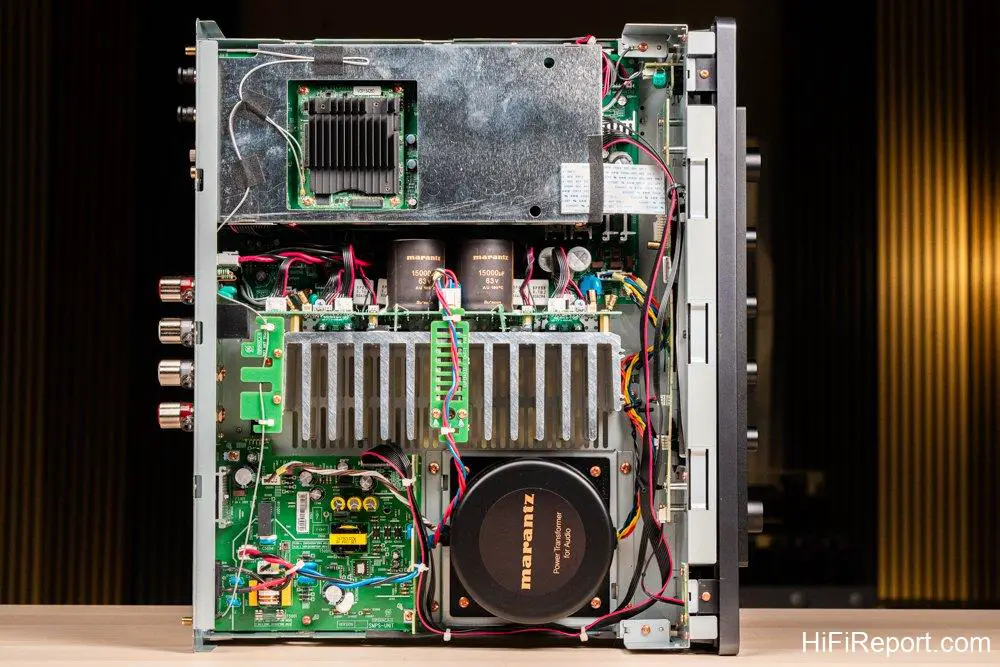
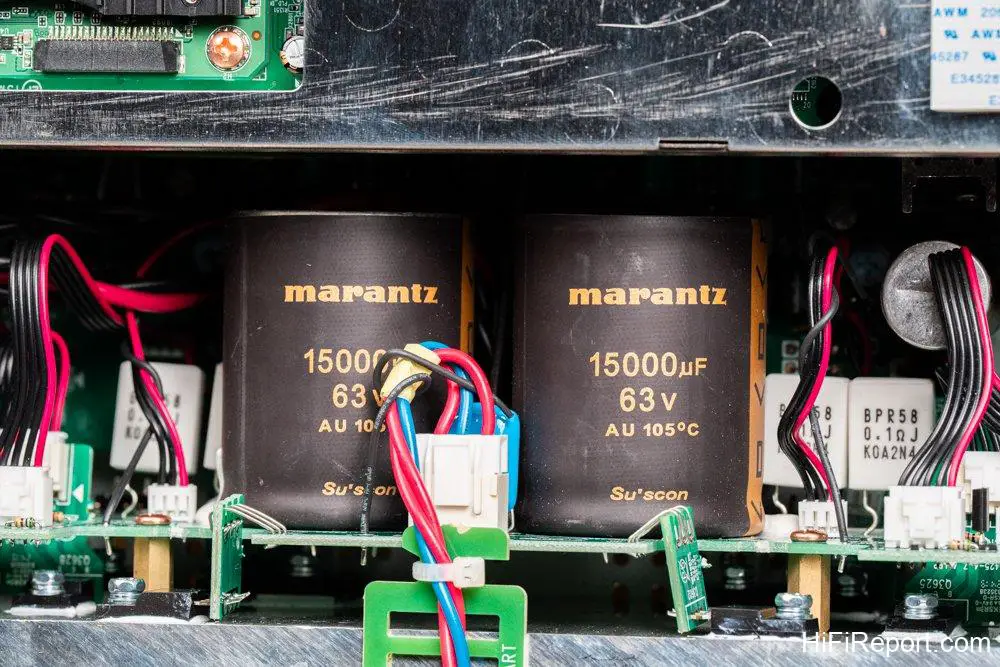
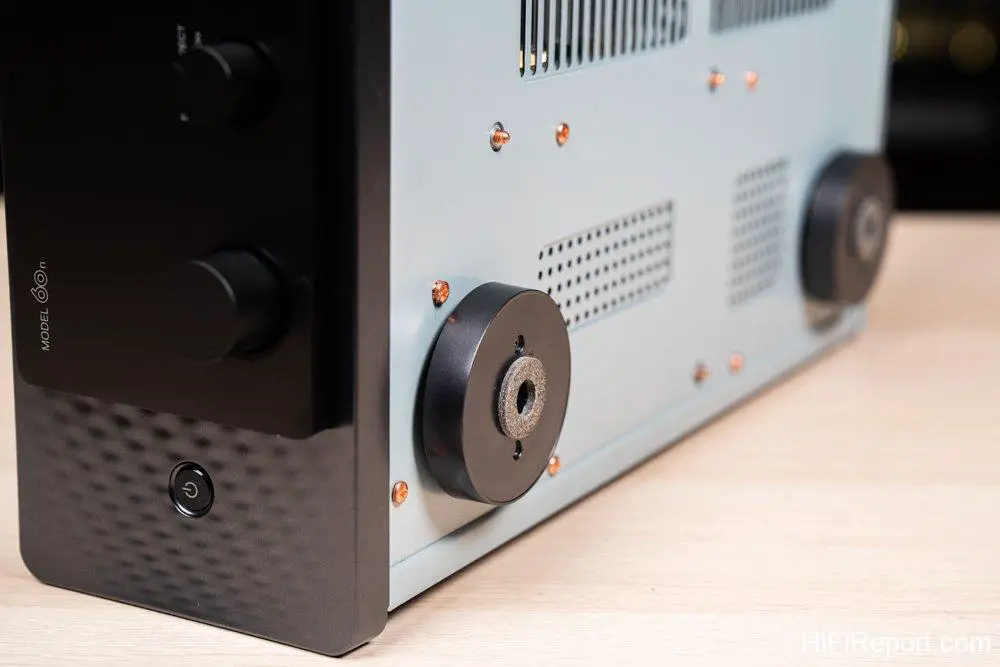
The power supply, located on the left side of the chassis, features a toroidal transformer in the Model 60n, which is enclosed in a metal shield to prevent magnetic flux leakage.
The amplification circuitry resides in the center of the chassis, with the power transistors tightly coupled to large aluminum alloy heatsinks.
Coupled with ventilation holes on the top cover, the unit’s temperature is well-managed even after extended listening sessions, remaining comfortably cool.
The right side houses the amplifier’s preamplifier, digital decoding, and streaming circuits, all covered by a metal shielding box. The Model 60n addresses numerous details at this price point with impressive consideration.
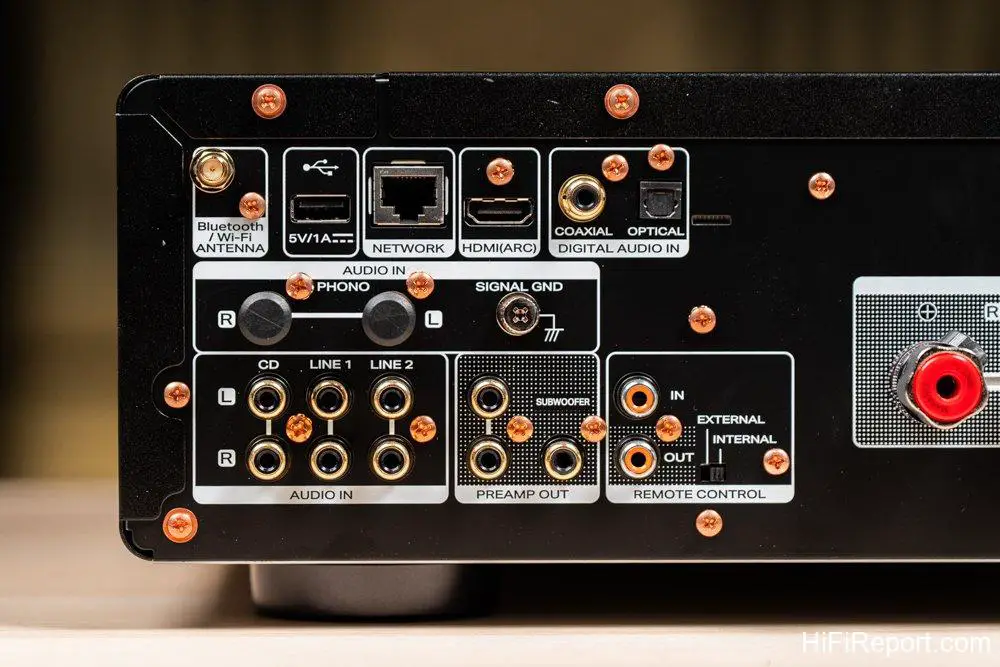
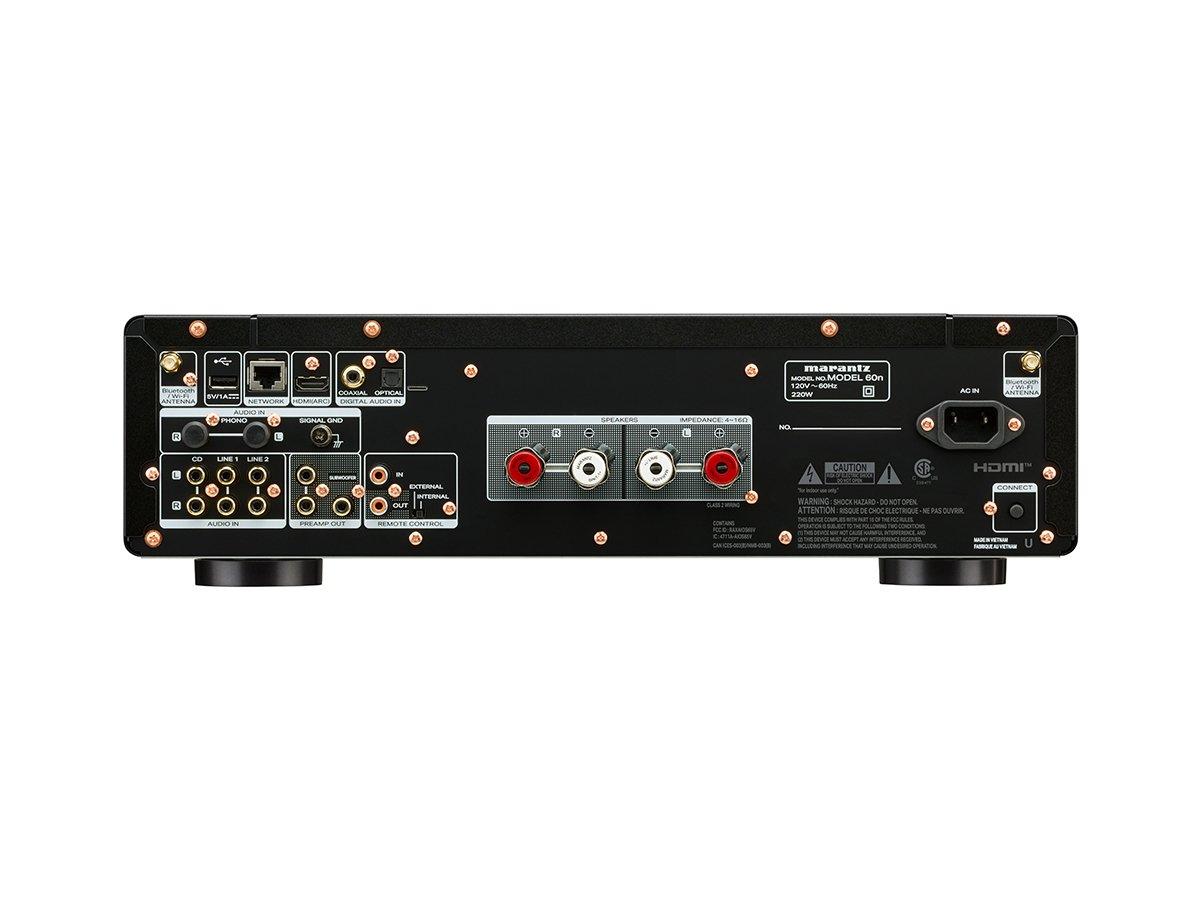
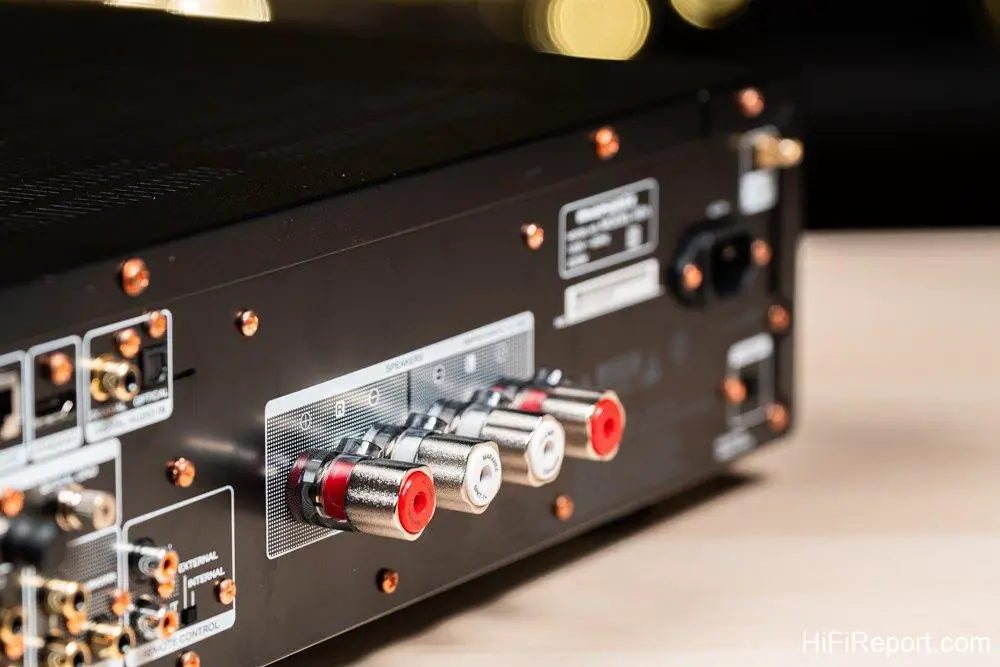
Built-in Phono Stage, DAC, Streaming, and HDMI ARC for TV Connectivity: Feature-Rich Interface
The Model 60n’s interface is equally rich and practical.
It offers three sets of high-level RCA analog inputs, along with an MM phono preamplifier input, which is more than sufficient for most users. But that’s not all.
The Model 60n also includes a pre-out and a subwoofer output.
Should users decide to add a power amplifier in the future, they can utilize the pre-out for a bi-amplification setup.

If they wish to integrate a subwoofer for a 2.1 channel system, the Model 60n supports this.
Alternatively, for a 2.2 channel system with subwoofers on both channels, the pre-out can also be used.
Beyond analog inputs, digital connectivity is also robust.
Choosing the Model 60n naturally means leveraging its built-in streaming playback and decoding capabilities to enjoy the benefits of a minimalist system.
Users can connect via wired Ethernet for stable performance and the advantages of a physical network cable, or opt for WiFi for wireless convenience, especially if the amplifier’s placement makes running a cable impractical.
Adjacent to the RJ45 port, a USB Type-A input allows for playback of files stored on external hard drives.
For additional digital sources, both coaxial and optical S/PDIF inputs are provided.
Perhaps most exciting is the inclusion of an HDMI ARC input, enabling users to connect their TV and elevate their home entertainment experience with enhanced audio for streaming, movies, and gaming.
DAC Supports High-Resolution Decoding, HEOS Streaming Platform Offers Seamless Integration
Delving deeper into its DAC and streaming specifications, the Model 60n supports decoding up to 24-bit/192kHz and DSD 4X (11.2MHz, or DSD 256), making high-resolution music playback a non-issue.
The streaming platform employed by the Model 60n is Marantz’s proprietary HEOS platform, which integrates various streaming services and offers a clear, intuitive control interface.
Users can find their favorite tracks within this unified playlist.
Furthermore, if you have multiple Marantz streaming devices at home, the HEOS App enables multi-room playback control.
The Marantz HEOS App is logically designed and operates smoothly, standing out as an excellent piece of software among those developed by audio manufacturers.
For users who prefer to stream directly from their familiar streaming service apps, this is also readily supported.
The Model 60n’s HEOS platform is compatible with direct playback from platforms like Tidal, Spotify, and Qobuz Connect. It also supports AirPlay, Bluetooth, and is Roon Ready, offering high overall application flexibility.
During my testing, I utilized Roon, Tidal Connect, and streamed music via HEOS. The user experience was excellent, allowing me to choose my preferred playback method at any given time.
Added Bonuses: Headphone Output and EQ Adjustment
For headphone listening, the Model 60n features a headphone output on the front panel, allowing for private listening without disturbing family or neighbors.
It also includes a simple EQ adjustment, with treble controllable at the 15kHz band for +/-10dB and bass controllable at the 50Hz band for +/-10dB.
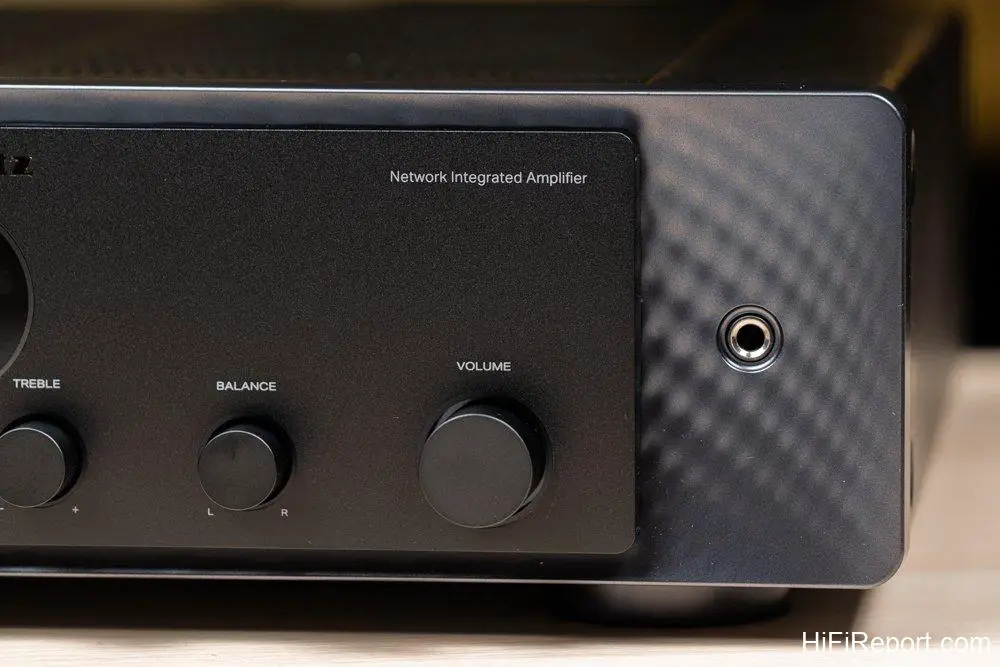
While basic, this EQ offers personalized adjustments to suit individual listening preferences or room acoustics.
For the purest sound, users can switch to “Direct Output,” bypassing the EQ circuitry for a cleaner signal.
All these functions can be conveniently controlled directly via the knobs on the front panel.
A Sound Profile That Mellows With Time
A year ago, I reviewed the Marantz Model 50, a purely analog integrated amplifier. My conclusion then was that it offered a warm, rich, and lustrous sound with sufficient detail and naturalness, exceeding expectations for its price point of over $2,000.
Listening to the Marantz Model 60n, which adds DAC and streaming capabilities to its integrated amplifier function, and at an even lower price, has made the process of listening and reviewing increasingly exciting. Such high-value equipment is a rare find these days.
The Model 60n’s sonic performance is indeed impressive.
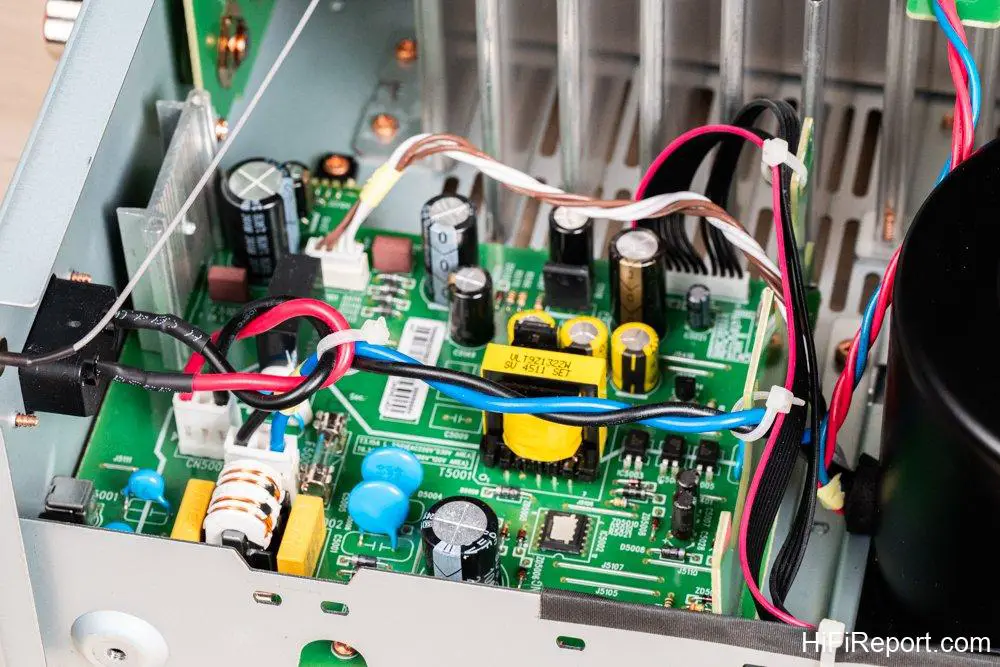
Its Class AB amplification, coupled with the HDAM modules and meticulously engineered linear power supply, allows the Model 60n to stand apart from the ubiquitous Class D modules and switching power supply architectures found in similarly priced products, showcasing its brand’s traditional character with pride.
While amplifiers with switching power supplies and Class D modules are not inherently inferior, they often exhibit a fast, sharp, precise, high-resolution, and transparent sound signature. This differs from the warm, dense, solid, and full-bodied sound profile characteristic of Marantz’s Class AB amplifiers.
For music listening, Marantz’s approach may not immediately grab your attention, but it’s the “mellows with time” type of sound. It’s not only enduring and fatigue-free but also increasingly reveals the beautiful musical atmosphere within.

Integrated amplifiers in the $1,500 range often emphasize feature richness; however, the Model 60n manages to deliver outstanding sonic performance for its class, which is truly remarkable.
Warm Tonality, Solid Texture, Robust Dynamics, and an Expansive Soundstage
Taking Anne-Sophie Mutter’s “Across the Stars” album as an example, this recording of John Williams’ classic film score retains the original orchestral arrangements but reimagines them with a solo violin accompanied by a full orchestra, placing significant emphasis on the solo violin.
The violin, played by Mutter, dramatically narrates the story. Affordable amplifiers often struggle with such passages at higher volumes, risking a shrill, piercing, or overly aggressive violin sound. The Model 60n, however, provides complete reassurance in this regard.
The Model 60n’s sound possesses a warm tonality and solid thickness, with smooth, unblemished edges to the notes.
Whether it’s the resolute and powerful violin in “Rey’s Theme,” the soaring passion in “Across the Stars,” or the tense atmosphere in “the Duel,” the potential shrillness of the violin in higher registers is remarkably absent with the Model 60n.
The Model 60n does not diminish the music’s power or drive; it simply reduces the uncomfortable sharpness, allowing for a more effortless immersion into the music’s emotion.
For instance, in “Donnybrook Fair” from the same album, the pizzicato violin notes are crisp and clean, while the lower strings offer a full and rich tone.
In “Night Journeys” from the “Dracula” soundtrack, the deep and resonant bass from the lower strings lends considerable weight to the music.
This allows the music to develop its suspenseful Dracula theme in the mid and high frequencies, supported by a robust bass foundation, with the music’s grandeur unfolding through the interplay and layering of vocal parts.
Precise Depiction of Musical Scenes Creates a Sense of Realism
Listening to Alfred Brendel’s piano performance and Simon Rattle conducting the Vienna Philharmonic in Beethoven’s Fourth Piano Concerto, the recording and performance are balanced, elegant, refined, and beautiful.
The Model 60n reproduces this exquisite performance with a warm tonality, tangible brushstrokes, and clear definition.
The piano’s luster, even with the emphasized warm and full-bodied sound signature, does not detract from its brilliant radiance. The solid texture imbues the piano notes with a rich grain.
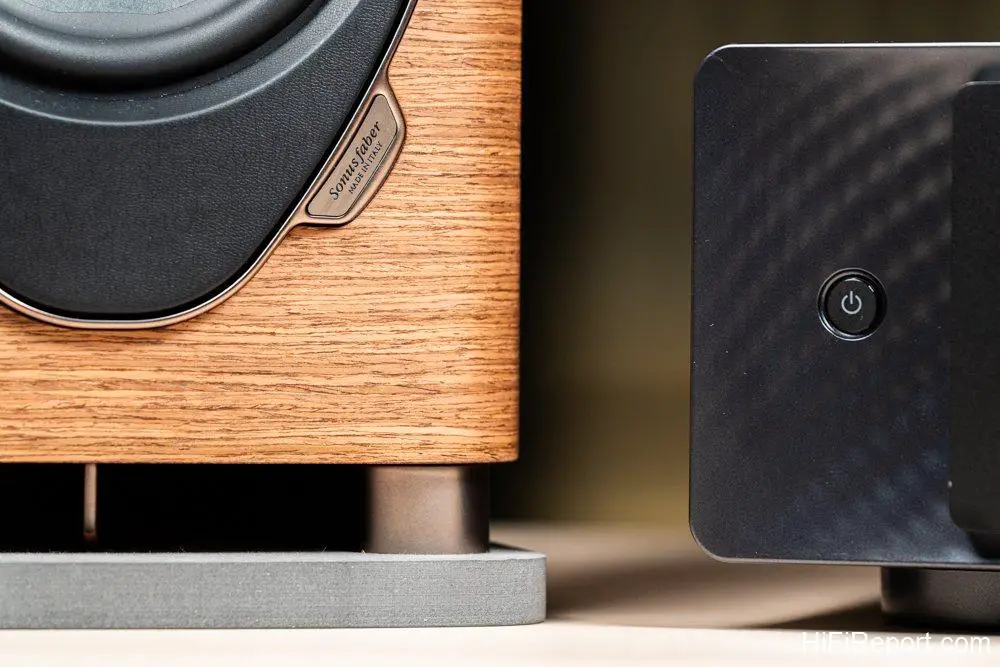
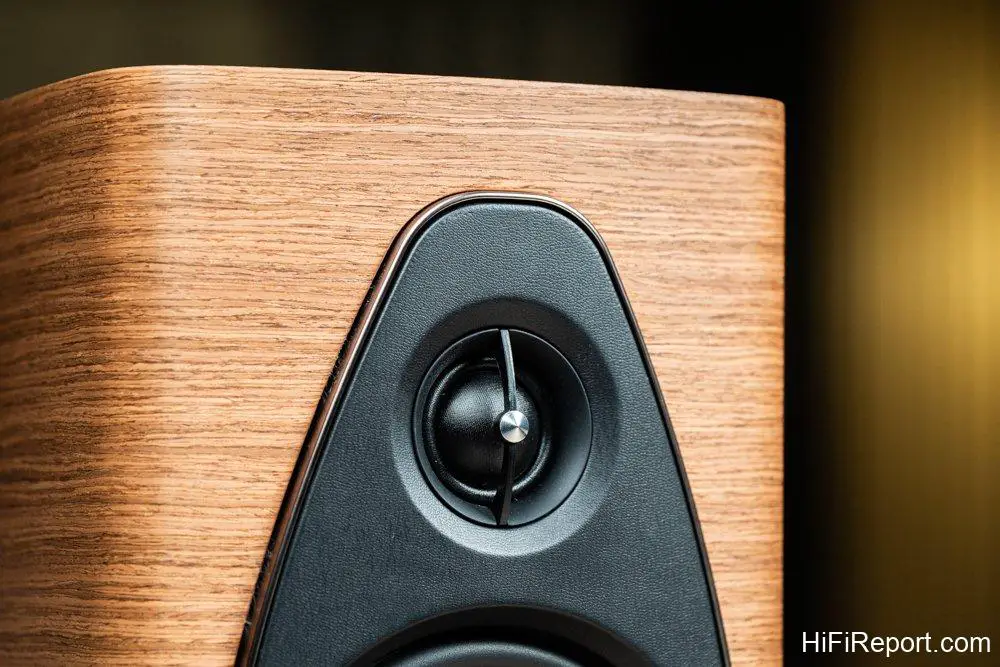
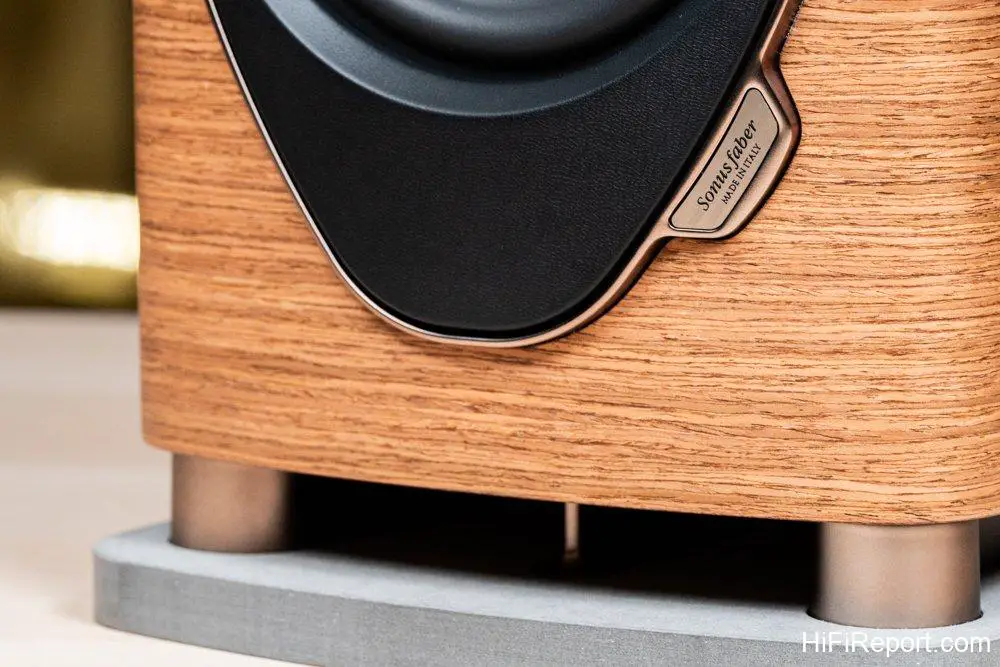
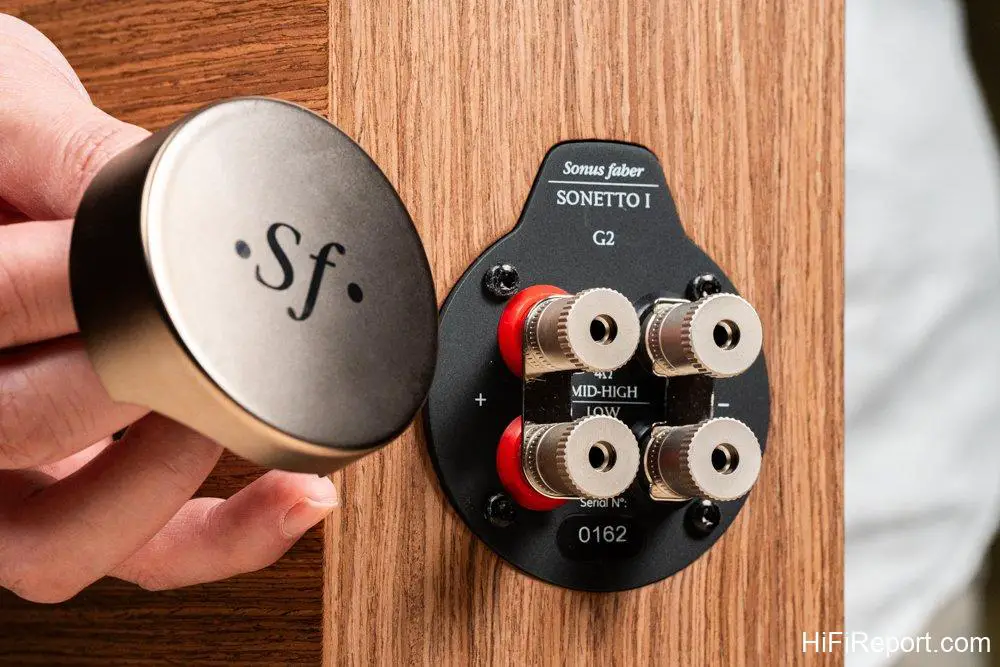
The soundstage presented during orchestral tutti passages is sufficiently large and wide. Is 60W adequate? When driving Sonus Faber Sonetto Is, I was able to achieve not only the vivid and delicate character of the SF speakers but also a respectable soundstage and well-formed bass.
Switching to floorstanding speakers with a wider frequency response and higher efficiency would undoubtedly present a different scale of sound.
In the second movement, the dialogue between the piano and lower strings reveals two distinct textures: the crystalline delicacy of the piano and the robust, heavy character of the strings. The Model 60n renders this short, dialogue-heavy movement with vibrant detail.
Astonishing Pipe Organ Bass from Such an Amplifier
Entry-level amplifiers often suffer from a thin sound and struggle to drive bass effectively. The Model 60n’s specifications of 60W @ 8 ohms and 80W @ 4 ohms may not immediately inspire great expectations.
However, when actually playing music, it becomes clear that it is more than sufficient. While I cannot speak for others, the Marantz Model 60n is genuinely capable.
The previously mentioned recordings all feature orchestral performances with grand tutti passages and sections requiring bass reproduction.
However, another captivating and natural soundstage, particularly in terms of scale, comes from recordings of cathedral choirs accompanied by pipe organs.
On the album “Christmas in Norway,” the natural reverberation of the cathedral space makes the choir’s performance exceptionally rich and harmonious. The voices layer and emerge, creating an abundance of harmonic beauty within the space.
As the deep notes of the pipe organ descend, a sense of sacredness arises. The question is, can a 60W amplifier drive speakers to produce such bass? After my listening tests, I can confirm that the Model 60n is not a cause for concern.
Jazz Vocals are a Strong Suit, and Unapologetically So
When playing vocal tracks, the Model 60n’s warm, sweet, and solid sound is consistently pleasing.
For instance, on Diana Krall’s “Love Scenes” album, Krall’s slightly husky, smoky voice is deep and mellow, with clear vocal lines, a full-bodied presence, and rich detail.
While the Marantz Model 60n’s vocal reproduction may not be etched with pinpoint accuracy, it is undeniably solid, presenting a palpable, soulful presence.
Her subtle vocal inflections, the resonant changes in her voice during shifts in pitch and tone, and the breathy whispers deliberately crafted to create a romantic atmosphere—all these details of Krall’s singing are rendered with enough fidelity to make her voice particularly captivating.
This, combined with a warm-toned, roundly granulated piano, a full-bodied, deep yet clear bass, and a versatile guitar, further highlights the Model 60n’s prowess in reproducing jazz vocals.
The Marantz Model 60n represents another excellent hit from the manufacturer.
Affordable, feature-rich, capable of both audio and video, with ample power, a warm sound, elegant aesthetics, and easy system matching…
For a price of just over $1,500, acquiring a product like the Model 60n is undoubtedly an enticing option for any budget-conscious consumer who wants to enjoy music.
Specifications
Marantz Model 60n
Type: Streaming Integrated Amplifier
Output Power: 60 Watts / 8Ω, 80 Watts / 4Ω
Frequency Response: 5Hz~100kHz
Total Harmonic Distortion: 0.02%
Damping Factor: >100
Signal-to-Noise Ratio: Phono Preamp / 87dB, High-Level Input / 113dB
Treble Control: ± 10 dB @ 15kHz
Bass Control: ± 10 dB @ 50Hz
Analog Inputs: MM Phono Preamp x1, RCA x3
Analog Outputs: Subwoofer Output x1, Pre-Out x1, Headphone Output x1
Digital Inputs: Coaxial, Optical, USB A, HDMI
Network Inputs: RJ45, Wi-Fi
Streaming Features: Airplay 2, Roon Ready, Spotify Connect, Tidal Connect
Streaming Services: Tidal, Deezer, Amazon Music HD, Pandora, TuneIn, iHeartRadio…
Dimensions: 442 × 129 × 431 mm (W×H×D)
Weight: 15.5 kg

- Stream in high-resolution spin vinyl play CDs or watch TV. Do it all the Marantz way with MODEL 60n
- Hi-Res audio support up to 24-bit 192kHz & Roon-Ready
- Effortless streaming with HEOS Built-in WiFi AirPlay 2 & Bluetooth
- 2.1 Channel output allows for loudspeaker and subwoofer connection
- Featuring Marantz proprietary HDAM circuits for detailed audio reproduction