
Naim Nait XS3 Review
Naim, the venerable British audio brand, has become a household name among audiophiles in recent years. Not only is it cherished by seasoned enthusiasts as an audio gem, but it also garners high praise from the younger generation of listeners. How does Naim manage to appeal across such a broad spectrum? It’s because they are one of the few manufacturers steadfastly adhering to traditional circuit design, while also being early pioneers in the realm of streaming audio.
To ensure seamless compatibility with their products, the company invested heavily in integrating numerous software engineers to develop their proprietary app. What seemed like a bold move in an era before widespread streaming music adoption proved to be well within Naim’s foresight.
They even collaborated with loudspeaker giant Focal to launch all-in-one streaming speakers like the Mu-So, demonstrating Naim’s commitment to both preserving tradition and possessing a keen eye for the future of audio.
Recently, I had the pleasure of reviewing their Uniti Star all-in-one streaming amplifier. Beyond its stylish exterior, it features a built-in DAC, extensive streaming support covering virtually everything, the ability to play CDs, and compatibility with high-resolution audio files – its features are simply countless! Yet, its internal circuit design remains entirely faithful to Naim’s traditional Hi-Fi philosophy.
In contrast, the Naim Nait XS3 I’m about to introduce is a straightforward integrated amplifier with a singular focus. Before the review, I couldn’t help but wonder if such an amplifier might be overshadowed by Naim’s own feature-rich products. However, after a thorough examination, I realized not only were my concerns unfounded, but I also found myself falling head over heels for the Nait XS3. I’m eager to share what makes it so captivating!
Design and Connections
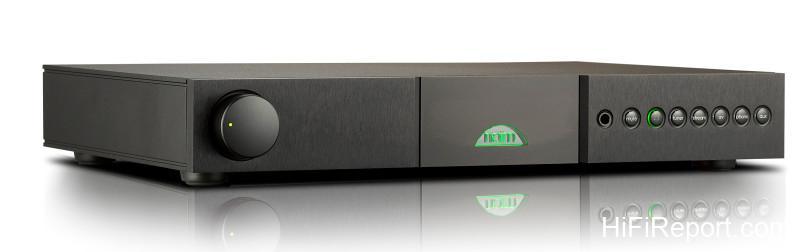
This Nait XS3 is the third generation of the original Nait XS amplifier and sits as the second-highest integrated amplifier in Naim’s traditional lineup, just below the flagship SuperNait 3. The two integrated amps share a similar aesthetic, both featuring Naim’s classic black aluminum chassis. The Nait XS3 has a slightly flatter profile and a brushed finish. At first glance, it might not seem particularly striking, but upon closer inspection, you’ll notice the exquisite craftsmanship.
It also feels substantial when handled.
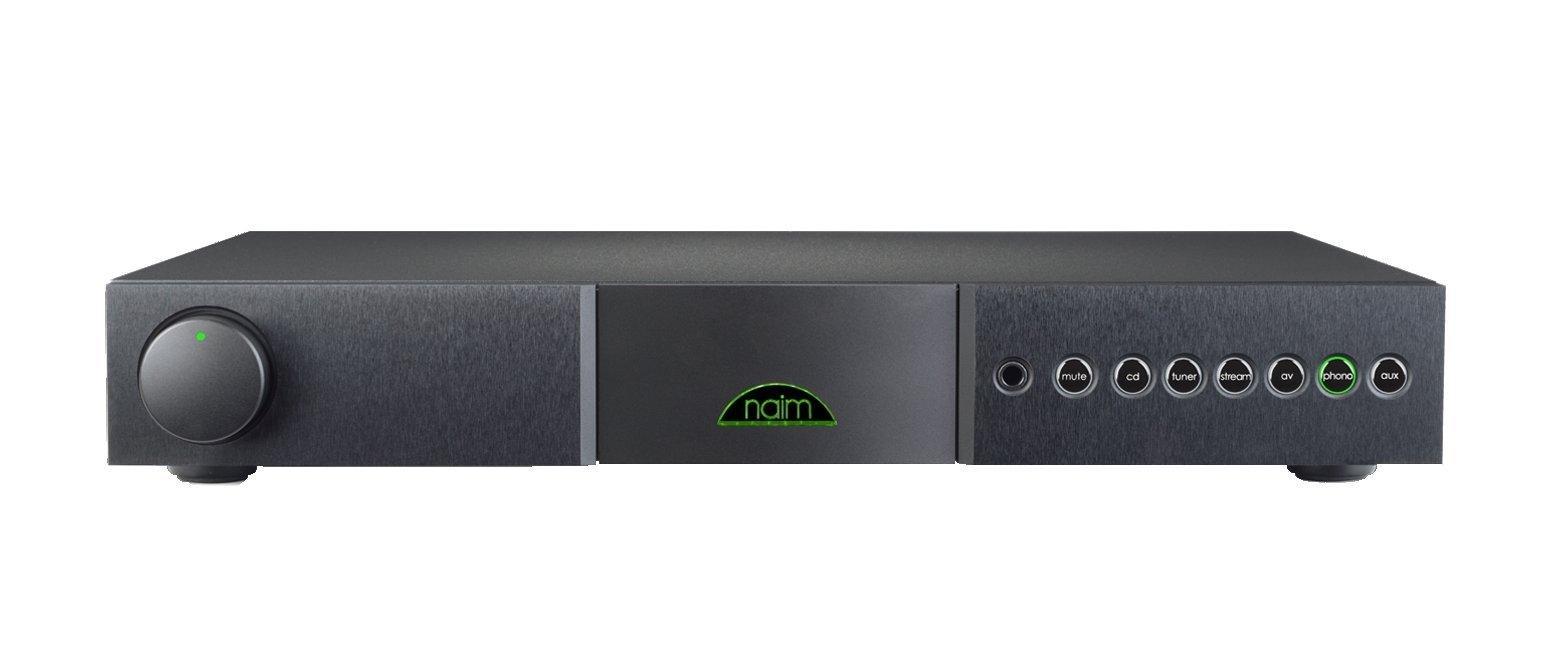
The front panel boasts a semi-circular transparent brand logo that illuminates green when powered on, lending a charmingly retro vibe. To the left is a single volume knob, while the higher-end SuperNait 3 adds a Balance knob for adjusting the left and right channel gain. The right side of the panel houses six source selection buttons and a Mute button, making operation intuitive and hassle-free.
Additionally, a 6.3mm headphone output is included, providing an extra reason for headphone aficionados to consider it.

The Nait XS3’s simplicity isn’t limited to its functions. Turning to the rear panel reveals that all the terminals are RCA single-ended connections, with no XLR balanced input. However, each input corresponds to Naim’s traditional DIN connectors. The manufacturer believes this is a superior terminal design for sound quality, and currently, Naim is one of the only audio companies using DIN connectors across all their equipment, which are more commonly seen on turntables.
If you own a Naim CD player or streamer, you can take full advantage of these.
In terms of connectivity options, besides the basic “CD,” “Stream,” and other selections for connecting a CD player or streamer, there’s also an “AV” input for home theater enthusiasts to connect a surround sound receiver. By selecting this and enabling the preamp bypass switch on the rear panel, you can use the Nait XS3’s power amplifier section to drive the main speakers, enhancing sound quality in a home theater setup.
Notably, this generation also adds a “Phono” option, indicating the inclusion of a built-in MM phono stage for connecting and listening to turntables. If you feel the low frequency needs reinforcement, the unit also offers a stereo “Sub” output to connect an active subwoofer and bolster the bass performance.
Internal Construction
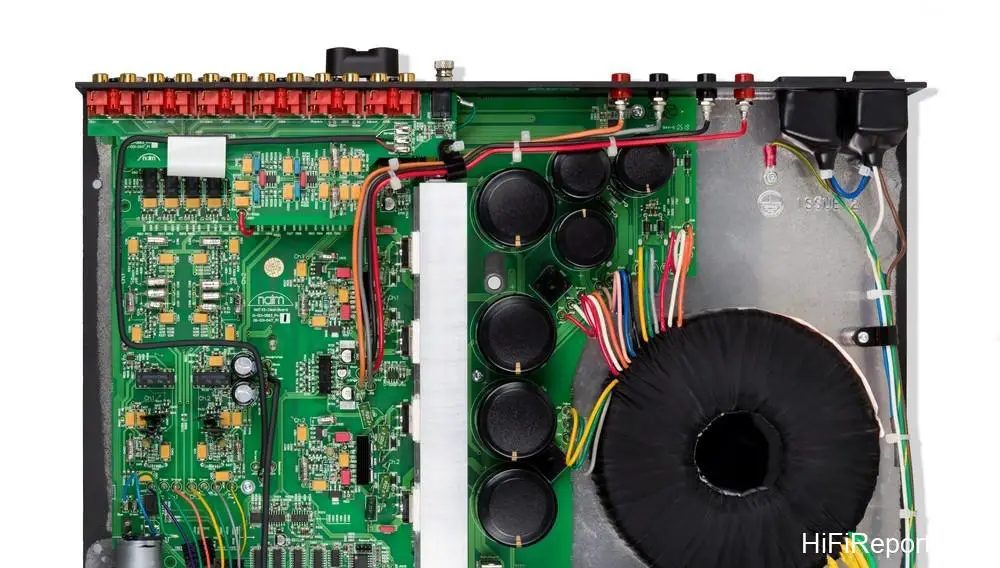
Looking at the exterior and functionality thus far, you might find the Nait XS3 rather plain, lacking any particularly outstanding features. However, the true magic is revealed when you open the chassis and examine its circuit structure – that’s when you understand the meaning of being truly unassuming yet profound!
First, the unit continues Naim’s excellent tradition: nearly half of the chassis space is occupied by a substantial 350 VA toroidal transformer, a high-end component manufactured by Nuvotem Talema in Ireland. Furthermore, the key principle of the entire circuit layout is an extremely short signal path, ensuring all signals are transmitted in the most efficient manner possible.
The preamp and headphone amplifier circuits employ pure Class A amplification, and all transistor outputs for the left and right channels use a balanced design to prevent interference between components. The headphone amplifier directly amplifies the signal from the preamp circuit with double gain, aiming for the purest possible sound quality. For volume control, an audiophile-grade ALPS Blue Velvet variable resistor is selected.
At the signal input stage, the unit utilizes reed relays, known for their fast response time.
Additionally, this generation Nait XS3 features upgraded gain-stage transistors, doubling their speed, which positively impacts the overall transient response. This design is identical to that found in the high-end SuperNait 3. The key difference lies in the Nait XS3’s output power of 70 watts (into 8 ohms), while the SuperNait 3, benefiting from a larger power supply, delivers 80 watts.
Moreover, the internal circuits are almost entirely populated with surface-mount components (SMD). Furthermore, including the various circuit boards, the volume control module, and the contacts for the input terminals, most connections are meticulously hand-soldered by the British factory.
It’s hard to imagine the cost involved in such a process, but Naim insists on it because, compared to standard PCB boards and plastic connectors, this approach not only minimizes the signal path but also reduces transmission loss to the absolute minimum, resulting in a more direct and dynamically responsive performance.
Conversely, this method demands exceptional soldering skills, as every joint affects the sound quality. Naturally, every solder joint on the Nait XS3 is beautifully executed, reflecting Naim’s uncompromising Hi-Fi spirit!
Finally, the upgraded phono stage module in this generation is well worth mentioning. The MM phono stage utilizes a dedicated circuit board, specifically designed with a gain stage, passive equalization, and RIAA active equalization to correct the frequency response curve of records more smoothly while simultaneously reducing noise.
The components on the phono module are also point-soldered, showcasing craftsmanship that easily rivals professional external phono preamps, making it a valuable feature for vinyl enthusiasts.
Listening Experience
I conducted the test using a Lumin D2 streaming player as the source, paired with the Nait XS3 integrated amplifier, driving Dynaudio Emit 30 floorstanding speakers. As my personal reference system uses a KT150 single-ended tube integrated amplifier, I can confidently say that the Nait XS3’s sound character shares an 80% or greater similarity with my amplifier – it’s probably the most “tubelike” solid-state amplifier I’ve ever heard!
The difference is that the Nait XS3 not only possesses that pure, direct sonic character similar to vacuum tubes but also combines it with the better control and density of solid-state amplifiers. The mid and low frequencies are solid and rich. This sonic characteristic is absolutely captivating for listening to jazz and vocals.
For example, playing “Stolen Moments” from the first track of “Oliver Nelson – The Blues And The Abstract Truth,” the initial horn ensemble radiates a slightly tipsy, twilight hue. The metallic texture is warm without sacrificing detail, and the performance of each section is incredibly vivid, weaving together a rich tapestry of layers.
During the brass solo passages, you feel life-sized instrument shapes appearing before your eyes, with a very direct and realistic texture. Freddie Hubbard’s trumpet’s dazzling golden light and aggressive solo are slightly softened, the edgy metallic sound smoothed out to be more rounded and fluid, sounding denser and more hydrated. When it comes to Eric Dolphy’s masterful flute, the silky metallic friction texture remains clear, but the tone appears fuller and thicker.
And Oliver Nelson’s saxophone low murmurs can simply be described as “sexy”! It sounds very rich and intimate, as if playing right in front of you, allowing you to feel the vibrant flow of air inside the horn walls.
Another remarkable advantage of this amplifier is its exceptionally precise phase alignment. I believe this is key to its “tubelike” sound. The sense of positioning is clear and distinct, with a definite hierarchy, allowing the rhythm section instruments in the jazz ensemble to punctuate just right, sounding as naturally integrated as milk and water.
The piano notes are full and stable; while not the epitome of delicate transparency, the key presses still possess a very responsive elasticity and weight.
The jazz drums are struck with lively speed and punch. You can clearly hear the thick, dense sizzle of the cymbals, and the snare drum offers a bouncy, energetic feedback, accompanied by the loose, full double bass plucking, complementing the brass instruments just enough to make the lead instruments’ forms more vivid and three-dimensional. It’s impossible not to sway along with the rhythm – truly enjoyable!
Or, listening to “As Easy As Rolling Off A Log,” the fourth track from the “James Taylor – American Standard” album, you can feel the natural form of the vocals, without any awkward edges or the slightest sense of defocusing. The image is condensed and direct, as if the singer has appeared right in front of you and merged with the space.
Furthermore, the Nait XS3 does not deliberately sharpen sibilant details like many solid-state amplifiers do. Beneath its warm and rich tonal foundation, James Taylor’s voice sounds unhurried and full of moisture, possessing a delightful analog character. The acoustic guitar accompaniment is also a strong point of this amplifier. The note texture sounds sweet and elastic, with agile dynamic performance fully revealed.

Details like the friction sound of fingers gliding on the strings or the resonance of the wooden body from hitting the soundboard are conveyed with fullness. This vivid musical texture is something I’ve never heard from solid-state amplifiers in the same class.
The Nait XS3’s direct sonic character doesn’t particularly emphasize soundstage effects. When playing large-scale classical music, it lacks the deep spatial feeling, but the instrument density is high, and the texture is very vivid, with clear details. For example, playing the “Giuliano Carmignola – Concerto Italiano” album, the opening string ensemble has a stable momentum, very fast speed, and incredibly sharp energy release and control.
The deep hum of the double bass sounds solid and tight, without any sense of bloat or delay. The lead violin’s tone is neutral, without any excessive coloring, faithfully presenting a full bowing texture and warm wooden character, adding a grand and dignified atmosphere to the elegant Baroque music.
The clear detail reproduction gives the Nait XS3 excellent control even in complex accompaniments. Whether it’s the crisp plucking of the harpsichord or the harmonies of the strings, everything is interpreted in an orderly fashion without becoming overly rigid and losing musicality. I believe this is where the Nait XS3’s tuning is masterful – it gives you direct, unadulterated musical details while consistently maintaining a rich, smooth flavor, showcasing the music’s most faithful beauty.
It makes you want to listen to album after album, becoming increasingly engrossed!
Conclusion
The Nait XS3 is truly exceptional. In a trend where audio equipment increasingly focuses on packing in as many features and support options as possible, Naim has instead concentrated on making the simplest “integrated amplifier” the very best it can be. Every electronic component, every solder joint within it, speaks of the manufacturer’s dedication and pursuit of perfection, sparing no expense. Isn’t that what “audiophilia” is all about?
A masterpiece of traditional audio craftsmanship like the Nait XS3 is a must-have for any serious audiophile.
Specifications
* Type: Integrated Amplifier
* Output Power: 70W / 8 ohms
* Digital Decoding: PCM 24/192, DSD64 (Note: The original text seems to incorrectly list digital decoding specs for an integrated amplifier without a built-in DAC. This likely refers to compatible streaming sources, but the spec as written is unusual. Assuming it relates to capabilities when paired with Naim streamers.)
* Terminal Inputs: MM Phono (RCA) ×1, High Level RCA ×4, DIN ×4
* Terminal Outputs: Subwoofer (RCA) ×1, DIN ×1 (bi-amp), 6.3 mm Headphone Output ×1
* Dimensions: 70×432×314mm (H×W×D)
* Weight: 8.5kg